
Peter Kernwein posted a photo:

MHKBB posted a photo:

Nauvo, Finland
Camera: Hasselblad 503CW
Lens: Carl Zeiss Planar T* 2.8/80 C
Film: Ilford XP2 Super
Lab: Prolab, Stuttgart
Judge tells Tennessee officials all items in execution room must be saved as Pike remains restrained in hospital bed
A judge ordered Tennessee officials on Wednesday to preserve all evidence related to the botched execution attempt on convicted murderer Christa Pike, as it emerged that the state has refused pleas from medical staff to allow her to be unshackled from her hospital bed.
At a hearing in Nashville on Wednesday, judge I’Ashea Myles said: “Anything that was in the actual room” during the attempted execution a week ago must be preserved by the state, including all drugs, intravenous lines and tubing used in the death chamber.
Continue reading...Convicted pair, plus third man released in August, have IPPs replaced after serving much longer than minimum terms
Two men jailed with indefinite sentences for public protection (IPPs) have been freed after each serving about two decades in custody despite receiving minimum terms of two years or less.
A high court judge and a magistrate hearing an appeal after a review by the Criminal Cases Review Commission (CCRC) told Luke Ings and Liam Bennett they would be freed, and also replaced an indeterminate sentence given to a third man, James Ward.
Continue reading...This year’s Nobel prizes in chemistry, physics and physiology or medicine have celebrated work that has been used to develop countless drugs and transform modern medicine, allowed physicists to observe one of the most mysterious particles, and provided a tool that could act as an on/off switch for brain cells. To find out more, Madeleine Finlay talks to our science editor, Ian Sample, and correspondents Nicola Davis and Linda Geddes
Nobel prize in medicine 2026 awarded for research into mysteries of brain
Nobel prize in physics goes to Francis Halzen for south pole work on neutrinos
Nobel prize in chemistry awarded for work on mirror-image molecules
Continue reading...


/s3/static.nrc.nl/wp-content/uploads/2026/10/07195550/071026BIN_2037245346_1.jpg)
AI-generated images don’t have to look like AI-generated images…they can be any style you want. (It’s just going to get more and more difficult to tell…)

Je kunt het natuurlijk doen, hè. Dat je bij een zoveelste aangifte, een zoveelste kansloos politieverhoor gewoon voor een zoveelste keer plaatsneemt voor een zoveelste rancuneuze Officier van Justitie, om in het bankje een zoveelste poging om je vrije meningsuiting de grond in te stampen lijdzaam te ondergaan. Dat doet Jan Roos niet, want Jantje is er wel een beetje klaar mee. Jantjes advocaat is bovendien helemaal niet beschikbaar op het moment dat hij volgende week voor de meervoudige kamer in Groningen moet verschijnen, een zitting waarvan de datum sowieso pas anderhalve week geleden aan de verdediging is medegedeeld. Dus ja, dan kun je een andere advocaat optrommelen en die opdragen om zich in moordend tempo door een dossier heen te vreten waar het OM twee jaar aan voorbereidingstijd in heeft kunnen steken, maar je kunt ze het ook gewoon maar allemaal lekker laten uitzoeken. Volgende week dinsdag dus de rechtszaak tegen Jan Roos, over wat lelijke opmerkingen van Jan Roos over wat mollige wichten 2 jaar geleden, zonder Jan Roos. Voor een uitgebreide uitleg over hoe belachelijk het allemaal is verwijzen we u graag door naar: Jan Roos. Free Jan Roos.
SocialAMSTERDAM (ANP) - De burgemeester van Amsterdam, Femke Halsema, heeft een pro-Palestijnse demonstratie bij de Stopera ontbonden, meldt een ANP-verslaggever ter plaatse. De politie riep de ruim honderd demonstranten op het gebied te verlaten, anders zou er geweld worden gebruikt. De mobiele eenheid was aanwezig om hen weg te drijven, maar heeft niet ingegrepen.
Eerder woensdagavond verzamelden demonstranten zich op de Dam. Zij herdachten de tienduizenden dodelijke slachtoffers die in de oorlog in Gaza vielen na de Hamas-aanval op Israël op 7 oktober 2023. Aanvankelijk was het plan om van de Dam naar het Centraal Station te lopen. Daar zou de groep een sit-in houden. Dat voornemen werd omgegooid: de stoet trok in andere richting over het Rokin naar de Stopera.
Onderweg werd de sfeer grimmiger. Zo werden er rotjes afgestoken en liepen er mensen met een spandoek met daarop de tekst 'wij steunen Hamas'. Vlak nadat de demonstranten bij de Stopera waren aangekomen, verzocht de politie hen te vertrekken.
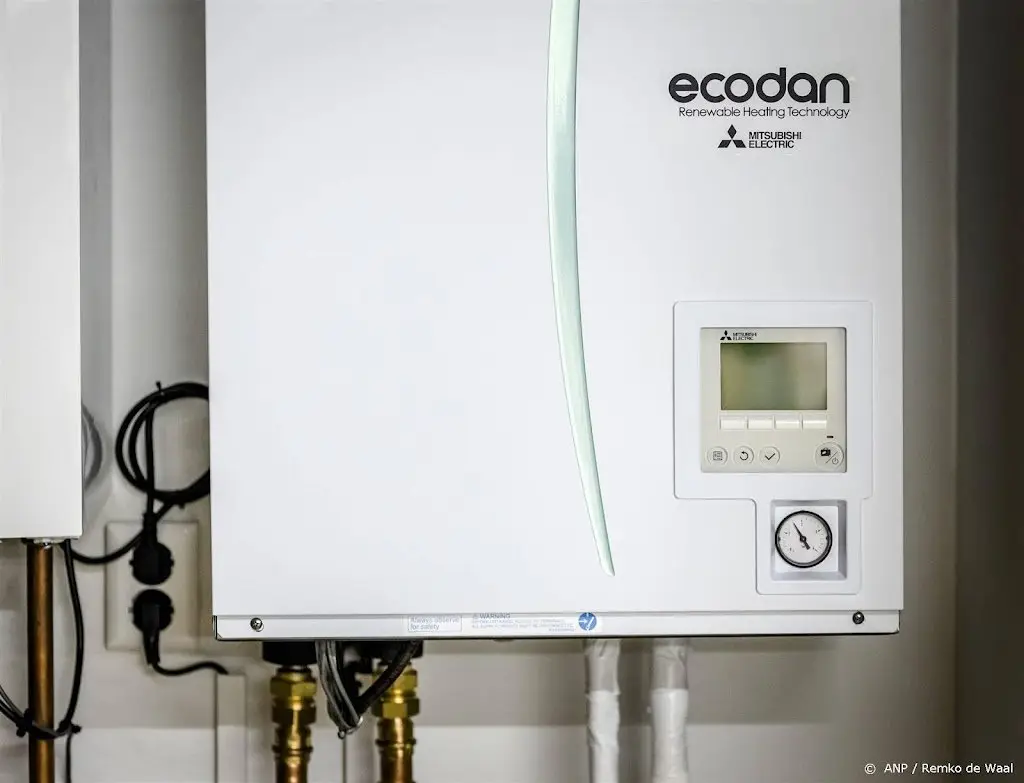
Hangt er bij jou een cv-ketel van een jaar of tien? Dan is de kans groot dat je hem na 2029 moet vervangen. Een nieuwe gasketel van zo'n €2.000 is dan volgens het kabinet in veel gevallen niet meer genoeg.
Woonminister Elanor Boekholt-O'Sullivan schreef woensdag in een Kamerbrief dat de slimme hybride warmtepomp vanaf 2029 de standaard moet worden als je ketel aan vervanging toe is. Volgens de NOS ben je dan na subsidie al snel zo'n €6.000 kwijt. Maar niet elke woning valt eronder.
De norm geldt alleen als je de ketel vervangt. Zolang je bestaande ketel het doet, mag hij volgens de NOS gewoon blijven hangen. Gaat hij kapot of is hij versleten, dan voldoet een gewone gasgestookte cv-ketel niet meer.
Een volledig elektrische warmtepomp mag ook. In de brief zegt de minister dat het kabinet die zelfs liever ziet, daar waar het kan. Kies je voor een hybride, dan moet die wel 'slim' zijn: hij moet kunnen verwarmen buiten de piekuren op het stroomnet of als de stroom goedkoop is, meldt vakblad Warmte365.
Zolang je ketel het doet, mag hij gewoon blijven hangen.
Vastgelegd is er nog niets. Volgens Warmte365 werkt het kabinet de regeling verder uit na de klimaatbesluiten van het voorjaar van 2027. De consultatie en de behandeling in het parlement staan gepland voor de zomer en het najaar van 2027. De aangepaste bouwregels moeten medio 2028 verschijnen. Volgens de minister is 2029 de vroegst mogelijke start, schrijft RTV Focus Zwolle.
Helemaal nieuw is het plan niet. In 2022 wilde het kabinet-Rutte IV de hybride warmtepomp al vanaf 2026 verplicht stellen. Onder het kabinet-Schoof ging dat plan van tafel, omdat PVV, NSC, VVD en BBB de kosten voor huishoudens te hoog vonden.
Een goed onderhouden cv-ketel gaat volgens de Consumentenbond gemiddeld zo'n 15 jaar mee, schrijft installateur Stemper. Bij een enquête onder 7.000 mensen hield ruim de helft het met de vorige ketel 15 jaar of langer uit.
Een ketel uit 2014 is in 2029 dus vijftien jaar oud. Een ketel uit 2019 is dan tien. De Consumentenbond raadt aan om vanaf een ketelleeftijd van tien jaar rekening te houden met vervanging en er alvast geld voor opzij te zetten. Met de nieuwe norm in het vooruitzicht wordt dat potje een stuk groter.
De NOS rekent voor dat een hybride warmtepomp inclusief installatie al gauw €8.000 kost, tegen €2.000 voor een cv-ketel. Met de bestaande subsidies kom je op ongeveer €6.000.
Vereniging Eigen Huis (VEH) maakt onderscheid tussen twee situaties, meldt RTV Focus Zwolle. Kan je huidige ketel blijven hangen, dan kost een hybride ongeveer €6.200. Moet de ketel ook vervangen worden, dan loopt het op tot ongeveer €8.300. In het rekenvoorbeeld van VEH gaat er zo'n €2.125 subsidie af. Dan houd je circa €4.075 of €6.175 over.
Bij een kapotte ketel zit je in die tweede situatie. Vergeleken met alleen een nieuwe ketel van €2.000 betaal je dan ruim €4.000 meer. Let op: dat subsidiebedrag geldt nu, niet per se in 2029. Hoe de subsidie al in 2027 verandert, lees je in Twijfel je over een warmtepomp? Wachten tot 2027 kan je ruim €1.100 subsidie kosten.
Daar staat wel een lagere energierekening tegenover. VEH rekent met deze besparing per jaar:
Hoeveel jij echt bespaart, hangt af van je isolatie, je gasverbruik, de energieprijzen en het type warmtepomp. Volgens VEH verdien je een hybride nu in ongeveer tien jaar terug, aldus de NOS. Wat de belastingschuif van 2027 betekent voor huishoudens met een ketel of een warmtepomp, lees je in Cv-ketel of warmtepomp? Zo pakt de energierekening van 2027 voor jou uit.
Zodat je weet dat als je ketel aan vervanging toe is er een kostenpost is en dat je daar rekening mee kunt houden.
Niet iedereen krijgt met de plicht te maken. Dit zijn de uitzonderingen die tot nu toe genoemd worden:
Hoe vast die uitzonderingen zijn, verschilt per bron. De NOS schrijft dat bewoners van appartementen en monumenten niet hoeven over te stappen. Volgens RTV Focus Zwolle gaat het om een voorlopige uitzondering bij de start in 2029. Huis aan Huis Enschede spreekt van een mogelijke uitzondering en meldt dat de precieze doelgroep nog wordt onderzocht.
Komt er bij jou in de wijk een warmtenet, dan hoef je straks waarschijnlijk geen hybride te kopen.
Bronnen: NOS, Rijksoverheid, RTV Focus Zwolle, Huis aan Huis Enschede, Warmte365, TPO, Stemper
De 87-jarige Maricarmen Abascal is overleden, meldt de huurdersvereniging van Madrid. Abascal werd vorige maand na zo'n zeventig jaar haar huurwoning uitgezet. Dat was de aanleiding voor massale protesten in Spanje tegen hoge prijzen op de woningmarkt, en een politieke crisis. Premier Pedro Sánchez zag zich daardoor genoodzaakt om nieuwe verkiezingen uit te schrijven.


