Wel.nl

Minder lezen, Meer weten.

Telegraph: Britse diensten doen onderzoek naar Duits spionagelek

LONDEN (ANP) - De Britse inlichtingendiensten hebben een onderzoek ingesteld naar aanleiding van de aanhouding van een voormalige Duitse inlichtingenchef, meldt de krant The Telegraph. Het voormalige hoofd van de Duitse buitenlandse inlichtingendienst BND August Hanning zit vast voor het kopen van geheimen nadat hij voor zichzelf was begonnen. Mogelijk waren daar ook buitenlandse geheimen bij.

De Britse evenknie van de BND, SIS, beter bekend als MI6, wil meer weten, aldus The Telegraph. Hetzelfde geldt voor de dienst die is gespecialiseerd in communicatie, GCHQ. Volgens de krant vindt bij de diensten een "systematisch intern onderzoek" plaats naar de gevoelige informatie die met Europese partners is gedeeld. Amerikaanse diensten doen volgens de krant hetzelfde.

Hanning heeft volgens de Duitse justitie als consultant geheimen gekocht via zijn voormalige stafchef, Manfred D., die tot voor kort nog voor de BND werkte. Die informatie is mogelijk ook bij buitenlandse diensten beland.


Rente op studielening omhoog voor kwart miljoen oud-studenten

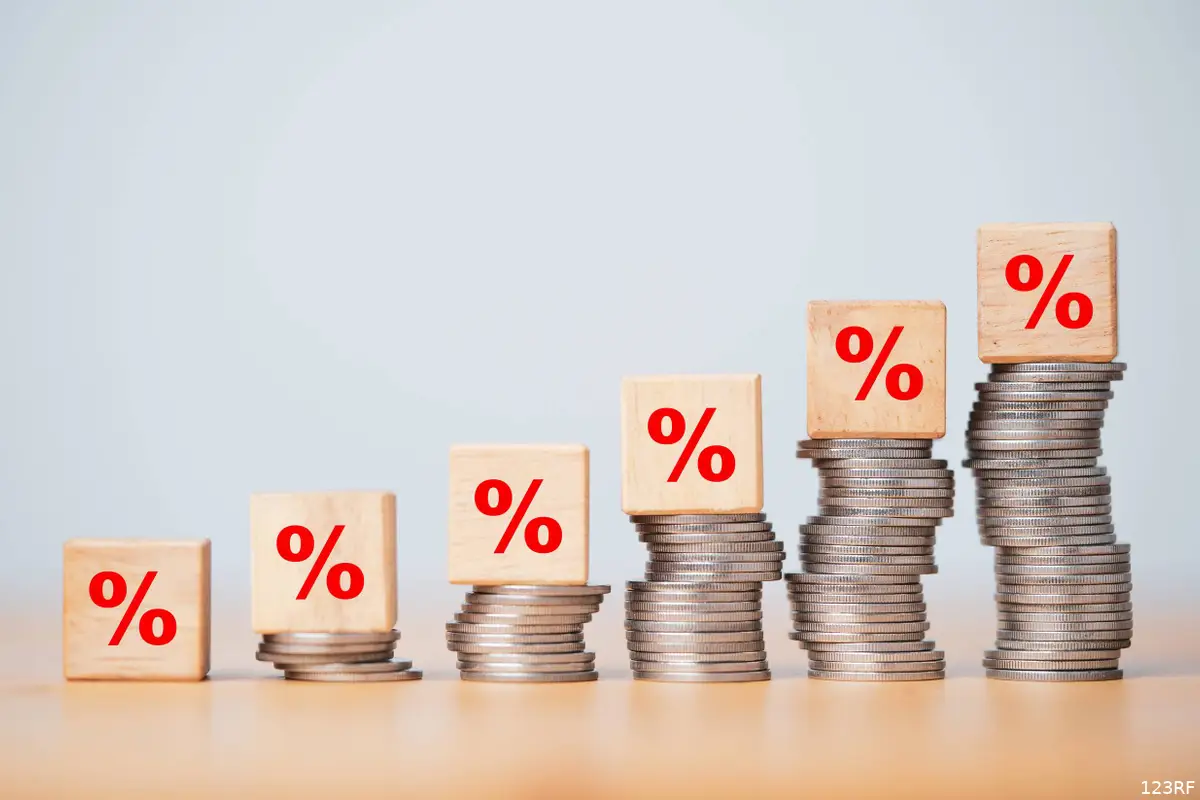
DEN HAAG (ANP) - De rente op studieleningen gaat volgend jaar met bijna een procentpunt omhoog tot 3,28 procent voor oud-studenten die de lening binnen vijftien jaar moeten terugbetalen. Voor studenten die er 35 jaar voor hebben, gaat de rente 0,37 procentpunt omhoog tot 2,7 procent. In totaal gaat de rente voor een kwart miljoen oud-studenten omhoog in 2027.

De nieuwe rentepercentages gelden niet voor alle oud-studenten. De rente wordt voor iedere oud-student elke vijf jaar opnieuw vastgesteld, dus het nieuwe percentage geldt voor oud-studenten die in 2026 nog een lening kregen en voor studenten van wie de rentevaste periode van vijf jaar afloopt. Voor iedere student wordt de rente elk jaar bijgesteld.

Mensen die voor 2015 een studielening zijn aangegaan, vallen onder het stelsel van terugbetalen in vijftien jaar. Alle studenten die erna zijn gaan studeren, kunnen hun lening in 35 jaar terugbetalen en betalen minder rente.

ISO

In januari 2023 werd de rente voor het eerst in jaren boven de 0 procent vastgesteld op 0,46 procent. Een jaar later steeg die naar 2,56 procent.

Het Interstedelijk Studenten Overleg (ISO) zegt in een reactie dat het nieuwe rentepercentage in de praktijk kan betekenen dat mensen "duizenden euro's extra" moeten afbetalen. De "forse stijging" van de rente toont volgens het ISO aan hoe "de rekening van economische onzekere tijden bij de student komt te liggen".


Waarom de wereldwijde schuld en rente elkaar in recordtempo opjagen (en niemand op de rem trapt)

De ene recordmelding na de andere komt uit de obligatiemarkt rollen.

De Franse staatsschuld bereikte deze week een naoorlogs record van 3,6 biljoen euro, ruim 60 miljard meer dan in maart. Dat is 119 procent van alles wat er in een jaar in Frankrijk wordt verdiend. De Amerikaanse rente op staatsobligaties met een looptijd van 30 jaar steeg dinsdag naar 5,62 procent, het hoogste niveau in ruim 24 jaar. En ook de Japanners betalen nu ruim 3,1 procent rente op hun staatsschuld, iets wat de afgelopen decennia niet eerder voorkwam.

Wereldwijd hebben landen en bedrijven samen 365 biljoen dollar geleend, berekende het Institute for International Finance. Landen geven nu meer uit aan rente dan aan defensie, investeringen in AI of de energietransitie. Hoe heeft het zo ver kunnen komen?

Wat is een obligatie?

Een obligatie was ooit een kleitablet, later een stuk perkament of papier. Dat helpt om het te begrijpen, zegt Peter Siks, beleggingsexpert bij onlinebroker Lynx, tegen de Volkskrant. 'Omdat je dan ook begrijpt dat je zo'n formulier kunt doorverkopen'.

Een obligatie is dus niks meer en niks minder dan een verhandelbare lening. Koop je een obligatie van 1.000 euro met een looptijd van 10 jaar en 5 procent rente, dan krijg je elk jaar 50 euro. Na het tiende jaar krijg je je 1.000 euro terug.

Die zekerheid maakt obligaties volgens Roelof Salomons, beleggingstrateeg bij BlackRock, ‘het fundament van de financiële markten'.

Waarom is rente niet altijd hetzelfde?

Rente is volgens Salomons ‘de prijs van tijd’. De hoogte hangt af van twee factoren: de looptijd en de kredietwaardigheid van de lener. Siks legt het zo uit: ‘Als een onbekende op straat mij aanspreekt en een ton vraagt voor een nieuw pannenkoekenrestaurant, vraag ik daarvoor een hogere vergoeding dan wanneer de Amerikaanse overheid mij benadert.’

Ook inflatie speelt mee. Beleggers willen een rendement dat hoger is dan de inflatie, anders leggen ze geld toe. Stijgt de inflatie, dan stijgt de rente.

Obligaties zijn verhandelbaar, en dat heeft een bijzonder effect: worden ze riskanter, dan daalt hun prijs en stijgt de rente. Stel dat een obligatie van 909 euro, met 10 procent rente, door risico nog maar 870 euro waard is. Dan is de rente al gestegen naar 15 procent.

Waarom stijgen de rentes nu?

Er spelen vier krachten tegelijk:

- Inflatie. Die loopt op door de Iran-oorlog. Hoe langer de zee-engtes en oliepijpleidingen in het Midden-Oosten dicht of gestremd zijn, hoe hardnekkiger de inflatie. Ondertussen draait de Amerikaanse economie als een tierelier, wat de consumptie en dus de inflatie verder aanjaagt.

- Strenge centrale banken. Na de energieschokken van de Russische inval in Oekraïne liep de inflatie gierend uit de hand. Dat willen de banken niet nog eens op hun geweten hebben. De Fed geeft niet toe aan de druk van president Donald Trump om de rente te verlagen en heeft de rente onlangs zelfs verhoogd.

- Het afbouwen van het schuldpapier. Na de eurocrisis en in de coronatijd kochten centrale banken massaal obligaties op. Nu bouwen ze die voorraden af, waardoor er minder geld beschikbaar is om obligaties te kopen.

- Enorme vraag naar kapitaal. Overheden moeten investeren in defensie en energie-infrastructuur, en AI-bedrijven lenen honderden miljarden voor datacenters. Zeker de ‘hyperscalers’ kijken volgens Salomons niet op een half procent rente meer of minder, wat de rente wereldwijd opdrijft.

Zorgenkinderen Frankrijk en de VS

Dan zijn er nog de zorgen over de houdbaarheid van staatsschulden. In Frankrijk is elke substantiële hervormingspoging van president Emmanuel Macron gestrand, met name op de pensioenen. Siks: ‘Frankrijk heeft geen fondsen van 1.600 miljard zoals Nederland die kent, ze hebben daar gewoon helemaal niks.’

Beleggers kijken met angst en beven uit naar de presidentsverkiezingen van volgend jaar, want een populistische president zal niet snel impopulaire maatregelen nemen. Ook de Amerikaanse schuld groeit met bijna 2 biljoen dollar per jaar, zo'n 250 miljoen dollar per uur.

Vicieuze cirkel

En dat is het probleem. Doordat rentes oplopen, moeten overheden meer lenen om hun rentelasten te blijven betalen. Daardoor lopen de schulden verder op en maken beleggers zich meer zorgen over de houdbaarheid. Die zorgen vertalen zich weer in een hogere rente, en zo verder.

Obligatiekoning Bill Gross, oprichter van de grootste obligatiehandelaar ter wereld, verzuchtte deze week: ‘Mijn overtuiging is dat je nu geen obligaties moet bezitten, met uitzondering van 1-jarige Amerikaanse staatsleningen.’

Meer weten?

Institute for International Finance (IIF): Global Debt Monitor

MoneyVox: Franse rente en staatsschuld

Ultra-wideband technology for Moon communication and ranging

europeanspaceagency posted a photo:

Ultra-wideband technology for Moon communication and ranging

The three terminals of ESA's UWB technology demonstrator.

Future missions on the Moon will need reliable ways to communicate and navigate in areas beyond satellite coverage. ESA's ultra-wideband (UWB) demonstrator will test wireless communications and precise ranging between a lunar lander and rover.

UWB is a short-range wireless technology that uses extremely short radio pulses to measure the time it takes signals to travel between devices. This allows the users to determine distances very accurately while also exchanging data.

On the Moon, where communication and navigation services are far more limited than on Earth, UWB could enable landers, rovers and astronauts to communicate and locate one another within centimetres. By testing UWB in the lunar environment, the payload will help assess the technology’s potential to support future operations on the Moon’s surface.

The demonstrator will fly on ispace Mission 3, currently planned for 2028. The payload consists of three UWB terminals: one installed on the lander and two on an ispace-Europe rover. As the rover moves across the lunar surface, the terminals will exchange signals to test both communications and ranging capabilities.

In November 2024, ESA awarded Romanian company Control Data Systems a contract to develop the demonstrator; the mission is set to become the first Romanian payload on the Moon.

Credits: ESA/CDS

When the Sun turns black

europeanspaceagency posted a photo:

When the Sun turns black

A satellite image shows the Sun with a black dot at its centre, resembling a glaring eye in the darkness of space. The black spot is not a camera failure, but an expected behaviour of imaging sensors under extreme illumination, known as the Black Sun effect – when the over-saturation of pixels causes very bright areas to appear dark.

Taken by a miniature camera flying onboard the Trisat-S nanosatellite, this image is exactly what the mission team was hoping for.

“The Black Sun effect might at first appear to be an unwanted imaging artefact, but for us it is a very useful visual feature,” explains Iztok Kramberger, principal investigator of the Trisat programme at the University of Maribor, Slovenia. “Together with the observations of Earth and the Moon, the ‘Black Sun’ serves as a visual reference that can be used by a spacecraft to determine its attitude and orbit.”

The team already investigated this effect with their Trisat-R mission, which was supported by the European Space Agency’s General Support Technology Programme. When Trisat-R’s camera wasn’t busy capturing images of the Sun, it snapped an image of the Earth as seen through the camera’s 2-mm lens, from thousands of kilometres away.

Launched in early September with a follow-up experiment, Trisat-S is a mission led by the University of Maribor in cooperation with Slovenian space company SkyLabs and carries six miniature cameras that cover the satellite’s surroundings in all directions.

“While Trisat-R provides observations from two cameras in medium Earth orbit, offering a different perspective of the Earth and the space environment, Trisat-S gives us the opportunity to collect simultaneous observations from six cameras in low Earth orbit,” adds Iztok.

“The resulting images are particularly valuable because we can compare them with our ground-based simulations to further refine and validate our visual awareness models, closing the loop between simulations, laboratory testing and actual spaceflight.”

Earlier this year, the tiny imaging technology was exposed to an intense radiation environment in CERN’s Charm facility – similar to the harsh conditions it would experience in space – to further evaluate how radiation protection mechanisms developed by SkyLabs ensure that the camera sensor maintains its functionality and imaging performance under radiation.

Alongside its imaging-based navigation experiments, Trisat-S is demonstrating advanced spacecraft hibernation technologies for future long-duration missions.

“Ultimately, our goal is to give a spacecraft the ability to understand where it is and how it is oriented simply by looking at its surroundings using highly miniaturised technology, which is an important step towards autonomous navigation far beyond Earth,” concludes Iztok.

Trisat-S was one of six commercial and educational CubeSats launched on Isar Aerospace’s Spectrum launcher in September 2026. This launch made Isar Aerospace the first European company to reach orbit with their own launch vehicle and the first company to complete ESA’s European Launcher Challenge.

Credits: University of Maribor

The Guardian

Latest news, sport, business, comment, analysis and reviews from the Guardian, the world's leading liberal voice

A ‘Godzilla-level’ El Niño is causing extreme weather conditions around the world – put your questions to our environment writers

Guardian journalists Jonathan Watts and Gabrielle Canon will be online from 4pm BST (11am EDT) today to answer your El Niño questions.

This year’s huge El Niño is causing climate chaos around the world. Temperate records have already been broken, with extreme heat reported from western Europe to California. Meanwhile, Bangkok is suffering massive flooding and the weather phenomenon is projected to cause a further 450,000 deaths globally by February.

Jonathan Watts, the Guardian’s global environment writer along with extreme weather reporter Gabrielle Canon will be online from 4pm BST (11am EDT) today to answer your questions on the unfolding crisis.

Continue reading...

Somewhere in the world

KTK's has added a photo to the pool:

Somewhere in the world

Feeling Autumn in the Sky

7RF01303.jpg

Somewhere in the world

KTK's has added a photo to the pool:

Somewhere in the world

The road, glowing golden in the morning sun.

7RF01302.jpg

Lanterns

lioil has added a photo to the pool:

Lanterns

Inside Shimabara castle

The Moscow Times - Independent News From Russia

The Moscow Times offers everything you need to know about Russia: Breaking news, top stories, business, analysis, opinion, multimedia

Russia Drops Criminal Case Against Children’s Hospice Founder Lida Moniava

Moniava had been charged with spreading “false information” about Russia’s army for a post about Ukrainian civilians killed in Russian attacks.

At Least 8 Killed in Overnight Russian Strikes on Ukraine

The strikes come as Russia and Ukraine have each promised to ratchet up attacks on the other.

At Least 24 Killed in Ukraine, Zelensky Condemns One of Russia's Most 'Vile Strikes'

The strikes come as Russia and Ukraine have each promised to ratchet up attacks on the other.

Russia Launches Heavy Strikes at Ukraine, Killing at Least 20

The strikes come as Russia and Ukraine have each promised to ratchet up attacks on the other.

The Register

Biting the hand that feeds IT — Enterprise Technology News and Analysis

Rails originator roasted over Rust boosterism

Last month at Rails World 2026, Ruby on Rails creator David Heinemeier Hansson gave a relentlessly optimistic keynote in which he suggested AI has all but eliminated the need for developers to manually write code. But perhaps DHH, as he is known online, shouldn’t delete his code editor quite yet. On Sunday, DHH posted about a test in which he had frontier agents implement and optimize his company’s Campfire group chat app in three languages: Elixir, Go, and Rust. He then compared the runtime performance of those versions with the original Ruby on Rails implementation. DHH’s post includes data that seemingly demonstrates the efficiency of the Rust programming language, and AI agent coding itself. But many observers came to another conclusion: Don't trust DHH’s benchmarks. As of press time, the post and accompanying chart garnered over 900,000 views. It showed the Rust rewrite of the chat app outperformed others by a wide margin on five tasks, including searching or posting a message. DHH did not say which AI services he used for these rewrites, but noted that each rewrite took only a few hours, as the original code itself, largely written in Ruby, is relatively compact. Many observers, notably advocates of other languages, quickly surmised from the source material that DHH had optimized the Rust results but didn't do the same for the other languages he tested. Whither high-level languages? Rewriting applications in Rust, often with the help of AI agents, seems to be a popular undertaking these days, with Microsoft's Copilot runtime, the pnpm JavaScript installer, and the Bun JavaScript toolchain all getting the Rust treatment. In DHH’s test, the Rust implementation handily bested the others across all five workloads, sometimes by a wide margin. To serve a “room page,” for instance, Rust knocked out 36,260 requests per second. In contrast, Ruby on Rails was only able to fulfill a paltry 241 requests, while Elixir delivered 722 requests, and even runner-up Golang only knocked out 3,860 requests a second. Rust executed the other tasks with similar alacrity, easily besting the other languages DHH used. The takeaway was obvious to DHH: Rewriting an application in Rust, or better yet having AI agents do the job, may very well result in major performance improvements for an app. DHH suggested that many factors go into choosing a programming language for a particular job, and execution speed is not the sole criterion. Rust can be agonizingly slow to compile, and for many, writing or even reading Rust code is an arduous job. DHH himself began developing Rails in 2003 while building Basecamp in the then relatively obscure Ruby programming language to ease the developer experience. He doesn’t seem to mind that Ruby ranked the slowest in his own tests. “I didn't care about [performance] when the pay-off was huge in terms of productivity and developer joy.” But AI agents don’t give a hoot about joy. “You really have to bury your head in the sand not to see that when agents write the code and validate the output, we need to adjust to a new reality,” he wrote. Chips on the table DHH’s ad-hoc test was quickly met with skepticism, criticism and outright mockery, especially on X. (It’s as if DHH’s conservative views on immigration and his work to bring yet another Linux desktop into the world didn’t give him enough headaches). “What worries me about the future of programming is you see this and don’t immediately know there must be something wrong with the results or what you actually measured,” wrote prominent Google engineer Jaana Dogan in an X response to DHH’s tests. Dogan did not elaborate on the test’s shortcomings, but many others, especially advocates of other languages, were more than happy to provide details. One Elixir advocate called DHH’s implementation “moronic,” while a couple of others actually rewrote the Elixir code to make its performance comparable to Rust’s. After that rewrite, the Elixir version of the app bested Rust’s performance on some tasks, despite further third-party Rust optimizations. DHH expressed surprise that others would assume a high-level language like Elixir or Ruby could even compete with a language like Rust, which runs closer to the metal. But he also noted on X that “It's not exactly extra points for Elixir if frontier agents can't find the magic ‘go fast’ switches.” Elsewhere, observers noted that the Rust rewrite got a lot more post-coding attention than the other implementations of Go and Elixir, both of which seemed to be quickly wrapped up after the initial agent requests. “You're not benchmarking languages, you're benchmarking how much attention each port got,” one observer wrote on X. Golang advocates were likewise unamused. “The benchmark was unfair. More time was put into the Rust code while the rest were one-shotted,” one wrote on X. Someone else even made their own chart showing how much more the Rust code was tuned compared to the quick passes on the other languages. None of these rebuttals actually negates DHH’s advocacy of using agents to code. But clearly, skipping a manual review of the resulting work will still leave a lot of potential gains on the table. ®

Europarlementariër Dirk Gotink, de laatste volksvertegenwoordiger van NSC, verlaat de partij: ‘Politieke doorstart waar ik geen onderdeel van wil zijn’

Gotink noemt de toenadering die de partij zoekt tot Mona Keijzer de aanleiding voor zijn vertrek. De ideeën van hemzelf en Keijzer over Europa liggen volgens Gotink dusdanig ver uit elkaar dat hij zich gedwongen voelt de partij te verlaten.

De aantrekkingskracht van tienermoeders op tv

‘Vier Handen op Eén Buik’ is minder erg dan ’16 and Pregnant’ ooit was. Toch is het smoezelige gevoel na kijken naar tienermoeders nooit ver weg.


In de nieuwe roman van Daisy Johnson woedt in elke vrouw een prachtige storm

In de nieuwe roman van deze Britse schrijver komen alle thema’s uit haar eerdere werk aan de orde. Opnieuw worden daarbij vrouwen op een knappe manier ontsluierd en mysteries verdiept.

MetaFilter

The past 24 hours of MetaFilter

The Failure of the Pandemic Novel

That Will There, Transcription, and Down Time each tease out the confluence of ambivalence, exhaustion, and over-compensative compliance that underscored pandemic life is compelling. Their characters' lack of clarity about Covid and its consequences is, ironically, its own form of clear-sightedness. It speaks to a very contemporary feeling of unease about Covid and the recent past and what this ultimately says about where the culture is heading.

Reef Country

Stueyman has added a photo to the pool:

Reef Country

Reef to the south of Lancelin Island.

VK: Voorpagina

Volkskrant.nl biedt het laatste nieuws, opinie en achtergronden

Knausgård is op zijn allerbest in het relatief dunne ‘De avondschool’