Bewoners in De Esch in Rotterdam kampten jarenlang met nachtelijke overlast door onder andere straatraces, schreeuwende jongeren en drugsgebruik. Een nachtelijk gebiedsverbod bracht de rust in de wijk terug. Nu dat verbod bijna afloopt, pleiten bewoners voor een permanente oplossing.
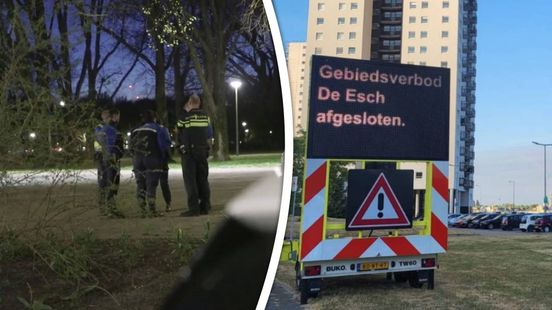
Bewoners in De Esch in Rotterdam kampten jarenlang met nachtelijke overlast door onder andere straatraces, schreeuwende jongeren en drugsgebruik. Een nachtelijk gebiedsverbod bracht de rust in de wijk terug. Nu dat verbod bijna afloopt, pleiten bewoners voor een permanente oplossing.

Het is voor het eerst sinds de Tweede Wereldoorlog dat een extreemrechtse politicus een functie als deze bekleed. Rausch krijgt onder meer de bevoegdheid om te bepalen wie wel en niet het parlementsgebouw in mag.
/s3/static.nrc.nl/wp-content/uploads/2026/10/06190813/061026VER_2037259992_1.jpg)
De overname van Warner Bros Discovery door mediaconcern Paramount Skydance ter waarde van 110 miljard dollar is rond.
/s3/static.nrc.nl/wp-content/uploads/2026/10/06190956/061026VER_2037260082_1.jpg)
Nigeria filed complaint over ineligible players in playoff
Fifa investigators aware of situation before tournament
Fifa allowed the Democratic Republic of the Congo to compete at this summer’s World Cup despite reports suggesting an internal investigation found that the country had fielded an ineligible player in qualifying.
The player in question, the goalkeeper Lionel Mpasi, starred for his nation at the tournament, including against England in the last 32. Mpasi, who was born in France and played for Les Bleus as a youth, had never completed the process of switching nationalities, Fifa reportedly found. No punishment was levied against the Congolese federation, Fecofa.
Continue reading...Order on two construction sites comes after Google failed to carry out the necessary environmental impact assessments
Google has been ordered to temporarily stop work on two datacentres in Finland after failing to do the necessary environmental impact assessments on its construction sites.
The planned datacentres in Muhos and Kajanni are part of a 13bn euro project across multiple sites in northern Finland by the technology company amid huge demand for space to house online infrastructure.
Continue reading...
Past portals, Lotte Lisa Ekkel
SAN FRANCISCO (ANP) - Teksten gemaakt door ChatGPT krijgen een watermerk in de Europese Unie. OpenAI, de eigenaar van de chatbot, laat weten het onzichtbare watermerk de komende weken in te voeren. Daarmee moet duidelijker worden dat een tekst door kunstmatige intelligentie (AI) is gegenereerd.
De maatregel wordt alleen in de EU uitgerold. Op deze manier wil OpenAI voldoen aan Europese regels rond AI. De AI-verordening verplicht aanbieders van kunstmatige intelligentie om door AI gegenereerde teksten op een machinaal leesbare manier herkenbaar te maken.
OpenAI legt uit dat zijn technologie voor tekstwatermerken een onzichtbaar statistisch signaal toevoegt aan de woordkeuzes van de chatbot. Een detector zoekt vervolgens naar dat signaal om te beoordelen of een tekst een OpenAI-watermerk bevat. Die tool is voorlopig alleen toegankelijk voor onderzoekers en deskundige organisaties die door het bedrijf zijn goedgekeurd.
Concurrent Anthropic meldde in augustus al met een watermerk voor zijn chatbot Claude te komen om aan de Europese AI-verordening te voldoen.
DEN BOSCH (ANP) - Joep Wennemars kan nog niet zeggen hoe goed hij eind oktober is bij de eerste wedstrijd van het schaatsseizoen. De 24-jarige schaatser van Team Essent moest afgelopen zomer herstellen van een liesblessure. "Ik vind dat ik niet op 100 procent ben", zo vertelde hij tijdens de teampresentatie in Den Bosch. "Ik weet niet of ik over een paar weken hard ga schaatsen of niet. Ik ga wel meedoen."
Wennemars was dit voorjaar gemotiveerd om aan het nieuwe seizoen te beginnen, maar merkte al snel dat ondanks de rust eerdere klachten niet verdwenen waren. "Ik voelde al snel dat het niet goed was en dat het lichaam niet in balans was", zei hij. "Ik dacht, dit is niet duurzaam wat ik aan het doen ben, ik kan niet zo door blijven rammen."
Uit onderzoek kwam naar voren dat het peesblad dat vanuit de buik over het schaambot naar de spieren loopt, losgelaten was. Dat is volgens Wennemars geleidelijk gebeurd. "We hebben alle trainingen laten vallen en ik ben teruggegaan naar de basis en vanaf nul weer gaan bouwen."
'Moeilijkste periode'
Wennemars vertelde dat hij de periode dat hij verplicht rust moest nemen zwaarder vond dan het drama dat hem overkwam op de Olympische Spelen van Milaan. Daar greep hij op de 1000 meter naast een medaille, toen de Chinees Lian Ziwen hem hinderde op de kruising.
"Datgene wat mij het meest dierbaar is - elke dag trainen en beter worden - werd me ontnomen, net als het gevoel dat ik de baas ben over mijn eigen lichaam en er alles mee kan doen", legde Wennemars uit. "Dit is emotioneel de moeilijkste periode die ik heb gekend. Maar ik ben ook heel dankbaar dat ik de stap heb gezet om goed onderzoek te doen, want ik voelde dat er iets niet goed was."
De schaatsers rijden van 30 oktober tot en met 1 november in Thialf het kwalificatietoernooi voor de wereldbeker.
PARIJS (ANP/AFP) - De Franse autoriteiten vervolgen een agent voor een incident waarbij een scholier gewond raakte. De politieman zou vorige week van dichtbij een traangasgranaat op de jongen hebben afgevuurd tijdens de scholierenprotesten.
De 14-jarige jongen, die Eden wordt genoemd, verloor daardoor veel tanden. Ook brak hij volgens de autoriteiten zijn kaak. "Hij kan niet meer praten en eet door een rietje", zei zijn moeder tegen Franse media.
Videobeelden van het incident in Saint-Ouen-l'Aumône zijn veel gedeeld op sociale media. De betrokken agent verklaarde tijdens verhoor dat de jongen zich verzette en dat hij daarop reageerde.
Justitie gaat daar niet in mee. Een aanklager stelde dat het afvuren van de granaat disproportioneel was. Daarom kan de agent, die inmiddels is geschorst, zich volgens hem niet beroepen op zelfverdediging.
Another week brings yet another open weights model and this one is huge — or at least it is for Europe's AI flag bearer Mistral, which has taken to calling the 1 trillion-parameter large language model (LLM) Le Chonk. Its product name is Mistral Large 4, which is a lot less fun than the cat-meme-inspired "very official" moniker Le Chonk. Nonetheless, the LLM is the French model-dev's biggest open weights release ever. At a trillion parameters, Le Chonk is squarely in frontier territory, and like most modern frontier models, it is multimodal, reasoning, and employs a mixture of experts (MoE) architecture with about 49 billion active parameters to keep serving costs low. Mistral didn't offer any guidance on hardware requirements in its release blog, but the model is still small enough to run reasonably on 8-way GPU boxes like Nvidia's HGX B300 or AMD's MI355X. We know far more about the hardware the model was trained on. According to Mistral, this Chonker was trained using roughly 3,800 Grace Blackwell GPUs — or around 52 NVL72 racks — in Mistral's own datacenters located in Europe on a corpus spanning more than 160 languages using a combination of supervised pre-training and reinforcement learning. Sovereign AI remains a major focus for Europe and Mistral is clearly cashing in on demand for frontier class models trained and run within Europe's borders. The model itself is currently in preview, but you won't have to wait long for its weights to drop. Mistral expects them to be live on Hugging Face and other model repos within the month. Early testing by independent benchmarking firm Artificial Analysis puts Le Chonk at a major disadvantage relative to OpenAI or Anthropic's flagship models. In the AI guru's intelligence leaderboard, Mistral Large 4 preview sits between DeepSeek V4.1 Flash and OpenAI's entry-level GPT6 Luna models. Having said that, Mistral's latest model outshines the United States' most capable open weights model, Thinking Machines Lab's Inkling, by a significant margin. So when it comes to non-Chinese LLMs you can actually download, Mistral does quite well. As you'd expect, Mistral's own benchmarks tell a far rosier story. Across coding, agentic, finance, and legal benchmarks, the model build shows its latest LLM trading blows with some of the top Chinese offerings from Alibaba, Moonshot, Z.AI, and DeepSeek. You can find their charts here, but as always take them with a grain of salt. One area Mistral is particularly proud of is Le Chonk's performance in cybersecurity workloads. The company claims the model is one of the strongest performers in cybersecurity benchmarks like Artificial Analysis' new Cyber index. This is a dig at proprietary American models from the likes of OpenAI and Anthropic, which have a tendency to refuse cybersecurity-related tasks that could be perceived as adversarial. As we previously reported, this is potentially problematic for customers trying to use AI models to red-team their own systems in order to identify vulnerabilities before someone else finds them. "Provider-level refusals can block legitimate vulnerability research and incident response, and where losing access to a capability mid-incident can itself become a critical security risk. ML4 pairs top-tier cyber performance with open weights and self-deployment, giving organizations both the capability and the autonomy to run advanced security work under their own policies," Mistral wrote in a blog post. According to Mistral, Le Chonk is only the first in a series of new models made possible by its €3 billion (about $3.4 billion) Series D funding round last month. The company already expects the model's performance to improve meaningfully as it continues applying reinforcement learning, which suggests a more potent Mistral Large 4.1 could be around the corner. If you'd like to give the model a spin before its weights drop later this month, it's currently available via Mistral's API. ®

Reframe is a poignant 5 minute short film made with AI tools by live-action cinematographer and DP Hiroki Shioya.
"With REFRAME, I tried to approach AI filmmaking in almost the same way I would approach a live-action film — thinking carefully about framing, lenses, light, blocking, performance, and the rhythm between shots.
The film took about three weeks to make, including a lot of testing, generation, editing, sound work, and color finishing.
And no, making the AI actors feel realistic was definitely not easy! One of the hardest parts was getting very subtle human behavior — small things like eye movement, the timing of a reaction, breathing, and slight changes in expression can make a huge difference between something feeling human and something feeling obviously AI-generated.
Character consistency was also a challenge. I'm happy with how the protagonist worked in this film overall, but it's definitely one of the areas I want to push much further in my next project."
Used ethically, AI can open doors for indie film creators.... (archive link) The low-costs of AI film production allowed the creation of Dreams of Violet, a docudrama based upon the January massacre in Iran. It was the first fully AI-generated film to premiere in the Tribeca Festival. For Reframe, Shioya used Cinema Studio 4.0. An advanced generation platform that allows 30+ camera movements, 4 camera types and 5 optically modeled lenses with adjustable aperture and focus. It comes with 50 color palettes. It generates shots that are up to 30-seconds long. Editing, color, sound design, subtitles, and final finishing were completed in post-production. Here is Shioya's Project Page for Reframe, showing all 523 shots that went into making this film.
Used ethically, AI can open doors for indie film creators.... (archive link) The low-costs of AI film production allowed the creation of Dreams of Violet, a docudrama based upon the January massacre in Iran. It was the first fully AI-generated film to premiere in the Tribeca Festival. For Reframe, Shioya used Cinema Studio 4.0. An advanced generation platform that allows 30+ camera movements, 4 camera types and 5 optically modeled lenses with adjustable aperture and focus. It comes with 50 color palettes. It generates shots that are up to 30-seconds long. Editing, color, sound design, subtitles, and final finishing were completed in post-production. Here is Shioya's Project Page for Reframe, showing all 523 shots that went into making this film.