The Guardian

Latest news, sport, business, comment, analysis and reviews from the Guardian, the world's leading liberal voice

EU’s ability to defend against invasion remains in doubt, finds official report

Fragmented infrastructure and reliance on US continue to hinder ‘defence readiness’, says European court of auditors

The EU’s ability to respond to a foreign invasion by 2030 remains in doubt due to a continuing reliance on the US and fragmented national defence systems, according to a report from its official auditor.

The European court of auditors (ECA) said the EU was much better prepared than before Russia’s full-scale invasion of Ukraine of 2022, but achieving its goal of defence readiness by the end of the decade would be difficult.

Continue reading...

Manchester synagogue attack: ministers seek to block M15 files from inquest

Government lawyers tell coroner disclosing intelligence would pose serious risk to national security

Ministers are seeking to block intelligence material from being heard at an inquest into the death of two men killed in the 2025 Manchester synagogue attack.

Lawyers for Shabana Mahmood, the home secretary, told a coroner on Thursday that disclosing the MI5 files would pose a serious risk to national security.

Continue reading...

There’s a quick way to slow climate change. Why isn’t everyone doing it? - video

Methane is a potent greenhouse gas that traps more than 80 times as much heat than carbon dioxide over a 20-year period and causes 25% of global heating today. We definitely don’t want this gas spewing needlessly into the atmosphere, but in 2023 that’s exactly what environment editor Damian Carrington found was happening when he reported on 1,000 super-emitting methane leaks across the globe. Now Turkmenistan, the worst country for mega-leaks, has begun to plug them. Damian tells Madeleine Finlay why some experts call stopping leaks the climate ‘emergency brake’ and reveals which countries are still failing to act.

Continue reading...

Billionaires hoarding wealth while the rest of us struggle need to ask themselves: what would Dolly do? | Rebecca Shaw

Every story about Dolly Parton’s generosity should shame the super-rich, who could easily make the world a better place for all

Since the moment the news broke that the great Dolly Parton had died, we have been inundated with all manner of Feelings. The internet is flooded with tributes to Dolly by people from all walks of life, who knew her personally or only from afar. There seems no end to the sharing of stories and thoughts about her, and in what feels like a miracle in this divided world, it has only been positive. Even on social media, where people tear down nice things like it’s their full-time job, I’ve seen nothing but adoration. She is not only beloved for her musical genius, but also for her generosity, her sense of humour, her support for other artists, her active care for marginalised communities, her attitude to living, her truly kind spirit.

I am one of these enthusiasts, of course. I have loved Dolly since I was a kid. I remember going to the Nashville country music museum in my 20s and seeing her handwritten lyrics for Jolene. A shiver went down my spine at the thought of 27-year-old Dolly writing that song, not knowing how far she would go, and the great good she would do for the world.

Continue reading...

‘I want to go further’: Justin Broadrick on retiring Godflesh, playing with Phoebe Bridgers – and his new band

A hernia may mean his screaming days are over, but the Napalm Death alum’s influence on metal echoes on in unexpected places – and with ‘heavy, ugly’ experiments in the pipeline, his passion for ‘outsider music’ remains strong

On 4 October 2024, Justin Broadrick felt a pop. The singer and guitarist of pioneering industrial metal duo Godflesh had felt pain in his groin for several years. After a coughing fit following a show in Sofia, Bulgaria, he knew he had a hernia. “It was a small knob in my groin,” says Broadrick. “I got back home and told my partner, and she was like, ‘Let’s watch how it goes.’” He continued to perform live for another year, wearing up to two hernia belts at a time. By the time he got it surgically treated in February this year, it was 13cm long.

The next month, Broadrick shared a picture of himself in hospital and announced that Godflesh’s near-four-decade career will soon end. His condition had been caused by the physicality of shouting over their music since he was 18; he just turned 57. If he were to do so again, he would risk blowing out his abdominal wall entirely. There will be two more studio albums – starting with this autumn’s reliably crushing Decay, recorded pre-surgery – and possibly some archival releases and remixes. But beyond that? Nothing.

Continue reading...

My dad died suddenly with no will. Am I morally obliged to share his estate with my estranged half-sibling? | Leading questions

It’s kind of you to wonder if you should change the way things were left, writes advice columnist Eleanor Gordon-Smith. But it’s possible his preference is already clear

My dad died suddenly earlier this year, with no will, and I am unsure as to how I should distribute the estate. We are talking about very modest sums of money – about £5,000 ($US6,750; $AU9,500) in total.

My dad was a very ethical person. While his death was unexpected, he had a sense it was coming. Around six months before he died, he arranged for the disposal of many personal effects. The lack of a will, given his self-discipline and preferences for forward planning, is odd.

Continue reading...

Two cousins hired a 4WD to find their missing Australian family in Nepal. Then ‘there was no more road’

As Santosh Swaminathan and Nathan Subramanian wait for the army to restore access into the areas where their loved ones had been, they are growing increasingly desperate

As the hot sun beats down in Kathmandu, Santosh Swaminathan and his cousin Nathan Subramanian take a break from searching for their missing loved ones to stop at a temple and pray.

After they lost contact with Swaminathan’s sister and her husband following the devastating flood last week, they flew from India to Nepal. But as they wait for the army to rebuild roads and bridges into the areas where their loved ones were, they’re getting desperate.

Continue reading...

Bucking Fastard review – Herzog’s starry twins soap provokes a syncing feeling

Venice film festival: Rooney and Kate Mara play the real-life Chaplin sisters who spoke in unsettling unison in this silly, pointless drama

Werner Herzog is such a unique film-maker that even a dud from him has some interest, but sadly a dud is what this is. It is a fiction feature based on a true story which – despite a few laughs – systematically wastes the audience’s time, as well as the talents of its formidable female leads, real-life sisters Rooney and Kate Mara. You can almost feel this pointless, aimless film making it up as it goes along, losing its way, line by line, scene by scene.

It is inspired by the story of twins Freda and Greta Chaplin from York in the UK; they eerily spoke in unison and in the 1980s were the subject of a highly publicised court case for harassing a neighbour. Herzog’s movie transplants their story to Ireland, in which the Maras play weirdly but comically interdependent sisters Jean and Joan Holbrook whose lives are sent in all sorts of loopy directions. Orlando Bloom plays the roguish neighbour who breaks the women’s hearts (Herzog imagines them as a short-lived throuple), and Domhnall Gleeson is a caring social worker who tries to make them less dysfunctional by taking their case after they move away from the scene of their sexual resentment and legal shame. (During the trial they shout out the spoonerism of the title.)

Continue reading...

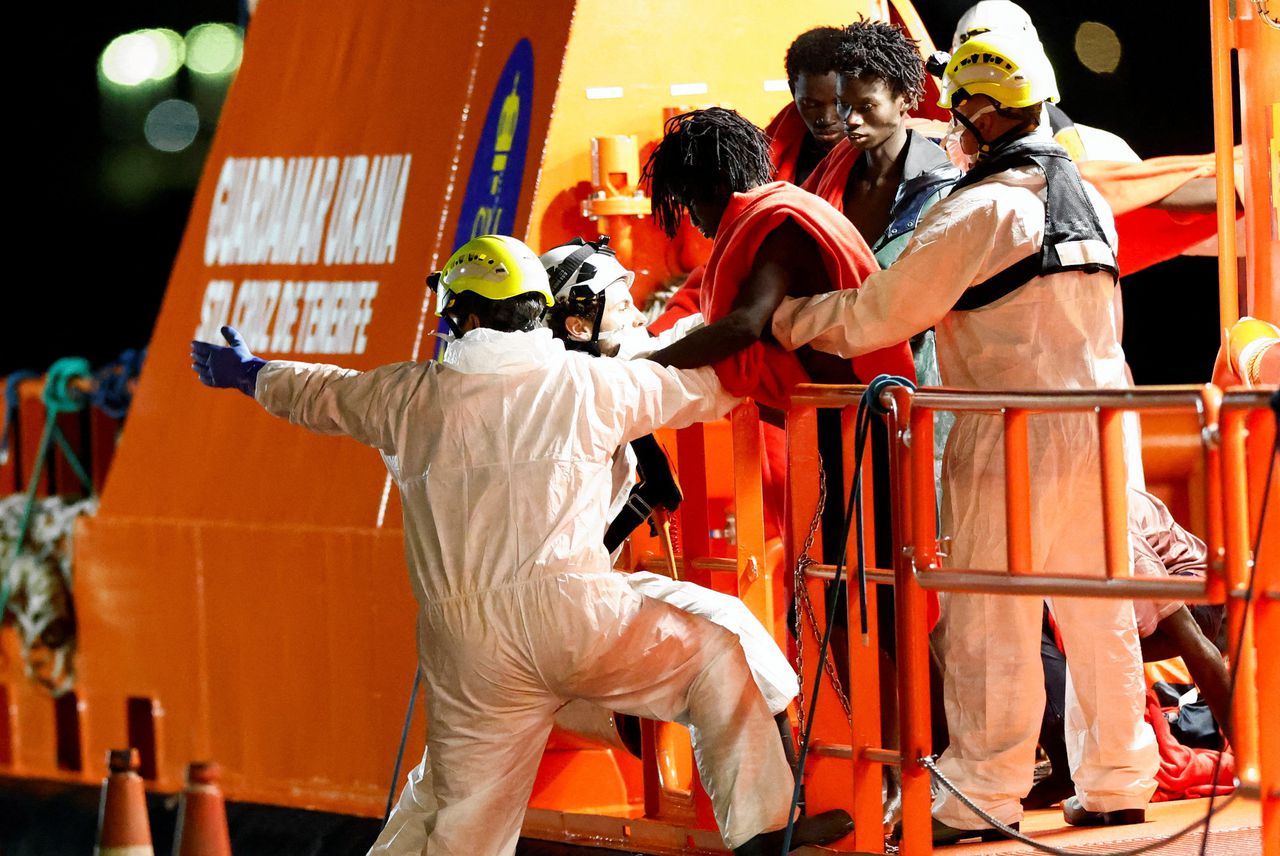
Ruim tachtig opvarenden vermist die vanuit Gambia de oversteek naar de Canarische Eilanden waagden, vermoedelijk verdronken

De Spaanse maritieme reddingsdienst vond woensdagochtend een kleine houten boot die vanaf West-Afrika koers had gezet richting de eilandengroep. De boot vertrok met 127 mensen aan boord, 44 opvarenden konden gered worden.

Rijnmond - Nieuws

Het laatste nieuws van vandaag over Rotterdam, Feyenoord, het verkeer en het weer in de regio Rijnmond

Ilse tovert oude patatzak om tot designertas: 'Ik gooi alles onder de naaimachine'

Een oude metrostoel, een gebruikte patatzak en versleten Feyenoord-sjaals. Voor de 24-jarige Ilse Veening zijn het geen spullen die je zomaar weggooit, maar materialen voor een nieuwe garderobe. De ontwerpster geeft bekende Rotterdamse iconen een tweede leven als mode-item.

Wel.nl

Minder lezen, Meer weten.

Rekenkamer: onzeker of EU in 2030 voldoende defensieparaat is

LUXEMBURG (ANP) - Ondanks miljardeninvesteringen in defensie is het onzeker dat de EU in 2030 zijn defensieparaatheid op orde heeft. Dat concludeert de Europese Rekenkamer (ERK) in een donderdag verschenen analyse. De coördinatie tussen Europese en nationale financieringsstromen over de inzet van de vele extra vrijgemaakte miljarden euro's moet worden verbeterd, adviseert de ERK. Als dat niet gebeurt, kan dat leiden tot versnipperde investeringen en dubbel werk, waarschuwt de Rekenkamer.

Als het extra geld niet goed wordt ingezet, kan dat bovendien leiden tot tekorten van defensiematerieel, belangrijke componenten en/of geschoold personeel, tekent de ERK aan.

De Europese Commissie stelde in maart 2025 dat de komende jaren 800 miljard euro nodig is voor de noodzakelijk geachte herbewapening van Europa. In 2030 moet Europa voldoende capaciteit hebben om tegenstanders af te schrikken en een goedlopende defensie-industrie hebben, zei voorzitter van de Europese Commissie Ursula von der Leyen vorig jaar maart.

Beleid verschoven

De ERK ziet dat het beleid van de EU en de lidstaten is verschoven van crisisrespons naar defensiegereedheid. De gecombineerde defensie-uitgaven van de EU-landen zijn tussen 2020 en 2025 met bijna 80 procent gestegen, meldt de Rekenkamer. Dit geld wordt gebruikt voor het vergroten van de militaire capaciteit en ondersteuning aan Oekraïne.

"De EU heeft diverse initiatieven gelanceerd om lidstaten te stimuleren samen te werken en hun defensie-inspanningen te bundelen. Toch is het cruciaal om oog te hebben voor de bestaande risico's", zegt ERK-lid Marek Opioła.

Leningen

De Rekenkamer maakt zich er zorgen over dat de EU steeds vaker gebruikmaakt van leningen die door de EU-begroting worden gedekt. Het gaat daarbij onder andere om 150 miljard euro van de eerder genoemde 800 miljard euro. Die heeft de Europese Commissie op de kapitaalmarkt geleend en dat vervolgens weer aan lidstaten geleend voor gezamenlijke defensieprojecten. De EU heeft daarnaast 90 miljard euro geleend voor Oekraïne, waarvan 60 miljard euro voor defensie is bestemd.

"Het toenemende gebruik van met schulden gefinancierde defensie-uitgaven en door de EU gedekte leningen kan de budgettaire houdbaarheid ondermijnen. Daardoor kan de vermindering van de overheidsschuld vertraging oplopen en de druk op de EU-begroting toenemen", waarschuwt de Rekenkamer.


Groei Franse economie lager door extreme hitte en droogte

PARIJS (ANP/BLOOMBERG) - De groei van de Franse economie zal dit jaar lager uitvallen door de extreme hitte en droogte van afgelopen zomer, waarin de landbouw schade opliep door tegenvallende oogsten. Dat zegt het Franse ministerie van Financiën op basis van een voorlopige schatting.

Volgens het ministerie wordt vooralsnog gerekend op een negatieve impact van 0,1 procentpunt door de hitte en droogte. Het ministerie heeft de schattingen voorgelegd aan een parlementaire commissie die onderzoek doet naar de gevolgen van het extreme zomerweer. Daarbij had Frankrijk ook te kampen met grote natuurbranden.

Daarmee lijkt de groeiverwachting van de regering van 0,7 procent voor heel 2026 nog verder uit zicht te raken, want vorige week werd de groei in het tweede kwartaal al neerwaarts bijgesteld door het Franse statistiekbureau Insee. In die periode was nu sprake van nulgroei. Eerder werd nog een plus van 0,2 procent gemeld. Daarnaast was de krimp in het eerste kwartaal iets groter dan eerder gedacht.


De Jonge: geen tunnelvisie in kabinet tijdens coronapandemie

DEN HAAG (ANP) - Het kabinet had geen tunnelvisie tijdens de coronapandemie, zei toenmalig zorgminister Hugo de Jonge. Volgens hem waren er voldoende reflectiemomenten en konden alle kabinetsleden altijd hun zegje doen, zei hij tegen de coronacommissie.

"Haalden ze altijd binnen wat ze hadden gewild? Nee, dat niet", zei De Jonge over ministers die iets anders wilden dan de kabinetslijn. "Soms kun je ook geen andere keuze maken, ook al zou je wel willen."

Volgens de huidige commissaris van de Koning in Zeeland was het kabinet "standvastig in het voornemen om kwetsbare mensen te beschermen en te voorkomen dat de zorg overbelast zou raken".

Onder anderen voormalig partijgenoot van De Jonge Mona Keijzer, die destijds staatssecretaris van Economische Zaken was, zei tijdens haar verhoor dat er "collectieve tunnelvisie" was in het kabinet. De Jonge zag het niet als tunnelvisie, maar als standvastigheid. "Waar niemand aan heeft willen, kunnen of durven tornen. Geen enkele serieuze partij heeft dat willen doen."


Eigen risico gaat een jaar later omhoog, maar je zorgpremie stijgt in 2027 alsnog fors: zoveel betaal je meer per maand

Het eigen risico blijft in 2027 op €385. De geplande verhoging naar €455 is een jaar uitgesteld, naar 2028. Klinkt als goed nieuws, tot je de zorgpremie erbij pakt: Zorgwijzer verwacht een stijging van 7 tot 9 procent. Wie nu €159 per maand betaalt, gaat straks waarschijnlijk €171 tot €174 kwijt. Per type huishouden pakt dat heel verschillend uit.

Uitstel, geen afstel

Uit gelekte Prinsjesdagstukken blijkt dat de verhoging van het eigen risico voor volgend jaar van de baan is. Het gaat om uitstel: in 2028 gaat het bedrag naar verwachting alsnog omhoog naar €455 per jaar. Dat meldt Nationale Zorggids op basis van cijfers van Zorgwijzer. Na die verhoging zouden in de jaren erna nog verdere stijgingen volgen, bedoeld om de zorgkosten in bedwang te houden. Of die plannen er ook echt komen, is onzeker: het minderheidskabinet heeft steun van de oppositie nodig.

Het eigen risico blijft gelijk. De rekening schuift naar de premie.

De premie stijgt wél

Zorgwijzer rekent voor 2027 op een premiestijging van 7 tot 9 procent. Dat is zo'n €12 tot €15 extra per maand per verzekerde, ofwel €144 tot €180 per jaar. De oorzaken zijn structureel: hogere lonen in de zorg, duurdere behandelingen, vergrijzing, en afnemende reserves bij zorgverzekeraars waardoor er minder buffer is om premiestijgingen op te vangen. Die premiestijging staat los van het eigen risico: ook zonder de geplande verhoging was de premie gestegen.

De gezonde twintiger zonder zorgtoeslag

Een twintiger die zelden naar de huisarts gaat en geen zorgtoeslag ontvangt, heeft niets aan het uitstel van het eigen risico. Die €385 maakt hij of zij toch nooit vol. Wat er wél verandert: €12 tot €15 extra premie per maand, zonder enige compensatie. Dat is €144 tot €180 per jaar erbij voor een verzekering die nauwelijks wordt gebruikt. Mensen die amper naar de dokter gaan en geen recht hebben op zorgtoeslag, krijgen geen financieel voordeel terug.

Het gezin met twee volwassenen

Kinderen onder de 18 zijn gratis meeverzekerd, maar beide ouders betalen elk de hogere premie. Een gezin met twee volwassenen is in 2027 naar schatting €24 tot €30 per maand meer kwijt, ofwel €288 tot €360 per jaar. Gezinnen met een lager inkomen kunnen aanspraak maken op zorgtoeslag. De verwachting is dat die in 2027 iets stijgt, omdat de zorgpremies met enkele tientjes per maand omhoog gaan. De definitieve zorgtoeslag voor 2027 is echter nog niet bekend. Die bedragen worden pas op 15 september, Prinsjesdag, bekendgemaakt.

De chronisch zieke 60-plusser

Wie jaarlijks het volledige eigen risico opmaakt, merkt het uitstel het sterkst. Had het eigen risico wél gestegen naar €455, dan was deze groep €70 per jaar extra kwijt geweest bovenop de premiestijging. Die €70 valt nu weg. Maar de premie stijgt ook voor chronisch zieken met €144 tot €180 per jaar. Per saldo betalen zij in 2027 dus meer dan in 2026, maar minder dan wanneer het eigen risico ook was verhoogd. Chronisch zieken worden tegemoetgekomen via gemeenten, waarvoor 350 miljoen euro is gereserveerd. Maar gemeenten geven aan dat die regeling lastig uitvoerbaar is, en het risico bestaat dat iedere gemeente de doelgroep anders bepaalt, waardoor mensen niet overal op hetzelfde kunnen rekenen.

Niemand betaalt in 2027 minder voor zorg dan nu.

Wie wint er eigenlijk?

De premiestijging raakt iedereen. Het uitstel van het eigen risico maakt alleen verschil voor wie dat eigen risico ook daadwerkelijk volledig opmaakt, en zelfs dan compenseert het de hogere premie niet volledig. Gezonde verzekerden zonder zorgtoeslag zijn per saldo het slechtst af: zij betalen meer premie zonder daar iets voor terug te krijgen. Het volledige plaatje, inclusief de definitieve zorgtoeslag voor 2027, volgt op Prinsjesdag. Eerder schreef Welingelichte Kringen al over de AOW-bezuiniging die definitief van tafel ging en over hoeveel minder WW je straks krijgt per salarisniveau.

Bronnen: Nationale Zorggids, Zorgwijzer, Overstappen.nl


Trump: geen belastingvoordeel voor scholen die minderheden helpen

WASHINGTON (ANP) - De Amerikaanse regering van president Donald Trump heeft nieuwe plannen aangekondigd om positieve discriminatie tegen te gaan, schrijft The New York Times. Volgens de nieuwe regels verliezen alle scholen met hulpprogramma's voor minderheden hun belastingvrije status. Die maatregel kan scholen veel geld kosten.

In de Verenigde Staten hebben bepaalde minderheden, zoals zwarte mensen of latino's, veel minder kans om bijvoorbeeld te gaan studeren dan witte mensen of Amerikanen met een Aziatische achtergrond. Sommige onderwijsinstellingen hebben daarom programma's opgezet om die kansenongelijkheid recht te trekken.

Trump ziet dat als discriminatie ten opzichte van witte of Aziatische mensen, omdat die niet in aanmerking komen voor die hulp.

De nieuwe regels gelden voor alle onderwijsinstellingen, van basisscholen tot universiteiten. Het betekent niet alleen dat de scholen zelf meer belasting moeten afdragen, maar ook dat donateurs niet meer belastingvrij kunnen schenken.


VK: Voorpagina

Volkskrant.nl biedt het laatste nieuws, opinie en achtergronden

Franse bende onder leiding van een 18-jarige wilde Kylian Mbappé ontvoeren

OM moet van rechter namen psychiaters geven aan ouders overleden Milou (17) – en doet dat vandaag nog

De Speld

Uw vaste prik voor betrouwbaar nieuws.

Kinderfeestje heeft als thema ‘tyfus luid schreeuwen terwijl jij brak bent’

​Het kinderfeestje waar de 32-jarige Joep voor is uitgenodigd deze zondagochtend, heeft als thema: ‘Tyfus luid schreeuwen terwijl jij brak bent’. “Dit is al het vierde kinderfeestje met dit thema dit jaar”, zucht Joep.

“Om me heen schieten de kinderen uit de grond als kool. Vroeger was het nog lekker voetbal kijken en pilsen op zondag, maar dat is inmiddels verleden tijd.” De single begrijpt niet goed waar deze nieuwe ontwikkeling in thema’s vandaan komt. “Ik herinner me dat ik als kind vaak kinderfeestjes had met thema’s zoals dino’s, piraten en prinsessen, Pokémon, superhelden, cupcakes versieren, dat soort shit. Niet dit.”

De ouders van het kindje hebben al laten weten dat er verschillende leuke spelletjes op het programma staan: zoete cupcakes happen nét wanneer jij je kotsmisselijk voelt, met z’n alle aan Joep zijn benen hangen en krijsen tot de paracetamol uitwerkt.

Joep weet nog niet zeker wat hij aandoet maar wel al wat hij meeneemt. “Waarschijnlijk houd ik gewoon weer de kleren aan van de avond ervoor, dat werkte op het kinderfeestje van Vlinder ook prima. Wat ik meeneem is een liter fles cola en rum.”

​

&''


The Register

Biting the hand that feeds IT — Enterprise Technology News and Analysis

Drowning in CVEs and thirsty for answers? Try CTEM

A decade or two ago, board executives asked "why should I care about cybersecurity?" Five years ago, they were asking "Are you patching our software vulnerabilities?" Now, they're starting to ask: "Are we actually secure?" They might want a simple 'yes' or 'no' initially, but eventually they'll say the most dreaded thing of all, and it'll be a demand, not a question: "Prove it". Traditional vulnerability management and patching, won't survive that conversation. It's why a relatively new approach is gaining traction: Continuous Threat Exposure Management (CTEM). What's wrong with vulnerability management We define security flaws using Common Vulnerabilities and Exposures (CVEs), and we tell each other how bad they are by assigning the Common Vulnerability Scoring System (CVSS) to them. There are three problems with that. There's a firehose of CVEs, the CVSS scores aren't helpful when triaging them, and AI is about to make the whole thing much worse. CISOs are drowning in CVEs. The industry has spent decades creating tools that churn out vulnerability data and others that consume it. Few if any tell you which vulnerabilities an attacker could use to hurt you in your environment. The volume of CVEs is making traditional vulnerability management (patch it and forget it) less tractable every year, says Drew Vanover, principal security strategist at Horizon3. "Think about the last patch release that Microsoft put out," he says. "There were over 500 fixes in one patch cycle. That is incomprehensible. Nobody is going to be able to go through, vet, prioritize, and deploy all of those in a way that is truly considered safe." The number of CVEs created each year has been soaring, putting more pressure on the US’ National Institute for Standards and Technology's National Vulnerability Database, which has now been backlogged for years. NIST threw up its hands in April and effectively declared CVE bankruptcy. The US Department of Commerce highlighted the second issue (that current severity metrics aren't useful) as part of a report this May. Aside from launching a zinger at the NIST by saying that the NVD was poorly managed, it also suggested that it stop assigning CVSS scores altogether. These are highly subjective, it said. They also depend on exactly what the exposed system is doing in a particular organization's infrastructure. Is a critical severity score in a product important if only one sandboxed system ever interacts with it? Or could an attacker chain three apparently innocuous vulns to cause damage that a business executive would care about? AI will make vulnerability management harder These complex problems are a headache, but AI is about to turn it into a full-on migraine. Frontier LLMs like Claude's Mythos are already surfacing zero-days at scale, heralding a flood of CVEs. They don't just find bugs at scale; they also work much more quickly than their human counterparts to create and weaponize exploits. This makes it even more important that organizations patch the right bugs quickly. The Cloud Security Alliance now describes an asymmetric vulnerability cycle in which attackers can use AI to discover and exploit vulnerabilities more quickly, (increasingly before patches are even released), while organizations are taking longer to patch them. What is CTEM? Something has to change. Gartner figured this out in 2023, when it named CTEM a top cybersecurity trend. This is a way of staying on top of your vulnerabilities by triaging them properly. To do that, you have to go beyond the technical implications of a security flaw and understand what it really means for your business. Gartner lays out five steps to CTEM: ● Scoping Find the assets that carry significant business impact and prioritize them. ● Discovery Find how they're exposed by analyzing their weaknesses in depth. ● Prioritization Rank those exposures based on real business risk. ● Validation Test out the vulnerabilities to see if they're exploitable. ● Mobilization Fix them with a proper incident response plan. How automated pen testing helps manage vulnerabilities This approach promises to nail the security flaws that matter to an organization, but it's also more complex than traditional vulnerability management. It needs automation, which is what Horizon3 is providing with NodeZero. Scoping out systems is a commodity practice these days. So is discovery. Horizon3 is leaving those to partners so it can focus on the parts of the CTEM framework that aren't yet easy for customers to solve. Those are prioritization by business impact, and mobilization. NodeZero runs penetration tests across an organization's infrastructure and documents the exploitable paths with evidence a defender can follow. The output is the wheat sifted from the chaff; a shorter list of exposures that security teams and developers can focus on. The impressive part here is the chain-of-attack behavior. NodeZero probes for weaknesses, exploits them, and then pivots based on what it finds. This means it adapts to the environment to extend its attack, just as a real attacker adapts attacks and moves laterally through systems. This approach is based on a deterministic machine learning expert system rather than a general LLM, explains Vanover. "A good analogy is to think about the medical profession," he says. "A GP is your general LLM trying to cover everything. They know a little bit about a lot, but they aren't the experts, and that's where you start having hallucinations and guesses and misses." The company only uses generative AI for specific tasks. Using it to parse a two petabyte S3 blob looking for sensitive data or identifying high-value credentials, with data staying inside the customer's boundary via AWS Bedrock, for example. What it doesn't do is run amok spawning rogue agents in your system. Vanover says the value here is in proving that you've clobbered load-bearing security bugs. "If we say that we can exploit something, it's because we did, and we'll show you the proof in the platform," he says. The next step is closing the loop by retesting the exploit after it's been dealt with. Teams get to close tickets because NodeZero can no longer traverse the attack path. That is a testable definition of "fixed" and one that translates into a risk metric a CFO can read. Horizon3 also wants to solve customers' tool sprawl problems with a single product that handles all of the heavy CTEM lifting. A common failure mode of enterprise CTEM programs is a stack of vendors whose handoffs create precisely the blind spots the framework was meant to eliminate. That disappears when it's all under one service. Is automated penetration testing safe? CISOs might be nervous letting an autonomous penetration testing system loose on production systems. It sounds like something that could break running processes. Why not just test against a digital twin instead? Testing in production is the safest way to find bugs, retorts Vanover. That's because environments drift frequently, especially in an agile world driven by short development sprints and automated changes to code. If a user changes a password or a team pushes a feature fragment, a digital twin system won't reflect reality. So Horizon3 focuses on strong production guardrails instead. "I don't need to ransom your system to prove to you that I can ransom it," Vanover says. "If I can get on the system, install a remote access tool, create a file, encrypt the file, and delete that file, I've just proven that I can ransom your system." He says Horizon3 has run more than 320,000 production tests across customer organizations. These include some that are especially nervous about what's poking around in their systems, such as the NSA and the largest medical records processor on the planet, along with a couple of large healthcare providers. Where can I start with CTEM? Gartner's CTEM framework is powerful, but it might also be daunting for CISOs. Vanover advises them to begin by picking one thing and doing it well. "No organization is going to implement CTEM in a year. That is a recipe for failure," he says. "Break it down. Look at places for the low-hanging fruit." You could do worse than look at what systems are actually reachable instead of blindly trusting an asset inventory that might be out of date. The race is on to embrace CTEM, because metrics like the number of patches applied won't satisfy the board for much longer. They don't describe how much exploitable surface still exists. The point of running the CTEM loop is to move reporting from activity to outcomes, so that the board gets to see fewer exploitable paths and a smaller blast radius. The new goal is to prove that a security control worked, not just that you paid for it. Want to operationalize CTEM but don’t know where to start? Check out this whitepaper from Horizon3

Meest prestigieuze wetenschappelijk tijdschrift ter wereld schrijft absurde apologie Jason Arday

Niet in de OneWorld, niet in Het Parool, niet in de Volkskrant, niet in de Kijk, niet in de Zo Zit Dat, niet in de Quest, niet in The Guardian (zeker niet in The Guardian, daar nemen ze de waarheid serieus) maar in Nature, het meest prestigieuze wetenschappelijke tijdschrift ter wereld, staat nu een HOOFDREDACTIONEEL COMMENTAAR (dus geen ingezonden brief of een door onder werkdruk bezwijkende peers gereviewd artikel) waar de honden echt geen brood van lusten. Onder de kop 'The death of Jason Arday must prompt deep reflection' staat een letterbrij met van alles, behalve diepe reflectie. 

Geen enkele diepe reflectie over hoe het kan dat iemand die over van alles en nog wat liegt hoogleraar in Cambridge kon worden. Geen enkele diepe reflectie over waarom iemand die alleen maar platitudes uitkraamde door de internationale media als een academische held werd gepresenteerd. Geen enkele diepe reflectie over waarom Jason Arday de politie en een duur advocatenkantoor afstuurde op de journalist die netjes onderzoek deed naar zijn plagiaat. Geen enkele diepe reflectie over de verzinsels van Arday over zogenaamde racistische aanvallen die hij te verduren kreeg. Geen enkele diepe reflectie over waarom het nota bene die rare engnek Nathan Cofnas was die de academische omerta over Arday doorbrak. Geen enkele diepe reflectie over de zelfmoord van de Japanse wetenschapper Yoshiki Sasai na terechte kritiek op zijn artikel in nota bene Nature. Niks. Nakkes. Nada. 

Wat er wel staat is modieuze bagger over hoeveel aandacht er in de media (overigens zou Matt Walsh, de schrijver van deze parodie op een wetenschappelijk artikel die door Nature wordt aangehaald, ook met pek en veren van de universiteit gejaagd moeten worden) was voor Arday en over de rol van racisme bij de kritiek op een hoogleraar aan een van de meest prestigieuze universiteiten ter wereld die een rare lulmeier blijkt te zijn. Dat is leuk voor een verontwaardigde influencer die wat likes op Instagram wil scoren. Dat is voor een eminent wetenschappelijk tijdschrift echt ver beneden de maat.   

En nogmaals, dit is Nature hè, niet de Donald Duck (of Science, dat is ook een niet te harden lifestyleblaadje geworden, red.). Je zou trouwens verwachten dat er in Nederland kwaliteitskranten zich bezighouden met deze reflectie, maar bij de Volkskrant hadden ze tot voor kort geen idee wie 'die Ardy' is en bij NRC zijn ze te druk met zichzelf. Dus hee. Dan stellen wij de vraag toch gewoon: waarom zou de Nederlandse belastingbetaler in vredesnaam instellingen financieren die meedoen aan een rat race waarin de hoogste beloning een publicatie in dit door volkomen geschifte idioten geleide vuilnisvod is? Minister Letschert? KNAW? Robbert Dijklul? Iemand die daar een antwoord op weet?