Social

Even voor de duidelijkheid: deze vliegen binnenkort dus ook per dozijn uit die enorme moord-drone THUNDER, en daarna is niets in een straal van VIERHONDERZESTIG KILOMETER nog veilig. Maar Altius 700 hoeft dus niet per se 460 kilometer af te leggen hè, het kan die brandstof ook 4 uur lang besteden aan het 'loiteren' (rondhangen) boven een positie tot een doelwit zich aandient. En toch voorzien we een gunstig eindresultaat van al deze ontwikkelingen. In de nabije toekomst is oorlogsvoering namelijk een kwestie van drone vs drone, en daarmee raken we zo ver verwijderd van de notie van menselijke slachtoffers, dat we een oorlog na de drone-fase gewoon als afgerond beschouwen. Behalve in het Slavische Slachthuis, dat was de hybride voorloper. Meer beeld na de breek.
Afgelopen april: per Apache
SocialStraks per dozijn geleverd door moord-drone uit de hel Thunder
SocialOok geleverd vanuit uw achterbak trouwens (zie 0:16)
Social

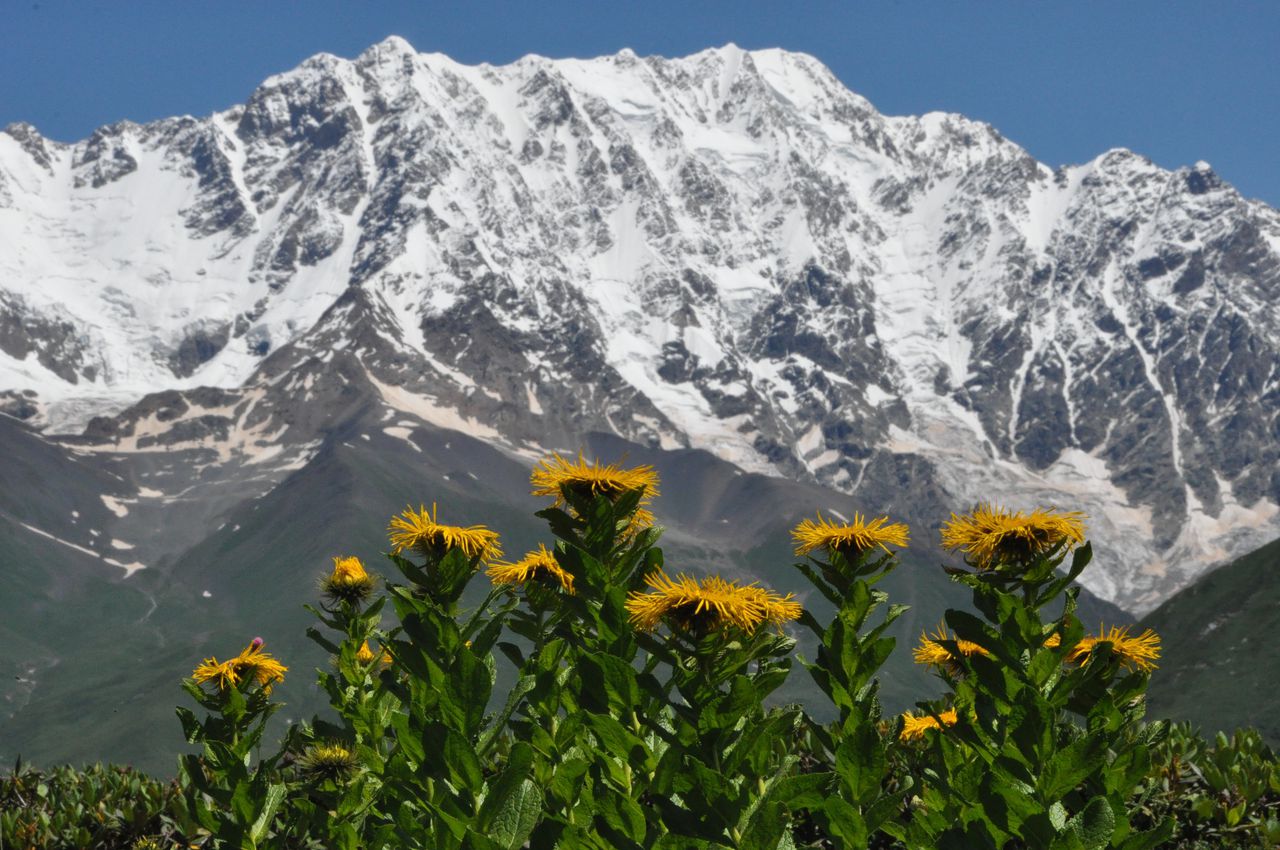
Door klimaatverandering doen steeds meer plantensoorten hun intrede op Europese bergtoppen. Maar wat gebeurt er met de soorten die juist van de kou houden?
OVERASSELT (ANP) - De politie heeft donderdag wederom wapens aangetroffen in het onderzoek naar de gebeurtenissen in Overasselt. Die worden meegenomen in het lopende onderzoek naar de schietpartij in de Gelderse plaats, meldt de politie.
PARIJS (ANP/AFP/DPA) - Frankrijk beleefde afgelopen maanden de heetste zomer sinds het begin van de metingen in 1900, meldt weerdienst Météo France. Het was dag en nacht gemiddeld 24 graden. De maximumtemperaturen lagen 4,8 graden hoger dan normaal in dit seizoen.
Eerder werd al bekend dat afgelopen 23 juni gemiddeld de hoogste temperaturen ooit werden gemeten in Frankrijk. Ook telde het land liefst 53 dagen met een hittegolf, veel meer dan het vorige record uit 2022 (33 dagen). Daarnaast was het veel droger en kampte Frankrijk met tal van bosbranden.
De weerdienst benadrukt dat zomers zoals deze zo goed als onmogelijk zouden zijn zonder de door mensen veroorzaakte klimaatverandering.
Frankrijk was niet het enige land in West-Europa met de heetste zomer ooit gemeten. Ook in Nederland, België, Oostenrijk en het Verenigd Koninkrijk werd het niet eerder zo warm in de zomermaanden.
PARIJS (ANP/AFP) - De Amerikaanse ruimtevaartbedrijven SpaceX en Blue Origin schrappen hun komst naar een ruimtevaarttop in Parijs volgende week. Dat meldt het Franse ministerie dat verantwoordelijk is voor ruimtevaart. Ook de Amerikaanse bedrijven Stoke Space en Starcloud hebben afgezegd.
SpaceX is het ruimtevaartbedrijf van Tesla-topman Elon Musk en Blue Origin is van Amazon-oprichter Jeff Bezos. Nieuwssite Politico had eerder deze week gemeld dat het Witte Huis druk had uitgeoefend op de ruimtevaartbedrijven om de komst naar de top op 9 en 10 september af te blazen. Volgens Politico zou hun aanwezigheid als een soort steun voor EU-beleid kunnen worden gezien.
Ook zou Frankrijk de top niet hebben gecoördineerd met de Amerikaanse regering en zou Frankrijk kritiek hebben geuit op Amerikaanse praktijken om de concurrentie te beperken. Dat alles zou er dus voor hebben gezorgd dat het Witte Huis niet wil dat de bedrijven daarheen gaan. Het Witte Huis wilde geen commentaar geven aan het Franse persbureau AFP.
Slovenian wins stage 12 as Mas strengthens position
Tim Merlier claims stage two in Tour of Britain
Spain’s Enric Mas extended his overall lead in the Vuelta a España with a late attack on his rivals as Slovenia’s Jakob Omrzel won stage 12 to Calar Alto on Thursday.
Movistar rider Mas burst out of a chasing group including red jersey contenders Primoz Roglic and Felix Gall with around 13km of the mountainous 166.6-km ride left and powered away. Roglic and Gall, who began the day second and third on general classification, could not respond as Mas finished 27 seconds clear of Roglic to strengthen his hold on the race.
Continue reading...The lack of justice for Daphne Caruana Galizia in Malta casts a shadow on reporters everywhere
The acquittal of Yorgen Fenech, who was on trial in Malta for involvement in the murder of the journalist Daphne Caruana Galizia, is a devastating blow for justice and press freedom. Nine years after her car was blown up, it seems increasingly unlikely that anyone will be held to account for ordering and paying for her death. Mr Fenech’s admissions that he knew about the murder before it happened, and gave money to the middle-man who paid the killers, make it hard to understand why he was found not guilty on the lesser charge of association.
All killings of journalists are wrong. The bomb placed in Caruana Galizia’s car was especially shocking, as such brazen violence is usually associated with war zones or states overrun by organised crime. The fact that this acquittal came two months after those of three men accused of murdering another journalist, Lyra McKee, in Northern Ireland, adds to a grim impression of impunity for killers. While McKee is not thought to have been targeted in the way that Caruana Galizia was, the inability of police and prosecutors to secure convictions in either case points to wider problems.
Do you have an opinion on the issues raised in this article? If you would like to submit a response of up to 300 words by email to be considered for publication in our letters section, please click here.
Continue reading...Student protesters among those hacked, says digital rights group, though Aleksandar Vučić’s government denies spying
At least 14 people from across Serbian civil society were targeted with advanced spyware earlier this year in what the digital rights group Share Foundation said was the largest documented wave of such infection in Serbia to date.
The wave of spyware infections was discovered in August after Apple notified people in 110 countries that they had probably been victims of mercenary spyware.
Continue reading...Abductions are resurging and may be spreading to new areas – with young children among the victims. A military response alone won’t work
Early last month, Nigeria’s government announced the largest single-day hostage rescue in its history, with the freeing of 300 people who had been taken in raids in two north central states. Celebrations were short-lived. Barely a fortnight later, gunmen abducted up to 600 worshippers from a mosque in Niger state. Nigerians paid kidnappers nearly $6m in ransoms in the year to June, according to a new report from the Lagos-based consultancy SBM Intelligence – more than triple the total in the previous 12-month period. More than 7,800 people were abducted, a two-thirds increase, and more than 1,100 killed, including almost 900 civilians.
When Boko Haram abducted almost 300 schoolgirls from their school in Chibok, Borno state in 2014, it made headlines worldwide. Yet around 45 children, mostly aged between two and five, remain missing after they were snatched from schools in Mussa, in north-eastern Borno state, in May. There is growing concern that kidnappings may be spreading to new areas. Forty-six students and staff were abducted from three schools in the south-western state of Oyo in the same month; they were rescued in July.
Do you have an opinion on the issues raised in this article? If you would like to submit a response of up to 300 words by email to be considered for publication in our letters section, please click here.
Continue reading...Issy Wong’s five for 33 sets up win with 27 overs to spare
Victory seals series with a match still to play
England sealed victory in their one-day international series against Ireland with a straightforward six-wicket win at Derby on Thursday, after seamer Issy Wong took a career-best five for 33.
Wong, once again handed the new ball in the absence of Lauren Bell, bowled with accuracy and control to knock over Ireland captain Gaby Lewis’s leg stump, then ran rampant through the lower-middle order as they tried to hit out but instead were bowled out for 165.
Continue reading...Venice film festival: Two men, some violence, much freewheeling chat: so far, so standard fare from the Oscar-winning writer-director. But this time the comedy and charm can feel diluted by blood and machismo
It isn’t a Martin McDonagh movie unless you’ve got two morose guys – one old, one not so old – who do nothing all the livelong day but bitch and snipe and quarrel and exchange barbed bromantic dialogue while occasionally going off on a plaintive tangent about nothing at all, incidentally revealing something very wrong with their friendship. If it can be called that. In The Banshees of Inisherin from 2022, the older guy decides he wants nothing more to do with the younger guy; in In Bruges from 14 years earlier (of which this latest film is almost a retread or maybe B-side), the older guy has an awful secret he is keeping from the younger guy.
Wild Horse Nine brings McDonagh to a US setting with American (not Irish) characters and dialogue. But as in another US-set film – 2012’s Seven Psychopaths – Americanness can bring out something less interesting in McDonagh: more violence, more strenuous sweary machismo, less comedy, less charm. Yet there is something interesting and watchably acrid in the pairing of Sam Rockwell and John Malkovich, with Malkovich unspooling long speeches in that unmistakable nasal croon or whine, often concluding with his lips parted in a pursed-lip pout, a mannerism that leaves the audience unsure exactly how ironic or contemptuous he is supposed to sound.
Continue reading...
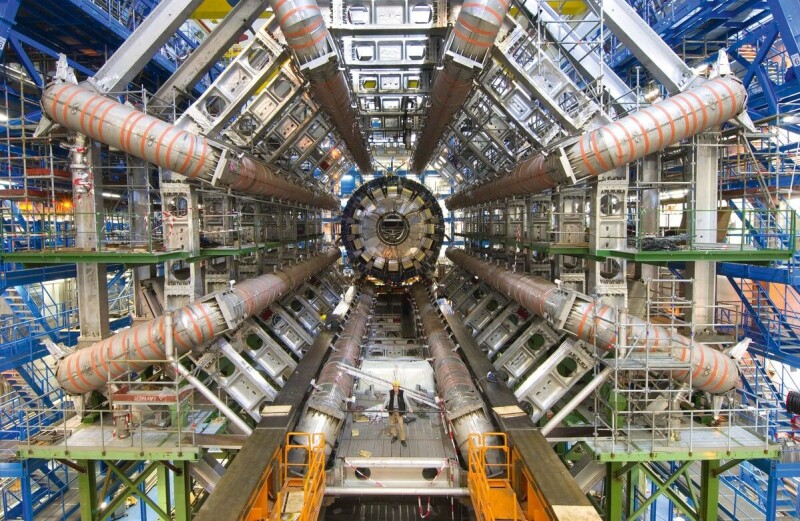
CERN is moving several thousand computers that control its particle accelerator hardware from Red Hat-family Linux distros to Debian. CERN – the place that runs the Large Hadron Collider – generates a lot of data, and that means it uses a lot of computers. Most of them run Linux, and for over 20 years, it used distros in the Red Hat family. Now, that's beginning to change: it’s moving what it calls the “front end” computers, the ones underground that control the LHC, over to Debian Linux. At the end of last month, the MiniDebConf Winterthur 2026 was held in Switzerland, and two CERN engineers, Federico Vaga and Nikos Tsipinakis, gave a talk about Controlling CERN’s Accelerators with Debian. In a dense 40 minutes, they talked about the size and complexity of CERN’s computer systems and the many problems with moving some of them from the Red Hat family over to Debian. The European Organization for Nuclear Research - whose CERN acronym comes from the French name of its predecessor, Conseil Européen pour la Recherche Nucléaire - is one of the world's most high-tech research organizations. It's where the World Wide Web was invented, and CERN has also long been a major user of Red Hat-family Linux. For many years, CERN and Fermilab – its equivalent in the USA – jointly maintained their own RHELative, called Scientific Linux. This started in 2004, and its first mention on The Register was in 2007. For some years, Scientific Linux was one of the leading free RHELatives… until 2014, when Red Hat brought CentOS in-house. CERN’s job is doing physics, not maintaining a Linux distro, so once CentOS became official, CERN switched to it – starting with its own build of CentOS 7. You can probably already guess where this story is going. With hindsight, that wasn’t a great move. There was a lot of detail in Vaga and Tsipinakis’s talk, and we only have space for some of the highlights. Alongside some paid copies of RHEL 7 and RHEL 8, CERN had a lot of CentOS Linux 7 installed. It was planning a migration to CentOS 8, but in 2020, Red Hat cut eight years off CentOS 8’s support lifespan. Version 8 was meant to go out of support at the end of 2029, but Red Hat cut it to the end of 2021. With so much hardware and such very expensive machinery to turn on and off, CERN has to plan as much as 15 years ahead. Obviously, it evaluated CentOS Stream 9 as a candidate, with a view to moving to CentOS Stream 10 as soon as possible. But there was a big problem. RHEL 9 went into beta in late 2021, and as we mentioned in 2022, RHEL 9, and thus CentOS Stream 9, has a minimum CPU requirement of x86-64-v2. This would eliminate 47 percent of CERN’s embedded control computers. In 2025, RHEL 10 moved that to x86-64-v3, which would eliminate another 17 percent of the survivors. That means that tracking future Red Hat releases would mean replacing some 65 percent of what CERN calls its “front end” computers – the ones that live underground, connected to the accelerators. Some of these are specialized hardware: some are VMEbus single-board computers, others use purpose designed and built CERN monitoring hardware, much of which is on parallel PCI cards. The CERN engineers estimated that to replace all these, they would need to redesign 11 custom boards, which would mean hiring two electrical engineers, two software engineers, and two technicians. Also, installing new racks and new cabling in some places would mean digging new tunnels, 100 metres (330 feet) underground. They estimated the project would cost at least CHF 5.4 million ($6.7M or £5M), and it only had a 20 percent chance of success. (All the custom hardware designs are online and openly available – they just aren’t much use to anyone else.) It started evaluating other distros, placing them along two axes. One is control and maintenance: how much control each distro gives and how much maintenance it takes. The other is the level of integration with CERN’s platform, which strongly favors the Red Hat family – so, RHEL, CentOS Stream, Rocky Linux, and AlmaLinux. It looks to us like CERN did some in-depth evaluation, including some less-common distros such as the Civil Infrastructure Platform. Debian and Ubuntu both scored well as relatively low-maintenance options, but their integration with CERN systems would be poor. The answer was, as Vaga put it, “a software solution for a software problem.” If their kit couldn’t run more modern RHELatives, then they would not use RHELatives. They would switch the accelerator computers to Debian instead. He pointed out that this is just one of their three main tiers of computers. The other two are the “consoles”, desktops and laptops which the physicists use to set up their experiments. These currently run AlmaLinux 10 with the Xfce desktop, on an isolated network which is not connected to the Internet. We reported on that choice back in 2022. The second tier systems are called “datacenter” machines, which log, validate, and analyse the commands from the consoles before they’re transmitted, and are also used for modeling and other experiments. These formerly ran CentOS Linux 7, currently run RHEL 9 and will probably move to AlmaLinux 10 in future. It’s the third tier of machines that are currently being moved to Debian. The second part of the talk went into some technical detail about how. The custom hardware needs kernel drivers, which must be built for each specific build and version of the kernel – and CERN builds its own kernels, its own initramfs images, and configures its own bootloader. All these computers are network-booted, and mount their root filesystems over NFS. These images also need to be versioned, but this does make updating them easier. Deploying kernel drivers is much harder than user-space applications. They can’t be built locally on the machine the usual way with DKMS – it’s much too demanding for embedded systems. A key problem is that Debian repositories do not handle multiple different versions of packages well, so the team had to split files between separately versioned repositories instead. Packaging these things is hard, too. Tools such as Debhelper and Debusine, or openSUSE’s OBS, don’t help. In the end, support for .deb packages was “hammered into” the Koji build service CERN already used, and it used ELBE, which “turns the build servers into Debian environments.” For now, the other systems are staying in the greater Red Hat family. At the end, one question asked if AlmaLinux’s greater platform support (including for x86-64-v2 and x86-64-v3) would have helped, but at the time that CERN had to make tough choices, the AlmaLinux project wasn’t able to commit to supporting this. It doesn’t only mean building binaries, but also a lot of testing and validation work. It’s easier to go with an OS that natively supports these things, and both speakers were full of praise for Debian’s self-description of “the universal operating system.” This is an interesting study in distro choice. With Red Hat’s sudden changes of plan and direction in recent years, we’re sure that many other organizations and companies have faced similar problems. The difference here is that CERN is a publicly funded, non-profit hi-tech institution, meaning that it is both willing and able to talk about this in public. We wouldn’t be surprised if CERN chose to move more systems in the direction of Debian in future, but it may not be soon: the current project is already looking towards 2033. For a timeline like this, CERN bought support and training from Freexian and will be using the Freexian-backed Debian ELTS versions of Debian 13, and it’s starting to plan for Debian 15. We cannot help but think that Red Hat made some very bad decisions in almost every aspect of its recent product transitions, although as we have said before, the real original mistake here was adopting CentOS and making it official in 2014. IBM’s subsidiary has alienated a lot of non-paying users, but just like CERN, many users of its free distros were also using the paid ones – however, we are confident this is just one of many such large-scale migrations. It’s just unusually public. ®