Wel.nl

Minder lezen, Meer weten.

Onderzoek: techbedrijven zijn springplank voor nieuwe ondernemers

AMSTERDAM (ANP) - Grote techbedrijven die actief zijn in Nederland, zijn een springplank voor een nieuwe generatie ondernemers. Dat heeft dataplatform voor start-ups Dealroom becijferd, in samenwerking met start-uporganisatie Techleap en techbedrijf Uber.

Onderzoekers hebben 270 bedrijven in kaart gebracht die zijn opgericht door voormalige medewerkers van techbedrijven als Booking.com, Adyen, Uber en Netflix. Voorbeelden van deze start-ups zijn TravelPerk, dat is opgezet door oud-Booking.com-mensen, en Silverflow, Tebi en Founda, opgericht door voormalige medewerkers van Adyen. Gezamenlijk hebben de oud-medewerkers met hun nieuwe bedrijven al meer dan 1,9 miljard dollar financiering opgehaald.

Met een geschatte gezamenlijke werknemerspopulatie van zo'n 10.600 medewerkers verlaten jaarlijks zo'n 2700 mensen deze grote techbedrijven, stellen de onderzoekers verder. Daarmee is er volgens hen een aanzienlijke stroom van ervaren ondernemers en talenten richting nieuwe, snelgroeiende bedrijven en andere delen van de economie.


Ook 150 ABN AMRO-medewerkers gaan dinsdag staken, stelt FNV

DEN HAAG (ANP) - Ook 150 werknemers van ABN AMRO staken dinsdag uit protest tegen de kabinetsplannen rondom sociale zekerheid, meldt vakbond FNV. Personeel van de bank sluit zich aan bij een landelijke demonstratie in Den Haag, waarbij overheidsmedewerkers met een koffertje met alternatieve plannen naar het ministerie van Financiën trekken.

De acties zijn gericht tegen plannen van het kabinet om te bezuinigen op zaken als de WW en arbeidsongeschiktheidsverzekeringen. FNV noemt de timing "extra wrang", vanwege de banen die de komende jaren verdwijnen bij ABN AMRO. "Je betaalt jarenlang premie en op het moment dat je het nodig hebt, wordt het vangnet onder je vandaan getrokken", stelt FNV-bestuurder Arne Gorter. "Dat accepteren wij niet."

FNV is bezig met een brede actiegolf in aanloop naar Prinsjesdag, waarbij in verschillende sectoren en op verschillende plekken in Nederland wordt gestaakt of actiegevoerd.

ABN AMRO is om reactie gevraagd.


Olieprijzen hoger na aanvallen op olietankers Straat van Hormuz

SINGAPORE (ANP/BLOOMBERG) - De olieprijzen stonden maandag hoger na de Amerikaanse aanvallen op Iraanse olietankers en Iraanse vergeldingsaanvallen op schepen bij de Straat van Hormuz in het weekend. Daarnaast heeft Iran een verboden zone buiten de Straat van Hormuz aangekondigd. Daarmee dreigen de prijzen aan de Nederlandse pomp nog verder op te lopen.

Amerikaanse olie staat nu boven de 92 dollar per vat en Brentolie kost meer dan 97 dollar per vat. Daarmee werd de stijging van vorige week verder doorgezet na het opgelaaide geweld in het Midden-Oosten, waardoor de hoop op een snelle heropening van de Straat van Hormuz voorlopig is vervlogen. De prijs van Brent is dit jaar bijna 60 procent gestegen.

De Verenigde Staten hebben luchtaanvallen gedaan op de Iraanse tankers als vergeldingsacties voor raketaanvallen op Amerikaanse marineschepen. Daarbij zou een tanker vernietigd zijn. Iran claimde vervolgens weer eigen wraakaanvallen op schepen die zijn gelinkt aan de VS en zei spoedig met een verboden zone voor schepen te komen.


The Guardian

Latest news, sport, business, comment, analysis and reviews from the Guardian, the world's leading liberal voice

Unidentified Murder review – playful sendup of alien abduction and true crime influencers in Hong Kong

Childhood friends claim to have witnessed the disappearance of a schoolkid in this low-budget comedy caper that pushes limits of storytelling

Modestly scaled and intricately structured, Kwok Ka-Hei and Jack Lee Chun-Kit’s comedy is a capriciously playful send-up of true crime aficionados and wannabe influencers, done with affection rather than malice. It revolves around a (fictional) 25-year-old case that captivates the whole of Hong Kong. Back when they were seven, childhood friends Mark (Ling Man-lung) and Kit (Ronald Lam Tsz-kit) claimed to have witnessed the abduction by aliens of their classmate Ho in the woods of Tung Tau Hill. On the 25th anniversary of this supposed incident, the pair re-enter the internet’s consciousness after an interview on an online chatshow about unsolved mysteries. Cashing in on their viral fame, Mark’s girlfriend Man (Renci Yeung) hires actor Kim (Peter Chan Charm-man) to pretend to be Ho, all in the hope of racking up views on her social channels. Just when the cameras are all set up, Man watches in horror as the staged reunion leads to a real murder … or does it?

The film unfolds in a series of increasingly tricksy complications and reversals. All of a sudden, apparent victims are revealed to be scheming masterminds, and vice versa. As most of the actions take place in the forest where the abduction supposedly occurred, the plot derives comic relief from the increasingly blurred line between truth and playacting. Largely shot with handheld cameras, it has a visual style that lends authenticity to representations of online media, though occasionally this distracts from the physical comedy performed by the cast. The constant twists also turn into bit of a competitive sport, meaning the film becomes more of a writing exercise than anything else.

Continue reading...

A crucial look at the disappearance of Austin Tice: best podcasts of the week

The US marine turned journalist went missing in Syria 14 years ago – and now, a suspenseful new pod uncovers essential evidence. Plus, the charming Julie Andrews serenades audiences with Jane Austen’s Emma

It has been 14 years since US marine turned journalist Austin Tice went missing in Syria. Much has changed in the embattled nation since then – not least the end of Bashar al-Assad’s regime – but Tice is yet to be found. In this series, Josh Baker and Sara Obeidat uncover crucial new evidence, some of which has already made headlines. Sensitive and highly suspenseful. Hannah J Davies
Widely available, episodes weekly

Continue reading...

Ministers propose converting female prison estate into cells for men

Plans would see parts of estate converted but campaigners warn it just ‘moves the crisis from one part to another’

Ministers will seriously examine converting parts of the female prison estate into cells that can safely house male prisoners, as the government looks to reduce numbers of women in prison to ease strain on the system.

The prisons minister Catherine McKinnell is to look into the practicalities of converting female spaces to male over the coming months, after warnings from governors and experts that it would pose significant challenges.

Continue reading...

Going for gold: an early autumn road trip across Finland’s sparkling lake district

On a self-drive break in search of Lake Saimaa’s autumn colours, we encountered blue skies, cosy lakeside cabins and saunas, great food – and lots of stubbornly green trees

I wasn’t sure what to expect from an autumn trip to Finland, my first ever to the country, but spending an afternoon sprawled on a deck chair beneath blazing blue skies certainly wasn’t part of it. After a morning walking beneath the leafy canopy at the Mustila Arboretum – the oldest, most extensive botanical garden in the country – and a lunchtime wine-tasting (more of which later), my friend Sara and I pitched up at the Sahanlahti resort, deep in the Finnish Lakeland, only to find sun-drenched scenery that felt far more Mediterranean than Nordic.

Sahanlahti was the second stop on a mid-September road trip from Helsinki to the shores of Lake Saimaa; a journey in search of ruska, the spectacular autumn colours that blaze for a few short weeks before the long Finnish winter sets in. However, on our opening drive east from the airport to the Radalla resort, set on Lake Urajärvi, most of the thousands of trees we drove past were resolutely green, with just the very tips of the leaves tinged with auburn, like a foliage balayage.

Continue reading...

Hawking by Graham Farmelo review – the dark side of genius

A biography of the physicist recognises his achievements, but also reveals the selfish narcissist underneath

When I wrote an unadoring review of Stephen Hawking’s final book, a collection of essays published posthumously in 2018, New Scientist suppressed some of my criticisms on the grounds that it was “too early” to voice anything other than praise for the physicist who died, aged 76, that March. It was apparently still too early in 2021, when no British publisher would touch Charles Seife’s exposé of Hawking’s bullying and self-aggrandising behaviour, Hawking Hawking.

In this new biography, veteran science writer Graham Farmelo takes a different approach. It is a comprehensive and accessible portrait of a brilliant scientist and an extraordinarily determined man who also possessed deep personal flaws to which the scientific community and the public mostly turned a blind eye. The uncomfortable but unavoidable truth is that Hawking’s overweening ambition and self-promotion, his repeated failure to acknowledge the work of others, his sexism and controlling behaviour were largely ignored because of his disability. I think it is indeed going to take us years to process that.

Continue reading...

Pixel 11 review: Google sets the bar for standard flagship phones

Longer battery life, faster chip, actually useful AI tools and better cameras keep quality Android ahead of competition

Google’s Pixel 11 continues to set the standard for what you should expect from the base model of a flagship phone with class-leading cameras, long software support and almost all the bells and whistles of its most expensive phones.

The regular Pixel 11 costs £879 (€999/$899/A$1,499) making it £80 or equivalent more expensive than last year’s model as the cost of RAMageddon continues to bite. It’s not cheap by any stretch of the imagination, but it comes with 256GB of storage and is £200 less than the Pixel 11 Pro, matching rival Samsung’s Galaxy S26.

Screen: 6.3in 120Hz FHD+ OLED (422ppi)

Processor: Google Tensor G6

RAM: 12GB

Storage: 256 or 512GB

Operating system: Android 17

Camera: 48MP+ 13MP UW + 10.8MP 5x tele; 10.5MP selfie

Connectivity: 5G, eSIM, wifi 6E, UWB, NFC, Bluetooth 6 and GNSS

Water resistance: IP68 (1.5m for 30 minutes)

Dimensions: 152.8 x 72.0 x 8.6mm

Weight: 197g

Continue reading...

‘This is what I have to do to survive’: the Sudan refugees forced into sex work

They fled a brutal civil war to reach safety in Egypt, but now many Sudanese women and girls are falling prey to sexual exploitation

Sudanese women who fled to Egypt to escape the war in their country are facing increasing levels of sexual exploitation, with the Guardian told of single mothers forced to sell their bodies to survive and feed their children.

Many of the women have not previously worked in Sudan, where conservative social norms dictate that men are usually responsible for financial support. Without established trades or professions, and with their husbands and other family members dead or missing, many female refugees are struggling to pay for food, medical care and rent.

Continue reading...

A new start after 60: I was always quiet – but at 82 I’m a famous, funny fashion influencer

Vivienne Truran was a civil servant and antiques dealer, who spent most of her life in the background. At 80, she realised how outgoing she was, and started a soaringly successful new career

‘It took me till I was 80 to realise that I’m quite an outgoing and loud person,” says Vivienne Truran. Now 82, she has 829,000 followers on Instagram, where she posts daily videos about her outfit choices, including which of her trademark glasses work best with her look, all in her lilting Cardiff accent.

It all started 18 months ago. “I think I want to be an influencer,” she announced in one of her first reels. “Now, what can I influence people in?”

Continue reading...

Rob Reiner wins posthumous Emmy for The Bear, as Widow’s Bay dominates early awards

Reiner broke record set by his father Carl Reiner at the ceremony formerly known as the Creative Arts Emmys, with The Pitt, Pluribus and DTF St Louis also winning big

Rob Reiner has won a posthumous Emmy for his performance in The Bear, nine months after his death – breaking the record set in the exact same category by his own father, Carl Reiner.

Reiner’s win for outstanding guest actor in a comedy was announced on Sunday night at the ceremony formerly known as the Creative Arts Emmys, a two-day awards event held a week before the main ceremony and telecast.

Continue reading...

Left Behind

Stueyman has added a photo to the pool:

Left Behind

After the storms… a wreck at Palm beach.

The Last Pier

Stueyman has added a photo to the pool:

The Last Pier

Woodman Point ammo jetty, looking its age and showing some storm damage. By the signage the demolition will come soon, folllowed by a new $17m replacement

Rijnmond - Nieuws

Het laatste nieuws van vandaag over Rotterdam, Feyenoord, het verkeer en het weer in de regio Rijnmond

Bewoners ten einde raad: parkeerlift al drie jaar kapot nadat die was ingestort

Al bijna drie jaar staan de 69 parkeerplaatsen onder woontoren De Hoge Erf in Rotterdam-Delfshaven leeg. De parkeerlift stortte in augustus 2023 met een auto op het plateau naar beneden. De tientallen auto’s die ondergronds vaststonden, werden uiteindelijk bevrijd. De garage zelf bleef dicht.

Bewoners ten einde raad door kapotte parkeerlift: wel betalen maar niet parkeren

Al bijna drie jaar staan de 69 parkeerplaatsen onder woontoren De Hoge Erf in Rotterdam-Delfshaven leeg. De parkeerlift stortte in augustus 2023 met een auto op het plateau naar beneden. De tientallen auto’s die ondergronds vaststonden, werden uiteindelijk bevrijd. De garage zelf bleef dicht.

Ingestorte autolift na drie jaar nog altijd kapot, bewoners moedeloos: 'Begin er nooit aan'

Al bijna drie jaar staan de 69 parkeerplaatsen onder woontoren De Hoge Erf in Rotterdam-Delfshaven leeg. De parkeerlift stortte in augustus 2023 met een auto op het plateau naar beneden. De tientallen auto’s die ondergronds vaststonden, werden uiteindelijk bevrijd. De garage zelf bleef dicht.

The Register

Biting the hand that feeds IT — Enterprise Technology News and Analysis

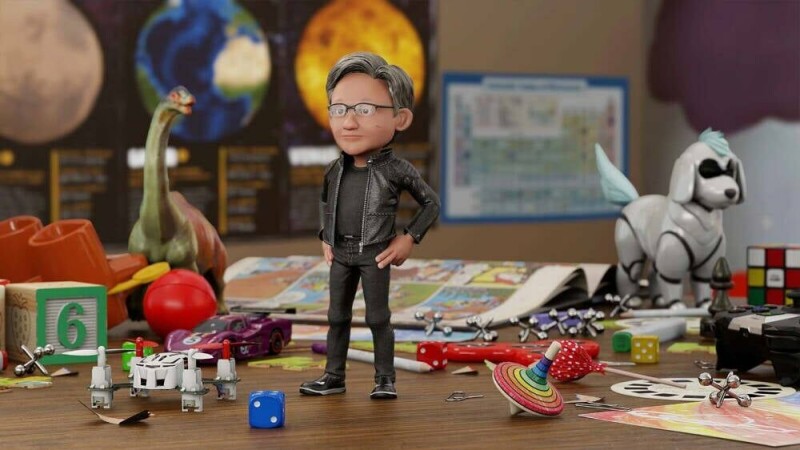
Jensen's purchase of a new toy could reshape the entire AI industry

KETTLE AI repository Hugging Face will soon be an Nvidia property, and while everyone's promising things will remain the same we at The Register's Kettle desk aren't so sure the status quo is going to stay the status quo at the AI industry's leading open model host. You can listen to the latest episode of The Kettle right here on this page, as well as on Spotify, Apple Music, or YouTube. Those platforms also let you subscribe to Kettle, so you are always notified when the latest episode goes live. Joining host Brandon Vigliarolo this week is reporter Dan Robinson, who broke the news of Nvidia's $12.9 billion acquisition for El Reg yesterday, weighs in on what he heard during the announcement call, while senior reporter Tom Claburn opines on what he sees coming. A lightly edited transcript is below: Brandon (00:01) Hello and welcome to another episode of The Register's Kettle podcast. I'm Reg reporter Brandon Vigliarolo, and if you've been keeping an eye on things the past few days, you probably already know what the big tech news story of the week is, and that's Nvidia's $12.9 billion acquisition of AI repository Hugging Face. With me to discuss this deal and what it might mean for the future of the AI sector for both companies and developers is our reporter Dan Robinson and senior reporter Tom Claburn. Thanks for coming on, guys. Tom (00:31) Thank you. Brandon (00:31) All right, so Dan, you broke this story, I think it was just yesterday now, and you were on the conference call that Nvidia and Hugging Face leadership held. So break it down for us. What was the agreement here? What's the deal? Dan (00:45) Well, like you said, it was a $12.9 billion purchase from Nvidia to acquire Hugging Face, which is the home of open AI, as I've been told. Brandon (00:59) Open source AI. Dan (01:01) Well, open. Brandon (01:03) Open source and open weight. I just want to make sure it's not the home of OpenAI, the company, right? Dan (01:08) Yes, let's not get confused about that. They've entered into this agreement which is due to close next year, providing that they meet all the regulatory requirements, of course, and there are no objections from the authorities on that. It looks like Nvidia's agreed to keep a hands-off approach and allow Hugging Face to pretty much just do what they're already doing. But as we've been seeing, there are quite a few concerns around that, as Nvidia is a very powerful company in the AI market. And Hugging Face is the go-to place for open models. Brandon (02:15) I'm sure most of our listeners know what Hugging Face is; it's essentially the GitHub for the AI space. It hosts models, and new open models tend to show up on Hugging Face first. There's also a pretty active community that discusses the development of these things on the platform. Dan (02:36) Right, yes sure. Brandon (02:38) So this is obviously a pretty consequential move in this space and I know both Nvidia and Hugging Face framed it as giving Hugging Face more resources to pursue its mission. I think Clement, the CEO of Hugging Face, said that they want to reach a hundred million developers in the next few years and that they were worried that they wouldn't be able to without more resources. Let's be realistic. They're hosting a lot of very large AI models and all the data sets they contain. That's a lot of storage space and a lot of computing resources, not to mention serving and dealing with all the workloads that come with this. I imagine that could eat up a lot of cash and resources. Dan (03:25) Of course. And it's quite an ambitious goal given that they're at about 80 million users, I think it's estimated at the moment. And if you compare them with someone like GitHub, I think they are somewhere around 180 million since they've been taken over by Microsoft. Brandon (03:50) And we've seen how well that's worked in the past few months with the stability issues and everything. It kind of begs the question too whether or not, if you get that big, can you remain stable and would Hugging Face end up suffering from some of the same problems that GitHub does? Tom (04:05) I wonder how long Hugging Face is going to continue to be flooded with new models because the models are appearing daily at Hugging Face. But what are the economics for making them? A lot of these companies are presumably not generating the revenue to pay for the cost of these models. And at some point, what are the economics of just giving away these models? Nvidia I think clearly sees that there's a future in the enterprise business where companies are going to want to control their own AI and run it. But is the pace of model development going to continue on into the future because where does all the money come from to pay for this? Brandon (04:55) Well, probably Nvidia now, right? Tom (04:58) And it makes you wonder if this is part of the circular financing that we've seen throughout the industry. It raises a lot of questions. I was also surprised that one thing we haven't seen, which was talked about, was Nvidia purchasing a stake in Perplexity, which has been reported, but as far as I know hasn't actually happened. They were said to be looking around at investing some large sum in Perplexity. That hasn't been publicly announced yet, and I wonder if this deal changes that discussion. Brandon (05:33) Perplexity, just remind me, do they make models? Tom (05:37) Well, they started off as AI search and are now kind of an AI agent platform. Brandon (05:41) Right. Okay. Tom (05:44) And I think that they've been apparently doing pretty well, but all of these companies I think would like to have an exit before they can demonstrate that they have general market revenue. Brandon (05:57) Right. I mean, obviously Nvidia is probably well positioned to acquire more people in the AI space. But that again raises some antitrust concerns. I know Tobias, our systems editor, Tobias Mann, wrote an op-ed arguing that he basically thinks this is a ripe opportunity for antitrust regulators to step in and deal with this, right? Because he thinks that no matter what Nvidia claims, and no matter what Hugging Face thinks, the impartiality and the openness of the platform might not last given the situation and Nvidia's control of the AI space right now. What do you guys think about the potential conflicts of interest here? Tom (06:40) I think there's a huge potential conflict of interest. I think that the willingness of the administration to do any antitrust enforcement has been demonstrated, which is there's not very much willingness. Brandon (06:50) Right. And we saw that this week with Google, right? The government basically gave up on trying to break up Google and said that they can just continue operating as is with their ad tech. Tom (07:02) Can you point to the last time in the past twenty years there's been a substantive penalty that's changed the behavior of a large tech company? Even Meta, in the social media lawsuit, seventeen billion is a small percentage of its actual revenue. Brandon (07:20) Not only just seventeen billion, but seventeen billion over ten years, right? Seventeen billion is a substantial chunk of quarterly earnings, I think, but not when spread out over ten years. And even then, like thirty percent of that penalty, they're refusing to pay out unless YouTube and TikTok voluntarily conform to similar guidelines on age gating and restricting youth profiles that they do. So you can essentially say that deal is worth even less than they're reporting. Tom (07:54) Right. I haven't seen a substantive case of regulatory intervention, at least in the US. I think Europe is a little bit more assertive about this, but even they kind of dialed back their penalties. Brandon (08:08) And unfortunately, even though their founder might have a very French sounding name, Hugging Face is based in the United States, so I don't think that the EU is going to really have much of an antitrust investigation here. Dan, would the UK have any grounds to do any kind of investigation on this deal, or is this going to probably be purely US? Dan (08:30) I don't think so. It's difficult to say. They're both US companies really. Brandon (08:35) Right. Right. Dan (08:37) Obviously it could have worldwide implications. But I'm not sure that any other countries have any kind of regulatory claim on it. Brandon (08:55) So unfortunately it's probably going to fall to the Trump administration or whoever comes next. And even when Lina Khan was at the FTC and was doing a lot of antitrust stuff to try targeting big tech, a lot of that amounted to nothing, right? A lot of her big cases ended up again, like Tom said, in the past twenty years has there been any substantive ruling that affected a big tech company? And she was going after Amazon hard, and that amounted ultimately to not too much. If we look at the antitrust landscape and say it's unlikely that this deal is going to be stopped, what is the likelihood you think that Nvidia honors its commitment to remain hands-off? Dan (09:41) Like Tobias said, the temptation is going to be pretty huge to have some of the models first support Nvidia hardware or to have better support or documentation on Nvidia. Even if you look at Microsoft and GitHub, you could perhaps argue that it's worked reasonably well apart from some hiccups. I don't know if all the developers would agree with that, but even there, Microsoft tried to infuse Copilot into it, which didn't go down well at all. I do agree that the temptation to interfere is going to be too great for Nvidia and perhaps there should be some kind of antitrust investigation but we seem to be all of the mind that that probably isn't going to happen. Tom (10:55) I think it's likely that this will end up pushing other companies to develop their own repositories just to have a supply of models, and you already kind of see that with Apple. They have their own sort of MLX framework and it's probably not too far a stretch to imagine them pushing a set of optimized MLX models or things that work really well on their Metal hardware, and maybe AMD ... Brandon (11:21) Nvidia, you mean? Tom (11:22) Apple. Brandon (11:25) Apple. Okay, I see what you're saying. Tom (11:26) And then AMD maybe does something similar. It would make sense for them strategically as a defensive measure Brandon (11:36) That feels like a net loss for the AI community, right? Hugging Face right now is kind of like the AI Switzerland; it's a platform that allows any and all comers to host their models on there, let people pick them apart, let people try them out. In the same way that a fracturing of GitHub would be an unfortunate loss, I feel like. You can argue that there's a centralized platform and that increases the chance of failure or loss of data. If everyone decides to go their own direction with this, I wonder what kind of net loss that would have for the AI development space. Tom (12:16) Everyone is going to be looking for a sort of edge, and whether you find that in terms of the model distribution or in the harness or somewhere else in the technology stack, the open weight models have become commodified very quickly. So you're either going to have the Anthropics and OpenAIs of the world if they can sustain their financial positions selling the high-end stuff to government clients, and then a bunch of quickly commoditized models that are going to only have differentiation based on what can be added to them, like if they work really well with a particular harness or if they really are well suited for Nvidia's hardware. Brandon (13:00) Do you think that there's a chance that this gives Nvidia a more dominant position in the AI hardware space than it has right now? Tom (13:08) Once you have that feedback loop between software and hardware, it makes switching harder, which is why the other companies have to respond. They have to have a combined software-hardware stack to make the jump palatable. Brandon (13:26) Right. So basically what we're looking at is this could serve as a definitive moment in the commodification of open source and open weight AI models, essentially. Because you've got Nvidia basically staking its claim to it – this is all hypothetical, right? Because it's entirely possible that Nvidia could end up being like Microsoft and just kind of saying, "Yeah, we're just going to remain relatively hands off on this, except for providing the backbone for it, as failure-prone as that may be, and letting the community itself just function largely independent of us." Obviously, like you said, Dan, the Copilot situation, and Microsoft's made its changes to the platform over the years. But if Nvidia decides – and I agree with Tobias, this is a pretty big temptation for them now having direct financial control over everything that goes on at Hugging Face to basically prioritize their own stuff, to make this a platform that serves them first. I feel like you're right, Tom, this could end up fracturing the AI market into a whole bunch of different stacks where model A plays well with hardware A and model B plays well with hardware B. And you pick the stack you want to be part of. Dan (14:48) Yeah, and to be honest, people's perception will matter as much as anything. Even if Nvidia does manage to resist the temptation, if there's a perception that that's happening, people, users, developers will start to drift away. And with the rest of the open source world, people will start up their own alternatives and probably we'll get another Hugging Face perhaps. Brandon (15:20) Sure. Maybe one with a more sensible name. And the name Hugging Face has always kind of made me go, "Wait wut..." I know they started off as trying to appeal to teen users with some open source chatbots or something way back in 2016. Is that where they started? And then the name just kind of stuck even though they moved beyond that original mission? Dan (15:40) I don't know. It just makes me think of the movie Alien, I'm afraid. Tom (15:47) Yeah. Brandon (15:47) It does kind of, doesn't it? Not exactly a great idea, the thought of an AI – Tom (15:51) Someone took the wrong lesson from that movie. Brandon (15:56) – the AI grasping onto your face and shoving models down your throat. Tom (15:59) Yeah. Brandon (16:02) Well, speaking of the response to it or the perception, Dan, you were on the conference call and I know they were taking questions from people on there. What kind of questions were you hearing on that call? Was there a lot of concern? What was the general tone to people speaking? Dan (16:22) I think some of the questions were more about why Hugging Face decided to go for this because they had rejected an offer of investment from Nvidia just last year. Brandon (16:38) Right. I think it was a $500 million dollar offer. Dan (16:43) And the CEO couldn't really give a good reason why they suddenly changed their minds. His explanation that the planets aligned this time is a nice metaphor. Perhaps they did come around to thinking they need some kind of financial stability. Brandon (17:11) Yeah, I think like Tobias said, if Hugging Face was to collapse due to running out of funding, it would be even more devastating than a sale to Nvidia. Dan (17:25) What would happen to all their data and all the models if that happens? Brandon (17:28) Right. Right. Dan (17:31) I suppose you could take that angle, but somebody stopped just short of saying that it's the typical startup pathway to being acquired by a big company and that's their profitable exit. Brandon (17:52) $12.9 billion is a pretty hefty windfall for a company. I think you mentioned in your story that there was something like a hundred million reserved for staff from Hugging Face who are joining Nvidia, is that right? Or was that in Tobias's article? Dan (18:11) That was Tobias. Brandon (18:14) Okay. Dan (18:15) I don't think he mentioned a figure, but he said there was something like a billion dollars earmarked. Brandon (18:20) Yeah. I think he said a billion dollars earmarked for Hugging Face employees joining Nvidia. Like a startup seeking an exit here, this is a fantastic deal for anyone involved at that company. Dan (18:36) Right. Brandon (18:36) They're getting a major financial windfall, which can start to make all those proclamations about pledges of openness fall by the wayside when you're looking at all those zeros. Dan (18:47) Yes, you could say that. Maybe we shouldn't comment. Brandon (18:53) No, no. We won't. Tom (18:54) I think it's interesting that you have people making these sorts of deals rather than trying to exist as separate companies. Hugging Face is clearly not bringing in a lot of revenue on its own. And I think that there are a lot of companies in the AI space looking around going, "Okay, we're actually not making any money, how are we going to survive?" And Nvidia buying them seems to be the solution for a lot of problems. So we'll see how long that lasts. Brandon (19:22) Yeah. Dan (19:24) It does seem that Nvidia seems to crop up everywhere in AI. They seem to be the big investor behind an awful lot of the companies in AI. They've invested in both Anthropic and OpenAI. A lot of these neolouds that are popping up to offer GPU-as-a-service to anyone wanting to develop AI. It just seems like they're kind of like the kingpin behind the entire AI industry in a way. Brandon (20:03) They're the big player right now. That company is worth so much money and Jensen Huang seems willing to just open up his checkbook to anyone who seems to be moderately of value to Nvidia's bottom line. I think Tom hit it on the head; it goes back to all that circular investing. We're seeing this consolidation of the AI industry right now, and it's all consolidating around Nvidia. Who would have thought twenty years ago when I was buying graphics cards for my gaming PC that, you know, Nvidia would be what they are now, but here we are. All right, guys. Well, thanks for coming on, even if it seems like we're just hashing over the inevitability of the way the AI industry is changing. And we will be here week after week to talk about it right here on The Kettle.

Pluralistic: Daily links from Cory Doctorow

No trackers, no ads. Black type, white background. Privacy policy: we don't collect or retain any data at all ever period.

Pluralistic: How corporate America built a better Roach Motel (07 Sep 2026)


Today's links


A fake Harvard Business Review cover, dated September-October 2026. It features a large Roach Motel under the headline 'THE NEW CUSTOMER RETENTION' with the subhead 'Why acquire customers when you can take hostages?'

How corporate America built a better Roach Motel (permalink)

"If economists wished to study the horse, they wouldn’t go and look at horses. They'd sit in their studies and say to themselves, 'What would I do if I were a horse?'" -Ely Devons

Half a century ago, a group of lavishly financed economists from the University of Chicago (the "neoliberals") convinced governments all over the world to completely upend the way they treated monopolies. Up until then, the purpose of competition enforcement was to reduce corporate power, with the understanding that once a corporation became more powerful than the government, it would be impossible to force it to follow any rules:

https://pluralistic.net/2022/02/20/we-should-not-endure-a-king/

But for the "Chicago Boys," monopolies were evidence of efficiency. When you encounter a company in the wild that has acquired a commanding market share, your first assumption should be that it has taken over its sector by being better than anyone else – you should not assume that the company cheated its way to glory. After all, if a company with a large market share was cheating – say, if it was increasing its profit margins by reducing quality or jacking up prices – then smaller companies would rush into the market to poach its dissatisfied customers.

Thus, all competition enforcement was reduced to an empty syllogism: monopolies are the result of excellence and any less-than-excellent monopolist will have its advantage "competed away." Therefore, any monopolist you encounter in the wild is definitionally not a bad monopolist, otherwise it would already have disappeared.

To quote another economist joke:

Two economists are walking down the street when one notices a $20 bill on the sidewalk. "It's not a real $20 bill," the other declares. "If it were a real $20 bill, someone would have picked it up off the sidewalk already."

Half a century later, our entire economy is dominated by monopolies, duopolies and cartels, who boast of gigantic margins, whose products are palpably worsening at an accelerating clip, and yet there is no sign of the "new market entrants" who should be flooding into the market to "compete away" those amazing margins. It turns out that asking "What would I do if I were a horse?" does not yield a series of accurate predictions about horses.

Things have changed. Today, the University of Chicago's Stigler Center harbors a cluster of influential economists who largely or entirely repudiate the orthodoxy of the Chicago Boys. The Center hosts an annual, rather radical conference on antitrust; runs an excellent heterodox podcast (Capitalisn't); its house organ, Promarket.org, regularly hosts work that torches the received wisdom of High Chicago Neoclassicism; and the school's researchers publish papers that dare to actually "go and look at horses."

A recent horse-looking excursion has yielded some distressing, alarming, and thoroughly documented equine facts. In a new Stigler paper, "Rising Customer Durability, Falling Business Dynamism," UC's Li Azinovic-Yang, Ava E Speros and Christopher R Stewart and Stanford's John D Kepler report on some clever research into how a monopolist could raise prices, lower quality, anger its customers, and still dominate its market:

https://www.chicagobooth.edu/-/media/research/stigler/pdfs/workingpapers/387_customer.pdf

The researchers' hypothesis was that dominant businesses don't maintain their lead by making their customers happy, but by making it harder for those customers to leave. There's good reasons to suspect this. Between 2002 and 2024, the average "customer relationship" (how long a customer continues to purchase from a merchant) has risen from 7.5 years to 11.5 years, a 50% surge in "customer loyalty," far outstripping any measure of customer satisfaction over the same period. This is true across all the largest sectors of the economy: "manufacturing, information, professional services, financial services, and wholesale trade."

How to explain the falling divorce rate between customers and businesses? That's where the researchers got very clever. They realized that when a company seeks permission to acquire another business, it must publish truthful and comprehensive information about how the merger is expected to increase the profits of the new combination. These disclosures are validated by external auditors, boards of directors, and/or audit committees. There are legal repercussions for falsifying them or making material omissions to them, and they are matters of public record.

Crucially, these disclosures must include the business's plans to retain its customers, and its plans to increase the profits from those customers. That's where the researchers struck gold. They amassed a novel data-set of 9,500 acquisitions that disclosed over $1t worth of "customer relationship-related intangibles," more than 20% of all the assets that changed hands.

They supplemented this data by mining earnings calls (also subject to strict penalties for omissions and falsehoods), finding CEOs boasting about "practices that may impede switching or increase customers’ dependence on the firm." Executives bragged about their "contractual restrictions, bundling and ecosystem lock-in, and switching costs."

You can get a sense of these in a short accompanying article by the study's co-author Christopher Stewart:

https://www.promarket.org/2026/09/04/american-companies-expect-their-customers-to-stay-much-longer-that-may-be-making-the-economy-less-competitive/

The article recounts how Sirius XM's execs celebrated the news that an appeals court had struck down the FTC's "Click to Cancel" rule, which required companies to make it as easy to resign from a subscription service as it was to sign up for it. Click to Cancel is a response to increasingly sleazy, increasingly pervasive tactics that make it all but impossible to stop being someone's customer. Trump's FTC walked away from defending the rule, which let the court kill it:

https://pluralistic.net/2025/05/12/greased-slide/#greased-pole

After Click to Cancel died, Sirius XM's C-suite got on a call with their shareholders to project "better outcome(s) as a result of not having that in place." Sirius believed that a rule that made it easy for customers to resign from their monthly subscriptions would hurt its business. Put another way: Sirius believes that its profits come in part from the fact that dissatisfied customers can't figure out how to cancel their service.

Then there's the online insurance company eHealth, whose execs crowed about a new "innovation" that forced senior patients to painstakingly enter a long list of their medications and doctors, but did not give them any way to export that data. The lengthy investment of time in getting set up on eHealth would stop customers from leaving, because they wouldn't want "to repeat all of that information over the phone."

This is also a feature of business-to-business relationships. In 2019, US Silica's execs described how they had launched a program to become embedded in their customers' supply chains, because that "really locks in the business," making it "much more difficult for customers to switch and go to someone else."

That's the first half of the story: an empirical account of how the business world switched from "acquiring customers" to taking hostages.

But the second half of the paper is even more interesting: an empirical investigation into the effects of this customer lock-in. For starters, increased customer retention is "associated with higher gross profit margins": that is, the companies whose customers can't leave squeeze those customers for more profit. What's more, once a company has its customers locked in, it starts to capture a larger share of all the profits in its entire sector: these hostage-takers become so profitable that their profits dwarf the profits of their competitors.

The paper also solves the mystery of the missing market entrants that the neoclassical horse-ponderers insisted would be conjured up to compete away an abusive monopolist's margins. The more locked in the customers of a monopolist are, the fewer companies try to enter that market. This makes sense: who would invest in a new business in a market where none of its potential customers can switch to its new business?

This is the opposite of what the horse-ponderers have insisted upon for 50 years. The more lock-in a company attains, the more profitable it becomes, and the less it has to worry about new competitors coming after those incredible margins. This is obvious to everyone, except the monopolist-funded "social scientists" and the governments they captured.

This is bad news, and not just for those locked-in customers. New businesses are the source of new jobs, and, yup, it turns out that sectors dominated by firms with high lock-in create fewer jobs. Of course, as workers chase fewer jobs, bosses are able to suppress their wages by forcing workers to bid against one another. Once again, the study finds that the sectors with the most lock-in also see declining wages in addition to declining jobs.

These are not the horse-ponderers' "efficient" monopolists. Once a company has its customers locked in, it innovates less – as measured by the number of patents a company is awarded, and by how often those patents are cited in other patents (this second measure helps distinguish companies that file mountains of bullshit patents from companies that actually invent useful things). Naturally, R&D spending also declines in companies with more lock-in.

All of this is entirely compatible with the theory of enshittification. Once a company knows its customers can't leave, it can switch from treating them well to abusing them in order to extract money from them. The same goes for companies whose workers can't leave – because they're bound by noncompete clauses, or because their employer has bought out all their rivals:

https://www.eff.org/deeplinks/2023/04/platforms-decay-lets-put-users-first

It's like the old Lily Tomlin sketches on SNL and Laugh-In, where she played Ernestine the telephone operator narrating satirical ads for AT&T. Those sketches would end with her obviously true catch-phrase: "We don't care. We don't have to. We're the phone company":

https://www.youtube.com/watch?v=CHgUN_95UAw

Decades later, Tomlin's phone company joke is a perfect distillation of modern management philosophy. As a famous NBER working paper showed, when a family business is handed over to a professional manager with an MBA, the company doesn't become more profitable overall; it just finds ways to pay its workers less:

https://www.nber.org/system/files/working_papers/w29874/w29874.pdf

That's why Tim Wu named this "the age of extraction." "Growth" no longer means "making something new that people want" – now it means "finding ways to take a larger share of the pie, even if that makes the pie smaller overall":

https://www.wired.com/story/tim-wu-age-of-extraction/

This is something we can all feel. We experience it in our daily lives, through "shrinkflation" and "junk fees" and a million other gross and petty scams. But it's rare that we actually catch executives explicitly admitting that their job is to find ways to take you hostage and squeeze you.

Historically, those revelations have come from extraordinary circumstances, like when Frontier (the worst ISP in America) went bankrupt and we learned that the company had 1.6 million customers who had no access to competing broadband connections. Frontier carried these hostages on their balance sheet as a special, highly valued asset, since they could be charged more for slower, less reliable service:

https://www.eff.org/deeplinks/2020/04/frontiers-bankruptcy-reveals-cynical-choice-deny-profitable-fiber-millions

In assembling this novel, high-quality data-set, the researchers on this paper have performed an important service, capturing a vast number of sworn confessions of highly paid enshittifiers, and then showing how their hostage-taking wrecked competition, prices, wages, jobs and innovation.


Hey look at this (permalink)


A shelf of leatherbound history books with a gilt-stamped series title, 'The World's Famous Events.'

Object permanence (permalink)

#20yrsago Three-hole punch debut, April 1940 https://web.archive.org/web/20061119140057/https://blog.modernmechanix.com/2006/09/06/three-hole-paper-punch-debut/

#20yrsago New Zealand redefines open source as “code you can’t modify” https://memex.craphound.com/2006/09/07/nobel-prize-sperm-bank-human-tragicomedy-about-eugenics/

#20yrsago MSFT quicker to patch DRM than security vulnerabilities https://www.schneier.com/blog/archives/2006/09/microsoft_and_f.html

#20yrsago Wikipedia’s dumbest arguments https://en.wikipedia.org/wiki/Wikipedia:Lamest_edit_wars

#10yrsago Why the Pirate Party could end up running Iceland https://web.archive.org/web/20211024071400/https://www.newstatesman.com/culture/2016/09/how-internet-pirates-became-political-force-iceland

#10yrsago Sampling bias: how a machine-learning beauty contest awarded nearly all prizes to whites https://web.archive.org/web/20160906154712/https://motherboard.vice.com/read/why-an-ai-judged-beauty-contest-picked-nearly-all-white-winners

#10yrago Warner Bros flags its own website as a piracy portal in copyright takedowns https://torrentfreak.com/warner-bros-flags-website-piracy-portal-160904/

#10yrsago The privacy wars have been a disaster and they’re about to get a LOT worse https://locusmag.com/feature/cory-doctorowthe-privacy-wars-are-about-to-get-a-whole-lot-worse/

#10yrsago Weapons of Math Destruction: invisible, ubiquitous algorithms are ruining millions of lives https://memex.craphound.com/2016/09/06/weapons-of-math-destruction-invisible-ubiquitous-algorithms-are-ruining-millions-of-lives/

#10yrsago Pro-democracy reformers win big in Hong Kong’s elections https://globalvoices.org/2016/09/06/hong-kong-voters-elect-pro-democracy-legislators-to-defend-the-citys-autonomy-from-china/

#1yrago Stock buybacks are stock swindles https://pluralistic.net/2025/09/06/computer-says-huh/#invisible-handcuffs


Upcoming appearances (permalink)

A photo of me onstage, giving a speech, pounding the podium.


A screenshot of me at my desk, doing a livecast.

Recent appearances (permalink)


A grid of my books with Will Stahle covers..

Latest books (permalink)


A cardboard book box with the Macmillan logo.

Upcoming books (permalink)

  • "The Post-American Internet," a geopolitical sequel of sorts to Enshittification, Farrar, Straus and Giroux, 2027

  • "Unauthorized Bread": a middle-grades graphic novel adapted from my novella about refugees, toasters and DRM, FirstSecond, April 20, 2027

  • "Enshittification, Why Everything Suddenly Got Worse and What to Do About It" (the graphic novel), Firstsecond, 2027

  • "The Memex Method," Farrar, Straus, Giroux, 2027


Colophon (permalink)

Today's top sources:

Currently writing:

  • “Once Is Enemy Action,” a science fiction novel about the origins of modern technofascism. Today's words: 574 (7730 total).

  • "The Post-American Internet," a sequel to "Enshittification," about the better world the rest of us get to have now that Trump has torched America. Fourth draft completed. Submitted to editor.

  • A Little Brother short story about DIY insulin PLANNING


This work – excluding any serialized fiction – is licensed under a Creative Commons Attribution 4.0 license. That means you can use it any way you like, including commercially, provided that you attribute it to me, Cory Doctorow, and include a link to pluralistic.net.

https://creativecommons.org/licenses/by/4.0/

Quotations and images are not included in this license; they are included either under a limitation or exception to copyright, or on the basis of a separate license. Please exercise caution.


How to get Pluralistic:

Blog (no ads, tracking, or data-collection):

Pluralistic.net

Newsletter (no ads, tracking, or data-collection):

https://pluralistic.net/plura-list

Mastodon (no ads, tracking, or data-collection):

https://mamot.fr/@pluralistic

Bluesky (no ads, possible tracking and data-collection):

https://bsky.app/profile/doctorow.pluralistic.net

Medium (no ads, paywalled):

https://doctorow.medium.com/

Tumblr (mass-scale, unrestricted, third-party surveillance and advertising):

https://mostlysignssomeportents.tumblr.com/tagged/pluralistic

"When life gives you SARS, you make sarsaparilla" -Joey "Accordion Guy" DeVilla

READ CAREFULLY: By reading this, you agree, on behalf of your employer, to release me from all obligations and waivers arising from any and all NON-NEGOTIATED agreements, licenses, terms-of-service, shrinkwrap, clickwrap, browsewrap, confidentiality, non-disclosure, non-compete and acceptable use policies ("BOGUS AGREEMENTS") that I have entered into with your employer, its partners, licensors, agents and assigns, in perpetuity, without prejudice to my ongoing rights and privileges. You further represent that you have the authority to release me from any BOGUS AGREEMENTS on behalf of your employer.

ISSN: 3066-764X

Rotterdam - FediMeteo (@rotterdam@nl.fedimeteo.com)

Weer voor de stad Rotterdam Deze bot wordt beheerd door het FediMeteo-project. Voor informatie en contact kunt u de pagina https://fedimeteo.com raadplegen.

Weer voor Rotterdam ☁️ - 07-09-2026 07:15 CEST...

Weer voor Rotterdam ☁️ - 07-09-2026 07:15 CEST

In één oogopslag:
• 19.3°C · Bewolkt ☁️ | Min 19.3°C / Max 26.4°C | Kans op neerslag 4%

Verwachting voor vandaag:
• Min 19.3°C, Max 26.4°C (Bewolkt) ☁️, Kans op neerslag 4%, 🧭 1015.9 hPa ↘️ -0.6 hPa/24h, Windsnelheid: 22.7 km/u (6.3 m/s), richting: ↗ 224°

Uurlijkse voorspelling voor de komende 12 uur:

• 08:00: 19.5°C (Bewolkt) ☁️, Kans op neerslag 12%, 🧭 1016.5 hPa ➡️ 0.0 hPa/1h, Windsnelheid: 10.4 km/u (2.9 m/s), richting: ↑ 165°
• 09:00: 20.4°C (Licht bewolkt) 🌤️, Kans op neerslag 9%, 🧭 1016.4 hPa ➡️ 0.0 hPa/1h, Windsnelheid: 10.4 km/u (2.9 m/s), richting: ↑ 161°
• 10:00: 22.2°C (Gedeeltelijk bewolkt) ⛅, Kans op neerslag 6%, 🧭 1016.5 hPa ➡️ 0.0 hPa/1h, Windsnelheid: 11.2 km/u (3.1 m/s), richting: ↑ 175°
• 11:00: 24.0°C (Zonnig) ☀️, Kans op neerslag 4%, 🧭 1016.3 hPa ➡️ 0.0 hPa/1h, Windsnelheid: 13.7 km/u (3.8 m/s), richting: ↗ 219°
• 12:00: 25.1°C (Zonnig) ☀️, Kans op neerslag 3%, 🧭 1015.9 hPa ➡️ 0.0 hPa/1h, Windsnelheid: 9.4 km/u (2.6 m/s), richting: ↗ 221°
• 13:00: 26.4°C (Zonnig) ☀️, Kans op neerslag 2%, 🧭 1015.7 hPa ➡️ 0.0 hPa/1h, Windsnelheid: 14.4 km/u (4.0 m/s), richting: ↗ 214°
• 14:00: 26.0°C (Gedeeltelijk bewolkt) ⛅, Kans op neerslag 2%, 🧭 1015.9 hPa ➡️ 0.0 hPa/1h, Windsnelheid: 20.2 km/u (5.6 m/s), richting: → 248°
• 15:00: 24.8°C (Gedeeltelijk bewolkt) ⛅, Kans op neerslag 1%, 🧭 1016.1 hPa ➡️ 0.0 hPa/1h, Windsnelheid: 19.1 km/u (5.3 m/s), richting: → 252°
• 16:00: 25.5°C (Zonnig) ☀️, Kans op neerslag 1%, 🧭 1016.1 hPa ➡️ 0.0 hPa/1h, Windsnelheid: 17.3 km/u (4.8 m/s), richting: → 252°
• 17:00: 24.5°C (Bewolkt) ☁️, 🧭 1016.4 hPa ➡️ 0.0 hPa/1h, Windsnelheid: 19.8 km/u (5.5 m/s), richting: → 254°
• 18:00: 23.0°C (Bewolkt) ☁️, 🧭 1016.3 hPa ➡️ 0.0 hPa/1h, Windsnelheid: 20.5 km/u (5.7 m/s), richting: → 248°
• 19:00: 22.0°C (Bewolkt) ☁️, 🧭 1015.7 hPa ↘️ -0.6 hPa/1h, Windsnelheid: 22.7 km/u (6.3 m/s), richting: ↗ 243°

Voorspelling voor de komende dagen:

• dinsdag 08 september: Min 15.7°C, Max 19.5°C (Matige regen) 🌧️, Neerslag 11.7 mm, Kans op neerslag 52%, 🧭 1010.9 hPa ↘️ -5.0 hPa/24h, Windsnelheid: 20.9 km/u (5.8 m/s), richting: ↗ 224°
• woensdag 09 september: Min 14.8°C, Max 17.8°C (Lichte regen) 🌧️, Neerslag 3.9 mm, Kans op neerslag 43%, 🧭 1010.4 hPa ↘️ -0.5 hPa/24h, Windsnelheid: 20.7 km/u (5.8 m/s), richting: ↘ 293°
• donderdag 10 september: Min 12.8°C, Max 19.3°C (Lichte motregen) 🌦️, Neerslag 0.1 mm, Kans op neerslag 10%, 🧭 1018.6 hPa ↗️ +8.2 hPa/24h, Windsnelheid: 7.9 km/u (2.2 m/s), richting: ↗ 240°
• vrijdag 11 september: Min 13.7°C, Max 18.5°C (Lichte motregen) 🌦️, Neerslag 1.5 mm, Kans op neerslag 37%, 🧭 1017.2 hPa ↘️ -1.4 hPa/24h, Windsnelheid: 14.8 km/u (4.1 m/s), richting: ↗ 217°
• zaterdag 12 september: Min 14.2°C, Max 19.8°C (Bewolkt) ☁️, Kans op neerslag 10%, 🧭 1023.2 hPa ↗️ +6.0 hPa/24h, Windsnelheid: 10.3 km/u (2.9 m/s), richting: → 271°
• zondag 13 september: Min 14.8°C, Max 19.4°C (Lichte motregen) 🌦️, Neerslag 2.7 mm, Kans op neerslag 29%, 🧭 1019.0 hPa ↘️ -4.2 hPa/24h, Windsnelheid: 18.1 km/u (5.0 m/s), richting: ↗ 237°

Details:
• 🌡️ Huidige temperatuur (om 07:15): 19.3°C (Bewolkt)
• 🤚 Gevoelstemperatuur: 18.1°C (-1.2°C)
• 💨 Windsnelheid: 9.7 km/u (2.7 m/s), richting: ↑ 176°
• 🌬️ Windstoten: 19.4 km/h (5.4 m/s)
• 💧 Luchtvochtigheid: 56%
• 🧭 Luchtdruk: 1016.5 hPa ➡️ 0.0 hPa/3h
• 👁️ Zichtbaarheid: 27.2 km
• ☀️ UV-index: 0.1
• 🌅 Zonsopgang: 07:03 · 🌇 Zonsondergang: 20:15

Luchtkwaliteit:
• AQI: 42 🟢 (Goed)
• PM2.5: 9.4 μg/m³
• PM10: 13.7 μg/m³

Gegevens geleverd door Open-Meteo