Despite the workarounds, market analysts warn that Baltic and Arctic ports lack the storage capacity and specialized infrastructure needed.
Having seemingly written off the midterms, the Republican bigwigs are making their pitches for 2028. But the current commander-in-chief could be looking closer to home
The US midterm elections are a month away and it’s looking rough for the Republicans. I wouldn’t discount devious schemes behind the scenes, but, on the face of it, the president and his entourage seem to be flailing. Donald Trump is desperately dangling money in front of voters and promising “a big surprise”. Meanwhile, the vice-president, JD Vance, and the GOP senator Ted Cruz seem more concerned with fighting over who will be Trump’s heir than with the midterms.
If the polls are to be believed, Vance is the frontrunner for the Republican presidential nomination in 2028. But while he may have great name recognition, Vance is also unlikable. According to the CNN analyst Harry Enten, he is one of the least popular vice-presidents in history. He’s also apparently made enemies within his own party, largely because of his scepticism about the Iran war. His detractors include Cruz, who told MS Now in August that Vance wasn’t a shoo-in for the nomination. The party, Cruz said, was still figuring out the best candidate and needed “to decide who we are, what do we believe”.
Continue reading...Sarah Pochin bought Anglesey property two days after writing to minister about impact of second home ownership on rural communities
A Reform UK MP bought an £800,000 second home on a picturesque Welsh island two days after raising concerns in parliament about the impact of second homes on rural communities.
Sarah Pochin completed the purchase of a Grade-II listed property on the southern coast of Anglesey (Ynys Môn).
Continue reading...Enlargement commissioner Marta Kos outlines proposed safeguards to protect EU from undemocratic leaders
The European Commission wants to ensure there is no repeat Viktor Orbán among the next generation of EU member states, as it set out plans to prepare for the bloc’s enlargement into eastern Europe in the next few years.
In an interview with the Guardian and other European newspapers, the EU commissioner for enlargement, Marta Kos, outlined proposals for special safeguards to protect the bloc from leaders who could flout democratic values and hold hostage decision making, a pattern of behaviour exemplified for many by the former Hungarian prime minister.
Continue reading...Richard Linklater is directing a film adaptation of the Sondheim musical Merrily We Roll Along. Shooting started in 2019 and will continue until 2040 to match the musical’s 20-year period. (Linklater’s Boyhood was shot over 12 years.)
Het was even crisis bij dierenopvangcentrum Spijkenisse: de ballen waren op. Dat betekende een stuk minder vertier voor alle viervoeters in de opvang. Maar voetbalvereniging Hekelingen bracht daar verandering in: de club zorgde er met een flinke donatie voor dat de honden weer de wei in kunnen, als Maradona en Marco van Basten in hun beste dagen.

DEN HAAG (ANP) - Volt-fractievoorzitter in de Eerste Kamer Gaby Perin-Gopie heeft het kabinet uitgenodigd om voor een brede meerderheid te gaan samenwerken met haar partij en PRO. In de Algemene Politieke Beschouwingen in de senaat zei ze dat dit de beste en snelste oplossing is voor premier Rob Jetten.
"Waarom maakt het kabinet geen gebruik van de uitgestoken hand voor een stabiele meerderheid?" vroeg Perin-Gopie aan het kabinet. Het "shoppen voor verschillende meerderheden" levert volgens haar niets op.
PRO en Volt kunnen het kabinet een meerderheid geven in de Tweede en de Eerste Kamer.
Perin-Gopie vreest dat het kabinet alleen "de tijd uitzit tot een van de partijen er goed voorstaat in de peilingen". Zij noemt dat "doorstartpolitiek" en ze denkt dat Nederland daarmee "geen stap verder komt".
Je kat krijgt elke dag dezelfde brokjes uit de supermarkt en je denkt er verder niet over na. Toch zat er PFAS in de zalmbrokjes van alle vijf grote supermarkten die voor een nieuw onderzoek zijn getest. Eén huismerk springt eruit: daarin zat ook een veel giftigere variant. Hieronder lees je om welke zakken het gaat en wat het onderzoek wel en niet aantoont.
Vijf zakken zalmbrokjes getest
Het onderzoek werd gedaan in opdracht van Greenpeace en zaterdag 3 oktober naar buiten gebracht. Volgens Kassa gaat het om brokjes van Albert Heijn, Jumbo, Aldi, Lidl en PLUS. Het waren allemaal brokjes op basis van vis, en dit zijn de producten uit de steekproef:
- Premium brok adult zalm (Albert Heijn)
- Cachet kattensnacks met zalm (Aldi)
- Volledig diervoeder katten volwassen zalm & rijst (Jumbo)
- Coshida high premium kattenvoer met zalm (Lidl)
- Premium brokjes adult zalm (PLUS)
In alle vijf de verpakkingen werd de PFAS-soort TFA gevonden. Kassa beschrijft TFA als de kleinste PFAS-variant: hij breekt moeilijk af en staat erom bekend dat hij zich opstapelt.
Albert Heijn springt eruit
In het huismerk van Albert Heijn werd naast TFA ook PFNA aangetroffen. Greenpeace noemt dat een vorm van PFAS die tien keer giftiger is dan PFOA, en die stof is inmiddels verboden.
De labresultaten zijn beoordeeld door Jacob de Boer, emeritus hoogleraar en toxicoloog aan de Vrije Universiteit Amsterdam. Hij noemt de uitslag verontrustend. Volgens zijn analyse zat er in de AH-brokjes veel meer PFNA dan verantwoord is als je de normen voor mensen aanhoudt. Een kat die de hele zak opeet, krijgt zo'n 50 keer meer PFAS binnen dan de norm voor mensen.
Voor katten bestaat op dit moment helemaal geen PFAS-norm.
Die vergelijking met mensen is dus een hulpmiddel om de hoeveelheid te kunnen inschatten. Het is geen grens die voor dieren officieel is vastgesteld. Volgens De Boer laat de uitkomst wel opnieuw zien hoe wijdverspreid PFAS in voedsel is, en nu dus ook in voer voor huisdieren.
Wat de supermarkten zeggen
Namens de supermarkten reageerde brancheorganisatie CBL. Tegen Distrifood zei het CBL dat het voorop staat dat producten in de winkel veilig zijn, 'voor mens en dier', en dat het de signalen over PFAS serieus neemt. Volgens het CBL ligt de oorzaak wel ergens anders:
Mensen kunnen via voedsel en water PFAS binnenkrijgen, maar de verontreiniging van producten vindt een stuk eerder in de keten plaats.
Het CBL vindt daarom dat Europa samen de uitstoot van PFAS bij de bron moet aanpakken. Greenpeace legt de schuld ook niet bij de winkels. In een bericht over het onderzoek schreef de organisatie dat het supermarkten en voerfabrikanten zelf niet te verwijten valt. Volgens Greenpeace belandt PFAS via de chemische industrie in de grondstoffen. De organisatie gebruikt de uitkomst om opnieuw te pleiten voor een nationaal PFAS-verbod.
Ook de Dierenbescherming liet weten dat ze geschrokken is van PFAS in kattenvoer. Eerder schreven wij al over PFAS in mensen, in 'Zeven keer zoveel PFAS in je bloed? In deze Nederlandse regio's is de vervuiling het ergst'.
Wat het onderzoek niet zegt
Het gaat om een steekproef: per supermarkt is één soort zalmbrokjes getest. Andere smaken, natvoer, brokjes zonder vis en merken van de dierenwinkel zijn niet onderzocht. Of die schoner of juist viezer zijn, blijkt dus niet uit dit onderzoek. Er is tot nu toe ook niets teruggeroepen.
Wat je nu kunt doen
- Kijk welke zak je in de kast hebt en vergelijk de naam met de vijf producten hierboven.
- Heb je de Premium brok adult zalm van Albert Heijn? Dat is het enige product uit de test waarin ook PFNA zat.
- Twijfel je of je beter op ander voer kunt overstappen? Vraag het je dierenarts, zeker als je kat dieet- of gezondheidsklachten heeft.
- Houd de websites van de supermarkten in de gaten voor eventuele reacties of maatregelen.
Bronnen: Kassa (BNNVARA), Distrifood, Greenpeace Nederland, Greenpeace Nederland (LinkedIn), Greenpeace Nederland (PFAS in voeding), Dierenbescherming

BRUSSEL (ANP) - De Europese Commissie wil normen voor Europese producten of diensten bij uitzondering ook buiten de EU kunnen laten vaststellen, meldt ze dinsdag in een voorstel.
Een norm is een soort document waarin de technische details staan waaruit een product of dienst bestaat. Dat verschilt van het formaat van een vel A4-papier tot de veiligheid van kinderspeelgoed of welke oplader op welk apparaat past. Die normen zijn niet automatisch verplicht, maar het vaststellen van een EU-norm zorgt ervoor dat een product of dienst makkelijker binnen de interne markt te verhandelen is.
Binnen de EU zijn er drie officiële organisaties die die normen kunnen vaststellen. De Commissie wil nu voor bepaalde sectoren, zoals AI, cyberveiligheid en batterijen, ook zo'n soort norm buiten de EU kunnen laten vaststellen. Dit omdat snelheid geboden is in dit soort sectoren. Dit mag alleen met instemming van de lidstaten, staat in het voorstel.
Wachttijd
"Dit zou innovatieve oplossingen helpen sneller de markt te bereiken", aldus de Commissie. De gemiddelde wachttijd voor een norm zou kunnen worden verlaagd van zes naar vier jaar, verwacht het dagelijks bestuur van de EU.
Met name kleine en middelgrote bedrijven hebben hier voordeel van, verwacht de Commissie. Die zijn vaak afhankelijk van een normstelling om te kunnen doorgroeien binnen de interne markt van de EU.
DEN BOSCH (ANP) - Sponsor Essent heeft zich tot en met 2030 verbonden aan de schaatsploeg van coach Jac Orie en commercieel directeur Sven Kramer. Dat heeft Team Essent dinsdag tijdens de teampresentatie in Den Bosch bekendgemaakt.
Essent is sinds 2024 sponsor van het schaatsteam waar onder anderen Joep Wennemars, Suzanne Schulting, Beau Snellink en Angel Daleman rijden.
"Het is mooi dat we nu kunnen verkondigen dat we een fantastisch traject hebben tot 2030", zei Kramer in Den Bosch. "Het is heel fijn dat we kunnen bouwen aan de toekomst en een stip aan de horizon hebben en tijd hebben met z'n allen."
In 2030 vindt het langebaanschaatsen van de Olympische Spelen, georganiseerd in de Franse Alpen, plaats in Thialf in Heerenveen.

europeanspaceagency posted a photo:

NASA/ESA/CSA James Webb Space Telescope has unveiled numerous stars formerly hidden by clouds of dust in a stellar nursery known as NGC 7129 – a cauldron of cosmic creation, 3300 light-years from Earth. Webb captured infrared light, which pierces through the dense matter that scatters or absorbs other types of light. This region, rife with stellar objects in different stages of their lives, offers an opportunity to explore how stars shape their surroundings.
The stars from this cluster are in different stages of their development, as the more massive stars form and evolve the fastest. The most massive (and the most mature) is the region’s luminous central star, LkH(alpha) 234. This star, which sports the image’s most prominent diffraction pattern weighs around 5 to 8 times our Sun. So-called pre-main-sequence stars like these have mostly finished gathering mass and have begun contracting under the force of gravity, causing their temperatures to rise. In time, this star will fuse its own hydrogen like our Sun.
The cavity to its left, which appears in gold and spans about 3.5 light-years, is the largest demonstration of the central star’s impact. Outflows from an earlier stage of the star’s life cycle carve into the dense molecular cloud of hydrogen. Both the outflows and the star’s light energise the gas, causing it to glow. While much of this hydrogen gas is blown away, a large amount is also compressed, creating the conditions for even more stars to form.
A few of these young stars are visible within the cavity. Several of these are also pre-main-sequence and generate stellar winds. The nearby bow shocks, the curved compressed gas that appears near the stars, are created as those winds push into the energetic gas and form their own, smaller cavities.
Together, the central star and the embedded stars create a hot environment that pushes against the colder and denser molecular gas, and form a boundary known as a photodissociation region. In this region, the molecules of hydrogen break down into atoms. By influencing the heating, cooling, and chemistry of the region, this collection of stars offers insight into how these molecular clouds will gradually erode over millions of years.
The region to the right of the central star narrates a different, but equally chaotic tale. This clumpy matter represented in red hides much younger objects than those on the left: protostars. The protostar stage is earlier than the pre-main-sequence stage and occurs after molecular clouds of gas and dust initially compress and fragment.
As the protostars accumulate matter and increase their mass, they eject outflows of superheated material. These outflows interact with the dense, gray matter that the protostars are wrapped within, creating shocks that cause the textured appearance. The red glow is also the result of the interaction, just like the outflows of the central pre-main-sequence star on the golden cavity to the left of the region. Multiple overflows from multiple stars overlap from our point of view, leading to the chaotic appearance.
[Image description: A cluster of many stars that display Webb’s unique eight-pronged diffraction pattern. At its center is a yellow star with the largest diffraction pattern. To the left of the star, there is a region filled with yellow dust and gas that extends from the star to the left border of the image, covering about two-thirds of the image. Several blue stars of different sizes are embedded within this region. The top third, which lies outside of the yellow region, holds a few bright protostars, within dense gray gas. Those stars illuminate the gas, making it appear blue. To the right of the central star, there is a clumpy, flame-like plume of red dust and gas with protostars that emit a soft white light within. The plume is surrounded by more dense gray gas and dust. There are several background galaxies strewn throughout the image]
Credits: NASA, ESA, CSA, STScI; Image Processing: A. Pagan (STScI); CC BY 4.0
europeanspaceagency posted a photo:

ESA astronaut and NASA's SpaceX Crew-12 mission specialist Sophie Adenot poses for a portrait while wearing the pressure suit she will wear when she departs the International Space Station inside the SpaceX Dragon spacecraft.
Follow Sophie’s mission on the εpsilon page and on her social media platforms, such as X, Facebook, Instagram, LinkedIn.
Credits:ESA/NASA – Anil Menon
europeanspaceagency posted a photo:

NASA's SpaceX Crew-12 members gather for a portrait in the pressure suits they will wear when they depart the International Space Station inside the SpaceX Dragon spacecraft.
From left, Roscosmos cosmonaut and mission specialist Andrey Fedyaev, NASA astronauts Jack Hathaway and Jessica Meir, Crew-12 pilot and commander respectively, and ESA (European Space Agency) astronaut and mission specialist Sophie Adenot.
Follow Sophie’s mission on the εpsilon page and on her social media platforms, such as X, Facebook, Instagram, LinkedIn.
Credits:ESA/NASA – Anil Menon
europeanspaceagency posted a photo:

The European Space Agency (ESA) and the Institute of Atmospheric Physics at German Aerospace Center, DLR, teamed up to measure rocket emissions on a sub-orbital launch that flew on 1 October. Ground-based measurements were combined with measurements recorded from a chaser aircraft that flew through the exhaust plume of a rocket launched from Esrange in Sweden, for the Mapheus-17 mission. The operations show what is possible to record and better understand rocket emissions in the lower atmosphere as space agencies work towards more sustainable space transportation.
Mapheus is a regular series of DLR rocket flights, this mission housed multiple experiments in materials and life sciences, as well as testing technology in microgravity. Mapheus-17 flew almost 300 km upwards before landing back on Earth 16 minutes after liftoff – around 70 km downrange from the launch pad.
The ‘Firewall’ project aims to develop a concept to measure rocket emissions. To learn by doing, Firewall used DLR’s Mapheus-17 solid-propellant sounding rocket mission as a first test case.
The Firewall campaign relied on DLR’s Falcon 20E research aircraft that is equipped with instruments to measure gases and particles in the rocket’s exhaust plume. The Falcon 20E aircraft took off around 20 minutes before the rocket launch and then flew through the region where the plume drifted at altitudes between 2 and 6 km. As the plume disperses just minutes after liftoff it becomes invisible, adding to the challenge of taking measurements.
A custom-made container packed with an array of scientific measurement systems near the launch site also recorded the emissions at the launch pad, complementing what the aircraft measured.
The project offered the team important real-world experience in coordinating air-traffic control, flight instruments, the teams working on the rocket operations and how to combine them in a joint campaign. The operations went well, the rocket concluded its flight and the Falcon 20E observation aircraft landed safely after flying through the rocket exhaust. Researchers at ESA and DLR will now analyse the data recorded to see if the setup worked as intended. If so more rocket-sniffing flights could follow.
Credits: ESA
europeanspaceagency posted a photo:
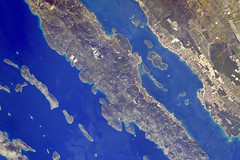
This picture was published on social media by ESA astronaut Sophie Adenot with the following caption: Day 234, orbit 3627 — I’ll soon have my feet back on Earth, but even from the ground, I definitely plan to keep sharing the beauty of our planet with you. I still have a few photos in store…
This heart is the small Croatian island of Galešnjak, in the Adriatic Sea.
Sending you lots of love from orbit!
Follow Sophie’s mission on the εpsilon page and on her social media platforms, such as X, Facebook, Instagram, LinkedIn.
Credits: ESA/NASA – S. Adenot


Democratic Party runs more than 60 military-intelligence candidates for Congress. If, as appears likely based on pre-election polling, the Democratic Party makes significant gains in November, the military-intelligence "caucus" inside the Democratic delegation could double or triple in size. They will vastly outnumber the relative handful of self-proclaimed "democratic socialists" to whom the corporate media has given so much attention, and whom pseudo-left groups cite as evidence that the Democratic Party can be pushed to the left.
As we have argued in previous such studies, the large number of military-intelligence operatives entering politics as Democratic Party candidates is the result of a two-way process. The Democratic Party leadership is openly encouraging the recruitment of such candidates, as it seeks ever-closer ties to the Pentagon and CIA. And large sections of the military-intelligence apparatus view the Democratic Party as their preferred political vehicle, in opposition to the erratic policies of Donald Trump and particularly his pullback from direct involvement in the US-NATO war against Russia in Ukraine. Hat-tip to jeffburges in this thread. Why, besides NATO and Ukraine, would former military intelligence officers run for office as Democrats? Apropos of nothing, here are some other recent headlines: Report: Trump Used Grok to Help Talk Him Into Illegal Invasion of Venezuela. President Donald Trump was reportedly encouraged by Elon Musk's AI chatbot, Grok, to carry out his illegal invasion of Venezuela during an hourslong session with the chatbot just weeks before the attack this January. In December 2025, Trump asked Grok questions for hours during a secret visit to the White House by Musk, per new reporting by Time Magazine. How Jared Kushner's firm's investment in an Israeli company could be a major conflict of interest. At the same time Jared Kushner has acted as a key negotiator in the war in Gaza, his private equity company, Affinity Partners, has held the largest stake in an Israeli firm backing businesses involved in Israel's military campaigns, a CNN investigation has found. Jared Kushner is at the center of Trump's corruption. On Monday, Paramount Skydance — run by David Ellison, a billionaire Trump has openly urged to reshape the news industry in his favor — launched an unprecedented bid to acquire Warner Bros. Discovery by initiating a hostile takeover after losing an earlier bidding contest to Netflix. Paramount's offer draws heavily from Kushner's investment firm, Affinity Partners, and from the sovereign wealth funds of Saudi Arabia, the United Arab Emirates and Qatar... Not even Rupert Murdoch's right-wing media empire was capitalized by foreign monarchies seeking political leverage.
As we have argued in previous such studies, the large number of military-intelligence operatives entering politics as Democratic Party candidates is the result of a two-way process. The Democratic Party leadership is openly encouraging the recruitment of such candidates, as it seeks ever-closer ties to the Pentagon and CIA. And large sections of the military-intelligence apparatus view the Democratic Party as their preferred political vehicle, in opposition to the erratic policies of Donald Trump and particularly his pullback from direct involvement in the US-NATO war against Russia in Ukraine. Hat-tip to jeffburges in this thread. Why, besides NATO and Ukraine, would former military intelligence officers run for office as Democrats? Apropos of nothing, here are some other recent headlines: Report: Trump Used Grok to Help Talk Him Into Illegal Invasion of Venezuela. President Donald Trump was reportedly encouraged by Elon Musk's AI chatbot, Grok, to carry out his illegal invasion of Venezuela during an hourslong session with the chatbot just weeks before the attack this January. In December 2025, Trump asked Grok questions for hours during a secret visit to the White House by Musk, per new reporting by Time Magazine. How Jared Kushner's firm's investment in an Israeli company could be a major conflict of interest. At the same time Jared Kushner has acted as a key negotiator in the war in Gaza, his private equity company, Affinity Partners, has held the largest stake in an Israeli firm backing businesses involved in Israel's military campaigns, a CNN investigation has found. Jared Kushner is at the center of Trump's corruption. On Monday, Paramount Skydance — run by David Ellison, a billionaire Trump has openly urged to reshape the news industry in his favor — launched an unprecedented bid to acquire Warner Bros. Discovery by initiating a hostile takeover after losing an earlier bidding contest to Netflix. Paramount's offer draws heavily from Kushner's investment firm, Affinity Partners, and from the sovereign wealth funds of Saudi Arabia, the United Arab Emirates and Qatar... Not even Rupert Murdoch's right-wing media empire was capitalized by foreign monarchies seeking political leverage.