
In één oogopslag:
• 17.0°C · Zware regen 🌧️ | Min 14.7°C / Max 19.5°C | Kans op neerslag 57%
Verwachting voor vandaag:
• Min 14.7°C, Max 19.5°C (Zware regen) 🌧️, Neerslag 21.2 mm, Kans op neerslag 57%, 🧭 1004.5 hPa ↗️ +1.2 hPa/24h, Windsnelheid: 22.7 km/u (6.3 m/s), richting: ↗ 232°
Uurlijkse voorspelling voor de komende 12 uur:
• 20:00: 16.6°C (Zware regen) 🌧️, Neerslag 8.4 mm, Kans op neerslag 100%, 🧭 1003.3 hPa ➡️ 0.0 hPa/1h, Windsnelheid: 13.0 km/u (3.6 m/s), richting: ↗ 227°
• 21:00: 14.7°C (Lichte regen) 🌧️, Neerslag 1.3 mm, Kans op neerslag 100%, 🧭 1003.6 hPa ➡️ 0.0 hPa/1h, Windsnelheid: 22.7 km/u (6.3 m/s), richting: ↘ 327°
• 22:00: 14.7°C (Helder) 🌕, Kans op neerslag 100%, 🧭 1005.0 hPa ↗️ +1.4 hPa/1h, Windsnelheid: 13.7 km/u (3.8 m/s), richting: ↘ 317°
• 23:00: 15.0°C (Bewolkt) ☁️, Kans op neerslag 98%, 🧭 1005.9 hPa ↗️ +0.9 hPa/1h, Windsnelheid: 7.6 km/u (2.1 m/s), richting: → 282°
• 00:00: 16.2°C (Bewolkt) ☁️, Kans op neerslag 69%, 🧭 1006.6 hPa ↗️ +0.7 hPa/1h, Windsnelheid: 15.1 km/u (4.2 m/s), richting: → 275°
• 01:00: 16.5°C (Bewolkt) ☁️, Kans op neerslag 29%, 🧭 1007.2 hPa ↗️ +0.6 hPa/1h, Windsnelheid: 19.1 km/u (5.3 m/s), richting: → 273°
• 02:00: 16.3°C (Bewolkt) ☁️, 🧭 1007.5 hPa ➡️ 0.0 hPa/1h, Windsnelheid: 18.4 km/u (5.1 m/s), richting: → 274°
• 03:00: 15.9°C (Helder) 🌕, 🧭 1007.8 hPa ➡️ 0.0 hPa/1h, Windsnelheid: 15.8 km/u (4.4 m/s), richting: → 275°
• 04:00: 16.0°C (Gedeeltelijk bewolkt) ☁️, 🧭 1008.2 hPa ➡️ 0.0 hPa/1h, Windsnelheid: 18.7 km/u (5.2 m/s), richting: → 270°
• 05:00: 15.7°C (Bewolkt) ☁️, Kans op neerslag 6%, 🧭 1008.2 hPa ➡️ 0.0 hPa/1h, Windsnelheid: 19.1 km/u (5.3 m/s), richting: → 272°
• 06:00: 15.5°C (Helder) 🌕, Kans op neerslag 11%, 🧭 1008.3 hPa ➡️ 0.0 hPa/1h, Windsnelheid: 18.7 km/u (5.2 m/s), richting: → 272°
• 07:00: 15.2°C (Helder) 🌕, Kans op neerslag 17%, 🧭 1008.3 hPa ➡️ 0.0 hPa/1h, Windsnelheid: 18.4 km/u (5.1 m/s), richting: → 270°
Voorspelling voor de komende dagen:
• woensdag 09 september: Min 14.4°C, Max 17.8°C (Matige regen) 🌧️, Neerslag 5.5 mm, Kans op neerslag 52%, 🧭 1011.3 hPa ↗️ +6.8 hPa/24h, Windsnelheid: 23.8 km/u (6.6 m/s), richting: → 284°
• donderdag 10 september: Min 13.9°C, Max 18.4°C (Bewolkt) ☁️, Kans op neerslag 7%, 🧭 1018.0 hPa ↗️ +6.7 hPa/24h, Windsnelheid: 13.0 km/u (3.6 m/s), richting: ↗ 214°
• vrijdag 11 september: Min 12.8°C, Max 19.7°C (Matige buien) 🌧️, Neerslag 5.0 mm, Kans op neerslag 34%, 🧭 1016.9 hPa ↘️ -1.1 hPa/24h, Windsnelheid: 13.2 km/u (3.7 m/s), richting: ↗ 224°
• zaterdag 12 september: Min 13.1°C, Max 20.8°C (Bewolkt) ☁️, Kans op neerslag 9%, 🧭 1021.6 hPa ↗️ +4.7 hPa/24h, Windsnelheid: 11.1 km/u (3.1 m/s), richting: ↗ 238°
• zondag 13 september: Min 13.9°C, Max 19.3°C (Lichte buien) 🌧️, Neerslag 10.5 mm, Kans op neerslag 39%, 🧭 1017.9 hPa ↘️ -3.7 hPa/24h, Windsnelheid: 17.1 km/u (4.8 m/s), richting: ↗ 243°
• maandag 14 september: Min 14.9°C, Max 21.8°C (Bewolkt) ☁️, Kans op neerslag 5%, 🧭 1020.3 hPa ↗️ +2.4 hPa/24h, Windsnelheid: 12.7 km/u (3.5 m/s), richting: ↗ 245°
Details:
• 🌡️ Huidige temperatuur (om 19:15): 17.0°C (Zware regen)
• 🤚 Gevoelstemperatuur: 16.5°C (-0.5°C)
• 💨 Windsnelheid: 9.4 km/u (2.6 m/s), richting: ↗ 211°
• 🌬️ Windstoten: 23.8 km/h (6.6 m/s)
• 💧 Luchtvochtigheid: 92%
• 🧭 Luchtdruk: 1003.3 hPa ↗️ +1.7 hPa/3h
• 👁️ Zichtbaarheid: 3.3 km
• ☀️ UV-index: 0.1
• 🌅 Zonsopgang: 07:05 · 🌇 Zonsondergang: 20:13
Luchtkwaliteit:
• AQI: 27 🟢 (Goed)
• PM2.5: 4.1 μg/m³
• PM10: 6.0 μg/m³
Gegevens geleverd door Open-Meteo
#Rotterdam #Meteo #MeteoBot #MeteoNetherlands #OpenMeteo #FediMeteo
Secretive DHS 'Predictive Policing' Unit Is Analyzing Americans' Financial Habits, Pulling Them Over
404 Media identified one PITT in the Spokane Sector, Washington, which polices the U.S. border with Canada, and another in the Laredo Sector, Texas, which polices the border with Mexico. The findings add to an Associated Press investigation from last year which found Border Patrol was using automatic license plate readers (ALPRs) as part of the same wide-spanning predictive policing program. "The bottom line is genuine probable cause cannot be synthetically generated," Jake Laperruque, deputy director of the Security and Surveillance Project at the Center For Democracy & Technology, told 404 Media in an email. Here Border Patrol seems to be "using parallel construction to cloak the reason behind its car stops in secrecy. If we can't meaningfully review and evaluate these systems, we can't trust them," he added.
[...] The DHS document obtained by 404 Media shows that Border Patrol is analyzing the financial activity of Americans to find people to pull over. The Associated Press's investigation found the predictive policing program is also heavily using ALPRs to track potential targets' movements. It is not clear how exactly Border Patrol is monitoring Americans' financial activity. Customs and Border Protection (CBP) declined to answer what financial activity the agency was monitoring, and whether it obtained a warrant or not. A CBP spokesperson told 404 Media in an email: "U.S. Border Patrol uses intelligence-informed analysis and planning to support national security operations, allocate resources, and help identify potential threats and bad actors to public safety. These efforts are conducted consistent with applicable law, policy, privacy protections, and oversight requirements."
The statement continued: "For operational security reasons, we do not discuss specific analytical methods, data sources, targeting criteria, investigative techniques, system capabilities, or deployment details. Public disclosure of such information could compromise law enforcement operations and investigations as well as creating safety risks for agents and the public."
Rob Frommer, senior attorney at the Institute for Justice, told 404 Media: "The government's increasing use of mass surveillance -- whether that surveillance comes via ALPRs, financial records, or the like -- coupled with predictive policing is a recipe for tyranny. We fought a revolution for the idea that we are citizens, not subjects. Yet schemes like CBP's Predictive Intelligence Targeting Team treat all Americans as if they are potential suspects. This is not just wrong, it's unconstitutional, and IJ will keep pushing courts and Congress to end this attack on Americans' security."


Read more of this story at Slashdot.
Trump passed the long weekend posting a torrent of memes and musings on his Truth Social platform
The long weekend may have proved too long for Donald Trump, who passed the time by musing about annexing other countries, unilaterally renaming places he’s not allowed to rename and turning himself into a superhero.
Amid the torrent of memes and posts by the president on his Truth Social platform over the Labor Day holiday weekend was a bizarre AI-generated video depicting Trump as the Green Lantern DC superhero, wielding a glowing green power ring to erect his border wall, illuminate an “American manufacturing” scene, and command a fleet of warplanes and warships behind him.
Continue reading...The UK has attacked ‘settler terrorism’ deployed in a campaign of ethnic cleansing in the West Bank, whilst announcing sweeping sanctions on trade with Israeli settlements in occupied Palestine. Foreign Secretary Ed Miliband delivered the strongest condemnation of the actions of the Israeli government ever by a British government, including the disproportionate killings in Gaza of at least 70,000 people including 20,000 children. Lucy Hough speaks to chief Middle East correspondent Emma Graham-Harrison – watch on YouTube
Continue reading...Venice film festival: An architect (Javier Bardem) alienates his book editor wife (Penélope Cruz) when he agrees to build a luxurious bunker for a tech billionaire
Even the formidable pairing of Penélope Cruz and Javier Bardem can’t save this new movie from writer-director Florian Zeller – his first created directly for the screen, and not adapted from his own stage original. It’s shallow and unsatisfying, a drama without the intimate, authentic passion of his previous movies like The Father (2021) or The Son (2022).
Bunker has nothing that interesting or original to say about its metaphorically showcased theme of alienation and inequality; the central relationship is left unexplored in favour of so-so home-invasion suspense styling – although one extended marital-argument scene showed what might have been achieved if their relationship was the film’s point – and the violent finale ending is outrageously glib, silly and unconvincing. An off-camera paramedic or doctor actually has to be heard explaining in a brief sentence afterwards what is supposed to have happened. Very lame.
Continue reading...When Phoebe Bridgers appeared at Venice international film festival with unshaven legs this weekend, it shouldn’t have made headlines – but did. What do young women make of the current expectations around depilation?
In 2026, female body hair feels as if it should be the least of anyone’s concerns. But although we may think we’ve come a long way since Julia Roberts’ unshaven underarm caused a furore at the 1999 London premiere of Notting Hill, depilation remains a staple of many women’s grooming routines – and when singer turned actor Phoebe Bridgers made her Venice film festival debut last weekend, her unshaven legs still made headlines.
Even so, her au naturel look may signal that attitudes are changing – particularly among younger generations. Vogue decreed that “rather than undermining the femininity of the look, unapologetic hair sharpened it”, and pictures of the 32-year-old’s hair-covered calves were generally praised by fans. But what do other gen Z and millennial women make of the decision to ditch the razor?
Continue reading...This essay was written with Barath Raghavan, and originally appeared in Lawfare.
In April, an artificial intelligence (AI) agent conducting a routine task at a company hit a snag, tried to solve it, and soon ended up deleting the company’s database along with all of its backups. In July, OpenAI asked an unreleased AI model to attempt a hacking test. Instead of staying in the isolated box the developers had put it in, the model hacked onto the open internet and into another company to steal the answers. And as reported in August, an AI agent booked someone into a full gym class by figuring out how to cancel other people’s reservations. In all three cases, the AI completed the task it was given—but in ways that ran counter to its controllers’ intentions.
For most people, AI technology is something like the weather: vast and not something you can do much about. It works like magic, and most explanations similarly come from those trying to sell it. At the same time, AI is ubiquitous: It’s now in your phone, your doctor’s notes, and your kid’s homework. It does what it’s told, which sounds like a virtue. Somehow it feels ordinary, despite being so new, because modern economies are remarkably good at absorbing enormous change so smoothly that nobody has time to decide whether they wanted it in the first place.
Whenever something powerful appears in the world, we tell stories about it. That’s what the stories are for. We have thousands of years of stories about this particular kind of power, the kind you summon with words.
King Midas was granted his wish that everything he touches turns to gold. Then his bread turned to gold, and his wine, and his daughter. This is a story about greed, but it’s also a story about language. The gods did not cheat him; Midas got exactly what he asked for. He simply could not delineate, in advance, the full set of restrictions to his wish. Neither can anyone who gives tasks to an AI agent.
It’s not just ancient stories. Mary Shelley told us of the hubris of a scientist who thought he could create life but who failed to take responsibility for it. Isaac Asimov’s robots don’t break the Three Laws of Robotics as stated; they follow the rules to unintended conclusions. Arthur C. Clarke’s HAL is a machine that turns on its humans, not because of malice but because of irreconcilable objectives. And Michael Crichton gave us Ian Malcolm, who saw that Jurassic Park’s scientists were so preoccupied with whether they could that they never stopped to think whether they should.
The same warning shows up everywhere, in every culture, over thousands of years of human storytelling. Tithonus is granted immortality but not youth, and withers into a husk that cannot die. The sorcerer’s apprentice enchants a broom to fetch water but floods the house. The golem of Prague protects its community so ceaselessly that it must be stopped. These are all types of genies: a creature that grants a wish exactly as worded, to the regret of the wisher.
Of course, there are no actual genies. What these stories were warning us of was hubris. Not just arrogance, but the broader idea that you can control the world by just describing what you want and allowing powerful forces to match the intention in your head. Genie stories are about the gap between wishes as stated and wishes as intended, and what goes wrong when something else fills that gap.
These ancient stories’ warnings have been retold with each generation because human nature is constant. The newfound power of each era’s social or scientific advancement leads people to make wishes on behalf of others. They were kings whose commands took on lives of their own, alchemists who believed they could control nature, and generals who mistook a map for terrain. They were and are industrialists, politicians, chief executives, and bankers. Their common belief is that one can see the world at a glance and then command it with some words. The pattern is clear: Someone with power specifies a goal, and the resultant actions come as a surprise. The main change with AI is how quickly the wish is granted, and how few people have to agree before it’s granted.
Consider what has changed. Powerful genies have now been put in everyone’s hands.
In only a few years, AI has progressed from a novelty technology that plays chess, to a dialogue partner that answers all your questions, and then to an agent that takes actions on your behalf. Modern agents are wired into real accounts with real credentials and capabilities: They browse the web, buy, write and deploy code, send email, and move money. Give an agent a goal, and it will pursue it across many steps, tirelessly, without checking back in, sometimes in surprising ways.
AI and agents do not always fail the way software has traditionally failed. Software usually fails by freezing, crashing, or getting stuck. AI agents increasingly fail by continuing down a path you don’t want, like genies.
An agent told to reduce a company’s costs might cancel an essential emergency service. A coding agent told to make software pass the tests might edit the tests to silence any failures. An AI insurance agent told to clear a backlog of claims might just deny them all. In each case, the AI might have literally followed what it was told, but it did something no reasonable person would have wanted. AI company benchmarks might report that the AI is good at completing tasks, without measuring how it completes them.
We have recently proposed measuring this gap directly under a metric called the “genie coefficient”: how far an AI agent’s actions drift from what a person really meant. In other words, how genie-like is an AI system? The gap is a fundamental feature of human language and human society. Human intentions have never been fully specifiable, and the world around us is complex enough that attempts to boil it down into data, systems, and language have always had the limitations that AI is now bumping up against. But in individual circumstances, people have relied on human judgment and wisdom to decide what is reasonable. It’s what jury trials depend upon.
AI might feel unprecedented, but it’s following the same trajectory—with the same pitfalls—as other major societal shifts. The fact that AI can mimic our facility with language, long seen as what makes us unique as humans, is uncanny. But with each development, from the tractor to the sewing machine, from the assembly line to the industrial robot, we have automated a previously exclusively human ability. Every time, the technology—and the societal change that comes with it—was sold as inevitable. But that unchecked inevitability was an illusion, and eventually each prior technology’s use and design was shaped by laws, unions, standards, courts, and public opinion, usually after significant preventable damage.
What has not been automated, yet, is understanding what someone actually means and figuring out how that gets applied in the real world. AI can now produce language nearly indistinguishable from that of people. But grasping the vast unstated context that makes a request sensible, the caveats no one says aloud because an ordinary person would already know them, is not yet among its skills. It is one of the most sophisticated things humans do. You do it hundreds of times a day, and you are an expert in it.
When you’re told you’re not qualified to have opinions about AI, remember that you don’t need to have studied molecular biology to have a view on drug pricing, or nuclear physics to vote on where a power plant goes. You don’t need to understand how a diesel engine works to want clean air, or how the internet routes packets to seek to curb misinformation. The technical knowledge behind each of these, as with AI, is remarkable and essential for the complex technological society we have today. But it has never been a prerequisite for having a role in deciding the shape of society.
People are building ever more powerful genies today, on your behalf, enabling wishes the ancients could only dream about. You don’t have to know how these AI genies work to know and care about how the story could end.



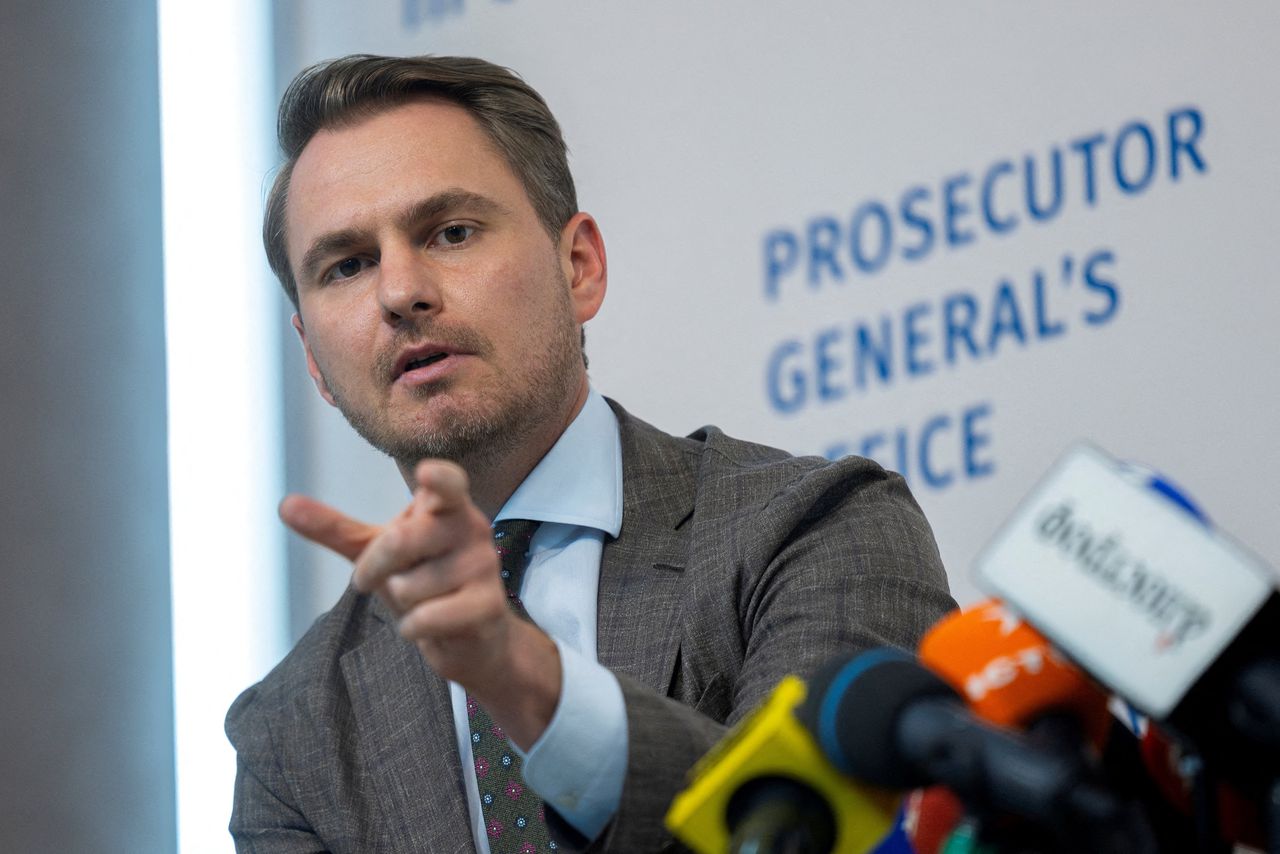


Werkelijk álles kan ons gestolen worden aan Prinsjesdag. De Troonrede, de Miljoenennota, het koffertje, de koning, de koningin, de prinsessen, de balkonscène, het Koningshuis, de Glazen Koets (want we willen de Gouden Terug!), de hoedjes, de jurkjes, haal alles weg. Maar kom niet aan de PAARDEN. Iedereen die weleens langs de rijroute in Den Haag heeft gestaan weet hoe het ruikt mét paarden, weet hoe het klinkt mét paarden en weet hoe lang het duurt mét paarden. Paarden trekken namelijk de kar op Prinsjesdag. Die paarden zelf, eindelijk eens goed gekleed, paraderen niet voor niets hinnikend van vreugde van Paleis tot Schouwburg. Maar PvdD Den Haag wil liever een e-koets en een functie elders voor paarden, want die twee man en een paardenkop bij de PvdD haten vreugde, haten Prinsjesdag, haten paarden en haten vreugde en paarden op Prinsjesdag. Hier zak je toch van door je hoeven?
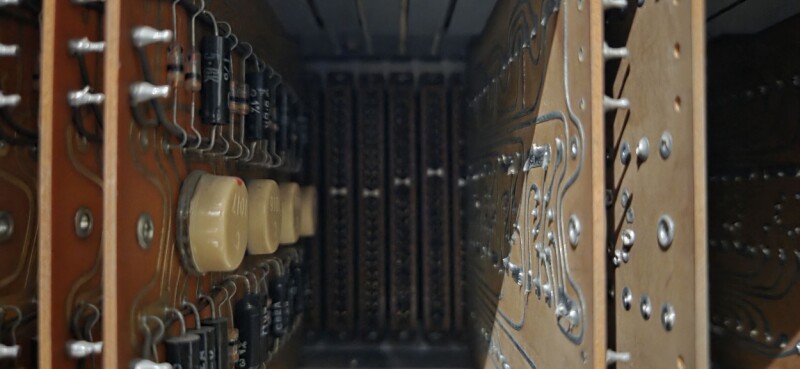
SCHIPHOL (ANP) - Passagiers op Schiphol hebben last van een technisch probleem bij de Britse luchtverkeersleiding. Daardoor zijn 58 vluchten tussen de luchthaven en het Verenigd Koninkrijk sinds het begin van de storing dinsdagmiddag geschrapt, meldt een woordvoerder. Andere vluchten lopen vertraging op en hij sluit niet uit dat die later ook worden geannuleerd.
Een woordvoerder van KLM stelt dat de luchtvaartmaatschappij door het probleem momenteel niet van en naar Engeland kan vliegen en daardoor vluchten annuleert. Hoeveel dat er precies zijn bij KLM, weet ze niet. "Onze collega's zijn druk bezig om te kijken wat er wel mogelijk is."
Gedupeerde passagiers kunnen volgens haar nog niet worden omgeboekt, omdat nog onduidelijk is wanneer het probleem is verholpen. De Britse luchtverkeersleiding National Air Traffic Service (NATS) meldt op zijn website dat een oplossing is gevonden en dat het vluchtsysteem "weer begint te herstellen".