Steeds meer Nederlanders binden na hun werkdag de veters van hun sportschoenen vast om even stoom af te blazen. Zeker nu we ons bewuster zijn van onze fysieke gesteldheid, is buiten bewegen populairder dan ooit. Toch belanden veel enthousiaste sporters na een paar weken op de bank met kuitklachten of pijnlijke schenen. Vaak ligt de oorzaak niet bij een gebrek aan motivatie, maar bij een verkeerde of onvolledige sportuitrusting.
Tijdens een intensieve workout krijgen je benen flinke klappen te verduren. Met elke stap die je zet, vangen je kuitspieren en gewrichten een schok op die gelijk staat aan een veelvoud van je lichaamsgewicht. Naarmate je langer sport, treedt er spiervermoeidheid op en wordt de bloedcirculatie trager. Dit is het moment waarop kleine scheurtjes in het spierweefsel kunnen ontstaan, wat uiteindelijk leidt tot nare blessures zoals shin splints. Hoewel veel mensen direct honderden euro's investeren in de nieuwste hardloopschoenen, wordt de basis rondom de voet en het onderbeen vaak vergeten. Toch kan het dragen van goede sport sokken met gerichte compressie een wereld van verschil maken door spiertrillingen te verminderen en de bloedsomloop te stimuleren.
Het menselijk lichaam is gebouwd om te bewegen, maar het herstelvermogen neemt af naarmate we ouder worden of wanneer de intensiteit van de training plotseling toeneemt. Compressietechnologie, oorspronkelijk afkomstig uit de medische wereld om trombose te voorkomen, heeft de afgelopen decennia succesvol de overstap gemaakt naar de recreatieve sport. Door een degressieve druk uit te oefenen, die het hoogst is bij de enkel en langzaam afneemt richting de knie, wordt zuurstofarm bloed effectiever teruggepompt naar het hart. Dit proces zorgt ervoor dat afvalstoffen zoals melkzuur sneller worden afgevoerd.
Dit principe is bijzonder nuttig voor iedereen die de grens van zijn of haar uithoudingsvermogen opzoekt. Zonder de juiste ondersteuning voelen benen na verloop van tijd zwaar en loodachtig aan. Een betere afvoer van afvalstoffen betekent simpelweg dat spieren langer optimaal kunnen presteren. Bovendien neemt de kans op nachtelijke kramp na een stevige workout aanzienlijk af.
Vooral hardlopers hebben baat bij een kritische blik op hun kledingkast. De herhalende en eenzijdige beweging van het rennen op verharde wegen is een flinke belasting voor het hele onderlichaam. Naast schokdemping is het droog houden van de voeten een absolute prioriteit om blaren en schimmelinfecties te voorkomen. Regulier katoen is in dit geval uit den boze, omdat de vezels zweet vasthouden en vervelende wrijving veroorzaken. Door te kiezen voor hoogwaardige hardloopsokken die gemaakt zijn van vochtafdrijvende materialen, blijven je voeten koel en droog. De naadloze afwerking van dit soort geavanceerde kledingstukken voorkomt bovendien irritante drukpunten die je uit je ritme kunnen halen.
Het comfort tijdens een lange sessie wordt voor een groot deel bepaald door een efficiënte temperatuurregulatie. Innovatieve garens trekken het vocht weg van de huid en transporteren het naar de buitenste laag van de stof, waar het snel kan verdampen. Dit houdt niet alleen de voeten op een aangename temperatuur, maar verlengt ook de levensduur van je sportschoenen doordat bacteriën veel minder kans krijgen om zich te nestelen en nare geurtjes te verspreiden.
Uiteindelijk draait een actieve levensstijl om consistentie en plezier in het bewegen. Wie constant worstelt met terugkerende pijntjes of lange herstelperiodes, raakt al snel de motivatie kwijt om de sportieve draad weer op te pakken. Door bewuster te kijken naar wat je draagt en hoe slimme materialen het lichaam fysiologisch kunnen ondersteunen, leg je een oersterke basis voor langdurige mobiliteit. Het gericht inzetten van moderne textielinnovaties stelt zowel de beginnende wandelaar als de fanatieke atleet in staat om veilig grenzen te verleggen. Het gaat er immers niet om hoe snel je aan een nieuw trainingsschema begint, maar of je fysiek in staat bent om morgen met hetzelfde plezier weer fit de deur uit te stappen.
DEN HAAG (ANP) - De provincie Zuid-Holland moet snel aan de slag met de aanbevelingen uit de evaluatie van de chaotisch verlopen overgang van het busvervoer rond onder meer Alphen aan den Rijn, Gouda, Katwijk en Leiden. Daarvoor pleit een deel van Provinciale Staten. In de evaluatie staat onder meer dat het verstandig is om busstallingen in provinciaal beheer te nemen en om een nieuwe concessie in de zomer te laten beginnen in plaats van in de winter.
"Een goed idee, laten we dat zo snel mogelijk regelen", aldus BBB'er Niels Oosterom. "We moeten nu keuzes maken, om te voorkomen dat we de volgende keer weer in deze ellende terechtkomen", zei Steven Datema (ChristenUnie). Gedeputeerde Jeroen van Dijken zegt al aan voorstellen te werken, maar benadrukt wel dat de volgende concessiewisseling pas in 2033 is.
Qbuzz nam eind 2024 het busvervoer in het noorden van Zuid-Holland over van Arriva. Mede door een personeelstekort en vertraagde oplevering van elektrische bussen verliepen de eerste maanden heel chaotisch.
De Europese Centrale Bank verhoogt morgen vrijwel zeker de depositorente naar 2,50%. Wie een aflossingsvrije hypotheek boven de nieuwe bankgrens van 30% heeft en wiens rentevaste periode binnenkort afloopt, krijgt twee klappen tegelijk: een fors hogere rente op de bestaande schuld, plus gedwongen omzetting van een deel naar annuïtair.
In een peiling van Reuters onder 65 economen verwachtten alle ondervraagden een verhoging met een kwart procentpunt, meldde de Dagelijkse Standaard. De ECB verhoogde de depositorente in juni al van 2,00 naar 2,25%. Sindsdien is de inflatie verder opgelopen: volgens een flashraming van Eurostat kwam de inflatie in de eurozone in augustus uit op 3,3%, een stijging ten opzichte van 2,9% in juli. Dat is het hoogste niveau sinds september 2023.
In juli hield de bank de rente ongewijzigd op 2,25%, maar uit de notulen bleek dat de ECB na de verhoging in juni wilde wachten tot september om eventueel opnieuw actie te ondernemen. De meeste economen verwachten dat de verhoging van morgen voorlopig de laatste wordt; circa 91% denkt dat de depositorente eind 2026 nog op 2,50% staat. Ruim driekwart voorziet dat dit niveau tot halverwege 2027 wordt gehandhaafd.
De gemiddelde hypotheekrente voor tien jaar vast staat momenteel op circa 4,3%, aldus de Consumentenbond. Aan het begin van het jaar lag die nog rond 3,84%. Wie in de jaren van lage rentes een hypotheek afsloot tegen 1,5 à 2 procent, betaalt bij verlenging meer dan het dubbele.
De rentestijging alleen is al pijnlijk, zoals we eerder beschreven in De hypotheekrente stijgt weer, en het einde is niet in zicht: drie dingen die je nu kunt doen. Maar wie daarnaast een aflossingsvrij deel boven 30% van de woningwaarde heeft, loopt bij verlenging tegen een tweede muur. Bij alle grote banken mag je nu maximaal 30% van de waarde van je woning aflossingsvrij lenen; dat was 50%. Het resterende bedrag moet via een annuïtaire of lineaire vorm worden afgelost. Wat dat concreet betekent als je looptijd afloopt, schreven we gisteren in Strengere regels aflossingsvrije hypotheek: dit gebeurt er als jouw looptijd afloopt.
Een hogere rente plus verplichte aflossing: voor je portemonnee is dat geen optelsom, maar een vermenigvuldiging.
Neem een woning van €400.000 met een aflossingsvrij hypotheekdeel van €160.000, goed voor 40% van de woningwaarde. De eigenaar heeft een rente van 2,0% die over een jaar afloopt. De bruto maandlast bedraagt nu €267.
Bij verlenging gelden twee dingen tegelijk. De bank staat nog maar 30% aflossingsvrij toe: dat is €120.000. De overige €40.000 moet worden omgezet naar een annuïtaire hypotheek. En de rente op het aflossingsvrije deel springt van 2,0% naar circa 4,5%, inclusief de opslag van 0,3 tot 0,5 procentpunt die banken inmiddels rekenen voor aflossingsvrije hypotheken.
De nieuwe rekening: €120.000 aflossingsvrij tegen 4,5% kost €450 per maand aan rente. De €40.000 annuïtair over twintig jaar tegen circa 4,3% kost ongeveer €249 per maand aan rente en aflossing. Totaal: circa €699 per maand. Dat is €432 meer dan de huidige €267.
Een deel van dat bedrag is aflossing en dus vermogensopbouw: dat geld verdwijnt niet, het zit in je huis. Maar het moet elke maand wél van je rekening. Voor een huishouden dat gewend is aan €267 per maand, is de sprong naar bijna €700 een schok in de cashflow.
Huiseigenaren die in de jaren van lage rentes een hypotheek afsloten met een aflossingsvrij deel boven 30% van de huidige woningwaarde, en wier rentevaste periode binnen twee jaar afloopt, zitten in de gevarenzone. Circa 45% van de totale Nederlandse hypotheekschuld is (deels) aflossingsvrij. DNB waarschuwt voor het concentratierisico tussen 2035 en 2052, wanneer een groot aantal aflossingsvrije hypotheken tegelijk afloopt.
Controleer drie dingen: hoeveel procent van je woningwaarde het aflossingsvrije deel uitmaakt, wanneer je rentevaste periode afloopt, en of je bank de 30%-grens hanteert. Zit je erboven en loopt je rente binnen twee jaar af, dan is een gesprek met een hypotheekadviseur verstandiger dan afwachten.
Het ECB-besluit valt morgen om 14.15 uur. Voor wie boven de 30% zit, is dat niet alleen macro-economisch nieuws. Het is de klok die op je eigen hypotheek tikt.
Bronnen: Dagelijkse Standaard, Eurostat, Raisin, The Asset, ABN AMRO, Consumentenbond, De Belegger, Hypotheekplatform, BLOX
AMSTERDAM (ANP) - De overzichtstentoonstelling van de Japanse kunstenaar Yayoi Kusama wordt voor het Stedelijk Museum in Amsterdam de "grootste tentoonstelling die we ooit hebben gehad", zegt een woordvoerder. "De hele 'badkuip', de aanbouw aan het oude pand, is gevuld met haar werk. Dat is eerder gebeurd, maar wat deze expo groter maakt is dat we Kusama hebben doorgetrokken naar buiten: bomen op het Museumplein zijn gewrapt in rood met witte stippen en ook is de gevel bestickerd met gekleurde stippen."
Door de aandacht voor het recente overlijden van Kusama, vorige maand op 97-jarige leeftijd, is een run ontstaan op de tickets in de voorverkoop. De eerste dagen en ook alle weekends in september zijn al uitverkocht. De expo in het Stedelijk gaat op 11 september open voor het publiek en is te zien tot en met 17 januari.
Volgens de woordvoerder is dit de laatste tentoonstelling waar Yayoi Kusama zelf de laatste hand aan heeft gelegd. Er is zeer recent werk te zien, dat tegenover jeugdwerk is gezet. Ook toen schilderde ze al de stippen waarmee ze wereldberoemd is geworden. "Als kind van 10 jaar zag ze de stippen als hallucinaties, als een soort sluier." Voor haar stonden de 'polkadots' symbool voor oneindigheid.
Pompoenen en spiegelruimtes
De Japanse werd niet alleen beroemd om haar stippen, maar ook om pompoenen en spiegelruimtes. Op de tentoonstelling in Amsterdam zijn die in ruime mate te zien. Op de bovenverdieping is er een installatie met spiegels en gestippelde, tentakelachtige objecten die Kusama speciaal voor deze expositie heeft ontwikkeld.
Yayoi Kusama werd in 1929 geboren in de Japanse stad Matsumoto. Ze begon haar carrière in eigen land, maar emigreerde in 1956 naar de Verenigde Staten, waar ze experimenteerde met schilderkunst, sculpturen, film en mode. In de jaren 60 verbleef ze ook geregeld in Nederland. In 1973 keerde ze terug naar Japan, waar ze uiteindelijk overleed.
‘The black cloud emerged from a grate in the street. I guess something underground was on fire. It was hilariously cinematic – just one of those eerie, spontaneous things that happen in a city’
This image was taken in 2011 or 2012, just after I had moved to Los Angeles. I was downtown, an area I don’t go to that much, walking around with my camera. Some black smoke started to emerge from a grate in the street – I guess something underground was on fire. It was hilariously cinematic, as if some sort of devil was going to appear. It was really just one of those eerie, spontaneous things that happen in a city. There is a very powerful feeling of surrender when I am photographing. I have to submit to the authority of ignorance when I’m out there.
I grew up in San Jose, which is a sprawling American suburb – there’s no city about it. I came to LA because I was depressed where I lived, and I had just met my future wife, who didn’t want to live in San Jose either. LA is not really a city, it’s hundreds of places. You can drive 15 minutes and be in a completely different environment – the beach, the mountains. There’s a weird sentience to the city, if you let it take you. I get an inexplicable desire to just get in the car and go.
Continue reading...Downed trees cause widespread power outages on Kauai as winds and rains rip up roads and coat homes in mud
Damaging winds and heavy rains from Hurricane Lowell caused significant damage on Hawaii’s western islands, knocking out power to thousands, ripping up stretches of road and drenching homes and stores with mud.
Fierce winds downed trees and caused widespread power outages on the island of Kauai, home to 73,000 residents. The Kauai Island Utility Cooperative reported that nearly all of its roughly 35,000 members were without power on Tuesday.
Continue reading...CPS says charges relate to alleged sexual misconduct by the actor towards five women between 2007 and 2016
The actor and filmmaker Noel Clarke has been charged with six sexual offences, including two of sexual assault, after allegations made by five women.
The charges against the former Doctor Who actor involve two counts of sexual assault, three counts of voyeurism and one count of exposure.
Continue reading...

For the last three years Jake Welch has been 3D scanning public restrooms and archiving their peculiarities on a website called The Restroom Archive. “It started as a joke,” Welch, the site’s creator and head archivist, told 404 Media.
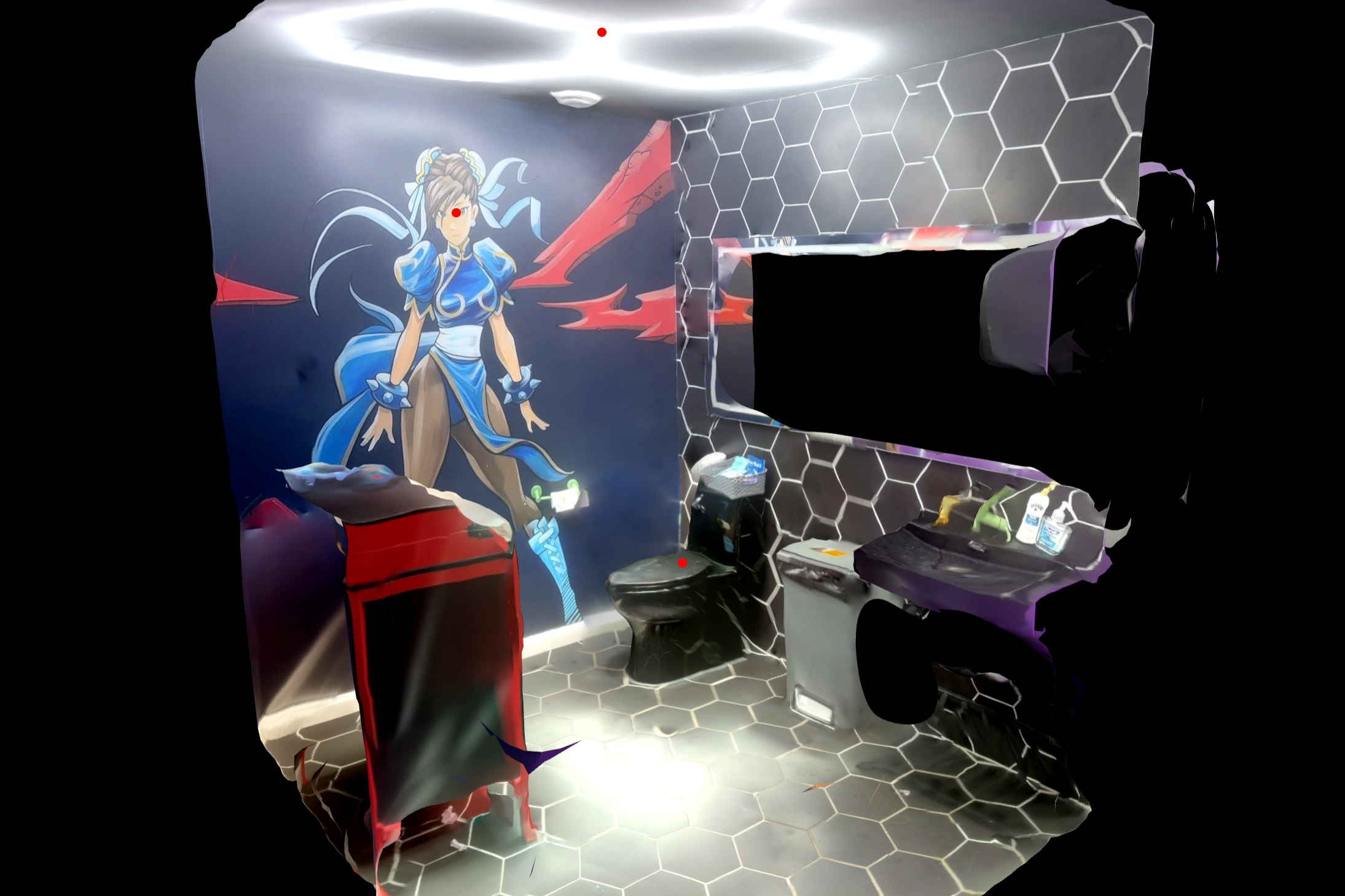
The Restroom Archive describes itself as “an ongoing repository of publicly accessible restrooms.” When someone first visits the Archive, the site serves them a random 3D scan of a public restroom, its location, and a brief written description. Hurricane, Utah’s Gypsy Emporium Antique Mall, for example, was scanned on April 11, 2026 and features paintings of a squirt gun on two of its four walls. “This restroom is accessed by passing through the antique mall through a back hallway and through the door of a jail cell,” the description says.
The renders are created with smartphone photogrammetry apps like Polycam which take hundreds of photos of an area and stitches them together to create a 3D environment. The results are imperfect. The rooms appear to run at the seams as if they’re built from wax and the tech has trouble with reflective surfaces, sometimes rendering mirrors as an abyss. There’s often a blank spot or warp in the render where the person who took the photos has been marred out of the scan. Sometimes the process captures a shoe or bit of arm which ends up in the final render unattached to a human.
The brief descriptions and imperfect scans make the Archive uncanny, but also funny. “I had just discovered Polycam for the first time, and went out with friends one night, staying out late. We went to an IHOP, and I kind of started to scan the restaurant as a joke,” Welch, a freelance designer in NYC when he’s not scanning restrooms, told 404 Media.
A month later, he scanned a bathroom restaurant while out with his wife. “I came back and we were just laughing at how funny of an idea that was and I kind of just kept doing it,” he said.
After scanning the restaurant, Welch went on a road trip with friends and scanned all the restrooms he hit along the way. “After I had like five or six of them, I started noticing things that I liked about each of them. I was like: ‘I like that this one has this weird trash can from outside in the restroom,’ or ‘I love that this one has the hand dryer plugged into an outlet right below it.’ It was all of these things that I thought were just hilarious, but also kind of interesting,” he said.
“Some of them are scary. Some of them show their wear from the use of people passing through them. But some of them are really interesting and well-designed, well-decorated, or super eclectic,” Welch said. “Maybe this is the artist brain in me but I started to see them as storytelling. They very much reflect the culture of where they’re situated and the people that are using them.”
According to Welch, some of the most frightening restrooms are the ones he saw on road trips. “I feel like it’s always the ones that are on the highway as you’re passing through a truck stop. There’s the Minute Market in Washington, Utah. So grimy looking. Or ampm in Barstow, California. Sometimes in its bar where it’s just totally graffitied and worn. The mirror is completely covered, you can’t even see in it. They’re often scary,” he said.
Welch said he’d also observed vast regional differences in America’s toilets. I think it has a lot to do with suburban versus urban,” he said. “Most of my restrooms in Utah are quite spacious, or maybe a little bit more commercial because there's a lot of [chain restaurants] in Utah. Here in New York, all the restrooms are really small, really impromptu. Oftentimes, I'm scanning them in these tiny hole-in-the-wall restaurants where you have to walk through the kitchen to get to the back, and it's obvious that they don't let everybody use the restroom. So those ones are usually a little bit more decrepit, a little bit more neglected, or sometimes they use them like storage rooms, a little bit more multifunctional because space is tighter in New York.”
After three years of scanning the restrooms and uploading them, Welch decided to overhaul the Archive and open it up to public submissions. “There are submission agreements that they have to abide by, but they're really loose,” he said. “It's it's things like just making sure that the scans are quality, making sure that they're not scanning anything too terrible or too gross because I have to vet all of them before they're posted, or, you know, making sure that people aren't trespassing or aren't scanning private residential restrooms or anything like that.”
Most Android and iOS smartphones can handle scanning a bathroom, but Welch preferred his iPhone. “If it’s a pro model, it has lidar, which uses lasers in your phone to measure distance,” he said. “I don’t even know why they have that. It feels like the use cases are kind of limited, but for me, it’s like I can’t get any other phone besides a pro model anymore because I like the lidar too much for bathroom scanning.”
There’s better methods of scanning that would create cleaner and more accurate visions of the world’s bathrooms. “I’ve had a lot of people in the comments in some of my videos saying that I should use Gaussian splats, which are a newer technique for making 3D models, and they’re a lot higher fidelity,” Welch said. “It’s built up with these blurry-looking point clouds, and they’re a little bit more crisp. But I kind of like this aesthetic of the blobby, stitched together photogrammetry. It kind of feels like it’s befitting of the space.”
He also liked the strange abysses the iPhone makes. “Another aspect of the lidar, since it’s lasers, when it bounces off a reflective surface you get really weird artifacts. So that’s why, if you look at a lot of the scans, a lot of the trash cans or a lot of the mirrors, they get really really wacky. So I think that’s fun,” he said.
When he set out to redesign the site a few weeks ago, Welch said it was important that he take it as seriously as possible. The contrast between the strange subject matter and the serious archive was important. “I started doing a lot of research on real life internet archives used by museums, libraries, and also just started doing research on public bathroom signage, and started to pull together these conventions to design a new website,” he said. “And part of that was the descriptions [...] there's something about the subject matter being so funny and humorous and taboo that made me want to completely steer away from that and take the archive 100% seriously.”
The redesign, and a viral Instagram reel, drove traffic to the Archive and submissions started to come. “I’ve had a few from around the world. I had one in Dublin that’s a typical tavern-pub bathroom, but in the description they said that the walls were covered with tags of left-wing groups and soccer clubs,” he said. “To my untrained eye, as an American, I wouldn’t have known.”
And, of course, there were new and different kinds of scary public bathrooms. “The very first user-submitted submission was in the basement of the Tri-Cities airport in Tennessee and it had been completely gutted. It’s just a dirt room,” he said. “I opened it up and I’m like, ‘what the hell am I looking at?’ And then I notice in the corner, like the ghost of an imprint of a urinal with the plumbing still attached. I'm like, ‘oh my God, this is a restroom.’ It was such a left field submission, but it was honestly kind of validating to me of why I should open it up to the public.”
Welch told me he envisioned a future where bathroom scans poured in from around the world “It's cool to see new restrooms. I'm hoping that it gets attention in other parts of the world where maybe restroom designs are different,” he said.
Then he told me about a hole in his archive. “Sign up to be an archivist,” he said. “We need your scans in South Carolina.”

Read more of this story at Slashdot.