
Thomas Hawk posted a photo:

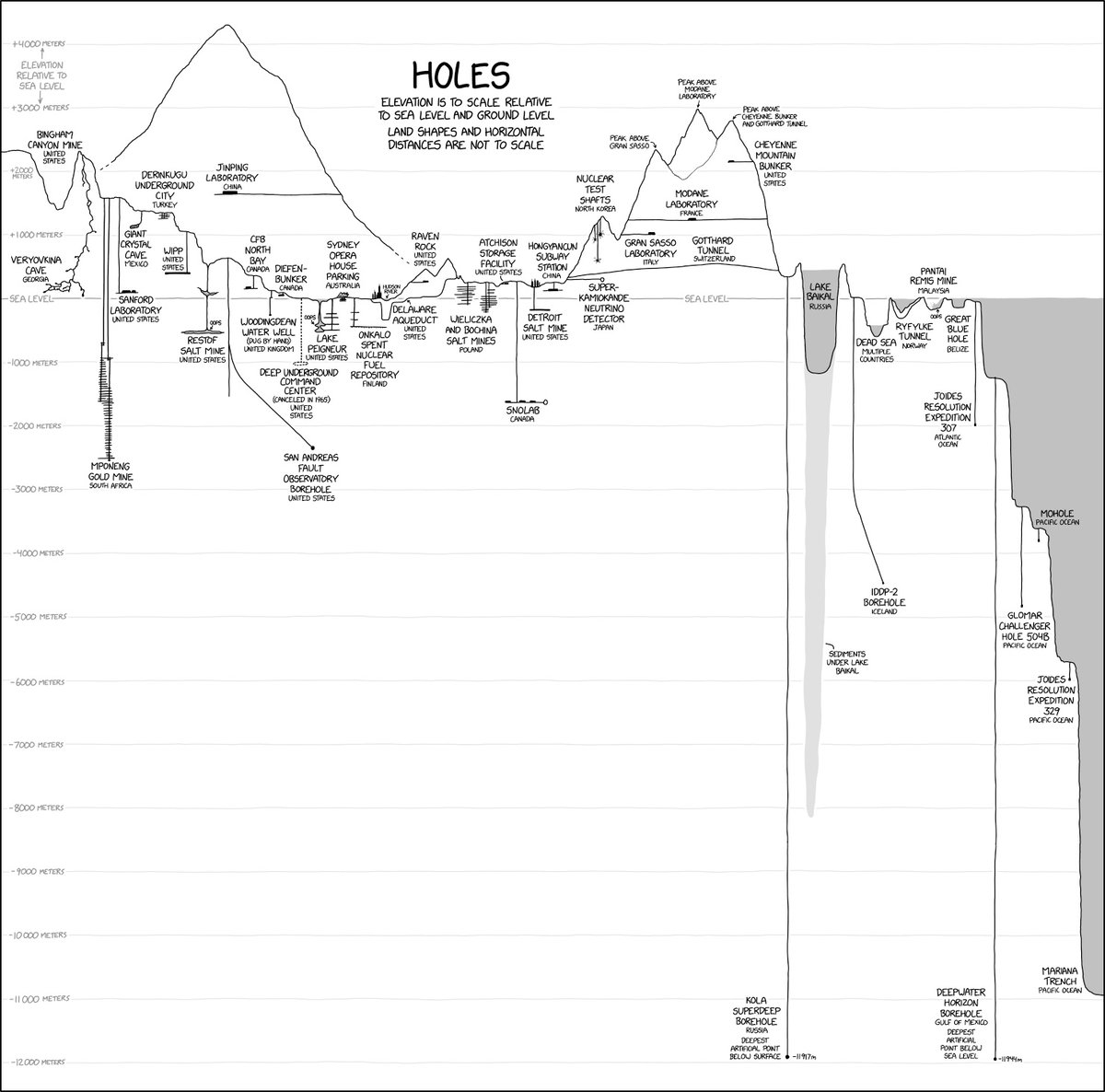
From XKCD, a tour of some of the Earth’s deepest and most notable holes, including mines, caves, boreholes, subway stations, lakes, tunnels, neutrino detectors, and, of course, the Mariana Trench.
I was surprised to learn that a pair of boreholes, the Kola Superdeep Borehole and the Deepwater Horizon Borehole, are actually deeper than the Mariana Trench. Explain XKCD has more info on each of the various holes, including the truly bonkers Cave of Crystals in Mexico.
Tags: geology · infoviz · Randall Munroe · xkcd
Ocean Vuong has a photograpy show opening at The Wadsworth Museum in Hartford, CT in August. Vuong used “portraiture, landscape, and snapshots to document queer and immigrant life in the Connecticut River Valley over two decades”.
When A.I. Is a Member of the Family. How a family of three in a Cleveland suburb uses AI chatbots. This is wild.
/s3/static.nrc.nl/wp-content/uploads/2026/07/13193259/130726VER_2035191110_.jpg)
Microsoft geeft als eerste grote Amerikaanse partij inzicht in het stroomverbruik van zijn datacenters in Nederland. Dat is groot, en groeit de komende jaren bovendien hard. Terwijl andere datacenteruitbaters zwijgen, verhardt de strijd om toekomstige aansluitingen op het stroomnet.
/s3/static.nrc.nl/wp-content/uploads/2026/07/10160057/130726ECO_2035141725_.jpg)
Ongeveer een kwart van de geslaagden op havo en vwo kiest voor een tussenjaar. Ze willen reizen, sporten, een taal leren, vrijwilligerswerk doen. En ze zijn op zoek naar persoonlijke groei. „Ik weet nog niet zo goed wat mijn kwaliteiten zijn.”
/s3/static.nrc.nl/wp-content/uploads/2026/07/06121134/070726BIN_2034868452_tussenjaar1.jpg)
/s3/static.nrc.nl/wp-content/uploads/2026/07/13170410/130726VER_2035187769_.jpg)
/s3/static.nrc.nl/wp-content/uploads/2026/07/13190249/130726BUI_2035123105_1.jpg)

Nederland waterland. Dat ligt niet alleen ontzettend lekker in het gehoor, het ís ook nog eens zo. MAAR VOOR HOELANG NOG? Al tijden wordt gewaarschuwd voor grote watertekorten en zelfs De T. zucht, maar nu brengt Nieuwsuur ons een waarschuwing rechtstreeks van de Landelijke Coördinatiecommissie Waterverdeling, die stelt dat we waterwise zo'n beetje teruggaan naar het jaar 1976 (toen Joop den Uyl nog kraanbeheerder was). We zitten pas een paar dagen in fase 1: dreigend watertekort, maar fase 2: feitelijk watertekort ligt al op de loer. Dat raakt in de eerste plaats scheepvaart en boeren, alleen op een gegeven moment komt ook de burger in de zee van ellende terecht, zeker met die eeuwigdurende hittegolf waar we in zitten. En ja, mogen we dan straks nog wel dweilen? Plantjes water geven? De was doen in een teil? Kan er dan nog muntjesloos gedoucht of moeten we de zweetgeur van Jeroen van sales op kantoor gaan gedogen? Dat worden onsmakelijke toestanden in Nederland. Gelukkig kunnen we in plaats van drinkwater nog altijd aan het bier (toch geldt ook hier: hoelang nog?), verder ziet het er allemaal bepaald niet positief uit.
De hopeloze toestand in het Slavische theater volgt u wellicht in ons onregelmatigheidsklassement van de Weekupdates maar voor deze banger breken we de week graag weer op. Een FAB-3000, een 3.000 kilo zware zweefbom met een explosieve lading van 1.400 kilo die onder een Su-34 jachtbommenwerper geknoopt wordt en dan een kilometer of 40 van het doelwit op deze manier wordt losgelaten om het zelf uit te zoeken. Heel precies zijn ze niet. En dan krijg je dus deze ellende, in Orikhiv, oblast Zaporizhzhia. Op een woonblok, waar weinig mensen meer wonen, dus we zullen het volgens de Code van de Volkskrant wel geen genocide noemen. En er zijn natuurlijk minder Joden bij betrokken!


Jeongmin Lee is interested in the ways “memory is carried through craft and repetition.” On traditional Korean mulberry paper, or hanji, Lee draws delicate lines in ink and pigments known as bunchae, rendering rippling textures that whirl across the page. Steeped in local folklore and mythology, the Busan-based artist creates surreal scenes that conjure fantastical tales of life by the sea.
“Most of my recent projects begin with reading regional folktales, visiting places connected to those stories, and collecting fragments of history, mythology, and oral traditions,” she says. “I rarely paint a folktale exactly as it’s written; I’m more interested in its symbols, emotions, and the questions it leaves behind.”

Many of Lee’s compositions focus on women’s knowledge, labor, and resilience and how those qualities emerge through coastal storytelling. Tales of powerful sea gods and the diving traditions of the haenyeo commingle into balanced illustrations that translate the symbols and motifs of the region anew.
While her approach is labor-intensive, Lee enjoys utilizing such a meticulous, meditative technique. “Painting with traditional pigments requires a slow, layered process. The colors are built gradually, allowing the paper and pigments to create subtle textures that wouldn’t be possible with other materials,” she adds. “It gives me space to sit with these stories while I paint them.
Many of the works shown here are part of Daughters of the Sea, an ongoing series recently on view at the SĀBRS Festival in Riga. Lee hopes to expand the project into one that’s participatory and connects similar narratives from across the globe. “I’m exploring ways that folklore can become something people experience and talk about together, rather than something that exists only on a gallery wall,” Lee shares.
She’s also currently working on a graphic novel centering on Busan’s mythology and folklore, which she hopes to complete next year. Keep up with her projects on Instagram.


Do stories and artists like this matter to you? Become a Colossal Member today and support independent arts publishing for as little as $7 per month. The article Korea’s Coastal Folklore Surfaces in Jeongmin Lee’s Ink Illustrations appeared first on Colossal.
# xrandr Screen 0: minimum 320 x 200, current 1024 x 768, maximum 7680 x 7680 HDMI-1 connected primary 1024x768+0+0 (normal left inverted right x axis y axis) 0mm x 0mm 1024x768 60.00* 800x600 60.32 56.25 848x480 60.00 640x480 59.94 HDMI-2 disconnected (normal left inverted right x axis y axis)
I have also tried various permutations of hdmi_force_hotplug, hdmi_group, hdmi_mode, hdmi_force_mode, hdmi_force_hotplug and hdmi_drive in config.txt, and video=HDMI-A-1:1920x1080@60D in cmdline.txt with no change.
Before I toss it in the trash, does anyone know what could have caused this and if it is fixable? Is this a known failure mode of the video hardware scorching itself somehow?
Do not speculate. Do not just google it for me.


Read more of this story at Slashdot.
A voxel Tokyo in real Japan time – ride the Yamanote line and study Japanese: https://jivx.com/densha
Discussion: http://news.ycombinator.com/item?id=48890959

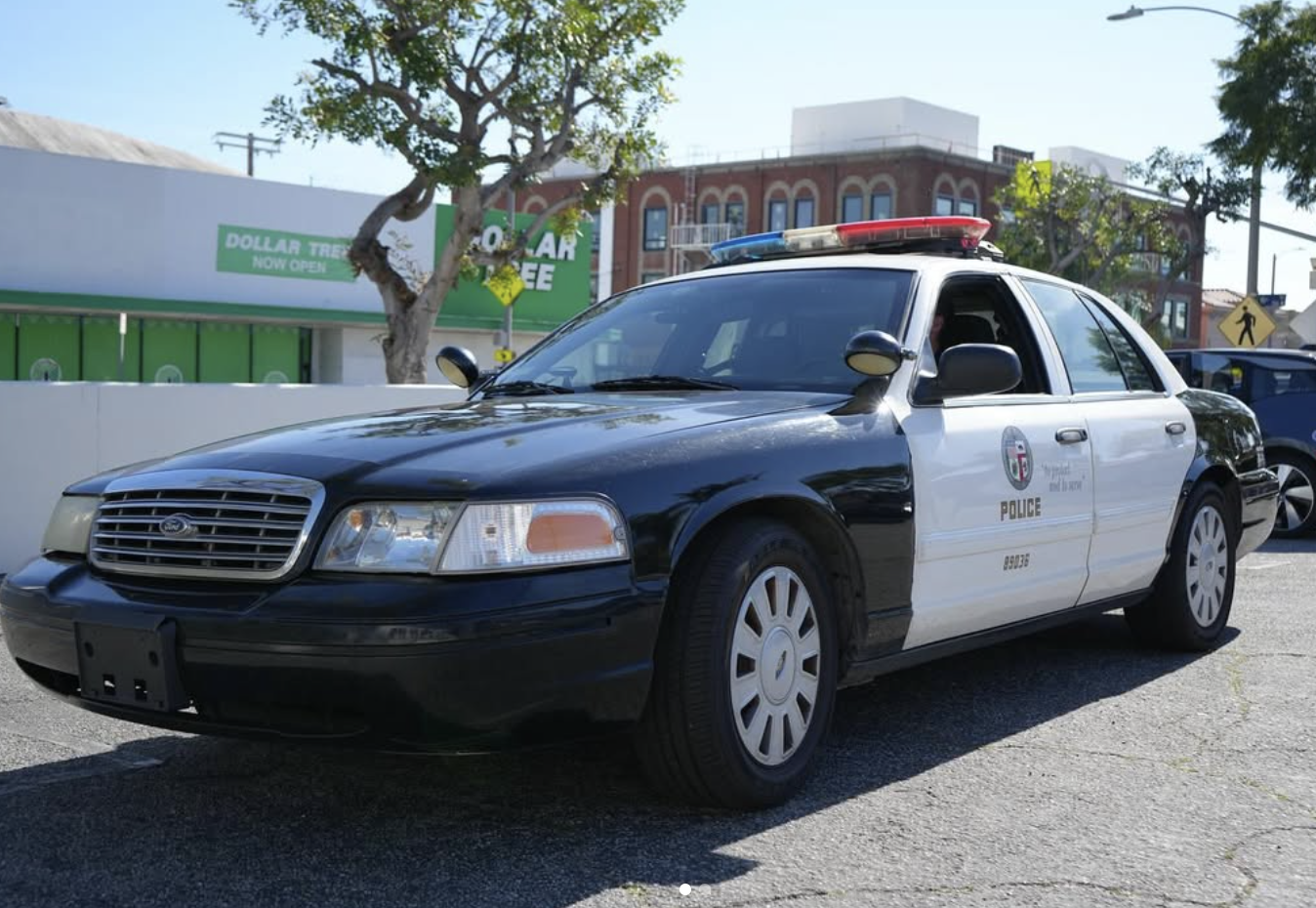
The Los Angeles Police Department (LAPD) announced it will let its surveillance contract with automated license plate reader company (ALPR) Flock expire, becoming the largest police department in the country to drop its contract. Notably, the decision came after an audit of ALPR technology found that, in a two-month period, the LAPD had improperly "investigated" 161 people whose cars were flagged as stolen in the LAPD’s ALPR system but were not actually stolen.
The news that LAPD pulled over 161 innocent people in two months because of improper tagging in the department’s system comes after several high-profile incidents in which people in other states were accosted by police because of data entry or clerical errors in ALPR systems. Joel Feder, an editor of the car journalism website The Drive, detailed a harrowing tale in which he was tracked for days and ultimately pulled over by police in Minnesota because the license plate of the car he was reviewing for the website had been entered into the Flock system as stolen by a police department in California. Monday, the website MotorBiscuit wrote about an innocent woman who was jailed for 13 days because she drove a black Dodge Durango and police searched the Flock system for a Black Dodge Durango suspected of being involved in a fatal hit-and-run accident.
A new report by the LAPD Office of the Inspector General (OIG) suggests that instances of people being falsely pulled over because their license plates have shown up on an ALPR “hot list” are very common, and that the surveillance of people on hot lists that ultimately result in no action from police is staggering. Many ALPR systems have this “hot list” feature, which is where police enter a license plate and get a ping or notification about the vehicle’s whereabouts whenever it passes a connected ALPR camera. In a two-month period between August 1 and September 30, 2025, the LAPD’s cameras generated more than 210.5 million license plate reads, according to the report.
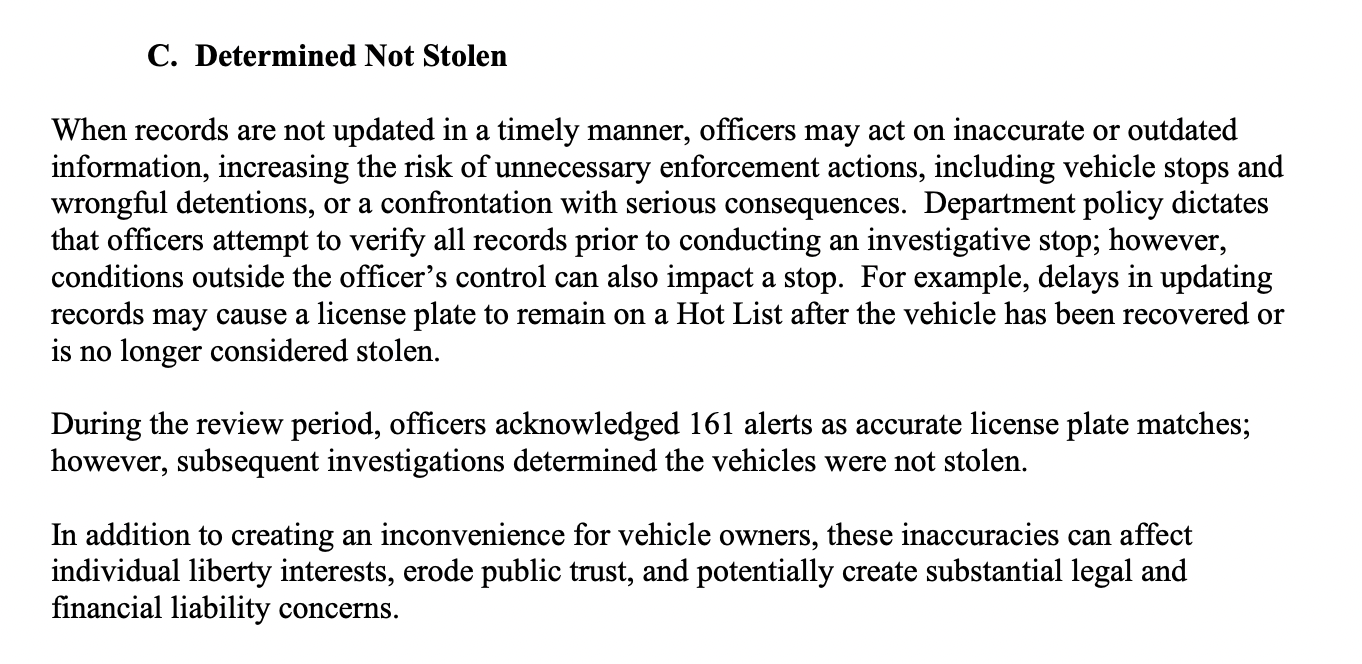
“During the review period, officers acknowledged 161 alerts as accurate license plate matches; however, subsequent investigations determined the vehicles were not stolen,” the report reads. “In addition to creating an inconvenience for vehicle owners, these inaccuracies can affect individual liberty interests, erode public trust, and potentially create substantial legal and financial liability concerns.”
The report notes that this happened because of “inaccurate or outdated information, increasing the risk of unnecessary enforcement actions, including vehicle stops and wrongful detentions, or a confrontation with serious consequences,” and that in many cases, license plates remained on a hot list after a stolen vehicle had already been recovered or was reported as not stolen, meaning the cops are in some cases pulling over the lawful owner of the vehicle.
Notably, the report states that when police get an ALPR hot list hit, the department generally considers any subsequent action to be a “high-risk” stop, meaning the risk of confrontation or potential danger is greatly increased from routine traffic stops for running a red light or speeding.
“When a license plate matches with a vehicle of interest on a Hot List, an alert will appear on the police vehicle’s Mobile Digital Computer,” the report reads. “Often, officers will approach the vehicle with extreme caution or conduct a ‘high-risk’ stop. This involves calling for back up, air support, and a supervisor and ordering the suspect out of their vehicle.” The report says, “department policy requires officers to attempt to verify the accuracy of the ALPR alert prior to conducting a stop,” but that often does not happen. The report also states that, on the vast majority of hot list hits, no action is taken by police meaning that specific people are being subjected to tracking and surveillance for no readily discernible reason. In the two-month audit period, 5,911 different license plates were tracked. No action was taken against 4,575 of those cars.
The LAPD said in response to the report that cars improperly flagged as stolen “generally result from the timing of record updates outside of the Department’s control, such as delays by another jurisdiction or a vehicle owner in clearing a plate from a Hot List after a vehicle has been recovered or is no longer wanted.” In other words, LAPD is often relying on other police departments to remove license plates from a hot list, highlighting the problems with networking different surveillance systems together.
The LAPD OIG report, which appears to have directly led the LAPD to allow its Flock contract to expire, studied the use of three different ALPR systems the department has been using, including static, pole-mounted cameras from Motorola and Flock and cameras in police cruisers made by Axon. In total, the department has nearly 2,000 ALPR cameras; LAPD accesses data for both Flock and Axon systems through Flock’s backend thanks to a data sharing partnership between Axon and Flock, according to the report. The report said the department was able to recover 337 stolen cars during the two months and that ALPR data led to 74 arrests total.
Both the OIG and the LAPD determined that the ALPR system needs to be reconsidered. The OIG suggested that the LAPD “suspend the deployment of new ALPR cameras and the execution of new ALPR-related contracts pending public input and a broader reassessment of vendors and data practices” and “strengthen oversight of ALPR data access.” The LAPD allowed its Flock contract to expire over the weekend, and said it would not enter into new contracts until going through a full audit process.


