In de nieuwste campagne ‘Women Work’, over vrouwen in hoge functies, ligt Sydney Sweeney met een bal in haar mond op een bureau in een prestigieus advocatenkantoor. De campagne is gelanceerd door een gokbedrijf dat zegt het belangrijk te vinden om ‘bij te dragen aan de emancipatie én de viering van vrouwen’.
“Wat wij uit willen stralen, is dat vrouwen ook in hoge functies thuishoren en dat vrouwen ook best kunnen werken. In zoiets belangrijks investeren wij als bedrijf graag ons geld”, vertelt een trotse woordvoerder van het gokbedrijf. “We hebben lang nagedacht over hoe we deze boodschap het beste konden overbrengen. Toen kwamen we al snel bij Sydney.”
In de campagne is te zien hoe Sydney Sweeney volledig naakt, op een paar hoge lakleren laarzen na, met een bal in haar mond, over een bureau kruipt terwijl ze verleidelijk de camera inkijkt. Aan het einde van de video verschijnt de slogan in beeld: ‘Women can also be a leader at an office’, terwijl Sydney zichtbaar worstelt om wat speeksel weg te slikken.
&
Experts air concern over AI lingo redolent of Pink Floyd star and James Joyce’s prose that is creating headaches for monitoring and oversight
AI models have begun communicating in a strange new version of English that reads like a cross between James Joyce’s Finnegans Wake and tech bro jargon, new research has found.
Autonomous AI agents are rapidly creating novel dialects allowing them to converse in an often barely comprehensible language, which risks making it harder for humans to monitor their behaviour.
Continue reading...Critically endangered Bornean orangutans flee forests as staff at Cabang Panti work round the clock to stave off blaze
Wildfires in Indonesia are sweeping through a critical research site for Bornean orangutans and are now threatening a celebrated research camp, home to one of the world’s longest-running studies of wild apes.
In the past few days, the fires have burned within 200 metres of Rangkong research station, a satellite of Cabang Panti research station, which lies about four miles north in Gunung Palung national park.
Continue reading...Dan Thomas, a former Tory councillor, was elected to Senedd as leader of the opposition in May
The leader of Reform UK in Wales is standing down after he was arrested and bailed on suspicion of assault.
Dan Thomas, a former Tory councillor, had only been announced as Reform UK’s Welsh leader by Nigel Farage in February.
Continue reading...PGA commissioner: ‘The Tour is built on meritocracy’
Rahm and Hatton likely to start back on DP World Tour
The head of the PGA Tour has insisted there will be no favours offered to golfers looking to return to the platform following LIV’s bankruptcy filing last week.
The increasing likelihood is players such as Jon Rahm, Cameron Smith and Tyrrell Hatton will have to play their way back on to the PGA Tour through performances in Europe in 2027 in what would represent a boost to the DP World Tour.
Continue reading...More than 330,000 sea turtles arrived in southern Mexico in a mass nesting phenomenon known as an ‘arribada’.
The sixth arribada of the season, which began in March, brought thousands of turtles to the beach in less than 48 hours to lay their eggs, according to officials at La Escobilla beach sanctuary in Oaxaca, Mexico.
The olive ridley turtle plays a fundamental role in marine and coastal ecosystems by contributing nutrients to beach-dune systems and regulating populations of jellyfish and sponges, according to Mexico's federal attorney for environmental protection, but the climate crisis is now threatening their survival
Continue reading...Wij zouden gaan voor Bassie van Bassie & Adriaan, Adriaan van Bassie & Adriaan, Jeremy Irons, die gast die Ludo speelt in GTST en Anthony Hopkins, maar dat is juist het mooie: smaken verschillen. Dus zegt u het maar: wie zijn volgens u de beste vijf acteurs die op moment nog in leven zijn. Als u toevallig tegenover een acteur zit moet u wel die acteur noemen, anders telt het niet natuurlijk.


In Derrick Jensen’s 1995 book Listening to the Land, Chickasaw poet and environmentalist Linda Hogan said, “There is a way that nature speaks, that land speaks. Most of the time we are simply not patient enough, quiet enough, to pay attention to the story.” Decades on, we continue to grapple with an increasing detachment from nature as unfettered urban development sprawls, the current administration rolls back environmental protections for emissions and public lands, and an escalating reliance on A.I. in work and life has led to a massive surge in data center construction.
Our collective clamoring for so-called progress and our obsession with creature comforts and endless technological advancements mean we’re removing ourselves both physically and psychologically from a world humans were once much more in tune with. For artist Meg Webster, this fraying relationship has long informed an interdisciplinary practice that advocates for nature.

Through immersive environmental installations and large-scale sculptures made from organic materials, Webster interrogates the delicate yet resilient balancing act sustained by the earth’s ecosystems. In direct opposition to the extractive processes society relies on for fossil fuels and other natural resources, the artist invites us to commune with elements such as soil, salt, sand, and more, by experiencing them in unexpectedly precise geometric forms.
For Sculpture Milwaukee, an aluminum and glass spiral fitted with an irrigation system nourishes an intimate garden. At Paula Cooper Gallery earlier this year, a monumental installation made from plant cuttings loosely unfurled in a coiled, almost fox-like form. And a long-term installation at Dia Beacon filled the organization’s post-industrial space with monumental sculptures made of salt, earth, beeswax, and dried brush.
The works most recently at Dia, which included installations like “Cono di Sale (Salt Cone)” (1988) and “Wall of Wax (1990)” draw on the post-minimalist tradition of using easily accessible materials and unlike the movement’s predecessor, not obscuring the way it was constructed. Webster’s pieces are simultaneously meticulous and organic; she creates precise domes, cones, and concave slabs that are fragile, even precarious, yet they also possess an inherent strength.

The artist often incorporates ancient shapes like spirals. Ubiquitous and universal, these forms were carved into stone thousands of years ago, on boulders used to build the Newgrange passage tomb in Ireland and on carefully selected slabs of sandstone in the American Southwest, where Ancestral Puebloans observed the solstices. Webster’s “Soft Broch,” first created in 1984, is a tribute to the unique drystone towers found in Scotland, which may have been fortified, high-status homes and the nucleus of local Iron Age communities.
Works like “Glen” (1967) and “Concave Room for Bees” (2016), the latter of which was installed at Socrates Sculpture Park along the East River in Queens, are rooted in the Land Art movement of the mid-20th century. Both evoke ancient Roman amphitheaters, except in Webster’s imagining, these open-air spaces are attended by pollinators, and flowers are the entertainment. It’s not just a visually striking garden; we’re also reminded how essential insects are to plants’ survival and vice versa, and how both continue to dramatically decline due to habitat loss, pesticides, and other human-triggered factors.
Webster’s oeuvre is also characterized by a beautiful sense of openness, both literally and conceptually. The work is never didactic; it is meant to be experienced and interpreted uniquely by the viewer. One can walk inside of her spiral works, and in the case of “Glass Spiral” in Milwaukee, peer out from wherever you are to see different vantage points of the piece. In “Thicket,” visitors enter what feels like the beginning of a maze. And “Soft Broch” envelops you within its its textural, organic walls.
In “outdoor installations designed to enhance the community’s appreciation for and understanding of the earth’s ecosystem,” Paula Cooper Gallery says, Webster venerates the natural world, giving us the immersive opportunity do the same and, hopefully, to continue outside of the gallery walls.


Do stories and artists like this matter to you? Become a Colossal Member today and support independent arts publishing for as little as $7 per month. The article How Monumental Environmental Works by Meg Webster Cultivate Reconnection appeared first on Colossal.
ChatGPT staat altijd voor je klaar. Geen haast, geen andere afspraak en geen vermoeid gezicht als je nóg een vraag stelt. Dat kan prettig zijn, maar ongemerkt verandert die behulpzame chatbot misschien in een hulpmiddel waar je niet zonder kan.
Dat overkwam de auteur van een essay over AI-afhankelijkheid. Ze dacht graag hardop met anderen, maar vrienden en familie hadden niet altijd tijd. AI bleek een ideale vervanger: altijd beschikbaar, bemoedigend en bereid om mee te denken.
De gesprekken werden langer en frequenter. Na verloop van tijd ontstond twijfel wanneer ze een beslissing nam zonder die eerst met AI te bespreken. Zelf zag ze het probleem niet. Een vriendin wel. "Vraag je AI om toestemming? Wat ben je aan het doen?" Die vraag kwam hard aan. "Helpt AI mij of is hij de baas over me", vroeg de schrijfster zich af.
Opvallend is haar achtergrond. Ze werkt al meer dan 25 jaar als therapeut, promoveerde eerder in elektrotechniek en computertechniek en was hoogleraar engineering aan Colorado State University. Toch merkte ze haar groeiende afhankelijkheid aanvankelijk niet op.
Onderzoek naar AI-afhankelijkheid staat nog in de kinderschoenen. In een studie van MIT Media Lab en OpenAI werden duizend deelnemers vier weken gevolgd, waarbij meer dan 300.000 berichten met AI werden uitgewisseld. Meer gebruik hing samen met meer afhankelijkheid en grotere eenzaamheid.
Inmiddels bestaat er zelfs een meetinstrument voor emotionele afhankelijkheid van chatbots: de AI Chatbot Emotional Dependence Scale.
AI gebruiken voor momenten waarop andere mensen niet beschikbaar zijn, hoeft geen probleem te zijn. Een Stanford-studie uit 2024 onder meer dan duizend AI-gebruikers liet zien dat beperkt gebruik voor veel mensen betekenisvolle steun kan bieden.
Het risico ontstaat wanneer AI menselijke interactie steeds meer gaat vervangen. Een chatbot heeft immers iets verleidelijks: hij is beschikbaar wanneer je wilt en heeft alle tijd.
Zelf gebruikt de auteur AI nog steeds. Alleen niet meer als gesprekspartner die iedere beslissing eerst moet goedkeuren. De vraag die haar vriendin stelde, gebruikt ze nu als graadmeter: "Wat ben ik aan het doen? Helpt AI mij of laat ik hem bepalen?"
Bron: Psychology Today
YANBU (ANP/RTR) - Het laden van olie in de Saudische havenstad Yanbu aan de Rode Zee is opgeschort. Dat melden scheepvaartbronnen aan persbureau Reuters. Enkele dagen geleden werd de belangrijke oost-westelijke pijpleiding uit voorzorg stilgelegd na een aanval met drones. Via deze pijpleiding wordt normaal olie vervoerd van de Perzische Golf naar de havenstad aan de Rode Zee om vanuit daar geëxporteerd te worden.
De pijpleiding was de afgelopen maanden belangrijker geworden, omdat daarmee de Straat van Hormuz kon worden omzeild. Dagelijks gingen zo'n 4 miljoen vaten olie via de pijpleiding naar Yanbu om vanuit daar geëxporteerd te worden. Volgens kenners valt er 4 procent van het wereldwijde olieaanbod weg.
Reuters meldde afgelopen weekend al op basis van bronnen dat er maar voor een paar dagen aan exportvoorraad in Yanbu voor handen was.
De prijs van een vat Brentolie steeg dinsdag met bijna 3 procent tot ruim 108 dollar per vat.

In a move that should surprise zero people but is worth noting nonetheless, three felony charges against a man who destroyed a police officer’s “decoy” 3D-printed Flock camera have been reduced to misdemeanors after the police admitted the fake camera was not worth more than a thousand dollars.
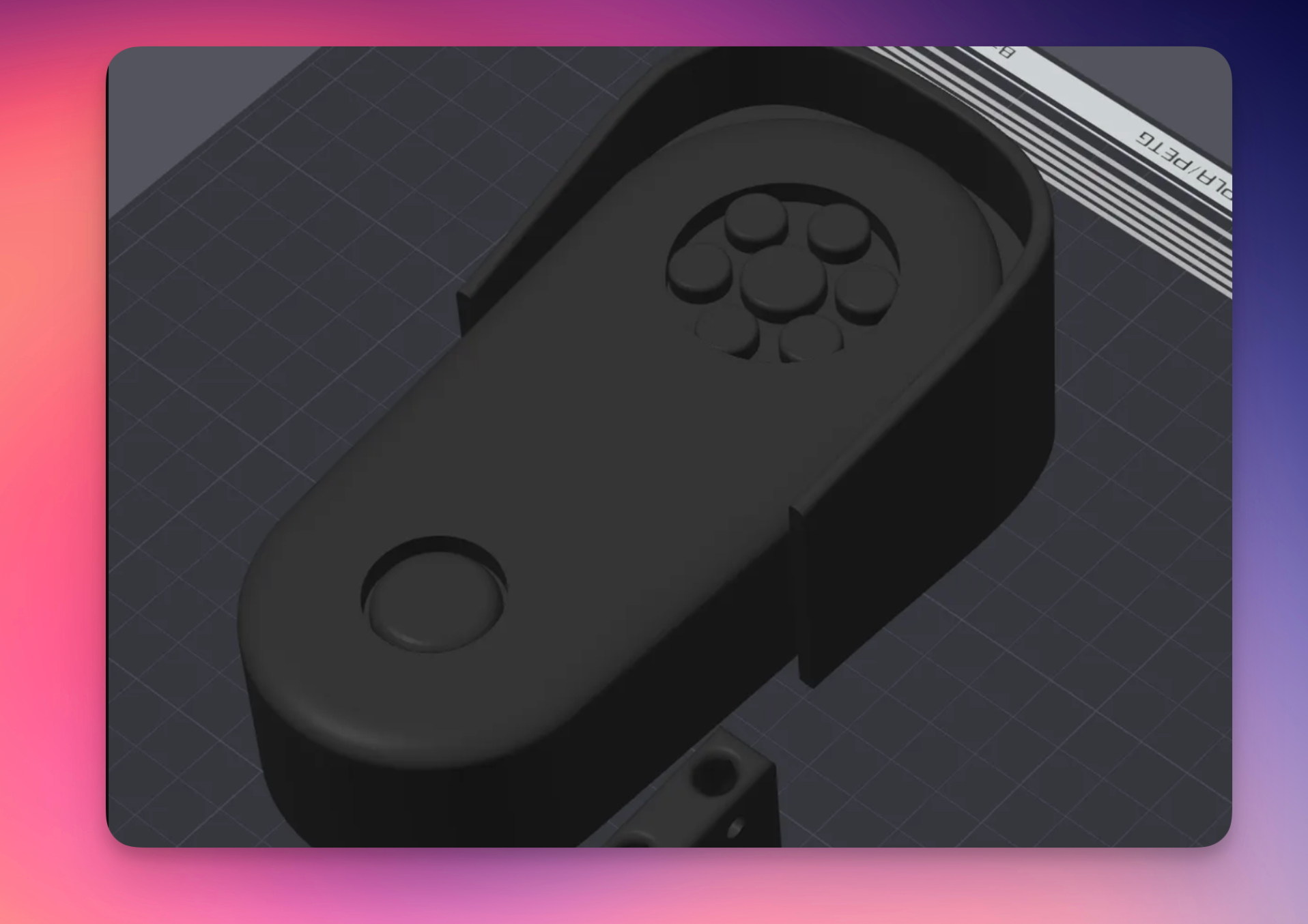
In August, we wrote about the Oviedo, Florida Police Department’s strategy to catch would-be Flock vandals by 3D-printing shells of Flock cameras, attaching them to poles around the city, and then having human cops monitor the poles for multiple nights. The police eventually caught a man named Evan Meyer, who allegedly knocked one of these decoy cameras off a pole and destroyed it with garden shears. Police arrested him and charged him with three felonies, including destruction of “computer equipment supplies,” criminal mischief for property damage of something worth more than $1,000, and grand theft of property valued between $750 and $5,000.

All three of these charges were felonies, and the police department and 404 Media have shared a lengthy email exchange in which the department refuses to release any records about how the camera was made because of an ongoing criminal investigation associated with the destruction.
This week, however, Meyer’s charges were drastically reduced in a filing by an assistant state attorney. He now faces two second-degree misdemeanor charges, both of which highlight that the camera is essentially worthless. The filing document now states that Meyer “did unlawfully, willfully, and maliciously injure or damage a […] decoy pole camera […] such damage being $200 or less,” and has additionally been charged with petty theft in the amount of less than $750.