The Guardian

Latest news, sport, business, comment, analysis and reviews from the Guardian, the world's leading liberal voice

Bank of England holds interest rates at 3.75% but warns war could force future rises

Central bank announces surprise plan to sell billions of pounds in government bonds back to the Treasury

The Bank of England has kept interest rates on hold as it warned a continuation of the current bitter fighting in the Middle East could force it to raise borrowing costs amid mounting fears over inflation.

It also announced a surprise plan to sell billions of pounds in UK government bonds back to the Treasury to avoid fuelling turbulence in the gilt market, in a decision that could have major consequences for the public finances before next month’s budget.

Continue reading...

Tories challenge chancellor to rule out tax rises in budget as Badenoch labelled ‘embarrassment’ for Bank of England gaffe – UK politics live

The Conservatives want to brand Burnham’s administration as a ‘traditional tax and spend socialist government’

Andrew Griffith has delivered his speech, and he is now taking questions.

Q: You want the government to pause the making tax digital programme. Is that an admission that the last government got this wrong when it introduced it?

It is an admission that despite [good] intentions, the execution of that has left a lot to be desired.

In fact, coming to parliament from business, I can confess the law that we pass the most often is the law of unintended consequences. And I think making tax digital is a good example of that.

The truth is that Burnham and Miliband ignored the advice they were given – which was that if they were determined to sanction Israel, they should not do so before the Israeli election on 27 October.

It may not be surprising that this was the message from the Israeli foreign minister, Gideon Sa’ar, when Miliband called him on 11 August to warn sanctions were imminent. ‘He said postpone it until after the elections,’ a diplomatic source confirms. It was also the message the Israeli embassy in London – and its new chargé d’affaires Chris Cantor – was relaying to the Foreign Office. ‘Their message was clear: why do it now? Wait until after the elections, because something might change,’ a senior Labour figure says.

Continue reading...

Real Madrid leading race to sign JJ Gabriel from Manchester United

  • Barcelona and Bayern among other admirers

  • United hope they convince 15-year-old to stay

Real Madrid are leading the race to sign the Manchester United teenager JJ Gabriel after he told the Premier League club he wants to cancel his registration.

The 15-year-old has attracted interest from across Europe as his reputation has grown with academy performances. Barcelona have been keen to acquire him and Bayern Munich are known to admire the winger. It is understood Gabriel prefers a move to Europe and having an Irish passport would enable that.

Continue reading...

Dear Ed Sheeran, fence-sitting is so last century: musicians can no longer opt out of politics | Zoe Williams

It’s all very 2026: with a stadium owner on one side and angry support acts on the other, the cornered star will have to pick a side

Ed Sheeran, seeking to stay out of politics, has become, in this moment, the most political artist in the world. And in trying to leave himself room to manoeuvre, he has backed himself into a corner. Since the rapper Macklemore was dropped as a support act on Sheeran’s Loop tour on Monday, every other opening act has pulled out. Finneas O’Connell kept it brief on Tuesday: “Artists must not be silenced when they speak up for the oppressed. I stand with Palestine and its people.” Aaron Rowe was already out, saying: “I cannot stand by and allow billionaires to use their position of power to silence … rightful voices.”

Beoga, Sheeran’s actual backing band, then pulled out, along with the Danish band Lukas Graham, who probably made the mildest statement, managing to not even mention any countries: “We should be able to speak about war, about civilians being killed, about children who deserve to grow up. Wherever they live. Whatever flag flies over them.”

Zoe Williams is a Guardian columnist

Continue reading...

Why stop at Wuthering Heights: House of the Damned? Bring on Mrs Dalloway’s Rampage!

It isn’t just Winnie the Pooh – now the star of Blood & Honey II. Budget shockers are treating any story with expired copyright as ripe for murderous exploitation

It is significant that, at this point in our cultural journey, we have become accustomed to film producers jumping on every single property as it enters public domain, so they can make a cheap and exploitative horror film about it. We have seen Winnie-the-Pooh: Blood and Honey. We’ve seen Bambi: The Reckoning. We’ve seen the six separate horror movies (including Mouseboat Massacre and Mouse of Horrors) that are based on Steamboat Willie. This is just the world we live in now.

But if you zoom out even a tiny amount, it all starts to look a little silly. Not because it suggests the paying public has a fondness for inarguably bad horror films based on loose interpretations of recognisable figures, but because it’s missing the bigger picture. In other words, while producers are watching eagerly for the next newly out-of-copyright property to exploit (by the way, Babar the Elephant will enter the public domain in January), there is an entire ocean of public domain work just sitting there to be desecrated.

Continue reading...

Beabadoobee: Pylon review – voice of a generation’s surprisingly relatable rampage through rock star rage

(Dirty Hit)
The Filipino-British songwriter’s fourth album sprinkles 90s alt fuzz with disarmingly sweet melodies and an impressive host of guests including Paramore’s Hayley Williams and Turnstile’s Brendan Yates

Last month, the Guardian published a feature about the demise of the monoculture. It suggested that streaming services, personalised algorithms and the declining influence of radio and television meant we now live in a world where stardom isn’t as universal as it once was. It used Sam Fender and Olivia Dean’s single Rein Me In as an example: here was a song that spent a record-breaking 23 weeks at No 1 yet hadn’t attained anything like the ubiquity you would once have expected: to judge by social media, plenty of people seemed to have never knowingly heard it.

If you were looking to advance this theory, you might alight on the career of Beatrice Laus, the 26-year-old British-Filipino singer-songwriter better known as Beabadoobee. To a certain cohort, primarily female and in their late teens and early 20s, she is not just a huge star, but a genuinely iconic figure. The latter is an over-used adjective in 2026, but if social media abounds with tutorials advising female fans how to copy your style and imitate your makeup – if you can be personally held partly responsible for the 2021 outbreak of adolescent girls drawing fake freckles on their faces in imitation of your own – then it probably fits, whether it discomfits Laus or not. The lyrics of Satellite, the closing track on her fourth album Pylon, suggests it does: “I give the generation a new infatuation,” she sings. “If only I knew how to cope with the times.”

Continue reading...

‘I see them like my own children’: reforesting Ethiopia with 50bn trees, one step at a time

After losing much of its forests in recent decades, ordinary citizens have led the way in planting saplings across the country as part of the government’s Green Legacy Initiative

When Halima Kedir first began planting trees, she was met with scepticism and even mockery. “My neighbours discouraged me,” she recalls, sitting on a wooden chair in her garden, which is lush with the trees and fruits she has planted – banana, olive and grevillea among them.

“They thought I was striving for nothing, but with time, many are realising that trees can be part of the solution to our problems as a way to fight climate change and food insecurity,” she says.

Continue reading...

Feeling overwhelmed by the AI doom loop? Here’s the essential reading list to make sense of it all

It’s a chaotic time in an industry that’s reshaping our lives – Guardian reporters and experts recommend the books that help explain how we got here, and where we’re heading

Have you been feeling trapped in an endless cycle of artificial intelligence hype and panic? You’re not alone.

It’s a chaotic time to make sense of the industry that’s reshaping our lives, whether or not we like it. Last week, another AI company employee publicly resigned, warning the technology “could kill us all by the end of the decade”. Despite these dire warnings, AI companies have seen “otherworldly” surges in revenue and driven the US stock markets to new highs as they continue to push AI tools into everything from public school classrooms to law enforcement agencies, as well as rushing to put up new datacenters across the country.

Continue reading...

Laura Kaminski relishing trophy hunt at Brann after Crystal Palace ‘crash course’

Former Palace head coach has won a cup final in Norway and says chance to challenge for league title was a pull

“When it’s a good day, it’s absolutely stunning, so we’ll take that,” Laura Kaminski says with a laugh about the rainy west coast of Norway. The English former promotion-winning Crystal Palace coach is referring to Bergen, the place she now calls home, whose football club, Brann, she has taken to her heart since her appointment in January.

She could easily be speaking about the job itself. After Brann failed to qualify for the Women’s Champions League owing to a 4-0 second-leg defeat by Austria Vienna, they secured a cup final success against Aalesund, handing Kaminski a first major trophy on the continent. Her team are four points clear at the top of the league with seven games remaining.

Continue reading...

Jürgen Klopp wants his Germany team to reclaim national pride from ‘the wrong people’

  • Comments follow far-right election win in Saxony-Anhalt

  • ‘I’d like to reclaim the flag for myself and for us,’ he says

Jürgen Klopp has said Germany’s football team can help ensure “national pride is not entrusted to the wrong people” after a recent far-right AfD election victory.

In a Frankfurt press conference announcing his first Germany squad, the former Liverpool manager referenced a recent state election win by the anti-immigration Alternative for Germany party.

Continue reading...

Rotterdam - FediMeteo (@rotterdam@nl.fedimeteo.com)

Weer voor de stad Rotterdam Deze bot wordt beheerd door het FediMeteo-project. Voor informatie en contact kunt u de pagina https://fedimeteo.com raadplegen.

Weer voor Rotterdam ☁️ - 17-09-2026 13:15 CEST...

Weer voor Rotterdam ☁️ - 17-09-2026 13:15 CEST

In één oogopslag:
• 16.1°C · Bewolkt ☁️ | Min 14.9°C / Max 16.5°C | Kans op neerslag 52%

Verwachting voor vandaag:
• Min 14.9°C, Max 16.5°C (Matige regen) 🌧️, Neerslag 12.8 mm, Kans op neerslag 52%, 🧭 1009.2 hPa ↘️ -1.0 hPa/24h, Windsnelheid: 29.2 km/u (8.1 m/s), richting: ↗ 214°

Uurlijkse voorspelling voor de komende 12 uur:

• 14:00: 16.2°C (Lichte motregen) 🌦️, Neerslag 0.1 mm, Kans op neerslag 96%, 🧭 1010.2 hPa ➡️ 0.0 hPa/1h, Windsnelheid: 24.5 km/u (6.8 m/s), richting: ↗ 210°
• 15:00: 16.0°C (Lichte motregen) 🌦️, Neerslag 0.2 mm, Kans op neerslag 100%, 🧭 1009.7 hPa ↘️ -0.5 hPa/1h, Windsnelheid: 25.2 km/u (7.0 m/s), richting: ↗ 206°
• 16:00: 15.8°C (Matige motregen) 🌦️, Neerslag 0.6 mm, Kans op neerslag 100%, 🧭 1009.2 hPa ↘️ -0.5 hPa/1h, Windsnelheid: 27.4 km/u (7.6 m/s), richting: ↗ 203°
• 17:00: 15.6°C (Matige regen) 🌧️, Neerslag 4.2 mm, Kans op neerslag 100%, 🧭 1009.0 hPa ➡️ 0.0 hPa/1h, Windsnelheid: 29.2 km/u (8.1 m/s), richting: ↗ 215°
• 18:00: 15.7°C (Matige motregen) 🌦️, Neerslag 0.7 mm, Kans op neerslag 100%, 🧭 1008.9 hPa ➡️ 0.0 hPa/1h, Windsnelheid: 26.6 km/u (7.4 m/s), richting: ↗ 218°
• 19:00: 16.0°C (Lichte motregen) 🌦️, Neerslag 0.2 mm, Kans op neerslag 100%, 🧭 1008.8 hPa ➡️ 0.0 hPa/1h, Windsnelheid: 19.4 km/u (5.4 m/s), richting: ↗ 233°
• 20:00: 15.8°C (Bewolkt) ☁️, Kans op neerslag 98%, 🧭 1008.9 hPa ➡️ 0.0 hPa/1h, Windsnelheid: 17.3 km/u (4.8 m/s), richting: ↗ 214°
• 21:00: 15.7°C (Matige regen) 🌧️, Neerslag 4.9 mm, Kans op neerslag 90%, 🧭 1008.9 hPa ➡️ 0.0 hPa/1h, Windsnelheid: 20.5 km/u (5.7 m/s), richting: ↗ 230°
• 22:00: 15.5°C (Bewolkt) ☁️, Kans op neerslag 80%, 🧭 1009.2 hPa ➡️ 0.0 hPa/1h, Windsnelheid: 14.0 km/u (3.9 m/s), richting: ↗ 239°
• 23:00: 15.4°C (Bewolkt) ☁️, Kans op neerslag 65%, 🧭 1009.3 hPa ➡️ 0.0 hPa/1h, Windsnelheid: 13.0 km/u (3.6 m/s), richting: ↗ 235°
• 00:00: 15.5°C (Bewolkt) ☁️, Kans op neerslag 43%, 🧭 1009.5 hPa ➡️ 0.0 hPa/1h, Windsnelheid: 8.6 km/u (2.4 m/s), richting: → 266°
• 01:00: 15.4°C (Helder) 🌕, Kans op neerslag 18%, 🧭 1009.9 hPa ➡️ 0.0 hPa/1h, Windsnelheid: 7.9 km/u (2.2 m/s), richting: ↗ 218°

Voorspelling voor de komende dagen:

• vrijdag 18 september: Min 14.9°C, Max 18.1°C (Bewolkt) ☁️, Kans op neerslag 6%, 🧭 1012.9 hPa ↗️ +3.7 hPa/24h, Windsnelheid: 21.6 km/u (6.0 m/s), richting: ↗ 246°
• zaterdag 19 september: Min 16.6°C, Max 19.7°C (Bewolkt) ☁️, Kans op neerslag 23%, 🧭 1016.5 hPa ↗️ +3.6 hPa/24h, Windsnelheid: 26.6 km/u (7.4 m/s), richting: ↗ 226°
• zondag 20 september: Min 14.7°C, Max 18.4°C (Lichte buien) 🌧️, Neerslag 5.2 mm, Kans op neerslag 29%, 🧭 1021.4 hPa ↗️ +4.9 hPa/24h, Windsnelheid: 21.2 km/u (5.9 m/s), richting: → 269°
• maandag 21 september: Min 12.5°C, Max 17.7°C (Bewolkt) ☁️, Kans op neerslag 6%, 🧭 1028.8 hPa ↗️ +7.4 hPa/24h, Windsnelheid: 15.5 km/u (4.3 m/s), richting: ↘ 301°
• dinsdag 22 september: Min 12.3°C, Max 16.4°C (Bewolkt) ☁️, Kans op neerslag 6%, 🧭 1029.5 hPa ↗️ +0.7 hPa/24h, Windsnelheid: 5.0 km/u (1.4 m/s), richting: ↖ 122°
• woensdag 23 september: Min 10.3°C, Max 17.0°C (Zonnig) ☀️, Kans op neerslag 7%, 🧭 1027.1 hPa ↘️ -2.4 hPa/24h, Windsnelheid: 8.4 km/u (2.3 m/s), richting: ← 93°

Details:
• 🌡️ Huidige temperatuur (om 13:15): 16.1°C (Bewolkt)
• 🤚 Gevoelstemperatuur: 13.6°C (-2.5°C)
• 💨 Windsnelheid: 24.1 km/u (6.7 m/s), richting: ↗ 210°
• 🌬️ Windstoten: 45.0 km/h (12.5 m/s)
• 💧 Luchtvochtigheid: 82%
• 🧭 Luchtdruk: 1010.2 hPa ↘️ -1.0 hPa/3h
• 👁️ Zichtbaarheid: 28.4 km
• ☀️ UV-index: 2.0
• 🌅 Zonsopgang: 07:19 · 🌇 Zonsondergang: 19:52

Luchtkwaliteit:
• AQI: 30 🟢 (Goed)
• PM2.5: 4.9 μg/m³
• PM10: 9.1 μg/m³

Gegevens geleverd door Open-Meteo


How Candidates Could Use AI for Good

This essay was written with Nathan E. Sanders, and originally appeared in The Guardian.

There are plenty of signs that AI will make all of our experiences of the US midterm elections worse. Voters have anxiety about AI’s impacts on the country. Politicos are using AI deepfakes to spread lies. The White House is posting slopaganda.

Meanwhile, candidates are missing a real opportunity to use AI to make campaigning better. The technology can help candidates listen more deeply to voters’ concerns, engage constituents more inclusively, and formulate policy platforms that are more responsive to our input. There are vanishingly few examples of this in US politics, but groups in Japan, Scotland and the US’s own academic and private institutions show how that could change.

The problem with American campaigns’ current use of AI is that it’s not very different from the web ads of 30 years ago, or television ads before that: they are all about inundating voters with the candidate’s message. This one-to-many broadcasting is an uninspiring way to campaign, but not the only way. AI can help candidates connect one-to-one with as many people as possible. Or it can facilitate many-to-many connections, engaging voters in deliberation about issues at scale.

One of the most promising applications of AI being developed by pro-democracy innovators around the world is broad listening. These tools can collect public input in a format much richer than checkboxes on a survey form.

For example, the newly founded Japanese political party Team Mirai has built a foundation for eliciting public input from voters at scale, in depth, and across the breadth of legislative policy issues. It has developed an AI interviewer to cultivate constituent input on policy. Through extended conversations with this chatbot, voters explore and share their perspectives on specific policy issues. And the party has scaled this across a wide array of policy issues by integrating this functionality with an AI-powered portal for exploring bills.

Team Mirai describes itself as a “utility party”, developing tools for any Japanese political party to use to connect with voters. You might question whether Americans would willingly talk to a political AI. So far, Japanese voters have exchanged more than 300,000 messages across 16,000 AI interviews. Team Mirai grew adoption by providing a real incentive to engage: that talking to their AI interviewer does more than just posting on a platform such as Twitter/X or, equivalently, shouting into a void. Users see evidence that the party is actually listening and might take action on their behalf.

Team Mirai party members have directly cited AI interviews from constituents during legislative committee hearings, published a synthesis of that input back for voters, and even amended their policy platform based on user input. The party has rapidly risen to win 12 seats in the Diet, and is explicitly following in the footsteps of the civic hackers in Taiwan’s “gov zero” movement, who won political influence in their fight for transparency.

Other civic technologists are developing AI tools for scaling many-to-many conversations. CrownShy, a company funded in part by the Scottish government, is building a platform to bring the Platonic ideal of the town hall debate into the digital age. Their Comhairle tool integrates AI interviewing tools like the ones described above with software for synthesizing diverse viewpoints, holding virtual assemblies, and sharing video testimonials to help legislatures—or campaigners—organize digital consultations of their constituents en masse.

One thing the AI-powered software of Team Mirai and CrownShy have in common is that they are open-source, meant for anyone to use. Even though they are projects funded by political parties—the upstart party in Japan and the ruling party in Scotland—they are built to make democratic processes better, not necessarily for partisan political advantage.

For interested candidates, there is a wealth of tools available, many of them US-grown. The Stanford-affiliated deliberation.io uses AI to facilitate structured dialogues among thousands of participants and has been piloted for public listening sessions by the city of Washington DC. The MIT-affiliated Cortico project provides tools that surface under-heard community perspectives from recorded conversations, and is now organizing listening sessions at libraries across the country. The US non-profit-built Talk to the City uses AI to analyze large datasets of stakeholder input. The US startup Remesh has a commercial offering that uses AI to generate recommendations from dialogue, which has been tested in policy development scenarios.

There is a long and proud tradition of this sort of “civic technology” in the United States. Two decades ago, the spirit of innovation to develop software for better politics and civic engagement was so strong in organizations like Code for America and the Obama 2008 campaign that Congress funded a new executive agency to bring these ideas to government: the US Digital Service. (The Trump administration repurposed the USDS to become the US Doge Service in 2025.)

One signal that candidates and political parties may start adopting these kinds of tools came this spring from Higher Ground Labs. The Democratic-aligned campaign tech investment firm launched a new fund targeting, in part, “AI-Native Campaign Systems” and “community-Led Messaging Platforms that surface authentic, bottom-up insights from real conversations”.

AI is a multifaceted issue that deserves to be on the table in the midterms. So far, the powerful force of polarization in US politics seems to be separating the parties into the AI skeptics versus the AI boosters. We urge both voters and politicians to separate the technology of AI from its profiteers. We want big tech money out of politics, holding the AI companies accountable for the harm their models cause, taxing their revenues, and maybe even nationalizing them if the AI bubble bursts.

But we also think congressional candidates in the US midterms seeking authentic connection with voters, and seeking to differentiate themselves from their opponents, should be looking to use AI responsibly in their campaigning. The broad listening and deliberation tools pioneered by others around the world could make US politics more transparent, responsive and community-driven. The impact of AI on campaigning doesn’t have to be all bad.

VK: Voorpagina

Volkskrant.nl biedt het laatste nieuws, opinie en achtergronden

Canadese premier over nauwere samenwerking met EU: ‘Niemand schrijft ons voor met wie we overeenkomsten sluiten’

Boerenleider FDF roept op bewijsmateriaal brandstichting te verwijderen vanwege politie-invallen

Terug van nooit weggeweest: heel veel wolvenaanvallen in Drenthe en Overijssel

wolven

We moeten het hebben over de wolf, want de wolf was er weer en is er weer en blijft er weer. En dan was de wolf er vooral weer afgelopen zomer in Drenthe: "Het aantal gedode schapen in Drenthe ligt in heel 2026 tot nu toe 15 procent hoger dan vorig jaar. Met name vanaf juli schoot het aantal slachtoffers in Drenthe plotseling omhoog.Tussen 1 juli en 9 september dit jaar werden er in Drenthe 101 schapen en 17 runderen gedood. Een jaar eerder ging het in dezelfde periode om 28 schapen en 2 runderen." Maar in Overijssel was de wolf er net zo goed weer: "Ook in Overijssel namen de aanvallen in de zomer fors toe. Het aantal aanvallen op schapen is meer dan verdubbeld: van 39 dode schapen naar 95." Waarom toch zo'n massaslachting? Hebben wolven soms niks anders te doen in dit land?  Hoe onaardig ook, deze zomer zien we het door de vingers, wat een machtig mysterieuze wezen is de wolf immers en wat een prachtige zomer was het ook. Bovendien: de wolf was er weer en is er weer en blijft er weer, dus ja, dan krijg je dit PROBLEEM hé.

Wel.nl

Minder lezen, Meer weten.

Publiek kan weer naar natuurgebied bij Venray na grote brand

VENRAY (ANP) - Mensen kunnen vanaf zaterdag weer naar natuurgebied Boschhuizerbergen bij Venray in Limburg. Begin augustus brak daar een grote natuurbrand uit. Een gebied van ruim 100 hectare ging in vlammen op, waaronder bijna 4000 aaneengesloten struiken met jeneverbessen.

De afgelopen weken is hard gewerkt om het gebied weer veilig te maken voor bezoekers. Volgens de gemeente en natuurbeheerder Limburgs Landschap zijn meer dan duizend beschadigde bomen weggehaald. Witte paaltjes die een wandelroute aangeven, zijn hersteld. Limburgs Landschap wijst er wel op dat de gevolgen van de brand nog lang zichtbaar blijven.


Vijf verdachten schietpartij Overasselt langer vast

ARNHEM (ANP) - Vier verdachten van de schietpartij in Overasselt blijven tot negentig dagen langer vastzitten. Een vijfde verdachte blijft nog dertig dagen vast. Dat heeft de rechtbank in Arnhem woensdag besloten.

Bij de schietpartij op 1 september kwam de 51-jarige beveiliger Berry Leenders uit Wijchen om het leven. Twee politieagenten raakten gewond. In totaal hield de politie 35 mensen aan. Onder hen een Belg, zestien Fransen, elf Nederlanders, twee Algerijnen, een Libiër, een Oekraïner en een Belg. Twee Fransen zijn 16 en 17 jaar oud. De anderen zijn tussen de 18 en 32 jaar.

Eerder deze week besloot de rechtbank al dat veertien andere verdachten negentig dagen langer vast blijven zitten. Donderdag verschijnen nog eens dertien verdachten voor de raadkamer. De rechtbank maakt daar vrijdag de beslissingen over bekend.

De behandeling van de vijf verdachten woensdag was niet openbaar. De rechtbank geeft daarom geen details over de redenen voor de beslissingen.


Grote bioscoopketen Vue bekijkt beursgang in Londen

LONDEN (ANP) - De grote Europese bioscoopketen Vue overweegt een beursgang in Londen. Dat heeft topman Tim Richards gezegd tegen zakenkrant Financial Times. Bij die beursgang zou dan een waardering aan Vue van ongeveer 1,5 miljard pond, omgerekend 1,75 miljard euro, gehangen kunnen worden. Vue heeft in Nederland twintig bioscopen met 133 schermen.

In totaal heeft Vue 225 bioscopen met 2001 schermen in acht Europese landen, waaronder ook in het Verenigd Koninkrijk en Duitsland. Volgens Richards kan nog dit jaar worden begonnen met de voorbereidingen voor een beursgang die dan volgend jaar kan plaatsvinden. Binnenkort zal daar een definitief besluit over worden genomen.

Vue is nu nog in handen van geldschieters die vier jaar geleden de controle over de onderneming hadden genomen bij een schuldenherstructurering in de nasleep van de coronacrisis. De bioscoopsector werd toen hard geraakt door de lockdowns. De omzet bedroeg in het afgelopen boekjaar 781 miljoen pond, oftewel 912 miljoen euro.


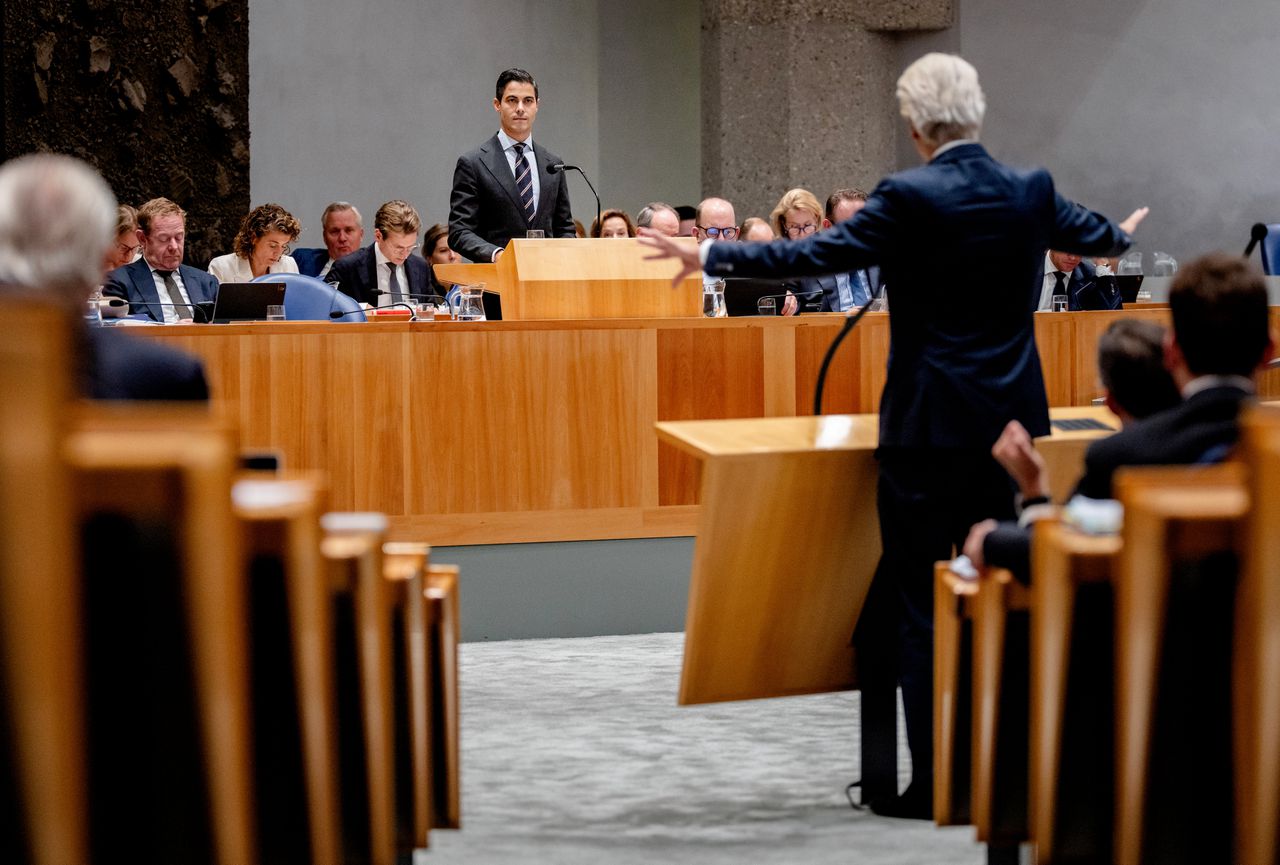
Opmerkelijk momentje: over AI zijn Wilders en Jetten het volkomen eens

Plots gaat het debat over de wereldwijde kansen en dreigingen van AI. Premier Jetten zegt na vragen van Volt-leider Laurens Dassen toe dat ook Nederland een ‘AI-veiligheidsinstituu…

The Register

Biting the hand that feeds IT — Enterprise Technology News and Analysis

Omarchy gains $18.5M in backing, fresh converts – and fierce critics

In more than 30 years in the Linux business, we've never seen a distro win so much backing so fast – or make so many enemies. As we write, it's less than three weeks since we wrote about David Heinemeier Hansson's Omarchy Arch-based Linux. Much of Omarchy's success is due to the visibility of Hansson – better known as DHH – the man behind both the distro and the Ruby on Rails web framework. He has attracted considerable attention for posts critical of immigration, including As I remember London and Wolves, sheep, and gypsies. When we started work on that story, the organization established to fund and oversee Omarchy, the Omacom Foundation, claimed $8 million in backing. By the time we finished writing the story the next day, it was up to $10 million. But that was August, and Omarchy is gaining ground fast. In the short interval since then, Omarchy has had two more point releases and is now at version 4.0.3. The project has also announced Omarchy M, an initiative to bring the distro to Apple Silicon Macs, with support for older Intel models also planned. Even the website has been redesigned, with more internationalization – and an animation that follows the mouse pointer. (It's been quite a while since we've seen one of those.) The more important changes are less immediately visible. The Omacom Foundation says its pledges and donations have now reached approximately $18.5 million, a total that includes multiyear commitments and AI tokens. It has a list of Patrons, which now includes OpenRouter and Four Technologies, as well as DigitalOcean, plus token pledges from Meta Superintelligence Labs, Anthropic, OpenAI, and Fireworks. Indeed, the announcement says: "In fact, Omarchy Quattro has almost exclusively been built by agents. Because they're just incredibly good at stuff like bash, QML, and debugging Linux issues." Omarchy is already spending some of that money on people. Its first three announced hires are kernel developer Krzysztof Wilczyński, infrastructure head Emir Beganović, and the pseudonymous outfoxxed, creator of Quickshell, a core component of the Omarchy 4 interface. Omarchy very pointedly doesn't have a code of conduct; instead, it has a Doctrine, the first principle of which is "uniting the nerds." We have to say that that goal isn't going quite so swimmingly. Although it is winning supporters and boosters, lots of them, it is also attracting some hostility in the FOSS world. Brennan Kenneth Brown set out the accusation in a post titled Normalized Fascism in Open Source: $12 Million Given to DHH. Blogger Jürgen "tante" Geuter is blunt: "Omarchy should not matter. But sadly it does. As a power grab." He continues: "Running Omarchy means… willingly integrating oneself into a fascist community. Legitimizing it. Supporting it. Omarchy is a fascist project that normalizes fascist thinking for everyone entering that community (even unknowingly)." There's now also a Stop Omarchy campaign, with a banner: "Omarchy is a political movement disguised as a Linux distro." Most recently, prominent FOSS boffin Matthew Garrett weighed in, saying: "I cannot understand the mindset of a (I hope small) subset of the free software community that software-related freedoms can never be impinged upon, but it's fine to remove arbitrary other freedoms that have a greater impact on people's lives. "Omarchy is fundamentally incompatible with the goals of free software… It's bad because it is, at the technical level, bad – and it's also bad because it's idealistically bad." The Register asked the Omacom Foundation to comment. Code, cash, and culture wars The problem of open source developers not getting paid for their efforts is a persistent one in the FOSS world, and yet people and organizations are lining up to pledge money, or tokens, or both, to Omarchy. Its popularity is undeniable, but its creator's politics are likely a contributing factor. Hansson is not the only prominent figure in the software industry whose politics have attracted scrutiny. In July, we reported that the co-owner of Mullvad made a large donation to an anti-migration political party in Sweden. In Britain, the right-wing populist Reform UK party is also receiving large donations – which has since doubled. A year earlier, the XLibre project launched and explicitly rejected DEI. Some were angry, but others embraced it, including endorsement from Devuan. XLibre upset some folks so much that one of the developers behind Alpine Linux launched the Wayback server sooner than planned, in response to XLibre. At the time, we wondered if compromise and cooperation were possible, but that possibility seems remote now. From Brexit and the election and re-election of Donald Trump to Alternative für Deutschland winning a German regional election, right-wing populist movements have gained ground. Several observers have claimed that Omarchy isn't a distro as such: "Omarchy is not a Linux distribution in any traditional sense – in fact, the entire 'Omarchy distribution' amounts to little more than Arch Linux plus DHH's personal dotfiles." Even so, it is a brand – and one closely entwined with the politics of its creator. Other FOSS projects have embraced or endorsed right-wing values, but few Linux variants have placed them so prominently alongside the software. Omarchy is bold. It makes no effort to look familiar or be especially user-friendly, unlike beginner-friendly distros such as Linux Mint or Zorin OS. Its brand is that it's stylish and sophisticated; it uses Hyprland, a tiling Wayland compositor from a controversy-courting developer, with a keyboard-driven interface that makes no effort to work like any others. There are no window title bars, and Alt+F4 doesn't close a window here. It is designed to be different and new, embracing a steep learning curve. Its target market appears to be innovators, influencers, and AI-assisted developers. DHH is talking to users on X, and of course X's owner is no stranger to this area. It's working. Despite the criticism, Omarchy is attracting users, even previously Linux-averse ones, as well as donations. Populist movements attract supporters and win elections. Omarchy appears to be drawing some of that same audience to Linux. To paraphrase Winston Churchill, storm clouds are gathering over the free software scene, and we are underneath looking for any glimpse of a silver lining. For those who do not want to support these trends, we recommend Pop!_OS 24.04 LTS and the COSMIC desktop. It is every bit as modern, bold, innovative, and striking. The distro underneath is a performance-tuned Ubuntu and, in our considered opinion, it works a great deal better. ®