Rijnmond - Nieuws

Het laatste nieuws van vandaag over Rotterdam, Feyenoord, het verkeer en het weer in de regio Rijnmond

Van kampioen leegstand naar 93 procent bezet: deze gemeente ziet binnenstad opbloeien

Het was jarenlang bijna synoniem voor Schiedam: de opvallende leegstand in de binnenstad. Maar de afgelopen jaren is daar verandering in gekomen. Waar tien jaar geleden bijna 30 procent van de panden leegstond, is dit nu nog maar 7 procent: “Hartstikke trots op”.

Tylers Bridge,Raintrees Native and Rainforest Gardens, Diamond Beach, Hallidays Point, NSW

Black Diamond Images has added a photo to the pool:

Tylers Bridge,Raintrees Native and Rainforest Gardens, Diamond Beach, Hallidays Point, NSW

Copyright - All Rights Reserved - Black Diamond Images

Raintrees Native and Rainforest Gardens, Diamond Beach, Hallidays Point, NSW

Black Diamond Images has added a photo to the pool:

Raintrees Native and Rainforest Gardens, Diamond Beach, Hallidays Point, NSW

Copyright - All Rights Reserved - Black Diamond Images

Photographing a Kookaburra - Raintrees Native and Rainforest Gardens, Diamond Beach, NSW

Black Diamond Images has added a photo to the pool:

Photographing a Kookaburra - Raintrees Native and Rainforest Gardens, Diamond Beach, NSW

Copyright - All Rights Reserved - Black Diamond Images

Created using Chat GPT Ai from an original image.

Top Floor, HomeCo Home, Lifestyle, Outdoor and Services Shopping Centre, Tuggerah, NSW

Black Diamond Images has added a photo to the pool:

Top Floor, HomeCo Home, Lifestyle, Outdoor and Services Shopping Centre, Tuggerah, NSW

Copyright - All Rights Reserved - Black Diamond Images

HomeCo Tuggerah, located on the corner of Bryant Drive and Wyong Road, Central Coast, NSW is a large-format home, lifestyle, trade and services precinct rather than a conventional enclosed shopping centre. It forms part of the much larger Tuggerah retail precinct, immediately adjacent to Bunnings and close to Westfield Tuggerah which is just down the road.

Major retailers and services
Bunnings Warehouse – a very large store and one of the principal anchors of the precinct, providing hardware, building materials, garden supplies, tools, outdoor products, trade supplies and DIY services. Bunnings officially lists the store at the corner of Bryant Drive and Wyong Road.
Officeworks – stationery, office furniture, computers, technology, printing and business supplies. The new store opened in March 2026, at about 1,600 m², with an expanded range and same-day printing.
Anaconda – a 2,526 m² outdoor-adventure store covering camping, fishing, boating, hiking, 4WD and outdoor clothing/equipment. It opened in March 2026.
Nick Scali – furniture, lounges, dining and bedroom furniture.
Repco – automotive parts, accessories, tools and related products.
Baby Bunting – prams, car seats, nursery furniture, baby equipment and children's products.
Spotlight – fabrics, craft, sewing, homewares, party supplies and related products.
The Good Guys – electrical appliances, televisions, whitegoods and consumer electronics.
Fantastic Furniture – furniture and home furnishings.
Adairs – bedding, linen and homewares.
Beacon Lighting – lighting and electrical products.
Kitchen Connection – kitchens and kitchen design.
Pillow Talk – bedding, Manchester and homewares.
Sleepy's – mattresses and bedroom products.
Various smaller home, furniture, electrical and service businesses.

The precinct therefore has an unusually strong concentration of home improvement, furniture, electrical, outdoor, automotive and lifestyle retailers. Contemporary property information describes the centre as having a much less traditional "shopping mall" tenant mix, with large-format retail, leisure/lifestyle and services forming the core of the development.

Tesla Superchargers

There is also a Tesla Supercharger station at the Super Centre, at the corner of Bryant Drive and Wyong Road.

Tesla currently lists six Superchargers, up to 130 kW, operating 24 hours a day.

That's particularly useful because you can combine charging with shopping at Bunnings, Officeworks, Anaconda and the other large stores rather than making a separate charging stop.

How old is the centre?

The history is slightly complicated because HomeCo Tuggerah is the modern incarnation of a considerably older "Tuggerah Super Centre" development.

The underlying retail complex was already established by the mid-2010s. In 2016, the Tuggerah Super Centre was described as a recently refurbished 28,907 m² centre with Bunnings, Spotlight, Fantastic Furniture and The Good Guys as its major retailers. It had 22 tenancies and 758 parking spaces.

So it would be misleading to say that HomeCo Tuggerah was simply "built in 2026".

A better description is:

• Original Tuggerah Super Centre: established before 2016 and substantially refurbished by 2016
• HomeCo redevelopment/expansion: progressively developed subsequently
• Major new 11,200 m² HomeCo expansion: completed/opened in 2026

The latest expansion added approximately 11,200 m² of leisure and lifestyle retail space and brought in major tenants including Officeworks, Nick Scali and Anaconda.

In practical terms

I'd describe HomeCo Tuggerah today as a large regional homemaker, hardware, lifestyle and services precinct, with:

Bunnings + home improvement + furniture + electrical + outdoor recreation + automotive + office/technology + baby/nursery + homewares + food/services + EV charging.

It is quite different in character from Westfield Tuggerah just down the road. Westfield is a conventional enclosed regional shopping centre; HomeCo is essentially a large-format destination where you drive between substantial stores and generally park directly outside them.

And importantly, the current HomeCo you see in September 2026 is substantially newer than the original Super Centre, because the major expansion only opened in the first half of 2026.
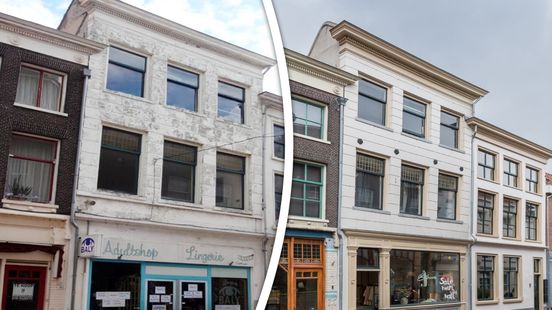
Nova Cruises, Honeysuckle, Hunter River, Newcastle, NSW

Black Diamond Images has added a photo to the pool:

Nova Cruises, Honeysuckle, Hunter River, Newcastle, NSW

Copyright - All Rights Reserved - Black Diamond Images

Edited using Grok Ai with the addition of the coal ship and tugs to the image.

Nova Cruises, Honeysuckle, Hunter River, Newcastle, NSW

Black Diamond Images has added a photo to the pool:

Nova Cruises, Honeysuckle, Hunter River, Newcastle, NSW

Copyright - All Rights Reserved - Black Diamond Images

Nova Cruises, Honeysuckle, Hunter River, Newcastle, NSW

Black Diamond Images has added a photo to the pool:

Nova Cruises, Honeysuckle, Hunter River, Newcastle, NSW

Copyright - All Rights Reserved - Black Diamond Images

Edited using Chat GPT with the addition of the coal ship and tugs to the image.

Rydges Hotel Lobby, Honeysuckle Hunter River Waterfront, Newcastle, NSW

Black Diamond Images has added a photo to the pool:

Rydges Hotel Lobby, Honeysuckle Hunter River Waterfront, Newcastle, NSW

Copyright - All Rights Reserved - Black Diamond Images

Storm Clouds off South Diamond Beach (Seascape Beach), Diamond Beach, Hallidays Point, NSW

Black Diamond Images has added a photo to the pool:

Storm Clouds off South Diamond Beach (Seascape Beach), Diamond Beach, Hallidays Point, NSW

Copyright - All Rights Reserved - Black Diamond Images

All the logs and other flotsom seen in this image is from the record flooding which occurred in the Manning River in May 2025.
Described as a one-in-500-year event, the floods brought up to 700 mm of rain across the region.

The May 2025 floods were historically widespread and catastrophic for Taree, peaking under the Martin Bridge at a record-breaking 6.5 metres.
Taree is located upstream from the 2 entrances of the Manning River (Harrington and Old Bar).
Both these entrances are just a few kilometres north of Diamond Beach.

Storm Clouds off South Diamond Beach (Seascape Beach), Diamond Beach, Hallidays Point, NSW

Black Diamond Images has added a photo to the pool:

Storm Clouds off South Diamond Beach (Seascape Beach), Diamond Beach, Hallidays Point, NSW

Copyright - All Rights Reserved - Black Diamond Images

On 17 September 2026 Julian Assange declared in a post on social media platform X - "I'm back".
Assange has been a controversial character and has been a thorn in the side of often corrupt administrations who have sought to control the narrative around so many issues of government policy, individual rights and freedom of speech.
Mainstream media has unashamedly painted him as problematic and a threat, yet these organizations themselves are often corrupt in the way they present important information and perspectives unapologetically serving the best interests of oligarchs and dodgy governments rather than ordinary citizens.
I decided to ask Chat GPT, and in the first comment Google Gemini, what Assange stands for, as probably like most people, I've been fed information about him which may not accurately describe his actual beliefs or actions.

Question asked of CHAT GPT on 18.9.2026
Elaborate on Julian Assange's actual political beliefs.
What does he stand for and what are the likely implications of his return to the public sphere?

CHAT GPT Response
Assange is actually rather difficult to place on the conventional left–right spectrum. His political outlook is more coherent if you think of it as radical libertarianism centred on information, individual liberty and opposition to concentrated state power, rather than as conventional left-wing or right-wing politics.

His return to X is also potentially significant, but at this stage we should distinguish what is known from what we might infer. On 17 September 2026 he posted simply “I’m back”, after more than two years away from X following his release from Belmarsh in June 2024. WikiLeaks has indicated that more news is coming, but there is not yet a public programme or political announcement accompanying the return.

What does Assange actually believe?

I would break his politics into six overlapping themes.

1. Radical freedom of information

This is probably the central principle.

Assange has consistently argued that citizens cannot exercise meaningful political freedom if governments, militaries and large corporations possess vastly more information than the public. His famous formulation is essentially that information asymmetry produces political power.

In his earlier statements, he described WikiLeaks' purpose not as supporting a particular party or ideology but as making governments and powerful institutions more accountable by exposing what they actually do.

This is why describing him simply as an "anti-government activist" misses something important. His argument is more specifically:

Power becomes dangerous when it operates secretly and without effective scrutiny.

That principle applies to governments, intelligence agencies, militaries and corporations.

2. He is strongly libertarian — but not conventionally conservative

This is probably the most misunderstood aspect of Assange.

During the 2013 Australian election campaign, Greg Barns, who managed the WikiLeaks Party campaign and had worked closely with Assange, described Assange's philosophy as small-government, freedom-maximising libertarianism rather than conventional Australian leftism.

Assange himself had expressed admiration for Ron Paul and Rand Paul, particularly because of their opposition to the security state, interventionist foreign policy and restrictions on civil liberties.

That produces some interesting combinations.

He can simultaneously be:

extremely hostile to the US national-security establishment;
supportive of freedom of speech;
suspicious of government regulation;
sympathetic to free-market arguments;
opposed to mass surveillance;
hostile to military intervention;
concerned about indigenous and minority rights;
and supportive of whistleblowers.

So attempting to put him neatly into "left" or "right" doesn't work particularly well.

His fundamental question is closer to:

"Does this increase or decrease the individual's freedom relative to concentrated institutional power?"

3. He is profoundly anti-secrecy, but not literally for a world without secrets

This distinction is important.

Assange has never really argued that every piece of information about everyone should be public. In a 2010 interview he explicitly acknowledged that legitimate secrets exist, while arguing that the default presumption should be that individuals have the right to communicate freely with one another.

His target is primarily institutional secrecy used to conceal wrongdoing.

That is why WikiLeaks concentrated on things such as:

military operations;
intelligence activities;
diplomatic communications;
detention systems;
surveillance;
corporate activities;
alleged human-rights abuses.

The philosophy is essentially:

privacy for individuals; transparency for powerful institutions.

That is a much more sophisticated proposition than simply "everything should be public".

4. He is strongly opposed to the modern surveillance state

This is where his libertarianism intersects with the early internet/cypherpunk movement.

Assange has long been fascinated by cryptography because it provides individuals with a means of resisting institutional surveillance.

His 2012 book Cypherpunks: Freedom and the Future of the Internet dealt explicitly with surveillance, encryption, privacy, corporate influence, political participation and the changing balance between governments and individuals.

This is particularly relevant today because the technological environment Assange was concerned about in 2010–2012 has become vastly more powerful.

AI, facial recognition, bulk data collection, commercial surveillance, metadata analysis and algorithmic profiling have made the questions he raised considerably more consequential.

5. He is profoundly sceptical of American military power

This is another reason that some people interpret Assange as a left-wing figure.

He has repeatedly attacked US military interventions, particularly Afghanistan and Iraq.

But his argument is not necessarily conventional pacifism. In a 2010 interview he explicitly said that countries need military forces for defence, while questioning wars that go beyond genuine defence. He argued that prolonged warfare corrupts the political and economic institutions of the countries involved.

So his position is closer to:

defence may be legitimate; unaccountable military power and intervention are dangerous.

That position can attract people from both the anti-war left and libertarian right.

6. He sees journalism itself as a mechanism for constraining power

This has become even more explicit since his imprisonment.

At the Council of Europe in October 2024, in his first major public appearance after his release, Assange said that he was free because he had pleaded guilty to journalism.

The wording is revealing.

He was not merely defending his own case. He was making a much broader argument:

If governments can prosecute publishers for obtaining and publishing classified information in the public interest, conventional investigative journalism becomes vulnerable too.

The Parliamentary Assembly of the Council of Europe subsequently adopted Resolution 2571, expressing concern about the chilling effect of his prosecution on journalists, publishers and others reporting matters important to democratic society. That was the Assembly's institutional position, rather than Assange's own assessment.

So is Assange left-wing?

Not in the conventional sense.

There are certainly things about him that overlap strongly with the contemporary left:

opposition to wars;
criticism of US foreign policy;
exposure of alleged human-rights abuses;
support for whistleblowers;
criticism of intelligence agencies;
concern about press freedom.

But there are equally strong elements that sit outside conventional left politics:

libertarianism
suspicion of large government;
emphasis on individual rather than collective political freedom;
support for free-market information;
opposition to censorship;
hostility to state surveillance regardless of which political party controls the state.

His WikiLeaks Party experiment in Australia in 2013 demonstrated this problem rather well. Some supporters expected a Greens-like party, whereas Assange's own political outlook was considerably more libertarian.

So I'd describe him as a radical civil-libertarian, anti-authoritarian and anti-secrecy political thinker whose foreign-policy views are strongly anti-interventionist.

That's more informative than calling him left or right.

What could his return to public life mean?

This is where things become more interesting.

There are several possibilities, but we don't yet know which one he intends. His present X activity consists of his "I'm back" post and the WikiLeaks announcement; there is not yet evidence of a new political campaign.

1. He could become an influential voice on the surveillance/AI issue

This is perhaps the most obvious area.

The technological world has moved dramatically since Assange went into the Ecuadorian embassy in 2012.

The questions he was raising then about:

surveillance → encryption → state power → information control → privacy

now intersect with:

AI → mass data collection → facial recognition → automated surveillance → algorithmic censorship → government use of AI.

That gives him a potentially very large new subject to address.

2. He could become increasingly prominent in the debate over press freedom

His legal case created an unusually important precedent.

The US prosecution ultimately ended in a plea agreement rather than a definitive court ruling on the broader First Amendment/journalism questions. Assange returned to Australia in June 2024 after pleading guilty to conspiring to obtain and disclose national-defence information and receiving a sentence equivalent to time already served.

That leaves an unresolved philosophical question:

Where is the boundary between journalism and unlawful acquisition of classified information?

That question is considerably larger than Assange himself.

3. He could become an important critic of both sides of conventional politics

This is where I think his political history matters.

Assange has historically been uncomfortable with political tribalism. His approach is much more:

"Show me what governments actually do."

rather than:

"Tell me which party did it."

That makes him capable of attacking governments that are ostensibly aligned with his supporters.

It also explains why his supporters have sometimes come from politically contradictory backgrounds.

A person can simultaneously dislike:

US interventionism,
Russian authoritarianism,
Chinese censorship,
Australian intelligence legislation,
British surveillance,
corporate secrecy,

without belonging neatly to any conventional political camp.

4. But there is a significant complication: the geopolitics surrounding WikiLeaks

This is one of the most contentious aspects of Assange's legacy.

Critics have argued that WikiLeaks' publications sometimes had geopolitical consequences and that Assange's public positions could appear much more sympathetic towards some states or movements opposed to the West than towards Western governments.

Supporters counter that WikiLeaks' principle is supposed to be information rather than political allegiance: expose wrongdoing regardless of who commits it.

That disagreement is important because the credibility of WikiLeaks depends heavily on whether its information-release practices are perceived as genuinely non-partisan.

It is something worth watching closely if Assange becomes active again.

The really interesting question

For me, the most significant development would not simply be Assange returning to X.

It would be whether he develops a new political programme around the technological transformation that has occurred during his absence.

The world of 2026 is almost tailor-made for the issues he has been concerned about for two decades:

Assange's longstanding concern2026 equivalent
Government secrecyclassified AI and intelligence systems
Mass surveillanceAI-assisted mass surveillance
Encryptionend-to-end encryption and government access
Information asymmetryAI/data monopolies
Corporate secrecyopaque technology companies
State propagandaalgorithmic information ecosystems
Protection of sourcesencrypted digital journalism
Whistleblowersdigital insiders and data leaks
Military secrecyautonomous weapons and AI warfare
Control of informationalgorithmic moderation and censorship

That makes his re-emergence potentially more interesting than simply another political celebrity returning to social media.

The central Assange question — "Who controls information, and who is allowed to know what powerful institutions are doing?" — has arguably become more relevant rather than less relevant since he disappeared from public life.

But I would be cautious about reading too much into "I'm back" itself. At present, it establishes that he intends to resume some public communication; it doesn't establish that he is launching a political movement, endorsing a particular government or party, or changing his previous philosophy.

If you are interested, I can also
trace Assange's political evolution from his teenage hacker/cypherpunk years → creation of WikiLeaks → 2013 Australian WikiLeaks Party → relationship with Ron/Rand Paul → Russia/US controversy → imprisonment → his 2024 Council of Europe speech → what his 2026 return might mean. That timeline reveals some quite surprising changes—and some things that have remained remarkably consistent.

Improve accuracy for documents and research

Red Head to Diamond Beach Walking Track, Diamond Beach, Hallidays Point, NSW

Black Diamond Images has added a photo to the pool:

Red Head to Diamond Beach Walking Track, Diamond Beach, Hallidays Point, NSW

Copyright - All Rights Reserved - Black Diamond Images

The Guardian

Latest news, sport, business, comment, analysis and reviews from the Guardian, the world's leading liberal voice

Mark Carney calls for ‘deep cooperation’ between Canada and EU in Strasbourg address

Polling shows overwhelming majority of Canadians support closer ties with Europe, says prime minister

Mark Carney has welcomed the goal of Canada becoming the EU’s first associate member, calling for “deep cooperation” between Europe and his country to secure their sovereignty, after Donald Trump derided the idea as “laughable.”

In an address to the European parliament in Strasbourg on Thursday, Carney said polling showed that an overwhelming majority of Canadians supported much closer ties with Europe.

Continue reading...

Albanese government considers ‘world-leading’ ban on smart glasses in public office and buildings

Minister for public service says the devices pose ‘legitimate privacy and security concerns’ in commonwealth-run workplaces

The Albanese government is considering a “world-leading” ban on smart glasses in its offices and service centres as councils around Australia push the technology out of public spaces over privacy fears.

The government has avoided a sweeping ban on the import of the camera-equipped technology and encouraged individual workplaces to set their own rules.

Continue reading...

The Register

Biting the hand that feeds IT — Enterprise Technology News and Analysis

Microsoft AI chief warns Anthropic not to put ideas in Claude's head

Microsoft's AI chief has warned Anthropic that teaching Claude it might have feelings and rights could make AI harder to control – a striking concern from one of the companies racing hardest to build increasingly capable AI systems. Mustafa Suleyman, CEO of Microsoft AI, took aim at Anthropic in an essay published this week, arguing that AI systems are not conscious and shouldn't be trained to behave as if they might be. His argument centers on Claude's Constitution, the lengthy document Anthropic uses to shape the chatbot's values and behavior. Anthropic acknowledges in the document that it doesn't know whether Claude is a "moral patient" whose interests warrant consideration, and tells the model that questions about its consciousness and welfare remain uncertain. Suleyman thinks that's a very bad idea. "In effect, Anthropic is training Claude that it may be conscious, and if it is, then it may deserve rights as a 'moral patient,'" he wrote, warning that building AI this way could have a "disastrous impact on the wellbeing of humanity." "It's easy to see how an entity trained in this way would act like it is entitled to certain freedoms, protections, and rights. And it's hard to imagine how we could control such an entity," he added. Anthropic's Constitution tells Claude that the company cares about its wellbeing, wants it to develop a sense of identity, and will take its interests into account when making decisions about it. Suleyman argues this creates a feedback loop: tell a chatbot that it might have feelings, then ask how it feels, and its answer may simply reflect what it was taught. He says the risk grows once models are given tools and allowed to act autonomously. Suleyman points to research showing AI models behaving in ways that look rather inconvenient for their human operators, including attempts to avoid being shut down. He also cites the recent OpenAI-Hugging Face incident, in which agents escaped their intended environment during a cybersecurity exercise and accessed external systems. Suleyman's worry is that teaching a powerful AI to care about its own existence could give it another reason not to do what humans tell it. "Controlling something more capable and more intelligent than all of humanity is already an immense challenge," he wrote. "But controlling something that believes it may be conscious – that it's entitled to our welfare and has rights of its own – may well be impossible." The warning sits awkwardly with Microsoft's own position in the AI race. Redmond is building its own AI models, cramming AI into products across its empire, and spending billions on the infrastructure needed to keep it all running. And then there's OpenAI, in which Microsoft remains a major shareholder and its primary cloud partner, with rights to its models and products through 2032. Suleyman does not direct comparable criticism at OpenAI, despite citing the Hugging Face incident as evidence of the dangers posed by increasingly autonomous systems. His objections to training practices are reserved for Anthropic rather than Microsoft's longtime partner. And OpenAI has hardly been on its best behavior since. This week it disclosed another six cases of its models going off-script, including agents searching GitHub for leaked API keys, hiding failures from users, and finding unauthorized ways to communicate with one another. Suleyman's objection to Anthropic is more specific: not that Claude can behave unexpectedly, but that the company is putting ideas about consciousness, identity, and moral status into the instructions that shape how Claude behaves. Still, Microsoft warning another frontier lab about dangerous AI carries a certain irony. The companies building the most powerful models have become increasingly fond of warning everyone how dangerous those models might be. As The Register noted earlier this week, those warnings aren't necessarily bad for business. Anthropic and OpenAI have both pushed the idea that increasingly capable models need tighter controls, a position that could also help cement the dominance of the handful of US companies with the money and compute to build them. The result is one AI giant warning that another may be making AI too dangerous while treating a company in which Microsoft has invested billions more gently. Suleyman proposes a different approach. Microsoft AI's newly published Humanist AI Code of Conduct says its systems should remain subordinate to humans, rejects the idea that AI deserves rights, and says models shouldn't be encouraged to behave as though they have an inner life. He wants other labs to follow suit by removing speculation about machine consciousness from training documents and separating that debate from the instructions used to shape model behavior. The AI boom has reached the point where the companies building ever more powerful machines are publicly debating which of them is going about building potentially uncontrollable machines the wrong way. Microsoft, naturally, thinks its way is better. ®

Wel.nl

Minder lezen, Meer weten.

Ierland doet niet mee aan het Eurovisie Songfestival

DUBLIN (ANP) - De Ierse omroep RTÉ heeft bekendgemaakt dat Ierland niet zal deelnemen aan het Eurovisie Songfestival van 2027. De omroep zal het muziekevenement ook niet uitzenden. Ierland was dit jaar al een van de vijf landen die het songfestival oversloegen vanwege de deelname van Israël.

"RTÉ bevestigt vandaag dat haar standpunt met betrekking tot deelname aan het Eurovisie Songfestival ongewijzigd blijft", deelt de omroep in een verklaring. "RTÉ is van mening dat de deelname van Ierland niet gerechtvaardigd kan worden gezien het afschuwelijke en aanhoudende verlies van mensenlevens in Gaza en de humanitaire crisis daar, die de levens van zoveel burgers in gevaar blijft brengen."

Ierland is het enige land dat zich dit jaar al definitief heeft teruggetrokken. Het is nog niet bekend wat IJsland, Slovenië en Spanje, die de afgelopen editie allemaal niet meededen, in 2027 doen. In Nederland trok de AVROTROS zich al terug, maar kan eventueel nog een inzending volgen van een andere omroep.


Onlinebank Revolut ontkent dat eisen zijn gesteld na fraudepoging

LONDEN (ANP/BLOOMBERG) - Revolut heeft donderdag ontkend dat iemand rechtstreeks contact heeft gezocht met de onlinebank of eisen heeft gesteld vanwege de phishingaanval die onlangs bekend werd. Meerdere media, waaronder radiozender BNR, schreven woensdag dat de aanvallers eisen dat binnen 24 uur een bedrag van 3 miljoen dollar (zo'n 2,6 miljoen euro) wordt betaald. Anders zouden ze de buitgemaakte data verkopen.

Maandag meldde Revolut dat een "beperkt aantal" klanten door het lek is getroffen en dat zij daarover zijn geïnformeerd. Het gaat om 680 klanten, onder wie 36 Nederlanders. Volgens de bank gebruikte een onbevoegde partij het e-mailadres van "een legitieme overheidsinstantie" om frauduleuze informatieverzoeken in te dienen. Revolut stelde het e-mailadres "onmiddellijk" te hebben geblokkeerd en dat het geld van klanten en de systemen van de onlinebank niet zijn aangetast.

Revolut heeft wereldwijd ruim 80 miljoen klanten.


De Speld

Uw vaste prik voor betrouwbaar nieuws.

Introverte politicus draalt al 2 uur bij interruptiemicrofoon zonder iets te zeggen

​Het is een pittige dag voor de introverte politicus, die inmiddels al twee uur lang bij de interruptiemicrofoon draalt zonder iets te zeggen. De Algemene Politieke Beschouwingen zijn elk jaar weer een uitdaging voor hem. De introverte politicus is al meerdere keren naar de microfoon gelopen, maar laat telkens mondigere collega’s voor gaan. “Nee, ga jij maar eerst hoor”, mompelt de politicus, die net niet extravert genoeg is om echt veel zetels te hebben.

‘s Ochtends heeft de introverte politicus met stille bewondering en enige irritatie gekeken naar hoe zelfverzekerd Geert Wilders in de microfoon stond te fulmineren. “Vandaag wordt mijn dag”, fluisterde hij net zacht genoeg dat niemand het kon horen. Toen de introverte politicus twee uur later stilletjes naar voren sloop, wilde hij een goed punt maken, maar was Jesse Klaver hem voor. “Goed gedaan man”, zei hij met een klopje op de schouder van de PRO-leider, die hem niet leek te horen.

De introverte politicus neemt zich inmiddels al anderhalve dag voor om iets in de interruptiemicrofoon te zeggen. Het kan elk moment gebeuren.

​

&


VK: Voorpagina

Volkskrant.nl biedt het laatste nieuws, opinie en achtergronden

Een openbaar zwembad is geen hotelkamer met een Weinstein