In de wasmachine van het leven heeft een 'bezoeker van de Amersfoort Pride' een rondje extra gedraaid: hij is na zijn bezoek op z'n snuit getimmerd door een groepje snoeiharde heteroseksuelen die zó hetero zijn dat ze met de onderbroekjes aan onder de groepsdouche stappen. Meer specifiek: 'jongens op fatbikes'. Of, hoe de NOS dat noemt: 'meerdere jongens'. En dan weet u vast wel weer hoe laat het is, want die grote groep 'fatbikers' verpest het weer eens voor de welwillende kleine minderheid van de 'fatbikers'. Sad.
Meerdere steekincidenten dwongen het Rode Kruis en vluchtelingenwerk zich terug te trekken uit Ter Apel. Een klein groepje mannen uit veilige landen die geen kans maken op asiel dwingen een viervoudig Nobelprijswinnaar te stoppen met hulpverlening. Het voelt alsof we een stukje grasland hebben afgestaan aan barbaren. Capitulatie.
Volgens het Rode Kruis, vluchtelingenwerk en vele andere gelovigen van de Linkse Kerk is de oplossing nog meer asielzoekerscentra en nog meer woningen voor statushouders. Dan schuiven asielzoekers naar de opvang, staan deze slachtoffers niet meer bij Ter Apel en kunnen ze daar niet meer neergestoken worden. Gratis huizen tegen steekincidenten.
Je zou toch denken dat we met beveiligers, politie en desnoods defensie elke grasspriet verdedigen tegen een buitenlandse invasie, om deze slachtoffers, samenleving en echte vluchtelingen een vredig, veilig en vrij land te bieden!? Dit kleine groepje mannen hoort in detentie, gevolgd door deportatie, dat maakt bedden vrij voor moeders met kinderen.
Ons migratiesaldo zakte ietsje onder de honderdduizend per jaar. Dat is ongeveer het aantal daklozen dat we hebben volgens ETHOS. Gewone mensen leven door een paar tegenslagen in hun auto, een bootje of op de bank van vrienden. Pointer deelde daarover deze week een meesterlijk portret, wie helpt deze jongedame aan een eigen huisje?
Onze daklozen worden zelfredzaam genoemd, krijgen geen hulp en staan op de wachtlijst voor sociale huurwoningen, een woning die nooit zal komen. Verslaafden krijgen tenminste nog een begeleid wonen traject, criminelen een maatregel stelselmatige daders, maar wie niet gebruikt of steelt wordt niet geholpen.
De gemeente Den Haag hielp in het eerste halfjaar 711 statushouders aan een woonplek en bouwde vorig jaar 158 nieuwe sociale huurwoningen. De eis van de spreidingswet is een veelvoud van de complete nieuwbouw. Deze statushouders mogen in alternatieve panden wonen, waar wij met dwangsommen worden uitgegooid.
Landelijk kan je dezelfde rekensom maken. Ons migratiesaldo over de afgelopen tien jaar was een miljoen nieuwe Nederlanders. Uitgaande van gemiddeld 2,1 personen per woning hebben ze bijna 476 duizend woningen nodig. Vorig jaar hadden we een tekort van 396 duizend woningen. Hun woningbehoefte overstijgt ons huidige tekort.
Alleenstaande statushouders eisen een eigen woning omdat ze graag een gezinnetje willen stichten of herenigen. Een eigen woning is voor de meeste Nederlandse alleenstaanden met een vaste baan een droom. Als ze samen met vrienden een huis willen huren of kopen, botsen ze met bestemmingsplannen en handhaving.
Tijdens de jaren vijftig woonden er gemiddeld 4,3 mensen in een woning, dat was vroeger goed genoeg voor ons, zo zijn vele nieuwkomers opgegroeid, waarom geven we nieuwkomers met een uitkering recht op een woning in plaats van een kamer? Waarom hebben we een hetze tegen woningdelen en wonen in alternatieve panden?
Tijdens de naoorlogse woningnood werden houders van een Nederlands paspoort gevraagd te emigreren, dat was toen geen radicaal rechts standpunt, waarom nu wel? Toen grote groepen gastarbeiders werden gevraagd, ging iedereen ervan uit dat ze zouden teruggaan naar het land van herkomst. Remigratie was de norm, niet een taboe.
De woningbehoefte door migranten over de afgelopen tien jaar overstijgt het huidige tekort met 80 duizend woningen. Je zou denken dat we zonder migratie geen tekort hebben, maar we zijn afhankelijk van 75 duizend migranten om woningen te bouwen. Probeer eens in een bouwput Nederlands te praten, zonder hun stort de bouw in.
Een totale migratiestop zou de afgelopen jaren aardig wat nieuwbouwwijken jarenlang hebben vertraagd, dat hadden we ook ruim honderdduizend woningen minder. We mogen niet sturen op arbeidsmigratie binnen de EU, we hebben geen zicht en geen controle. Ze hebben weinig rechten, dus eindigen ze regelmatig werkloos als dakloze.
Ons vorige kabinet kopieerde jaren terug een plan voor daklozen, ze moesten allemaal direct een huis krijgen, elke euro die je besteed aan huisvesting, bespaart 2,5 euro op allerlei zorg en incidenten, iets waar ze in Finland ook achter zijn. Helaas beloof je dan een half miljard Europeanen een huisje zodra ze een paar maanden komen kamperen.
Dan wordt het wel erg interessant in te gaan op een vaag verhaal van een Oost-Europese of Mediterrane koppelbaas, in een gratis bus te stappen naar Nederland en als het qua werk tijdelijk fout gaat je snel en definitief te vestigen in een sociale huurwoning. Op straatzorg en asiel dromen diverse kabinetten over woningen die ze niet bouwen.
"Are you armed?!" the police officer screamed. "Get out of the car!"
A writer for the car-news site The Drive describes how "a technological chain linking surveillance cameras, AI, and law enforcement... led to me and my wife being surrounded by police, hands on their guns, in a Kohl's parking lot in suburban Minnesota."
After dropping off our Amazon returns, we'd just gotten back in the Range Rover and reversed maybe two feet out of the spot when four cop cars came flying out of nowhere and boxed us in... The Plymouth Police Department had been tracking me for days using Flock license plate cameras, waiting for the right moment to strike, because they thought I'd stolen the Range Rover. And the reason I was ID'd as a dangerous car thief was a simple data error made 2,000 miles away in California, creating an edge case within an edge case that Flock's AI camera network was unable to handle... "The plates on this car are stolen," Officer Ganshyn said...
This made absolutely no sense. Car companies keep meticulous track of the fleets they loan out to the media. The vehicles all have special manufacturer or dealer plates that are logged every time one enters or exits... The New Jersey plates that were allegedly stolen from the LA dealer were 34 03 DTM, not 34 10 DTM. But when the police report was created and the plate was entered into Flock's system, it was just recorded as 34 DTM. Just the five large characters, no little number in the middle...
Flock's AI tech wasn't registering that non-standard little number when it began picking up the Range Rover around town... I connected the final dot. A lot of vehicles in [Range Rover manufacturer] JLR's media fleet have a New Jersey manufacturer plate with the same alphanumeric structure — 34 ## DTM — and Officer Ganshyn observed that meant it was now a nationwide issue. Anywhere a police department has a partnership with Flock, any other JLR-owned car with the same plate structure is going to get flagged as stolen. In fact, four other 34 ## DTM cars were being tracked around Minnesota that week, according to Officer Ganshyn. I was just the first one to get nabbed.
The only way to stop it would be for the LAPD to correct their initial report and update Flock's system, which Jaguar Land Rover was now racing to make happen following the phone call. Still, he warned me to drive straight home, park the Range Rover, and leave it there. If I were to cross into the neighboring town, I'd probably get flagged again and go through this entire ordeal again with a different set of officers. His parting words were ominous: "You're lucky we're in Plymouth. If you were in Minneapolis, they definitely would've come at you with guns drawn."
Ironically, even the original license plate wasn't stolen either, the article points out. It was reported misplaced during a Los Angeles photo shoot, and "The corporation had to report the plate as lost to law enforcement," according to the police report — and even then, the plate "was reported as NJ 34DTM instead of NJ 3403DTM."
The author's conclusion? "Once these systems have you in their crosshairs, there's pretty much only one way it can go... A simple data-entry error, magnified and broadcast nationwide by a growing surveillance network operated through an opaque partnership between a private company and public agencies, led police to identify me as a car thief and set up a sting to take me down. I mean, they even had a drone flying overhead during the 'bust'...
"Thank God our kids weren't with us."
Thanks to long-time Slashdot reader sinij for sharing the article.
Vrijdagavond maakten het Rode Kruis en Vluchtelingenwerk bekend dat het in Ter Apel te onveilig is voor hun vrijwilligers om nog hulp te bieden. Over de groep die de boel „versjteert” heeft de burgemeester al acht jaar acht ministers verteld.
AI researchers and tech-adjacent people have convinced themselves that asymptotic AI development is inevitable and that it will fully devalue labor, creating a perpetual/permanent underclass (New Yorker). The only logical course of action is to gain enough capital that you (and your descendants) will be on the winning side of things. (more inside)
That New Yorker article was actively discussed on LinkedIn "What is the 'permanent underclass' and why is the idea stirring up fear inside Silicon Valley and beyond?"
George Hotz's blog post You have three minutes to escape the perpetual underclass, with its associated and surprisingly reasonable Hacker News discussion.
(Once you know and are aware of the language, you'll see it more. I'd love some additional examples in the wild, but my coffee is running out so this will have to do)
This is a niche concern focused in California, New York, and Washington state, but those hubs build a lot of the technology we're forced to interact with. Unfortunately (for everyone involved) these are basically the same people who lost sleep over Roko's Basilisk almost 20 years ago. If those sleepless (mostly) bros had read a little more widely they would have encountered Pascal's Wager, which is the same thing.
My thesis: this fear drives additional financial risk-seeking behavior (/r/WallStreetBets, Polymarket, sports betting) and yields support of authoritarian policymakers.
The Rise of Unitree. DJI in drones and BYD in electric cars...now Unitree in robotics? The robotics frontier in levels of autonomy. But what the hey, let's see some dancing. (Spoiler: the human is a lot better than the robots).
"Right now, the vast majority of robots in China are still hand-assembled. They're not at scale; this is still very high-mix manufacturing. One reason Unitree benefits so much from in-housing actuator production is that the designs aren't set. That early decision — not to go to contract manufacturers until you have a high-volume, settled design — matters. They have used CMs before; I believe the G1 now uses one for specific parts."
---
"The actuator generates motion, but it's also the largest part of the robot's bill of materials. We've done internal BOM costing for a number of humanoids — the G1 is the one we published — and the actuators run around 50 to 70% of the BOM. Without them, your robot doesn't generate motion and doesn't function.
If you source them externally, you pay all the extra costs on top: shipping, other people's margins, some value-based pricing. So a robot built in the US — where manufacturing actuators is challenging — ends up structurally more expensive than one built on the same supply chain a Unitree or many Chinese robots use. You're stuck. To compete on cost, you have to compete on the same actuator supply chain, which is extremely difficult. "
---
"On overheating: look at the original G1s from a year or two ago, used in research tasks where they could carry a box of a couple kilograms for maybe five minutes at most.
Then it would overheat, and you'd have to let it sit in the corner for 30 minutes — sometimes a full hour — before doing another five minutes. They've clearly iterated on this. As we showed in our paper and heard from people, you can now get around five minutes of work with ten minutes of rest, even up to ten minutes of work with ten to fifteen minutes of rest. It varies by task, but it's a vector they've clearly improved"
Welcome back to the Abstract! Here are the studies this week that busted their butts, scaled great heights, got it right, and discovered a new world.
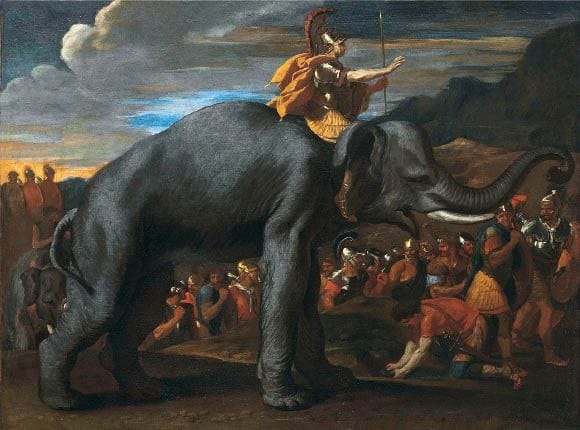
First, Hannibal marched an army of men, horses, and elephants over the Alps to threaten Rome. Scientists ask the question: Just how hard did they grind? Then, the mouse at the top of the world, the ancient origins of handedness, and a throwback to the alien megastructures.
In 218 BC, the Carthaginian general Hannibal Barca marched an army of 46,000 men and 37 war elephants over the Alps to threaten Rome right at its doorstep. This brash advance in the Second Punic War has become one of the most legendary military moves of all time, even though Hannibal was ultimately unsuccessful in his mad dash to sack Rome.
Yet despite the prominent place of this march in history, the exact route that Hannibal took over the Alps remains unknown. Now, scientists have taken a fresh stab at the millennia-old mystery by calculating how much energy various route options would have cost the troops and elephants. Though experts have generally considered a route called the Col du Clapier to be most likely, the new results suggest an alternate route known as the Col de la Traversette would have exacted less energy from the advancing army, which might have boosted its odds as Hannibal’s choice of crossing.
“Hannibal crossing the Alps on elephants.” Image: Nicolas Poussin
“Most of the discussions concerning Hannibal’s crossing were guided by philological and geological considerations, which tend to ignore the biology of the men and animals,” said authors Emilio Berti of Halle-Jena-Leipzig and Fritz Vollrath of the University of Oxford.
“Compared to choosing the Col de la Traversette, the routes via the Col de Montgenèvre, Col du Clapier, and Col du Mont Cenis would have required 11%, 16%, and 19% more energy, respectively, for the army as a whole,” the team continued. “Although Hannibal would not have had such accurate estimates, he may have had a qualitative understanding of the ranking of the possible routes. In which case, driven by the aim to minimize the energy costs of the crossing, he would have chosen the Traversette route.”
While this study does not resolve the tantalizing question of exactly where Hannibal hauled ass over the Alps, it sheds new light on the immense costs of this ancient act of bravado. Berti and Vollrath estimated that even if the army took the path of least resistance—the Col de la Traversette—the “elephants would have lost 4% of their body fat reserves, horses 11%, and men 19%.”
Invading Rome: The ultimate weight loss plan. Considering that half of Hannibal’s troops died during the crossing, this diet is not recommended.
Speaking of alpine survival, meet the Andean leaf-eared mouse (Phyllotis vaccarum). This little critter can live more than four miles above sea level, on the dizzying peaks of the Andes mountains, making it by far the highest-dwelling mammal on Earth.
The mouse has surpassed the “known elevational range limits of all other terrestrial vertebrates” which “were previously thought to be uninhabitable by mammals owing to severe hypoxia and frigid temperatures,” according to a new study about this mouse’s amazing adaptations.
To understand how this unassuming mouse survives up in the clouds, scientists analyzed the genomes of 167 leaf-eared mice collected across their range, which spans the lowlands all the way up to high Andean slopes, and compared them to their more grounded mouse relatives. The results revealed that the mountain mice have evolved a unique set of adaptations that are distinct from many other alpine animals, including the ability to metabolize toxic plants.
“The world’s highest-dwelling mammal has adapted to habitats at both the low- and high-elevation limits of its range, and much of the elevation-related selection relates to previously unappreciated aspects of feeding ecology,” the team concluded.
Mmm…toxic salads. Keep on living the high life, P. vaccarum.
Paleontologists have discovered the oldest potential evidence of a right-handed animal, though the 550-million-year-old seacrawler in question doesn’t actually have hands. Spriggina floundersi, an inch-long weirdo that lived in the Ediacaran period, has long fascinated scientists because it appears to be one of the first animals in the fossil record capable of locomotion.
When scientists took a closer look at more than 100 exquisite Spriggina fossils from South Australia, they discovered that about twice as many of them seemed bent to the left compared to the right, suggesting that the animal had a preferred direction of motion, or “handedness.” In this case, it was right-handed because the fossils are preserved in negative hyporelief, meaning that they are mirror images of the animal.
“A significant number of fossil specimens are bent to the left (right in life),” said researchers led by Scott D. Evans of the American Museum of Natural History. “The nature of these bends does not match expectations of anatomical asymmetry and instead constitutes the oldest described evidence of behavioural handedness.”
Now, the search is on for the elusive Ediacaran leftie.
Before there were interstellar objects and Pentagon UFO videos to ignite our extraterrestrial imaginings, there was Tabby’s Star, also known as KIC 8462852. Discovered in 2015, the star’s strange light patterns, which fluctuate significantly, sparked speculation that it might be orbited by “alien megastructures,” such as a massive solar energy plant called a Dyson sphere.
Now, scientists have discovered evidence of a huge planet transiting Tabby’s Star—meaning that it passed in front of the star from our perspective on Earth—which might help provide a natural exploration for its unusually pronounced dimming events. While reviewing observations from NASA’s Transiting Exoplanet Survey Satellite (TESS), the team serendipitously “found a single unreported transit event…on 2019 September 3” that lasted 21 hours, hinting at the presence of a giant planet about ten times as massive as Jupiter.
“No transiting companion has ever been detected around this well-known star, so the potential evidence of a candidate presented in this work is significant, as its existence could explain the complexity of the system,” said researchers led by Cristina Madurga-Favieres of the University of Warwick. “The strongest theory is that a group of exocomets or planetesimal fragments are responsible for the irregular and apparently non-periodic dips…of Tabby’s star. The presence of a companion would explain why these bodies are driven to the vicinities of the star, breaking up, as it would orbitally perturb them.”
In other words, the huge planet may be gravitationally hoisting a flock of smaller bodies into orbit around the star, producing the dimming events. While it’s not quite as sensational as a colossal alien power plant, it may help resolve the decade-long mystery of this strange star.


/s3/static.nrc.nl/wp-content/uploads/2026/07/11174644/110726VER_2035150802_.jpg)
/s3/static.nrc.nl/wp-content/uploads/2026/07/11115137/110726VER_2035149146_-dragend.jpg)