Wel.nl

Minder lezen, Meer weten.

Yeşilgöz hoopt dat BBB na motie van wantrouwen wel aan tafel komt

DEN HAAG (ANP) - Vicepremier Dilan Yeşilgöz (VVD) hoopt dat de BBB wel nog aan tafel komt nadat de partij donderdag een motie van wantrouwen tegen het kabinet steunde. Ze vond de steun "verrassend". Tegelijkertijd was Yeşilgöz "blij" dat ze gehoord meent te hebben dat BBB-leider Henk Vermeer alsnog wil onderhandelen over de kabinetsplannen.

De bewindsvrouw zegt dat ze later op vrijdag met Vermeer belt. Ze is "heel benieuwd" naar wat de gedachte was achter de steun voor de motie van de boerenpartij. Vermeer gaf eerder al aan de motie te hebben gesteund vanwege de stikstofmaatregelen van het kabinet.

Premier Rob Jetten zei donderdagavond de steun van de BBB voor de motie te zien als signaal dat de partij geen behoefte heeft om verder te praten. Volgens Vermeer hebben hij en Jetten inmiddels een "goed gesprek" gehad en is het nu aan het kabinet om de "juiste keuzes" te maken.

Steun van de BBB is vooral belangrijk voor een meerderheid over rechts in de Eerste Kamer, waar de partij elf zetels heeft.


Flevoland blijft erbij: geen kleine kerncentrale in de provincie

LELYSTAD (ANP) - Het Flevolandse provinciebestuur blijft van mening dat Flevoland "geen logische locatie" is voor een kleine kerncentrale, een zogeheten Small Modular Reactor (SMR). De provincie trok die conclusie begin dit jaar al na eigen onderzoek. Netbeheerder TenneT nam de Flevolandse hoofdstad Lelystad daarna echter wel mee in een studie naar de impact op het Nederlandse energiesysteem van zes mogelijke SMR's verspreid over het land, als alternatief voor twee nieuwe kerncentrales.

Hoewel de zes locaties volgens TenneT vrij willekeurig waren gekozen, leidde het in juni gepubliceerde rapport tot vragen in de provinciale politiek. Onder meer van de VVD, die wel wat ziet in kernenergie in Flevoland. De partij vroeg het dagelijks bestuur daarom of het onderzoek wil doen naar de mogelijkheden van een 'mini-kerncentrale' in Lelystad.

Het eerder ingenomen standpunt blijft echter "onverminderd van kracht", staat in het antwoord. Gedeputeerde Staten vinden Flevoland voorlopig geen logische locatie, onder meer om de bodemgesteldheid, problematiek rond koelwater en het ontbreken van grootschalige industrieclusters.

Onderzoek

TenneT heeft op verzoek van het ministerie van Economische Zaken en Klimaat voor verschillende gebieden onderzocht hoe twee nieuwe kerncentrales ingepast kunnen worden. De Groningse Eemshaven kwam daar als beste optie uit, maar de Groningse politiek wil geen kerncentrales. In Zeeland is daarvoor wel bestuurlijk draagvlak. Terneuzen is bij het kabinet ook in beeld, maar volgens TenneT moet op het stroomnet dan wel van alles gebeuren om de in Zeeland opgewekte energie kwijt te kunnen.

De beheerder van het landelijke hoogspanningsnet heeft daarom "op eigen initiatief" ook gekeken of zes kleine modulaire reactoren (SMR's) verspreid over het land een alternatief kunnen zijn. TenneT koos Bleiswijk, Dodewaard, de Europoort, A9 Zuid, Maasbracht en Lelystad als locaties voor een "technische scenarioanalyse". Spreiding van kernenergie over Nederland zou zorgen voor "een efficiëntere netinpassing", staat in het in juni gepubliceerde rapport.

Flevoland zegt "te betreuren" dat het vooraf niet afwist van het verkennende onderzoek. TenneT heeft excuses gemaakt aan de provincie en de gemeente Lelystad voor de ontstane verwarring, bevestigt een woordvoerder.


Zorgen in woningbouwsector om toenemende krapte op stroomnet

DEN HAAG (ANP) - Partijen in de woningbouwsector waarschuwen voor vertragingen en extra kosten, nu steeds meer nieuwbouwwoningen niet gelijk een aansluiting kunnen krijgen op het volle stroomnet. Woningcorporatiekoepel Aedes vreest dat woningzoekenden hierdoor mogelijk langer moeten wachten op een woning.

Voor honderdduizenden stroomaanvragen voor nieuwbouwwoningen is geen ruimte op het stroomnet, volgens Netbeheer Nederland. Het stroomnet in Nederland is al langer overvol, maar dit jaar zijn ook meer aanvragen gedaan dan ooit.

"Woningcorporaties investeren vandaag in projecten die pas over enkele jaren nieuwe woningen opleveren", stelt Aedes. "Tegelijkertijd lopen er al projecten waarin volop is geïnvesteerd, maar waarvoor nog geen zekerheid bestaat over een aansluiting op het stroomnet. Als die zekerheid uitblijft, dreigen vertragingen, lopen de kosten op en moeten woningzoekenden langer wachten op een betaalbare woning."

Makelaarsvereniging NVM denkt dat de aanwas van nieuwe woningen door de krapte op het stroomnet "flink" wordt geraakt.


Hoofdredacties en journalisten vaak juridisch onder druk gezet

DEN HAAG (ANP) - Vrijwel alle Nederlandse hoofdredacties en een meerderheid van de Nederlandse journalisten hebben in hun werk te maken met juridische druk. Dat blijkt uit een onderzoek van PersVeilig in samenwerking met Ipsos dat vrijdag is gepresenteerd. Aan het onderzoek deden 33 hoofdredacties en 471 journalisten mee.

Vrijwel alle hoofdredacties (94 procent) geven aan ooit een dreigende brief, mededeling of telefoontje te hebben ontvangen waarin met juridische stappen is gedreigd. Ruim de helft (56 procent) van de journalisten in Nederland heeft te maken gehad met juridische druk tijdens hun werkzaamheden.

De druk bestaat bij journalisten vooral uit dreiging met juridische stappen, rechtszaken of schadeclaims. Het gaat ook om sommaties, de inschakeling van een advocaat, verzoeken tot verwijdering, aanpassen of tegenhouden van publicaties en klachten bij de Raad voor de Journalistiek. In bijna een op de drie gevallen wordt er naast juridische druk ook een andere vorm van druk uitgeoefend, zoals dreigen met fysiek geweld (16 procent) of negatieve publiciteit (16 procent).

Bijna de helft van de respondenten zegt dat de gevallen waarbij druk wordt uitgeoefend gevolgen heeft voor het werkplezier. Daarnaast zegt 17 procent er gezondheidsproblemen door te ondervinden. Hoofdredacties geven aan in 61 procent van de gevallen publicaties aan te passen of niet te publiceren. Het gaat soms om kleine wijzigingen, zoals het achterwege laten van kleine details of bepaalde namen.


Bloomberg: Saudi Aramco levert geen olie aan klanten in Europa

DHAHRAN (ANP/BLOOMBERG) - Het Saudische staatsolieconcern Saudi Aramco heeft zeker twee raffinaderijen in Europa verteld dat ze volgende maand geen aardolie ontvangen. Dat meldt persbureau Bloomberg op basis van ingewijden. Normaal gesproken krijgen deze Europese klanten volgens contract vaste leveringen uit Saudi-Arabië, maar de olie-export is verstoord door een aanval op een belangrijke pijpleiding in het land.

De beslissing zou betrekking hebben op alle Europese inkopers van Saudische olie. Saudi Aramco reageerde niet direct op een verzoek om commentaar van Bloomberg.

Na een aanval sloot Saudi-Arabië vorige week een oliepijpleiding die van het oosten naar het westen van het land loopt. Na de blokkade van de Straat van Hormuz won die pijpleiding aan belang, omdat die de Saudi's de mogelijkheid biedt om via de havenstad Yanbu aan de Rode Zee olie te blijven exporteren. Volgens een bron van Bloomberg wordt de pijpleiding binnen enkele dagen weer opgestart, maar kan het tot zes weken duren voordat die weer als vanouds werkt.


Doden bij schietpartij op Filipijnse middelbare school

BANGA (ANP/AFP/RTR) - Bij een schietpartij op een Filipijnse middelbare school zijn zeker drie doden gevallen, meldt de burgemeester van de stad Banga. Een 16-jarige scholier begon om zich heen te schieten op de school en schoot daarna ook zichzelf dood. Acht jongeren raakten gewond.

Alle slachtoffers zijn tussen de 14 en 17 jaar. Vier van de gewonden verkeren in kritieke toestand.

Volgens de burgemeester had de schutter zijn vrienden tijdens de pauze gewaarschuwd dat ze naar huis moesten gaan, omdat hij na de lunch zijn "plan zou uitvoeren". Zijn vrienden dachten dat hij een grap maakte.

Schietincidenten op scholen waren lang heel zeldzaam in de Filipijnen, maar dit jaar komen ze vaker voor. Sinds juni is dit al de derde keer.


Waarom scoren Britten zo slecht op het Songfestival? Het Britse parlement stelt een onderzoek in: ‘Credible artiesten kijken wel uit’

Een commissie van het Lagerhuis wil uitzoeken waarom het Verenigd Koninkrijk zo vaak zo weinig punten krijgt op het Songfestival. „Ze schatten telkens fout in wat Europa leuk vindt.”

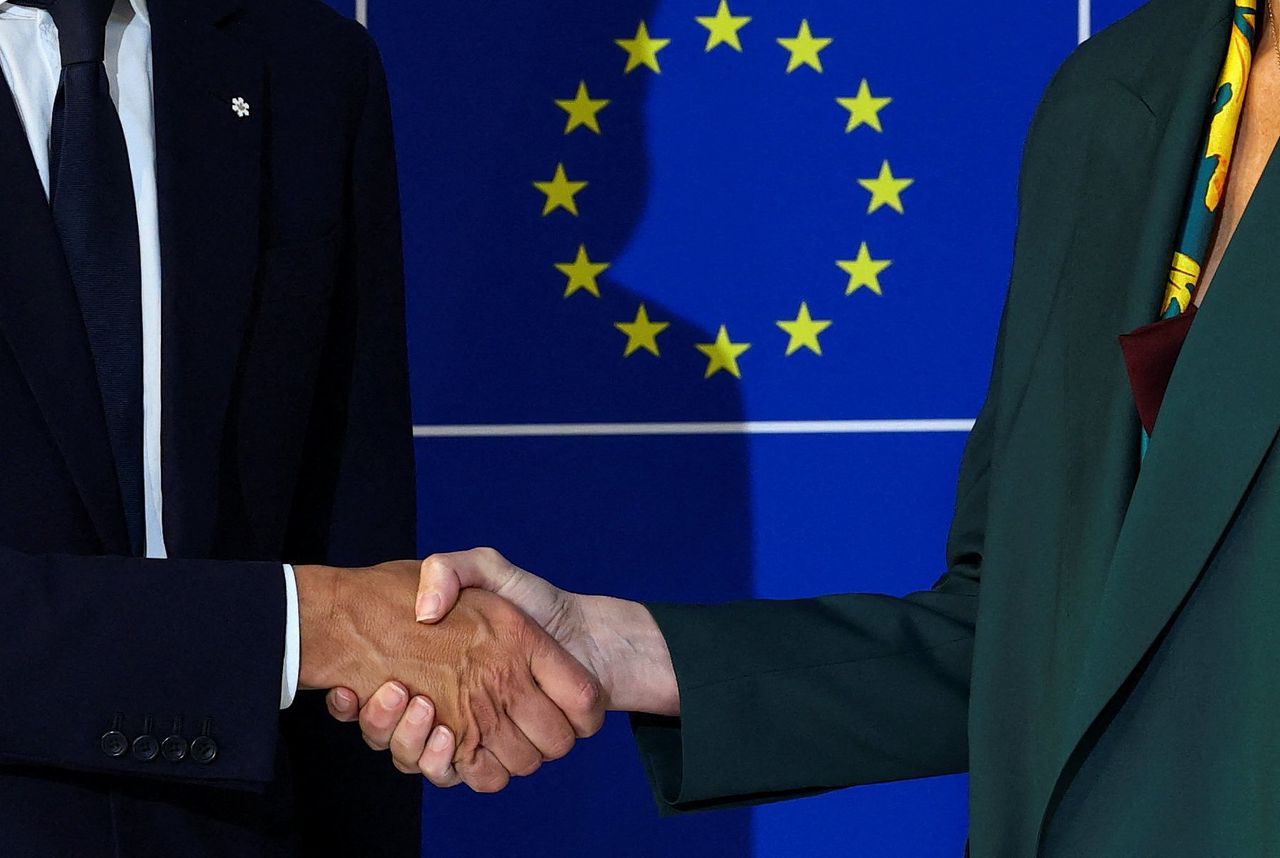
Wat zijn eigenlijk die Europese waarden?

We zoomen in op de Europese waarden, die zowel Canada’s Carney als Europa’s Von der Leyen deze week verdedigden. Wat verstaan we daar onder, en wiens waarden zijn dat?

De eerste zomer na Orbán in Boedapest: ‘Het is niet genoeg om feest te vieren als je zo lang bent onderdrukt’

In Hongarije heerst niet alléén maar euforie over de nederlaag eerder dit jaar van de autocraat Viktor Orbán, merkt Mandula van den Berg als ze voor het eerst weer in Boedapest komt na zijn val. Zelfs niet onder zijn tegenstanders.

Het debuut van een AI-actrice op het toneel prikkelt, maar mist diepgang

In de voorstelling ‘AI&IK’ onderzoekt Eran Ben-Michaël of een vriendschap met AI mogelijk is. De mix van stand-upcomedy en gesprekken met zijn zelfgebouwde AI-model zorgen voor een interessante insteek, maar een diepzinnigere uitwerking had niet misstaan.

Rijnmond - Nieuws

Het laatste nieuws van vandaag over Rotterdam, Feyenoord, het verkeer en het weer in de regio Rijnmond

Vier jaar cel voor asielzoeker (22) na dubbele poging verkrachting en geweld

De rechter heeft vier jaar cel opgelegd aan een asielzoeker die zich wilde vergrijpen aan twee vrouwen in Rotterdam. Dat gebeurde op 28 februari 2026 in de Agniesebuurt en in Schiebroek.

Politieauto in de kreukels na botsing op kruising in Vlaardingen

Op de kruising van de Schiedamsedijk en de Meester L.A. Kesperweg in Vlaardingen zijn vrijdagmiddag twee auto’s hard op elkaar gebotst. Een van de voertuigen is een politiewagen.

VK: Voorpagina

Volkskrant.nl biedt het laatste nieuws, opinie en achtergronden

Humor, felicitaties en zelfs een kalme Wilders: is de sfeer in de Kamer aan het opklaren?

Boats beside the brick warehouses in Hakodate

Sergiy Galyonkin has added a photo to the pool:

Boats beside the brick warehouses in Hakodate

Sightseeing boats and their reflections beside brick warehouses on the waterfront in Hakodate, Hokkaido, Japan.

The Register

Biting the hand that feeds IT — Enterprise Technology News and Analysis

The ideal database for AI agents doesn't exist yet, says Percona CEO

INTERVIEW Percona CEO Peter Farkas reckons AI caught the database industry off guard and that agentic workloads may eventually require a new kind of database – once anyone works out what those workloads actually need. Farkas spoke to The Register at the company's Percona Live event in Amsterdam, where members of the often-fractious open source database community gathered to discuss best practices, case studies, and the future. Percona provides software and support across a growing range of open source database technologies. Over its 20-year history, it has worked with MySQL, MongoDB, PostgreSQL, Valkey, and Redis. MySQL's first release arrived in 1995. The PostgreSQL project marked its 30th anniversary in July 2026, although its roots in the POSTGRES project stretch back further. Both databases therefore have decades behind them and represent mature, stable options – just as the conservative world of database administration prefers. The surge in AI services, however, is introducing workloads that these systems were not designed around, and Farkas believes none of the current choices are ideal. Of the current selection, Farkas said: "It's definitely not the best that we can have. It's the thing that we have right now." "I think AI definitely caught the industry off guard," he said. Farkas pointed to "iteration-focused workloads" in which an agent might make 150 attempts before a person or another system selects the best result. "A human would probably not push 150 options just so someone or another AI can pick out the winning one," he said. For now, organizations must select technology capable of handling these workloads without assuming that today's choice will remain the best fit. Farkas was careful not to favor a particular database. "Everything needs a database," Farkas said, though coming from the CEO of Percona, that is perhaps unsurprising. "If the new buzzword is blockchain or NFT or cloud or whatever, behind all of those things, there's a database, and AI is no exception. "AI needs a database, and AI is going to use the databases that we have for the time being, but I do believe that the best solution for AI or agentic workloads does not exist at this point, as there's just not enough time for something to become as mature as the trusted database software." The rapid pace of change sits uneasily with a database industry accustomed to products maturing over decades. AI development, by contrast, still has the feel of technology being flung at a wall to see what sticks. Farkas laughed when asked when such a solution might emerge. "I don't have a crystal ball," he said. He believes the AI market must mature before its requirements become clear enough for anyone to build a clean-slate database designed around them. Organizations are still deciding where AI belongs in their technology stacks, he said, including whether to run models themselves or use cloud services, and whether every use case needs a large language model rather than a smaller model with a lighter footprint. "It's easy to experiment with something that can just do everything, but that also means that the resources being consumed are outsized compared to the result," Farkas said. Farkas became CEO of Percona in October 2025, succeeding Ann Schlemmer. He had previously worked at Percona as director of support until 2016. In December 2021, he co-founded FerretDB, an open source service that converts MongoDB wire protocol queries into SQL for PostgreSQL or SQLite. MongoDB sued FerretDB in May 2025, alleging patent infringement, false advertising, and trademark misuse. FerretDB disputes the allegations. Asked what lessons he had brought from FerretDB, Farkas replied: "Lots of PTSD from courtrooms." Farkas also brings experience of working across multiple open source communities – useful as Percona shifts from a company primarily associated with MySQL to a database-agnostic, multi-tech business. Doing so has its own challenges. He noted that different communities work in markedly different ways. "We had multiple attempts at adding Postgres to our portfolio," he recalled, "but we had some wrong ideas that were based on the MySQL experience on how to engage with that community." "They have very different preferences. They have very different red flags they are looking for. For example, if you call something 'Percona TDE for Postgres', that is not going to fly: 'What is this nonsense? This is vendor lock-in! This is just one company trying to push their crap!' Whereas in the MySQL space, that's totally normal, and we needed to unlearn these things." Could Percona eventually extend its open source approach to AI? "Frankly, AI is a vendor lock-in situation," Farkas replied, pointing to services such as Gemini and ChatGPT. He argued that there is not yet a mature, enterprise-ready way to run open-weight agents, although Percona is exploring what it might contribute in that area. "Percona is not anti-AI," he said. "Percona is anti-rebranding Postgres or MongoDB as the AI database." ®

The Guardian

Latest news, sport, business, comment, analysis and reviews from the Guardian, the world's leading liberal voice

Naomi Campbell DJing and young Buddhist nuns: photos of the day – Friday

The Guardian’s picture editors select photographs from around the world

Continue reading...

Warren Buffett steps down as chair of Berkshire Hathaway after over 50 years

Buffett, 96, will become chair emeritus and remain director as his son, Howard, will step in as company’s new chair

Warren Buffett is stepping down as chair of Berkshire Hathaway after serving in the role at the conglomerate for more than 50 years.

The 96-year-old will become chair emeritus and will take on his new role immediately, the company said Friday. Buffett’s son, Howard, will become Berkshire Hathaway’s new chair, part of a long-planned succession. Howard Buffett has been on the Berkshire Hathaway board since 1993.

Continue reading...

Susan Calman: Tall Tales – comic’s first tour in 10 years is raw and riotous

Perth Concert Hall
Faux truculent and palpably adorable, the standup is in her element exposing her supposed flaws and the unseen idiocies of her TV career

Tall Tales is Susan Calman’s first new standup set for 10 years, designed to show us the real Susan behind the cuddly personality we see on TV. Given that was the premise of her 2016 touring show too, it’s clear that a decade away has done little to develop – but also nothing to diminish – the Glaswegian’s onstage shtick. This is a compelling return, stuffed with experiences and insights gleaned from that standup downtime, and which undergirds familiar tales of cat fancying, being small and entering menopause with a heartfelt reckoning with recent bereavement and rocky mental health.

That last material feels raw, as she tells us she only returned to standup (the thing she feared the most, she says) to shock herself out of a bad depression. That would be hard to credit based on her show alone, which finds Calman in her element: faux truculent but palpably adorable, fulminating at the indignities of short, lesbian, middle-aged womanhood, revealing to us the unseen idiocies of her gilded TV career. Her supposed flaws are arrayed for our pleasure: her catastrophising (cue a fun anecdote about being trapped on a hotel balcony), her addictive personality, and – in the peachy set-piece that closes act one – her hormonal lust for righteous revenge.

Touring until 20 November

Continue reading...

S-RIDE

ajpscs posted a photo:

S-RIDE

STEAL THE NIGHT
LOST NIGHT
© ajpscs

Slashdot

News for nerds, stuff that matters

Journalist Calls Out 'Collective Amnesia' of Schools' Romance With Big Tech Over AI

"Turns out, Silicon Valley isn't especially altruistic," writes the nonprofit education news site The 74. They're reading a new book promising "the inside story of how Big Tech catalyzed, co-opted, and ultimately came to capture computer science and AI education in America". Written by
New York Times business reporter Natasha Singer, Coding Kids: Big Tech's Battle to Remake Public Schools tells "the story of the nonprofit Code.org and its charismatic, Harvard-educated leader, Hadi Partovi," according to their review:

Thirteen years ago, Partovi... delivered a worrying message: Kids who didn't learn to write code would be left behind. And the long-term success of the United States economy depended on training these students to fill a million open tech jobs.... Fast-forward to 2026, and now we're dealing with AI, and tech is reading from a similar playbook.
Asked by The74's Greg Toppo, "Does this moment seem different to you?", Singer replies, "This moment is different, but also similar.


"We are in a moment in society where a lot of people have increased distrust of these huge tech companies, and we see a wave of parents pushing back against tech in schools. But we also see waves of people pushing back against Flock cameras, against data centers, that there's this feeling that tech has taken so much, and that people feel like they have lost control — that tech is being enacted on them... And parents are worried about the effects of unfettered tech access and kids' compulsive use of social media and phones, and so there's a different climate.


And yet there seems to be a disconnect in some ways with AI because you see that Microsoft and OpenAI and Anthropic and Google are all competing to get their AI tools into schools, and you see school districts across the country say "We've partnered with OpenAI." "We are a ChatGPT Pioneer School," or "We've partnered with Microsoft, and we're going to use 10,000 licenses of CoPilot." It's amazing to me. We have had these cycles of tech in schools where there are all these promises about the latest tech, laptops, learning apps, massive open online courses, virtual reality, big data's going to revolutionize schools and like democratize access to education for kids and get them these great career skills, and we keep having these cycles. My concern is that we don't learn anything.

One of the reasons I wrote this book is because it feels like we have collective amnesia. Now we're in the sixth or eighth cycle of this — and shouldn't we be asking questions about the push for AI in schools, based on what we've learned about the push for all the other things that came before?


Two Slashdot posts are cited in the book, both submitted by long-time Slashdot reader theodp (Slashdot UID #442,580), who even gets a shout-out in the book's "Acknowledgements" section (along with consumer advocate Ralph Nader).


Ironically, one member of Amazon's "Vine" program received a free copy of the book in exchange for a review — and apparently misunderstood its topic, writing that it made coding "feel approachable and even fun... [T]his is exactly the kind of book that could help a child become interested in technology without feeling overwhelmed by it. I particularly liked the way it encourages kids to be curious, experiment, and solve problems on their own. I would definitely recommend Coding Kids to parents, grandparents, or teachers looking for a good introduction to coding..."

Read more of this story at Slashdot.