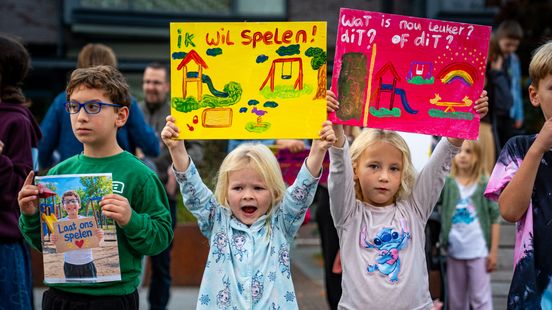
Kinderen hebben dinsdagavond gedemonstreerd tegen het verdwijnen van twaalf speeltuinen in Alblasserdam. Met borden stonden ze, samen met ouders, bij het gemeentehuis in het dorp.
/s3/static.nrc.nl/wp-content/uploads/2026/10/06125854/061026BIN_2037164277_eerste1.jpg)


Read more of this story at Slashdot.
Forward says he will be available after punishment
Ronaldo insists coach ‘had broken his word to me’
Cristiano Ronaldo has accused the Portugal head coach, Jorge Jesus, of twice breaking his word, saying a failed agreement to publicly explain his omission against Norway drove him out of the camp but insisting he remained available after any punishment.
In a lengthy statement, the 41-year-old gave his account of the dispute that prompted his departure from Copenhagen before Portugal’s Nations League match against Denmark last week.
Continue reading...Exclusive: Officials working on further radical changes that would change how much energy companies could charge customers
John Healey is planning a major intervention to cut energy bills for poorer households at this month’s budget, after ministers became alarmed at forecasts which show bills rising by hundreds of pounds in January.
The chancellor is working on plans to spend more than £1bn to help energy consumers, the bulk of which is likely to go towards increasing the discount given to households on certain benefits.
Continue reading...School trustees appoint Sally Yates to review policies as university grapples with fallout from alleged frat gang rape
A former high-ranking Department of Justice official will look at how Cornell handles sexual misconduct complaints, university trustees announced on Tuesday as they tried to address an outpouring of anger over allegations of a 2024 gang rape at a fraternity house.
Sally Yates, who was a deputy attorney general in the Obama administration, will spearhead the review, the trustees said. The assessment is to include how the Ivy League university investigates reports of sexual assault and sexual harassment, how the disciplinary process works, the adequacy of campus police responses, and more.
Continue reading...Het begon allemaal met deze video op YouTube waarin uitgelegd werd hoe iemand GPT-6 Astra gebruikte om FreeCAD aan te sturen.
Heel cool vond ik het voorbeeld waarbij de basis een door AI-gegenereerde foto van een vaas was. Jaja, AI-slop, nul creativiteit, ik geloof het allemaal wel. Het bleek ook te kunnen met Claude Desktop, dus wilde ik dat wel proberen. Ik had toevallig een foto van een zweefvliegtuig bij de hand (als je weet waarom dan weet je waarom en anders maakt het niet uit) en heb op basis daarvan een ontwerp laten maken.
In de presentatie hierboven die ik gebruikt heb bij onze bijeenkomst van de AI-community van iXperium vandaag leg ik de verschillende stappen uit. Er zit ook een dia in met een schermopname van het hele proces. Je ziet dat de video af en toe versneld wordt afgespeeld om te voorkomen dat je té lang zit te wachten tijdens het kijken. Maar ik doe dus niet veel. Ik lever een foto en een prompt. Daarna nog de vraag of Claude ook een bouwanimatie kan maken. Ook dat kon.
Omdat ik een Prusa printer thuis heb (niet 100% operationeel) heb ik eerst met de PrusaSlicer laten uitrekenen hoe lang het zou duren om te printen. Best lang.
Daarom heb ik Orca Slicer geïnstalleerd met een Snapmaker U1-profiel (als ik een nieuwe printer koop wordt het waarschijnlijk deze) om te kijken hoe lang het dan zou duren. En of het heel veel verschil zou uitmaken als ik het meteen in meerdere kleuren zou laten printen.
Nadat ik via de mail intern bij de HAN een aantal collega’s om advies gevraagd had, heb ik ook een FEM (Finite Element Method) simulatie laten uitvoeren om te berekenen of de verschillende onderdelen ook sterk genoeg zouden zijn als ik het zweefvliegtuig zou gooien. Een beetje dikkere ligger hielp. Ook kon ik Claude Desktop vragen om een paar scenario’s in de slicer uit te rekenen. Bijvoorbeeld hoeveel langer zou het naar schatting duren als ik de kop voor de buitenranden wat langzamer zou laten bewegen zodat die er netter uit zouden zien. Niet heel veel langer.
Oh, en omdat mijn HAN-laptop op dinsdagochtend van een nieuwe image voorzien zou worden en ik niet zeker wist of ik PowerPoint op tijd weer ter beschikking zou hebben (nee), had ik Claude ook nog even gevraagd om de PowerPoint (met behoud van alle animaties) te converteren naar een html-pagina. Dat is het resultaat dat je hierboven ziet.
De enige uitdaging? Ik heb nog niet kunnen testen hoe goed het ook daadwerkelijk print. En dat zal ook nog wel even duren, ik ben nu eenmaal vooral/alleen in Nijmegen of Arnhem onder werktijd en dan is het even 9 uur printen van onderdelen niet gemakkelijk te plannen. Mocht jij er zelf mee aan de slag willen, de bestanden zijn hier te downloaden.
Het niet kunnen printen heeft me er niet van weerhouden om nog wat verder te experimenteren. Ik wilde weten of ik ook een gadget kon ontwerpen voor iXperium in meerdere kleuren (voor op de Snapmaker U1) en met beweging. In Claude Desktop was dat nog best ingewikkeld. Na een brainstorm in tekst maakte Claude iets in FreeCAD wat niet heel inspirerend uitzag. Het grappige was dat uiteindelijk Gemini erin slaagde om een afbeelding te genereren van iets dat in theorie uit een printer zou kunnen komen op basis van een afbeelding die wij normaal in presentaties gebruiken (dus alleen in 2D beschikbaar is) en een beschrijving:
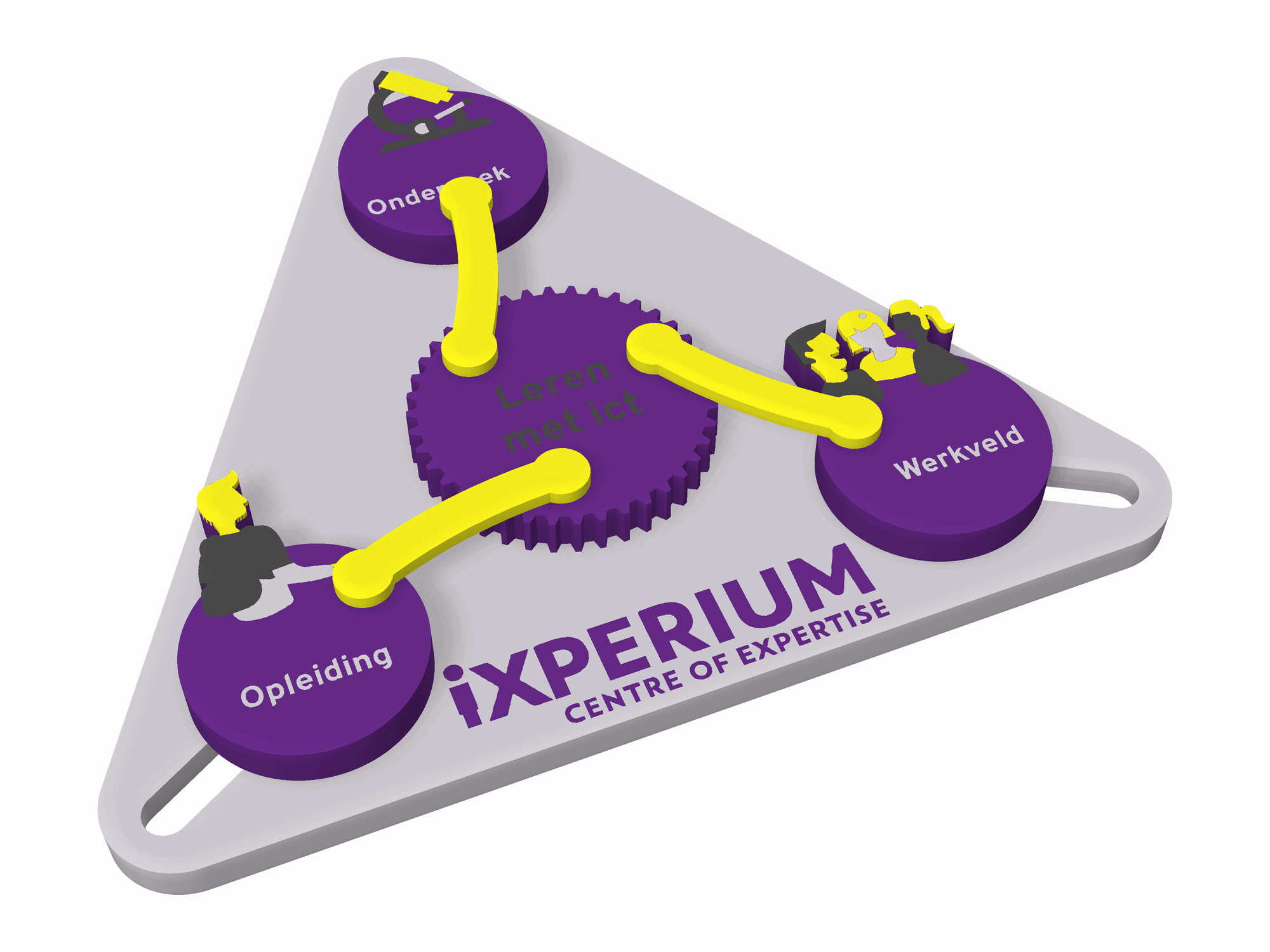
Toen ik dát aan Claude gaf, was dat wél voldoende om in FreeCAD iets te maken dat er uiteindelijk zo uitzag in de bouwanimatie:
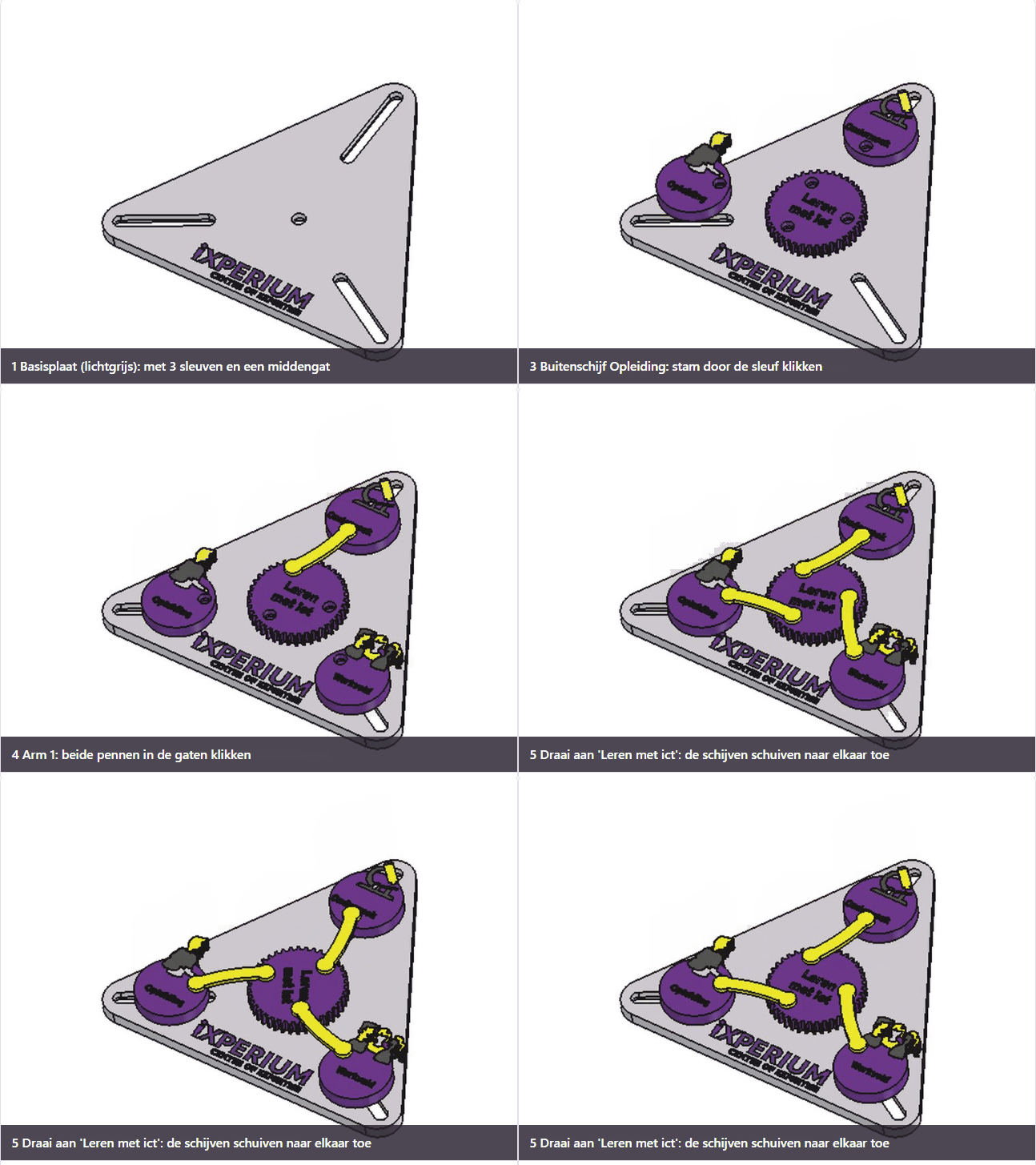
Niet helemaal identiek aan het origineel van Gemini, voor een deel ook wel omdat het idee nu was dat het echt zou kunnen werken na printen, dus moesten de onderdelen in elkaar klikken etc.
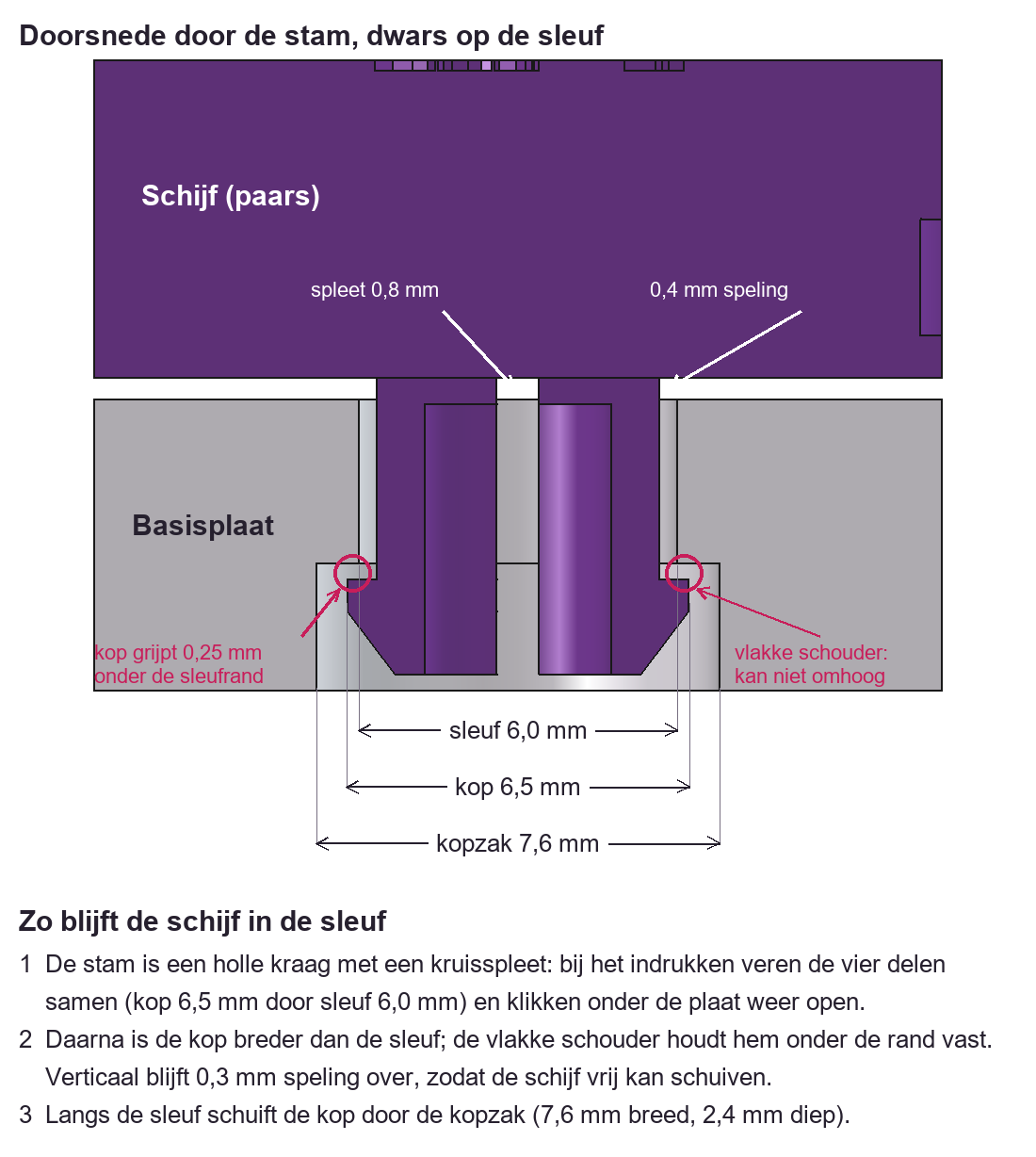
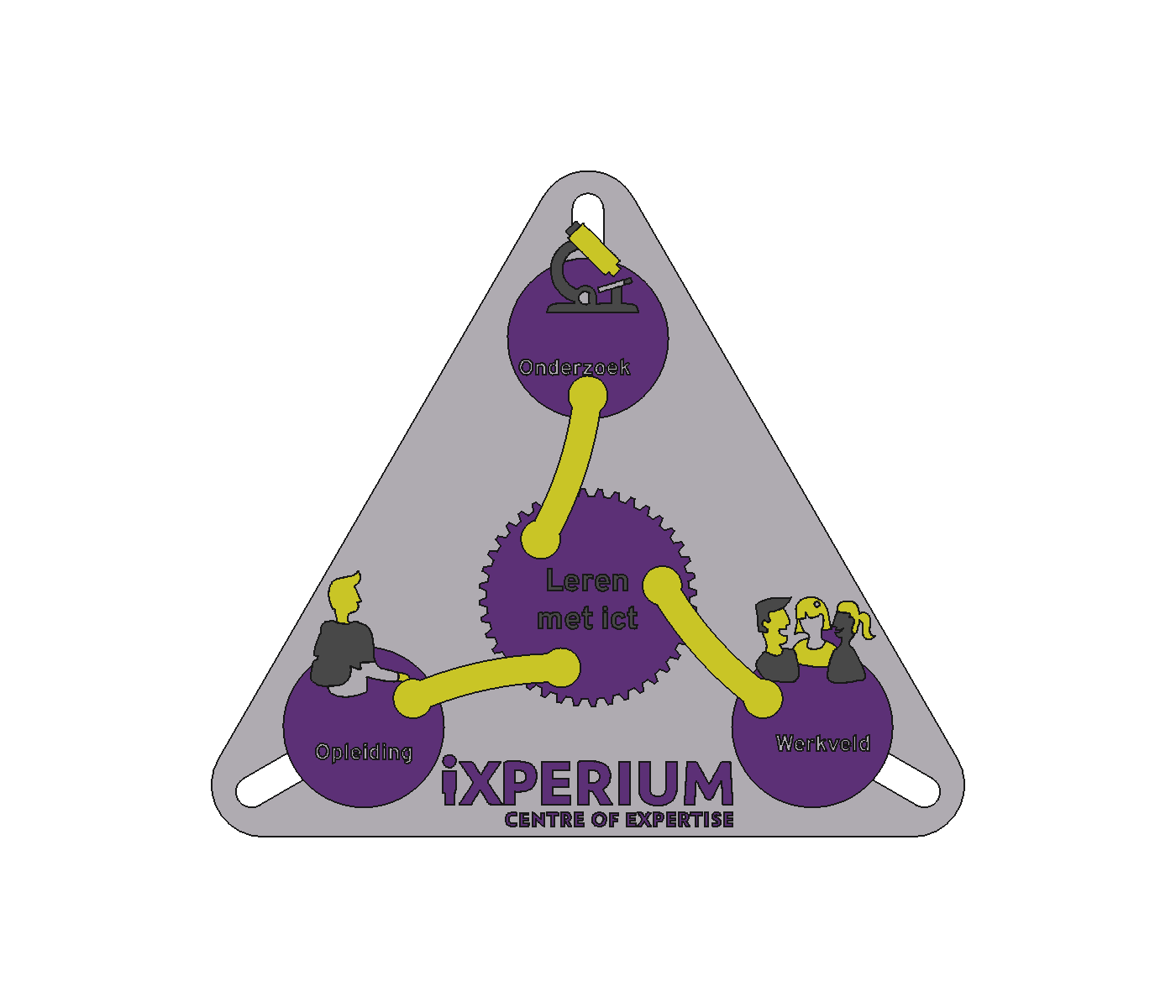
Gemini dacht daarna zelf dat de tool niet in staat was om een aangepaste afbeelding op basis van de render-afbeelding te maken, daar had ik wat hulp van Claude bij nodig om een goede prompt te laten genereren:
Use the attached image as the exact design reference. It is a CAD render of a 3D-printed desktop fidget toy
(triangular tabletop puzzle for a university centre of expertise). Turn it into a high-quality product photograph.

DESIGN (keep exactly as in the reference, do not redesign or add parts):
- A flat equilateral triangle base with rounded corners, printed in light grey PLA (#D2CED5), about 16 cm per side
and 5 mm thick. Three long narrow slots run from the three corners toward the centre.
- In the centre a large purple (#662A88) gear-like disc with fine teeth around the rim. On it, in dark grey (#4A4A4A),
the flat inlaid text "Leren met ict" in two lines.
- Three smaller purple discs sit near the corners on top of the slots: "Onderzoek" (top, with a yellow and dark-grey
microscope icon sticking out above the disc edge), "Opleiding" (lower left, a student with a backpack whose head and
shoulders stick out above the disc edge), and "Werkveld" (lower right, three people whose heads stick out above the
edge). Disc labels in light grey letters.
- Three short, slightly curved yellow (#F6F01D) arms connect the inner side of each small disc to the centre disc,
each attached with a small round pivot.
- At the bottom of the grey base the purple inlaid logo "iXPERIUM - CENTRE OF EXPERTISE".

LOOK: matte PLA 3D print, subtle visible layer lines on the edges, crisp multi-colour inlaid text and icons that are flush
with the surface (not embossed). Colours exactly: purple, yellow, light grey, dark grey. Smooth, even edges, realistic
plastic material with soft specular highlights.

SCENE: shot from a slightly raised three-quarter angle, on a light wooden meeting-room table, softly blurred modern office
in the background with natural window light, shallow depth of field, 85 mm lens, sharp focus on the whole toy, neutral
white balance. Photorealistic commercial product photo, 4:3.

IMPORTANT: copy all text exactly as written (Leren met ict, Onderzoek, Opleiding, Werkveld, iXPERIUM CENTRE OF EXPERTISE),
no extra text, no watermark, no extra objects on the toy.
Met daarna als aanvulling:
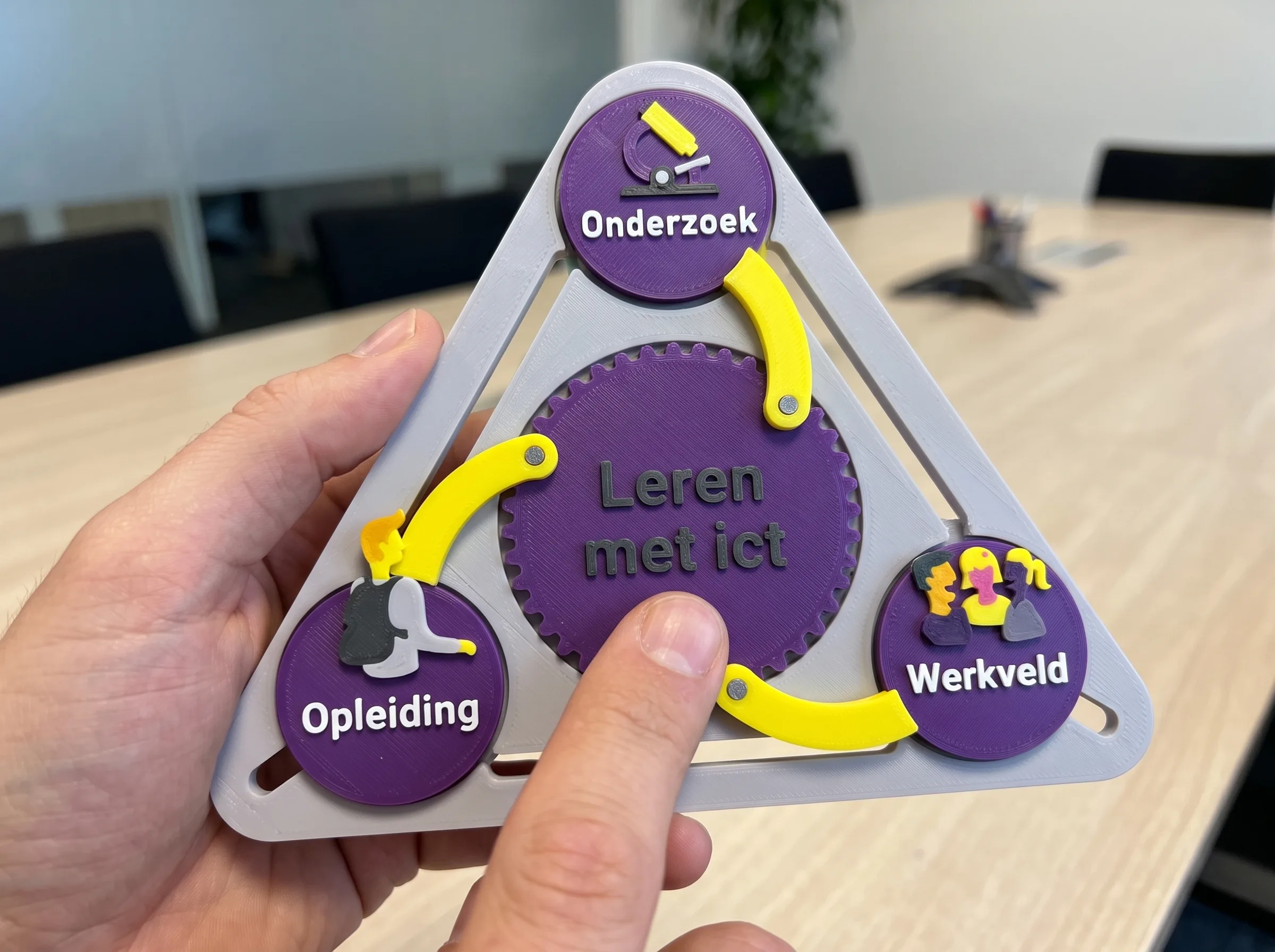
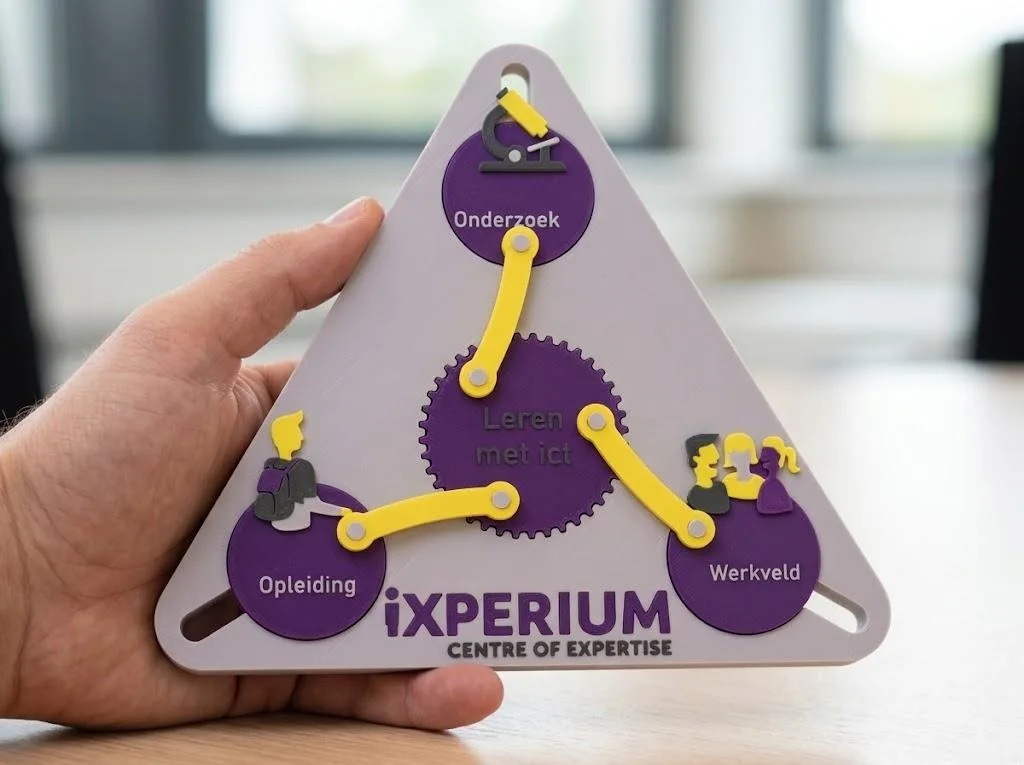
Same image, but a person's hand holds the toy at the left and bottom edge.
En dat leverde onderstaande afbeelding op:
Aardig is, zoals ik in de presentatie uitleg, dat je Claude ook variaties in de slicer kunt laten berekenen: hoe lang duurt het als ik 1 fidgetspinner laat printen? En als ik er 10 moet hebben, maakt het dan uit of ik ze per stuk print of alle onderdelen optimaal verdeel over de platen (spoiler: is sneller omdat niet alle onderdelen uit meerdere kleuren bestaan).
Zoals je hierboven kunt zien, helpt AI dus bij het brainstormen, het maken van een concept, het realiseren van een concept in FreeCAD, het voorbereiden van de prints in de Slicer, je kunt Claude zelfs vragen hoeveel filament je nodig hebt en welk filament daar het meest bij zou kunnen aansluiten qua kleur. Want tot op dit moment is het allemaal fictie wat je ziet. Eerst maar even laten uitrekenen wat ik nodig had:
Wat je voor de 10 sets van de fidget spinner nodig hebt (uit de meting van de platen, zonder reserve):
| Kleur | Kleurcode | Nodig voor 10 sets |
|---|---|---|
| Lichtgrijs | #D2CED5 | ca. 319 g |
| Paars | #662A88 | ca. 150 g |
| Geel | #F6F01D | ca. 22 g |
| Donkergrijs | #4A4A4A | ca. 4 g |
Het totaal is ongeveer 495 g. Het is PLA van 1,75 mm voor de Snapmaker U1. Vooral lichtgrijs en paars wegen zwaar. Van geel en donkergrijs heb je maar een handjevol nodig, dus daar heeft een kleine of reeds aanwezige rol genoeg aan.
En daarna op amazon.nl (geen affiliate site!) laten kijken wat er aan PLA-filament dat geschikt was voor de U1 te vinden was:
| Kleur | Doel | Nodig | Advies |
|---|---|---|---|
| Lichtgrijs | #D2CED5 | ca. 319 g | 1 spoel van 1 kg |
| Paars | #662A88 | ca. 150 g | 1 spoel van 1 kg |
| Geel | #F6F01D | ca. 22 g | 1 spoel (of restant) |
| Donkergrijs/zwart | #4A4A4A | ca. 4 g | 1 spoel (of restant) |
| Kleur | Product | Prijs | Link |
|---|---|---|---|
| Lichtgrijs | Amazon Basics PLA 1,75 mm, lichtgrijs, 1 kg (neutraal lichtgrijs) | EUR 17,02 | https://www.amazon.nl/dp/B07T6VTG5Q |
| Paars | ELEGOO PLA 1,75 mm Paars 1 kg (diep violet, 4,6 sterren) | EUR 19,99 | https://www.amazon.nl/dp/B0CD7QHY8G |
| Geel | eSUN PLA Basic 1,75 mm Geel 1 kg | EUR 15,99 | https://www.amazon.nl/dp/B0F99H9YND |
| Zwart (voor de donkere details) | eSUN PLA+ 1,75 mm Zwart 1 kg | EUR 14,44 | https://www.amazon.nl/dp/B07FQDKR28 |
Totaal ca. €67,44.
| Kleur | Product | Prijs | Link |
|---|---|---|---|
| “Lichtgrijs” -> Koud Wit | eSUN PLA Basic Koud Wit (wordt lichter/koeler dan #D2CED5) | EUR 13,59 | https://www.amazon.nl/dp/B0CR1DBBFM |
| Paars | eSUN PLA+ Paars (helderder violet dan #662A88) | EUR 15,33 | https://www.amazon.nl/dp/B07FQHQ519 |
| Geel | eSUN PLA Basic Geel | EUR 15,99 | https://www.amazon.nl/dp/B0F99H9YND |
| Zwart | eSUN PLA+ Zwart | EUR 14,44 | https://www.amazon.nl/dp/B07FQDKR28 |
Totaal ca. €59,35
Die zijn blauwachtig staalgrijs (eSUN PLA Basic Lichtgrijs en Grijs, Mat PLA Donkergrijs) en passen niet bij je neutrale lichtgrijs.
eSUN PLA Basic “Paars” is magenta; eSUN PLA+ “Purper” is violet maar lichter dan #662A88.
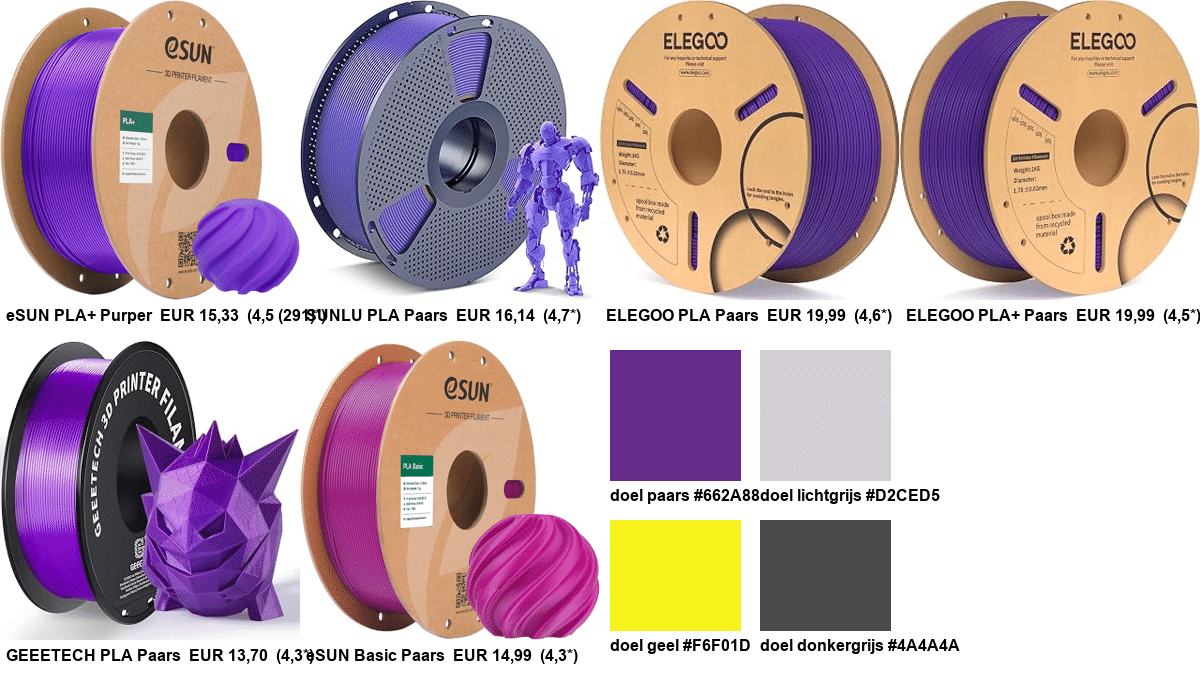
De waarschuwing dat prijzen kunnen veranderen, de garantie dat er niets besteld is, documentatiemateriaal inclusief foto’s van de rollen is allemaal beschikbaar. De tabel maakt ook zichtbaar dat het weliswaar lijkt alsof een fidget spinner tussen de 6 en 7 euro per stuk gaat kosten, die rekensom is niet helemaal eerlijk. Zwart en geel zou je waarschijnlijk nog van de oorspronkelijk meegeleverde spoelen hebben en dan hoef je alleen lichtgrijs en paars te kopen. Tussen de 3 en 4 euro per stuk dus.
Ook hier zijn de bestanden met de 6 printplaten voor 10 fidget spinners ook te downloaden. Ook hier de disclaimer: ik heb het nog niet kunnen testen, het zou me heel erg verbazen als het meteen, vanaf ontwerp zou werken en passen.
Ik denk dat het goed is dat ik het druk heb (daarom weer minder posts hier) want dit nodigt toch echt wel heel erg uit om weer met 3D printen aan de slag te gaan. Het is alweer 13 jaar geleden dat ik voor het eerst, met dank aan Fablab Zuid Limburg, met een Up Mini! aan de slag mocht. Wie weet krijgt in 2026 nog een vervolg.
Het bericht 3D printen met Claude Desktop verscheen eerst op ICT en Onderwijs BLOG.
Allahoe Akbar
Allahoe Akbar
Allahoe Akbar
Allahoe Akbar
Ashadoe ella ilaha illallah
Ashadoe ella ilaha illallah
Ashadoe enna Moehammeden rasoel Allah
Ashadoe enna Moehammeden rasoel Allah
Hayya al assalaah
Hayya al assalaah
Hayya al al Falaah
Hayya al al Falaah
Allahoe Akbar
Allahoe Akbar
La ilaha illallah
Proost


STRAATSBURG (ANP) - De Roemeense Europarlementariër Nicolae Ștefănuță is de opvolger van Bas Eickhout als covoorzitter van de Groenen in het Europees Parlement. De Nederlandse Eickhout stopte in mei als Europarlementariër na zeventien jaar. Hij was een van de bekendste Nederlandse gezichten in het Europees Parlement.
Eickhout stopte deels omdat hij relaties had in het verleden die "niet passen bij mijn rol", zei hij daar zelf over. Een week eerder maakte de 49-jarige bekend een relatie te hebben met de 25-jarige Oostenrijkse Europarlementariër Lena Schilling, eveneens aangesloten bij de Groenen.
De Duitse Terry Reintke is herkozen tot covoorzitter. De partijgroep heeft 53 van de 720 zetels in het Europees Parlement.
Rijd je volgend jaar door rood, dan ligt er waarschijnlijk een boete van €330 op de mat. Voor onnodig links rijden betaal je €300. De ANWB heeft de voorgestelde boetes voor 2027 op een rij gezet. Toch is het nog maar de vraag of die bedragen op 1 januari echt ingaan, want de Tweede Kamer wil de verhoging tegenhouden.
Het overzicht van de ANWB, waar Autobahn.eu vandaag over schrijft, komt uit het conceptbesluit van het kabinet. Volgens Autobahn.eu staat er boven de hele lijst een belangrijke kanttekening: politiek is nog niet beslist dat deze bedragen op 1 januari echt ingaan.
Het kabinet wil de boetes gemiddeld met 2,7 procent laten stijgen. Volgens het Nederlands Dagblad is dat gelijk aan de inflatie tussen maart 2025 en maart 2026. Dit zijn de bekendste bedragen, met tussen haakjes het tarief van nu:
Let op: daar komt nog iets bij. Alle Nederlandse bedragen zijn volgens Autobahn.eu exclusief de 9 euro administratiekosten die het CJIB bovenop een verkeersboete rekent.
Gemiddeld 2,7 procent erbij, maar voor links rijden ruim 7 procent
Hoe kan een stijging van 2,7 procent uitkomen op €20 extra? Dat komt door afronding. Bij de meeste Wahv-boetes worden bedragen boven 100 euro afgerond op een veelvoud van 10 euro. Snelheidsboetes vormen een uitzondering en worden per hele euro naar beneden afgerond.
Zo gaat onnodig links rijden van €280 naar €300, een stijging van 7,1 procent. Rijden zonder verzekering stijgt zelfs met 10 procent. Volgens het Veldhovens Weekblad ligt dat bijna 4 keer zo hoog als de gemiddelde indexatie van 2,7%. Toen eerder dit jaar de eerste berichten over de verhoging naar buiten kwamen, ging het nog om €328 voor door rood rijden. In het conceptbesluit is dat afgerond naar €330.
Wie vaak over de grens rijdt, ziet een groot verschil. Een vergelijking van Wegenvignetten.nl met tien populaire vakantielanden laat zien dat Duitsland veel lager uitkomt. Een eenvoudige roodlichtovertreding kost er 90 euro en eveneens een punt, terwijl Nederland naar 330 euro gaat. Brengt de bestuurder anderen in gevaar, dan kan de Duitse boete wel flink oplopen, plus een rijverbod.
Ook bij andere overtredingen is het verschil groot. Zonder gordel rijden kost in Duitsland standaard €30, tegenover straks €200 bij ons. Voor een mobiel apparaat tijdens het rijden betaal je daar €100, in Nederland wordt dat €450. En 30 km/u te hard buiten de bebouwde kom kost in Duitsland €150, tegenover €400 op een Nederlandse snelweg.
Voor exact dezelfde overtreding kan de rekening enkele tientallen kilometers over de grens honderden euro's lager zijn.
Op 22 september nam de Tweede Kamer een motie aan die het kabinet vraagt af te zien van de verhoging. De motie kreeg steun van partijen die samen 83 zetels vertegenwoordigen. Het kabinet had de motie vooraf ontraden. Volgens de ANWB vindt de Kamer dat verkeersboetes moeten bijdragen aan de verkeersveiligheid, en niet moeten dienen als inkomstenbron voor de begroting.
De Kamer staat daarin niet alleen. De Raad van State vindt dat het kabinet beter moet uitleggen waarom een nieuwe verhoging nodig en proportioneel is. Volgens TopGear wijzen de adviseurs erop dat verkeersboetes inmiddels gemiddeld hoger zijn dan vergelijkbare boetes die via het strafrecht worden opgelegd. Het Openbaar Ministerie en de Raad voor de Rechtspraak vonden eerder al dat de boetes niet meer in verhouding staan tot zwaardere strafbare feiten.
Het kabinet houdt toch vast aan de indexering. De opbrengst is groot: volgens Motornieuws ging er vorig jaar ongeveer 1 miljard euro aan verkeersboetes naar de staatskas. Ook eerder legde het kabinet een motie naast zich neer. In november 2025 schreef de toenmalige minister Foort van Oosten, volgens TopGear, dat hij een motie om de boetes niet meer mee te laten stijgen met de inflatie niet zou uitvoeren.
Een aangenomen motie is een oproep, geen wet
Bronnen: Autobahn.eu, ANWB, Autobahn.eu (Duitslandvergelijking), Wegenvignetten.nl, Nederlands Dagblad, TopGear, Veldhovens Weekblad, Motornieuws
LONDEN (ANP) - De Britse kledingwebsite ASOS heeft bevestigd dat dinsdagochtend een "ongeautoriseerde klantmelding" is verstuurd. Eerder op de dag werd bekend dat gebruikers van de app een melding hadden ontvangen, waaruit kon worden opgemaakt dat de systemen van ASOS zijn gehackt. Het bedrijf laat weten onderzoek te doen naar "ongeoorloofde activiteiten via platforms van derden" die het gebruikt voor communicatie met klanten.
Eerder schreven meerdere media, waaronder The Independent, al over de hack. ASOS zegt nu dat kwaadwillenden daarbij mogelijk toegang hebben gekregen tot persoonlijke data als naam en contactgegevens. "We geloven niet dat betaalkaartgegevens of wachtwoorden van accounts zijn getroffen", aldus ASOS, dat ook in Nederland actief is.
Het bedrijf zegt direct maatregelen te hebben genomen om de toegang tot de berichtenplatforms te beperken. De website en app werken volgens ASOS zoals normaal en er zouden geen verstoringen zijn. ASOS stelt verder dat het nog te vroeg is om te zeggen wat de mogelijke gevolgen voor de handel zijn.
DEN HAAG (ANP/RTR) - Duizenden besturingssystemen van Europese wind- en zonneparken zijn via het internet toegankelijk en zijn zodoende kwetsbaar voor hackpogingen. In Nederland zijn ruim 140 van dergelijke toegankelijke systemen gevonden, hebben onderzoekers van cybersecuritybedrijf Modat dinsdag bekendgemaakt tijdens een cybertop in Den Haag.
De onderzoekers vonden ruim 8500 toegankelijke besturingssystemen in 35 landen. De meeste zijn van wind- en zonneparken in Spanje, Griekenland, Italië en Duitsland. In veel gevallen ging het om beheerpagina's met een inlogscherm. Maar volgens een van de onderzoekers was het bij een deel ook mogelijk om de volledige controle over te nemen. Op de webpagina van een turbine waren live gegevens te zien, met knoppen voor "start, stop en reset". Sommige systemen bedienden meerdere turbines of een heel park.
Topman Soufian El Yadmani van Modat spreekt van een kwetsbare digitale infrastructuur. "Wat wij in een paar uur in kaart kunnen brengen, kan een aanvaller ook in een paar uur in kaart brengen", zegt hij.
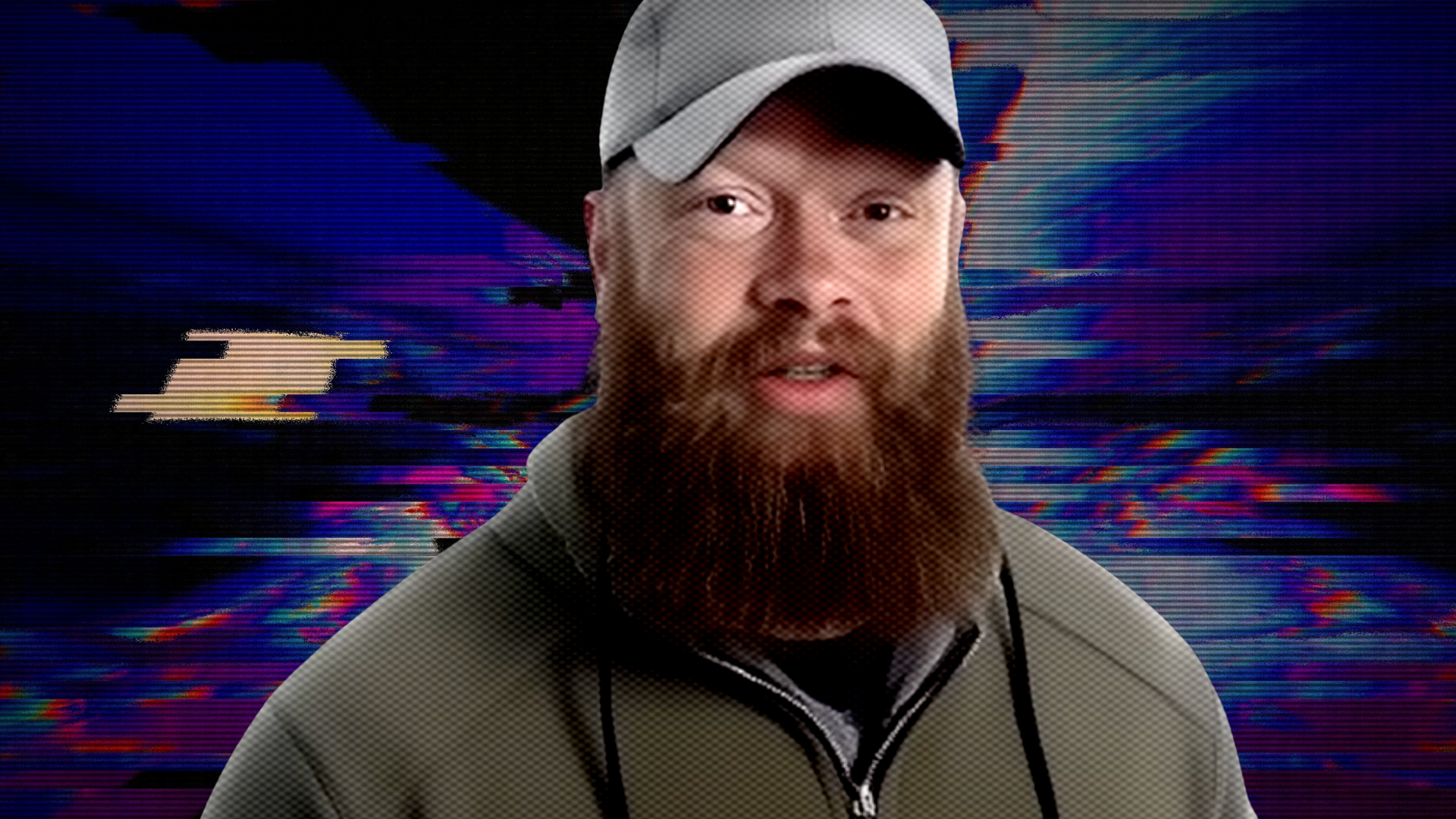
A man convicted of manslaughter in Arizona will be resentenced because an AI-generated video of his victim speaking from beyond the grave was ruled to have carried “undue emotional weight” as an impact statement. An appellate court in Arizona ruled that the manslaughter charge will remain, but the judge must reconsider the length of the man’s prison term because of AI.
In 2021, Gabriel Horcasitas shot and killed Christopher Pelkey during a road rage incident. A jury found him guilty of manslaughter. During Horcasitas’ sentencing hearing, Pelkey’s sister Stacey Wales played an AI-generated video of her brother as part of her victim’s impact statement. In the video, which she scripted with her own words that she made an AI generated likeness of Pelkey say, the AI avatar of Pelkey forgives his killer and said they “could have been friends” in another life.
“I loved that video,” the judge said while handing down the maximum sentence of 10 and a half years.
Wales told 404 Media that her intent with the video was to sway the judge. “Isn’t that what you want human connection to be?” she said. “Do you ever come out of a movie and say: ‘Well, that was too emotional. That was too powerful. Human connection is powerful, and trying to convey that to somebody that's never known another person, this person on the earth, to convey their lifetime of 37 years down to a two-hour sentencing event is hard to do, and I think that victims and victims' families should be afforded every opportunity.”
After sentencing, Horcasitas appealed. He argued that the AI Pelkey video was inadmissible because it carried “undue emotional weight” and that the “lifelike AI recreation of the victim conveyed an authority and authenticity” had a “psychological impact” on the judge, according to court documents reviewed by 404 Media.
The appellate court agreed and cited State v. Rose, a 2007 murder case where a man was sentenced to death for the murder of a police officer. During the victim impact portion of the sentencing in that case, the judge saw photos of the police officer’s children at his graveside. The court said those photos almost crossed the line into prejudicing the judge.
“The AI video crossed that line. Unlike the photographs in Rose, which captured a particularly poignant moment for the young surviving victims, the AI video here [...] does not reflect actual events,” court documents said.
“It clearly impacted the sentencing judge, who said he ‘loved the video’ and felt it ‘was genuine,’ pointing to the AI victim’s ‘obvious forgiveness’ of Horcacistas,” the court documents said. “On this record, the judge’s consideration of the AI video so prejudiced Horcasitas as to render the sentencing procedure fundamentally unfair.”
Wales and the rest of Pelkey’s family have spent the last five years in and out of various court rooms related to his death. If the current ruling holds, then she'll travel to Arizona from New York and give the same statement she did the first time through her brother’s AI-generated mouth, minus the AI-generated video. The same judge who originally said “I loved that video” will do the sentencing.
“Likely, the same people will go back down and make their speeches, and I will be making my victims' impact statement that I wrote for myself the first time around again, and I will be delivering Chris's AI script sentiment again,” she said. “If I need to stand there and read it myself, which would be legally lawful, I am prepared to do that. Chris's sentiment does not change. The delivery method will.”
Wales said she wrote the words that came out of the AI version of her brother, they weren’t AI-generated. She also noted that only the judge, her family, and the Horcacistas family were the only people who saw it during the trial. “This was not offered as evidence. Juries never saw this,” she said. “This was only created after a verdict was solidified, a guilty verdict.”
She also noted that the AI video was only one of a larger piece of testimony given that day. “I think that [the judge] is unfairly represented with a soundbite,” she said. According to Wales, the judge spoke for around half an hour and only mentioned the AI video once. Wales herself uploaded the soundbite from the judge saying he loved the AI-generated impact statement to YouTube, where it went viral.
But she also said she understood that AI is a new technology and when she played the AI-generated video of her brother that she was doing something no one else had done yet. She compared it to the way courts thought of photography in the late 19th century.
“It took about 15 years [...] and about five landmark cases in the United States that went all the way up to the Supreme Court before photography was an accepted standard to be used in the courtroom for evidence, identification, and testimony, et cetera,” she said. “I believe that's what we're seeing now with AI. It is a brand new medium.”
Wales said she understood she was setting a precedent, for good and for bad, and that she was OK with that. “There is always that first case, and so that mantle weighs on me that I need to be careful with how I defend this and how I explain the impetus, the goals, the motivations, and the veracity of what was created, because there are victims that depend on freedom of speech for the future, and I do believe that victims and their families should have every opportunity available to them to make their their points,” she said.
There’s no firm date for the new sentencing. “We do respect the court's opinion, and if we need to operate in those guardrails, I am prepared to read the same script that the AI version of Chris read the first time around,” she said. “His sentiment has not changed. Our opinion of what we believed he would think about this whole thing has not changed. The words I penned as Chris's imagined opinion still have not changed and will not change.”
Things That Are Good to Do. Including “admit what you don’t know”, “put the cart away”, “rest before you’re exhausted” (I often get this one wrong), and “walk home if you can”.


