The Guardian

Latest news, sport, business, comment, analysis and reviews from the Guardian, the world's leading liberal voice

Lindsay Clancy’s defense lawyer asks judge to investigate lone juror

Holdout juror in Clancy’s case, Michael Desronvil, sided with the prosecutors, arguing that Clancy knew what she was doing when she killed her three young children

Lawyers for Lindsay Clancy have asked a judge to investigate the conduct of the lone juror who wanted to convict the mother from Massachusetts of murder in the deaths of her three children.

In a motion filed Friday but made public Monday, Clancy’s lawyers asked the court to question the juror about his alleged use of a cellphone during deliberations, his truthfulness on a questionnaire that prospective jurors filled out before the trial began and his truthfulness when jurors were questioned by the judge a day before the trial ended.

Continue reading...

UK to give support to Saudi jets in attempt to counter Houthi fighters

Andy Burnham says he will urge Donald Trump to bring an end to conflict with Iran

The UK has agreed to provide defensive air support to Saudi Arabia to help counter Houthi fighters and restore stability in the Middle East while driving down the cost of living at home, Andy Burnham has said, ahead of his first meeting with Donald Trump.

The prime minister said he had agreed to a request for air-to-air refuelling of Saudi jets to defend energy infrastructure against the Iran-backed rebels and help keep oil flowing from the Gulf to ease global economic turmoil.

Continue reading...

Celia Birtwell ‘humanises’ Burberry in London fashion week closing show

Textile designer brings florals, vines and smiley doodles to brand’s luxury checks for one-off paired collection

Burberry and Celia Birtwell are both national treasures of sorts. One is Britain’s grandest luxury name, the other the textile designer who dressed bohemian 1960s London in her prints and has a place in art history as David Hockney’s favourite muse.

Burberry’s designer, Daniel Lee, has always loved Birtwell’s prints. When the two met this spring, he fell for “her energy, and her zest for life”, and a one-off Burberry meets Birtwell collection that closed London fashion week was born.

Continue reading...

World leaders address climate crisis before UN meet amid record-breaking El Niño

Prime ministers of Australia and Iceland discuss effects on their countries even as some shy away in face of war and inflation

World political leaders are descending on New York for the UN general assembly and some of them are putting the climate crisis on the agenda as they spoke on Monday at the start of the city’s annual Climate Week.

This year’s Climate Week – which runs alongside UNGA – comes after months of extreme heat in large parts of the world including Europe and the US, wildfires in Africa, flash flooding in Asia and a record-breaking El Niño.

Continue reading...

Infantino proposes an ‘independent external review’ of Fifa governance

  • President writes to council and member nations

  • Infantino says he is ‘fully committed to leading Fifa’

The Fifa president Gianni Infantino has agreed to commission an independent governance review after coming under mounting pressure to do so in the wake of the World Cup sale debacle.

The Guardian revealed last month that several members of the Fifa council had been lobbying for an external review of both the proposed Fifa Forward Enterprise (FFE) sell-off and the Folarin Balogun controversy, with the FA chair Debbie Hewitt increasing the pressure last week by writing to Infantino demanding the release of all documents relating to both issues.

Continue reading...

Come back soon Premier League, the endlessly moreish mega-product | Barney Ronay

Brighton have impressed in a goal-laden start to the season, in a league that remains a brutally strong attraction

Get ready for the dopamine crash. And this one really is a proper autumn nosedive. The past 17 days up to and including Sunday’s cut-off gave us 30 Premier League games and 79 goals. Which, if you take Spurs out of it – and this is fair because Spurs are now post‑goal, an entertainment concept unrelated to goals or even football itself – is really quite a lot.

Are your pathways stimulated? Are the neural connectors flickering? Well get ready for cold turkey, for 19 blank days of shivers and shakes until the Premier League show resumes in October. Maybe it really is time to buy one of those powders off the internet.

Continue reading...

Melbourne War Memorial

braart has added a photo to the pool:

Melbourne War Memorial

The arch ways

Flinders Range 2026

Chris&Steve has added a photo to the pool:

Flinders Range 2026

Water everywhere. Roadside stop at a normally dry creek - Cook Creek, Martin Wells Road to Pugilist Lookout.

kottke.org

Jason Kottke's weblog, home of fine hypertext products

Relationships are key to human happiness. “The top five...

Relationships are key to human happiness. “The top five [determinants of subjective well-being], ranked in order of impact, were romantic and familial relationships, financial situation, work, community and friends, and health.”

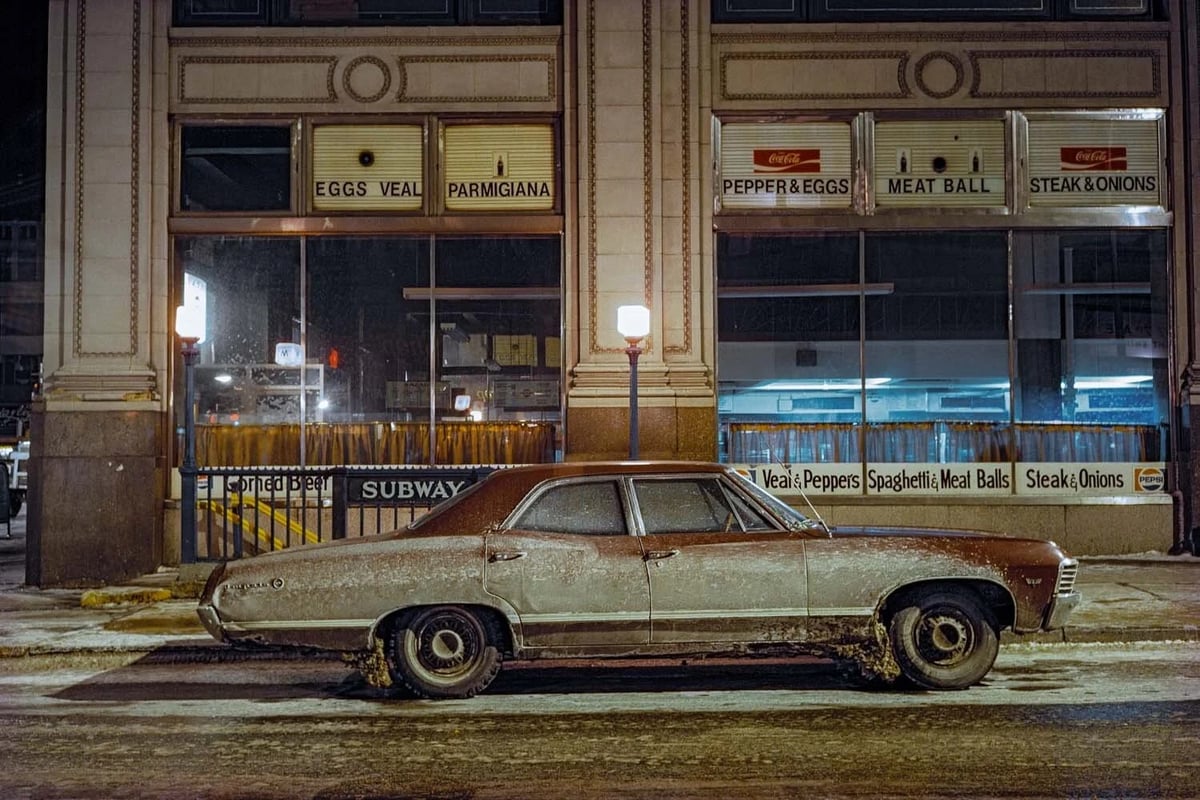
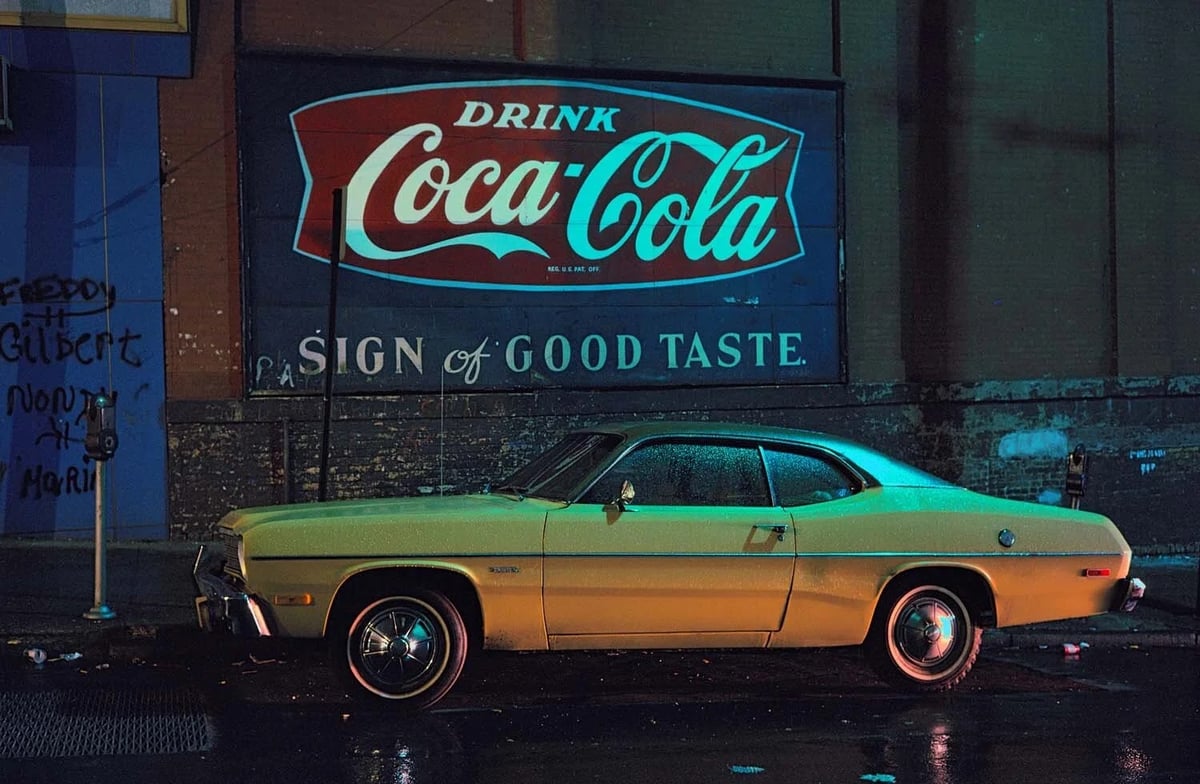
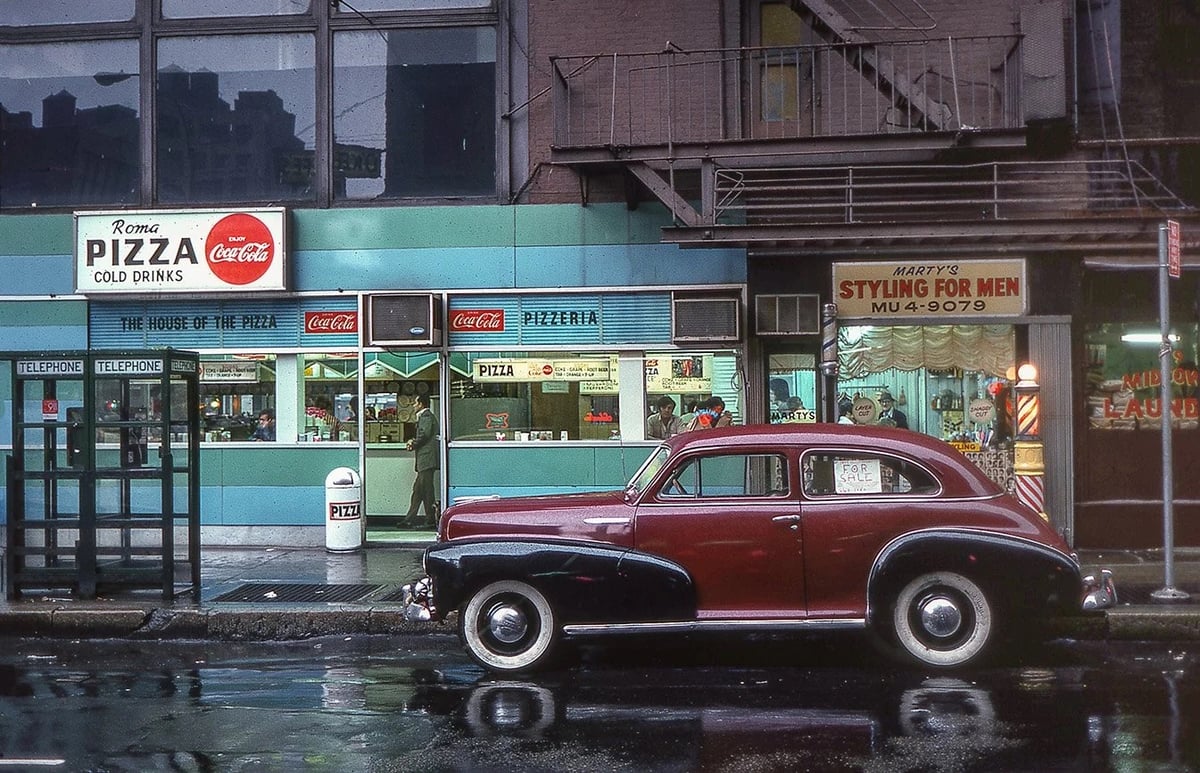
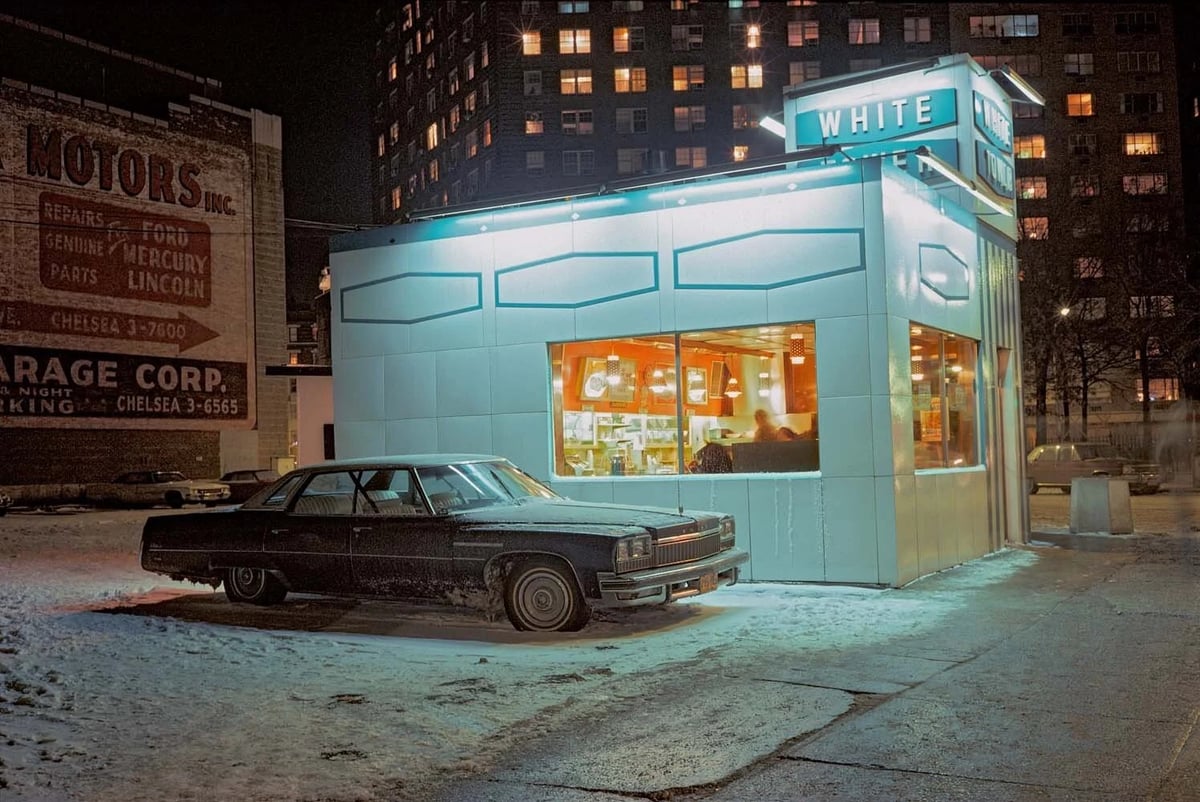
Cars, New York City (1974-1976)

In the 70s, photographer Langdon Clay took photos of cars parked on NYC streets at night and compiled them into a project: Cars, New York City | 1974-1976.

Using his Leica CL, Kodachrome 25, and a 40 millimeter lens, Clay traversed the streets of 1970’s Manhattan finding automobiles that paralleled their environment. The cinematic images are a result of time exposure, sodium vapor street lights, and the tenacity of youth.

Luc Sante wrote about Clay’s car photographs for the New Yorker:

One of the things that used to make America so distinctive was its cars. If you lived there, you would really have to go abroad for a while and then come back to appreciate the difference. In most countries of the world, cars were modest things, little bean-shaped units designed to take two or three people from here to there. In America, cars were real estate. They were enormous boats in which you could eat, sleep, make love, change clothes, throw parties, maintain an office, practice unlicensed dentistry—or take your six best friends out for a spin. They were a testament to America’s unlimited natural resources: oil, steel, rubber, naugahyde, and, above all, space. American cars could be so huge because the nation’s highways were endless, its city streets were wide, and there was abundant free parking everywhere you went. And that included New York City then, since most of its population took the subway.

A 2016 book featuring these images is out of print, but you can find copies for several hundred dollars. (via atlas obscura)

Tags: cars · Langdon Clay · NYC · photography

VK: Voorpagina

Volkskrant.nl biedt het laatste nieuws, opinie en achtergronden

British Columbia klaagt OpenAI aan wegens rol bij dodelijke schietpartij die gepland werd met behulp van ChatGPT

VN: Amerikaanse aanvallen op ‘drugsboten’ in strijd met internationaal recht en zijn mogelijk misdaden tegen de menselijkheid

Slashdot

News for nerds, stuff that matters

As KDE Turns 30, Contributors and Commits are Going Strong

"In a few weeks, KDE will turn 30 years old," writes core contributor Kevin Ottens, celebrating with some special KDE community data analytics (including a 30-year graph of the number of contributors):


It peaks around 180 on average (and sometimes reaches towards around 200 people) then shrinks again hitting bottom around 110 persons on average in 2017... Since then, we had two major events happening. First, 2018 is the year where we had the first set of KDE Goals being picked by the community, one being "Streamlined onboarding of new contributors". Second, we had the transition to GitLab which was fully delivered early in the second quarter of 2020...

Now it seems like the team size is around 140 people on average, so closer to the all time high of 2010 but we didn't fully close the gap yet. Interestingly though, the commit count is much closer to the one we had in 2010, with a bit less people. We even had an all time high commit count in 2023 which surpassed any other week since the creation of the project. And to make things even brighter, the trends at the end of the plot point upwards. Looks like 2026 will be a very good year. Hopefully the growth will stay stable this time and then the community will be the biggest it's ever been...


[For the KDE Plasma desktop] We find the 2010 dip but it's much less dramatic than in all the other plots. It stabilized much quicker and managed to stay with an almost identical team size. We also find the increase leading up to 2020. And clearly it's one of the projects which benefitted the most of the GitLab transition. It's average team size almost doubled during the transition! Earlier I asked where the increase we could see on KDE as a whole but not on applications was coming from? Well, this is probably it. Like the rest of KDE, 2026 will be a very good year for Plasma as well. I wonder... will it double in size again next year compared to 2020?

"I'm rather happy that KDE as a whole seems very healthy..." the post concludes. "It looks like in almost 30 years KDE built a great community and many awesome products..."

"Kudos to all the people involved for the past 30 years! Even if you're not involved any more you helped contribute something beautiful and precious to the world. We're the living proof that large commons can be created and made sustainable thanks to passionate people."

Read more of this story at Slashdot.

MetaFilter

The past 24 hours of MetaFilter

Try to argue about paywalls instead of substack below

"Audiences and newsrooms are unprepared to handle the paywall battle because the end result of its current handling is a situation where everyone loses. If paywalls continue to push readers away, more people will try to bypass them... But if journalists lose funding, audiences will suffer — because it means less reporting and more AI slop, SEO explainers, and basic, uninspired news." From CT Jones' substack. Paywalled article about Ms Rachel speaking out on Gaza here.

Thanks Garbage Day for leading me to this piece!

Wel.nl

Minder lezen, Meer weten.

Iraanse buitenlandminister aangekomen in New York voor VN

NEW YORK (ANP/RTR) - De Iraanse buitenlandminister Abbas Araghchi is aangekomen in New York voor zijn bezoek aan de Algemene Vergadering van de Verenigde Naties, meldden Iraanse media. Dinsdag begint het plenaire debat, waarbij wereldleiders om de beurt het woord krijgen.

Ondanks de oorlog tussen Iran en de Verenigde Staten mag er een Iraanse delegatie afreizen naar New York. Daarbij zijn wel reisbeperkingen opgelegd, net als een verbod op het kopen van bepaalde goederen. De VS hebben geen visa afgegeven voor het communicatieteam van de Iraanse president Masoud Pezeshkian.

Het plenaire debat start dinsdag traditioneel met de Braziliaanse president, Luiz Inácio 'Lula' da Silva. Daarna is de Amerikaanse president Donald Trump aan de beurt, als gastland. Pezeshkian komt woensdagochtend aan het woord.


Zelensky ontmoet CIA-baas Ratcliffe in Ierland

SHANNON (ANP/RTR) - De Oekraïense president Volodymyr Zelensky heeft op een vliegveld in Ierland de baas van de Amerikaanse inlichtingendienst CIA, John Ratcliffe, ontmoet. Volgens bronnen van persbureau Reuters werden de vliegtuigen van beide mannen bijgetankt terwijl zij met elkaar spraken.

Het is niet bekend wat Zelensky en Ratcliffe besproken hebben. De CIA-baas was eind vorige maand ook al op bezoek in Rusland voor overleg met de Russische inlichtingendiensten. De krant Financial Times schreef daarna dat het de bedoeling was om Ratcliffe een grotere rol te laten spelen bij de onderhandelingen over een einde aan de oorlog tussen Rusland en Oekraïne. Het Witte Huis ontkende dat.

Ratcliffe was zondag op bezoek in Caïro bij de Egyptische president Abdel Fattah al-Sisi. Zelensky reist naar de Verenigde Staten voor de Algemene Vergadering van de Verenigde Naties en heeft daar een ontmoeting met de Amerikaanse president Donald Trump.


AI-aandelen stuwen Wall Street, Nasdaq stijgt naar nieuw record

NEW YORK (ANP) - Wall Street is de eerste handelsdag van de week met overtuigende winsten gesloten, waarbij de Nasdaq een nieuw record bereikte. Vooral aandelen van AI-bedrijven waren gewild bij beleggers, na de koersval in de sector vorige week door sombere uitspraken van AI-topbestuurders over de gevaren van de technologie. Beurshandelaren lieten zich maandag echter weer leiden door de groeivooruitzichten van de techsector. Ook een aanhoudende daling van de olieprijzen verminderde de vrees dat de energieprijzen de inflatie verder zullen aanjagen.

De Dow-Jonesindex sloot 0,7 procent hoger op 52.048,83 punten, terwijl de breder samengestelde S&P 500-index 1,5 procent steeg tot 7764,70 punten. Techgraadmeter Nasdaq klom 2,3 procent tot 27.122,09 punten, de hoogste slotstand ooit.

De Dow ging afgelopen week voor de derde week op rij omlaag en leed met een weekverlies van 1,7 procent het grootste verlies sinds maart. De Nasdaq won vorige week 0,7 procent, ondanks de zorgen om AI.


The Register

Biting the hand that feeds IT — Enterprise Technology News and Analysis

Perpetual underdog AMD nips at Nvidia's heels as it joins the $1T club

AMD’s market cap briefly passed $1 trillion on Monday, making the perpetual underdog one of a handful of chip designers to ever hold the distinction. Make no mistake, AMD is still the underdog here, at least relative to Nvidia, which holds the distinction of being the most valuable company in the world with a market cap of nearly $5.5 trillion. But while AMD still trails Nvidia by a wide margin, the House of Zen has taken the lead over its long-time rival turned frenemy Intel, which is currently valued at $640 billion. Riding the AI wave Much of AMD’s success comes on the back of the AI boom. This didn’t happen overnight. AMD was late to the AI party having invested most of its GPU development resources in more traditional high-performance computing applications and national supercomputing projects. That changed in 2023 when it launched the Instinct MI300A — a part that, at least on paper, delivered higher performance, more memory, and greater bandwidth than Nvidia’s then new H100 and H200-series GPUs. But while better on paper, AMD’s products were dogged by un-optimized software, much of which had been designed from the ground up for Nvidia accelerators. AMD’s GPU team has spent the better part of three years changing the narrative around ROCm, helped by large-scale deployments of MI300- and MI350-series GPUs by the likes of Microsoft, OpenAI, Oracle, Anthropic, and Meta, with lower prices and higher memory capacity being key differentiators. Key wins with Neoclouds and smaller cloud service providers like TensorWave and Vultr helped to expose the open source community to AMD’s accelerators. By mid-2026, AMD claimed it had not only closed the performance gap with Nvidia but was also on track to launch a new rack-scale compute platform in the third quarter that was bigger and faster than Nvidia’s existing Blackwell-based rack systems and Vera Rubin. Compared to Nvidia’s own bleeding edge AI systems, AMD’s Helios rack boasts 50 percent more HBM4 and scale-out bandwidth and between 15 and 25 percent higher performance for AI training. And, if AMD is to be believed, Helios will deliver a 30 percent performance per dollar lead over the competition. That’s a hard number to validate, but for those on Wall Street, it’s a clear indication as to why the largest and most influential AI labs and hyperscalers have flocked to the platform. Not just Instinct However, GPUs aren't the only reason AMD's valuation has skyrocketed in recent years. They're just the hardest to ignore. In February, Aaron Rakers at Wells Fargo Securities estimated that Instinct GPU sales accounted for between $2.5 billion and $2.6 billion out of $10.3 billion in revenues during the fourth quarter of 2025, roughly matching Epyc CPU revenues. The rise of agentic AI workloads like OpenClaw and Claude Code has fueled demand for CPUs. While the models themselves still run on GPUs, the code they generate and tools they execute still need CPUs to run on. Here there’s a lot more competition. In addition to its long-time rival Intel, AMD is competing against Arm, Qualcomm, Nvidia, and the cloud providers themselves. But just like we saw with Instinct, AMD’s Epyc processors, which have consistently offered high core counts per dollar and, in more recent generations, higher performance per dollar than the competition, have helped the chip designer grow its market share by a considerable margin. In August, AMD’s share of the desktop CPU market crossed 35 percent. As we wrote in our review earlier this year, AMD now makes the world’s most powerful desktop CPU, and is largely uncontested in the workstation arena thanks in part to rebadging unlocked Epycs as high-core-count Threadripper CPUs. In the datacenter, AMD’s share jumped to 34.5 percent, while Arm-based CPUs from Ampere, Amazon, Microsoft, Google, and others accounted for another 13.6 percent of the market. As Mercury Research, the analyst firm behind the numbers, noted, AMD’s share rises to 46.4 percent when the comparison is limited to Epyc and Intel Xeon SP processors. These gains have been aided by an Intel that’s struggled to put out competitive Xeon processors. Ever since Chipzilla whiffed it on its Sapphire Rapids processors and gave AMD nearly two years to catch up, Intel has been trying to close the gap. Intel came close in 2024 with its Xeon 6 processors, which remain extremely popular as host CPUs for Nvidia’s smaller GPU systems, but an executive shake up and the cancellation of its mainstream Xeon 7 SP products mean Intel is unlikely to have a competitive datacenter CPU, potentially until 2028. AMD is facing some pressure from Nvidia’s Vera and Arm’s AGI CPUs, but largely in AI-centric applications like GPU head nodes, agent sandboxes and KV cache offload servers. AMD is able to address a much broader market thanks to a modular design that can support a wider array of target applications. But AMD’s share gains don’t stop at CPUs and GPUs. Over the past decade, AMD has amassed a large portfolio of technologies ranging from smartNICs and DPUs to FPGAs, and even system design through acquisitions. AMD’s acquisition of Xilinx is particularly notable as while not a particularly large revenue driver, it established the company as the largest supplier of FPGAs in the market and armed the chip designer with a mountain of IP, which has repeatedly helped it stay competitive. For example, the NPUs, which assured AMD’s qualification for Microsoft’s Copilot+ moniker, were lifted directly from Xilinx’s IP holdings. Where AMD goes from here Just as AMD became a useful tool for keeping pricing pressure on Intel CPUs, the same is now playing out for datacenter GPUs with Nvidia. Alongside the launch of Helios in July, AMD announced Anthropic had agreed to deploy up to 2 gigawatts of Instinct accelerators to support AI training and inference. OpenAI, Oracle, Microsoft and Meta also plan to deploy the rack systems at scale. “In datacenter AI, the growing number and scale of Helios and MI450-series deployments position the [datacenter] business for significant growth in the second half of the year, with growth accelerating in 2027," CEO Lisa Su told investors last month. "We now expect datacenter segment revenue to more than double year over year in 2027,” she added. Yet, despite the enduring optimism of AMD’s top executives, Wall Street’s feelings on the company remain mixed with the main concern being that AMD may have too many AI eggs in too few baskets. On the flip side, with such an expansive portfolio spanning general purpose compute, HPC, AI, embedded systems, desktop, and gaming, the case can also be made that while nowhere near Nvidia’s size, AMD's exposure to an AI bubble is far, far smaller. ®
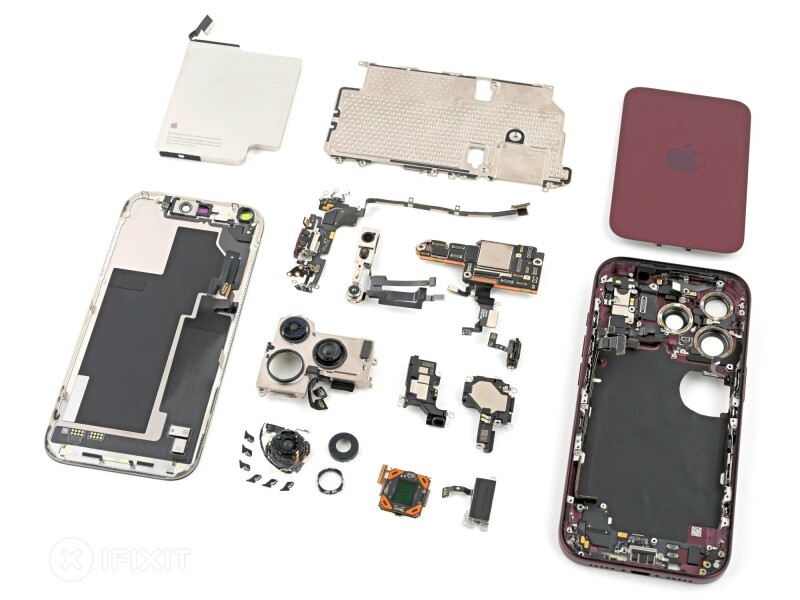
Skip the upgrade? iPhone 18 Pro aperture about as unrepairable as it gets, iFixit finds

iFixit has torn down the iPhone 18 Pro and Pro Max and found both wanting on repairability. Fiddly mechanical bits around the new camera, and a repeated design choice forcing internal repairs to go through a screen with a potentially fragile frame, led the iFixit team to conclude that, even with some improvements, Apple’s latest iPhones come with uncomfortable repairability tradeoffs. "This year’s updated camera is a good place to start," iFixit director of sustainability Elizabeth Chamberlain stated in the teardown review. "What does its new mechanism buy you, and how difficult and expensive will repairs be if one tiny blade gets stuck?” The answers to those questions are "not much" and "very", based on what iFixit found. The iPhone 18 Pro series’ main camera has an aperture made of six tiny blades, each about as thick as a human hair, according to iFixit. The tolerances are so fine and the mechanism so fiddly that iFixit said: "We’re reluctant to call a repair 'impossible', but this is about as close as it gets." "Any damage to your main camera will probably mean replacing the whole assembly, which is bound to be expensive," Chamberlain said. That’s not new; iPhone camera assemblies have long been a single replaceable unit, but they’re not cheap. "Apple hasn’t released parts yet, but the camera assembly for the 17 Pro is $249, and the variable aperture will only up that cost." It’s not even clear if the component will be more than a one-off experiment that gets dropped in future models due to the fact that any moving parts only make repairs harder. "Samsung tried it and dropped it, citing ‘limited functional benefit at smartphone camera levels,’ and we basically agree," Chamberlain said. As iFixit notes, the aperture doesn’t do that much for picture quality because even at its widest the opening is still small, while the tiny sensor and short focal length limit the amount of background blur compared with a larger dedicated camera. Pictures included in the teardown review demonstrate this, showing that the wider aperture has only a limited effect on depth of field and background blur. "This isn’t the signature wide aperture heavy bokeh look," Chamberlain noted. Scratchgate, meet framegate? As was the case with the iPhone 17 Pro, the 18 Pro series' battery sits in a screwed-in metal tray and is relatively easy to replace - a big plus considering it’s one of the most likely bits to need swapping out. Unfortunately, getting to it still requires going through the screen, and therein lies the problem: iFixit damaged the plastic frame that holds the screen in place in three of its four teardowns. The adhesive has to be heated and softened, but that isn't the main problem. Once the frame breaks, the screen may be hard to re-seat and reseal properly, potentially forcing a full display replacement. If the screen frame proves this failure-prone in further testing, no repairability improvements beneath it will matter much because opening the device would risk needing a new display. That said, iFixit isn’t officially ruling on that weakness quite yet. "That plastic frame has been present since the 15 Pro. But it hasn’t given us nearly as much trouble in previous years," Chamberlain wrote. "We've seen other teardowns avoid this damage. Four phones are too few to establish a failure rate." With that in mind, the iFixit team is giving the iPhone 18 Pro and Pro Max a 7 out of 10 repairability score, but that could go up or down depending on how additional teardowns go and how easy the frame is to remove. "Our damaged display frames haven’t directly tanked that score yet because we don’t know what caused the failures, how widespread they are, or how repeatable they are," Chamberlain explained. That 7 out of 10 is the same score iFixit gave the iPhone 17 Pro, but Chamberlain told us the 18 Pro seems generally less repairable. "The screen troubles and likely expense of camera repairs make us more worried about repairs in the 18 Pro," Chamberlain told The Register in an email. In other words, if you have an iPhone 17 Pro or Pro Max, there may not be a lot of reasons to upgrade aside from the addition of some new points of failure, iFixit opines. "If you’re considering upgrading from another recent-model iPhone, the photo quality differences are small enough that most people probably won’t notice," Chamberlain concluded about the new device. "We say it every year, and it’s especially true this year: skip the upgrade. The most sustainable phone is the one already in your pocket." Now to see how the iPhone Duo fares when iFixit gets its hands on one of those. ®

Runway

OzGFK has added a photo to the pool:

Runway

February 2026.
Narita Airport.
Fomapan 100, pushed three stops.
Ricoh 35 ZF.