
Christopher Nolans ‘The Odyssey’ zit vol onvergetelijke scènes waarin de angstwekkende macht van de Griekse mythen voelbaar is. De held van de film, Odysseus, blijkt gebrekkig, menselijk en relevant.
/s3/static.nrc.nl/wp-content/uploads/2026/07/14083411/150726CUL_2035192559_1.jpg)
/s3/static.nrc.nl/wp-content/uploads/2026/07/15160342/150726BUI_2035240278_frankrijk1.jpg)
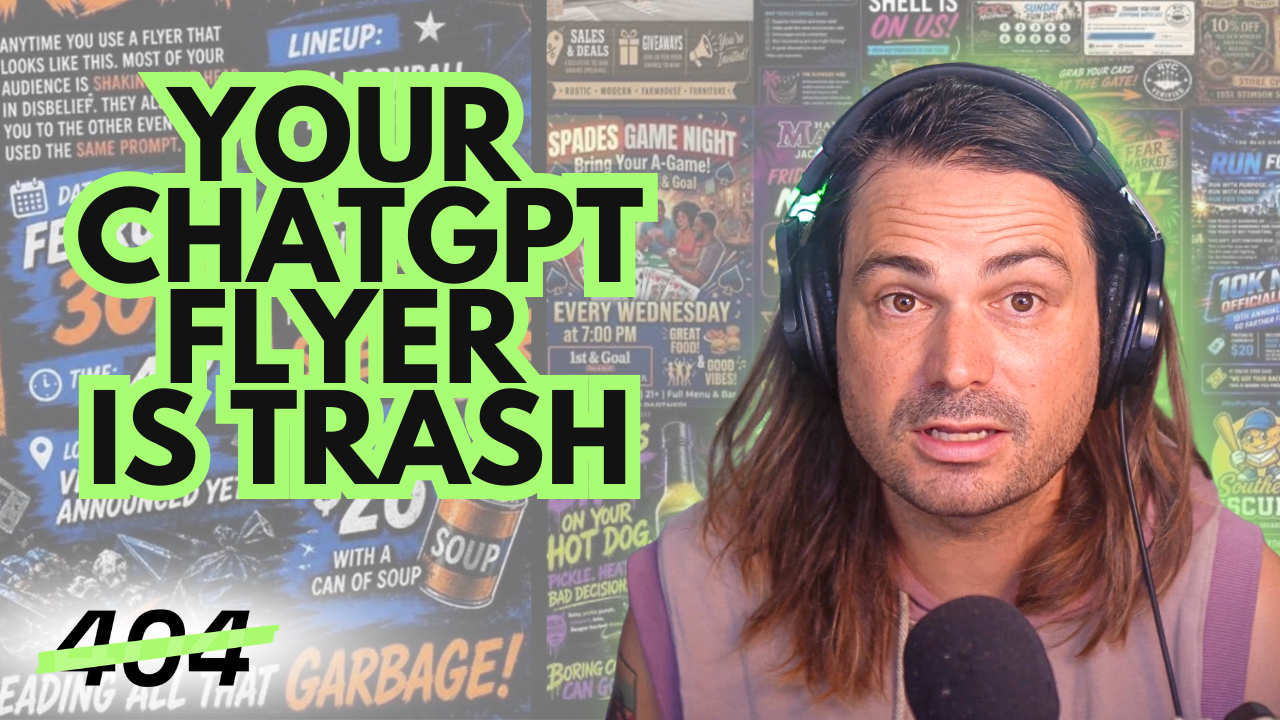
We start this week with Jason’s story about the ChatGPT flyer pandemic. They’re everywhere! Thank you to the readers and listeners who sent in their own examples. After the break, Sam tells us how Waymo snitched on kids and drove them to a group of waiting cops. In the subscribers-only section, Joseph explains why he bought a $3,000 suit that electrocutes your muscles. Yep.
Listen to the weekly podcast on Apple Podcasts, Spotify, or YouTube. Become a paid subscriber for access to this episode's bonus content and to power our journalism. If you become a paid subscriber, check your inbox for an email from our podcast host Transistor for a link to the subscribers-only version! You can also add that subscribers feed to your podcast app of choice and never miss an episode that way. The email should also contain the subscribers-only unlisted YouTube link for the extended video version too. It will also be in the show notes in your podcast player.
The Moist Towelette Online Museum. Live moist and prosper. 🖖💦
Molly Burford, author of Moments to Hold Close, writes list poetry (is that a thing?) about the kinds of people that you want in your life. From Types Of People You Need To Hang On To:
The friend who helps you clean your room. Those who are kind to those who can do nothing for them. Messy folks who repeatedly get it wrong but never stop trying to get it right anyway. Kindred spirits. Loud laughers. Pals who make the grocery store fun. Loved ones who get as excited about your success as you do. The person you feel comfortable crying in front of. Sing-in-the-car friends. People who text you to look at the moon.
I am 100% the friend who will text you to look at the moon or the meteor shower or the aurora.
From Types Of People I Admire The Most:
Someone who isn’t afraid to just be human. The friend who commits to the bit, even if it is well past its expiration date. People who accept that their ducks will always be in a bit of a zig-zag formation. Relentlessly creative folks. Daydreamers. Awkward silence embracers.
From Types Of People Who Will Change Your Life:
Teachers who believed there was potential within you, even when you were convinced you would always be a lost cause. The internet friend who showed you that your art does matter, and it’s needed. The mentor who became the older sister you never had. The ex-partner who showed you there are some types of people you’re only meant to love from afar. The neighbors who became family. The family members who became friends.
Tags: Molly Burford · poetry

Dat was het dan. Uw peuken waren al onbetaalbaar, en als u ze toch betaald had mocht u ze nergens meer roken. Of u importeerde ze, lekker goedkoop. Maar ook die laatste sluiproute naar een nog enigszins billijk geprijsd pakkie peuken wordt nu ontmanteld. De Douane gaat inzetten op een breed offensief tegen tabakssmokkel: "De smokkel van tabaksproducten is naast cannabis een vast verdienmodel van criminelen geworden. Daarnaast zien we de smokkelmethoden steeds veranderen. Het gaat zowel bij cannabis als tabaksproducten steeds meer om grensoverstijgende ondermijnende criminaliteit." Zo blijft er niks van de jeu over en rest de roker zuigen op suikervrije lolly's, knabbelen aan ongezouten pinda's of bietsen bij de anti-Israël lobby. Pff... zin in een troostpeuk nu.
Maar, handen heeft-ie! En als de menselijke operators genoeg trainingsdata hebben gegenereerd om NEO autonoom te maken, krijg je deze autonome vingers er gratis bij. Snappen we verder allemaal niks van, maar NEO zelf beschrijft het handwerk als volgt:
"We zijn verheugd onze baanbrekende, door pezen aangestuurde handen met 25 vrijheidsgraden voor het NEO-humanoïdeplatform te introduceren; ze bieden een behendigheid, kracht, veiligheid en betrouwbaarheid die bijna op menselijk niveau liggen. Deze handen zijn ontworpen met een fundamenteel doel: de hardwarematige beperkingen wegnemen die bepalen wat humanoïde robots kunnen doen, zodat data – en niet de hardware – de enige grens vormt voor hun capaciteiten. Doordat ze op alle relevante vlakken gelijkwaardig zijn aan of zelfs beter presteren dan menselijke handen, zorgen ze ervoor dat onze AI-modellen niet langer worden beperkt door een gebrek aan behendigheid. NEO kan nu vrijwel elke taak uitvoeren die een mens met de handen kan doen, en dat met de precisie, het aanpassingsvermogen en de voorzichtigheid die vereist zijn in praktijkomgevingen."
Meer beeld onderstaand en hele demo onderaan.
SocialSocial
Meta werkt aan een nieuwe ‘slimme bril’, ondersteund met AI. Daarmee kun je straks onophoudelijk filmen hoe je door iedereen op straat vies wordt aangekeken.
“Onze Meta-brillen roepen zo veel sterke emoties op, dat het bijna onmogelijk is om dat allemaal in real time te registreren”, legt CEO Mark Zuckerberg uit. “Maar met onze nieuwe AI-brillen kun je straks continu audio en video opnemen van mensen die zuchten, uit je buurt proberen te blijven en iets naar je schreeuwen over privacy.”
Bij de nieuwe brillen hoef je niet meer op record te drukken, en komt er ook geen lampje meer dat laat zien dat je aan het opnemen bent. “Hoe meer woede, hoe belangrijker een AI-bril wordt. Straks kunnen we emoties als ‘walging’, ‘woede’ en ‘diepe, diepe teleurstelling in de mensheid’ eenvoudig herkennen. Dan kun jij die beelden thuis op de bank rustig terugkijken."

&

Engeland en Argentinië spelen vanavond in Atlanta tegen elkaar voor een plek in de finale op het WK voetbal. Vanwege de geschiedenis is het een beladen duel, waarin de Engelsen hun hoop gevestigd hebben op een wonder.
"Dit is niet zomaar een potje", zegt oud-doelman Peter Shilton. "Je hebt de Falklands als politieke dimensie, je hebt de rode kaart van David Beckham in 1998, je hebt alle dubieuze momenten die dit toernooi in het voordeel van Argentinië zijn uitgepakt. Daar moet je als Engeland dan tegen strijden. Ik denk dat we iets heel bijzonders nodig hebben. Ik noem maar iets: een uittrap van Emiliano Martínez die tegen de kabel van een camera aankomt en zomaar uit de lucht valt, zodat Jude Bellingham kan scoren. De Kabel van God. Een mens mag dromen, toch?’’
De FIFA heeft laten weten dat de Engelsen nergens op moeten rekenen.
&''

We would like to hear about the highs and lows of university clubs and societies
As a new academic year approaches, we would like to hear from students and recent graduates (five years ago or less) about their experiences of university clubs and societies that freshers might find instructive.
What was your best experience of a university club or society? And what was your worst?
Continue reading...
Rarely do artists conceive of work that is prescient and, decades on, more urgent than when it was created. One who has accomplished this is certainly Ana Mendieta (1948-1985), whose interdisciplinary practice merged photography, land art, sculpture, film, and more. And in a large-scale, immersive survey of her work that opens today at Tate Modern, more than 120 pieces revisit the groundbreaking artist’s key series and empathetic exchange with land and nature.
Mendieta is best known for her Silueta Series, in which she impressed the shape of the human body in water, mud, rock, and forests. These sometimes consisted of outlines “drawn” onto surfaces, such as a gunpowder tribute on a fallen tree, which exists eternally half-ablaze in a photograph. Others are impressed directly into the earth, as if a person had been lying there for millennia as the desert or stone formed around her.

In what she described as “earth-body” works, Mendieta explored vital relationships between humans and nature, absence and presence, experience and temporality, and place and identity. She often turned the lens on herself, building compositions that plumb the tensions between beauty, ruggedness, vulnerability, and strength. Her practice can easily be viewed through the lens of ecofeminism, a movement that emerged around the same time Mendieta was working, but it is also profoundly personal.
At 12 years old, Mendieta was separated from her parents and brother, who remained in her home country of Cuba, when she and her sister were exiled to the U.S. following the Cuban Revolution in 1959. Throughout her life and brief career, she grappled with themes of displacement and disconnection. “My art is the way I reestablish the bonds that unite me to the Universe,” Mendieta said. “It is a return to the maternal source.”
There is also humor in her approach to self-representation, such as her early series of self-portraits in which she documented her wet hair in wild, sculptural forms or produced a sequential series of images in which an arrangement of flowers gradually conceals her face. Within a few years, the work adopted a more solemn, enigmatic tone, characterized by voids, organic forms, gesture, and ephemerality.
Mendieta also drew on her fascination with archaeology to create multimedia works that delved into the relationship between humans and the land. “My work is basically in the tradition of a Neolithic art,” she said in 1984. “I’m not interested in the formal qualities of my materials, but their emotional and sensual ones.”

The artist’s interest in the ancient past ultimately lends a timelessness to themes that resonate through her personal narrative but also, incidentally, the ills of the present. One might think of our screen-fueled social discord and the accelerating climate crisis, both also defined by a sense of alienation and disjointedness. Though Mendieta couldn’t have conceived of these things as we experience them today, she nevertheless tapped into a kind of visceral biophilia that’s more critical than ever. The exhibition at Tate highlights not only the artist’s the desire to connect with nature but also casts a light on how far removed from it most of us have become.
Ana Mendieta continues through January 17, 2027, in London. Plan your visit on Tate’s website.


Do stories and artists like this matter to you? Become a Colossal Member today and support independent arts publishing for as little as $7 per month. The article Experience Ana Mendieta’s Visceral, ‘Neolithic’ Work in a Major Survey appeared first on Colossal.
At Flickr, we’re committed to maintaining a platform that’s secure, trustworthy, and built for photographers who are passionate about sharing their work. As part of that ongoing commitment, we’re introducing a policy to remove inactive accounts that have never been used. These are free accounts that have been inactive for at least 90 days and contain no photos, no comments, no favorites, and no group activity – but they do represent real security risk, including potential for account takeover, spam, and abuse.
Dormant, empty accounts are a target for bad actors. Keeping millions of unused accounts in our system creates unnecessary exposure for our platform and, by extension, for the active community members who depend on Flickr. Cleaning up these accounts helps us run a safer, healthier platform.
Starting July 15th, 2026, we will:
Simply log in to your Flickr account at flickr.com before August 31st, 2026. Logging in is all it takes to keep your account active. If your account has been locked and you’d like to reclaim it, contact our support team at flickrhelp.com – we’re happy to help.
For accounts that are removed, all associated data – including profile information and account credentials – will be permanently deleted in accordance with our Privacy Policy.
Because these accounts contain no photos, no comments, no groups, and no social connections, the data involved is minimal: essentially an email address, a username, and authentication credentials.
Visit our Help Center at flickrhelp.com or review our Terms of Service for more information.
We appreciate your understanding as we work to keep Flickr a safe and vibrant home for photography.
— The Flickr Team


