Wel.nl

Minder lezen, Meer weten.

Je biertje wordt vanaf 2027 elk jaar automatisch duurder: wat de accijnsindexatie jou per rondje kost

Bestel je volgend jaar een rondje van vijf pils in de kroeg, dan betaal je daar door de nieuwe accijnsindexatie anderhalve cent meer belasting op. Klinkt als niets, maar het verschil met alle eerdere accijnsverhogingen is dat deze stijging niet eenmalig is: het kabinet stelt voor om vanaf 1 januari 2027 een jaarlijkse indexatiesystematiek voor de alcoholaccijns in te voeren, gekoppeld aan de inflatie.

0,3 cent per glas, maar dan elk jaar opnieuw

In tegenstelling tot andere accijnzen kende de alcoholaccijns tot nu toe geen automatische indexatiesystematiek, waardoor de reële hoogte ervan bij inflatie relatief afnam. Dat verandert. Voor een standaardglas bier van 250 ml met 5 procent alcohol stijgt de accijns inclusief btw van €0,123 naar €0,126, becijferde Man-Man.nl. Dat is 0,3 cent per glas. Bij een glas wijn van 100 ml met 12 procent alcohol gaat het van €0,116 naar €0,119.

Per glas merk je het nauwelijks. Maar het mechanisme is structureel: in 2032 zal de accijns gemiddeld zo'n 1,5 cent per glas hoger zijn dan nu, becijferde STAP. Bedrijven die alcohol verkopen betalen de accijns en rekenen die waarschijnlijk door aan de consument, aldus de Rijksoverheid.

Per glas merk je het nauwelijks. Maar het mechanisme is nieuw: de stijging stopt niet meer.

Craft bier krijgt een dubbele klap

Naast de indexatie wil het kabinet de kleine brouwersregeling afschaffen. De regeling geldt nu voor brouwerijen die gemiddeld niet meer dan 200.000 hectoliter bier per jaar produceren en zij krijgen een accijnskorting van 7,5 procent. Het accijnsverschil bedraagt bij een glas bier met 5 procent alcohol €0,01, en bij een glas met 10 procent alcohol €0,02, aldus de Rijksoverheid. Branchevereniging CRAFT riep het kabinet in augustus 2026 op om de verhoging van tafel te halen. Eerder schreven we over hoe de stapeling van drie belastingmaatregelen een glas tripel op het terras tot 30 cent duurder kan maken.

In Duitsland betaal je tot negen keer minder accijns

Het prijsverschil met de buurlanden is al groot en wordt groter. De bieraccijnzen in Nederland zijn bijna twee keer hoger dan in België en zelfs vier tot negen keer hoger dan in Duitsland, afhankelijk van de soort bier. Concreet: voor bier met 8 procent alcohol betalen Nederlandse brouwers ruim zestig euro accijns per honderd liter, terwijl Duitse brouwers voor dezelfde hoeveelheid iets meer dan zeven euro betalen, meldde CRAFT in de Levensmiddelenkrant. Het verschil wordt groter doordat het Duitse kabinet juist heeft besloten om bier vrij te stellen van de alcoholaccijnsverhoging die daar volgend jaar wordt doorgevoerd.

In Nederland betaal je ruim zestig euro bieraccijns per honderd liter. In Duitsland is dat iets meer dan zeven euro.

De bierverkoop daalt al

De effecten van eerdere verhogingen zijn al meetbaar. In het eerste halfjaar van 2026 is 2,8 procent minder alcoholhoudend bier verkocht dan in dezelfde periode in 2025. Ten opzichte van 2024 bedraagt de daling zelfs 5,3 procent, blijkt uit cijfers van Nederlandse Brouwers. In de grensregio's daalde de bierverkoop sinds de accijnsverhoging van 2024 zo'n 4 tot 5 procentpunt sterker dan in de rest van Nederland, met de grootste impact vlak bij de Duitse grens.

De Raad van State plaatst kanttekeningen bij de verwachte opbrengst. Het kabinet verwacht dat de indexatie structureel €129 miljoen per jaar oplevert, maar de Raad wijst erop dat de opbrengst van vergelijkbare maatregelen, zoals de kansspelbelasting, ver achterbleef bij de verwachting. De verhoging van de tabaksaccijns leidde zelfs tot een belastingderving, doordat minder mensen rookten en meer mensen rookwaar in het buitenland gingen kopen.

Wat het jou per rondje kost

  • Per glas pils (250 ml, 5%): 0,3 cent meer accijns in 2027, oplopend naar circa 1,5 cent in 2032.
  • Per rondje van vijf pils: anderhalve cent meer in 2027, circa 7,5 cent in 2032.
  • Per fles wijn (0,75 liter): accijns inclusief btw stijgt van €0,868 naar €0,890.
  • Per liter whisky: accijns inclusief btw stijgt van €8,843 naar €9,064.
  • Craft bier van een kleine brouwerij: daar komt vanaf 2028 nog €0,01 tot €0,02 per glas bij.

Nog niet definitief

De Tweede en Eerste Kamer moeten de wetsvoorstellen nog goedkeuren en stemmen in november en december over het Belastingplan 2027. Het minderheidskabinet heeft in de Tweede Kamer de steun van minimaal tien oppositie-Kamerleden nodig en in de Eerste Kamer zelfs van zeventien. CRAFT heeft een actiecampagne gestart en ontvangt Kamerleden bij brouwerijen om de gevolgen te laten zien. Wie zich wil uitspreken, kan de petitie op de website van de branchevereniging tekenen.

Bronnen: Man-Man.nl · Rijksoverheid.nl · Raad van State · Nederlandse Brouwers · CRAFT · Biernet.nl · Levensmiddelenkrant

Jetten in New York: lhbti-emancipatie gaat iedereen aan

NEW YORK (ANP) - Premier Rob Jetten heeft in New York een bezoek gebracht aan de lhbti-bar The Stonewall Inn. In 1969 braken daar rellen uit, wat leidde tot de wereldwijde protestbeweging voor lhbti-emancipatie.

Jetten is in New York voor de Algemene Vergadering van de Verenigde Naties. In gesprek met Nederlandse verslaggevers zei de premier dat lhbti-rechten wereldwijd onder druk staan. Ook in Nederland, waar volgens de premier de acceptatie voor de lhbti-gemeenschap achteruit holt. "Ik voel ook wel echt een persoonlijke betrokkenheid om te doen wat nodig is om ook de jongere generatie weer te laten zien: je mag jezelf zijn, ook in Nederland."

Lhbti-emancipatie gaat iedereen aan, zei Jetten. "Je ziet in landen waar lhbti-rechten als eerst worden aangevallen, dat daarna vaak veel andere rechten van andere minderheden volgen."

Gendertransitie

In gesprek met de Amerikaanse president Donald Trump heeft Jetten ook het belang van lhbti-emancipatie en de vrijheid om jezelf te kunnen zijn aangekaart. The New York Times schreef dinsdag dat een aantal grote ziekenhuizen in de VS hun behandelingen voor gendertransitie bij jongeren zal stopzetten.

Later deze week zal Jetten samen met de burgemeester van New York verschillende buurthuizen bezoeken waar "wordt gewerkt aan fatsoenlijk samenleven met elkaar, ongeacht wat je kleur, je afkomst of seksuele voorkeur is".

Negatiever

Deze week verscheen een rapport van het Trimbos-instituut en Universiteit Utrecht waaruit bleek dat Nederlandse jongeren de afgelopen vier jaar negatiever zijn gaan denken over homoseksualiteit. Het percentage jongens op middelbare scholen dat positief staat tegenover homoseksualiteit is bijna gehalveerd (40 naar 22 procent), terwijl dat bij meisjes daalde van 78 naar 51 procent.

Het kabinet denkt na over extra maatregelen, liet staatssecretaris Judith Tielen (Onderwijs en Emancipatie, VVD) in een reactie op het rapport weten. Ze zei dinsdag in de Kamer meer onderzoek te willen om zo tot een gerichte aanpak te komen.


Nederlanders hebben iets meer te besteden

DEN HAAG (ANP) - Nederlanders hadden in het tweede kwartaal gemiddeld iets meer te besteden. Dat is vooral te danken aan hogere lonen, meer banen en een stijging van de uitkeringen.

Het reëel beschikbaar inkomen van huishoudens steeg in het tweede kwartaal 0,7 procent in vergelijking met dezelfde periode vorig jaar, berekende het Centraal Bureau voor de Statistiek (CBS). Het gaat daarbij om het inkomen dat mensen overhouden nadat ze bijvoorbeeld belastingen en premies hebben betaald. Het CBS corrigeert het cijfer ook voor prijsstijgingen.

Vooral de hogere beloning voor werknemers droeg bij aan de beter gevulde portemonnee. De totale beloning van werknemers steeg volgens het CBS met 5 procent. Ook uitkeringen gingen omhoog. De hoogte daarvan is vaak gekoppeld aan het minimumloon, dat dit jaar verder steeg. Ook gingen de pensioenuitkeringen omhoog, deels door verhogingen van fondsen die zijn overgegaan naar het nieuwe pensioenstelsel. Het inkomen van zelfstandigen ging juist 2,2 procent omlaag.


Talent statushouders en asielzoekers onvoldoende benut, zegt SER

DEN HAAG (ANP) - Talenten van statushouders, asielzoekers en Oekraïense ontheemden worden onvoldoende benut in Nederland. Volgens een nieuw advies van de Sociaal-Economische Raad (SER) moeten deze nieuwkomers beter aan het werk geholpen worden, bijvoorbeeld in sectoren waarin personeelstekorten zijn.

In de asielprocedure gaat "veel kostbare tijd en motivatie" verloren, zegt de SER onder meer. Ook is werk vaak moeilijk te combineren met taal en inburgering, constateert het polderorgaan waarin werkgevers, vakbonden en ook deskundigen zitting hebben.

Van de statushouders heeft acht jaar na het verkrijgen nu 57 procent betaald werk. Mensen die uit Oekraïne zijn gevlucht, zijn niet inburgeringsplichtig en vinden wel relatief snel werk. Maar dit is vaak onder hun opleidingsniveau en op uitzendbasis.

"Nieuwkomers brengen kennis, ervaring en ambities mee. Als we daar vanaf het begin oog voor hebben, kunnen zij hun talenten inzetten en verder ontwikkelen", zegt SER-voorzitter Kim Putters.


The Register

Biting the hand that feeds IT — Enterprise Technology News and Analysis

In the age of AI, teaching networking principles remains more important than learning protocols

A few weeks ago I took part in the SIGCOMM 2026 Education Workshop, provocatively titled “Networking Education in the Age of AI”. Perhaps that title isn’t provocative to most educators today, but it is to me: I’ve repeatedly voiced my skepticism about AI in education (and other fields). I was also a student in another “age of AI” in the mid-1980s, which was followed by one of several “AI Winters,” but of course that couldn’t happen again, right? Fortunately there was much more to the workshop than its title might suggest, and Larry and I came away with some fresh energy and new ideas on what we still need to do for our 7th edition. I should mention that the event was a successful hybrid event, thanks to some serious effort by the organizers and support from SIGCOMM to use professional camera operators and audio gear. There was no escaping the early wakeup call to attend an event eight time zones away, but at least I didn’t need to fly anywhere. The large number of remote participants and high-quality setup ensured that the interactions never devolved into local-only discussions (although I missed the coffee breaks). I’m going to have to leave out a lot of what was good about the workshop (especially since I only joined at lunchtime) but I recommend taking a look at the accepted papers and artifacts to get a sense of the level of creativity and enthusiasm that was brought to the occasion. Notably, the papers were not actually presented; in some cases they were summarized or provided a jumping off point for a discussion. But this was a real working session, not a set of paper presentations. Engaging students with design One highlight for me was co-chairing an open mic session with Jim Kurose. Jim’s networking book (co-authored with Ken Ross) is the leader in our field, with Computer Networks: A Systems Approach at best a distant second. In a discussion about different teaching approaches including the use of labs as a primary teaching tool, I asked a question about the role of programming assignments in driving adoption of a textbook, and Jim’s answer was something like “programming exercises, Wireshark labs, etc.—all important, but don’t underestimate the value of nice, animated PowerPoint slides.” It’s a reminder that we have more work to do than just writing a book if we want it to be chosen for classroom instruction. One reason this is challenging is that neither of us has taught using our book for a long time – in my case, all my classroom teaching was in graduate classes that used systems papers rather than a textbook as the assigned reading. There were a dozen speakers in the open mic session, all of whom had something worthwhile to say, but I’ll highlight a few things that stuck with me. Karen Sollins shared some experiences in modeling her systems classes on law school case studies. The idea is that the professor doesn’t deliver a lecture but rather assigns papers that get students to talk about what goes on in systems papers. They might discuss questions such as “what constraints led to this system design” or “what alternatives were considered by the designers.” This contrasts with the more traditional approach (which I recall using when I was teaching) of walking the students through the design as I understood it, hoping they would walk away with some insights. This importance of getting students to engage with the challenges of the design process came up over and over, and it gets to the heart of what we are trying to emphasize in our new book. To take an example, we don’t simply want students to read our book to learn how TCP works; we want them to understand the tradeoffs that have been made and broad challenges that any reliable transport has to deal with, such as the difficulty of accurate round-trip time estimation and of achieving stability in a control system with imperfect knowledge of current conditions. One approach to getting students engaged in design has them tackle problems in class without the use of computers, described as “Networking Unplugged”. For example, pairs of students are given a piece of rope and asked to design a mechanism to send bits along it, leading them to “discover” encoding techniques such as NRZ and various forms of modulation. Of course there was plenty of discussion about using AI in teaching. One positive view is that students could be given bigger and more realistic system-building and measurement assignments because of the availability of AI coding agents to take on the implementation tasks. One paper made this case and combined it with suggestions on how to assess how well students are learning by getting them to discuss the design. Test the learning, not the implementation. I remain skeptical of the value of using LLM-generated code in production, because of the risks of hard-to-detect bugs and difficulty of maintenance (among other concerns), and my experience suggests code generation is a small part of building and shipping production systems. But as a tool to help students tackle more interesting and complex networking problems, I am willing to suspend disbelief. There is also a good argument for using open source models and shared research infrastructure especially given the dubious financial position of the AI model giants. I was intrigued by a discussion on how one becomes a networking educator. My contribution – I learned by watching and emulating the experts who I was lucky to work with at MIT – was not entirely satisfactory to me, and I continue to ponder this question. For one thing, I never had to supervise grad students myself, so there are some definite holes in my experience (which are growing in the “AI era”). An interview with me conducted in 2020 by SIGCOMM chair Matt Caesar, who generously calls me a great educator, contains a few ideas, but this seems like a topic we need to invest more time in, especially as we think about what extra materials need to accompany our next book. What remains at the core? Larry and I joined a breakout to discuss the questions: “What should remain at the core of networking education? Which traditional topics should we keep, and which should we rethink?” Larry started the discussion with the motivating example of QUIC, which is new enough, and complex enough, that it’s missing from a lot of introductory networking courses. His position (which I share) is that a student encountering QUIC for the first time should be able to make sense of it, by relating it to other things they already understand (like reliable transmission, congestion control, and end-to-end security). And from that it follows that we need to teach students enough about the underlying principles of networking and system architecture so that they can make sense of a new thing and fit it into their mental model. This brings us back to the centrality of understanding system design as a discipline, not just learning the details of the existing artifacts. We use the artifacts to illustrate principles at work and to highlight challenges that have existed since the early days of networking. We also highlight the role of judgement: deciding how to make certain tradeoffs by judging the relative importance of different axes by which a system is measured (performance, scalability, reliability, evolvability, etc.). This gave me my opening to elaborate on my belief that teaching mental models is central to what we as educators need to do. I managed to quote Rodney Brooks one more time on the symbol-grounding problem. He makes the point that robots can’t use transformer-like LLMs to reliably perform tasks, because LLMs don’t have grounding in the real world of physical objects in which robots operate. They manage symbols (words) but can’t connect those words to real objects. I believe this is equally true when the objects in question are networks. A real understanding of, say, transport protocols and their relationship to end-to-end security is not the same as how the words written about transport protocols normally show up in a document. Certainly this matches my experience from asking an LLM about QUIC and the Internet hourglass for a previous discussion about LLMs in networking education. I was challenged on the question of how one builds a mental model of networking, and my initial answer – that it is built up over years of experience – was rightly challenged by Jim as well. What can we teach in a one semester course if that’s the expectation? To take an example of a famously complex protocol, I think it’s fair to expect that a student can learn the broad design challenges that are tackled by a protocol like BGP, while we would not expect them to be able to configure BGP policies for an ISP at the end of one semester. So our approach takes the problem/solution model, where understanding the problem space is more important than learning every last detail of the protocol that addresses that problem. And a semester worth of such problems should give them a solid mental model to build on going forward. There was also a lively discussion about which principles need to be taught. We particularly discussed abstraction, which I think of as the hiding of details behind an interface or inside a model. As an example, Jim had suggested using Zoom to teach students about modern applications, which are increasingly not simple end-to-end connections but rather a rich distributed system with significant components living in cloud datacenters. (This is exactly the way we are explaining application architecture early in our new edition.) One way to apply abstraction in this case is to abstract away the details of the connection between the client and the datacenter. Not because they are uninteresting or unimportant, but because you need not worry about them if your goal is to understand the workings of a multipoint control unit (MCU) serving a large video conference. At the same time we need to teach about how abstracting away the details can lead to later problems, of which the initial design of HTTP over TCP is a famous example. Perhaps it was the presence of three senior textbook authors in the room that did it, but we did seem to have something like a consensus around a few ideas: teaching principles and the design process more than artifacts; helping students build a solid mental model of networking; and using a problem/solution approach rather than just teaching the current set of protocols. It’s clear that networking education is changing and the issue is top of mind for many SIGCOMM attendees. The workshop was both a bit of validation that we’re on the right track with our book, and a reminder that a book on its own won’t be sufficient. It’s a perfect time to be developing a new textbook, but we also need to develop additional teaching materials that will assist the community of educators in this changing landscape. Speaking of Rodney Brooks … … his new piece on time scales for technology deployment draws on his own experience with AI that goes back to the 1980s. He has a good track record predicting the rate of new tech deployment (and offers a good antidote to the current hype for AI). Yet another sobering paper suggesting that AI may be impeding students’ ability to learn. Very relevant to the discussions at the workshop. You can find all the SIGCOMM talks on YouTube, and a good place to start would be SIGCOMM award winner Walter Willinger’s keynote. We share some of his concerns about AI models and are big fans of his work on traffic modeling. ® Larry Peterson and Bruce Davie are the authors behind Computer Networks: A Systems Approach and the related Systems Approach series of books. All their content is open source and available for free on GitHub. You can find them on Mastodon, their newsletter right here, and past The Register columns here.

Sunrise ---Amaharashi coast---

Teruhide Tomori has added a photo to the pool:

Sunrise     ---Amaharashi coast---

Location : Amaharashi, Takaoka, Toyama prefecture.

富山県 雨晴海岸
富山県高岡市太田

DSCF6408(2)

p-universe has added a photo to the pool:

DSCF6408(2)

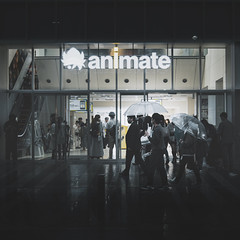
ANIMATE

ajpscs posted a photo:

ANIMATE

EXPOSE MORE
東京で雨
© ajpscs

Found Slide, Las Vegas

Thomas Hawk posted a photo:

Found Slide, Las Vegas

Why Don't You Tell Your Dreams to Me

Thomas Hawk posted a photo:

Why Don't You Tell Your Dreams to Me

Always Open

Thomas Hawk posted a photo:

Always Open

Her Name Was Rio

Thomas Hawk posted a photo:

Her Name Was Rio

Lazy 8 Motel, Tucson, Arizona

Thomas Hawk posted a photo:

Lazy 8 Motel, Tucson, Arizona

MetaFilter

The past 24 hours of MetaFilter

Rare and beautiful: Owl population booms following mouse plague

Rare and beautiful: Owl population booms following mouse plague. (Midwest and Wheatbelt regions, Western Australia)

Ius Mentis

Internetrecht door Arnoud Engelfriet

Toezichthouder adviseert ziekenhuizen en organisaties camerabrillen te verbieden

De Nederlandse Autoriteit Persoonsgegevens (AP) adviseert ziekenhuizen, rechtbanken en andere organisaties om camerabrillen bij hen te verbieden. Dat meldde Tweakers gisteren. Directe aanleiding lijkt de Meta-bril (hiernaast hoe die er van ‘binnen’ uit ziet) te zijn, hoewel er natuurlijk meerdere leveranciers zijn.

Die brillen zijn vaak in strijd met de AVG, zo legt de toezichthouder uit:

Wilt u de opnames in bredere kring delen [dan thuis]? Bijvoorbeeld op sociale media? Dan geldt de uitzondering voor persoonlijk of huishoudelijk gebruik niet. U mag anderen niet zomaar filmen en de beelden op internet delen. De AVG bepaalt wanneer dit wel mag. Meestal betekent dit dat de mensen die op de foto’s en filmpjes staan, toestemming moeten geven.
‘Meestal’, want je kunt je ook beroepen op een eigen gerechtvaardigd belang te weten de vrijheid van informatie garen en verspreiden (“vrijheid van meningsuiting”). En dan krijg je die beruchte belangenafweging van privacy van de gefilmden versus jouw nieuwsbelang bij het maken en uitzenden van de beelden.

Nou ben ik de eerste om de AVG van anti-informatievrijheden te beschuldigen, maar specifiek bij camerabrillen heb ik er moeite mee een goed argument te verzinnen. Ik vind het wezenlijk anders dan met een ‘echte’ camera of zelfs een mobiel in de hand rond te lopen: daarvan ziet iedereen dat je het doet. Je moet enige moeite doen, en dat geeft een rem.

Een camerabril heb je altijd op, of die filmt kun je van buitenaf niet zien (een klein wit lampje zie je toch niet in de buitenlucht). En daar komt bij dat de beelden naar Big Yankee Tech gaan om daar voor innovatieve dienstverbetering en algehele maatschappelijke vooruitgang (lees: killer drones bijtrainen) gebruikt te worden.

Een slimmerik heeft een app gemaakt die camerabrillen detecteert, met de onmiddellijke kanttekening dat mensen lastigvallen die zo’n bril dragen natuurlijk tegen de wet is.

Arnoud


Het bericht Toezichthouder adviseert ziekenhuizen en organisaties camerabrillen te verbieden verscheen eerst op Ius Mentis.

The Guardian

Latest news, sport, business, comment, analysis and reviews from the Guardian, the world's leading liberal voice

Glimpses into lives of Roman suburbanites in Bath revealed in rare finds

Exclusive: Restoration work at Bath Assembly Rooms unearths Roman ditches containing pottery, coins and fragments of a military helmet

The restoration of a Georgian building in Bath once frequented by Jane Austen has unexpectedly provided a tantalising glimpse into the life of the city’s Roman suburbanites.

A network of Roman ditches containing pottery, coins, glassware and a fragment of a military helmet has been found beneath Bath Assembly Rooms in the north of the city.

Continue reading...

From 50p gold hot pants to Paul Smith suits: how Kylie Minogue became one of pop’s ultimate chameleons

The star’s rise from Ramsay Street to global superstar is the subject of a new book. It’s a journey that has cleverly harnessed the power of fashion to transform, subvert – and shock

On 20 December 1989, Kylie Minogue first harnessed the power of fashion. Attending the Australian premiere of her film The Delinquents, she wore a custom sequined noughts-and-crosses minidress by Australian designers Morrissey Edmiston and a cropped blond wig. She also arrived with a new accessory: a rock star boyfriend in the shape of Michael Hutchence from INXS.

Before then, there’d been her Neighbours character Charlene’s peak-80s silk taffeta and lace wedding dress, and Kylie the pop star on the cover of her first album, in 1988, wearing a topless hat showing off cascading curls. But that had been fashion forced on her, at a time when she had no say in her image.

Continue reading...

London buses in decline? Why public transport in global cities is slowing to a crawl – visualised

As experts fear for future of UK capital’s bus network, some commuters are giving up entirely. London is not alone – with worrying implications for the poorest in society

Experts warn that slower buses risk driving passengers away: research cited by Transport for London (TfL) suggests a 10% fall in speed leads to a 6% drop in demand.

Passenger journeys in London have already fallen by more than 300m a year, or 16%, since 2013, despite the city’s population growing by almost a million people.

Continue reading...

Flamingos, family and fear of nuclear disaster: award-winning photos at C/O Berlin – in pictures

The exhibition space is showing the work of the winners of the Ulrike Crespo photography prize, inspired by everything from Chernobyl to migrating birds

Continue reading...