Popplio728 has added a photo to the pool:

Popplio728 has added a photo to the pool:
Popplio728 has added a photo to the pool:

Popplio728 has added a photo to the pool:

Popplio728 has added a photo to the pool:

From veteran strikers to exciting young talents, here are 10 signings who could prove to be bargains for their new teams
Even in this era of relentless transfer inflation, a fee of more than £20m does not usually represent a bargain. Roma’s move for the Porto playmaker Mora may be an exception, though. The teenager has been on the radar of Europe’s elite teams since starring for Porto’s B-team at 15, and Porto were braced for his €70m (£59.5m) release clause to be met in the summer of 2025. That didn’t happen and Mora then fell out of favour under the new head coach, Francesco Farioli. Roma swooped with an offer of €25m (£21.4m), plus a 50% sell-on fee which can be bought out. The potential move also intrigued Mora, who was eager to play under Gian Piero Gasperini. “He played a big part in my decision to come here because he likes players with my qualities, and I’m a fan of the way he wants his teams to play,” Mora said. The early signs are positive, with Mora netting his first Roma goal against Lecce as the Giallorossi made a flying start in Serie A.
Continue reading...Congress has so far done little to rein in the AI industry even as some of its most prominent leaders warn about potentially catastrophic risks
Hello and welcome to the US politics live blog.
Donald Trump will meet with the Chinese president Xi Jinping later today, ahead of a three-day visit that will undoubtedly see artificial intelligence (AI) high on the agenda.
Speaking at the UN general assembly, Donald Trump re-issued his threat to “annihilate” Iran and “drive them into Hell” if the regime didn’t capitulate and make a deal.” He also said he was “working closely with the leaders of Russia and Ukraine” to end the disastrous war, defended his administration’s actions in Latin America – including the midnight raid to arrest former Venezuelan president Nicólas Maduro, defended his drone strikes on boats in the Caribbean and the Pacific, accused Mexico of being effectively controlled by the cartels, and said it was “unacceptable” for the US to share a border with a nation under such conditions, pointed to regime change in Cuba and said he would reject any calls for a “globalist scheme” to control artificial intelligence.
Shortly after his UN address, Trump signed a Greenland deal, which Greenland’s prime minister Jens-Frederick Nielsen said “underlines the importance of the Nato alliance.” In tricky, carefully worded paragraphs, she said the agreement “recognises the US defining historical and ongoing contributions to the security and defence of Greenland,” but it also “respects the sovereignty and the territorial integrity of the Kingdom of Denmark, as well as Greenland’s right to self-determination.”
Trump told a CNN reporter at the UN general assembly on Tuesday that he was “surprised” the outlet was covering him, saying it ‘shouldn’t be here’ after he banned the network alongside Politico and MS Now from the White House on Friday.
At a joint press conference on Tuesday, vice-president JD Vance and Mehmet Oz, administrator of the Centers for Medicare and Medicaid Services, announced that the federal government was removing 760,000 enrollees from Affordable Care Act insurance marketplaces.
Continue reading...Sunil Bharti Mittal’s Airtel Money targets $9bn IPO in boost for ailing UK stock market
A payments business that operates across Africa and is ultimately controlled by an Indian billionaire has announced its intention to float on the struggling London Stock Exchange.
Airtel Money, the mobile money arm of Airtel Africa, is planning one of the biggest UK listings in years, in a boost for the shrinking London market that has faced a string of recent departures.
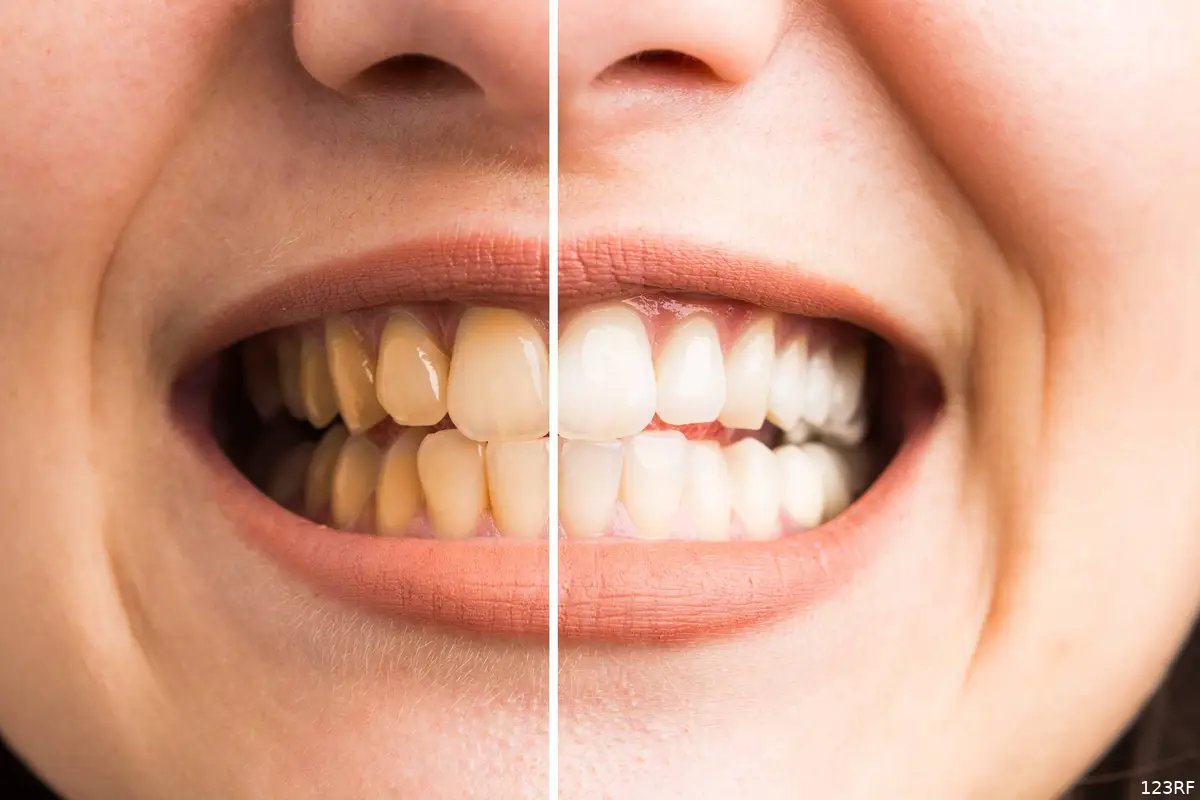
Continue reading...Koffie, thee, rode wijn: allemaal lekker, maar voor de kleur van je tanden is het minder ideaal. Ook worden tanden vanzelf wat donkerder als je ouder wordt. Een bleekbehandeling kan ze weer een stuk lichter maken. Maar wat gebeurt er dan precies met je tanden? En wat ben je ervoor kwijt?
Bij professioneel bleken wordt een bleekmiddel gebruikt dat waterstofperoxide bevat of afgeeft. Dat middel dringt de tand binnen en breekt de moleculen af die verkleuring veroorzaken. Je tanden worden daardoor lichter.
Er wordt dus geen wit laagje op je tanden gezet en er wordt ook geen glazuur afgeslepen. Wel kunnen tanden tijdens en kort na de behandeling gevoeliger zijn. Ook kan het tandvlees geïrriteerd raken als het met bleekmiddel in aanraking komt.
Goed om te weten: kronen, facings en vullingen bleken niet mee. Daardoor kan na afloop kleurverschil ontstaan.
Wie het veilig wil aanpakken, kan het beste eerst zijn gebit door een tandarts laten beoordelen. Een veelgebruikte methode is thuisbleken met op maat gemaakte bleekbitjes. Je doet bleekgel in het bitje en draagt dat dagelijks enkele uren, volgens de instructies van de tandarts.
Reken daarbij niet op een sneeuwwit gebit na één nacht. Zo'n bleekkuur duurt doorgaans een tot enkele weken. Het resultaat is bovendien niet permanent. Koffie, thee, wijn en roken kunnen je tanden daarna opnieuw verkleuren.
Bleekstrips en andere middelen voor thuis zijn goedkoper, maar bevatten doorgaans veel minder of geen waterstofperoxide. Vermijd in ieder geval experimenten met citroensap of andere zure en schurende huismiddeltjes: die kunnen je glazuur aantasten.
Dan de grote vraag: wat kost het? Voor regulier bleken mag een tandarts in 2026 maximaal 93,77 euro per kaak rekenen. Laat je zowel boven- als onderkaak behandelen, dan komt de rekening dus neer op 187,54 euro.
Maar daarmee ben je er meestal nog niet. De bleekbitjes, bleekgel en andere materiaal- en techniekkosten mogen apart worden berekend. Daardoor ligt de uiteindelijke rekening voor professioneel thuisbleken in de praktijk vaak op enkele honderden euro's. Vraag daarom vooraf om een prijsopgave waarop behandeling, bitjes en bleekgel afzonderlijk staan vermeld.
Voor één afzonderlijke verkleurde tand, bijvoorbeeld na een wortelkanaalbehandeling, gelden andere bedragen. Inwendig bleken kost in 2026 maximaal 60,01 euro voor de eerste behandeling en 22,51 euro voor iedere volgende behandeling van die tand.
Tanden bleken is doorgaans puur cosmetisch. De basisverzekering betaalt de rekening daarom niet. Wie droomt van een hagelwit gebit, zal dus meestal zelf de portemonnee moeten trekken.
OOTMARSUM (ANP) - De zeventiende editie van The Passion wordt volgend jaar uitgezonden vanuit het Twentse stadje Ootmarsum, onderdeel van de gemeente Dinkelland. Dat werd woensdag bekendgemaakt door de Poaskearls, een groep van acht jongemannen die traditioneel door de straten van Ootmarsum trekken om het paasfeest aan te kondigen. De uitzending is live op Witte Donderdag 25 maart bij KRO-NCRV op NPO 1.
Ootmarsum kreeg rond 1300 stadsrechten. The Passion vindt plaats in het historische centrum van de stad op het Kerkplein, met als middelpunt de eeuwenoude Simon en Judaskerk. "Dat The Passion naar Ootmarsum komt, is een enorme opsteker voor Dinkelland en voor de hele regio", zegt burgemeester John Joosten in een verklaring. "Het laat zien wat er kan ontstaan wanneer initiatief, ondernemerschap en gemeenschap elkaar vinden."
Ook KRO-NCRV is blij met Ootmarsum als uitzendplek van The Passion 2027. "Sommige plekken lijken gemaakt voor The Passion en Ootmarsum is zo'n plek", zegt directievoorzitter Arie Koornneef.
WASHINGTON (ANP) - Trumps Vredesraad presenteert woensdag tijdens een bijeenkomst van de lidstaten een plan voor de wederopbouw van Gaza. Voor de plannen is 2,45 miljard dollar (2,15 miljard euro) nodig, meldt de Amerikaanse nieuwssite Axios, die het plan heeft ingezien.
Een groot deel van het geld, ongeveer 1 miljard, moet gaan naar het herstel van de infrastructuur, waaronder het plaatsen van tijdelijke huisvesting. De Vredesraad wil geïsoleerde caravans plaatsen voor ontheemde Palestijnen die nu in tenten wonen. Ook moeten er herstelwerkzaamheden worden verricht aan ziekenhuizen, wegen en de elektriciteits- en waterinfrastructuur.
In het voorstel wordt 885 miljoen dollar toegewezen aan veiligheidsgerelateerde projecten. Zo moet er een permanente basis komen in Rafah die plaats biedt aan 5000 manschappen van een internationale vredestroepenmacht en moet er een nieuwe Palestijnse politiemacht worden opgezet. Ook moet er een wapenopkoopprogramma komen om leden van Hamas en andere groeperingen ertoe te bewegen hun wapens in te leveren.
35 miljard dollar
Het is nog niet precies duidelijk hoe het plan gefinancierd wordt. Het benodigde bedrag van 2,45 miljard dollar is nog niet bijeengebracht. In de toekomst zal volgens de Vredesraad nog veel meer geld nodig zijn. De fysieke schade in Gaza wordt na de jarenlange oorlog met Israël geschat op meer dan 35 miljard dollar, en in de komende tien jaar zal meer dan 70 miljard nodig zijn voor de wederopbouw.
Voor de uitvoering van het plan is de Vredesraad afhankelijk van Israël en Hamas. Israël wil dat Hamas eerst wordt ontwapend voordat het zich volledig terugtrekt uit Gaza, terwijl Hamas juist wil dat dit gelijktijdig gebeurt.
mikeleonardvisualarts has added a photo to the pool:

mikeleonardvisualarts posted a photo:
Most people in the world who use AI feel good about the technology and believe it will be a net positive for the future, according to a new study from Gallup. This is not the case in the United States, however, which is one of the few countries surveyed where negative emotions towards AI outweigh the positive.
The new survey from Gallup and Microsoft polled people in 37 different countries about AI. “The study, which will ultimately cover 140 countries, measures public engagement with AI across five dimensions. In addition to emotional response, the survey captures awareness, frequency of use, expected impact and trust,” the study said.
Most people polled — a median of 81% — were aware AI tools exist, but only a median of 43% used them daily. Gallup told 404 Media it defined a “daily user” as an employed person who used AI everyday for either work or personal reasons or an unemployed person who used the tech every day.
The study found that people had a mixed, but generally optimistic, view of artificial intelligence. “AI engagement can be viewed as an adoption ladder, moving from awareness to ever having used AI and then to more frequent use,” the survey said. Generally — but not always — the more someone used AI the more they trusted its results, the more positive they felt towards it, and the more they believed it would help make a better future.
Digging in, however, the results are more complicated. Some people who reported positive feelings towards AI also said they didn’t trust its results. “People may therefore see considerable potential in AI even while remaining uncertain about whether they can rely on the information it provides,” the survey said.
Daily users tended to trust AI “to provide accurate information,” according to the study. “The survey cannot establish whether greater trust leads people to use AI more often, whether experience with AI builds trust, or both. But the strength and consistency of the relationship suggest that trust and adoption are connected.”
Globally, most people surveyed felt good about AI and expected to improve their country. As AI adoption increased in a country, so too did positive feelings. But not in the United States, which was one of only three countries surveyed where negative emotions towards AI outweighed the positive.
Pablo Diego-Rosell, a senior scientist at Gallup, told 404 Media that he’d seen similar results in other western countries. “The Netherlands, Canada, the U.K., New Zealand, Ireland and Malta all rank near the top in terms of worry,” he said. He noted that he hasn’t seen survey results from some of the bigger European countries like Germany and France but said that worrying about AI “appears to be a uniquely Western phenomenon.”
Gallup called this the “Paradox of the Worried West.”
“The biggest unanswered question is causality. We see a very strong relationship between frequent AI use, greater trust and lower worry, but we do not know which direction that relationship runs,” Diego-Rosell said. “Does experience with AI make people more comfortable with it, or are people who already trust AI simply more willing to use it?”
“There is also a broader question about what trust in AI actually means. In this study, we measure one specific dimension: whether people trust AI to provide accurate information,” he added. “But trust in AI can also involve whether people believe it is reliable, safe, fair, transparent, protective of privacy, and likely to act in ways that serve their interests.
The west didn’t have a monopoly on negative emotions towards AI, however. The other two countries where negative emotions towards the technology outweighed the positive were Egypt and Palestine.
“One possibility is that these results partly reflect the broader emotional context in which people are evaluating AI. When people are living in environments where worry, stress or other negative emotions are already elevated, some of that broader emotional climate may shape how they react to a technology like AI,” Diego-Rosell said. “At the same time, our data do not allow us to determine how much of the response is specific to AI versus the wider circumstances people are experiencing.”
It’s possible that people in the US, Egypt, and Palestine are already anxious and worried and that this is coloring their perception of AI. Israel is waging war on Palestine, settling in its territory, and using AI to pick targets to bomb in Gaza.
Americans — where much of AI is built and first deployed — have been repeatedly told in the past few months by AI evangelists and company insiders that the technology could, literally, end all life on Earth. The constant stream of news stories about AI swarms “breaking containment” while AI experts claim there’s a one in ten chance the technology kills everyone on the planet probably had a hand in altering the American mood.
“The broader story is that public engagement with AI is much more complicated than simply being ‘for’ or ‘against’ it,” Diego-Rosell said. “People who are aware of AI are more likely to expect it to help than harm, and positive emotions outweigh negative ones. At the same time, trust in AI’s accuracy is considerably lower than optimism about its potential, and worry remains widespread in some countries. So optimism, skepticism and concern can coexist.”