Wel.nl

Minder lezen, Meer weten.

Dit zijn de 6 slechtste dieetadviezen die voedingsexperts ooit hoorden

Geen brood meer, elke dag sporten en op zondag mag de rem eraf. Wie wil afvallen, krijgt al snel een compleet reglement cadeau. Het klinkt daadkrachtig. Maar een streng verbod of een mooie belofte is nog geen verstandig voedingsadvies. Deze zes regels verdienen een flinke kanttekening.

Schrap gluten uit je menu

Glutenvrij is geen synoniem voor slank. Zonder medische reden hoef je gluten niet te vermijden, en een glutenvrij dieet is op zichzelf geen afslankmethode. Een glutenvrij koekje blijft dus gewoon een koekje, geen dieettruc.

Bij coeliakie ligt dat anders: dan is glutenvrij eten noodzakelijk. Vermoed je dat je klachten door gluten komen? Overleg met je huisarts in plaats van zelf zomaar brood en pasta te schrappen.

Sport genoeg en de kilo’s verdwijnen vanzelf

Bewegen verbruikt energie, maar geeft geen garantie op gewichtsverlies. Ook wat je eet en drinkt blijft meetellen: als je over langere tijd evenveel energie binnenkrijgt als je verbruikt, daalt je gewicht niet.

Bekijk daarom niet alleen je sportschema, maar ook je eetpatroon. De sportschool is geen vrijbrief voor onbeperkte porties.

Van gezond eten mag je onbeperkt nemen

Noten passen in een gezond voedingspatroon, maar bevatten ook veel calorieën. Hetzelfde misverstand speelt bij avocado en olijfolie: gezonde vetten maken de hoeveelheid niet onbelangrijk. Ook met gezonde producten kun je meer energie binnenkrijgen dan je gebruikt.

Het alternatief is niet dat je voortaan bang moet zijn voor een handje noten. Het is dat je ‘gezond’ en ‘onbeperkt’ niet met elkaar verwart. Let op porties, niet alleen op het gezonde imago van een product.

Een cheat day zet je stofwisseling weer aan

De belofte klinkt aantrekkelijk: de hele week opletten en daarna een dag uitbundig eten om je verbranding een zetje te geven. Alleen is een betekenisvolle stofwisselingsboost door zo’n dag niet overtuigend aangetoond.

Veel extra calorieën kunnen het tekort van eerdere dagen bovendien verkleinen of wegwerken. Dat maakt een etentje of een stuk taart nog geen probleem. Er is verschil tussen ruimte maken voor iets lekkers en een hele dag eten alsof calorieën tijdelijk niet meetellen.

Alleen eten en sporten doen ertoe

Een eetplan houdt niet op bij je bord en je sportschoenen. Ook slecht slapen en langdurige stress kunnen invloed hebben op je gewicht.

Wie daar last van heeft, doet er verstandig aan die problemen mee te nemen in de aanpak. Vraag dus niet alleen: wat kan ik nog uit mijn menu schrappen? Kijk ook naar rust, herstel en wat in jouw dagelijks leven haalbaar is.

Verbied jezelf voorgoed alle lekkere extra’s

Je hoeft niet al je favoriete calorierijke eten af te zweren om af te vallen. Een kleine portie kan passen, zolang je totale eetpatroon ruimte laat voor gewichtsverlies. Een koekje is dus geen bewijs dat de dag mislukt is.

Maak liever bewuste keuzes over hoeveel en hoe vaak dan een levenslang verbod. Zoek geen wonderregel, maar een aanpak die bij je past. Loop je vast, bespreek dan met een diëtist wat voor jou haalbaar en passend is.

Meer weten?

  • Voedingscentrum: gluten en het glutenvrije dieet
  • Voedingscentrum: afvallen met gezonde voeding
  • Voedingscentrum: hoe werkt afvallen?

The Guardian

Latest news, sport, business, comment, analysis and reviews from the Guardian, the world's leading liberal voice

‘And you will be the People’s Earl’ – Charles Spencer’s Swan Song: Diana, My Sister, digested by John Crace

The earl on his globally lauded eulogy for Diana, King Charles’s sausage fingers and toxic Raine, topped off with a lavish sprinkling of adverbs

Cheers cried out throughout the land. Halley’s comet made an unscheduled appearance in the ethereal night sky. In very heaven, angelic choirs rang out. A saviour had been born. A light to lighten the world. But enough about me. For this paragraph at least.

In my universally acclaimed funeral address, I aimed to speak for my sister. The real Diana. For only I truly knew her. She had the heart of a lion. And I had a glut of cliches. Yet when Diana had swept so triumphantly into the arena of royal life, I was but a callow youth awash with hormones and gripped by the self-centredness of adolescence. Nothing much has changed. Yet I know, with all my heart, that Diana would have wanted me to tell our story.

Continue reading...

Eric Idle has had tons of celebrities staying at his house. God, it must be exhausting | Adrian Chiles

Whether it’s an A-lister or an old schoolfriend emerging blearily from the spare room, those first moments of the day are tricky

First thing in the morning, that’s the hardest time. Eric Idle told me this. A wise man, is Eric. Actor, comedian, songwriter, musician, screenwriter and playwright and, when it comes to mornings, a man of wisdom.

I interviewed him about his new book, which is a love letter to his house in Provence. He bought it more than half a century ago, before he hit the big time. It didn’t cost him much, because it was tiny, tumbledown and without water or electricity. Slowly, as the money came in from this job or that, he made improvements. By hook or by crook, the water and electricity started to flow, and with them a steady stream of guests coming to stay. These weren’t just any old guests: they were superstars, among them David Bowie, Art Garfunkel, Penny Marshall, Lauren Hutton, Brian Cox (the professor and the actor too, I think, although possibly not at the same time), Paul Simon, Carrie Fisher, Robin Williams and George Harrison. Also Michael Palin and assorted Pythons; Ronnie Wood and assorted Stones. And so on. There are photos of Wood sitting on the floor strumming his guitar; Bowie mooning about clad only in short shorts. Quite something, but all I could think about was how tiring it must have been to have so many guests turning up all the time. Let’s be honest: guests are a bit of an effort. A-lister or Joe Bloggs, a guest’s a guest.

Continue reading...

Australia banned this anti-fascist play in 1936 at the request of the Nazis. Ninety years on, it’s being staged again

A new production of Clifford Odets’ agitprop work Till the Day I Die is being remounted on the back of a truck in a Melbourne car park – rekindling its activist intent

It might be difficult to imagine these days, but there was a time when theatre in Australia was so politically incendiary it could cause an international diplomatic scandal. A year after it premiered on Broadway in 1935, US playwright Clifford Odets’ Till the Day I Die found itself at the centre of controversy in Australia when it was banned by the federal government at the request of the Nazi party’s consul general, on the grounds it was offensive to a “friendly foreign nation”.

Odets’ play, about a communist Berliner arrested by the Nazis for producing leftwing political pamphlets, was a companion piece to his more famous Waiting for Lefty, which was staged the year before by Sydney’s New Theatre – one of a branch of theatre companies that sprang up around the globe in the 1930s that was heavily affiliated with communism. The ban was counterproductive, leading to a massive public outcry and a cobbled, surreptitious production performed on the back of a truck at Collingwood town hall in Melbourne.

That truck is a galvanising symbol of rebellion and resistance for theatre-makers Mark Wilson and Katie Sfetkidis, who have been inspired to revisit the play as an act of leftist solidarity with the past and a spur for future activism. They’re staging a new production of it for this year’s Melbourne fringe festival in the car park of the Trades Hall building on the back of their own truck. “We got excited by these artists refusing to be banned, about the idea of a necessary theatre,” Wilson says.

Continue reading...

My (complicated) relationship with AI: often seductive, occasionally frustrating and always demanding vigilance | Setareh Seyedghorban

As a multilingual academic, artificial intelligence has levelled the playing field. But I will continue to think, judge and develop ideas that are stubbornly mine

I am walking between carriages in search of a cup of tea on a train travelling over 100 miles an hour from Liverpool to London when I see half the people in my carriage in deep conversations with a machine: ChatGPT, Claude and Gemini to name a few. I am meant to be on sabbatical, the rare stretch of academic life reserved for slow thinking. Around me, almost nobody is thinking slowly.

This is not limited to a train carriage. Half of the adults surveyed in one US study reported using an AI chatbot, one example of how fast people are entering a relationship with their AI tools, which now receive more of our questions, problems and drafts than our friends and colleagues do.

Continue reading...

Bats originated in Europe, rewriting mammals’ family tree, study reveals

Biggest study of its kind provides insights into bats’ evolution – a potential gamechanger for research into treating viruses and cancer in humans

In the northern forests of the Congo-Brazzaville, as the sun slips away, a distinctive honking fills the dusky sky. Every evening, thousands of hammer-headed fruit bats depart their daytime roosts in search of mates, calling out through large, box-shaped snouts that give the flying mammals the appearance of a winged moose. Here, along the Congo River, scientists have been collecting DNA swabs and tissue samples from the bats for years, working deep into the night in spacesuit-like protective gear.

Those hard-won samples are now among the thousands of specimens gathered from bats across the world that have helped to reshape what we know about the bat family tree.

Continue reading...

Six arrested after anti-migrant protest at Gosport marina

Heeding calls from far-right activist Daniel Thomas, hundreds of protesters turned out in Hampshire

Six people have been arrested after anti-migrant protesters gathered at a marina in Hampshire in the mistaken belief that a small boat was due to arrive.

Heeding calls from the far-right campaigner Daniel Thomas, hundreds of protesters gathered early on Tuesday evening at Gosport in Hampshire, aiming to disrupt any disembarkation of asylum seekers. The Border Force vessels carrying them landed instead in Dover early on Wednesday.

Continue reading...

The Register

Biting the hand that feeds IT — Enterprise Technology News and Analysis

Thoughts return to forbidden RAM upgrades as Raspberry Pi OS gets fresh lick of paint

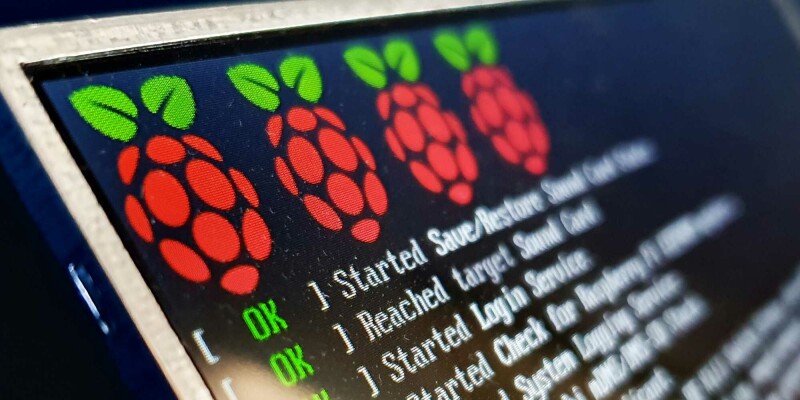
Raspberry Pi OS has gained a new desktop layout, while surging memory prices have revived a row over firmware that restricts RAM upgrades. Although Raspberry Pi doesn't emphasize version numbers in its materials, the updated operating system's splash screen identifies it as version 6.3, dated September 2026. Its long-running release notes document details the changes. This time around, the desktop GUI gets a visible revamp. In place of the vintage-Windows-style taskbar, users can now choose a dock centered at the bottom of the screen and a full-screen app launcher. There are three options: just a dock, just a taskbar, or both at once – in which case the panel goes transparent and disappears from view except for the status indicators at the right end. We tried all three configurations, but missed the option to position the dock vertically. We strongly prefer that arrangement. If you too wish to conserve your vertical pixels, then use the raspi-config command to switch to X11 instead of Wayland. You lose the Raspberry Pi Connect feature, but in return you get a vertical LXDE taskbar. It looks pretty good. We suspect the design is intended to be less intimidating to children more familiar with smartphones than desktop Windows – still an important audience for the Pi. Under the hood, the Pi OS Wayland desktop components have been updated – the release notes say "labwc and wlroots updated to version 0.20." That is slightly behind version 0.20.2 of the labwc compositor, and The Reg FOSS desk still feels some concern when confronted with pre-1.0 version numbers. We thought Wayland was meant to be mature and ready for enterprise production by now. The underlying Linux kernel remains at version 6.18, which arrived in the previous update we reported on back in June. Pi OS remains fairly lightweight and fast, although it is not as svelte as it once was. While looking at the SpacemiT K3 in June, we noted that an 8 GB Raspberry Pi 5 cost a whopping £168 in the UK or $175 in the US. Things have not improved. As we write, the 16 GB model costs £292.80 in the UK or $305 in the US. RAM upgrades encounter a firmware check Earlier this month, this prompted Mike Thompson, the original creator of Raspbian, to tweet: "When I created Raspbian for the Raspberry Pi, I was excited to help bring low-cost compute into the hands of a next generation of tinkerers and programmers. "However, I now despair that a Raspberry Pi can cost upwards of $300 because AI shortages are making personal computing unaffordable. Furthermore, bright young people are being discouraged from learning programming because they are being told it is now a commodity skill that AI will do. "I have to ask myself what it was all for. Is this the future we were promised? If so, I'm starting to regret my part in it." He has a point. Prices like these provide a strong incentive to repair a dead Pi or upgrade a low-spec model using RAM harvested from another device. You need to be both skilled and determined to even try – it means desoldering the Pi's ball-grid-array system-on-a-chip and the RAM underneath, and then resoldering it. This is not trivial stuff. As Pi OS 6.3 appeared, attention returned to a forum comment posted in June by Raspberry Pi Senior Principal Software Engineer Phil Elwell. He confirmed that newer firmware locks devices to their original RAM capacity. "We therefore remove the commercial incentive by locking devices to their original RAM size," he wrote. "And for improved compatibility with a variety of suppliers, we now also program in some other device attributes, meaning that switching parts of the same size may not work. I don't see RAM being swapped between authorised devices of different sizes as a likely use case, but don't waste your time trying – it won't work." Several stories have covered the issue this week, but our favorite comes from hardware-hacking website Hackaday, whose Arya Voronova points out that anyone capable of replacing the RAM should also be capable of downgrading to an older bootloader that does not enforce the check. Some unscrupulous resellers appear to be buying low-memory Pi boards, upgrading them, and selling them as higher-capacity models. Voronova found 15 GitHub reports from people apparently affected – she highlights one case where a board with 8 GB of working, usable RAM describes itself as a 2 GB board, and another case where the vendor denied it. The check was added two years ago. Voronova observes that the release notes for that bootloader omit the change entirely. You might think a new check capable of preventing modified hardware from booting was worth mentioning. We can't fault her summary: "Don't lament Raspberry Pi RAM upgrades, especially given they're only slightly harder to perform now. Very few hackers ever performed them, the main audience for them turned out to be dodgy hardware resellers online, and in most cases, repair doesn't seem to be impeded at all, either." ®

Academic publisher Elsevier hit by LAPSUS$ redirect attack

Academic publishing giant Elsevier confirmed a compromise this week after students found its platform redirecting users to a cybercriminal crew's leak page. One Reddit user, a self-described nursing student, highlighted the issue on September 22, posting a screenshot of LAPSUS$’s leak site after trying to access “homework and textbooks.” “Every time I try to open the Elsevier website, I am met with this,” they wrote. “Anyone know anything or have any explanation? Totally creepy.” Amsterdam-based Elsevier told The Register it was briefly compromised following an attack Monday, but played down the wider impact. “On September 21, Elsevier identified that visitors to select platforms were being redirected to a third-party page,” a spokesperson said. “Our cybersecurity team responded immediately, resolving the issue and restoring normal service. “Our investigation indicates that this was a narrowly scoped, limited-duration event involving the temporary redirection of traffic for certain web properties. There is no indication that core platforms, customer data, research content, or operational systems were compromised.” Elsevier did not respond to additional questions related to the specific platforms that were affected or for how long LAPSUS$’ redirect was in place. The company is best known for its ScienceDirect platform, which hosts scientific, technical, and medical journal articles. It is also behind ClinicalKey, an AI-powered platform designed to provide medical professionals fast answers to care queries, and LeapSpace – an AI-assisted workspace for academic researchers. LAPSUS$, meanwhile, is better known for its criminal enterprises, namely big-name cyberattacks on the likes of Rockstar Games, which led to the earliest high-profile Grand Theft Auto VI leaks, and more recently, attacks on Adidas and GitHub. The online assault on Rockstar Games was part of a wider spree of crimes carried out when the group was in its pomp between 2020 and 2022. Other victims included BT, Microsoft, Okta, Samsung, and Vodafone, which in turn stoked a concentrated law enforcement operation to disrupt the teenage criminals behind it. After a protracted break, the LAPSUS$ name returned in 2025, partnering with Scattered Spider and ShinyHunters in another string of cyberattacks affecting household names, before splitting up and activity dropping to a modest six attacks per month, according to SOCRadar. ®

Closing the observability gap for the AI-ready enterprise

The modern enterprise is a digital enterprise. From the back office to the factory floor, connected systems and digital services form the operational backbone on which all else depends. So when disruption hits, it can have a huge financial, reputational, productivity, and even compliance impact. This has raised observability to a board-level issue. "For a public company, a material cyber incident is a disclosure obligation. You're on a four-business-day clock from the moment you determine its material," explains NETSCOUT director of enterprise strategy, Jack Callahan. "So when you have a disruption, whether that's a cyber-attack, a DDoS attack, or someone pushing a bad update to the network, the first executive problem is the same: figuring out whether it’s material." With each technical team pointing fingers at each other, observability becomes the single source of truth that organizations need to identify root cause, accelerate resolution, and improve reliability. Yet in many enterprises, it’s not having the desired impact. The long-established data foundation of metrics, events, logs, and traces (MELT) can’t by itself keep pace with the complexity and scale of today’s digital infrastructure. Organizations have defaulted to gathering more data, increasing sampling, and extending retention. But they’re not getting better insight. “Executives who would expect to have a lot of data in front of them with which to make a decision don't always find that that data is as conclusive as they'd want it to be,” Callahan continues. “And therefore, they’re trusting their gut more than they’d expect, given how much they’re spending.” The costs of this observability debt are building. One study by NETSCOUT reveals that 81 percent of organizations believe insufficient data increases incident resolution time. Over two-fifths (42 percent) estimate downtime at $500,000 to$999,000 per hour. These costs are unsustainable, both economically and otherwise. To harness the power of autonomous AI in operations, organizations need a data foundation they can trust implicitly. This demands a fresh approach; economically viable and grounded in observability data that’s consistent, comprehensive, enriched, and real time. And delivered in a way that complements rather than replaces existing observability investments — extending the value of the platforms already embedded in the enterprise stack. Where visibility fails MELT data is still essential to observability. But it wasn’t designed for today’s complex, distributed and dynamic operations. Metrics explain that something has changed over time. Events surface when something changed. Logs tell teams that something happened at a specific time. But they don’t provide the context that explains what actually happened on a network and why. Traces come closest, as distributed tracing is built to follow a request across services. But a trace only shows what has been instrumented, which leaves it blind at un-instrumented components, third-party dependencies, and the infrastructure in between. And those are exactly where things tend to break down, meaning the context of what actually happened and why isn’t captured. Context essentially means being able to reconstruct a single, complete and ordered chain of events across different systems — including what kick-started an event, how it propagated, and what happened at each step. This is where MELT-only observability techniques often fail. Timestamps can be inconsistent across different systems. Identifiers might not be preserved across architectural boundaries. Sampling and aggregation remove vital detail needed for reconstruction. And data may be stored across different tools with incompatible schemas. Research reveals that 96 percent of organizations use metrics and logs, yet 82 percent report visibility gaps, and nearly all (96 percent) lack sufficient data to determine root cause during incidents. They tend to lose visibility where systems meet, such as between on-premises and cloud (58 percent), the edge (51 percent), or in service-to-service interactions (39 percent). AI sharpens the challenge These issues become more serious in an AI context. Organizations are already embracing AI-driven operations to improve efficiency, decision making and customer experiences. But when systems start operating autonomously, making decisions and taking action at machine speed, they need forensic-grade data with high-fidelity context to produce reliable outcomes. That means continuous, unsampled records that preserve system interactions across environments. Higher levels of autonomy demand higher levels of confidence in network data. But telemetry can lose fidelity through sampling and abstraction — common techniques used in MELT to manage high data volumes. The resulting incomplete and fragmented data can lead to false correlation, ambiguity over root cause, inconsistent outputs, and overconfidence in partial signals. “An agent is not going to apply human intelligence to troubleshoot an issue. It's going to make a decision based on the data it has,” says Callahan. “So if you are feeding it partial, or periodic, or sampled data, you're at risk of scaling that uncertainty really quickly.” It’s a challenge that many organizations are just waking up to. According to NETSCOUT, only 41 percent describe AI-assisted insights as “very or extremely consistent.” A similar share (38 percent) admits to lacking forensic-grade data to validate automated actions. Some 29 percent say they don’t have real-time visibility across environments, and 28 percent don’t fully trust automation output. Closing the observability gap A better approach would be to build observability around MELT data enriched to provide the context that IT teams need, but without the bloat that adds unsustainable extra cost. This starts with packet data: the authoritative record of what actually traversed the network. It provides visibility into the transactions, dependencies and interactions (human and machine-based) across the IT ecosystem. Using deep packet inspection (DPI) techniques, this visibility can be distilled into metadata that, added to MELT, produces what NETSCOUT calls “MELT+”. “Digital services become observable through the exchanges among their components. NETSCOUT Smart Data transforms those observed interactions into transaction-level evidence: whether communication succeeded, how the transaction performed, where delay or failure appeared, which services were affected and, when identity context is available, which users experienced the impact. That gives operations teams and AI systems a more complete and trustworthy basis for understanding what actually happened,” explains NETSCOUT field marketing manager , Steve Horneman. “Most telemetry describes the state of individual components. NETSCOUT observes the interactions among those components and creates meaning from them as the activity occurs. By extracting context early, from independently observed traffic rather than relying only on what individual systems report, we give operations platforms and AI a more consistent account of how a digital service actually behaved. That is the difference between collecting more telemetry and creating evidence that can support a confident decision.” One case illustrates the advantage of this approach. A product manufacturer found that wireless connectivity issues were causing automated guided vehicles (AGVs) to fail in its global facilities, costing the company $500,000 per hour in lost productivity. Outages were occurring roughly every three weeks. Existing robotics telemetry failed to find the root cause. But once NETSCOUT was pulled in, the source of the issue was pinpointed, and a proactive monitoring model adopted which detects AGV failures within seconds. Troubleshooting fell from hours to minutes, saving the company tens of millions of dollars annually. The benefits of MELT+ expand beyond outages and operational incidents to cybersecurity, Horneman continues. “The strategic value extends beyond observability. The same independently observed interaction evidence can support operational assurance at the enterprise perimeter, expose service-to-service behavior and potential lateral movement internally, and give operations, security, and AI systems a common evidentiary foundation. Instead of each team interpreting a different version of events, they can reason from the same observed reality,” he says. NETSCOUT calculates that organizations treating network traffic data as authoritative are nearly three times more likely to report that visibility gaps occur infrequently (50 percent vs.18 percent). It is this level of insight into what’s happening on the network that makes the same packet-derived intelligence valuable to forensic analysis teams. “Once an attacker has privilege on a host, the telemetry that host generates about itself is within reach,,” says Callahan. “Sophisticated attackers hide lateral movement exactly that way. What they can't do is go back and change the packets that already crossed the network. That's a higher level of veracity, and a more complete view.” When metadata is Smart Data NETSCOUT’s approach uses DPI to observe live, unsampled packets directly from the network and then convert it into high-fidelity metadata using Adaptive Service Intelligence (ASI). It’s designed to tackle the main challenges of traditional MELT: scale, efficiency, cost, and data richness. NETSCOUT observes traffic from strategic points in the network rather than monitoring each application or server, reducing telemetry volume, ingestion cost, and complexity. It analyzes and distills packet data into Smart Data, metadata generated at the point of capture, which reduces the volume that needs to be moved, stored or retained downstream. What customers get is an approach that is complementary to MELT but which is economically more sustainable, produces more complete, network-derived data, and which feeds into existing observability platforms to further reduce TCO. It also delivers what analyst firm Futurum describes as the critical foundation for autonomous AI operations. Data that captures verifiable network behavior and observed interactions rather than abstractions. Data that ensures comprehensive visibility regardless of whether individual applications have been instrumented, and a complete view without sampling gaps. And which is consistent across observability, security, and operations teams, while demonstrating sequence and causality across service boundaries. “MELT alone is not going to be a sufficient data foundation to run AIOps on,” says Callahan. “We're able to generate data with more of the context you need earlier in the process, and therefore richer data flows into your platforms.” Just getting started Despite the obvious benefits of MELT+ approaches, NETSCOUT data reveals that only 11 percent of organizations treat full-fidelity network data as authoritative. For CIOs keen to change that statistic, the first step is to evaluate their current observability data by five key criteria, as shared by NETSCOUT COO, Sanjay Munshi. It should be comprehensive; covering any cloud, service, app, network or vendor. It should be curated; with purpose-built feeds optimized for storage and cost. It must be credible in offering a verifiable chain of interactions showing how services, apps and users behave in context. It must be consistent across use cases. And it must provide continuous real-time insight into data in motion. “If you’ve been optimizing to reduce your MELT cost, what you’ve been doing is also reducing the context that your application teams and agents have. But you no longer have to sacrifice one in order to gain the other,” Callahan concludes. “If you’re worried about telemetry costs. If you're worried about having the data you need to make decisions in the moment or for compliance reporting. If you're trying to figure out how to move your AI pilots into production: we can strengthen what you are already doing in the platforms you use every day.” Sponsored by NETSCOUT


Trump overweegt een exportverbod voor diesel. Doet hij dat echt, dan heeft Europa een probleem

De prijs van diesel staat op recordhoogte, en dan overweegt Trump ook nog eens een exportverbod ervan. Het zou problematisch zijn voor Europese dieselrijders, en voor de Amerikaanse industrie.


Trump is een gevaar voor de pers, maar de miljardairs die zelfcensuur afdwingen zijn nog veel zorgelijker

Er zijn Amerikanen die het geluid van hun televisie dempen zodra ze hun president in beeld zien verschijnen. Maandag was een greep naar de afstandsbediening niet nodig.

De Speld

Uw vaste prik voor betrouwbaar nieuws.

​Israël boycot Songfestival na deelname Nederland: ‘Slechts kwart jongeren daar steunt homorechten’

Israël heeft zich teruggetrokken van deelname aan het Eurovisiesongfestival. Dat meldde een woordvoerder eerder vandaag nadat duidelijk werd dat Nederland wél deelneemt aan de politieke liedjeswedstrijd.

“Wij zijn heus niet het braafste jongetje van de klas”, aldus de woordvoerder. “Maar met een land als Nederland gaan wij het podium gewoon niet delen. Slechts een kwart van de jongeren daar steunt homorechten. Dat is voor ons onverenigbaar met alles waar het Songfestival voor staat. Het is ooit opgericht om mensen en landen met elkaar te verbinden. Het lijkt me duidelijk dat Nederland daar nu héél ver van af staat. Als u mij nu wil excuseren, ik moet nog een genocide vergoelijken.'

​

&''


VK: Voorpagina

Volkskrant.nl biedt het laatste nieuws, opinie en achtergronden

Met hart en ziel pleit ik voor een Europees leger

Robot rent voor het eerst marathon op één batterijlading: ‘Andere hardlopers moedigden hem aan’

Russisch paspoort, stinkend rijk, nauwe banden met Poetin – en toch geschrapt van Europa’s sanctielijst

The Moscow Times - Independent News From Russia

The Moscow Times offers everything you need to know about Russia: Breaking news, top stories, business, analysis, opinion, multimedia

Putin Says Election Turnout Shows Russians Support Military Agenda

"Such a high, even record, number of people who came out and voted shows that the people of Russia support our efforts aimed at strengthening the country," he said.

Russian Military Helicopter Briefly Entered Polish Airspace

The Mi-8 helicopter spent 42 seconds in Polish airspace, the Polish military said.

Rijnmond - Nieuws

Het laatste nieuws van vandaag over Rotterdam, Feyenoord, het verkeer en het weer in de regio Rijnmond

Ruit kapot nadat auto tegen gevel rijdt in Rotterdam

In de Kipstraat in het centrum van Rotterdam is een auto tegen de gevel van een veilinghuis gereden. Niemand raakte gewond, maar de klap zorgde wel voor een gebarsten ruit en schade aan de auto.

DOVENDEBAT. JA21'er spreekt over 'álle gebedshuizen', D66'er hoort alleen 'moskee'

Social

Horen we steeds vaker: dove D66-dames die via D66-dwingelandij hun D66-dogma's willen doordrijven. Het slachtoffer van D66'er Renilde Huizenga is JA21'er Ranjith Clemminck, die van minister Hear me alleen maar het juiste antwoord wil horen over de regeltjes omtrent neutraliteit van stemlocaties in gebedshuizen. Hij zegt nota bene: "Of het nu een moskee is of een kerk." Nou is het sowieso niet heel gek om de moskee als voorbeeld bij te nemen, maar daar gaat het deze D66-dove helemaal niet om. Die wil wil heel bijdehand "EN DE CHRISTENEN DAN?" kunnen roepen omdat D66 nu eenmaal een partij is die zich graag afficheert met moslims. Daarnaast is deze Huizenga na 316 'actieve' dagen in de Kamer nog steeds niet bekend met het fenomeen 'via de voorzitter spreken'. Dwingend, dom, doof; waarschijnlijk hebben wij het gewoon niet goed gehoord en is deze mevrouw niet van D66 maar van DENK.

New meme just dropped: "Ranjith bemoeit niet"

ranjith bemoeit niet

De D66'er dramt door

Social