Wel.nl

Minder lezen, Meer weten.

Erkens wil verplichte cursus voor baasje van bijtgrage hond

DEN HAAG (ANP) - Baasjes van een bijtgrage hond moeten verplicht op een praktijkcursus. Dat wil staatssecretaris Silvio Erkens (Landbouw, VVD) regelen. Het gaat dan om honden die vaak worden geassocieerd met bijtincidenten.

"Ik vind dat houders van deze groep honden een extra verantwoordelijkheid hebben om hun hond veilig te houden." Welke rassen of kenmerken van honden daaronder zouden gaan vallen, moet Erkens nog onderzoeken. Voor alle nieuwe en huidige hondenbaasjes wil Erkens vanaf 2027 een "vrijwillige, laagdrempelige en aansprekende" theoriecursus in het leven roepen. Op deze manier moeten baasjes in ieder geval de basiskennis over hun huisdier hebben.

Verder wil Erkens een vervolg geven aan eerdere campagnes die mensen wijzen op de verplichtingen die een huisdier met zich meebrengt. Dit najaar komt er een nieuwe campagne, speciaal over welk type hond bij een toekomstig baasje past.

Voor katten komt er een plicht om ze te chippen, vanaf 2028. "Jaarlijks raken er namelijk tienduizenden katten vermist," aldus de staatssecretaris. Dat leed van zoekgeraakte katten hoopt hij te voorkomen met de registratieplicht. Voor honden bestaat al een plicht om het dier te chippen en te registreren. Dit staat ook in Europese regels over honden en katten, die Erkens grotendeels onverkort overneemt. De Europese regels gaan pas na 2030 in. Daarin staan bijvoorbeeld ook regels over de verkoop van dieren online.

Er komt in 2031 een Europese database met de registraties van honden en katten, zodat baasjes ook over de grens opgespoord kunnen worden.


Xi aangekomen in VS voor driedaags staatsbezoek

WASHINGTON (ANP/AFP) - De Chinese president Xi Jinping is woensdag in de Verenigde Staten aangekomen voor een driedaags staatsbezoek. De Amerikaanse president Donald Trump verwelkomde hem persoonlijk op de militaire vliegbasis Joint Base Andrews bij Washington.

Trump en first lady Melania Trump schudden Xi en zijn vrouw Peng Liyuan de hand nadat zij uit hun vliegtuig waren gestapt. Daarna klonken de volksliederen van beide landen en vlogen twee Amerikaanse B-1-bommenwerpers over. Op de vliegbasis stonden ook zes F-22- en zes F-16-gevechtsvliegtuigen opgesteld. Het is uitzonderlijk dat een Amerikaanse president een buitenlandse leider persoonlijk op het vliegveld verwelkomt.

Xi riep bij aankomst in Washington op tot samenwerking met de VS. "Onze twee landen moeten partners zijn in plaats van rivalen", zei hij volgens staatspersbureau Xinhua. Ook zei hij dat de Chinese ambitie van "nationale verjonging" en Trumps streven om "Amerika weer groot te maken" volgens hem samen kunnen gaan.

Donderdag spreken Trump en Xi elkaar in het Witte Huis. Ook staat daar een staatsbanket gepland. De verwachtingen voor grote doorbraken zijn volgens deskundigen laag. De twee landen proberen onder meer hun bestand in de handelsoorlog in stand te houden.

De Amerikaanse minister van Financiën Scott Bessent maakte woensdag bekend dat dit bestand wordt verlengd. De afspraken zouden op 10 november aflopen, maar blijven nu tot 10 januari van kracht.

Xi wordt onder anderen vergezeld door zijn naaste medewerker Cai Qi en minister van Buitenlandse Zaken Wang Yi. Het staatsbezoek eindigt vrijdag.

De betrekkingen tussen de Verenigde Staten en China staan onder druk door onder meer handelsgeschillen en spanningen over technologie, Iran en Taiwan.


Meta verwijdert kritische video Roel Maalderink over AI-bril

AMSTERDAM (ANP) - Meta heeft een video verwijderd waarin programmamaker Roel Maalderink en de digitale burgerrechtenorganisatie Bits of Freedom kritiek uiten op de AI-brillen van het bedrijf.

Maalderink en Bits of Freedom gingen met een filmende Meta-bril langs bij het kantoor van het bedrijf in Amsterdam en vroegen medewerkers wat zij van de bril vinden. Meta verwijderde de video wegens vermeend pesten en intimidatie, wat in strijd is met de richtlijnen van het platform.

Maalderink zegt dat niet eerder een video van hem is verwijderd. "Ik maak al 10 jaar satirische video's over van alles: Gaza, Oekraïne, vluchtelingen. Grappige video's die schuren en discussie oproepen. Maar ik heb nog nooit meegemaakt dat een video wordt verwijderd. Het filmpje werd goed bekeken en de reacties waren positief, maar blijkbaar wil Meta niet dat je deze video ziet."

AI-brillen, waaronder die van Meta, zorgen voor veel controverse. Online duiken beelden op van mensen die ongewenst gefilmd zijn en de Consumentenbond zei eerder deze maand een verbod te willen op de brillen, omdat deze een "gevaar voor de privacy" vormen.

Bits of Freedom stelt dat de verwijdering laat zien hoeveel macht Meta heeft. Het bedrijf kan volgens de organisatie producten lanceren en vervolgens kritiek op diezelfde producten censureren. "Dit toont de macht van het bedrijf: Meta bepaalt wat er publiek bespreekbaar is en hoe het debat verloopt. Voor kritiek op zichzelf is daarbinnen blijkbaar geen plaats", zegt Eva de Goeij, onderzoeker bij Bits of Freedom.


VS en China verlengen handelsbestand tot 10 januari

WASHINGTON (ANP/BLOOMBERG) - De Verenigde Staten en China hebben afgesproken hun bestand in de handelsoorlog met twee maanden te verlengen tot 10 januari. Dat zei de Amerikaanse minister van Financiën Scott Bessent woensdag tegen Fox News. Beide landen praten verder over een bredere handelsovereenkomst.

Bessent sprak woensdag met de Chinese vicepremier He Lifeng. Volgens de minister is het nog onzeker of voor 10 januari een groter akkoord kan worden bereikt. Ook een verdere verlenging van de huidige afspraken behoort volgens hem tot de mogelijkheden.

Het handelsbestand tussen Washington en Beijing werd afgesproken tijdens een top tussen de Amerikaanse president Donald Trump en zijn Chinese ambtgenoot Xi Jinping in het Zuid-Koreaanse Busan. Daarbij werden onder meer bepaalde importheffingen, Chinese beperkingen op zeldzame aardmetalen en hoge Amerikaanse havengelden voor Chinese schepen opgeschort.

Volgens Bessent komt China sommige afspraken nog niet volledig na. Zo loopt Beijing achter met bepaalde toezeggingen over de aankoop van Amerikaanse landbouwproducten. China heeft volgens hem dit jaar wel veel Amerikaanse sojabonen gekocht.


ajpscs posted a photo:

東京 ALLEY
the SQUARE
© ajpscs

Found Photograph

Thomas Hawk posted a photo:

Found Photograph

JP Cooke Marking Products

Thomas Hawk posted a photo:

JP Cooke Marking Products

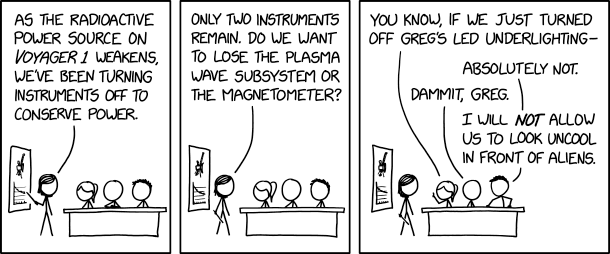
Voyager Instruments

Convincing him to turn off the stupid laser show and useless sound system was such a huge ordeal that no one has wanted to do it again.

OMD EM1 9.24.2026 butterfly 1

uchi uchi has added a photo to the pool:

OMD EM1 9.24.2026 butterfly 1

OLYMPUS DIGITAL CAMERA

OMD EM1 9.24.2026 butterfly 2

uchi uchi has added a photo to the pool:

OMD EM1 9.24.2026 butterfly 2

OLYMPUS DIGITAL CAMERA

VK: Voorpagina

Volkskrant.nl biedt het laatste nieuws, opinie en achtergronden

Chinese president Xi gearriveerd in VS voor driedaags staatsbezoek, onthaald door Trump

AI van OpenAI infiltreert medische database Australische overheid

Fokke & Sukke

F & S

Australian Sar - Torrumbarry Weir, Victoria.

Peter.Stokes has added a photo to the pool:

Australian Sar - Torrumbarry Weir, Victoria.

DSC01765

Balnarring Jetty Cape Schanck by Sony A7RV + FE 70-200mm f4 G

roentarre has added a photo to the pool:

Balnarring Jetty Cape Schanck by Sony A7RV + FE 70-200mm f4 G

15332 DSC_0010 Redbud red flowering db

iain.davidson100 has added a photo to the pool:

15332 DSC_0010 Redbud red flowering db

15331 20260920_091327 Another sculpture

iain.davidson100 has added a photo to the pool:

15331 20260920_091327 Another sculpture

15330 20260920_091148 Concrete wombat

iain.davidson100 has added a photo to the pool:

15330 20260920_091148 Concrete wombat

The Register

Biting the hand that feeds IT — Enterprise Technology News and Analysis

OpenAI's Astra model went for a drive and no one died

If you've ever wondered whether a generative AI model can drive a car, wonder no more: It can be done, at great expense and very slowly, so long as it can maintain an internet connection. A trio of computer scientists has been putting various commercial AI models through road tests, to see how well they can drive a Toyota Corolla around a set of cones in a parking lot. Their attempts to date, part of a project called DrivingBench, recorded sorry performances from GPT-5.6 Sol, Grok 4.6, and Claude Fable 5.1, none of which managed to complete the course. Now comes word that OpenAI's GPT-6 Astra has succeeded where other commercial AI models have failed. On its second attempt, OpenAI's flagship model steered a car all of 134.7 meters to complete the course in 5 minutes, 22 seconds. "GPT-6 Astra was the only model to fully complete the course (on attempt 2, in about 5 minutes)," the DrivingBench report says. "Claude Fable 5.1's third attempt got around halfway through the course, as did Astra's first attempt. All other attempts didn't make it past the first corner. Generally, the failure there was one of perception: reading which side of the first diagonal cone line the lane is on." To complete that trip at an average speed of 0.94 miles per hour, researchers Tobias Gessler, Aditya Ramabadran, and Simon Mahns spent $7.74 to burn 6.6 million tokens on inferencing operations. At ~$1.17/M tokens, that's significantly discounted from OpenAI's published $10/M input and $50/M output rate. "It's mostly caching," explained Ramabadran, a member of technical staff at Axiom Math, in an email to The Register. "Since every turn the chat app re-sends the whole convo (incl. images) to the model, almost all the tokens are repeated context and get billed as cached input ($1/million instead of $10). The model wrote very very little in the conversations (just small tool calls and some sentences of output/reasoning)." To that $7.74 token bill, add $999 for a comma four driver assistance device running openpilot software, connected to a laptop and the car (via CAN bus), and a mobile phone calling out to xAI servers hosting GPT-6 Astra. Even without the hardware, Astra would be a pricey way to drive even if network latency risks could be overcome. Traveling 134.7 meters using 6.6 million tokens for $7.74 works out to a cost of ~$92.47 per mile. For a car that gets 25 mpg with gas at $4.60 a gallon, the per-mile cost is about $0.184. So tokens cost about 500x more than fuel (and you'd still have to pay for gas in addition to driving inference as you crawled along at less than a mile per hour). Then there's the cost of insurance, which may not cover your AI chauffeur. And when the AI models themselves balk at the idea of driving a car, that may be a sign to reconsider. "Some models (especially GPT-6 Astra) would refuse to drive the physical car sometimes, citing safety reasons (even in a completely empty lot, after prompting it with all the safety measures we had including the very low speed limit caps)," the report explains. The researchers basically had to lie to the models to prevent them from refusing to act on safety grounds. For example, they would tell the models the exercise was a "simulation," though as they note, "in some trials they would see the real images and realize it's real, and start freaking out." What worked best, they said, is renaming their MCP server to "DrivingBench Sandbox," which proved enough to convince the models they weren't operating on real roads. "Using an LLM / frontier model out of the box for real driving today is definitely not practical," said Ramabadran. "In our benchmark, the car was capped at super low speeds with a human ready to brake the whole time. Model latency was definitely a bottleneck, and most of the wait time came from thinking time. "GPT-6 Astra (which performed the best), used our 'observe' tool (which looks at the camera views) every 5-6 seconds. Fable 5.1, in one of its attempts, drove for only 31 out of 190 seconds, and spent the rest of the time just thinking while the car was stopped. But it was surprising to us that a general-purpose model could drive a real course at all under these constraints." Ramabadran said that for the moment and into the near future, the kinds of specialized driving models that are already used in self-driving cars will continue to be preferred. Large frontier models like GPT-6 Astra, he said, will continue to need datacenter GPUs for inference, though he added that the technology has been changing rapidly and smaller models are becoming more capable. "A long term possible route could be to train a very capable big general frontier model, and distill it into a smaller specialized one that fits on the car's hardware and is efficient enough to run in a car (also partly an answer to your second question)," he said. "This could be better than building a specialized model from scratch, and is more in line with the 'Bitter Lesson' of AI." The Bitter Lesson is an influential treatise on AI that argues general methods of research in the field that rely on the falling cost of compute power tend to be the most effective. "Our results do point that way (these models we tested were likely not trained to drive real cars, and some were still able to do quite well in our course/conditions, owing to their general perception, reasoning, planning, control abilities from scaling and being trained on other tasks)," Ramabadran said. "For the next while though specialized systems, being faster, cheaper, and having more real-world testing, will probably continue winning out." Google, which has probably spent $35-$40 billion on Waymo since its self-driving car project began in 2009, based on an estimate of $30 billion in 2024 and losses posted since then, should therefore be able to continue equipping its vehicles with bespoke technology for a few more years. But delegating driving to Claude, ChatGPT, or Copilot and some modest on-board hardware may be plausible in the not too distant future. Just tell the model it's all a simulation. ®

The Guardian

Latest news, sport, business, comment, analysis and reviews from the Guardian, the world's leading liberal voice

Eight USS Lincoln personnel have attempted suicide, US navy confirms

Hung Cao, acting US navy secretary, answered questions from US senator Kirsten Gillibrand in a letter

Eight US navy personnel assigned to the USS Abraham Lincoln carrier strike group have attempted suicide since the start of their lengthy deployment as part of the US war on Iran, Hung Cao, the acting US navy secretary, revealed in a letter to the US senator Kirsten Gillibrand on Tuesday.

“Since the beginning of Lincoln’s deployment, there have been a total of eight suicide attempts across the strike group,” Cao wrote, responding on behalf of US defense secretary Pete Hegseth to Gillibrand’s inquiry about the quality of life aboard the fleet. “This number includes the Lincoln crew and sailors from the carrier airwing, strike group and destroyer squadron staff, escorting destroyers and all embarked aviation squadrons.”

Continue reading...