The Guardian

Latest news, sport, business, comment, analysis and reviews from the Guardian, the world's leading liberal voice

Susan Sarandon and Hannah Einbinder arrested at anti-Netanyahu protest in New York

Actors detained at Jewish Voice for Peace demonstration against Israeli prime minister’s address to the UN general assembly

Oscar-winning actor Susan Sarandon and Hacks star Hannah Einbinder were among people detained by police in New York on Thursday as they moved in to break up a protest against Benjamin Netanyahu.

Agence France-Presse footage shows NYPD officers cuffing Thelma & Louise star Sarandon at the demo in the city as the Israeli prime minister was readying to address the United Nations general assembly.

Continue reading...

Theranos founder Elizabeth Holmes reportedly to be transferred to halfway home next year

Holmes was sentenced to 11 years in prison in 2022 but has seen her sentenced reduced several times

Elizabeth Holmes, the disgraced founder of blood testing startup Theranos, will reportedly be transferred from a minimum security prison to a halfway home next August.

In 2022, Holmes, 42, was sentenced to more than 11 years in prison for defrauding Theranos investors out of hundreds of millions of dollars and ordered to pay restitution. The company falsely promoted its technology as being capable of detecting diseases, including types of cancer, from drops of finger-pricked blood.

Continue reading...

Israel’s Saied Abu Farchi sent off for gun gesture celebration in defeat by Austria

  • Forward uses corner flag to simulate gun after equaliser

  • Nations League match ends in 3-1 loss for Israel

Israel’s forward Saied Abu Farchi was ⁠sent off for celebrating his goal against Austria in ⁠his side’s 3-1 ​Nations League defeat on Thursday by using the corner ⁠flag to simulate a gun.

Abu Farchi headed home in the 55th ⁠minute to bring Israel level after ​Austria had ‌taken the lead ‌through a Romano Schmid penalty before ‌half-time at the Raiffeisen Arena in Linz.

Continue reading...

Trump officials ask supreme court to allow third-country deportations

Attorney general Todd Blanche requests that justices overturn lower court ruling that halted such removals

The Trump administration has asked the US supreme court to allow it to deport immigrants to countries other than their own, the latest effort to seek approval for a controversial policy that fulfils Donald Trump’s mass deportation agenda.

Todd Blanche, the US attorney general, said on Thursday morning that the Department of Justice would ask the conservative-majority supreme court for help, nearly a week after a lower court judge rejected the policy.

Continue reading...

Rotterdam - FediMeteo (@rotterdam@nl.fedimeteo.com)

Weer voor de stad Rotterdam Deze bot wordt beheerd door het FediMeteo-project. Voor informatie en contact kunt u de pagina https://fedimeteo.com raadplegen.

Weer voor Rotterdam ☁️ - 25-09-2026 01:15 CEST...

Weer voor Rotterdam ☁️ - 25-09-2026 01:15 CEST

In één oogopslag:
• 14.7°C · Gedeeltelijk bewolkt ☁️ | Min 14.9°C / Max 19.3°C

Verwachting voor vandaag:
• Min 14.9°C, Max 19.3°C (Bewolkt) ☁️, 🧭 1020.3 hPa ↘️ -3.1 hPa/24h, Windsnelheid: 11.9 km/u (3.3 m/s), richting: ↓ 344°

Uurlijkse voorspelling voor de komende 12 uur:

• 02:00: 14.4°C (Helder) 🌕, 🧭 1023.4 hPa ➡️ 0.0 hPa/1h, Windsnelheid: 9.4 km/u (2.6 m/s), richting: ↖ 130°
• 03:00: 14.2°C (Bewolkt) ☁️, 🧭 1023.2 hPa ➡️ 0.0 hPa/1h, Windsnelheid: 11.5 km/u (3.2 m/s), richting: ↖ 141°
• 04:00: 14.0°C (Bewolkt) ☁️, 🧭 1022.6 hPa ↘️ -0.6 hPa/1h, Windsnelheid: 12.2 km/u (3.4 m/s), richting: ↖ 154°
• 05:00: 13.5°C (Bewolkt) ☁️, 🧭 1022.2 hPa ➡️ 0.0 hPa/1h, Windsnelheid: 11.5 km/u (3.2 m/s), richting: ↑ 162°
• 06:00: 13.1°C (Bewolkt) ☁️, 🧭 1021.9 hPa ➡️ 0.0 hPa/1h, Windsnelheid: 10.1 km/u (2.8 m/s), richting: ↑ 162°
• 07:00: 12.9°C (Bewolkt) ☁️, 🧭 1021.5 hPa ➡️ 0.0 hPa/1h, Windsnelheid: 10.1 km/u (2.8 m/s), richting: ↖ 151°
• 08:00: 13.0°C (Bewolkt) ☁️, 🧭 1021.5 hPa ➡️ 0.0 hPa/1h, Windsnelheid: 9.4 km/u (2.6 m/s), richting: ↖ 156°
• 09:00: 14.3°C (Bewolkt) ☁️, 🧭 1021.4 hPa ➡️ 0.0 hPa/1h, Windsnelheid: 9.0 km/u (2.5 m/s), richting: ↑ 170°
• 10:00: 15.6°C (Zonnig) ☀️, 🧭 1021.4 hPa ➡️ 0.0 hPa/1h, Windsnelheid: 8.6 km/u (2.4 m/s), richting: ↑ 180°
• 11:00: 17.4°C (Zonnig) ☀️, 🧭 1021.5 hPa ➡️ 0.0 hPa/1h, Windsnelheid: 8.3 km/u (2.3 m/s), richting: ↑ 191°
• 12:00: 19.0°C (Zonnig) ☀️, 🧭 1021.0 hPa ↘️ -0.5 hPa/1h, Windsnelheid: 9.0 km/u (2.5 m/s), richting: ↑ 181°
• 13:00: 20.5°C (Zonnig) ☀️, 🧭 1020.4 hPa ↘️ -0.6 hPa/1h, Windsnelheid: 10.8 km/u (3.0 m/s), richting: ↑ 177°

Voorspelling voor de komende dagen:

• zaterdag 26 september: Min 12.9°C, Max 23.0°C (Bewolkt) ☁️, 🧭 1020.0 hPa ➡️ 0.0 hPa/24h, Windsnelheid: 12.2 km/u (3.4 m/s), richting: ↑ 169°
• zondag 27 september: Min 15.9°C, Max 20.1°C (Bewolkt) ☁️, Kans op neerslag 5%, 🧭 1016.9 hPa ↘️ -3.1 hPa/24h, Windsnelheid: 14.8 km/u (4.1 m/s), richting: ↙ 28°
• maandag 28 september: Min 13.6°C, Max 20.6°C (Matige motregen) 🌦️, Neerslag 1.3 mm, Kans op neerslag 6%, 🧭 1017.3 hPa ➡️ 0.0 hPa/24h, Windsnelheid: 12.2 km/u (3.4 m/s), richting: ↖ 114°
• dinsdag 29 september: Min 15.4°C, Max 20.3°C (Matige motregen) 🌦️, Neerslag 3.0 mm, Kans op neerslag 28%, 🧭 1017.2 hPa ➡️ 0.0 hPa/24h, Windsnelheid: 13.3 km/u (3.7 m/s), richting: ↗ 233°
• woensdag 30 september: Min 14.0°C, Max 25.1°C (Matige buien) 🌧️, Neerslag 11.2 mm, Kans op neerslag 6%, 🧭 1016.2 hPa ↘️ -1.0 hPa/24h, Windsnelheid: 13.1 km/u (3.6 m/s), richting: ← 110°
• donderdag 01 oktober: Min 17.5°C, Max 22.8°C (Lichte motregen) 🌦️, Neerslag 0.5 mm, Kans op neerslag 11%, 🧭 1015.7 hPa ↘️ -0.5 hPa/24h, Windsnelheid: 11.9 km/u (3.3 m/s), richting: ↑ 162°

Details:
• 🌡️ Huidige temperatuur (om 01:15): 14.7°C (Gedeeltelijk bewolkt)
• 🤚 Gevoelstemperatuur: 12.5°C (-2.2°C)
• 💨 Windsnelheid: 8.3 km/u (2.3 m/s), richting: ↖ 131°
• 🌬️ Windstoten: 14.4 km/h (4.0 m/s)
• 💧 Luchtvochtigheid: 66%
• 🧭 Luchtdruk: 1023.4 hPa ↘️ -0.8 hPa/3h
• 👁️ Zichtbaarheid: 50.0 km
• ☀️ UV-index: 0.0
• 🌅 Zonsopgang: 07:31 · 🌇 Zonsondergang: 19:36

Luchtkwaliteit:
• AQI: 25 🟢 (Goed)
• PM2.5: 8.2 μg/m³
• PM10: 14.8 μg/m³

Gegevens geleverd door Open-Meteo


VK: Voorpagina

Volkskrant.nl biedt het laatste nieuws, opinie en achtergronden

Premier Jetten in toespraak voor VN: ‘Ondermijning Internationaal Strafhof raakt ons allemaal’

Premier Jetten in speech voor VN: ‘Ondermijning Internationaal Strafhof raakt ons allemaal’

Found Photograph -- Las Veags, Nevada

Thomas Hawk posted a photo:

Found Photograph -- Las Veags, Nevada

Hubba Bubba

Thomas Hawk posted a photo:

Hubba Bubba

Our Hearts, Our Free

Thomas Hawk posted a photo:

Our Hearts, Our Free

Last Call

Thomas Hawk posted a photo:

Last Call

Found Slide -- George McNutt Collection

Thomas Hawk posted a photo:

Found Slide -- George McNutt Collection

date stamped on slide, June 1972

Living the Fucking Dream

Thomas Hawk posted a photo:

Living the Fucking Dream

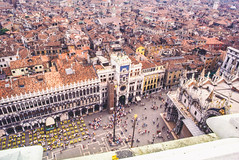
Found Kodachrome Slide -- Venice, Italy

Thomas Hawk posted a photo:

Found Kodachrome Slide -- Venice, Italy

date stamped on slide June 1985

SciFi Station

Greg Adams Photography posted a photo:

SciFi Station

Pannenhuis Metro Station, Brussels.

September, 2026

Wel.nl

Minder lezen, Meer weten.

Van Weel: Rekenkamer had gelijk, Kamer op verkeerde been

DEN HAAG (ANP) - "Het is klip en klaar dat u zich op het verkeerde been gezet heeft gevoeld," zei minister David van Weel (VVD, Justitie) tegen de Tweede Kamer in het laatste deel van het debat over de aangiftes die waren blijven liggen. "Daar had de Algemene Rekenkamer ook gewoon gelijk in." Eerder in het debat maakte de minister al excuses, maar zei hij dat hij de Kamer niet had misleid.

Van Weel moest zich verantwoorden in een debat nadat hij had gesteld dat aangiftes die waren blijven liggen, vooral meldingen betroffen. De Algemene Rekenkamer stelde dat de minister daarmee de Kamer op het verkeerde been had gezet. Dat waren "nuances", volgens de minister. Na die woorden bleven veel Kamerleden van de oppositie met twijfels achter.

Van Weel sprak Kamerleden van SGP en PRO persoonlijk aan: "Ik ben onvolledig geweest, in de woorden van meneer Van Dijk. Tegen mevrouw Mutluer zeg ik ook: dat is nooit mijn bedoeling geweest en had ook niet gemogen. Dat moet anders, dat kan anders. En dat wil ik u graag bewijzen."

Een PVV-motie van wantrouwen gericht aan Van Weel werd ruim verworpen. Alleen Forum voor Democratie stemde mee. SP en JA21 zeiden voorafgaand aan de stemming dat de laatste woorden van Van Weel belangrijk waren om uiteindelijk tegen te stemmen.

"Wij zaten echt op het randje van steun voor de motie van wantrouwen," stelde Ingrid Coenradie van JA21. De houding van Van Weel op het laatst had ze graag eerder in het debat gezien. "En ik verwacht dan ook dat we geen minister meer zien die achteraf dingen herstelt, maar een minister die de vlucht vooruit neemt en de relatie met de Algemene Rekenkamer écht herstelt."

JA21 is belangrijk als mogelijke samenwerkingspartner voor het minderheidskabinet om regeringsplannen aan een meerderheid in de Tweede Kamer te helpen.


kottke.org

Jason Kottke's weblog, home of fine hypertext products

What If We Just Stopped? “We’re in the Looney Tunes stage...

What If We Just Stopped? “We’re in the Looney Tunes stage of the end of social, where we’ve glided well past the edge of the cliff and it’s slowing dawning on us that the only way left is down. Fast.”

The Grotto 25-08-2026 Great Ocean Road Victoria Australia

Annette_747 has added a photo to the pool:

The Grotto 25-08-2026 Great Ocean Road Victoria Australia

King Protea Close-up

rajbhoy has added a photo to the pool:

King Protea Close-up

King Protea, Protea cynaroides. At the Blue Mountains Botanic Garden in Mount Tomah, NSW Australia.

The Register

Biting the hand that feeds IT — Enterprise Technology News and Analysis

Google's TPUs to catch some rays in orbit next week

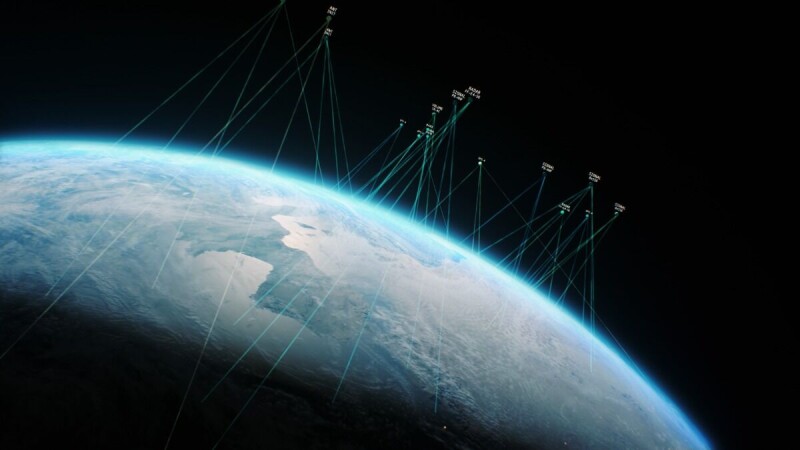
Google will loft its tensor processing units (TPUs) into orbit aboard a SpaceX rocket next week, in the latest phase of its previously announced Project Suncatcher space datacenter initiative. The launch is part of a test mission to better understand how its homegrown compute platform will handle both the rigors of launch and the harsh environment of space. Long term, the Chocolate Factory believes that space-based datacenter clusters powered by a limitless supply of solar energy from our sun could hold the answer to more sustainable AI. Not everyone is convinced. Earlier this year, Gartner analyst Bill Ray described the idea as “peak insanity.” He argued that space-based datacenters won't be viable for decades and in the end won't serve terrestrial needs. But that hasn't stopped the likes of Nvidia and Google from trying. Google has been particularly pragmatic relative to others like SpaceXAI, which like any other Musk-run outfit can't help but set ambitious targets like 250-kilowatt satellites. Rather than grand plans and satellite concepts backed by dubious launch economics, Google's Project Suncatcher is being treated for what it is: a moonshot. Like past moonshots, it may ultimately go nowhere. Remember Project Loon? Google is still in the early stages of development here. It hasn't announced a space-rated TPU and instead has subjected its existing Trillium accelerators, which we looked at back in 2024, to a series of tests here on Earth to understand whether it can be done. The challenges are numerous, as Suncatcher's project leaders explained in a recent blog post touting the proof-of-concept launch. The first challenge is surviving the trip into space. During launch, they explain that the chips will be subjected to as much as 50-100 gravities worth of amplified forces. If not accounted for, the systems could literally shake themselves to pieces. Since announcing Project Suncatcher last year, Google's moonshot team has conducted several tests, including one involving a vibration table, to simulate these forces, but it won't know for sure if its kit will survive until it's actually in orbit. As you probably already guessed, once in orbit, the challenges facing Google's systems are far from over. Beyond the atmosphere, the chips will be subject to solar activity and cosmic rays that could cause single-event upsets, such as bit flips, as well as cumulative damage from ionizing radiation. By bombarding its TPUs with energetic particles using UC Davis' Crocker Nuclear Laboratory's proton beam, Google is reasonably confident that its TPUs won't fizzle out shortly after reaching their target orbit, but once again lab tests can only tell you so much, and there is a lot more that can go wrong. In particular, there's the issue of cooling. Heat can't be carried away by convection in the vacuum of space, and so these satellites will ultimately have to rely on radiation to reject it. According to Google, it will need roughly 1.3 square meters of radiator area to dissipate the heat generated by a single TPU, and the search and advertising giant hopes to pack dozens of TPUs into each satellite. This translates to a rather large radiator area. Once again, Google arrived at this conclusion based on testing within a temperature controlled vacuum chamber. However, this is only part of the challenge. There's also the issue of getting the heat from the TPU to the radiators in the first place. Here Google is exploring existing technologies like heat pipes and pumped coolants. With its first launch, Google aims to see what works, what doesn't, and to identify points of failure that can be addressed in future missions. The test sat is scheduled to launch aboard the Transporter-18 rideshare mission aboard a SpaceX Falcon 9 rocket on October 1. However, Google's challenges extend far beyond the chips themselves. Even if Google can figure out how to build space-rated TPUs without breaking the bank, the available launch systems put a practical limit on how big they can be built. Because of this, space-based AI training and inference will have to be spread across multiple satellites, necessitating high-speed interconnects. At the distances required, this means laser-based communication, which Google argues is well understood, but hasn't been adapted for the requirements of orbital AI just yet. Most existing inter-satellite communications have relatively low bandwidth over a wide area. Its clusters will need the exact opposite: extremely high bandwidth over relatively small distances. But even if Google can prove that orbital datacenter clusters can be made to work, there's no guarantee it'll be economical. Speaking with El Reg earlier this year, space datacenter startup Orbital admitted the entire venture depends on rockets from SpaceX and others driving the cost to orbit from around $7,000 per kilogram today to just $10 per kilogram, a target that many have expressed skepticism SpaceX will actually be able to deliver. Speaking of SpaceX, the rocket company's AI wing SpaceXAI aims to put its first space-based test systems into orbit by the end of next year. If all goes to plan, the simplified system will be the first of what could eventually become a constellation of up to one million satellites. But as is often the case with Elon Musk's claims, and Google's moonshots for that matter, their dreams don't always become reality and even when they do, it doesn't always happen as quickly as they'd hope. ®