UTRECHT (ANP) - Schaatsbond KNSB heeft voorafgaand aan het na-olympische seizoen twee wijzigingen aangekondigd in de selectieprocedure van Nederlandse schaatsers voor internationale toernooien. Dat maakte de bond dinsdag bekend. Individuele schaatsers kunnen zich via de World Cups al plaatsen voor het WK afstanden. Ook verandert de selectie van de ploegenachtervolging bij de mannen.
Aan de plaatsing voor het WK afstanden zijn drie voorwaarden verbonden. De schaatser moet na vier World Cups in de top-3 van het internationale klassement staan, minimaal één World Cup hebben gewonnen én de hoogst geklasseerde Nederlander zijn. Dat kan voor de beste Nederlandse schaatsers betekenen dat zij het NK afstanden in januari, het kwalificatietoernooi voor het WK, kunnen overslaan.
Bij de ploegenachtervolging wordt de selectie van de mannen voor de eerste twee World Cups bepaald op basis van het World Cup Kwalificatietoernooi (WCKT), in plaats van aanwijzing door bondscoach Rintje Ritsma. De winnaar van het WCKT gaat automatisch het World Cup-circuit in.
LOS ANGELES (ANP/BLOOMBERG) - Paramount Skydance heeft de overname van Warner Bros. Discovery ter waarde van 110 miljard dollar afgerond. Daarmee is een van de grootste mediafusies aller tijden een feit, na een slepende biedingenstrijd met Netflix en het afweren van allerlei rechtszaken.
Het nieuwe bedrijf, dat Skydance gaat heten, brengt twee van de vijf grootste Hollywoodstudio's samen, met bekende filmreeksen als Harry Potter en Mission: Impossible. Onder het bedrijf vallen ook tientallen Amerikaanse tv-zenders en twee grote streamingdiensten: Paramount+ en HBO Max.
"Vandaag is een historische dag, niet alleen voor Skydance, maar voor onze hele sector", zei topman David Ellison, zoon van de bekende techmiljardair Larry Ellison, dinsdag in een verklaring.
In bepaalde opzichten is dit pas het begin. Skydance staat nu voor een ingewikkelde integratie van de twee mediabedrijven. Daarbij moet het een schuldenlast van tientallen miljarden dollars zien weg te werken. In Hollywood wordt gevreesd voor een grote banenreductie.
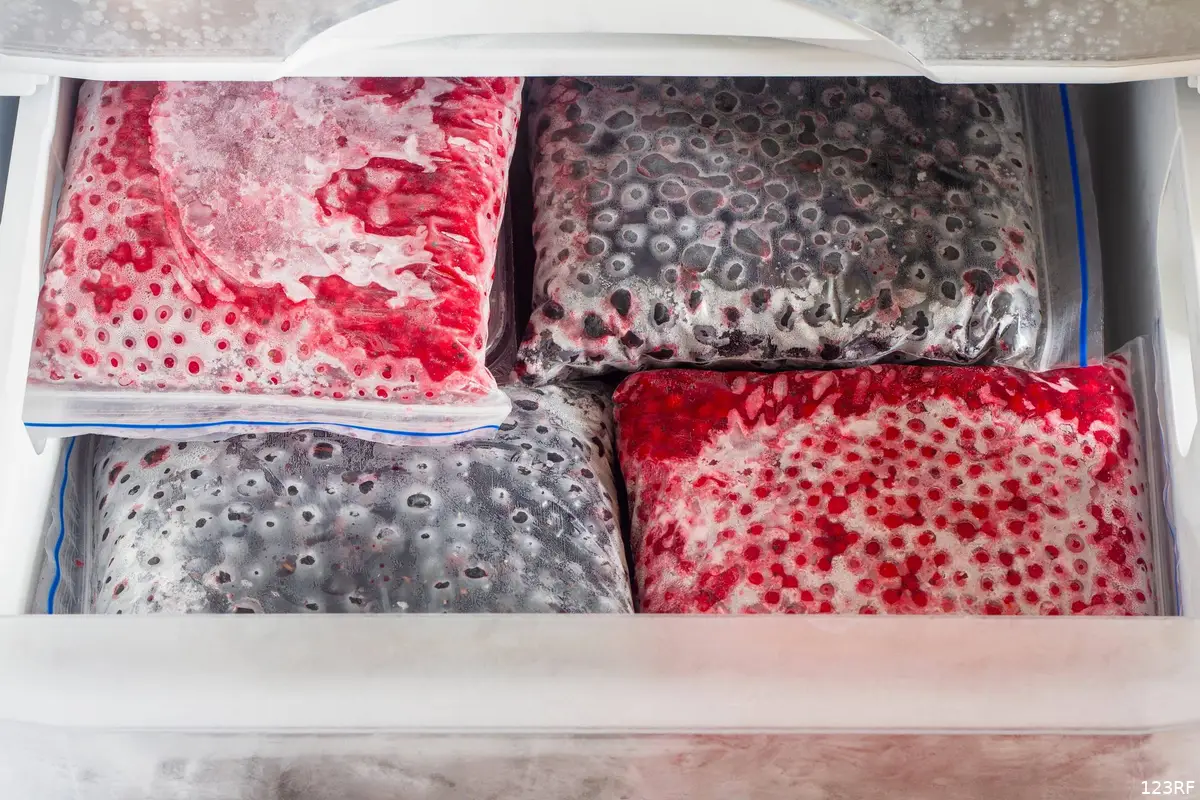
Aangevroren ijs kost ruimte en stroom. Met aluminiumfolie en een pan kokend water ben je er razendsnel vanaf, zonder dat je urenlang hoeft te wachten tot alles is ontdooid. Waarna je de vriezer weer kunt gebruiken voor de belangrijke zaken des levens: pizza’s, bitterballen, brood, pangasiusfilets en wodka.
Na verloop van tijd zet zich langs de wanden van het vriesgedeelte steeds meer ijs af. Dat maakt het apparaat minder efficiënt, het verbruikt meer stroom en er blijft minder ruimte over voor nieuwe producten.
Hoe vaak moet je ontdooien?
Fabrikanten adviseren om minstens twee keer per jaar te ontdooien. Afhankelijk van hoeveel ijs er aanvriest, kan het vaker nodig zijn. Een goede vuistregel: ontdooi zodra de ijslaag dikker is dan een halve centimeter. En dat gaat vaak sneller dan je denkt.
De bekendste methode is de vriezer leeghalen en de stekker eruit trekken tot alles gesmolten is. Dat is niet erg handig, want het kan lang duren. Het trucje met aluminiumfolie is eenvoudiger en sneller.
Zo werkt het
1. Bedek het ijs. Leg aluminiumfolie langs de wanden van de vriezer en zorg dat al het ijs bedekt is.
2. Kook water. Verwarm water in een pan. De pan moet groot genoeg zijn, maar ook in de vriezer passen met de deur dicht.
3. Zet de pan in de vriezer. Plaats de pan met kokend water in de vriezer en sluit de deur.
4. Wacht een paar minuten. Open de vriezer en haal het ijs met een spatel weg. Dat kost nauwelijks moeite.
5. Pak hardnekkige plekken aan. Zit het ijs nog vast? Dompel een doek in warm water en wrijf ermee over de aluminiumfolie.
6. Maak schoon. Is alle ijs weg? Reinig de vriezer dan met witte azijn.
Waarom werkt aluminiumfolie?
Aluminiumfolie geleidt warmte goed. Daardoor verspreidt de warmte van de pan zich snel over de hele vriezer en smelt het ijs sneller.
Met deze methode bespaar je niet alleen tijd en moeite. Een goed onderhouden en regelmatig ontdooide vriezer verbruikt minder energie. Dat scheelt op de lange termijn op je energierekening.
SANAA (ANP/AFP) - De strijd in Jemen heeft in 24 uur tijd meer dan 270 levens gekost. Bronnen zeggen tegen persbureau AFP dat 115 militairen uit het regeringskamp sneuvelden. Aan de zijde van de Houthi's vielen 160 doden.
In Jemen laaide de strijd deze maand op toen de internationaal erkende regering de aanval opende op de Houthi's. Die zwaarbewapende beweging heeft grote delen van het land in handen, waaronder hoofdstad Sanaa.
Er zou momenteel vooral zwaar worden gevochten in het zuidwesten van het land. Daar grenst Jemen aan de zeestraat Bab al-Mandeb, die belangrijk is voor de wereldeconomie.
Luchtaanvallen
Bronnen bij de Houthi's stellen dat vooral veel strijders omkwamen door luchtaanvallen van Saudi-Arabië, dat de regering steunt. De Houthi's nemen zelf regeringstroepen onder vuur met drones en raketten.
De strijd woedt niet alleen in Jemen. De Houthi's zeggen ook doelen te bestoken in buurland Saudi-Arabië. Daar zou maandag onder meer het vliegveld bij Riyad zijn aangevallen.
UTRECHT (ANP) - De acceptatie van homoseksuele en lesbische personen is de afgelopen twee jaar niet toegenomen, terwijl die van transgender, non-binaire en intersekse personen licht is gedaald. Dat staat in de lhbtiqa+-monitor van Movisie. Dat kenniscentrum doet samen met Ipsos I&O en adviesbureau Panteia elke twee jaar onderzoek naar de leefsituatie van lhbtiqa+-personen en de opvattingen over hen in Nederland.
Nederlanders staan het meest positief tegenover homoseksuele en lesbische personen. Ruim 80 procent van de 3000 ondervraagden zegt hen te accepteren. Desondanks geeft een grotere groep aan het aanstootgevend te vinden als twee mannen in het openbaar zoenen. In 2024 had een vijfde van de respondenten hier moeite mee; dat is nu ruim een kwart.
"Lange tijd werden de opvattingen over homoseksualiteit steeds positiever. Hoewel een grote meerderheid homoseksualiteit accepteert, zien we nu voor het eerst dat deze stijgende lijn niet verder doorzet", zegt Karijn van den Berg, senior-onderzoeker bij Movisie. De tweejaarlijkse monitor wordt gedaan onder meerdere leeftijdsgroepen. Uit onderzoek van het Trimbos-instituut en Universiteit Utrecht blijkt echter dat de acceptatie van homoseksualiteit onder jongeren hard is gedaald. In de periode 2021-2025 halveerde dat bijna van 40 naar 22 procent.
Mentale gezondheidsklachten
De houding tegenover transgender personen is met 3 procent gedaald. Iets minder dan twee derde van de respondenten geeft aan een positieve houding te hebben tegenover transpersonen. Het aantal Nederlanders dat transvrouwen niet als 'echte vrouwen' ziet, steeg ten opzichte van twee jaar geleden. Ruim een derde erkent transvrouwen niet als vrouw.
Ook de acceptatie van non-binaire en intersekse personen daalde. Van 54 naar 52 procent en van 68 naar 66 procent, respectievelijk. Daarnaast komt naar voren dat mensen over het algemeen een beperkte kennis hebben over intersekse en aseksuele personen.
De onderzoekers keken ook naar het welzijn van queer personen. Daaruit blijkt dat lhbtiqa+-personen onder meer vaker suïcidale gedachten hebben dan heteroseksuele personen en personen die zich identificeren met hun geboortegeslacht. Ook zouden queer personen vaker last hebben van andere mentale gezondheidsklachten, met uitzondering van homoseksuele en lesbische mensen. Hun mentale gezondheid is vergelijkbaar met heteroseksuelen. De resultaten over het welzijn van transgender en intersekse personen zijn volgens de onderzoekers slechts indicatief, omdat deze groepen weinig respondenten telden.
U aanschouwt hier de door Saoedi-Arabië gesteunde SouthernGiants Brigades (wiki) op een voorrangsweg met Houthi-voetgangers tijdens de herovering van havenstad Mokha aan de Jemenitische westkust. Goed nieuws voor de soennitische zionisten (Saudi's), Israël en de VS, slecht nieuws voor Iran en PRO Amsterdam. En dan is de islamitische NAVO - het Mecca Defense Pact tussen de Saudi's, Turken en Pakistanen - vandaag ook nog eens formeel geactiveerd. Wat er ongeveer op neer lijkt te komen dat Turkije en Pakistan "take the necessary measures to provide the agreed military forces and capabilities and ensure their rapid deployment in the Kingdom." Het is onduidelijk of dit neer zal komen op directe Turkse en Pakistaanse aanvallen op de Houthi's, we verwachten eerder dat de landen bij gaan dragen aan de Saudische luchtverdediging.
Multiple Democrat, Republican, and Independent lawmakers have introduced new pieces of legislation that, if passed, would dramatically curb federal agencies’ access to Flock cameras, with the lawmakers referencing reporting by 404 Media in their explanations for why the legislation is needed.
On Friday Senator Bernie Sanders (I-Vt.), Representative Alexandria Ocasio-Cortez (D-N.Y.), and Senator Jeff Merkley (D-Ore.) announced the Ban Flock Act, which would prohibit federal agencies from using automatic license plate readers (ALPRs) and block federal funding from state and local governments that use the cameras. It would also let Americans sue the federal government for violation of their rights through ALPRs.
“At a time of growing concern about the unchecked power of artificial intelligence, Flock is eviscerating the very notion of privacy by installing tens of thousands of cameras in communities across America without their consent,” Sanders said in the announcement posted to his website. “Going to the doctor? Flock knows. Dropping your kid off at school? Flock is tracking you. Flock is always watching. We cannot allow America to become a surveillance state where a handful of AI oligarchs profit by giving the government the power to track our every movement.”
💡
Do you know anything else about Flock? I would love to hear from you. Using a non-work device, you can message me securely on Signal at joseph.404 or send me an email at joseph@404media.co.
Ocasio-Cortez said, “AI-powered cameras are keeping track of our every move and weaponizing this data against working people to make record profits. The widespread integration of this technology into American society is unconscionable.” Merkley added, “No one should have this unchecked surveillance power at their fingertips, which is why I’m teaming up with Senator Sanders to rein in this dangerous technology.”
Sanders’ announcement says that one reason for the legislation is Flock has shared state information with federal immigration officials. In May 2025, 404 Media revealed local cops were doing lookups in Flock for Immigration and Customs Enforcement (ICE). After that report, Flock made dramatic changes to its product, including stopping other agencies searching cameras in Illinois, California, and Virginia. Flock said it also introduced a new tool that blocks impermissible searches in real time.
The announcement also said law enforcement have used Flock data to investigate protests against ICE raids and ‘No Kings’ demonstrations. 404 Media revealed both of these, reporting that California cops investigated an “immigration protest” using Flock lookups, and, using data from the Electronic Frontier Foundation, that cops used Flock to monitor No Kings protests around the country. 404 Media also recently reported Flock itself taught cops how to surveil No Kings protesters in a company webinar.
Hajar Hammado, senior policy advisor at activist and progressive policy group Demand Progress, said in a press release “The Ban Flock Act is the gold standard for any legislation working to fight invasive Flock cameras on the federal level. Flock and other ALPR companies have wormed their way into communities across the nation and drastic, all-encompassing action is needed to root them out.”
Senator Josh Hawley (R-Mo.) announced his own piece of proposed legislation late last month. The Stop Flock Abuse Act would require a written approval process for each search; force agencies to delete driver data after ten days, with exceptions for active investigations; and ban ALPR networks from incorporating facial recognition technology. During a recent senate hearing, Hawley pointed to 404 Media’s reporting specifically.
Separately, Representatives Greg Casar and Shontel Brown recently wrote to FBI Director Kash Patel asking how the agency plans to acquire nationwide access to ALPR data, Semafor reported. 404 Media first revealed this plan in May. The letter also referenced 404 Media’s reporting which revealed a cop in Texas used Flock to search ALPRs nationwide for a woman who self-administered an abortion.
Community support for the admins who keep groups thriving.
A note from the team
Welcome to the first issue of Admin Field Notes, built for you, the people who make Flickr groups feel like home. Whether you started your group last month or have been running it for a decade (or two) we are grateful for everything you do to keep the Flickr community engaged and connected. For our very first edition of Admin Field Notes, we’re focused on getting your groups set up and making good first impressions. A warm welcome takes thirty seconds and it’s the single biggest lever you have for turning a new member into a regular. Let’s get started.
— The Flickr Community team
Section 01 · Admin Toolkit
First up, some of the basics about choosing group settings that are a good match for your group.
This issue’s topic
Setting Up Your Flickr Group
Starting a Flickr group takes just a few clicks, but building one that’s still thriving a year from now starts with some key decisions made before your first member arrives. In this article, we walk through a few of them, including: who can find your group, what to expect from members, and how to introduce your group to someone scrolling past, so you can head off moderation headaches before they start.
1
Be intentional when choosing your privacy setting.
Public groups are great for growth and discoverability, Invite-Only offers a happy middle ground, and Private keeps things tight-knit for clubs and close collaborators. Choose your setting carefully, since switching from public to private can’t be undone.
2
Keep your rules short and enforceable.
Two or three focused rules that lead with the spirit of your group will stick with members far better than a long list. Be specific about what’s off-topic, and let people know what happens when a discussion or photo doesn’t match with the groups purpose.
3
Make your description do double duty.
Your description is a first impression for potential members and a reference point for you when a post doesn’t belong. Name your niche down to the details, say who the group is for, and mention any weekly themes or monthly challenges so it reads like an invitation.
Frequently asked
Do I need to approve every photo before it’s added?
Not always, pre-approval in a queue slows momentum. Consider more of a light-touch moderation like some regular spot checking instead of a full approval queue, unless spam has been a real problem. You can always make adjustments to this as you go along. If spam or off topic content becomes an issue, adding an approval queue is a quick change.
How do I get people to post instead of just lurk?
Lower the bar for the first post. A themed prompt like, share your first photo taken this year, is easier to act on than an open, less specific, invitation. Also, when you notice new members are posting, give them a fave or comment to help welcome their content to your group.
What should actually be in my group rules?
Keep it to a few short rules focused on what you want, not just what’s banned. Visit the Flickr blog to find more details on rules that work.
Welcome to Flickr Group Admin HQ, a space we’ve created just for Flickr Group Admins. This group exists for you, the admins who keep Flickr Groups running. You set the tone, keep discussions welcoming, manage photo queues, handle the challenging edge cases, and show up consistently. That work is a central part of what makes Flickr’s communities feel like communities, and it deserves a support system of its own. In this group, you can trade notes, ask questions, share what’s working (and what isn’t), and connect with people who understand the job of an admin because they’re doing it too. To kick things off, stop by the group and introduce yourself.
Give this a try · Win a year of Flickr Pro
Post a pinned welcome message in your group, then reply to one new member’s post from the last two weeks with a personal comment.
Deadline: November 6th.
Proof: Reply to this issue’s discussion thread with a link to your welcome/introduction thread. It might help shed some light for other admins on what’s working well for you.
Draw: One winner drawn at random will be announced in the Admin HQ Group.
Highlights from the latest installment of The Admin Resource Hub, our blog series for group admins.
Admin Resource Hub · Part 2
Building Your Team
Running a group solo works fine, right until it doesn’t. That’s why we’re talking about the importance of building your dream team of mods and co-admins to keep your group’s momentum going.
Knowing when it’s time
A photo queue that’s piling up, discussion questions going unanswered, or a wave of new members you no longer recognize are all signs it’s time for some help. Ask early, while things are still manageable, so there’s room to show your new moderators or admins how you’d like the group to run.
What to look for in a moderator
Your best mods are often your most consistent members: people who already know the group’s rhythm, leave kind and constructive feedback, extra perk is if they are around during hours you’re not. Many won’t volunteer, so don’t be shy about asking.
Ready to make it official?
Head to the Administration tab in your group, click Manage your members, and select Promote next to their name. Choose Admin or Moderator, then save your changes.
Every issue we’ll ask one question and feature some of our favorites answers in the next one. Since this is Issue 01, there’s nothing to look back on yet, so let’s start the loop. Drop your answer in the Flickr Admin HQ group and we’ll feature our favorites in Issue 02.
This issue’s question
What’s the first thing you do to make a new member feel welcome?
Reply in the Flickr Admin HQ thread. We’ll feature the best answers in Issue 02.
Rolien Sasse, directeur van vredesorganisatie PAX, weet dat haar boodschap niet populair is: je moet ook met partijen praten die je wantrouwt. Alléén over bewapening praten in oorlogssituaties vindt ze roekeloos.
The Saint Omer director has gathered work by artists, writers, composers and poets for Geste de Consolation, set in the 60m-long central hall of the Palais d’Iena in Paris
Alice Diop has just returned to France from California when we speak. It’s a Zoom meeting with a bad connection, and Diop leans close to the camera, always in frame, barely moving. It’s like watching the characters in her documentaries and films, where her camera lingers on its subject with a slow, cool intensity.
Diop had been attending a two-week celebration of her work organised by the French department at University of California, Berkeley, in which academics pored over her documentaries (Nous (We), Vers La Tendresse (Towards Tenderness)) and her first feature film, Saint Omer, which received the Silver Lion in Venice in 2022. The courtroom drama was inspired by a real trial that Diop attended, of a Senegalese woman who had allowed her baby to drown in the sea. Over two hours, it explored the complexities of race, culture and motherhood in contemporary France. The film was the first by a black female director to be entered by France as its official entry in the 2023 Academy Awards.
The term Afrobeats is applied to all sorts of genres, flattening them into one. Artists, media and the music industry must do better at showing off the richness of African pop
In 2024, South African pop star Tyla won the best Afrobeats award at the MTV VMAs. Beaming in a yellow dress, she began her acceptance speech in a celebratory tone. “This is such a big moment for African music. The global impact of Water,” – her hit single – “proves that African music can be pop music.” But as the audience’s cheers swelled, she became more sombre, describing the moment as bittersweet. “There’s a tendency to group all African music as Afrobeats,” she continued. “Even though Afrobeats has opened so many doors for us, African music is so diverse. I come from South Africa, I represent amapiano”, referring to the country’s rolling, sensual dance subgenre. Her passionate entreaty notwithstanding, months later she’d reprise her win in the Afrobeats category of the American Music Awards.
Tyla is hardly the only African artist to rail against the Afrobeats tag. Tems has spurned the term, describing her music as a cocktail of “Afro, R&B, soul and alternative elements”. Likewise, Burna Boy prefers to call his music Afrofusion, a fitting characterisation of the smorgasbord of sounds that converge in his music. Wizkid, Ckay, King Promise and Davido have also chafed at the term Afrobeats, yet it persists and holds back African music.
Industry leaders say bogus claims rose 14% last year, pushing up premiums for all customers
An insurance fraudster who pocketed more than £14,000 for the supposed theft of Lego sets, fishing gear and gaming consoles was behind one of last year’s most high-profile bogus claims.
Investigators uncovered £1.34bn of fraud in 2025, a 14% increase on the year before, according to the Association of British Insurers (ABI).
Webb's unique view of the stellar nursery known as NGC 7129 reveals numerous stars formerly hidden in this cosmic cauldron.
Stars begin their life in cold, dense regions of dust and gas, hiding from view of most telescopes. Webb’s high degree of infrared sensitivity allows astronomers to peer through dust to study these baby stars.
In this image, we can see stars in various stages of development. The most mature and massive (about 5-8x the mass of our Sun) is the region’s bright central star. In the cavity on the left, appearing in gold, is the largest demonstration of its impact. The outflows from an earlier stage in the star’s development carve into the dense molecular cloud of hydrogen, and combine with the star’s light, causing it to glow.
The region on the right, represented in red, hides much younger objects than those on the left: protostars. As the protostars accumulate matter and increase mass, they eject outflows of super heated material that interact with matter around the star, creating shocks that cause the textured appearance we see in this image. More protostar outflows are at upper left where a dark shadow is being cast by a protostar disk, visible against the surrounding nebula, depicted in blue.
Seeing these different structures help astronomers study the star lifecycle in various stages, leading to a more complete understanding of our universe.
Image credit: NASA, ESA, CSA, STScI, Processing: Alyssa Pagan.
Image description: A young star cluster filled with many stars that display Webb’s unique eight-pronged diffraction pattern. At its center is a yellow star which sports the largest diffraction pattern. To the left of the star, there is a region filled with yellow dust and gas that extends from the star to the left border of the image. This yellow region extends from the bottom, covering about two-thirds of the image. The yellow region has several blue stars of different sizes embedded within. The top third, which lies outside of the yellow region, holds a few bright protostars, within dense gray gas. Those stars illuminate the gas, making it appear blue. A few red outflows from other protostars are visible above this grayish-blue region. To the right of the central star, there is a clumpy, flame-like plume of red dust and gas with protostars that emit a soft white light within. The plume is surrounded by more dense gray gas and dust. There are several background galaxies strewn throughout the image.
Webb's unique view of the stellar nursery known as NGC 7129 reveals numerous stars formerly hidden in this cosmic cauldron.
Stars begin their life in cold, dense regions of dust and gas, hiding from view of most telescopes. Webb’s high degree of infrared sensitivity allows astronomers to peer through dust to study these baby stars.
In this image, we can see stars in various stages of development. The most mature and massive (about 5-8x the mass of our Sun) is the region’s bright central star. In the cavity on the left, appearing in gold, is the largest demonstration of its impact. The outflows from an earlier stage in the star’s development carve into the dense molecular cloud of hydrogen, and combine with the star’s light, causing it to glow.
The region on the right, represented in red, hides much younger objects than those on the left: protostars. As the protostars accumulate matter and increase mass, they eject outflows of super heated material that interact with matter around the star, creating shocks that cause the textured appearance we see in this image. More protostar outflows are at upper left where a dark shadow is being cast by a protostar disk, visible against the surrounding nebula, depicted in blue.
Seeing these different structures help astronomers study the star lifecycle in various stages, leading to a more complete understanding of our universe.
This image: NASA’s retired Spitzer Space Telescope observed the hot gas and dust within NGC 7129, managing to identify numerous protostars within the dense material. However, resolving certain details, like the impact of those protostars on their surroundings, proved to be difficult.
NASA’s James Webb Space Telescope adds to Spitzer’s observation, showing bow shocks, stars, and protostars within the golden cavity and the effects of protostar outflows in the dense red clouds. Webb’s sensitivity also picks up the faint infrared emissions of the cold, gray gas where protostars have yet to form and many distant background galaxies.
Image description: Two images appear side by side. The left is labeled “Spitzer” and the right “Webb.” The Spitzer image, which is fuzzier and less detailed, shows two regions separated by a bright central object, a star. To the left of the star, there is a region filled with red dust and gas that extends from the star to the left border of the image. The red region extends from the bottom, covering about two-thirds of the image. To the right of the star is a large, irregular green blob. The Webb image shows the same two regions at both sides of a central star, but at a higher resolution. The left region is filled with stars and yellow dust and gas that extends from the star to the left border of the image. This yellow region extends from the bottom, covering about two-thirds of the image. The top left of the image holds a few bright protostars, within dense gray gas. To the right of the central star, there is a clumpy plume of red dust and gas, which is surrounded by more dense gray gas and dust.
The spread of censored and mangled syntax is happening because people believe, or have experienced, that platforms will silence them for accurately describing the world in plain language. This shit is terrible, and it has to stop.






/s3/static.nrc.nl/hpe/bd9c93f-web-061026OPI_2037108664_sasse1.jpg)
:format(jpeg):fill(f8f8f8,true)/s3/static.nrc.nl/taxonomy/bf9b707-commentaar-itemafbeelding-2024.png)


