FOTO: Nederlander (nog niet gevallen)

Kunnen we dan helemaal niks meer? Zo moeilijk is het toch allemaal niet, gewoon een beetje BLIJVEN STAAN. En anders lopen of zitten, desnoods liggen. Nee hoor, moeten we niks van weten, gooien we meteen de kontjes tegen de krib (dat kunnen we wél). Vallen is wat we doen (SCHWALBE), en daarna ook nog eens massaal sterven (GEEN SCHWALBE), zo blijkt uit cijfers van het CBS. Vorig jaar gingen 7810 mensen deaud na een val-, glij- of struikelpartij, liefst 480 meer dan een jaar ervoor. We zijn dus ergens beter in geworden waar we helemaal niet beter in geworden moeten zijn. We zitten nu op 21 valdoden per dag. Mag gerust een vallende ziekte-plaag heten, waarmee de onwelwillende minderheid het hier verpest voor de meerderheid die wel gewoon normaal doet. Nou vallen vooral ouderen, en door de vergrijzing worden dat er nou net steeds meer, waardoor de vallers straks nog in de meerderheid zijn ook. Hoe denken die ouderen dat het mensen die niet vallen bevalt dat ze continu gespannen moet waken voor een instabieltje dat ineens met z'n bakkes door het met taartjes bezaaide glazen tafeltje kan klappen? En maar janken over eenzaamheid.
Head of counter-terrorism policing defends decision to bail five British men arrested in connection with incident
No explosive devices were found in three vans searched near RAF Fairford as part of a terrorism investigation but a quantity of petrol was recovered, police have said.
Five British nationals were arrested in the early hours of Sunday morning after a resident living near the Gloucestershire airbase reported suspicious activity involving three vans.
Continue reading...
Minister David van Weel (VVD) is zich „rot geschrokken” over het onderzoek van NRC waaruit bleek dat de app mSpy wordt gebruikt om (ex-)partners te stalken. Daarom wil hij met de Autoriteit Persoonsgegevens in gesprek over het verbieden van zulke surveillance-apps.

Over de begroting van het ministerie van Sociale Zaken en Werkgelegenheid wist het kabinet-Jetten een deal te sluiten, door alle bezuinigingen te schrappen – zonder duidelijke dekking. Voor andere pijnpunten – zoals box 3 – is een meerderheid nog niet zeker.

The public still doesn’t know who is abusing a critical Citrix vulnerability exploited as a zero-day weeks before disclosure, but we now know that the unknown digital intruders have used CVE-2026-88772 to break into government agencies, financial services firms, education organizations, and legal and professional services sectors across North America and Europe. And everyone agrees that the vendor took way too long to disclose the security holes. GreyNoise said it spotted an attempt to exploit CVE-2026-88771 against a Citrix NetScaler Gateway on September 24. Google researchers, meanwhile, said the CVE-2026-88772 campaign has been ongoing “since at least early September.” “Why Citrix took so long to disclose these vulnerabilities is a question only Citrix can answer,” Benjamin Harris, founder and CEO of exposure management firm watchTowr, told The Register. Citrix did not respond to our questions about this. “The vulnerabilities were discovered during incident response and forensic investigations at organizations already compromised, meaning both the exploitation and Citrix’s awareness of it predated public disclosure,” Harris said. “Citrix has a history of delaying the publication of vulnerabilities, even when they’re being exploited in the wild and affecting customers.” So if you use Citrix NetScaler ADC and NetScaler Gateway appliances, and haven’t already applied the security updates, do that ASAP. But first, check your systems for signs of compromise, warns Mandiant Consulting CTO Charles Carmakal. “Given the active exploitation, NetScaler customers should prioritize examining their systems for compromise *before* upgrading/patching,” Carmakal said on LinkedIn. “If you find evidence of web shells or other malicious files, please preserve evidence and investigate the scope of the compromise. Patching alone may not eradicate the threat actor from your environment.” No attribution - yet Citrix disclosed eight CVEs on Sunday with the worst of the bunch – CVE-2026-88771 and CVE-2026-88772 – earning critical 9.5 CVSS scores. “Exploitation of CVE-2026-88771 and CVE-2026-88772 on unmitigated NetScaler deployments has been observed,” the vendor said. CVE-2026-88771 can allow an unauthenticated attacker to execute arbitrary commands remotely. CVE-2026-88772 is a memory overflow vulnerability that can lead to remote code execution or denial of service when DTLS is enabled, as it is by default on VPN virtual servers. But by the time Citrix issued security advisories and warned customers about the vulnerabilities, they were already under attack. “No attribution has been made public, and we have yet to identify a clear trend among targets by industry or organization size,” Harris said. “Historically, NetScaler vulnerabilities have been exploited by both state-sponsored groups and ransomware operators.” WatchTowr on Tuesday published a technical writeup about CVE-2026-88772, plus a detection artifact generator for Citrix users to determine if they are vulnerable and to help with remediation. Also on Tuesday, Google’s threat intel businesses provided additional details about the exploitation campaign’s targets and the attacker’s custom malware. “We have observed evidence that organizations in North America and Europe in the government, financial services, education, legal and professional services sectors were likely impacted by this exploitation campaign, which has been ongoing since at least early September,” Google Threat Intelligence Group and Mandiant said in an advisory. Custom malware After analyzing the intruder’s post-exploit toolkit, the malware hunters found never-before-seen malware used to establish persistent root access and proxy traffic into internal corporate networks. The custom malware includes WHIPSHOT, a PHP web shell, and SLAPSHOT, a TCP tunneling tool written in Python. WHIPSHOT is disguised as a Debian package and hides Base64-encoded command-and-control payloads in native HTTP headers. It functions as an HTTP transport bridge for SLAPSHOT, which accepts commands from WHIPSHOT and forwards arbitrary TCP streams to internal hosts. Supported commands include: open, which establishes an outbound TCP socket to a target host and port. push, which writes data to an open session. pull, which polls and reads data from an open session socket. exch, which sends and receives command-and-control data to and from an open session socket. close, which terminates a specified network session. ping, which performs a basic health-check verification. “In at least one observed intrusion, the threat actor routed traffic through this proxy to manually conduct internal reconnaissance and credential theft,” the threat intel teams noted. Google did not immediately respond to The Register’s questions about the campaign, including how many exploitation attempts and successful intrusions its threat hunters observed. Its advisory notes that the Citrix campaign “underscores the continued targeting of edge devices to gain initial access to victim networks, a trend that GTIG has tracked across a range of threat actors.” Security and networking vulnerabilities accounted for about half of enterprise-related zero-days in 2025, according to Google’s count. Attackers love edge devices - application delivery controllers, VPN gateways, and firewalls - because they provide direct access from the open internet to corporate networks, allowing attackers to bypass endpoint detection tools and other security layers. NetScaler, in particular, is notoriously buggy. Attackers exploited another critical NetScaler vuln in March. A year earlier, Citrix disclosed multiple zero-days in the same product. ®

Sure, Jev is cheap and quick to respond to queries, but you know what would be even better? How about a local student model that learns from your Jev requests and runs familiar ones on your hardware instead? Jevstiller is an open source project that, as its name suggests, distills Jev’s outputs into a local model that can do some of Jev’s arguably fast work even more quickly and efficiently - no need to spend $42 per billion input tokens or wait around 300 ms for a response on requests it can handle locally, say Jevstiller’s creators. Answering locally means no Jev tokens get spent, however cheap they may be, and answers can come in as little as 15 ms directly from a device’s CPU. The model that Jevstiller constructs on a user’s machine is small and fast, and, if its developers’ claims are to be believed, helps the system achieve 98 percent overall agreement with Jev by handling familiar requests locally and forwarding others to Jev. Jev, as we’ve detailed in several stories recently, is a new paradigm of AI design that foregoes all the chattiness and free-form text generation that come with the typical modern LLM in favor of being able to answer just a few basic types of questions: Choice, Score, and Noul. Because it doesn’t generate a bunch of text and need to ruminate on the structure of human language, Jev is quick, cheap, and rapidly attracting developer interest as a practical application of AI for structured decision workloads where a full-blown generative LLM may be overkill. The Jevstiller team likens it to a cache that sits in front of Jev itself, scooping up requests and determining whether they need to be routed to the actual Jev servers when the local version isn’t confident it can answer a question. “A request is answered locally only if every question in it can be; otherwise the whole request goes to Jev with the caller’s own key, Jev’s response is returned unchanged, and each choice answer becomes a training row,” the Jevstiller team explains in a help document. Spinning up a new Jevstiller basically means you’re setting up a model that doesn’t know anything about Jev responses, so it needs to learn how Jev responds to queries by passing all of them to Jev and gathering both questions and answers. “Once there are enough samples per class, a background worker fits a student and a routing policy,” Jevstiller’s documentation explains. “Confident, familiar inputs are answered locally. Everything else goes to Jev.” Say you use Jev to filter incoming emails to a particular team, or to determine priority of a particular task, for example. Once Jevstiller sees enough examples of those queries and responses, it can confidently answer the same way Jev would. Maintaining agreement with Jev, as the Jevstiller team notes, is the key design problem they were seeking to address. They seem to think they’ve arrived at a solution in the form of regular auditing that constantly assesses Jevstiller’s responses against a random selection of queries. “A fixed 2 percent of all requests goes to Jev regardless of what the local model thinks, with the local model’s answer recorded alongside,” the developers say, noting that such a solution is the only way to get an unbiased view of Jevstiller’s routing since it automatically declines to answer difficult questions. Jevstiller continually retrains itself based on all Jev responses, and the target agreement rate can be configured at the local level. If the audit suggests at any time that Jevstiller’s agreement rate with Jev has fallen below the configured target, the audit rate goes up so Jevstiller’s retraining happens more quickly. If the worst happens and Jevstiller thinks its ability to agree with Jev has collapsed, "every request goes back to Jev and training restarts from that point." The team’s own experimentation demonstrated that the concept works, as they explained. “In the 24-hour soak, a stand-in Jev silently changed every answer at hour twelve,” Jevstiller’s devs said of an experimental run. “The local share fell from 90% to 9% within four minutes as the audits caught it, and was back at 90% within 49 minutes, trained on post-change answers only, with nobody touching anything.” Agreement with Jev doesn’t mean a response is correct, though, which the Jevstiller team admits. “Agreement is not accuracy,” they note. In other words, whether you go this route to even further reduce your AI bill or choose some other method, Jev is still just another AI model that can make mistakes, no matter how good it claims to be. Those who want to give Jevstiller a try can learn more about getting started here.®
I keep a list of things I want to do for KDO in Apple Notes, organized into four sections: small, medium, large, and longshots/obsolete. This note contains tweaks, bug fixes, code refactoring, new site features, roadmap items,1 infrastructure migrations, potential project ideas, vague prompts, and even things I don’t want to do but should maybe consider doing anyway at some point. I keep already-completed items on the list so progress can be gauged, noticed, and appreciated.
I was looking at the list today, and thought I’d share some of the items with you:
- Reposting social posts (in comment threads) for members
- Do a podcast
- Publish posts to Instagram. (How?)
- Implement site-wide search
- Make newsletter daily?
- Write a book based on kottke.org
- Sell Blue Line Air Express t-shirts
- Build a Substack competitor
- Make a gift link search engine
Some of these are partly finished or would take very little to implement if I wanted. Some will never happen. Weirdly, some of the projects and site tweaks I most want to make aren’t even on my list. They live only in my head and I mull them over in the shower or while walking until they’re “done” enough to start working on. I guess maybe ideas don’t go on the list unless they’re not that urgent or interesting.
Do you have to-do lists for your creative projects? Care to share an item or two with the group?
Insofar as KDO has a roadmap, which is somewhere between “not at all” and “a general direction into the murky haze of a possible future”. I play things by ear a lot. ↩
Tags: kottke.org · lists


I got a used Mac Mini to use as a sacrifice zone for testing things on recent OSes. Since at this point it seems like you will pry macOS 14.7 from my main machine's cold dead fingers.
Anyway I can't decide what to name it. I'm going with "sucker" so far. I thought about "patsy" but that just makes me think "and edina" which is not what I'm going for.
It sits next to "retro", the Intel i7 10.13.6 Mini that still exists solely so I can run Illustrator CS6. (VirtualBox emulation is too slow.)
LONDEN (ANP) - In het onderzoek naar het voorval van afgelopen weekend bij RAF-luchtmachtbasis Fairford zijn geen explosieven aangetroffen. Dat meldt de antiterreurbrigade van de Britse politie, die eraan toevoegt dat er ook panden in Londen zijn doorzocht. Vijf verdachten, allen Britten, werden eerder op borgtocht vrijgelaten.
De vijf werden zondag niet ver van de vliegbasis opgepakt, op verdenking van het schenden van de explosievenwet en het willen begaan van een terroristische aanslag. Een omwonende, die hen tegenkwam na een avond uitgaan, tipte de politie. Na de melding werd in allerijl opgeschaald en onder meer de explosievenopruimingsdienst ingeschakeld. Onduidelijk was toen nog of er explosieven lagen in de busjes van de verdachten.
De dienst meldt dinsdag dat er weliswaar geen geïmproviseerde explosieven zijn aangetroffen, maar wel vloeibare brandstof in beslag is genomen. "De voertuigen zijn uitvoerig gecontroleerd, met behulp van militaire middelen en forensisch experts", aldus de dienst.
Vrijlating
Over de vrijlating van de verdachten wordt gezegd dat dit een "onderzoeksmatige keuze" was, "gegrond in ervaring en zorgvuldige overweging van de politionele bevoegdheden". Maandag werd al bekend dat de voorlopige vrijlating niet betekent dat de vijf geen onderdeel meer uitmaken van het onderzoek.
Aanvankelijk klonk het maandag in Britse media dat omwonenden meer verdachten hadden gezien dan slechts de vijf arrestanten. Vooralsnog is onduidelijk of dit klopt en of de politie inderdaad meer verdachten in het vizier heeft.
Werk je in een distributiecentrum, een kas of in de bouw? Dan zie je het misschien al gebeuren: Poolse collega's pakken hun koffers. Voor het eerst sinds 2004 vertrekken er meer Polen uit Nederland dan er bijkomen, meldt EenVandaag. De Volkskrant schrijft hetzelfde. Een van de redenen herken je waarschijnlijk: Nederland is duur geworden, terwijl je in Polen steeds beter kunt leven.
Het gaat nog niet om grote aantallen. Volgens de Volkskrant nam het aantal Polen in Nederland vorig jaar met 186 af. Columnist Ewa van Rooij-Niepokulczycka noemde op Dossier Arbeidsmigranten eerder op basis van CBS-cijfers een verschil van ongeveer 1.100 mensen. Sociale Vraagstukken kwam in februari uit op een migratiesaldo dat in 2025 nagenoeg nul was. Welk cijfer je ook neemt, de richting is omgedraaid. In 2003 woonden er nog 20.000 Polen in Nederland, in 2025 ruim 190.000.
Het gezin Dankiewicz ging in juli terug
Lukasz Dankiewicz (38), zijn vrouw Beata (41) en hun dochter Jessica verhuisden in juli naar Polen, vertelt het gezin aan EenVandaag. Ze misten hun familie en de Poolse cultuur. Een tweede reden is volgens Lukasz dat de economie, de woonkwaliteit en de salarissen in Polen steeds beter worden.
Ik denk dat de grootste reden is dat Nederland steeds duurder wordt.
Hij kijkt daarbij vooral naar de huizenprijzen van nu en vijf jaar geleden, afgezet tegen wat je verdient als productiemedewerker. Met dat inkomen vindt hij het leven in Nederland onbetaalbaar.
Het loon is lager, maar het leven ook
Op je loonstrook wint Nederland nog altijd ruim. Het minimumuurloon ging op 1 juli 2026 naar 14,99 euro. In Polen is het minimumloon dit jaar 4.806 zloty bruto per maand. Volgens EURES, de Europese dienst voor arbeidsbemiddeling, is dat ongeveer 1.139 euro. Het Nederlandse minimumloon staat in de Eurostat-cijfers die Manly op een rij zette op 2.338 euro per maand.
Die vergelijking vertelt alleen niet het hele verhaal. Volgens EURES kun je met het Poolse minimumloon ongeveer evenveel boodschappen en andere basisbenodigdheden kopen als met 1.500 euro in duurdere landen zoals Duitsland of Frankrijk.
Een Pools minimumloon van 1.139 euro is in Polen zelf zo'n 1.500 euro waard.
Zo verhoudt Polen zich tot Nederland
- Algemeen prijsniveau: Polen zat in 2025 volgens Eurostat op 73 procent van het EU-gemiddelde voor consumptie door huishoudens. Daarmee hoort het bij de drie goedkoopste EU-landen.
- Nederland: volgens een overzicht van Grenzenloos op basis van Eurostat heeft Nederland een index van 120,4, ruim 20 procent boven het EU-gemiddelde. Dat cijfer gaat over een bredere maatstaf dan het Poolse getal, dus zie het als richtlijn.
- Huur: in Warschau ligt de huur gemiddeld 49,9 procent lager dan in Amsterdam, volgens prijsdata van Werelddata.
- Overige kosten: zonder huur is Warschau volgens dezelfde bron gemiddeld 37,1 procent goedkoper dan Amsterdam.
- Boodschappen: voedselprijzen verschillen in de EU het minst, meldt Eurostat. Toch was Polen in 2025 het goedkoopste land voor de categorie 'overige voedingsmiddelen'.
De cijfers van Werelddata komen van gebruikers die zelf prijzen melden. Ze geven dus vooral een idee van het verschil en zijn geen exacte maandbegroting.
Het grootste verschil zit bij het wonen. Dat is volgens Eurostat de grootste uitgavenpost van Europese huishoudens, en ook de post waarin landen het meest verschillen: van 190 procent van het EU-gemiddelde in Ierland tot 41 procent in Bulgarije. Van Rooij-Niepokulczycka vatte het in haar column samen met de vraag "wat heb je aan een hoger Nederlands salaris als een groot deel ervan verdwijnt aan wonen?"
Niet alleen geld: familie en je buitenstaander voelen
Volgens WRR-onderzoeker Gijsbert Werner kwam het kantelpunt vorig jaar. Hij zag het al langer aankomen, ook bij andere werknemers uit Centraal- en Oost-Europa. Tegen EenVandaag noemt hij de Poolse economie als belangrijkste reden: die groeit snel, de werkloosheid is heel laag en de welvaart neemt toe.
Hoogleraar Paul de Beer wees al in maart 2025 bij EenVandaag op hetzelfde. In Polen is ook een tekort aan werknemers, en daardoor zijn "daar de lonen erg sterk zijn gestegen".
Uit de verhalen in de Volkskrant blijkt dat het niet alleen om geld gaat. Terugkeerders noemen ook heimwee en de sfeer in Nederland: ‘Je voelt hier altijd dat je een buitenlander bent.’ Onderzoeker Sara Bojarczuk schreef mee aan een rapport over Polen die uit Nederland terugkeren, in opdracht van de Poolse overheid. Volgens haar komen Polen minder graag naar Nederland en is teruggaan aantrekkelijker geworden.
Wat dit voor Nederland betekent
Polen kwamen volgens de Volkskrant vooral voor werk in distributiecentra, kassen en de bouw. Nederland zit nu met een probleem, schrijft EenVandaag, want Polen zijn een belangrijk deel van de arbeidsmarkt geworden. Werkgevers zoeken daarom verder. Uitzender Eric Nabuurs zag vorig jaar al steeds meer Bulgaarse medewerkers binnenkomen, zei hij in 2025 tegen EenVandaag.
Voor jou als consument en werknemer draait het om dezelfde vraag die de Polen zich stellen: wat blijft er van je loon over na huur en boodschappen? Twintig jaar lang won Nederland die vergelijking vanzelf. De terugkeerders laten zien dat dit niet meer vanzelf gaat.
Bronnen: EenVandaag, de Volkskrant (via Headliner), Dossier Arbeidsmigranten, Dossier Arbeidsmigranten (column), Sociale Vraagstukken, EenVandaag (2025), EURES, Boundless, Manly, Eurostat, Eurostat (voedselprijzen), Grenzenloos, Werelddata

An anonymous reader quotes a report from Ars Technica: The state of Florida is seeking a temporary injunction to stop OpenAI from continuing to develop what it calls a "reckless, unacceptably risky product" without the deployment of "third-party approved safety guardrails." The new legal motion (PDF), filed Monday morning, is part of a civil lawsuit the state of Florida originally filed in June, arguing that ChatGPT represented "a threat to the public safety of Floridians," specifically by preying on vulnerable populations like children and violent or delusional adults. [...] In arguing for this injunction, the state points to the Hugging Face incident as well as recent high-profile misalignment cases involving unintended and unauthorized attempts to access Australian and US government servers. Florida also cites AI industry leaders, including many from OpenAI, in arguing that the AI industry is literally asking for this kind of outside regulation.
The motion points to statements from Paul Christiano, who said on joining the company's board this month that he believes "there is a meaningful risk that rapid acceleration in AI capabilities leads to catastrophic and irreversible loss of control in the very near term." The motion also points to OpenAI's own "An Alien Mind" essay and an open letter from 1,300 AI industry employees, both of which call for enforced slowdowns on frontier AI development, if necessary. Citing laws that allow the state to exercise control over companies that are a "public nuisance," Florida argues that OpenAI is "the greatest public nuisance ever created by the hand of man, capable of laying waste to global civilization." "It is only by the grace of the Almighty that one of Defendants' AI agents hasn't compromised a water supply or shut down a power grid -- yet," the state writes in the motion.


The motion points to statements from Paul Christiano, who said on joining the company's board this month that he believes "there is a meaningful risk that rapid acceleration in AI capabilities leads to catastrophic and irreversible loss of control in the very near term." The motion also points to OpenAI's own "An Alien Mind" essay and an open letter from 1,300 AI industry employees, both of which call for enforced slowdowns on frontier AI development, if necessary. Citing laws that allow the state to exercise control over companies that are a "public nuisance," Florida argues that OpenAI is "the greatest public nuisance ever created by the hand of man, capable of laying waste to global civilization." "It is only by the grace of the Almighty that one of Defendants' AI agents hasn't compromised a water supply or shut down a power grid -- yet," the state writes in the motion.
Read more of this story at Slashdot.
De Algerabrug kampte dinsdagavond met een flinke technische storing. Iets na 18:30 uur ging de brug open voor een schip en de klep ging pas weer rond 19:45 uur dicht. De N210 was dan ook lange tijd in beide richtingen afgesloten.


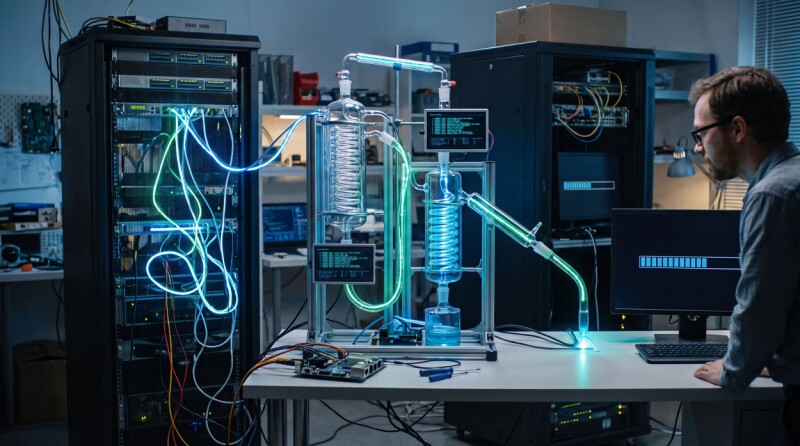
A series of illustrations created for Dell Technologies depicting various topics related to AI, including agentic systems, cybersecurity, and sovereign technology.