404 Media

404 Media is an independent media company founded by technology journalists Jason Koebler, Emanuel Maiberg, Samantha Cole, and Joseph Cox.

Our Solar System Is Terminally Unstable and Will Be Completely Destroyed, Study Finds

Our Solar System Is Terminally Unstable and Will Be Completely Destroyed, Study Finds

Welcome back to the Abstract! These are the studies this week that searched for the ur-animals, wandered the poles, rained on Mars, and destroyed the solar system.

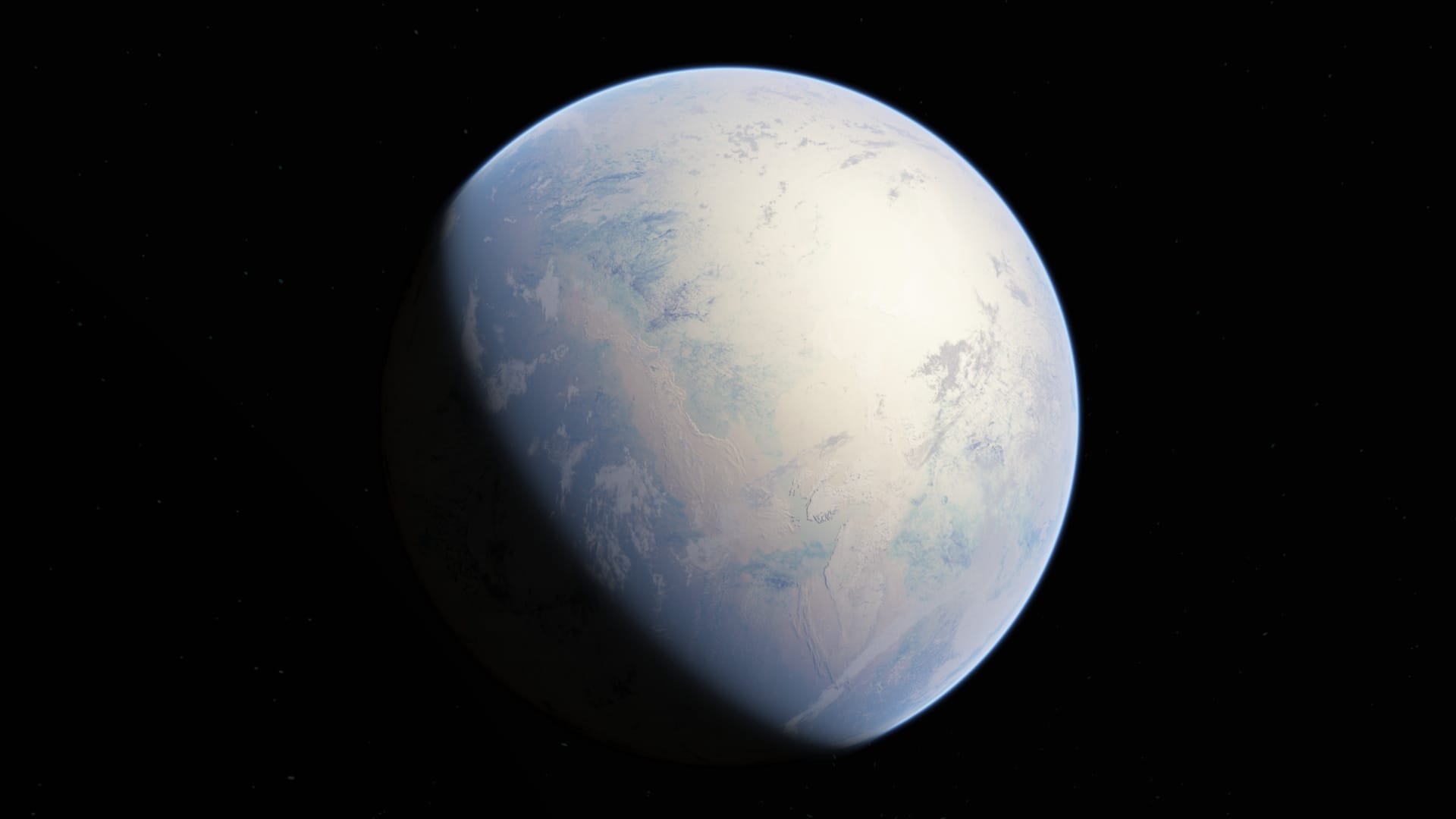
First, scientists present new evidence that the first animals appeared more than 800 million years ago, a truly ancient origin that suggests our metazoan ancestors survived a period known as Snowball Earth, when our planet is thought to have been nearly completely frozen. Then: Earth’s poles won’t sit still, the sepulchral stuff of life, and a dramatically shortened lifespan for our solar neighborhood.

As always, for more of my work, check out my book First Contact: The Story of Our Obsession with Aliens, or subscribe to my personal newsletter The BeX Files. 

I trace my ancestry to Snowball Earth

Durbin, Orin Lole et al. “Re-evaluating molecular clock maximum age calibrations revives pre-Ediacaran divergence estimates for animals.” Science Advances.

When did the first animals emerge on Earth? It’s a question that has provoked centuries of scholarly debate, and also inspired some wonderful answers in myth and legend (I’m partial to the Bible’s tidy solution: day six checklist).

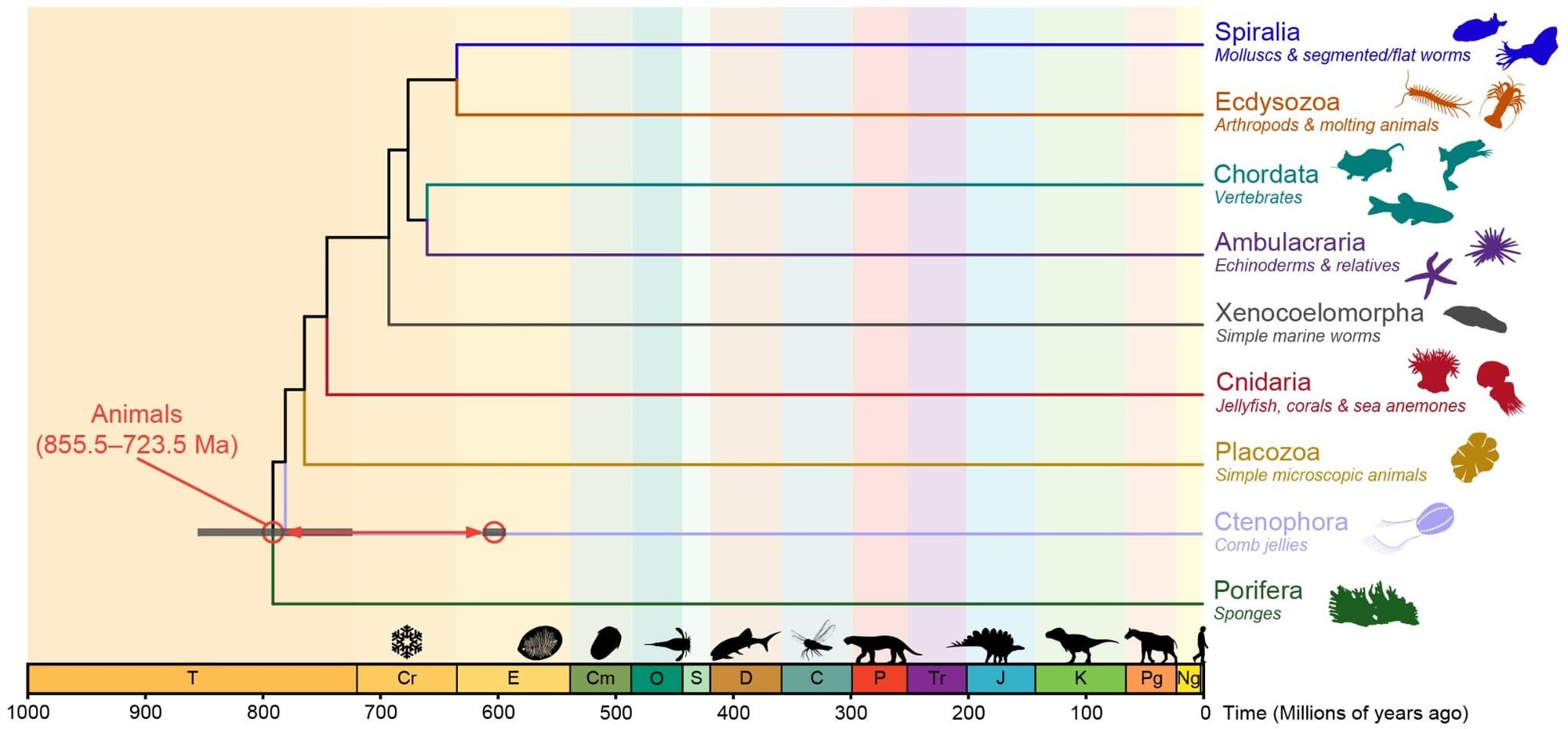
The earliest animals that are clearly preserved in the fossil record lived during the Ediacara period some 574 million years ago, but the origins of our diverse metazoan family are likely much older. Now, scientists suggest that animals may have appeared on Earth a whopping 800 million years ago, during the ancient Tonian era, according to a new estimate of the dawn of animals.

“The timing of the origin of animals on Earth has puzzled scientists for centuries,” said researchers led by Orin Lole Durbin who was at the University of Oxford during this research and is now at Virginia Tech. “Unambiguous animal body fossils within the Ediacara Macrobiota provide a hard minimum calibration of 574 [million years] for crown Metazoa. Animals must have evolved before this date. Determining a maximum calibration for animals (a date at which they had not yet evolved) is a more complex task.”
Our Solar System Is Terminally Unstable and Will Be Completely Destroyed, Study Finds

Estimated timeline for the origin of animals based on molecular clock analyses. The grey bar on the right of the image is the origin of animals based on an Ediacaran upper calibration. The grey bar to the left is the origin based on older deposits in the Tonian period, as suggested by the new study. Image: Orin Lole Durbin.

The team turned to molecular clock analysis, a technique that uses the rate of genetic mutations in lineages as a rough way to reconstruct evolutionary timelines. The researchers focused on two fossil deposits—China’s Weng'an Biota and Mongolia’s Kheseen Biota, which date back 590 and 550 million years respectively—to extend the possible timeline of animals back more than 200 million years earlier. 

If animals really did appear in the Tonian era, it means that our earliest metazoan ancestors survived episodes of so-called “Snowball Earth,” when our planet was almost fully covered in ice. These early critters were likely simple marine sponges and comb jellies that lived for hundreds of millions of years until their descendents exploded into the kaleidoscopic variety of animals that persist to this day.

“The possibility of a pre-Ediacaran origin and diversification of animals means we cannot discount hypotheses that link the timing of animal diversification to Cryogenian Snowball Earth glaciations,” according to the study. “The causes and trajectory of animal evolution will remain uncertain until paleontological and geochemical data provide sufficient confidence in maximum calibrations to ensure a reliable timescale.”

In short: Respect your sponge elders.  

In other news…

A pole-ing error

Domeier, Mathew et al. “Quadrupolar sea level fluctuations reveal episodes of rapid polar wander.” Science.

Earth is a roiling mess of shifting continents and squishy innards, a situation that constantly throws its spin axis off balance and prompts the geographic poles to drift. This phenomenon, known as true polar wander (TPW), is distinct from Earth’s wandering magnetic poles, which are shaped by interior core-mantle processes. 

Right now, TPW is clocked at a slow rate of 10 centimeters per year, but scientists have found evidence of “fast” episodes of TPW that pushed the poles off by thousands of miles over millions of years, which has knock-on effects for ocean and land distribution across the globe. 

A team has now pinpointed several of these fast episodes over the past 320 million years, “confirming that protracted rapid TPW has occurred on Earth and that couplings among Earth’s rotational dynamics, mantle processes, and surface environments can be strongly episodic,” according to their study.

“These findings refute the view of TPW as negligible or persistently slow and highlight the need to consider TPW as an episodic control on sea level change and likely other global environmental and biological dynamics,” said researchers led by Mathew Domeier of the University of Oslo. 

In addition to these long-term natural changes, recent human activity has slightly impacted TPW, especially the construction of dams and the glacial melt of anthropogenic climate change. So the next time you address a letter to Santa at the North Pole for your kid—or yourself, no judgement—make sure you have the most up-to-date coordinates.

It’s raining formaldehyde—formalallelujah! 

Koyama, Shungo et al “Global Distribution of Atmospheric Formaldehyde Deposition Correlated with Water Vapor on a Warm Early Mars.” The Planetary Science Journal.

Formaldehyde, the toxic chemical, has a bit of a morbid reputation—exposure to it can be fatal and it’s a common ingredient used to embalm corpses. But, paradoxically, formaldehyde (H2CO) also helped pave the way for the emergence of life on Earth as a precursor of bioessential elements such as sugars, amino acids, and nucleobases.

If life ever flourished on Mars, formaldehyde would likely also have been part of the story. To map out the possible distribution of the chemical on ancient Mars, scientists ran models of its atmosphere between 3.6 and 3.8 billion years ago, when the red planet was warmer and wetter. The results showed that formaldehyde was strongly associated with water vapor, suggesting that the chemical rained down from the ancient skies into Martian waterways.

“Significant atmospheric deposition of H2CO is observed over water bodies, including the northern ocean,” said researchers led by Shungo Koyama of Tohoku University. “We suggest that basins adjacent to persistently humid regions, which likely experienced H2CO accumulation and subsequent organic synthesis, could be potential landing sites for future missions to investigate ancient chemical evolution and whether it led to the origin of life.”

Hopefully, future missions to Mars will leave any signs of life with no place left to formalde-hide. 

Update the cosmic actuary tables

Batygin, Konstantin et al. “Terminal Instability of the Solar System Triggered by Stochastic Solar Mass Loss.” The Astrophysical Journal Letters.

I hate to be the bearer of bad news, but the solar system has been diagnosed with terminal instability and has been given a mere six billion years to live.  

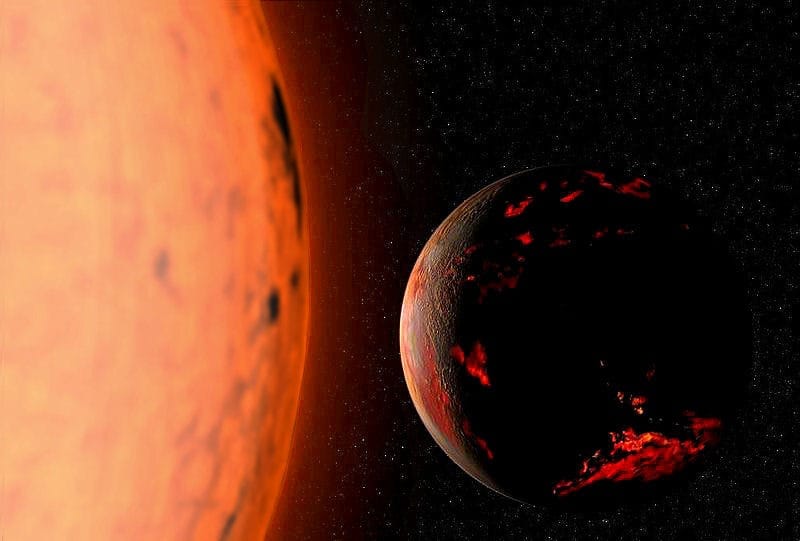
That’s the upshot of a new study that modelled the solar system’s future as the Sun becomes a red giant star and, ultimately, collapses into a stellar husk called a white dwarf. 

Though the dying Sun will consume Mercury, Venus, and perhaps even Earth, scientists have previously assumed that the giant outer planets might be relatively unscathed by its death—perhaps surviving for up to 100 billion years after the main-sequence lights go out. But updated simulations suggest that these distant objects may be thrown into fatal chaos as early as the red giant phase, and that they are unlikely to survive more than a billion years after the Sun’s transition to a white dwarf.
Our Solar System Is Terminally Unstable and Will Be Completely Destroyed, Study Finds
The future of Earth is bright, literally. Image: Celestia

“[Isaac] Newton, contemplating the drifting orbits of Jupiter and Saturn, suspected that the planetary order was mortal, and three centuries of celestial mechanics…have progressively deferred that verdict, most recently to timescales far beyond the age of the Universe,” said researchers led by Konstantin Batygin of the California Institute of Technology. “Our results return the solar system’s dissolution to astrophysically familiar territory, and relocate its cause: not the slow seep of chaos, nor the chance encounter with a passing star, but the Sun itself, which in dying does not merely enlarge the planetary system it built—it shakes it, and more often than not, spills it.”

“Newton’s envisioned instability is real after all,” the team. “He was mistaken only about the perpetrator.”

What a great story to kick off this spooky season! Planetary order is mortal, but cosmic horror is eternal. 

Thanks for reading! See you next week.


The Guardian

Latest news, sport, business, comment, analysis and reviews from the Guardian, the world's leading liberal voice

‘One person turned up at my house’: Russell T Davies on fierce fandom, finding love after grief - and the fear that drives him to keep a knife by the door

He’s the titan of TV who revived a flatlined Doctor Who and turned British queer life into jaw-dropping drama. But the screenwriter’s groundbreaking writing has sometimes made him a target of hate – from homophobes and Whovians alike

• ‘Goodbye Whoniverse. God, that was fun!’: Read an exclusive extract from Davies’s memoir

Russell T Davies is a man who prefers to look on the bright side. That time he was gay-bashed by a gang of bus conductors? “People have been beaten up far worse than me, that was just a bit of a thumping in the street.” When the production schedule of his dystopian drama Years and Years forced him back to work within days of his husband’s death? “Writing was a nice escape.” Even a story about his “tough” father branding him “yesterday’s man” after his initial departure as showrunner on Doctor Who concludes with a cheerful: “I knew I wasn’t.” It’s easy to see how he’s earned a reputation as the most affable man in TV, if not the world. So why has he taken to keeping a kitchen knife by his front door, “ready to use”?

“I’m called a paedophile and a groomer online by people like [Father Ted creator and anti-trans activist] Graham Linehan, and now people believe what they read. People believe it when they’re told the Earth is flat,” he says. His support for trans rights has resulted in years of death threats and “groomer” smears, which he used to brush off. “But the online world is becoming the real world. People have worked out my address, and one person turned up at my house. If you believe a paedophile lives here, it’s not the maddest thing in the world to come and get me. I’ve been saying for years that our rights are paper-thin, and here we are. What scares me is that I can’t see an end to it. Nothing is going to unseat these tech barons – it will require some sort of revolution to stop them. So for the first time in history, hatred is being monetised by an algorithm.”

Continue reading...

Remains of medieval tsar return to Bulgaria after decades-long dispute with Greece

Greek PM hopes handover of Tsar Samuel will help persuade Britain to return Parthenon marbles

The remains of medieval ruler Tsar Samuel will arrive in Bulgaria on Saturday amid great pomp and ceremony, after decades of negotiations with neighbouring Greece.

The remains – discovered in a Greek border area 60 years ago – are to be flown to the Bulgarian capital, Sofia, onboard a military aircraft to be received with full state honours, including a fighter jet escort, a 21-gun salute and a procession to the Church of St Sophia, where the public will be able to pay respects.

Continue reading...

still water

Takao Iwata has added a photo to the pool:

still water

the break of dawn on Autumnal Equinox Day

Traditional Table Setting

Hiro_A has added a photo to the pool:

Traditional Table Setting

Classic Japanese Eaves

Hiro_A has added a photo to the pool:

Classic Japanese Eaves

GLASS BLOCK

ajpscs has added a photo to the pool:

GLASS BLOCK

STEAL THE NIGHT
© ajpscs

Wel.nl

Minder lezen, Meer weten.

102-jarige vrouw overleden door overstromingen in Spanje

MADRIGUERAS (ANP/RTR) - Door overstromingen in het zuidoosten van Spanje is een 102-jarige vrouw om het leven gekomen, melden de regionale autoriteiten. Tientallen anderen werden door hulpdiensten gered.

De plaats Madrigueras in de regio Castilië-La Mancha werd vrijdag getroffen door hevige regenval. Auto's dreven door de straten. Tijdens een grote reddingsoperatie werden zeker negentig mensen gered.

Brandweerlieden troffen het lichaam van de hoogbejaarde vrouw aan in haar woning, waar het water tot ruim 1 meter hoogte gestegen was.

Hevige regenval

Volgens de autoriteiten viel er 142 liter regen per vierkante meter in de plaats met bijna 5000 inwoners. Ook in andere delen van het zuidoosten en noordoosten van Spanje viel in korte tijd veel regen.

De overstromingen volgen op de heetste zomer die ooit in Spanje is gemeten. In augustus overleden bijna 2150 mensen door de hitte.


Resten Bulgaarse tsaar na ruim 1000 jaar terug naar huis

THESSALONIKI (ANP/RTR) - De overblijfselen van een Bulgaarse tsaar zijn in het Griekse Thessaloniki na meer dan duizend jaar overgedragen aan Bulgarije. Tsaar Samuel leidde een Bulgaars rijk van 997 tot 1014 waarbij hij oorlog voerde met het aangrenzende Byzantijnse Rijk. Samuels rijk besloeg steeds grotere delen van de Balkan, maar aan het begin van de elfde eeuw kregen de Byzantijnen de overhand en versloegen zijn leger definitief in 1014.

Samuels resten werden in 1965 opgegraven en bewaard in het Griekse museum van Byzantijnse cultuur. Over de tsaar en andere historische objecten is decennialang onderhandeld. Zaterdag zijn in het museum in Thessaloniki, in aanwezigheid van de Bulgaarse premier Rumen Radev en diens Griekse collega Kyriakos Mitsotakis, de resten en voorwerpen aan elkaar overgedragen.

Griekenland krijgt bijvoorbeeld bijna vijftig objecten terug die Bulgaarse troepen tijdens de Eerste Wereldoorlog roofden uit Griekse kloosters en kerken.


VS praten met Rusland over oliedeal, meldt The New York Times

WASHINGTON (ANP/RTR) - De Amerikaanse regering praat met Rusland over een oliedeal waarmee miljarden dollars gemoeid zijn, meldt The New York Times zaterdag op basis van ingewijden. Volgens de Amerikaanse krant is zo'n mogelijke deal onderdeel van de Amerikaanse onderhandelingen over een einde aan de oorlog in Oekraïne.

Het zou gaan om een deal die betrekking heeft op het netwerk van oliebronnen, raffinaderijen en tankstations die eigendom zijn van het Russische olieconcern Lukoil. Zakenlieden uit het Midden-Oosten die banden hebben met de Amerikaanse onderhandelaars Steve Witkoff en Jared Kushner zouden ervan kunnen profiteren.

De Russische president Vladimir Poetin bracht de deal volgens bronnen ter sprake tijdens een bijeenkomst met Witkoff en Kushner op 5 september in het Kremlin. Poetin stelde de deal voor om te laten zien dat het best mogelijk is voor de Russen om zaken te doen met de Verenigde Staten, heeft een van de ingewijden gezegd.

De Amerikaanse regering en Lukoil hebben nog niet op het bericht gereageerd.


Fantail. Mid September, Tolmie garden

Lesley A Butler has added a photo to the pool:

Fantail. Mid September, Tolmie garden

Mid September, Tolmie garden

VK: Voorpagina

Volkskrant.nl biedt het laatste nieuws, opinie en achtergronden

Druk uit de VS werkt: Europa brengt meer diesel op de markt, exportverbod van de baan

Britse politie verijdelt aanslag op Joodse gemeenschap van Manchester, twee Iraniërs opgepakt

GLASS BLOCK

ajpscs posted a photo:

GLASS BLOCK

STEAL THE NIGHT
© ajpscs

It's Too Late for This Now

Thomas Hawk posted a photo:

It's Too Late for This Now

Town-Topic Hamburgers

Thomas Hawk posted a photo:

Town-Topic Hamburgers

Rijnmond - Nieuws

Het laatste nieuws van vandaag over Rotterdam, Feyenoord, het verkeer en het weer in de regio Rijnmond

Gemaskerde mannen Overasselt in appgroepen geronseld voor aanslag: '3 boys gaan die man spatten'

De gemaskerde mannen die begin deze maand in Overasselt werden opgepakt, zijn voor een deel via sociale media geronseld. Ze kregen instructies voor hun aanslag via berichten op Signal en Snapchat, schrijft RTL Nieuws op basis van het strafdossier. Een van de verdachten komt uit Caplle aan den IJssel.

Formula 1 News

Formula 1® - The Official F1® Website

LIVE COVERAGE: Qualifying for the Bahrain GP in Malaysia

Live coverage of Saturday's Formula 1 Qualifying session for the 2026 Bahrain Grand Prix in Malaysia.

In Carré laat rockband De Staat het publiek voelen hoe massamanipulatie werkt

Alle ingrediënten waren vrijdag aanwezig voor een imponerende, zelfs dreigende ervaring in theater Carré in Amsterdam. Toch overtuigde het optreden van De Staat niet helemaal. Juist bij doembeelden verwacht je een consequenter dramaturgisch spoor.

xiffy

Public posts from @xiffy@mastodon.nl

Kreeg ineens zin om een tegeltje te bakken.
zonder reuzenrad ben je echt geen stad. - Online tegeltjes bakken - WBVB Rotterdam

tegelizr.nl/tegeltje/zonder-re