Feynman en/of Feiten – Woningen tegen wapens

rode kruis in Ter Apel

Meerdere steekincidenten dwongen het Rode Kruis en vluchtelingenwerk zich terug te trekken uit Ter Apel. Een klein groepje mannen uit veilige landen die geen kans maken op asiel dwingen een viervoudig Nobelprijswinnaar te stoppen met hulpverlening. Het voelt alsof we een stukje grasland hebben afgestaan aan barbaren. Capitulatie.

Volgens het Rode Kruis, vluchtelingenwerk en vele andere gelovigen van de Linkse Kerk is de oplossing nog meer asielzoekerscentra en nog meer woningen voor statushouders. Dan schuiven asielzoekers naar de opvang, staan deze slachtoffers niet meer bij Ter Apel en kunnen ze daar niet meer neergestoken worden. Gratis huizen tegen steekincidenten.

Je zou toch denken dat we met beveiligers, politie en desnoods defensie elke grasspriet verdedigen tegen een buitenlandse invasie, om deze slachtoffers, samenleving en echte vluchtelingen een vredig, veilig en vrij land te bieden!? Dit kleine groepje mannen hoort in detentie, gevolgd door deportatie, dat maakt bedden vrij voor moeders met kinderen.

Ons kabinet probeert tien gemeenten met de spreidingswet te dwingen asielzoekers en statushouders op te vangen, maar faalt zelf messentrekkende kansarme asielzoekers uit veilige landen op te pakken, te veroordelen, te straffen en uit te zetten. Wanneer mogen gemeenten het kabinet dwingen de nieuwe Europese vertrekregeling uit te voeren!?

Ons migratiesaldo zakte ietsje onder de honderdduizend per jaar. Dat is ongeveer het aantal daklozen dat we hebben volgens ETHOS. Gewone mensen leven door een paar tegenslagen in hun auto, een bootje of op de bank van vrienden. Pointer deelde daarover deze week een meesterlijk portret, wie helpt deze jongedame aan een eigen huisje?

Onze daklozen worden zelfredzaam genoemd, krijgen geen hulp en staan op de wachtlijst voor sociale huurwoningen, een woning die nooit zal komen. Verslaafden krijgen tenminste nog een begeleid wonen traject, criminelen een maatregel stelselmatige daders, maar wie niet gebruikt of steelt wordt niet geholpen.

De gemeente Den Haag hielp in het eerste halfjaar 711 statushouders aan een woonplek en bouwde vorig jaar 158 nieuwe sociale huurwoningen. De eis van de spreidingswet is een veelvoud van de complete nieuwbouw. Deze statushouders mogen in alternatieve panden wonen, waar wij met dwangsommen worden uitgegooid.

Landelijk kan je dezelfde rekensom maken. Ons migratiesaldo over de afgelopen tien jaar was een miljoen nieuwe Nederlanders. Uitgaande van gemiddeld 2,1 personen per woning hebben ze bijna 476 duizend woningen nodig. Vorig jaar hadden we een tekort van 396 duizend woningen. Hun woningbehoefte overstijgt ons huidige tekort.

Alleenstaande statushouders eisen een eigen woning omdat ze graag een gezinnetje willen stichten of herenigen. Een eigen woning is voor de meeste Nederlandse alleenstaanden met een vaste baan een droom. Als ze samen met vrienden een huis willen huren of kopen, botsen ze met bestemmingsplannen en handhaving.

Tijdens de jaren vijftig woonden er gemiddeld 4,3 mensen in een woning, dat was vroeger goed genoeg voor ons, zo zijn vele nieuwkomers opgegroeid, waarom geven we nieuwkomers met een uitkering recht op een woning in plaats van een kamer? Waarom hebben we een hetze tegen woningdelen en wonen in alternatieve panden?

Tijdens de naoorlogse woningnood werden houders van een Nederlands paspoort gevraagd te emigreren, dat was toen geen radicaal rechts standpunt, waarom nu wel? Toen grote groepen gastarbeiders werden gevraagd, ging iedereen ervan uit dat ze zouden teruggaan naar het land van herkomst. Remigratie was de norm, niet een taboe.

De woningbehoefte door migranten over de afgelopen tien jaar overstijgt het huidige tekort met 80 duizend woningen. Je zou denken dat we zonder migratie geen tekort hebben, maar we zijn afhankelijk van 75 duizend migranten om woningen te bouwen. Probeer eens in een bouwput Nederlands te praten, zonder hun stort de bouw in.

Een totale migratiestop zou de afgelopen jaren aardig wat nieuwbouwwijken jarenlang hebben vertraagd, dat hadden we ook ruim honderdduizend woningen minder. We mogen niet sturen op arbeidsmigratie binnen de EU, we hebben geen zicht en geen controle. Ze hebben weinig rechten, dus eindigen ze regelmatig werkloos als dakloze.

Ons vorige kabinet kopieerde jaren terug een plan voor daklozen, ze moesten allemaal direct een huis krijgen, elke euro die je besteed aan huisvesting, bespaart 2,5 euro op allerlei zorg en incidenten, iets waar ze in Finland ook achter zijn. Helaas beloof je dan een half miljard Europeanen een huisje zodra ze een paar maanden komen kamperen.

Dan wordt het wel erg interessant in te gaan op een vaag verhaal van een Oost-Europese of Mediterrane koppelbaas, in een gratis bus te stappen naar Nederland en als het qua werk tijdelijk fout gaat je snel en definitief te vestigen in een sociale huurwoning. Op straatzorg en asiel dromen diverse kabinetten over woningen die ze niet bouwen.

We kunnen niet bouwen op louter beleid en budget.

Mooi en goed. Taliban laten vrouwen in Afghanistan nog wel werken als reisgids

vrouwen in Afghanistan

We kennen de taliban hier vooral als verbiedende entiteit (schaken, school voor meisjes, werken voor vrouwen, vrouwensport, vrouwen in parken, boeken geschreven door vrouwen in het curriculum, popmuziek, Valentijnsdag, te korte baarden, nieuwsmedia die beelden van levende wezens publiceren (?), voorbehoedsmiddelen, computerspelletjes, door vrouwen gerunde restaurants, niet-turquoise taxi's, buitenlandse tv-series, schoonheidssalons), maar dat beeld behoeft enige nuance. Zo maken ze ook dingen mogelijk: partnergeweld (eenzijdig) bijvoorbeeld, of een leuke parttimebaan als reisgids voor de dames. Raar verhaal in Trouw vandaag, waarvan de afdronk is dat het fantastisch is dat vrouwen onder de Taliban wel als reisgidsen kunnen werken, zij het onder strikte begeleiding van een mannelijk familielid, en alleen als het gezelschap uit vrouwen bestaat. Hartstikke fijn natuurlijk, welke vriendinnengroep staat nou niet te popelen om op safari te gaan door een samenleving die The Handmaid's Tale als leidraad neemt, en die reële kans biedt op het meepikken van een publieke steniging. Ramptoerisme, gemoderniseerd. Leuk!

MetaFilter

The past 24 hours of MetaFilter

Technofeudalism and the Permanent Underclass

AI researchers and tech-adjacent people have convinced themselves that asymptotic AI development is inevitable and that it will fully devalue labor, creating a perpetual/permanent underclass (New Yorker). The only logical course of action is to gain enough capital that you (and your descendants) will be on the winning side of things. (more inside)

That New Yorker article was actively discussed on LinkedIn "What is the 'permanent underclass' and why is the idea stirring up fear inside Silicon Valley and beyond?" George Hotz's blog post You have three minutes to escape the perpetual underclass, with its associated and surprisingly reasonable Hacker News discussion. (Once you know and are aware of the language, you'll see it more. I'd love some additional examples in the wild, but my coffee is running out so this will have to do) This is a niche concern focused in California, New York, and Washington state, but those hubs build a lot of the technology we're forced to interact with. Unfortunately (for everyone involved) these are basically the same people who lost sleep over Roko's Basilisk almost 20 years ago. If those sleepless (mostly) bros had read a little more widely they would have encountered Pascal's Wager, which is the same thing. My thesis: this fear drives additional financial risk-seeking behavior (/r/WallStreetBets, Polymarket, sports betting) and yields support of authoritarian policymakers.

The beer scientist turning his attention to recording rare orchids

The beer scientist turning his attention to recording rare orchid species. Robert Mitchell's interest in rare orchids in the area around Frankston results in him naming three and penning a research paper.

Deep Roots, Tall Order

The Rise of Unitree. DJI in drones and BYD in electric cars...now Unitree in robotics? The robotics frontier in levels of autonomy. But what the hey, let's see some dancing. (Spoiler: the human is a lot better than the robots).

"Right now, the vast majority of robots in China are still hand-assembled. They're not at scale; this is still very high-mix manufacturing. One reason Unitree benefits so much from in-housing actuator production is that the designs aren't set. That early decision — not to go to contract manufacturers until you have a high-volume, settled design — matters. They have used CMs before; I believe the G1 now uses one for specific parts." --- "The actuator generates motion, but it's also the largest part of the robot's bill of materials. We've done internal BOM costing for a number of humanoids — the G1 is the one we published — and the actuators run around 50 to 70% of the BOM. Without them, your robot doesn't generate motion and doesn't function. If you source them externally, you pay all the extra costs on top: shipping, other people's margins, some value-based pricing. So a robot built in the US — where manufacturing actuators is challenging — ends up structurally more expensive than one built on the same supply chain a Unitree or many Chinese robots use. You're stuck. To compete on cost, you have to compete on the same actuator supply chain, which is extremely difficult. " --- "On overheating: look at the original G1s from a year or two ago, used in research tasks where they could carry a box of a couple kilograms for maybe five minutes at most. Then it would overheat, and you'd have to let it sit in the corner for 30 minutes — sometimes a full hour — before doing another five minutes. They've clearly iterated on this. As we showed in our paper and heard from people, you can now get around five minutes of work with ten minutes of rest, even up to ten minutes of work with ten to fifteen minutes of rest. It varies by task, but it's a vector they've clearly improved"

Jim Beam -- J.B. Turner Train, Jeff Koons

Thomas Hawk posted a photo:

Jim Beam -- J.B. Turner Train, Jeff Koons

e, by Jose Andres

Thomas Hawk posted a photo:

e, by Jose Andres

Found Kodachrome Slide

Thomas Hawk posted a photo:

Found Kodachrome Slide

Hotel Baxter, Bozeman, Montana

Thomas Hawk posted a photo:

Hotel Baxter, Bozeman, Montana

Frank Stella

Thomas Hawk posted a photo:

Frank Stella

Back When the World Was Great

Thomas Hawk posted a photo:

Back When the World Was Great

Burgemeester Velema van Ter Apel: 'Al weken wordt het grimmiger'

Vrijdagavond maakten het Rode Kruis en Vluchtelingenwerk bekend dat het in Ter Apel te onveilig is voor hun vrijwilligers om nog hulp te bieden. Over de groep die de boel „versjteert” heeft de burgemeester al acht jaar acht ministers verteld.

Meta stopt na enkele dagen alweer met AI-afbeeldingengenerator Muse Image, erkent ‘plank te hebben misgeslagen’

De AI-afbeeldinggenerator Muse Image die Meta dinsdag introduceerde, is na enkele dagen alweer gestopt, dat maakte het bedrijf bekend op vrijdag.

C&C Radiators Mono

Darren Schiller has added a photo to the pool:

C&C Radiators Mono

Cnr Grenfell Street and The Parade West, Kent Town, South Australia

C&C Radiators

Darren Schiller has added a photo to the pool:

C&C Radiators

Cnr Grenfell Street and The Parade West, Kent Town, South Australia

Core Advertising

Darren Schiller has added a photo to the pool:

Core Advertising

C&C Radiators, Kent Town, South Australia

Orange Glow

Darren Schiller has added a photo to the pool:

Orange Glow

Sunset bathes the rear wall of the Kent Town Hotel in fantastic orange light.

404 Media

404 Media is an independent media company founded by technology journalists Jason Koebler, Emanuel Maiberg, Samantha Cole, and Joseph Cox.

Scientists Solve Mystery of Bizarre ‘Alien Megastructure’ Star

Scientists Solve Mystery of Bizarre ‘Alien Megastructure’ Star

Welcome back to the Abstract! Here are the studies this week that busted their butts, scaled great heights, got it right, and discovered a new world.

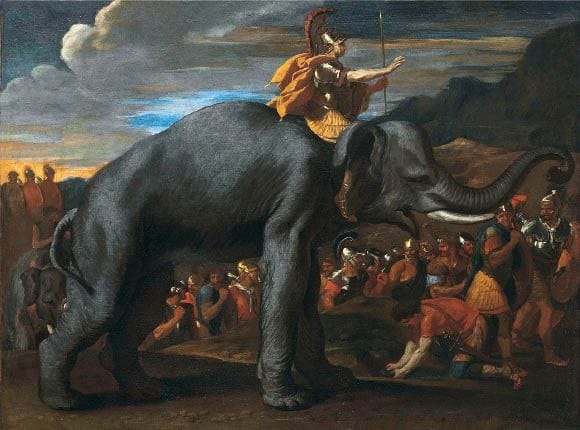
First, Hannibal marched an army of men, horses, and elephants over the Alps to threaten Rome. Scientists ask the question: Just how hard did they grind? Then, the mouse at the top of the world, the ancient origins of handedness, and a throwback to the alien megastructures.

As always, for more of my work, check out my book First Contact: The Story of Our Obsession with Aliens, or subscribe to my personal newsletter the BeX Files

Try the Hannibal diet (no, not the Lecter one)

E. Berti & F. Vollrath. “Energy costs of Hannibal’s alpine crossing.” Proceedings of the National Academy of Sciences.

In 218 BC, the Carthaginian general Hannibal Barca marched an army of 46,000 men and 37 war elephants over the Alps to threaten Rome right at its doorstep. This brash advance in the Second Punic War has become one of the most legendary military moves of all time, even though Hannibal was ultimately unsuccessful in his mad dash to sack Rome.

Yet despite the prominent place of this march in history, the exact route that Hannibal took over the Alps remains unknown. Now, scientists have taken a fresh stab at the millennia-old mystery by calculating how much energy various route options would have cost the troops and elephants. Though experts have generally considered a route called the Col du Clapier to be most likely, the new results suggest an alternate route known as the Col de la Traversette would have exacted less energy from the advancing army, which might have boosted its odds as Hannibal’s choice of crossing.

Scientists Solve Mystery of Bizarre ‘Alien Megastructure’ Star
“Hannibal crossing the Alps on elephants.” Image: Nicolas Poussin

“Most of the discussions concerning Hannibal’s crossing were guided by philological and geological considerations, which tend to ignore the biology of the men and animals,” said authors Emilio Berti of Halle-Jena-Leipzig and Fritz Vollrath of the University of Oxford. 

“Compared to choosing the Col de la Traversette, the routes via the Col de Montgenèvre, Col du Clapier, and Col du Mont Cenis would have required 11%, 16%, and 19% more energy, respectively, for the army as a whole,” the team continued. “Although Hannibal would not have had such accurate estimates, he may have had a qualitative understanding of the ranking of the possible routes. In which case, driven by the aim to minimize the energy costs of the crossing, he would have chosen the Traversette route.”

While this study does not resolve the tantalizing question of exactly where Hannibal hauled ass over the Alps, it sheds new light on the immense costs of this ancient act of bravado. Berti and Vollrath estimated that even if the army took the path of least resistance—the Col de la Traversette—the “elephants would have lost 4% of their body fat reserves, horses 11%, and men 19%.” 

Invading Rome: The ultimate weight loss plan. Considering that half of Hannibal’s troops died during the crossing, this diet is not recommended.

In other news…

The mighty mountain mouse

Liphardt, Schuyler et al. “Adaptation across an extreme elevational gradient in Andean leaf-eared mice, the world’s highest-dwelling mammal.” Science.

Speaking of alpine survival, meet the Andean leaf-eared mouse (Phyllotis vaccarum). This little critter can live more than four miles above sea level, on the dizzying peaks of the Andes mountains, making it by far the highest-dwelling mammal on Earth. 

The mouse has surpassed the “known elevational range limits of all other terrestrial vertebrates” which “were previously thought to be uninhabitable by mammals owing to severe hypoxia and frigid temperatures,” according to a new study about this mouse’s amazing adaptations.

Scientists Solve Mystery of Bizarre ‘Alien Megastructure’ Star
Andean leaf-eared mouse, Phyllotis vaccarum. Image: Marcial Quiroga-Carmona

To understand how this unassuming mouse survives up in the clouds, scientists  analyzed the genomes of 167 leaf-eared mice collected across their range, which spans the lowlands all the way up to high Andean slopes, and compared them to their more grounded mouse relatives. The results revealed that the mountain mice have evolved a unique set of adaptations that are distinct from many other alpine animals, including the ability to metabolize toxic plants. 

“The world’s highest-dwelling mammal has adapted to habitats at both the low- and high-elevation limits of its range, and much of the elevation-related selection relates to previously unappreciated aspects of feeding ecology,” the team concluded.

Mmm…toxic salads. Keep on living the high life, P. vaccarum

A handy discovery at the dawn of complex life

Evans, Scott D. et al. “Earliest evidence of behavioural handedness in the Ediacaran motile bilaterian Spriggina floundersi.” Scientific Reports.

Paleontologists have discovered the oldest potential evidence of a right-handed animal, though the 550-million-year-old seacrawler in question doesn’t actually have hands. Spriggina floundersi, an inch-long weirdo that lived in the Ediacaran period, has long fascinated scientists because it appears to be one of the first animals in the fossil record capable of locomotion. 

When scientists took a closer look at more than 100 exquisite Spriggina fossils from South Australia, they discovered that about twice as many of them seemed bent to the left compared to the right, suggesting that the animal had a preferred direction of motion, or “handedness.” In this case, it was right-handed because the fossils are preserved in negative hyporelief, meaning that they are mirror images of the animal.

Scientists Solve Mystery of Bizarre ‘Alien Megastructure’ Star
A fossil of Spriggina floundersi collected in South Australia. Image: Scott Evans / ©AMNH

“A significant number of fossil specimens are bent to the left (right in life),” said researchers led by Scott D. Evans of the American Museum of Natural History. “The nature of these bends does not match expectations of anatomical asymmetry and instead constitutes the oldest described evidence of behavioural handedness.”

Now, the search is on for the elusive Ediacaran leftie. 

It’s never aliens 

Madurga-Favieres, Cristina et al. “Evidence for a giant companion orbiting Tabby’s star.” Monthly Notices of the Royal Astronomical Society.

Before there were interstellar objects and Pentagon UFO videos to ignite our extraterrestrial imaginings, there was Tabby’s Star, also known as KIC 8462852. Discovered in 2015, the star’s strange light patterns, which fluctuate significantly, sparked speculation that it might be orbited by “alien megastructures,” such as a massive solar energy plant called a Dyson sphere.

Now, scientists have discovered evidence of a huge planet transiting Tabby’s Star—meaning that it passed in front of the star from our perspective on Earth—which might help provide a natural exploration for its unusually pronounced dimming events. While reviewing observations from NASA’s Transiting Exoplanet Survey Satellite (TESS), the team serendipitously “found a single unreported transit event…on 2019 September 3” that lasted 21 hours, hinting at the presence of a giant planet about ten times as massive as Jupiter. 

“No transiting companion has ever been detected around this well-known star, so the potential evidence of a candidate presented in this work is significant, as its existence could explain the complexity of the system,” said researchers led by Cristina Madurga-Favieres of the University of Warwick. “The strongest theory is that a group of exocomets or planetesimal fragments are responsible for the irregular and apparently non-periodic dips…of Tabby’s star. The presence of a companion would explain why these bodies are driven to the vicinities of the star, breaking up, as it would orbitally perturb them.”

In other words, the huge planet may be gravitationally hoisting a flock of smaller bodies into orbit around the star, producing the dimming events. While it’s not quite as sensational as a colossal alien power plant, it may help resolve the decade-long mystery of this strange star.  

Thanks for reading! See you next week.


The Register

Biting the hand that feeds IT — Enterprise Technology News and Analysis

AI customers are coming around to the idea that small is beautiful

To cater to the broadest possible market, OpenAI and Anthropic build ever-larger models capable of making a brute-force attempt to tackle almost any task. These models are the Swiss Army Knives of the AI world. When used with sufficient force, they can do almost any job … but nobody needs a frontier class model to summarize emails, draft replies, or summarize meeting notes. It's cheaper and easier to train a small domain-specific model that can run dozens of instances of on a single accelerator. Plus, building your own means you don’t have to worry about your apps rambling about goblins when OpenAI replaces an aging but still beloved model with a new one — or Uncle Sam decides your model of choice is a bit too dangerous for general consumption. Microsoft appears to be embracing the belief that bigger isn't always better, and has quietly built small army of domain-specific models. Detailed at its Build developer conference in June, Microsoft’s MAI family covers a broad range of use cases from general purpose reasoning and coding to image generation, editing, and voice models. According to a recent Bloomberg report, these models are now slowly but surely replacing OpenAI's models as the power behind the AI features in Microsoft products. When Microsoft was trying shoehorn generative AI into every facet of our digital lives, a Swiss Army Knife like GPT-5 was useful. But now the software giant knows how its customers are actually going to use AI, it can replace a frontier model with more precise tools that do the same job as quickly and cheaply as possible. Cheap is the key word here, because while AI has proven itself useful in certain areas, bean-and-token-counters aren't yet sure if it's possible to sell AI at a profit. For hyperscalers like Microsoft, that means smaller models may be necessary. Redmond describes MAI-Thinking-1 as a “medium-sized model that stands among the strongest models in its weight class” and says it "matches leading models on key software engineering benchmarks, demonstrates advanced mathematical reasoning capabilities, and is preferred to Sonnet 4.6 in our blind human side-by-side evaluations.” What Microsoft considers to be a medium model we can’t say, but when it comes to gen AI, size matters. The bigger the model, the better and more reliable it tends to be, but the more expensive it is to run. That’s because when a model uses fewer parameters, it frees up memory and improves hardware utilization. Smaller models also mean Microsoft can deploy the right AI for the right job at the right time. If Redmond sees a surge in speech-to-text traffic, the company can spin up more instances of the best model for that function while keeping costs controlled. In addition, Microsoft now designs and builds its own AI accelerators, as do Amazon and Google. Its Maia 200-series parts announced in January promise to deliver performance comparable to Nvidia's Blackwell parts. Custom chips mean operators can optimize the entire AI stack – software, hardware, and models – for greater efficiency. Microsoft isn’t the only hyperscaler thinking about smaller models. Google has been playing this game from the beginning with its Gemini and Gemma families of models built around its custom TPU architecture. However, the closest parallel to Microsoft is probably Amazon. At the dawn of the AI boom, Microsoft hitched its cart to OpenAI’s horse, while Amazon placed its bet on rival Anthropic. And just like Microsoft, Amazon has been investing heavily in its own Nova family of models and applications and coding assistants powered by them. General purpose frontier models still have their place, and someone still needs to drive innovation forward. Refining existing tools is much easier than inventing never-before-seen ones, which means OpenAI and Anthropic are still valuable to its hyperscale partners. And that's why they’re willing to invest billions to keep them afloat. The cloud titans still need the great model houses, but the less they rely on them the greater their chances of finally turning AI into a profitable business line. ®

Slashdot

News for nerds, stuff that matters

FCC Approves Reflect Orbital's Space Mirror Satellite That Astronomers Hate

The FCC has approved (PDF) Reflect Orbital's Earendil-1 test satellite, which will use a 60-by-60-foot mirror to reflect sunlight back to Earth after dark. "The reflected light from the satellite is supposed to span an area about 3 miles wide on the ground," reports PCMag. It comes despite objections from astronomers and environmental groups who are concerned that the satellites will unleash intrusive light pollution. From the report: The approval is only for one satellite, dubbed Earendil-1, which is meant to test Reflect Orbital's technology for shining sunlight back to Earth. The satellite will boast a steerable thin-film reflector measuring about 60 feet by 60 feet, with the goal of powering solar farms at night or illuminating disaster-struck areas after dark to help rescue teams. Reflect Orbital envisions operating over 50,000 satellites by 2035, effectively surrounding the Earth with a fleet of mirrors. The proposal has faced stiff pushback from environmental groups and astronomers who are concerned that the satellites will unleash intrusive light pollution. The opposition has been so strong that the FCC received over 1,800 public comments on the application, many of them objecting to Reflect Orbital's plan for Earendil-1.

[...] [T]he FCC approved the satellite, noting the grant is only "for a single demonstration satellite" to test an innovative technology that could advance American leadership in space. "The Communications Act states that it is the policy of the United States to 'encourage the provision of new technologies and services to the public,' and Reflect Orbital's demonstration satellite is an example of a potentially groundbreaking technology that the Commission has found is in the public interest to support," the order says. But on the most controversial aspect of the satellite, the FCC said the concerns around Reflect Orbital's solar reflector are "unrelated to the Commission's role in authorizing use of radiofrequency spectrum, and even if the Commission had authority to review and condition these operations (which it does not), these harms are unlikely to occur.

In addition, the commission said that U.S. courts have blocked the FCC from using "a generalized public interest requirement beyond its statutory authority in regulating communications. Accordingly, the operations of a solar reflector in space would not be reviewed as part of the Bureau's public interest analysis." The regulator also noted that conducting an environmental review for the satellite went beyond its authority. Even if the FCC did have the power, the commission emphasized that the grant is for a single satellite, not 50,000. "The majority of these comments focus on a hypothetical plan to deploy tens of thousands of satellites, and those who argue the single satellite will harm the human environment do not demonstrate with specificity the potential harm will be caused by the single satellite, but rather rely on the same studies as the commenters objecting to a larger constellation," the FCC adds.

Read more of this story at Slashdot.