The Guardian

Latest news, sport, business, comment, analysis and reviews from the Guardian, the world's leading liberal voice

‘We have been dispossessed’: Nick Hayes on land rights and a peaceful revolution at the real Toad Hall

The co-founder of the Right to Roam campaign and author of The Book of Trespass discusses the Oxfordshire riverside community he calls home and how Hardwick Hall has been taken back by the people

On the banks of the Thames in South Oxfordshire, the Hardwick estate has been owned by the Rose family for generations. When Sir Charles Rose, a banker, sportsman, yachtsman and aviator, sped through the lanes in his Rolls-Royce in the early days of motoring, he inspired Kenneth Grahame to create Mr Toad in The Wind in the Willows. Grahame’s character became a symbol of decadent aristocracy whose foolishness leads to the temporary loss of a fine house to weasel-socialists.

Now Toad Hall has been taken over for good and Nick Hayes, artist, writer and co-founder of the Right to Roam campaign, has had a riverside view of this striking turn of events. When Hayes, who lives on a beautiful wide-beamed barge on the Thames, became the Hardwick estate’s artist-in-residence, he discovered that Rose’s heirs are, in effect, disinheriting themselves. The estate is gradually being turned into a charity which will be run by the tenants and the alternative community that has grown up in its shelter.

Continue reading...

Dining across the divide: ‘Without being patronising, I think as he grows older he’ll tune in to the damage “free speech” can do’

Did a Tory voter who opposes all censorship offend a leftwinger concerned about how people treat one another?

• Want to meet someone from across the divide? Click here to find out how

Ted, 24, London

Occupation Works for a thinktank

Continue reading...

A cargo ship, 20 crew, and a huge stash of cocaine: the seafarer imprisoned for smuggling – on no evidence

After Turkish police found drugs on board the Phoenician M, the ship’s chief mate, Ali Albokhari, was sentenced to 30 years in prison. His wife is still fighting to free him

In the early hours of 6 October 2023, Elena Albokhari was woken by a text message from her husband. Ali Albokhari, 42, a Finnish-Syrian with dark hair and cherubic features, was chief mate on a cargo ship named the Phoenician M and had been at sea since June. The 180-metre bulk carrier had docked at Ereğli in the Turkish Black Sea a few days earlier and Ali was due to return home to Helsinki soon, but instead of feeling excitement, Elena was growing increasingly worried about his welfare.

She’d had a similar feeling of unease a month earlier, when the ship had arrived at Barranquilla, Colombia. Ali had called in a panic to report that drugs had been found; Armada Nacional officers had marched onboard and uncovered holdalls stuffed with 137kg cocaine. Labels on the packages – the crest of Turkish football club Kayserispor – hinted at their destination: Turkey was the next port of call. “I never want to work as a seaman again,” Ali told Elena. “We are having big problems.”

Continue reading...

Do humans really have a ‘lizard brain’ lurking beneath our rational minds?

It’s a powerful analogy that captured the popular consciousness, but the biological reality may be quite different

Humans have a cognitive quirk for the number three. Think of the many stories that use it, from The Three Little Pigs to Goldilocks and the Three Bears and The Three Musketeers. Public information and political campaigns use it for impact and ease of recall (“Stop, look and listen”; “See it. Say it. Sorted”; “Reduce, reuse, recycle”). And then there are psychological or philosophical frameworks: Freud with his id, ego and superego; Plato’s three parts of the human soul; the Holy Trinity.

Well, it turns out neuroscience isn’t immune from tri-mania. In 1959 Paul D MacLean set out a new way of thinking about the evolution and function of the brain, which he christened the “triune” – three-in-one – model. It quickly became one of best known and most enduring concepts in human biology. His idea was that a trio of distinct brains are layered inside our skulls, one on top of the other, all fighting to generate our feelings and thoughts.

Continue reading...

Trump wants control of the entire western hemisphere. Brazil might become his biggest prize | Steve Bloomfield

While the US president’s meddling could win Brazil’s election for the right, curbing gang violence is what voters care about

Donald Trump has enjoyed very few foreign policy victories since returning to power. From failed wars to failed peace processes, his second term in office has been marked by one costly blunder on the world stage after another. In Latin America, though, the US president has a different story to tell.

His administration’s national security strategy outlined how the US wanted to “restore American preeminence in the Western Hemisphere”. It was a brazen document, laying out how his government would interfere in the political life of countries it considered part of its sphere of influence, rewarding governments and movements that are “broadly aligned with our principles and strategy”.

Continue reading...

Max Verstappen wins chaotic F1 Bahrain GP in Malaysia after rain causes farcical scenes

  • First win of season for Dutchman after long rain delay

  • Heartbreak for Russell as power units struggle in weather

Max Verstappen won a chaotic Bahrain Grand Prix in Malaysia with a dominant drive for Red Bull, his team’s first win of the season, beating the Mercedes of Kimi Antonelli into second. The Italian’s teammate and title rival George Russell was forced to retire with five laps to go leaving the British driver’s title hopes shattered and Antonelli within touching distance of the championship.

Lewis Hamilton was third for Ferrari, making a remarkable comeback after a torrid afternoon, starting on the slick rubber tyres in the wet which dropped him as far back as 17th before reviving with a superb drive, including a late pass on Isack Hadjar who finished fifth. Ferrari’s Charles Leclerc was fourth after a race marked by farcical scenes before it was even underway. This season’s engine formula was found sorely wanting the first time it was tested in wet conditions.

Continue reading...

Jacob Rees-Mogg accuses Tucker Carlson of ‘verging on defending Hitler’

Former Tory minister defends UK decision to enter war in podcast with US rightwinger and Putin sympathiser

The former Tory minister Jacob Rees-Mogg has found himself defending Britain’s decision to fight against Adolf Hitler after inviting the US rightwinger and Vladimir Putin sympathiser Tucker Carlson into his home for an interview.

During the encounter, Carlson repeatedly suggested the west was to blame for inviting aggression from Russia and said of the prospect that Britain could have lost to Hitler: “Who cares?”

Continue reading...

Burnham’s plans for social care and its workers are admirable but changes must come quickly | Heather Stewart

Money is needed now for a system that has left families including mine struggling their way unsupported and forgotten

As one of many hundreds of thousands of people in the UK with a parent with Alzheimer’s, the passage in Andy Burnham’s speech about social care moved me to tears.

My mother had not even been diagnosed when I watched Theresa May announce her 2017 general election manifesto in a hall in Halifax – with care funding at its heart.

Continue reading...

Wel.nl

Minder lezen, Meer weten.

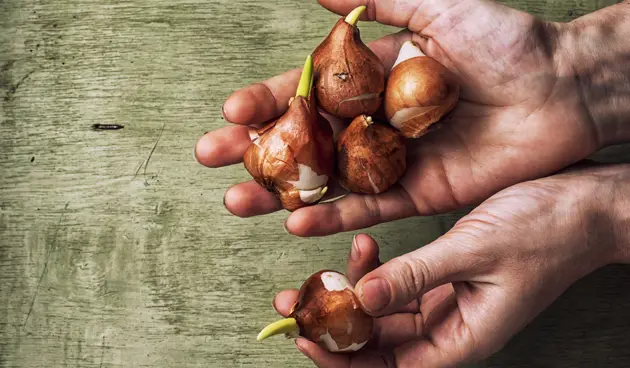
Tulpenbollen al in de grond gestopt? Na deze droge zomer is de grond vaak nog te warm, en daar profiteert een schimmel van

De zakjes tulpenbollen liggen al weken in het tuincentrum en de supermarkt. Met dit zachte weer wil je ze het liefst meteen de grond in stoppen. Wacht daar dit jaar nog even mee. Na de warme, droge zomer is de grond op veel plekken nog te warm voor tulpen, en daar profiteert een schimmel van. Hieronder lees je wanneer je wel kunt planten, welke bollen er nu al in mogen en wat je doet als je tulpen al geplant zijn.

Duurzaam Nieuws wees erop: na de recordwarme, droge zomer van 2026 kan de bodem nog te warm zijn voor tulpenbollen. Plant je in te warme grond, dan is de kans op tulpenvuur groter.

De grond telt, niet de lucht

Voor een tulpenbol gaat het om de temperatuur onder de grond. Volgens Duurzaam Nieuws wortelt een bol het best als de grond kouder is dan 10 graden. Boven de 12 graden kunnen schimmels zoals Fusarium zich blijven ontwikkelen. Ook de Olphidium-schimmel heeft baat bij warme grond. Die kan het Augusta-virus verspreiden, dat tulpen aantast.

Bloembollenverkoper Baltus Bloembollen is iets ruimer: plant pas als de grond is afgekoeld tot onder de 10 à 13 graden. Andere kwekers leggen de grens lager. Tulpenonline raadt aan te wachten tot de bodem rond de 7 tot 10 graden is. Hoe kouder de grond, hoe veiliger je zit.

Op een zachte middag kun je prima in de tuin werken, maar daarom is het nog geen plantdag.

Dat de grond nog zo warm is, heeft met dit jaar te maken. Volgens het KNMI hoort 2026 bij de 5 procent droogste jaren, schrijft Duurzaam Nieuws. Een vaste plantdatum op de kalender helpt je daarom weinig. Het warme weer houdt ook nog even aan: Weeronline verwacht maandag en dinsdag nog 20 tot 22 graden.

Tulpenvuur houdt van wind en regen

Tulpenvuur wordt veroorzaakt door de schimmel Botrytis tulipae. Die slaat vooral toe in natte seizoenen, en wind en regen verspreiden de sporen. Volgens Gardeners World herken je de ziekte in het voorjaar aan misvormde, korte scheuten en bladeren en aan bruine vlekken over de hele plant.

Dat weer staat voor de deur. Weeronline verwacht vanaf donderdag 8 oktober wisselvallig weer, met elke dag buien of regengebieden en soms veel wind. De maxima liggen dan rond 16 graden, en dat is volgens de weerdienst nog zacht voor de tijd van het jaar. De grond koelt dus niet ineens af, terwijl de schimmel wel volop kansen krijgt. Wat de weeromslag betekent voor je schutting en je verzekering, schreven we eerder in Waait je schutting om bij de eerste herfstwind? Dan betaal je de schade vaak zelf, en dit kun je nog doen voor woensdag.

Deze bollen kunnen er nu al in, tulpen wachten

Je hoeft niet met alle bollen te wachten. Volgens Groene Paradijs vormen deze soorten vroeg wortels en kun je ze goed in september of begin oktober planten:

  • Narcissen
  • Krokussen
  • Blauwe druifjes (Muscari)
  • Sieruien (Allium)

Tulpen plant je bewust later, het liefst in november, als de bodem is afgekoeld. Volgens Gardeners World kan het vanaf half oktober, maar is november de beste maand. Baltus houdt half oktober tot half december aan. Ook december is volgens de kweker nog prima, zolang je de grond kunt bewerken. Wachten kost je dus niets.

Geen bodemthermometer? Zo schat je het in

Met een bodemthermometer weet je het zeker. Alleen Puur raadt aan hem zo diep in de grond te steken als je wilt planten en een paar dagen achter elkaar op hetzelfde tijdstip te meten, bij voorkeur 's ochtends. Zo zie je of de grond echt afkoelt of dat het alleen om één koude nacht ging.

Zonder thermometer kun je een vuistregel gebruiken. Bollenverkoper DutchGrown zegt: als je overdag een jas nodig hebt, is het tijd om te planten. Volgens DutchGrown is dat meestal zo als het 's nachts steeds 10 graden of kouder wordt. Er is ook een oude boerenwijsheid: zijn de bomen verkleurd en vallen de bladeren, dan is het moment gekomen. Daar zou ik dit jaar niet op vertrouwen. Na de droge zomer verliezen veel bomen hun blad eerder dan normaal, dus vallend blad zegt nu weinig over de temperatuur van de grond.

Zitten je tulpen er al in? Houd de grond droog

Heb je je tulpen al geplant, zorg dan vooral dat ze niet ook nog nat komen te staan. Volgens Baltus rotten tulpenbollen snel als de grond steeds te veel vocht bevat. Blijft er na een flinke bui water staan, dan is die plek niet geschikt. Nu er elke dag buien worden verwacht, hoef je zelf geen water te geven.

Let in het voorjaar op misvormde scheuten en bruine vlekken. Zie je die, haal de aangetaste planten dan weg en gooi ze in de prullenbak, adviseert Gardeners World. Plant op die plek twee jaar lang geen tulpen meer.

Wat je nu kunt doen

  • Plant krokussen, narcissen, blauwe druifjes en sieruien nu al.
  • Bewaar je tulpenbollen tot het zover is op een droge, koele en goed geventileerde plek, zoals Tulpenonline adviseert.
  • Meet de grond op plantdiepte of gebruik de jas-regel. Plant tulpen pas als de grond kouder is dan 10 à 13 graden.
  • Houd november aan als beste maand. December kan ook nog, zolang je de grond kunt bewerken.
  • Kies een plek waar water goed wegloopt. Meng zware klei volgens Groene Paradijs eerst met grof zand en wat compost.
  • Plant niet in kletsnatte grond, ook niet als het moment verder goed is.

Meer weten?

Duurzaam Nieuws, Baltus Bloembollen, Weeronline, Gardeners World, Groene Paradijs, Tulpenonline, Alleen Puur, DutchGrown, Moowy
Iran: zeven voorwaarden aan VS voor heropening Straat van Hormuz

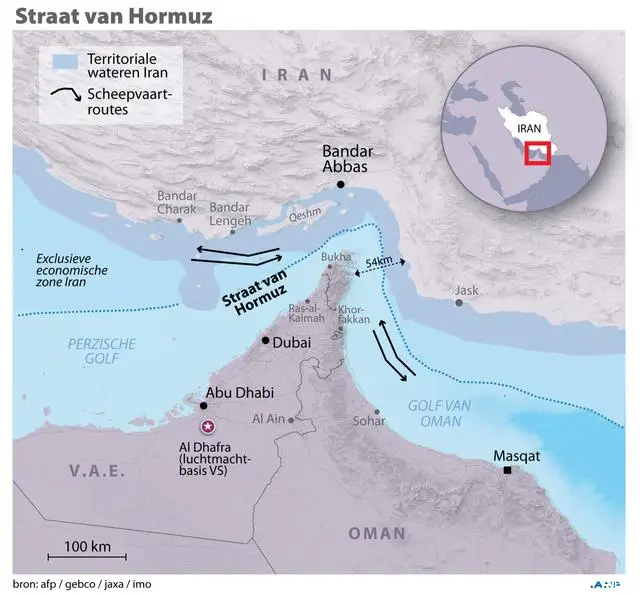
De Verenigde Staten moeten aan zeven voorwaarden voldoen voordat Iran de Straat van Hormuz heropent, stelt de Iraanse parlementsvoorzitter Mohammed Bagher Ghalibaf.

Volgens het staatspersbureau IRNA verklaarde Ghalibaf, tevens hoofdonderhandelaar, dat de belangrijke zeestraat afgesloten blijft totdat aan de voorwaarden is voldaan. De eisenlijst is gebaseerd op het tussentijdse akkoord van juni. Teheran heeft de lijst via bemiddelaar Qatar aan de Amerikaanse regering overhandigd.

Iran eist onder meer dat de VS een einde maken aan de zeeblokkade van Iraanse havens en schepen. Ook moeten de VS het verbod op Iraanse olie-export opheffen, Iraanse tegoeden vrijgeven, alle sancties tegen het land intrekken en alle militaire acties tegen Iran en zijn regionale bondgenoten, zoals Hezbollah in Libanon, staken.

Volgens Ghalibaf is de tijd van afwachten en het opleggen van eenzijdige eisen voorbij. De positie van Iran is volkomen duidelijk en definitief, voegde hij volgens IRNA toe.


Taskforce gaat voor Trump risico's en kansen AI in kaart brengen

WASHINGTON (ANP/AFP) - Een taskforce van het Witte Huis gaat de risico's en kansen van kunstmatige intelligentie (AI) in kaart brengen. Ook wordt gekeken hoe overregulering kan worden voorkomen, om innovatie niet in de weg te zitten. Dat heeft het hoofd van de taskforce, Jay Clayton, gezegd tegen The Wall Street Journal.

Clayton, directeur van de Amerikaanse nationale inlichtingendiensten, is door diverse media al bestempeld als de nieuwe AI-tsaar in de regering van president Donald Trump. Die titel is evenwel nog niet bevestigd. Clayton zou de tweede worden met die informele titel, na investeerder David Sacks, die de rol vervulde aan het begin van Trumps tweede termijn en inmiddels is opgestapt.

De nieuwe zogenoemde Super Intelligence Force krijgt 120 dagen de tijd om verslag uit te brengen over de risico's en kansen van AI. Volgens Clayton is het belangrijk dat de VS voorop blijven lopen op dit vlak. Onder anderen vicepresident JD Vance en minister van Financiën Scott Bessent zijn ook onderdeel van de taskforce.


VK: Voorpagina

Volkskrant.nl biedt het laatste nieuws, opinie en achtergronden

Verstappen houdt in Maleisië het hoofd koel en weet na maanden weer wat winnen is

Lezersreacties: ‘Benieuwd wanneer Máxima een onderzoek naar haar (voor)ouders laat doen’

Japanese Macaque

Jodi's Journeys has added a photo to the pool:

Japanese Macaque

Arashiyama Kyoto Monkey Park Iwatayama

The Register

Biting the hand that feeds IT — Enterprise Technology News and Analysis

Revive Raskin's 3 laws of software with humane work that considers a dev's duty of care

In 1942, Isaac Asimov formulated three laws of robotics. 58 years later, Jef Raskin responded with three laws of human-computer interface design. They haven’t been bettered yet. There are rules, and even laws, about designing computer user interfaces. Even after 35 years of Linux, which has brought Unix to the masses, the FOSS world has not yet really grasped this. In the meantime, the proprietary software world is busily forgetting everything it once knew. Sometimes these rules surface today, and the FOSS folks often get very cross when reminded that they’re user-interface scofflaws. Marcin Wichary’s recent blog post, They had no concept of a duty of care to their users, is an excellent recent example. (The Reg FOSS desk much admires Mr Wichary’s writing, to the extent that we bought his history of the keyboard, Shift Happens.) In his latest post, Wichary refers to CHERI Project boffin David Chisnall. Chisnall is a long-term Vim user – we all have our failings – and recently recounted trying NeoVim. He uses Vim’s persistent-undo feature, which records changes in a separate directory, so that you can repeatedly undo until you get back to changes you made weeks or months earlier. He’s customized where it’s kept, and when he tried the NeoVim fork, it overwrote his Vim undo file. In a later update to his post, he acknowledges that there was a warning, but he expected it to be safe. It was not safe. It overwrote records of more than a decade’s worth of changes. As he puts it: “Vim has kept this working across major version upgrades over a period of about 20 years. I don’t even think about it, it’s just part of Raskin’s First Law: A program may not harm a user’s data or, through inaction, allow a user’s data to come to harm. If vim or the computer crash, or if I close a file and come back to it six months later, my undo history is still there.” Wichary expands Chisnall’s citation of Raskin’s first law by giving all three, but just in case you’re not a follower of “Golden Age” science fiction, a little context. Asimov introduced his three laws in a short story called “Runaround”, in Astounding Science Fiction magazine* in May 1942. (The story was later collected in the anthology I, Robot – which is nothing like the terrible 2004 film.) A robot may not injure a human being or, through inaction, allow a human being to come to harm. A robot must obey the orders given it by human beings except where such orders would conflict with the First Law. A robot must protect its own existence as long as such protection does not conflict with the First or Second Law. Asimov’s idea was that by setting these rules, he could end the terrible genre of killer-robot stories that was already tired and stale by 1942. Jef Raskin, the lead designer of Apple’s original Macintosh project, attempted to bring similar clarity to software UI. Raskin’s three laws are: A computer shall not harm your work or, through inaction, allow your work to come to harm. A computer shall not waste your time or require you to do more work than is strictly necessary. An interface is humane if it is responsive to human needs and considerate of human frailties. He defined them in his 2000 book The Humane Interface, which you can still buy, or borrow from the Internet Archive. Sadly, Raskin died in 2005, but we have written about his work and his influence several times. He did set some of the direction of the original Macintosh. After Steve Jobs was booted off the Lisa, he took over the Macintosh – as described in The Canon Cat and the Mac that Steve Jobs killed. Raskin quit, and instead designed the remarkable Canon Cat, as we described a couple of years ago. We suspect Raskin was not a fan of Vi, the forerunner of Vim. We aren’t either, which is why we chose the year in the headline of this story: it’s the year Bill Joy wrote vi. Raskin criticized modal software, which requires extra mental effort from the user. So did another UI pioneer, the late great Larry Tesler, who invented the cut/copy/paste trio of commands. Tesler was known for his dictum “Don’t mode me in!” and even had a car license plate reading “NOMODES.” Dr Chisnall has some history of upsetting Unix fans – we’ve referred to one of his papers before: in 2018, he wrote C Is Not a Low-level Language: Your computer is not a fast PDP-11. Unix fans really didn’t like this. This vulture has been told to kill himself for daring to criticize C before now. (We wish we were joking, but no.) Although he has now updated his Mastodon post, the NeoVim fans are not happy. Indeed, one has lambasted this vulture on Bluesky for sharing Wichary’s post. It is interesting to note that NeoVim is the recommended editor in Omarchy, and until recently, the NeoVim developers cited a tweet from DHH on the project website. After an acromonious debate, the pull-quote was removed right around the time of Chisnall’s and Wichary’s posts. In the wide world of software design, we don’t expect the right-wing edge of that community to innovate much in ease of use. In a way, Unix and C embody a machismo infused school of software design: that of enjoying the process of mastering things which are hard to use. However, there are other types of software. We recently enjoyed reading about emulating an original Macintosh on a £0.60 chip. That’s $0.80 and of course the computer is a Raspberry Pi – but not even a Pi Zero: it’s a Pi Pico, a microcontroller. There is still some hope that the world can rediscover tiny, simple, user-centric software, built to be friendly first, and for rich functionality second. And, it almost goes without saying, hand-coded without bot assistance. Bootnote * Astounding magazine changed its name to Analog in 1960, and it’s still around. We recommend it. If you haven’t read Asimov’s original “Runaround”, that issue of Astounding is on the Internet Archive too. ®

Rijnmond - Nieuws

Het laatste nieuws van vandaag over Rotterdam, Feyenoord, het verkeer en het weer in de regio Rijnmond

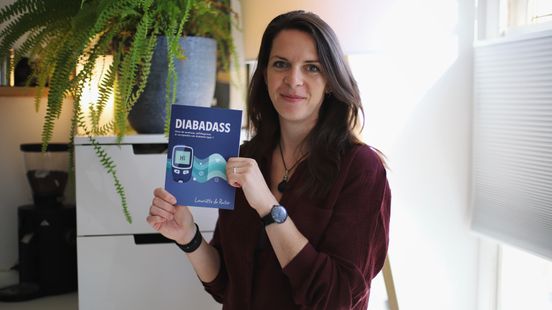
Na een griepje tijdens wintersport had Lauriëtte plots diabetes: ‘Het kan iedereen overkomen’

Lauriëtte de Ruiter ontdekte ruim tien jaar geleden dat ze diabetes type 1 heeft. Sindsdien kan ze nooit meer zonder nadenken een pizza, taartje of gezonde salade eten. “Het is een tweede fulltimebaan waarvoor je niet betaald wordt.”

I Can't Quite Remember My Name

Thomas Hawk posted a photo:

I Can't Quite Remember My Name

Found Kodachrome Slide

Thomas Hawk posted a photo:

Found Kodachrome Slide

Sunrise over Lavender Bay

gabski85 has added a photo to the pool:

Sunrise over Lavender Bay

Sunrise over Lavender Bay

gabski85 has added a photo to the pool:

Sunrise over Lavender Bay