The Guardian

Latest news, sport, business, comment, analysis and reviews from the Guardian, the world's leading liberal voice

Max Verstappen wins chaotic F1 Bahrain GP in Malaysia after rain causes farcical scenes

  • First win of season for Dutchman after long rain delay

  • Heartbreak for Russell as power units struggle in weather

Max Verstappen won a chaotic Bahrain Grand Prix in Malaysia with a dominant drive for Red Bull, his team’s first win of the season, beating the Mercedes of Kimi Antonelli into second. The Italian’s teammate and title rival George Russell was forced to retire with five laps to go leaving the British driver’s title hopes shattered and Antonelli within touching distance of the championship.

Lewis Hamilton was third for Ferrari, making a remarkable comeback after a torrid afternoon, starting on the slick rubber tyres in the wet which dropped him as far back as 17th before reviving with a superb drive, including a late pass on Isack Hadjar who finished fifth. Ferrari’s Charles Leclerc was fourth after a race marked by farcical scenes before it was even underway. This season’s engine formula was found sorely wanting the first time it was tested in wet conditions.

Continue reading...

Jacob Rees-Mogg accuses Tucker Carlson of ‘verging on defending Hitler’

Former Tory minister defends UK decision to enter war in podcast with US rightwinger and Putin sympathiser

The former Tory minister Jacob Rees-Mogg has found himself defending Britain’s decision to fight against Adolf Hitler after inviting the US rightwinger and Vladimir Putin sympathiser Tucker Carlson into his home for an interview.

During the encounter, Carlson repeatedly suggested the west was to blame for inviting aggression from Russia and said of the prospect that Britain could have lost to Hitler: “Who cares?”

Continue reading...

Burnham’s plans for social care and its workers are admirable but changes must come quickly | Heather Stewart

Money is needed now for a system that has left families including mine struggling their way unsupported and forgotten

As one of many hundreds of thousands of people in the UK with a parent with Alzheimer’s, the passage in Andy Burnham’s speech about social care moved me to tears.

My mother had not even been diagnosed when I watched Theresa May announce her 2017 general election manifesto in a hall in Halifax – with care funding at its heart.

Continue reading...

VK: Voorpagina

Volkskrant.nl biedt het laatste nieuws, opinie en achtergronden

Verstappen houdt in Maleisië het hoofd koel en weet na maanden weer wat winnen is

Lezersreacties: ‘Benieuwd wanneer Máxima een onderzoek naar haar (voor)ouders laat doen’

Japanese Macaque

Jodi's Journeys has added a photo to the pool:

Japanese Macaque

Arashiyama Kyoto Monkey Park Iwatayama

Suidobashi, October 2018.

mikeleonardvisualarts has added a photo to the pool:

Suidobashi, October 2018.

Wel.nl

Minder lezen, Meer weten.

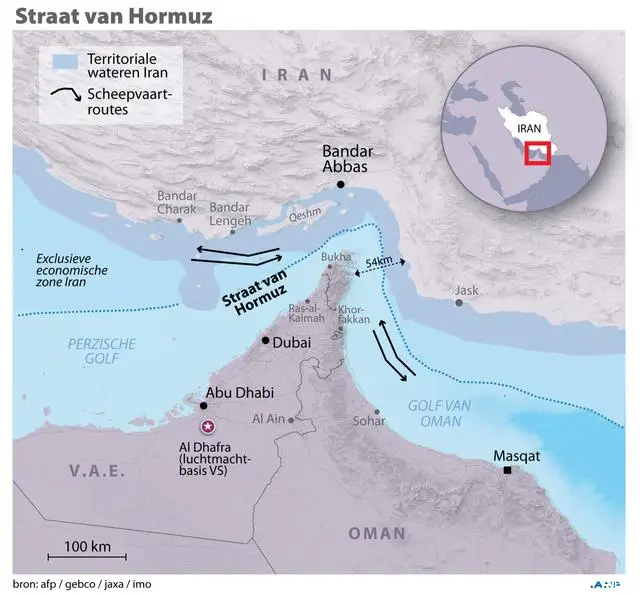
Iran: zeven voorwaarden aan VS voor heropening Straat van Hormuz

De Verenigde Staten moeten aan zeven voorwaarden voldoen voordat Iran de Straat van Hormuz heropent, stelt de Iraanse parlementsvoorzitter Mohammed Bagher Ghalibaf.

Volgens het staatspersbureau IRNA verklaarde Ghalibaf, tevens hoofdonderhandelaar, dat de belangrijke zeestraat afgesloten blijft totdat aan de voorwaarden is voldaan. De eisenlijst is gebaseerd op het tussentijdse akkoord van juni. Teheran heeft de lijst via bemiddelaar Qatar aan de Amerikaanse regering overhandigd.

Iran eist onder meer dat de VS een einde maken aan de zeeblokkade van Iraanse havens en schepen. Ook moeten de VS het verbod op Iraanse olie-export opheffen, Iraanse tegoeden vrijgeven, alle sancties tegen het land intrekken en alle militaire acties tegen Iran en zijn regionale bondgenoten, zoals Hezbollah in Libanon, staken.

Volgens Ghalibaf is de tijd van afwachten en het opleggen van eenzijdige eisen voorbij. De positie van Iran is volkomen duidelijk en definitief, voegde hij volgens IRNA toe.


Taskforce gaat voor Trump risico's en kansen AI in kaart brengen

WASHINGTON (ANP/AFP) - Een taskforce van het Witte Huis gaat de risico's en kansen van kunstmatige intelligentie (AI) in kaart brengen. Ook wordt gekeken hoe overregulering kan worden voorkomen, om innovatie niet in de weg te zitten. Dat heeft het hoofd van de taskforce, Jay Clayton, gezegd tegen The Wall Street Journal.

Clayton, directeur van de Amerikaanse nationale inlichtingendiensten, is door diverse media al bestempeld als de nieuwe AI-tsaar in de regering van president Donald Trump. Die titel is evenwel nog niet bevestigd. Clayton zou de tweede worden met die informele titel, na investeerder David Sacks, die de rol vervulde aan het begin van Trumps tweede termijn en inmiddels is opgestapt.

De nieuwe zogenoemde Super Intelligence Force krijgt 120 dagen de tijd om verslag uit te brengen over de risico's en kansen van AI. Volgens Clayton is het belangrijk dat de VS voorop blijven lopen op dit vlak. Onder anderen vicepresident JD Vance en minister van Financiën Scott Bessent zijn ook onderdeel van de taskforce.


Verstappen wint in Maleisië eerste grand prix van dit seizoen

SEPANG (ANP) - Max Verstappen heeft eindelijk zijn eerste zege van dit seizoen binnen in de Formule 1. De viervoudig wereldkampioen won in zijn Red Bull na een chaotische aanloop op dominante wijze de Grote Prijs van Bahrein, die in Maleisië werd verreden.

De Italiaanse kampioenschapsleider Kimi Antonelli (Mercedes) finishte als tweede, Lewis Hamilton reed in zijn Ferrari naar de derde plaats.

De race begon ruim anderhalf uur later dan gepland. Er was eerst lang oponthoud door zware regenval en later door stilgevallen auto's in de opwarmronden. Het bleek dat software in de half-elektrische auto's niet functioneerde in de natte omstandigheden.


The Register

Biting the hand that feeds IT — Enterprise Technology News and Analysis

Revive Raskin's 3 laws of software with humane work that considers a dev's duty of care

In 1942, Isaac Asimov formulated three laws of robotics. 58 years later, Jef Raskin responded with three laws of human-computer interface design. They haven’t been bettered yet. There are rules, and even laws, about designing computer user interfaces. Even after 35 years of Linux, which has brought Unix to the masses, the FOSS world has not yet really grasped this. In the meantime, the proprietary software world is busily forgetting everything it once knew. Sometimes these rules surface today, and the FOSS folks often get very cross when reminded that they’re user-interface scofflaws. Marcin Wichary’s recent blog post, They had no concept of a duty of care to their users, is an excellent recent example. (The Reg FOSS desk much admires Mr Wichary’s writing, to the extent that we bought his history of the keyboard, Shift Happens.) In his latest post, Wichary refers to CHERI Project boffin David Chisnall. Chisnall is a long-term Vim user – we all have our failings – and recently recounted trying NeoVim. He uses Vim’s persistent-undo feature, which records changes in a separate directory, so that you can repeatedly undo until you get back to changes you made weeks or months earlier. He’s customized where it’s kept, and when he tried the NeoVim fork, it overwrote his Vim undo file. In a later update to his post, he acknowledges that there was a warning, but he expected it to be safe. It was not safe. It overwrote records of more than a decade’s worth of changes. As he puts it: “Vim has kept this working across major version upgrades over a period of about 20 years. I don’t even think about it, it’s just part of Raskin’s First Law: A program may not harm a user’s data or, through inaction, allow a user’s data to come to harm. If vim or the computer crash, or if I close a file and come back to it six months later, my undo history is still there.” Wichary expands Chisnall’s citation of Raskin’s first law by giving all three, but just in case you’re not a follower of “Golden Age” science fiction, a little context. Asimov introduced his three laws in a short story called “Runaround”, in Astounding Science Fiction magazine* in May 1942. (The story was later collected in the anthology I, Robot – which is nothing like the terrible 2004 film.) A robot may not injure a human being or, through inaction, allow a human being to come to harm. A robot must obey the orders given it by human beings except where such orders would conflict with the First Law. A robot must protect its own existence as long as such protection does not conflict with the First or Second Law. Asimov’s idea was that by setting these rules, he could end the terrible genre of killer-robot stories that was already tired and stale by 1942. Jef Raskin, the lead designer of Apple’s original Macintosh project, attempted to bring similar clarity to software UI. Raskin’s three laws are: A computer shall not harm your work or, through inaction, allow your work to come to harm. A computer shall not waste your time or require you to do more work than is strictly necessary. An interface is humane if it is responsive to human needs and considerate of human frailties. He defined them in his 2000 book The Humane Interface, which you can still buy, or borrow from the Internet Archive. Sadly, Raskin died in 2005, but we have written about his work and his influence several times. He did set some of the direction of the original Macintosh. After Steve Jobs was booted off the Lisa, he took over the Macintosh – as described in The Canon Cat and the Mac that Steve Jobs killed. Raskin quit, and instead designed the remarkable Canon Cat, as we described a couple of years ago. We suspect Raskin was not a fan of Vi, the forerunner of Vim. We aren’t either, which is why we chose the year in the headline of this story: it’s the year Bill Joy wrote vi. Raskin criticized modal software, which requires extra mental effort from the user. So did another UI pioneer, the late great Larry Tesler, who invented the cut/copy/paste trio of commands. Tesler was known for his dictum “Don’t mode me in!” and even had a car license plate reading “NOMODES.” Dr Chisnall has some history of upsetting Unix fans – we’ve referred to one of his papers before: in 2018, he wrote C Is Not a Low-level Language: Your computer is not a fast PDP-11. Unix fans really didn’t like this. This vulture has been told to kill himself for daring to criticize C before now. (We wish we were joking, but no.) Although he has now updated his Mastodon post, the NeoVim fans are not happy. Indeed, one has lambasted this vulture on Bluesky for sharing Wichary’s post. It is interesting to note that NeoVim is the recommended editor in Omarchy, and until recently, the NeoVim developers cited a tweet from DHH on the project website. After an acromonious debate, the pull-quote was removed right around the time of Chisnall’s and Wichary’s posts. In the wide world of software design, we don’t expect the right-wing edge of that community to innovate much in ease of use. In a way, Unix and C embody a machismo infused school of software design: that of enjoying the process of mastering things which are hard to use. However, there are other types of software. We recently enjoyed reading about emulating an original Macintosh on a £0.60 chip. That’s $0.80 and of course the computer is a Raspberry Pi – but not even a Pi Zero: it’s a Pi Pico, a microcontroller. There is still some hope that the world can rediscover tiny, simple, user-centric software, built to be friendly first, and for rich functionality second. And, it almost goes without saying, hand-coded without bot assistance. Bootnote * Astounding magazine changed its name to Analog in 1960, and it’s still around. We recommend it. If you haven’t read Asimov’s original “Runaround”, that issue of Astounding is on the Internet Archive too. ®

Rijnmond - Nieuws

Het laatste nieuws van vandaag over Rotterdam, Feyenoord, het verkeer en het weer in de regio Rijnmond

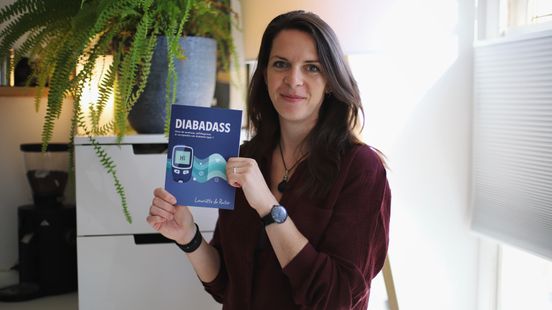
Na een griepje tijdens wintersport had Lauriëtte plots diabetes: ‘Het kan iedereen overkomen’

Lauriëtte de Ruiter ontdekte ruim tien jaar geleden dat ze diabetes type 1 heeft. Sindsdien kan ze nooit meer zonder nadenken een pizza, taartje of gezonde salade eten. “Het is een tweede fulltimebaan waarvoor je niet betaald wordt.”

I Can't Quite Remember My Name

Thomas Hawk posted a photo:

I Can't Quite Remember My Name

Found Kodachrome Slide

Thomas Hawk posted a photo:

Found Kodachrome Slide

Suidobashi, October 2018.

mikeleonardvisualarts posted a photo:

Suidobashi, October 2018.

Sunrise over Lavender Bay

gabski85 has added a photo to the pool:

Sunrise over Lavender Bay

Sunrise over Lavender Bay

gabski85 has added a photo to the pool:

Sunrise over Lavender Bay

Sunrise over Lavender Bay

gabski85 has added a photo to the pool:

Sunrise over Lavender Bay

Pincushion Protea 1

rajbhoy has added a photo to the pool:

Pincushion Protea 1

Pincushion Protea, Leucospermum. At the Blue Mountains Botanic Garden in Mount Tomah, NSW Australia.

MetaFilter

The past 24 hours of MetaFilter

Ever wanted to type on an ever-rolling conveyor belt of keys?

Google Japan has you covered. What about a mobius loop, to code with all your friends? One long bar? A rotary dial? A Spoon!? The list goes on! Full of deadpan puns, surprisingly high quality prototypes, and tongue in cheek humour, Google Japan have enough light hearted product concepts to keep a smile in your face for a good long while.