Bahrain Mujagata is just 21 years old and balances taxi driving with university studies and acting classes
“I’ve got T-shirts older than you!” The joke draws laughter from a table of black-cab drivers gathered in the Astral cafe on Regency Place in Westminster. Around the table, cabbies swap stories accumulated over decades behind the wheel: picking up the England World Cup hero Geoff Hurst, ferrying senior politicians around London, and navigating the capital long before smartphones and satnavs existed.
At just 21, Bahrain Mujagata is an anomaly among them. In late 2025, he became London’s youngest licensed black-cab driver after completing the Knowledge – the notoriously demanding test of the capital’s streets – in just two years and five months. Most candidates take three to four years to qualify, according to Transport for London.
Listeners in the 17th and 18th centuries experienced music in a startlingly vivid – and physical – way. A fascinating academic project is wondering if we should let ourselves be much more moved, and get moving. Plus: a prime minister’s musical legacy?
Professor Bettina Varwig wants to get us moving – and feeling, and listening, but primarily moving. The University of Cambridge academic says classical audiences today are “asked to leave our breathing, pulsing, feeling bodies at the door”. In concert halls we are told not to move or make a sound, subdue all the things that make us human. Whatever you do, don’t give in to the things your body is viscerally telling you when you experience a piece like Bach’s St John Passion, the way the music churns emotions and agitates your sinful heart. You have to listen passively, you can’t sigh or cry or clap in the wrong place, even if that’s what your whole being is telling you that you need to do to communicate the corporeal and spiritual pain the music is putting you through.
Varwig dreams of a different world. Her research focuses on how 17th and 18th-century listeners responded to music. “When you read about how music affected listeners in Bach’s time, their testimonies are striking in their bodily intensity,” she says. “Music contracted their innards and made their hearts leap. It could taste like vinegar in your throat. It could melt your earwax. It could draw your soul out of your body.”
The British government wants "trusted" news sources to be made more prominent on social media in plans that seem set to cause controversy with free speech advocates. In a Green Paper published Tuesday, the Department for Culture, Media and Sport (DCMS) laid out its aim to improve access to reliable news sources on online platforms. This is part of broader reforms to the UK's public service media system, intended both to ensure it continues to serve the British public and to support an eventual managed transition to internet-based TV. DCMS observes in the report "Watch this Space: A new strategic direction for UK media" that there has been a shift in how people consume news. For 75 percent of young people aged 16-24, social media is their main source, while more than half of UK adults now include social media as one of the ways they get updates. As Reg readers are well aware, while social networks provide access to a greater range of news sources, they are also a superb conduit for misinformation and disinformation, with "the potential for less accurate material to replace trustworthy sources as content is increasingly shaped by algorithms and AI." Because of this, the government is inviting feedback on its proposals. These would require social media companies and video-sharing platforms to make sure that news content from public service media (PSM), which includes the BBC, ITV, STV, Channel 4, S4C, and Channel 5, plus other trustworthy providers, is "prominent and easy to find on their platforms." How this would be achieved is up for discussion. DCMS suggests that it could involve a range of national and local news publishers being given prominent placement in search results or recommendation feeds when people search for news. The government claims to be keeping an open mind on this, seeking views on whether it can be achieved voluntarily, whether all PSM content should be prominent, and which platforms ought to be in scope. The Green Paper says that PSM providers are held to higher regulatory standards than other content providers, and this in turn increases their costs. Historically, they were also more prominent to audiences, but "in a platform environment driven by algorithmic recommendations, media is frequently optimized for engagement rather than public value." The paper claims that the risk is stark, especially for young people, and that there is broad societal consensus that such audiences should have guaranteed access to "high-quality, safe and educational content." This is consistent with the government's recent actions to protect children online, it further claims. But critics will argue that the government is trying to control the narrative, forcing social media platforms to give higher prominence to news sources that may be seen as part of the establishment or less likely to be critical of the government itself. We can only imagine the reaction of X owner and "free speech absolutist" Elon Musk, for example, who has openly clashed with the UK government on numerous occasions. We asked X for comment on this article. Jemimah Steinfeld, chief exec of campaign group Index on Censorship, said the government proposals are a cause for concern. "While the proposal sounds well and good – we all want less mis and disinformation online – who gets to decide and define what is 'trustworthy' is ripe for abuse," she told The Register. "Just look elsewhere for evidence. In the USA, for example, Donald Trump calls CNN and other heritage news companies 'fake news.' Do we essentially want to give leaders more power to control what we do and don't see?" Social media news reforms must therefore be "transparent and proportionate," according to Hanna Basha, a partner at London law firm Payne Hicks Beach. "The government is right to consider how trusted and regulated news providers can remain visible and accessible to the public," she said. "However, any new prominence requirements will need to be carefully balanced against freedom of expression and existing obligations on platforms under the UK's online safety framework, while providing clarity about how trusted news sources are identified and promoted." Also part of the Green Paper consultation is the future of television. DCMS notes the TV landscape is undergoing "a profound shift" from traditional broadcast to online linear viewing, creating a hybrid landscape between IPTV, traditional digital terrestrial television (DTT), satellite broadcasting, and cable. While online-only access is growing, a significant number of viewers continue to rely on traditional broadcast platforms. But maintaining the DTT network beyond a certain point means broadcasters carry the costs of multiple distribution methods to an ever-shrinking number of households relying on DTT. It believes this point may come as early as 2034, but that the government will set out the plan for a managed switch-off of DTT services, either on expiry of current licenses on December 31, 2034, or following a time-limited extension to December 31, 2044. The Media Green Paper public consultation started on June 23 and will run for ten weeks until midnight on August 31. Those wishing to respond can do so here, or by sending an email to watchthisspace@dcms.gov.uk. ®
Ruim twee derde van alle Nederlanders heeft nog nooit nagedacht over hun digitaal nalatenschap. Dit kan tot schrijnende situaties leiden, waarschuwt de Alliantie Digitaal Samenleven. „Ga je voordat de kist gesloten is nog iemands vingerafdruk afnemen, zodat je in hun apparaat kan?”
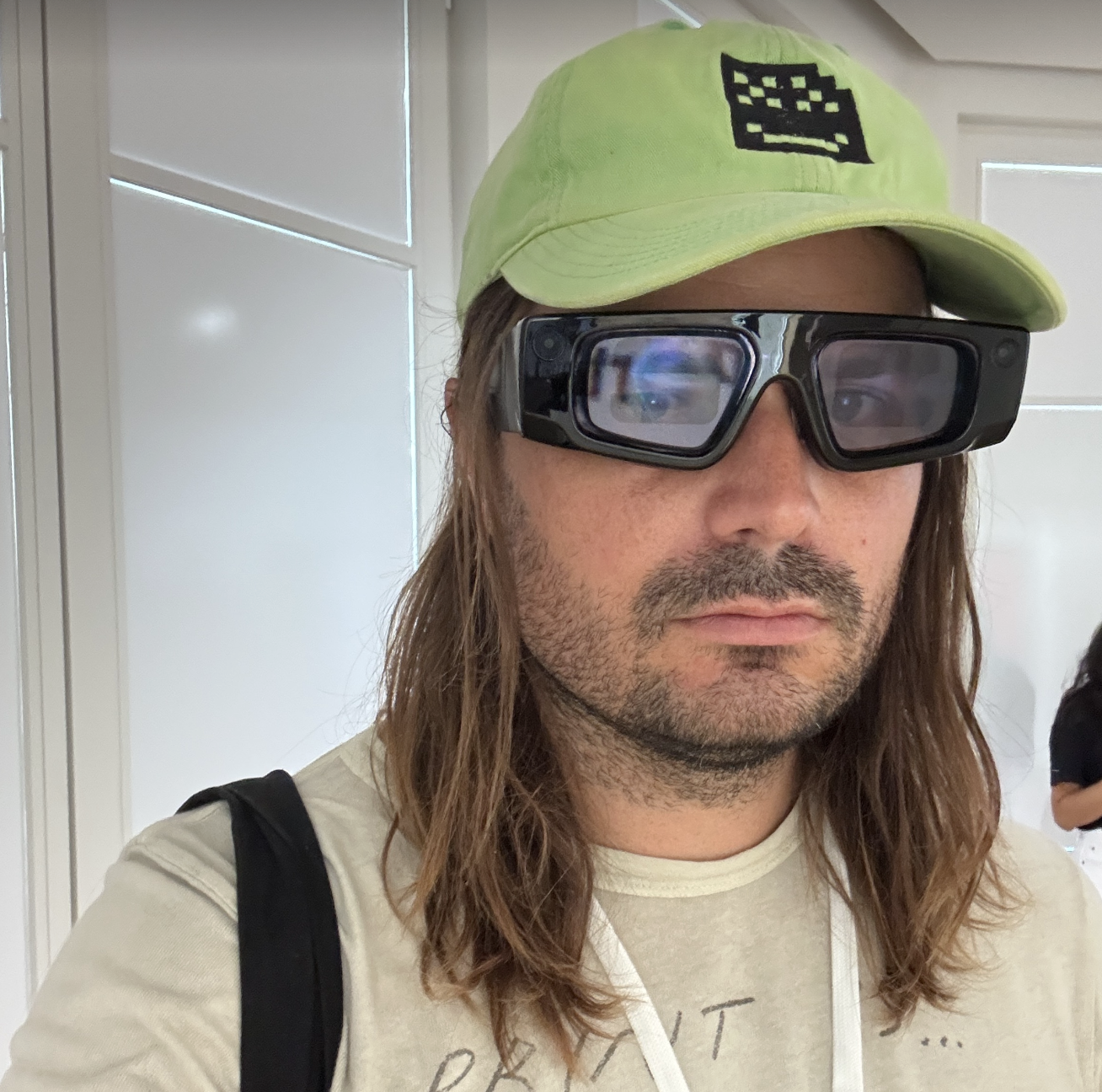
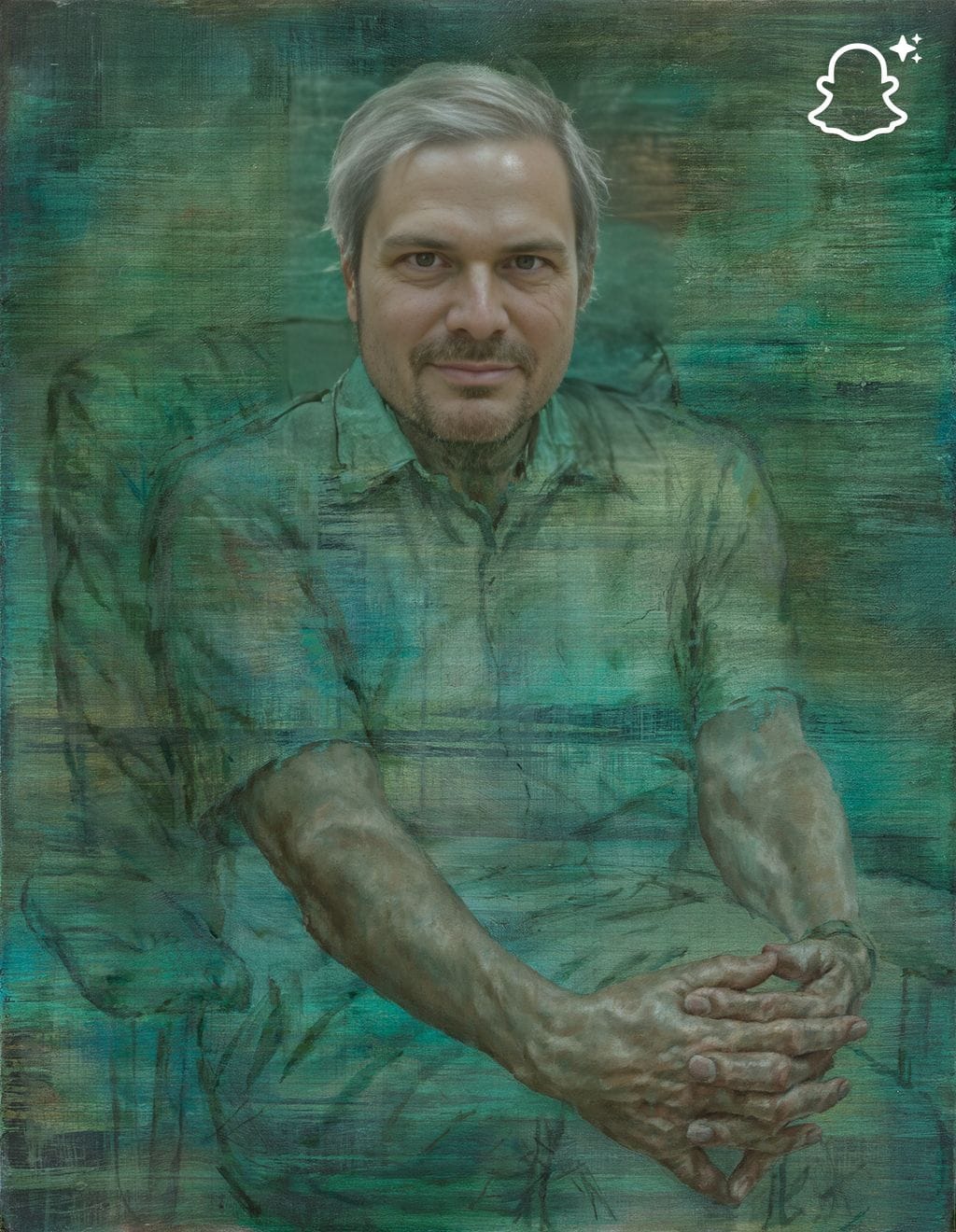
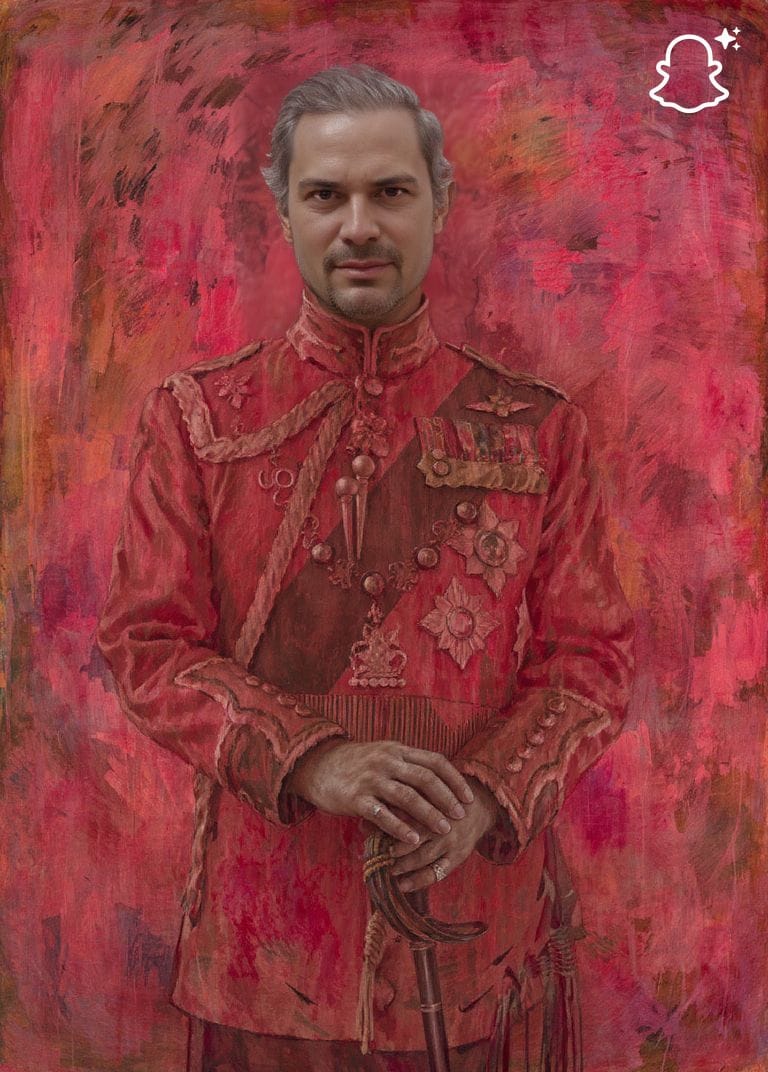
I am staring at a painted portrait of King Charles, who is wearing a red suit. The comically oversized and heavy Snap Specs I am wearing have basically created a digital version of the real painting and overlaid it over the real thing. A narrator speaking through the glasses asks me to reach out and touch a butterfly perched on his right shoulder. Through the glasses, I see a digital version of my hand reach out. The butterfly takes off and floats toward my ghostly hand. It lands on my fake fingers, and clips through them. Imagine yourself as royalty, a narrator in the Snap Specs says to me. King Charles’ face morphs into a version of my own, though it’s been run through an AI filter to look thinner, smoother, yet somehow older.
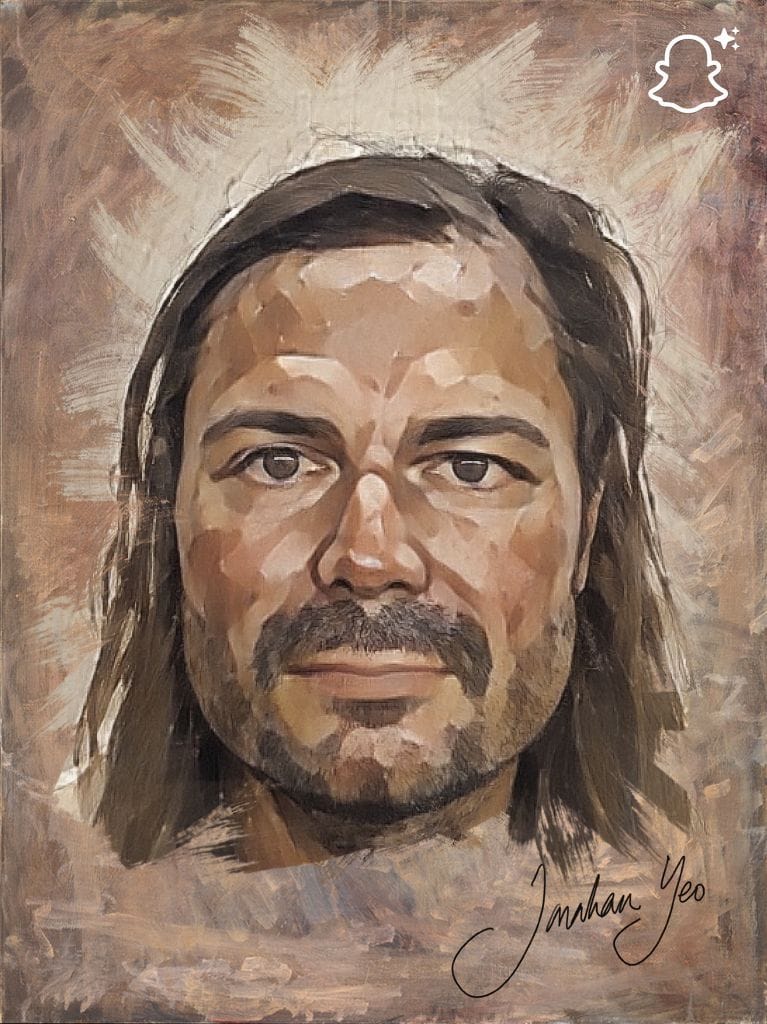
I walk to the next painting and stand on the black dot I’ve been told to stand on. The painting looks like a blank-ish canvas. I am positive I am about to see the same magic trick I’ve seen several times in the last few minutes; my face is going to be “painted” on the canvas the way it has been on several other portraits. The narrator starts talking to me. His voice is much fainter. He starts talking, and I look slightly away from the painting. The experience stops. I get a staffer to help me reset the glasses. I look back at the painting. The narrator begins talking. I slightly turn my head. The experience stops. I look at the painting again. It starts over. I remember that a staffer had told me not to look away from the paintings or the experience would stop. I do not move my head this time. Another AI version of my face appears on the canvas. I walk away, and do not feel as though I have just tried transcendent futuristic technology.
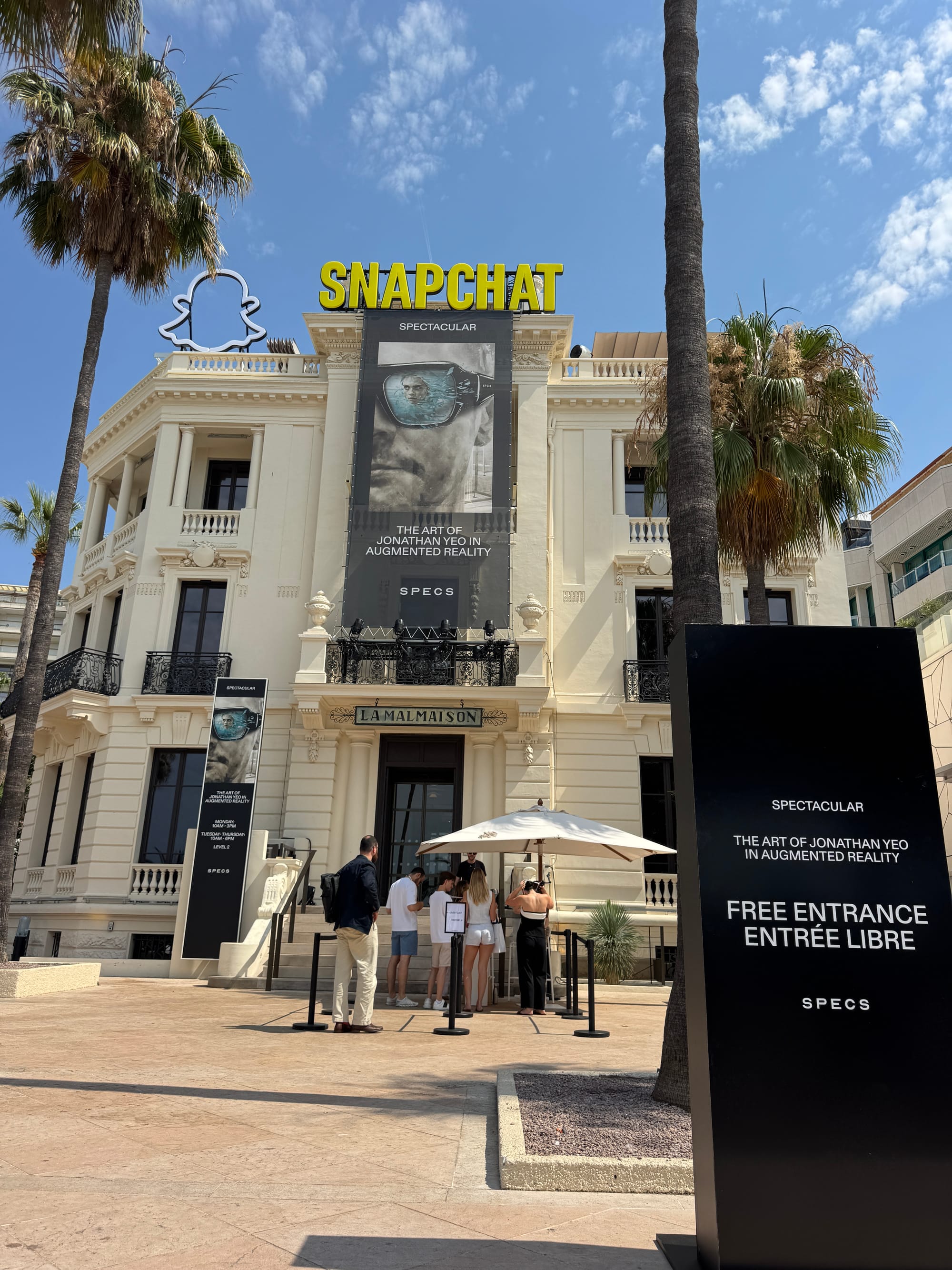
Snap let people try the glasses at “Spectacular, The Art of Jonathan Yeo in Augmented Reality,” a museum takeover at the Cannes Lions advertising festival in France, where nearly every big tech brand was pitching its platform’s advertising capabilities, and where I am working on a few stories for 404 Media. I don’t write about gadgets all that often, but with the Snap Specs getting lots of mostly negative attention and with investors actively begging CEO Evan Spiegel to not make them, I figured that, given the opportunity, I would put them on my face. Snap’s experience was tightly curated (the glasses don’t come out for four months), and was basically an audio/video tour of a few paintings of celebrities.
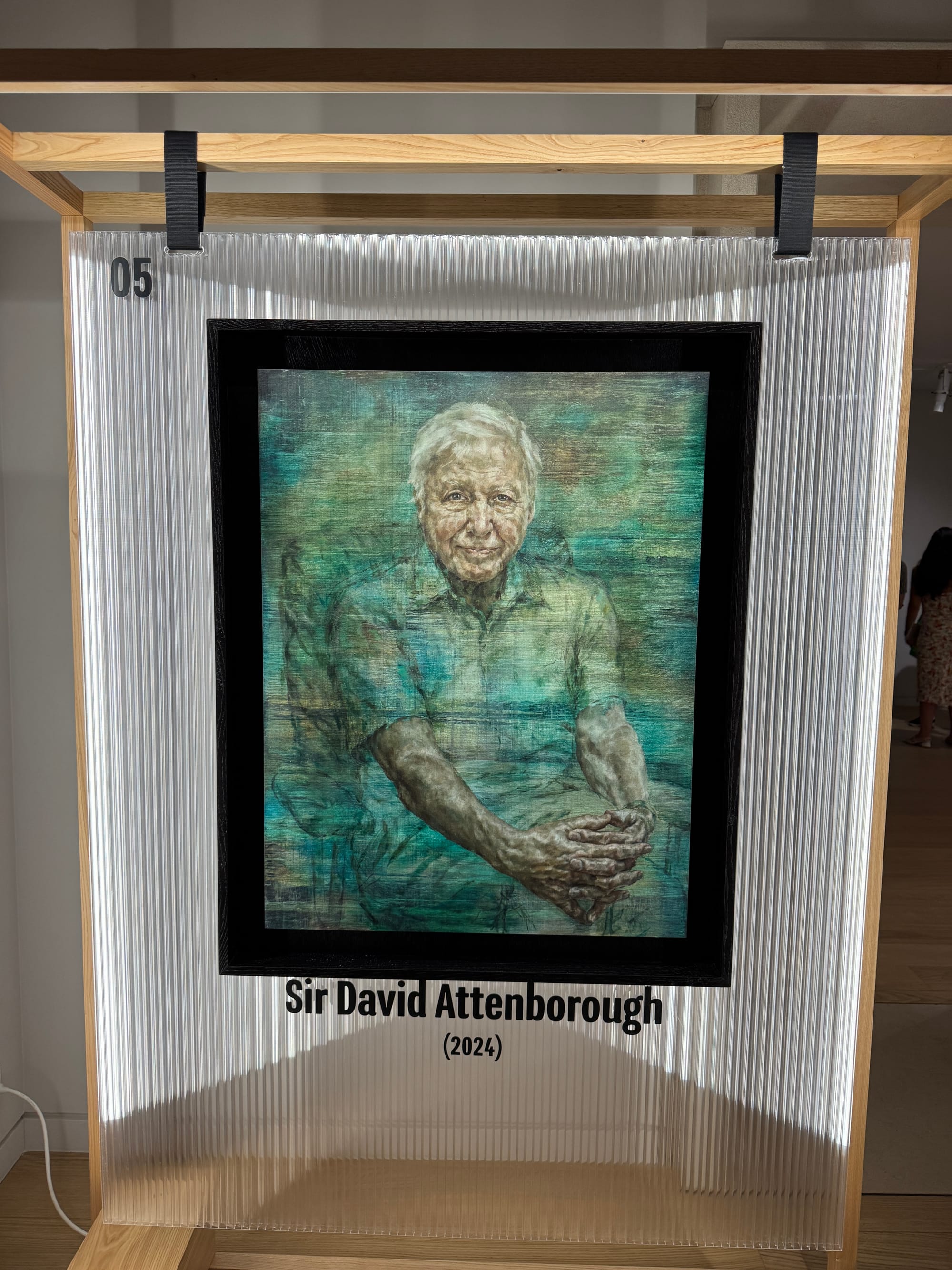
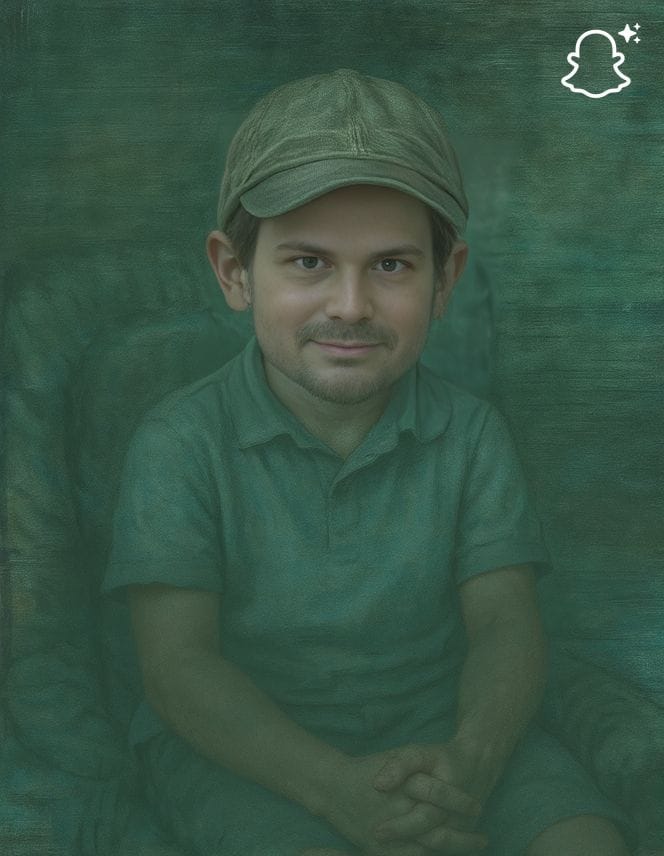
The flagship augmented reality experience for Snap’s new, widely clowned-upon glasses is essentially the same thing that brands have been doing at museums for 15 years now. Rather than use your phone to make art pop off the wall, it uses the $2,195 glasses that weigh “just 132 grams,” a Snap press release says (most regular glasses weigh between 25-50 grams) to make paintings of celebrities blink at you. At the beginning of the experience, my face was scanned on an iPad and then was presumably run through various AI filters to let me replace celebrity faces with my own. A portrait of Jony Ive in which he is holding an iPhone put my face on that iPhone, for example. A portrait of David Attenborough allowed me to “look into the past” and “look into the future” by running my face through different age filters; the result was an AI-ified version of me with a tiny head and a goatee as a child, wearing an enormous hat, and an older version of myself that I could flick back and forth to with my hand.
This was the type of brand experience I’ve done a million times at different conferences and it was so surface level as to be barely notable, but the glasses are indeed very heavy. They didn’t hurt to wear on my big head for 10 minutes, but I couldn’t imagine wearing them much longer than that. The visuals didn’t make me dizzy or nauseous like some virtual reality glasses have, but the visuals and audio also weren’t that great, and the glasses are augmented reality rather than fully engrossed virtual reality. There were clipping issues and, again, the experience stopped if I even slightly turned my head away from a painting—it is hard to imagine these things working well in real life. I have tried other VR and AR demos. So many are like this. They all have problems even in highly controlled environments and barely do anything more than your phone can do, with the added bonus of being incredibly expensive, uncomfortable, and branding you as an asshole. It was hard to imagine trying these and not dunking on them and, indeed, what I thought would happen did come to pass.
This is to say nothing of the privacy concerns associated with shoving AI into a camera and pair of comically large display glasses. We have written repeatedly about these dangers and they are not worth delving back into in a Snap-specific context, because these glasses are so big, heavy, dorky, and expensive that it is impossible to fantasize a world in which anyone wears them.

/s3/static.nrc.nl/wp-content/uploads/2026/06/24150935/240626VER_2034716339_diginalatenschap.jpg)