404 Media

404 Media is an independent media company founded by technology journalists Jason Koebler, Emanuel Maiberg, Samantha Cole, and Joseph Cox.

Podcast: If AI Is Sentient Then So Is ‘Age of Empires II

Podcast: If AI Is Sentient Then So Is ‘Age of Empires II

We start this week with Matthew’s story about a fascinating paper that argues if LLMs are sentient, then by those metrics so is the classic game Age of Empires II. After the break, Matthew tells us about a wild story out of Texas with a data center being built on land that was donated to be a park. In the subscribers-only section, we talk hacking and basketball.

Listen to the weekly podcast on Apple Podcasts, Spotify, or YouTube. Become a paid subscriber for access to this episode's bonus content and to power our journalism. If you become a paid subscriber, check your inbox for an email from our podcast host Transistor for a link to the subscribers-only version! You can also add that subscribers feed to your podcast app of choice and never miss an episode that way. The email should also contain the subscribers-only unlisted YouTube link for the extended video version too. It will also be in the show notes in your podcast player.


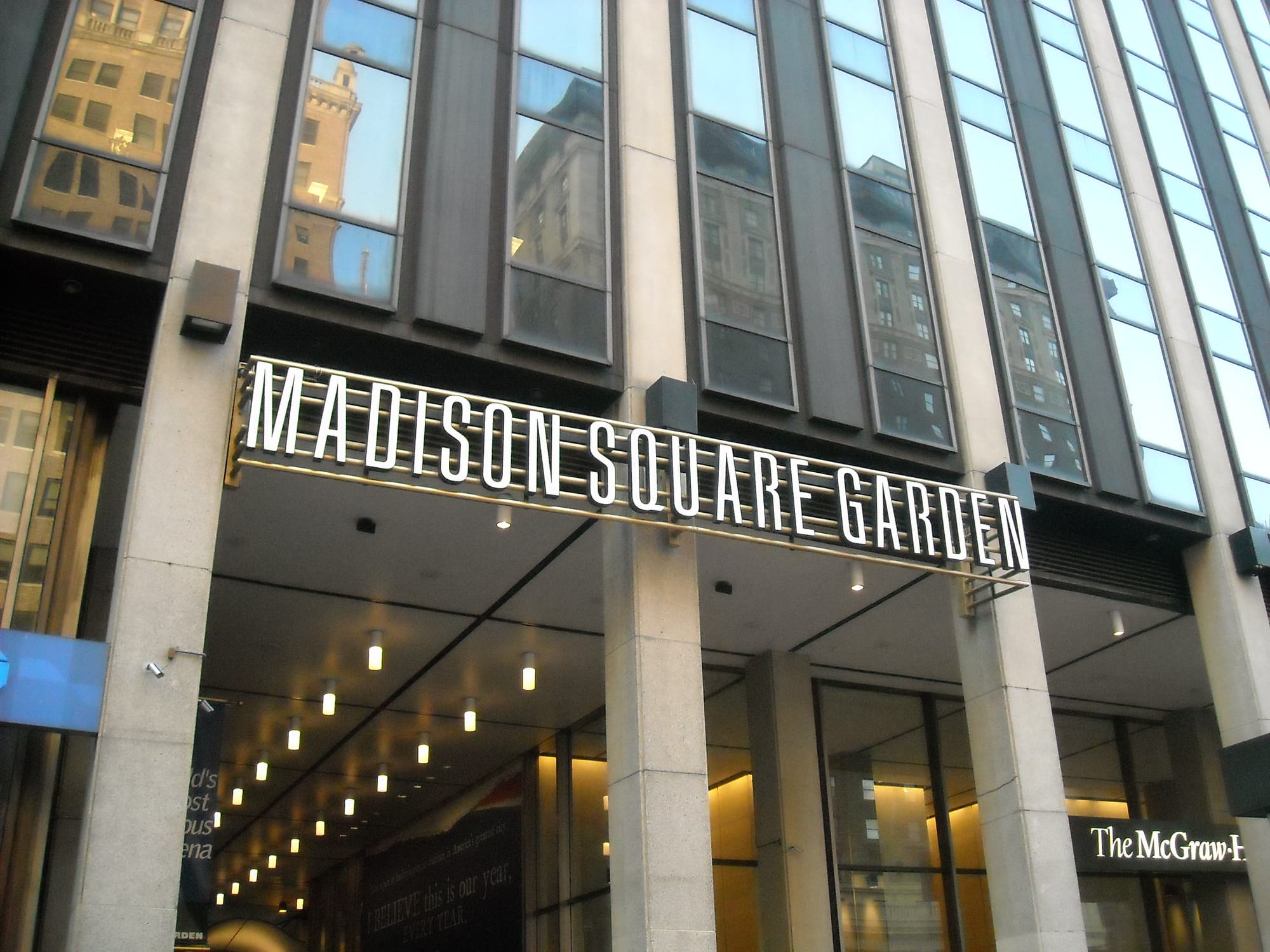
How Hackers Broke into Madison Square Garden

How Hackers Broke into Madison Square Garden

The hackers that stole a large cache of data from Madison Square Garden called a low level employee and tricked them into letting the hackers into MSG’s systems, according to the hackers and 404 Media’s review of the stolen data.

The breach highlights the risk of social engineering over voice calls, sometimes called ‘vishing’. Whereas phishing, where hackers social engineer someone over email or send them a fake login page, has been common for decades, vishing has only become prevalent more recently, especially as young and native English speaking hackers have become a serious cybersecurity threat.

💡
Do you know anything else about this hack or others? I would love to hear from you. Using a non-work device, you can message me securely on Signal at joseph.404 or send me an email at joseph@404media.co.

“Employee vishing on their Microsoft Entra,” a member of the hacking group behind the MSG breach, called ShinyHunters, told 404 Media when asked to explain how the group got in. Microsoft Entra is Microsoft’s identity management product, similar to Okta, which lets employees log into whatever tools or services they need to at work.

Last week 404 Media reported hackers had uploaded data stolen from MSG. A sample 404 Media reviewed at the time included files mentioning Knicks-related personalities, with fields such as “address,” “claim to fame,” and “cost of talent.” In some cases the data included a risk score for certain celebrities, with actor, director and Knicks fan Ben Stiller described as “Low Risk” and rapper Boogie with da Hoodie marked “High Risk.”

Since then 404 Media downloaded the full 45GB data dump and found the contents of a specific MSG employee’s OneDrive. It included work documents, photos, screenshots, and other attachments. A folder called “Personal,” contained the employee’s W-2 form, which included their name and other personal information. This indicated that the breach may have originated from this specific employee. 404 Media found a LinkedIn profile under the same name showing this person worked at MSG. 404 Media is not naming the employee for their privacy.

404 Media then asked a member of ShinyHunters how the group breached MSG. The member provided this employee’s name.

When 404 Media asked the ShinyHunters member to elaborate on how the group compromised MSG, they pointed to a May blog post from Microsoft, which they said was “about us.” That post described what Microsoft called a “methodical, sophisticated, and multi-layered attack.” It details another attack—the blog post was published May 18 and the ShinyHunters member said the MSG hack happened on June 5—but there are similarities.

The Microsoft blog post says hackers first targeted specific people to get their Microsoft Entra credentials. The hackers started the Self-Service Password Reset (SSPR) process, and then tricked users into completing the multifactor authentication prompts that appear legitimate, Microsoft said. “For example, the threat actor might impersonate an internal information technology (IT) support representative and contact the user claiming that their account requires urgent verification, instructing them to approve MFA prompts as part of a routine password reset procedure,” the blog post reads. 

Once in, the hackers can then pivot onto other apps or systems where data may be stored. In MSG’s case, the dump includes data taken from a SharePoint instance, Microsoft’s sharing and collaboration platform.

The ShinyHunters member didn’t elaborate beyond the blog post, but told 404 Media: “​​We called the employee and had them do the SSPR process,” referring specifically to the MSG hack. 

Law firm Morgan and Morgan has filed a class action lawsuit related to the breach, arguing MSG’s surveillance of visitors led to it. When asked if ShinyHunters targeted MSG because of the venue’s surveillance practices, the member said, “Yes we thought they would pay for that reason but they surprisingly did not.”

MSG did not respond to a request for comment.

404 Media reported this week the data dump contained a dossier on activists who had opposed MSG’s facial recognition program.

Euclid’s view of our galaxy’s bulge

europeanspaceagency posted a photo:

Euclid’s view of our galaxy’s bulge

This is the largest high-resolution photo ever made of our Milky Way galaxy’s centre in visible light. It was taken on 23 March 2025 by the European Space Agency’s Euclid space telescope. Packed with more than 60 million stars, this image opens the door for scientists to confirm the existence of any exoplanet found in this region and measure its mass using tiny changes in starlight over time.

The galactic bulge – the central region of our galaxy – is a vast, tightly packed structure filled mainly with old, cooler stars, giving it its characteristic yellow colour. Seen from some 26 000 light-years away, Euclid observes the galaxy’s centre through a complex foreground of material along its line of sight.

This ultra-wide view towards the bulge reveals not only stars, but also seemingly empty dark regions. The dark patches are not devoid of stars: they mark dense, dust-rich molecular clouds that absorb and scatter light from the bulge behind them. As Euclid looks through two of the Milky Way’s spiral arms, it also encounters regions of active star formation, traced by newly formed, massive blue stars. Their intense ultraviolet radiation ionises surrounding hydrogen gas, producing the faint red glow clearly visible in one of the cutouts.

Click here to download the version of this image with the rough edges from the detector pattern.

Read more about this image here.

Explore this image at the highest resolution in ESASky.

[Image description: A dense field of tiny stars fills this square image taken by the European Space Agency’s Euclid space telescope. The lower and central areas are dominated by bright yellow and gold colours, forming a textured background similar to fine glitter or sand. Dark brown and black patches cut irregularly through the yellow regions, like ink stains or clouds of smoke. Toward the upper left, the colours shift to purple and reddish tones, blending gently into the surrounding star field. Small blue points of light are scattered across the image.]

Technical details: The Euclid galactic bulge survey was conducted in early 2025 using Euclid’s optical camera VIS (monochromatic, one colour). These are first and foremost Euclid images, defined by Euclid’s crisp resolution and spectacularly wide field of view; the colours were added using observations captured in the summer of 2025 with the Canada-France-Hawai'i Telescope's MegaCam camera (CFHT-Megacam) in Hawai’i. The colours captured by MegaCam are in optical light through three broad-band filters (u, g, and r) overlapping the very broad VIS band over the r-band. The appearance of the most luminous stars in these images looks different than those generated from Euclid-only images, with additional diffraction spikes and a subtle halo around the very bright stars. This a consequence of combining Euclid VIS data, for their sensitivity and sharpness, and CFHT-MegaCam for the colours. Subtle differences in optical design of the two telescopes become apparent for the brighter objects.

Credits: ESA/Euclid/Euclid Consortium/NASA, CFHT, image processing by J.-C. Cuillandre and E. Bertin (CEA Paris-Saclay); CC BY-SA 3.0 IGO

Euclid’s galactic bulge survey

europeanspaceagency posted a photo:

Euclid’s galactic bulge survey

This six-gigapixel view of the galactic bulge is the largest high-resolution photo ever made of our Milky Way galaxy’s centre in visible light. It was taken on 23 March 2025 by the European Space Agency’s Euclid space telescope.

This version shows the full survey area, with edge effects from the 3x3 pointing pattern of Euclid's visible camera.

Euclid covered 4.8 square degrees of the sky with this image, corresponding to 22 times the area of the full Moon as seen from Earth. The image has been rotated counterclockwise compared to the celestial projection: north is to the left and east is down.

Read more about this image here.

Explore this image at the highest resolution in ESASky.

[Image description: A dense field of tiny stars fills this wide image taken by the European Space Agency’s Euclid space telescope. The image has an irregular, patchwork shape, with jagged edges and black gaps around the borders. The lower and central areas are dominated by bright yellow and gold colours, forming a textured background similar to fine glitter or sand. Dark brown and black patches cut irregularly through the yellow regions, like ink stains or clouds of smoke. Across the upper part of the image, the colours shift to deeper brown, reddish, and purplish tones, blending into the surrounding star field. Small blue points of light are scattered across the image.]

Technical details: The Euclid galactic bulge survey was conducted in early 2025 using Euclid’s optical camera VIS (monochromatic, one colour). These are first and foremost Euclid images, defined by Euclid’s crisp resolution and spectacularly wide field of view; the colours were added using observations captured in the summer of 2025 with the Canada-France-Hawai'i Telescope's MegaCam camera (CFHT-Megacam) in Hawai’i. The colours captured by MegaCam are in optical light through three broad-band filters (u, g, and r) overlapping the very broad VIS band over the r-band. The appearance of the most luminous stars in these images looks different than those generated from Euclid-only images, with additional diffraction spikes and a subtle halo around the very bright stars. This a consequence of combining Euclid VIS data, for their sensitivity and sharpness, and CFHT-MegaCam for the colours. Subtle differences in optical design of the two telescopes become apparent for the brighter objects.

Credits: ESA/Euclid/Euclid Consortium/NASA, CFHT, image processing by J.-C. Cuillandre and E. Bertin (CEA Paris-Saclay); CC BY-SA 3.0 IGO

Euclid galactic bulge – countless stars

europeanspaceagency posted a photo:

Euclid galactic bulge – countless stars

This image shows an area of the observations of the galactic bulge, made by the European Space Agency’s Euclid space telescope. The galactic bulge – the central region of our galaxy – is a vast, tightly packed structure filled mainly with old, cooler stars, giving it its characteristic yellow colour.

The area is zoomed in ten times compared to the full image.

Explore this image at the highest resolution in ESASky.

Read more about this image here.

[Image description: A very dense field of tiny, closely packed points of light fills the image. The colour is almost uniform, dominated by bright yellow and gold tones across the entire frame. Small white points appear slightly brighter here and there, with a few faint bluish points scattered among them. No large dark patches or strong colour variations are visible, giving the image a smooth, grain‑like appearance.]

Technical details: The Euclid galactic bulge survey was conducted in early 2025 using Euclid’s optical camera VIS (monochromatic, one colour). These are first and foremost Euclid images, defined by Euclid’s crisp resolution and spectacularly wide field of view; the colours were added using observations captured in the summer of 2025 with the Canada-France-Hawai'i Telescope's MegaCam camera (CFHT-Megacam) in Hawai’i. The colours captured by MegaCam are in optical light through three broad-band filters (u, g, and r) overlapping the very broad VIS band over the r-band. The appearance of the most luminous stars in these images looks different than those generated from Euclid-only images, with additional diffraction spikes and a subtle halo around the very bright stars. This a consequence of combining Euclid VIS data, for their sensitivity and sharpness, and CFHT-MegaCam for the colours. Subtle differences in optical design of the two telescopes become apparent for the brighter objects.

Credits: ESA/Euclid/Euclid Consortium/NASA, CFHT, image processing by J.-C. Cuillandre and E. Bertin (CEA Paris-Saclay); CC BY-SA 3.0 IGO

Euclid galactic bulge – molecular cloud

europeanspaceagency posted a photo:

Euclid galactic bulge – molecular cloud

This image shows an area of the observations of the galactic bulge, made by the European Space Agency’s Euclid space telescope. A dense molecular cloud in the foreground, called LDN 10, obscures the light from the galactic bulge (yellow).

The area is zoomed in ten times compared to the full image.

Explore this image at the highest resolution in ESASky.

Read more about this image here.

[Image description: A dense field of tiny, closely packed points of light fills the image. Most of the background is bright yellow and gold. A broad, irregular dark band runs diagonally across the centre, forming connected black and dark-brown patches. Brighter clusters of pale yellow and white points appear above and below this dark band, with a few slightly bluish points scattered throughout.]

Technical details: The Euclid galactic bulge survey was conducted in early 2025 using Euclid’s optical camera VIS (monochromatic, one colour). These are first and foremost Euclid images, defined by Euclid’s crisp resolution and spectacularly wide field of view; the colours were added using observations captured in the summer of 2025 with the Canada-France-Hawai'i Telescope's MegaCam camera (CFHT-Megacam) in Hawai’i. The colours captured by MegaCam are in optical light through three broad-band filters (u, g, and r) overlapping the very broad VIS band over the r-band. The appearance of the most luminous stars in these images looks different than those generated from Euclid-only images, with additional diffraction spikes and a subtle halo around the very bright stars. This a consequence of combining Euclid VIS data, for their sensitivity and sharpness, and CFHT-MegaCam for the colours. Subtle differences in optical design of the two telescopes become apparent for the brighter objects.

Credits: ESA/Euclid/Euclid Consortium/NASA, CFHT, image processing by J.-C. Cuillandre and E. Bertin (CEA Paris-Saclay); CC BY-SA 3.0 IGO

Euclid’s view of our galaxy’s bulge (16:9 cutout)

europeanspaceagency posted a photo:

Euclid’s view of our galaxy’s bulge (16:9 cutout)

This 16:9 cutout is taken from the largest high-resolution photo ever made of the centre of our Milky Way galaxy in visible light. It was captured on 23 March 2025 by the European Space Agency’s Euclid space telescope. A full view of the complete image is available here.

On the right side of the image, Euclid looks through the dense foreground of the Milky Way’s galactic plane, where thick molecular clouds appear as dark patches that obscure parts of the galactic bulge beyond. Moving towards the left, the view rises to higher galactic latitudes: the yellow glow of the bulge becomes clearer, with fewer and more isolated foreground clouds interrupting the starlight.

Read more about this image here.

[Image description: A wide, horizontal view shows a densely packed field of tiny stars. The left side is dominated by bright yellow and gold colours, with only a few dark patches interrupting the glow. Moving towards the right, the image becomes darker and more mottled, with larger irregular black and brown areas cutting into the star-filled background. Subtle purple and reddish tones appear toward the upper right, while small blue points of light are scattered across the scene.]

Technical details: The Euclid galactic bulge survey was conducted in early 2025 using Euclid’s optical camera VIS (monochromatic, one colour). These are first and foremost Euclid images, defined by Euclid’s crisp resolution and spectacularly wide field of view; the colours were added using observations captured in the summer of 2025 with the Canada-France-Hawai'i Telescope's MegaCam camera (CFHT-Megacam) in Hawai’i. The colours captured by MegaCam are in optical light through three broad-band filters (u, g, and r) overlapping the very broad VIS band over the r-band. The appearance of the most luminous stars in these images looks different than those generated from Euclid-only images, with additional diffraction spikes and a subtle halo around the very bright stars. This a consequence of combining Euclid VIS data, for their sensitivity and sharpness, and CFHT-MegaCam for the colours. Subtle differences in optical design of the two telescopes become apparent for the brighter objects.

Credits: ESA/Euclid/Euclid Consortium/NASA, CFHT, image processing by J.-C. Cuillandre and E. Bertin (CEA Paris-Saclay); CC BY-SA 3.0 IGO

The Guardian

Latest news, sport, business, comment, analysis and reviews from the Guardian, the world's leading liberal voice

The Warriors come out to Broadway with Lin-Manuel Miranda musical

Miranda and Eisa Davis’s concept album based on the 1979 film is to be realised for the stage, co-directed by Jenny Koons and Hamilton’s Andy Blankenbuehler

Lin-Manuel Miranda and Eisa Davis’s concept album based on The Warriors, the cult novel and film about warring New York gangs, is to become a Broadway musical next year.

The album, Warriors, was released to critical acclaim in 2024 and followed the eponymous Coney Island clan’s odyssey back to the Bronx after being falsely accused of killing the leader of the city’s biggest gang. The original story was written by Sol Yurick, whose 1965 book was inspired by Xenophon’s ancient epic Anabasis, and it became a Walter Hill action film in 1979.

Continue reading...

‘The family rift is as strong as ever’: how Brexit rocked our relationships

Remain voters recall how they dealt with division over 2016 referendum – and how they feel about their loved ones now

Ten years on from the EU referendum, we asked people how their voting experience had affected their relationships with friends and family.

Some spoke of painful family divisions that emerged between leave and remain voters, while others shared how, despite their political differences, they were able to move on with magnanimity.

Continue reading...

De Speld

Uw vaste prik voor betrouwbaar nieuws.

​Veesector: ‘Om de veestapel te halveren moeten we hem opeten’

Goed nieuws: er lijkt eindelijk een oplossing te zijn voor het stikstofprobleem in Nederland. Dat maakte de veesector vandaag bekend. Om de veestapel te halveren moeten we hem opeten.

“Het is eigenlijk raar dat we er niet eerder op gekomen zijn, want als je de oplossing zo op papier ziet staan, lijkt het heel eenvoudig. De stikstofuitstoot kan omlaag door de veestapel te halveren, dat wisten we natuurlijk al een tijdje en daar werd ook om gevraagd door de politiek. Maar de vraag was altijd: hoe? Daar is nu eindelijk het antwoord op: opeten”, zegt voorzitter van LTO Nederland Ger Koopmans. “Wat mij betreft starten we daar vandaag al mee. Het is namelijk heerlijk barbecueweer.”

Boer Erik schrok in eerste instantie van de gepresenteerde oplossing. “Wat blijft er hier straks over op het platteland als we al die koeien beginnen op te eten? Ik probeer mijn veestapel juist al jaren te verdubbelen.”

Toen hij even later hoorde hoe de hooivork in de steel zat, draaide hij bij. “Gooi die extra biefstuk, XXL-frikandel of welk ander stuntvlees dan ook vanmiddag nog in je boodschappenmandje, want alleen samen halveren we de veestapel. Voor nu.”

&''