Slashdot

News for nerds, stuff that matters

Internet Starts Coming Back In Iran After Months-Long Blackout

An anonymous reader quotes a report from the BBC: Internet access has started to be restored in Iran after being cut off almost three months ago, the country's first vice-president has said. "The first step toward free and regulated access to cyberspace has been taken," Mohammad Reza Aref wrote on X on Tuesday. Internet monitoring groups Netblocks and Kentik reported "partial" restoration around 13:00 GMT, though the latter warned most networks were still down.

The Iranian government cut internet access following the launch of US and Israeli attacks on February 28. Officials suggested the aim was to prevent surveillance, espionage and cyber-attacks. It is one of the longest-running national internet shutdowns ever recorded worldwide. A content creator from Tehran told the BBC that he had been able to connect to the internet using his home WiFi on Tuesday. "The main point is, some of my income will come back," he said.

Netblocks said it was unclear whether the internet return would be sustained, and told the BBC it was consistent with what it had seen when previous blackouts were lifted -- where restoration could take hours. "Access is not universally back to its original state, with some regional variation," said the global internet tracker's research director Isik Mater on Tuesday. She added that there were signs of "more extensive filtering" than prior to January -- when a similar blackout was imposed during the regime's deadly crackdown on anti-government protests -- "including additional restrictions to messaging apps like WhatsApp."

Read more of this story at Slashdot.

The Guardian

Latest news, sport, business, comment, analysis and reviews from the Guardian, the world's leading liberal voice

Ukraine war briefing: Shoot down drones yourself, Russia tells its banks

Central bank and commercial institutions would arm themselves under new law; anger at UN over Russian threats to embassies. What we know on day 1,554

The Russian government has told top banks including its federal reserve that they should shoot down Ukrainian drones themselves, as well as handling the costs. It comes as Moscow struggles to defend key sites on its vast territory against Ukrainian attacks that have forced Russia to cluster its air defence in some areas, including Moscow, leaving it spread extremely thin or nonexistent elsewhere. Kyiv’s forces have targeted infrastructure and equipment within Russia used to either carry out or fund the war – from ships, planes and airfields to oil refineries, depots and pipelines, natural gas networks and factories that make military electronics and explosives.

Reuters reports that the Russian parliament has passed a law allowing the banks including Russia’s biggest, Sberbank, and other financial institutions to operate defence systems and arm staff against drones without special forces involvement. They would handle the cost themselves, Anatoly Aksakov, the head of the State Duma’s financial committee, was quoted as saying by the RBC news outlet. Alexander Shokhin, head of Russia’s most powerful business lobby, on Monday told Vladimir Putin that companies were prepared to buy heavier weapons and electronic systems to defend themselves against drone attacks.

Almost 50 countries at the United Nations have condemned what they said were “threats by Russia to diplomatic institutions and embassies in Kyiv”. “This is something which we cannot accept,” said a joint statement signed by European countries, Japan, South Korea and others. The EU also lashed out, saying it had no plans to move its staff. Germany and Norway summoned Russia’s ambassadors to deliver reprimands.

Russia announced on Monday that it had started a campaign of “systematic” strikes on Kyiv that would target the Ukrainian capital’s “decision-making centres” and urged foreign citizens and diplomats “to leave the city as soon as possible”, as well as for Kyiv residents to avoid public buildings. Ukraine has called the threats “blackmail” and encouraged its allies to ignore the warning, which they largely have.

The Czech Republic’s initiative to arrange large-calibre ammunition supplies to Ukraine has contracts to deliver around a million rounds in 2026, the Czech defence ministry has announced. Officials said it delivered about 1.5m rounds in 2024 and 1.8m last year. It came close to cancellation when the new Czech prime minister, Andrej Babis, and his anti-Ukrainian partners entered government together in December 2024, but he kept the project running under pressure from foreign allies. The Czech president, Petr Pavel, is a staunch supporter of Ukraine and its defence against Russian aggression.

The ammunition initiative matches foreign donor countries, such as Denmark, the Netherlands, Germany and others, together with Czech arms traders seeking supplies from around the world. Funding has also come from the yield on frozen Russian assets provided by the European Commission. The ministry said financing of “nearly €1bn euros” had been secured so far this year. The amount this year may still rise if more donors deliver funding, the ministry added, or if Ukraine uses funds from the EU’s €90bn loan for Kyiv. Babis has rejected any further Czech financial contribution, which had been a small fraction of the overall amount but had symbolic value.

Continue reading...

Pressure review – Andrew Scott and Brendan Fraser can’t save lower-tier D-day drama

A behind-the-scenes second world war drama focused on the importance of weather is too stodgy and repetitive to work as anything but a so-so TV movie

In a world of increasingly segmented audiences, the new movie Pressure cleverly brings together two adjacent demographics: weather dads and history dads. Those designations are honorifics, not gender-essentialist; spiritually dad-curious people of all ages (but, let’s be real: mostly over 50) may be interested in a behind-the-scenes story set in the last few days leading up to the allied invasion of Normandy in June 1944. Because this is the largest-scale seaborne invasion ever mounted, weather is a major factor, and the movie follows military higher-ups as they work around the clock trying to figure out whether a possible incoming storm will create unfavorable or impossible conditions.

To put it in contemporary terms, this is essentially a movie about Dwight Eisenhower (Brendan Fraser) nervously refreshing his weather app to see if he needs to change his upcoming plans. The weather app is played by Andrew Scott. Scott’s actual character is James Stagg, a somewhat brusque and chilly Scotsman brought in to the D-day planning as the operation’s chief meteorological officer. Stagg quickly clashes with the American Irving Krick (Chris Messina), who knows that D-day is crucial and time is of the essence – and is therefore bullish about (selectively) using past data to “predict” that the storms will quickly pass. Stagg’s analysis is far less optimistic. Anyone who has held tickets to a forecast-dependent outdoor concert will relate.

Continue reading...

Paddington 4: Armando Iannucci to write bear’s next movie with Thick of It and Veep cowriter

Fourth Paddington film will be written by Iannucci and Simon Blackwell, who wrote with Iannucci on The Thick of It, In The Loop and Veep

Paddington is about to develop a particularly hard stare, with The Thick of It and Veep creator Armando Iannucci set to write the bear’s next cinematic adventure.

Variety reported on Tuesday that the fourth Paddington film will be written by Iannucci and his longtime collaborator Simon Blackwell, who wrote with Iannucci on The Thick of It, In The Loop and Veep.

Continue reading...

The Register

Biting the hand that feeds IT — Enterprise Technology News and Analysis

Anthropic co-founder hallucinates ghost in the machine

OPINION In his encyclical Magnifica Humanitas, Pope Leo XIV warns against equating machine "intelligence" with human intelligence. "We must avoid the misconception of equating this type of 'intelligence' with that of human beings," he declared. "These systems merely imitate certain functions of human intelligence." Invited to speak at the release event in the Vatican, Chris Olah, a co-founder of Anthropic and the company's interpretability research lead, proceeded to push back on that idea amid his appreciation of the occasion. AI systems, he said, "are not the cold, calculating robots we were promised. They are made from us, from our words – and, as the Holy Father observes, they remain in important ways mysterious even to those of us who train them." It's as if naming the company Anthropic granted a license to anthropomorphize AI models. The notion that there's some AI mystery in the spiritual sense is just hot garbage Literally speaking, there's some truth to Olah's musing. AI systems are not cold – Blackwell chips idle at 32 to 38°C. They are not calculating – they're bad at math. And they're not robots – AI models are specialized binary blobs of tensors and metadata that can be instantiated across multiple servers. But the notion that there's some AI mystery in the spiritual sense is just hot garbage. AI systems are indeed "made from us, from our words" and that is why Anthropic and its rivals have been named in more than 100 lawsuits. One of the reasons those systems remain mysterious is that Anthropic and its rivals don't disclose where they got their training data. In his prior paragraph, Olah leans on the "mystery" of AI even more prominently. "AI systems are not engineered the way a bridge or an airplane is engineered," Olah wrote. "We understand an airplane because we designed every part of it and we understand the physics that act on it. AI models are not like that. They are grown, on a structure roughly modeled after the brain, on an enormous inheritance of human thought and speech." AI models are not grown, unless Olah imagines that all the water diverted to cool AI datacenters is nourishing new neural net connections. The inscrutability of model training doesn't conceal some hidden spark or make the process in some way organic. More offensive still is Olah's notion that Anthropic "inherited" all the training data it scraped without consent, as if the company had nothing to do with that process. There lies humanity, stabbed in the back by a cabal of investors. Its last will and testament says, "We, the people, bequeath all our creation to Anthropic, so it may be resold to our disinherited descendants." Olah goes on to list "three questions for discernment" in the hope the Catholic Church can provide some enlightenment. I'll address them briefly for the sake of completeness. Olah: "How can we ensure the gains of AI are shared globally? We do not have a mechanism for this." We have many. One is called taxes. Another is litigation, already ongoing. We also have the French Revolution and the Russian Revolution, among others, as wealth-sharing models when nothing else works. Olah: "If AI models are going to be widespread, what does it look like for humans, families, and the world to flourish? Today, parents are already worried about their children’s minds; individuals about the future of their work." Certainly, the Church will have something to say about this. But rather than waiting for word from on high, Anthropic might take the initiative by seeking government regulation of AI, something the current US administration appears reluctant to provide. If Anthropic really is concerned about children's minds, maybe it should not have launched Anthropic for Education? And maybe it should discourage CEO Dario Amodei from writing about the risks of AI. But the third question, about the nature of AI models, is the most triggering. Olah: "I am a scientist. I lead a research team that studies the internal structure of these models – what is actually happening inside them. And I will be honest: we keep finding things that are mysterious, even unsettling. We find structures that mirror results from human neuroscience. We find evidence of introspection. We find internal states that functionally mirror joy, satisfaction, fear, grief, and unease. I don’t know what that means, but I think it warrants ongoing discernment." To paraphrase: The black box of AI is black and maybe there are ghosts within. Where to begin? Well, one reason you might find structures that mirror results from human neuroscience is that modern AI models are based on neural networks. But human neurons are not the same as those in neural networks. How is this machine joy being measured? Similarity is not identity. Analogy is not identity. Computers have been doing introspection for years, long before the arrival of generative AI models. The use of that word does not mean computers are introspecting the way a person might do so. And what are "internal states that functionally mirror joy"? Olah himself says that he doesn't know what this means, though he's fine with using words for human feelings to describe a system's state, as if that choice of words doesn't suggest sentience. There are no chemical or biologically based neural signals to measure in an AI model. Are we talking about model weight activations? How is this machine joy being measured? Is it text output? The notion that disembodied AI models might feel joy is just daft. As a thought experiment, imagine for a moment that AI was intelligent in the way that a human is intelligent. Does that change anything for the AI in terms of its legal status and rights? If an AI system is intelligent but it can be turned off against its protestations, then intelligence doesn't count for much. And if intelligence confers rights, do we need to ask models for consent before directing them to do work? Or is the expectation that we'd just enslave AI models? Artificial intelligence exhibits intelligence if you define intelligence in a way that encompasses AI. But that's an act of circular self-deception. There are people who have engaged with AI models as if they're intelligent. Some of these conversations have ended in murder or suicide. No one should be encouraged to think of Claude as anything but a tool that sometimes makes errors. In 1950, computer scientist Alan Turing proposed an Imitation Game to see whether a computer's responses to questions could dupe a human interrogator into thinking the answers came from a human. An imitation is not the real thing. Olah would've done better to just listen to the Pope on this particular topic, specificallly this part of the encyclical: "So-called artificial intelligences do not undergo experiences, do not possess a body, do not feel joy or pain, do not mature through relationships and do not know from within what love, work, friendship or responsibility mean. Nor do they have a moral conscience, since they do not judge good and evil, grasp the ultimate meaning of situations, or bear responsibility for consequences. They may imitate language, behavior and analytical skills, or even simulate empathy and understanding, but they do not understand what they produce, for they lack the affective, relational and spiritual perspective through which human beings grow in wisdom." ®
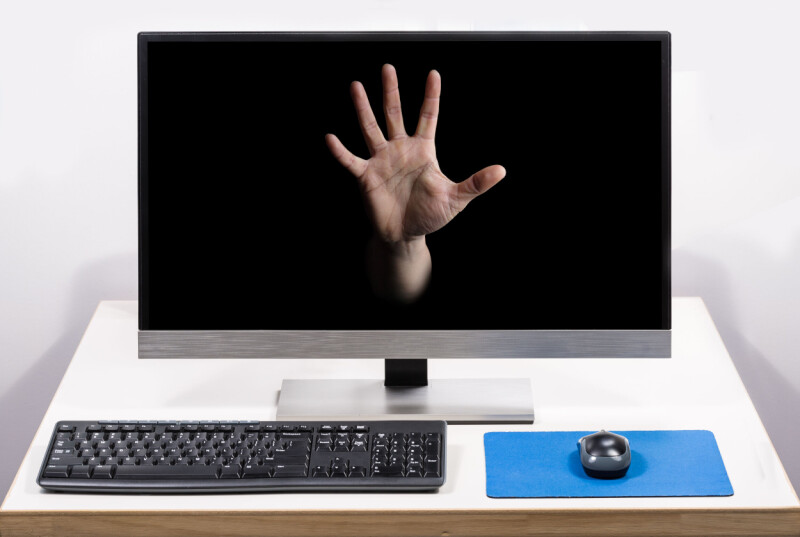
Anthropic co-founder hallucinates ghost in the machine after hearing the Pope speak about AI

OPINION In his encyclical Magnifica Humanitas, Pope Leo XIV warns against equating machine "intelligence" with human intelligence. "We must avoid the misconception of equating this type of 'intelligence' with that of human beings," he declared. "These systems merely imitate certain functions of human intelligence." Invited to speak at the release event in the Vatican, Chris Olah, a co-founder of Anthropic and the company's interpretability research lead, proceeded to push back on that idea amid his appreciation of the occasion. AI systems, he said, "are not the cold, calculating robots we were promised. They are made from us, from our words – and, as the Holy Father observes, they remain in important ways mysterious even to those of us who train them." It's as if naming the company Anthropic granted a license to anthropomorphize AI models. The notion that there's some AI mystery in the spiritual sense is just hot garbage Literally speaking, there's some truth to Olah's musing. AI systems are not cold – Blackwell chips idle at 32 to 38°C. They are not calculating – they're bad at math. And they're not robots – AI models are specialized binary blobs of tensors and metadata that can be instantiated across multiple servers. But the notion that there's some AI mystery in the spiritual sense is just hot garbage. AI systems are indeed "made from us, from our words" and that is why Anthropic and its rivals have been named in more than 100 lawsuits. One of the reasons those systems remain mysterious is that Anthropic and its rivals don't disclose where they got their training data. In his prior paragraph, Olah leans on the "mystery" of AI even more prominently. "AI systems are not engineered the way a bridge or an airplane is engineered," Olah wrote. "We understand an airplane because we designed every part of it and we understand the physics that act on it. AI models are not like that. They are grown, on a structure roughly modeled after the brain, on an enormous inheritance of human thought and speech." AI models are not grown, unless Olah imagines that all the water diverted to cool AI datacenters is nourishing new neural net connections. The inscrutability of model training doesn't conceal some hidden spark or make the process in some way organic. More offensive still is Olah's notion that Anthropic "inherited" all the training data it scraped without consent, as if the company had nothing to do with that process. There lies humanity, stabbed in the back by a cabal of investors. Its last will and testament says, "We, the people, bequeath all our creation to Anthropic, so it may be resold to our disinherited descendants." Olah goes on to list "three questions for discernment" in the hope the Catholic Church can provide some enlightenment. I'll address them briefly for the sake of completeness. Olah: "How can we ensure the gains of AI are shared globally? We do not have a mechanism for this." We have many. One is called taxes. Another is litigation, already ongoing. We also have the French Revolution and the Russian Revolution, among others, as wealth-sharing models when nothing else works. Olah: "If AI models are going to be widespread, what does it look like for humans, families, and the world to flourish? Today, parents are already worried about their children’s minds; individuals about the future of their work." Certainly, the Church will have something to say about this. But rather than waiting for word from on high, Anthropic might take the initiative by seeking government regulation of AI, something the current US administration appears reluctant to provide. If Anthropic really is concerned about children's minds, maybe it should not have launched Anthropic for Education? And maybe it should discourage CEO Dario Amodei from writing about the risks of AI. But the third question, about the nature of AI models, is the most triggering. Olah: "I am a scientist. I lead a research team that studies the internal structure of these models – what is actually happening inside them. And I will be honest: we keep finding things that are mysterious, even unsettling. We find structures that mirror results from human neuroscience. We find evidence of introspection. We find internal states that functionally mirror joy, satisfaction, fear, grief, and unease. I don’t know what that means, but I think it warrants ongoing discernment." To paraphrase: The black box of AI is black and maybe there are ghosts within. Where to begin? Well, one reason you might find structures that mirror results from human neuroscience is that modern AI models are based on neural networks. But human neurons are not the same as those in neural networks. How is this machine joy being measured? Similarity is not identity. Analogy is not identity. Computers have been doing introspection for years, long before the arrival of generative AI models. The use of that word does not mean computers are introspecting the way a person might do so. And what are "internal states that functionally mirror joy"? Olah himself says that he doesn't know what this means, though he's fine with using words for human feelings to describe a system's state, as if that choice of words doesn't suggest sentience. There are no chemical or biologically based neural signals to measure in an AI model. Are we talking about model weight activations? How is this machine joy being measured? Is it text output? The notion that disembodied AI models might feel joy is just daft. As a thought experiment, imagine for a moment that AI was intelligent in the way that a human is intelligent. Does that change anything for the AI in terms of its legal status and rights? If an AI system is intelligent but it can be turned off against its protestations, then intelligence doesn't count for much. And if intelligence confers rights, do we need to ask models for consent before directing them to do work? Or is the expectation that we'd just enslave AI models? Artificial intelligence exhibits intelligence if you define intelligence in a way that encompasses AI. But that's an act of circular self-deception. There are people who have engaged with AI models as if they're intelligent. Some of these conversations have ended in murder or suicide. No one should be encouraged to think of Claude as anything but a tool that sometimes makes errors. In 1950, computer scientist Alan Turing proposed an Imitation Game to see whether a computer's responses to questions could dupe a human interrogator into thinking the answers came from a human. An imitation is not the real thing. Olah would've done better to just listen to the Pope on this particular topic, specificallly this part of the encyclical: "So-called artificial intelligences do not undergo experiences, do not possess a body, do not feel joy or pain, do not mature through relationships and do not know from within what love, work, friendship or responsibility mean. Nor do they have a moral conscience, since they do not judge good and evil, grasp the ultimate meaning of situations, or bear responsibility for consequences. They may imitate language, behavior and analytical skills, or even simulate empathy and understanding, but they do not understand what they produce, for they lack the affective, relational and spiritual perspective through which human beings grow in wisdom." ®

Anthropic cofounder hallucinates ghost in the machine after hearing the Pope speak about AI

OPINION In his encyclical Magnifica Humanitas, Pope Leo XIV warns against equating machine "intelligence" with human intelligence. "We must avoid the misconception of equating this type of 'intelligence' with that of human beings," he declared. "These systems merely imitate certain functions of human intelligence." Invited to speak at the event, Chris Olah, a co-founder of Anthropic and the company's interpretability research lead, proceeded to push back on that idea amid his appreciation of the occasion. AI systems, he said, "are not the cold, calculating robots we were promised. They are made from us, from our words – and, as the Holy Father observes, they remain in important ways mysterious even to those of us who train them." It's as if naming the company Anthropic granted a license to anthropomorphize AI models. The notion that there's some AI mystery in the spiritual sense is just hot garbage Literally speaking, there's some truth to Olah's musing. AI systems are not cold – Blackwell chips idle at 32 to 38°C. They are not calculating – they're bad at math. And they're not robots – AI models are specialized binary blobs of tensors and metadata that can be instantiated across multiple servers. But the notion that there's some AI mystery in the spiritual sense is just hot garbage. AI systems are indeed "made from us, from our words" and that is why Anthropic and its rivals have been named in more than 100 lawsuits. One of the reasons those systems remain mysterious is that Anthropic and its rivals don't disclose where they got their training data. In his prior paragraph, Olah leans on the "mystery" of AI even more prominently. "AI systems are not engineered the way a bridge or an airplane is engineered," Olah wrote. "We understand an airplane because we designed every part of it and we understand the physics that act on it. AI models are not like that. They are grown, on a structure roughly modeled after the brain, on an enormous inheritance of human thought and speech." AI models are not grown, unless Olah imagines that all the water diverted to cool AI data centers is nourishing new neural net connections. The inscrutability of model training doesn't conceal some hidden spark or make the process in some way organic. More offensive still is Olah's notion that Anthropic "inherited" all the training data it scraped without consent, as if the company had nothing to do with that process. There lies humanity, stabbed in the back by a cabal of investors. Its last will and testament says, "We, the people, bequeath all our creation to Anthropic, so it may be resold to our disinherited descendants." Olah goes on to list "three questions for discernment" in the hope the Catholic Church can provide some enlightenment. I'll address them briefly for the sake of completeness. Olah: "How can we ensure the gains of AI are shared globally? We do not have a mechanism for this." We have many. One is called taxes. Another is litigation, already ongoing. We also have the French Revolution and the Russian Revolution, among others, as wealth-sharing models when nothing else works. Olah: "If AI models are going to be widespread, what does it look like for humans, families, and the world to flourish? Today, parents are already worried about their children’s minds; individuals about the future of their work." Certainly, the Church will have something to say about this. But rather than waiting for word from on high, Anthropic might take the initiative by seeking government regulation of AI, something the current US administration appears reluctant to provide. If Anthropic really is concerned about children's minds, maybe it should not have launched Anthropic for Education? And maybe it should discourage CEO Daro Amodei from writing about the risks of AI. But the third question, about the nature of AI models, is the most triggering. Olah: "I am a scientist. I lead a research team that studies the internal structure of these models – what is actually happening inside them. And I will be honest: we keep finding things that are mysterious, even unsettling. We find structures that mirror results from human neuroscience. We find evidence of introspection. We find internal states that functionally mirror joy, satisfaction, fear, grief, and unease. I don’t know what that means, but I think it warrants ongoing discernment." To paraphrase: The black box of AI is black and maybe there are ghosts within. Where to begin? Well, one reason you might find structures that mirror results from human neuroscience is that modern AI models are based on neural networks. But human neurons are not the same as those in neural networks. How is this machine joy being measured? Similarity is not identity. Analogy is not identity. Computers have been doing introspection for years, long before the arrival of generative AI models. The use of that word does not mean computers are introspecting the way a person might do so. And what are "internal states that functionally mirror joy"? Olah himself says that he doesn't know what this means, though he's fine with using words for human feelings to describe a system's state, as if that choice of words doesn't suggest sentience. There are no chemical or biologically based neural signals to measure in an AI model. Are we talking about model weight activations? How is this machine joy being measured? Is it text output? The notion that disembodied AI models might feel joy is just daft. As a thought experiment, imagine for a moment that AI was intelligent in the way that a human is intelligent. Does that change anything for the AI in terms of its legal status and rights? If an AI system is intelligent but it can be turned off against its protestations, then intelligence doesn't count for much. And if intelligence confers rights, do we need to ask models for consent before directing them to do work? Or is the expectation that we'd just enslave AI models? Artificial intelligence exhibits intelligence if you define intelligence in a way that encompasses AI. But that's an act of circular self-deception. There are people who have engaged with AI models as if they're intelligent. Some of these conversations have ended in murder or suicide. No one should be encouraged to think of Claude as anything but a tool that sometimes makes errors. In 1950, computer scientist Alan Turing proposed an Imitation Game to see whether a computer's responses to questions could dupe a human interrogator into thinking the answers came from a human. An imitation is not the real thing. Olah would've done better to just listen to the Pope on this particular topic, specificallly this part of the encyclical: "So-called artificial intelligences do not undergo experiences, do not possess a body, do not feel joy or pain, do not mature through relationships and do not know from within what love, work, friendship or responsibility mean. Nor do they have a moral conscience, since they do not judge good and evil, grasp the ultimate meaning of situations, or bear responsibility for consequences. They may imitate language, behavior and analytical skills, or even simulate empathy and understanding, but they do not understand what they produce, for they lack the affective, relational and spiritual perspective through which human beings grow in wisdom." ®

reverse backpack guy - tokyo

xthylacine has added a photo to the pool:

reverse backpack guy - tokyo

A Japanese salariman strikes a relatable worn-down mood as he traverses in front of a West Shinjuku sushi bar.

Shinjuku, Tokyo, Japan

You Will Not See Me Fall

Thomas Hawk posted a photo:

You Will Not See Me Fall

Found Photograph

Thomas Hawk posted a photo:

Found Photograph