The Register

Biting the hand that feeds IT — Enterprise Technology News and Analysis

Rogue states are putting AI agents to work on sanctions evasion

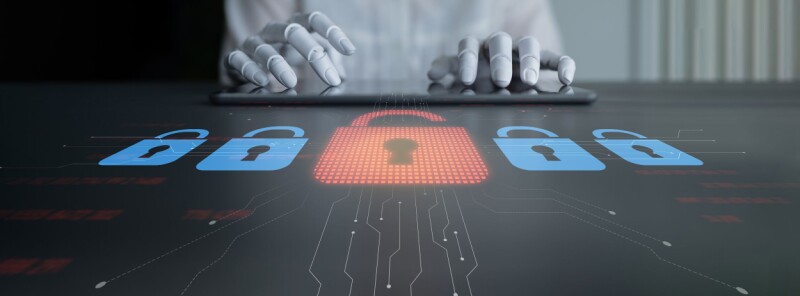
The future of sanctions evasion appears to involve fewer shady middlemen and considerably more rented GPUs, according to a new RUSI report on how rogue states are using AI to fake identities, automate shell companies, and launder crypto at scale. The report, "Algorithms of Evasion: The Rise of AI-Enabled Proliferation Financing," says countries including North Korea and Iran are deploying AI tools to support sanctions evasion and proliferation financing (PF) schemes, ranging from fake passports and corporate paperwork to cryptocurrency laundering and fabricated online personas. "AI has the potential to radically increase the scale of PF activities, like sanctions evasion, to levels that overwhelm current PF and sanctions evasion detection and enforcement capabilities," wrote Dr Aaron Arnold, a Senior Associate Fellow with the Centre for Finance and Security at RUSI, specializing in sanctions and proliferation financing. Arnold argues that AI is not reinventing sanctions evasion so much as supercharging it. "AI is not necessarily changing PF and sanctions evasion typologies but instead increasing their efficiency and effectiveness," he wrote. That includes generative AI systems capable of producing fake passports, bank statements, vessel registrations, invoices, and corporate records, according to the report. RUSI writes that AI "can mass-produce high-quality fraudulent documents" with enough contextual accuracy to fool traditional compliance checks that still rely heavily on manual document verification. The report also warns that many existing banking identity checks are rapidly becoming unreliable against modern AI tools. "Static biometric checks such as a selfie or voice print are no longer sufficient proof of identity against AI-enabled adversaries," Arnold wrote, noting that many current systems were designed for human fraudsters rather than synthetic identities and deepfake operators. The paper highlights North Korea's growing use of AI-enhanced deception in its overseas IT worker operations. After years of allegedly relying on VPNs and fraudulent documents to secure remote tech jobs abroad, Pyongyang-linked operators have reportedly started using AI-generated CVs and deepfakes during job interviews to obscure their identities. Crypto, naturally, remains a huge part of the picture. The report points to North Korea's Lazarus Group and the $1.5 billion Bybit theft in 2025 as evidence that sanctioned states are already deeply embedded in digital asset crime. Arnold warned that AI could make the laundering side even harder to track by constantly shifting transaction patterns to stay ahead of investigators. Arnold also points to a newer class of threat involving autonomous AI agents capable of handling discrete parts of a sanctions-evasion operation without constant human direction. In theory, he wrote, those systems could manage shell companies, move cryptocurrency through mixers and decentralized finance platforms, or generate deepfake content as needed, potentially making it harder for investigators who traditionally focus on dismantling human networks. RUSI's proposed fixes boil down to fighting automation with more automation. The report calls for clearer rules allowing banks to use AI-powered counter-proliferation tools, updated KYC systems capable of spotting deepfakes and synthetic identities, and new "compute-KYC" obligations forcing cloud providers to pay closer attention to who is renting the GPU power behind large-scale AI operations. The question now is whether regulators can modernize faster than sanctions evaders can automate. ®
The Guardian

Latest news, sport, business, comment, analysis and reviews from the Guardian, the world's leading liberal voice

Dog shoots woman with shotgun at Nebraska convenience store

Police responded to reports of gunfire at store in town of Scottsbluff, and found the culprit to be a dog

Police responding to reports of a shotgun blast at a convenience store sounds like the opening of countless American crime movies, but when cops in Nebraska responded to a recent such call they found an unusual culprit: a dog.

Local TV station KNOP News 2 reported that police in the town of Scottsbluff were called out to a local store recently after reports of a blast involving a shotgun.

Continue reading...

Mensgerichte AI is onverantwoordelijk

Kunstmatige intelligentie kan ook een grote impact hebben op dieren, dus het is gevaarlijk de mens centraal te stellen bij de ontwikkeling ervan, schrijft Eline de Jong.

De risico’s van AI bedreigen ook het financiële stelsel, waarschuwen Planbureau en toezichthouders

De snelle opkomst van AI vormt in toenemende mate een risico voor het Nederlandse financiële stelsel. Drie toezichthouders waarschuwen vandaag voor de gevolgen, zeker nu de geopolitieke onzekerheid zo groot is.


Wel.nl

Minder lezen, Meer weten.

Internettoegang in Iran weer gedeeltelijk hersteld

TEHERAN (ANP) - De internettoegang in Iran is weer gedeeltelijk hersteld, meldt internetmonitor NetBlocks in een post op sociaal netwerk Mastodon. Maandag schreven de Iraanse staatsmedia dat president Masoud Pezeshkian had bevolen de internationale internettoegang te herstellen.

Volgens NetBlocks heeft de blokkade 88 dagen geduurd en gebeurde het nog niet eerder dat een land zo lang was afgesloten van het internet.

Onduidelijk is volgens NetBlocks of het internetherstel van lange duur zal zijn.


Vakbonden: voorstellen kabinet lijken onvoldoende

UTRECHT (ANP) - Vakbonden FNV, CNV en VCP vinden de nieuwste voorstellen van het kabinet voor de AOW, WW en WIA op het eerste gezicht "volstrekt onvoldoende". Volgens de vakbonden is veel rondom de plannen te onduidelijk. Het kabinet wilde door aanpassingen aan die sociale regelingen miljarden besparen, waarop de vakbonden reageerden met de dreiging van stakingen. Na een handreiking van minister Hans Vijlbrief (Sociale Zaken) geven de bonden aan eerst een verhelderend gesprek met het kabinet te willen. De vakbonden houden de geplande acties op de agenda.


DNB-president waarschuwt voor grotere kans op cyberaanvallen

De kans op cyberaanvallen in Nederland is toegenomen door nieuwe vormen van kunstmatige intelligentie. AI-gedreven cyberaanvallen zouden zomaar tot uitval van betalingsverkeer kunnen leiden als banken en andere instellingen hun digitale beveiliging niet snel verbeteren, waarschuwt De Nederlandsche Bank (DNB).

DNB-president Olaf Sleijpen noemt de cyberdreiging dinsdag het risico voor de financiële stabiliteit waarover hij zich momenteel het meeste zorgen maakt. Hij ziet ook een potentieel "giftige cocktail" door samenhang met andere risico's. Daarom is "dringend actie nodig, zowel van financiële instellingen als van beleidsmakers".

Nieuwe AI-modellen als Mythos zijn in de ogen van Sleijpen een "gamechanger". Ze "zijn zo snel en slim dat zij zelf autonoom aanvallen kunnen uitvoeren omdat ze de zwakke plekken in de beveiliging in slechts enkele minuten hebben gevonden", stipt hij aan. "Als je dan de traditionele manier van patchen gaat toepassen, dan ben je veel te laat."

Geopolitieke spanningen

Cyberaanvallen worden volgens Sleijpen ook steeds nadrukkelijker onderdeel van geopolitieke spanningen. Hij ziet ook een verband met de kans op prijscorrecties op financiële markten. "Juist in tijden van marktonrust kunnen digitale aanvallen op de financiële sector het vertrouwen verder ondermijnen."

De opmerkingen staan niet op zichzelf. Eerder stuurde onder meer het Nationaal Cyber Security Centrum (NCSC) al een waarschuwing uit over de toegenomen cyberdreiging. Ook het Centraal Planbureau (CPB) en de Autoriteit Financiële Markten (AFM) waarschuwen dinsdag in eigen rapporten voor cyberrisico's en AI-gedreven fraude, zoals deepfakes.

Cyberbeveiliging

Sleijpen heeft de indruk dat de financiële sector al heel veel doet aan cyberbeveiliging. "Het staat bij allemaal op nummer één", constateert hij. "Maar er moet wel meer bij, dat is ook de conclusie." Banken zullen zelf bijvoorbeeld ook AI moeten gebruiken voor hun beveiliging en ze zullen meer in IT moeten investeren. "Dat kost geld, maar dan is het gelukkig goed nieuws dat de banken eigenlijk allemaal mooie winsten laten zien." Ze moeten die kosten dus kunnen opvangen.

Voor beleidsmakers ziet de DNB-baas ook een belangrijke taak. "Vanwege het grensoverschrijdende karakter van deze AI-ontwikkeling is internationale samenwerking en kennisdeling essentieel. Dit vraagt om een gecoördineerde Europese aanpak." Ook is het volgens hem zaak kwetsbaarheden op te sporen en te verhelpen in andere vitale infrastructuur, zoals energie en telecom.


Threthny has added a photo to the pool:

VK: Voorpagina

Volkskrant.nl biedt het laatste nieuws, opinie en achtergronden

BP ontslaat bestuursvoorzitter binnen een jaar, aanleiding is ‘onaanvaardbaar’ gedrag

xiffy

Public posts from @xiffy@mastodon.nl

@weblog
Er zijn zeker twee apps waarmee je het spel op je telefoon kan spelen.
Een Kickstarter voor een fysieke versie is helaas mislukt.