DEN HAAG (ANP) - De Koninklijke Landmacht stopt voorlopig volledig met oefeningen in Gelderland waarbij explosieven, open vuur en pyrotechniek worden gebruikt. Dat meldt het krijgsonderdeel op sociale media. De reden is dat het risico op natuurbranden in de provincie dinsdag is verhoogd naar fase 2.
Eind vorige maand braken meerdere natuurbranden uit tijdens militaire oefeningen in onder meer Gelderland en Noord-Brabant. De grote natuurbrand bij het Artillerie Schietkamp in 't Harde was pas na dagen onder controle en de brandgeur en rook werden in grote delen van Nederland gemeld. De provincie Noord-Brabant riep Defensie na de branden met urgentie op de droogteprotocollen te herzien. Daarna gaf het ministerie van Defensie aan te werken aan een aanpassing van de regels voor oefeningen in droge periodes. Die moet nog voor de zomer klaar zijn.
Fase 2 wordt door de brandweer afgekondigd als het al langere tijd droog is in de natuur. Dat vergroot het risico op natuurbranden, die zich ook nog eens snel en onvoorspelbaar kunnen ontwikkelen, zeker bij harde wind. Terreineigenaren, natuurbeheerders en hulpdiensten zijn tijdens fase 2 extra alert.
De landmacht laat weten de oefeningen pas weer te hervatten als het risico op natuurbranden weer gedaald is naar fase 1.
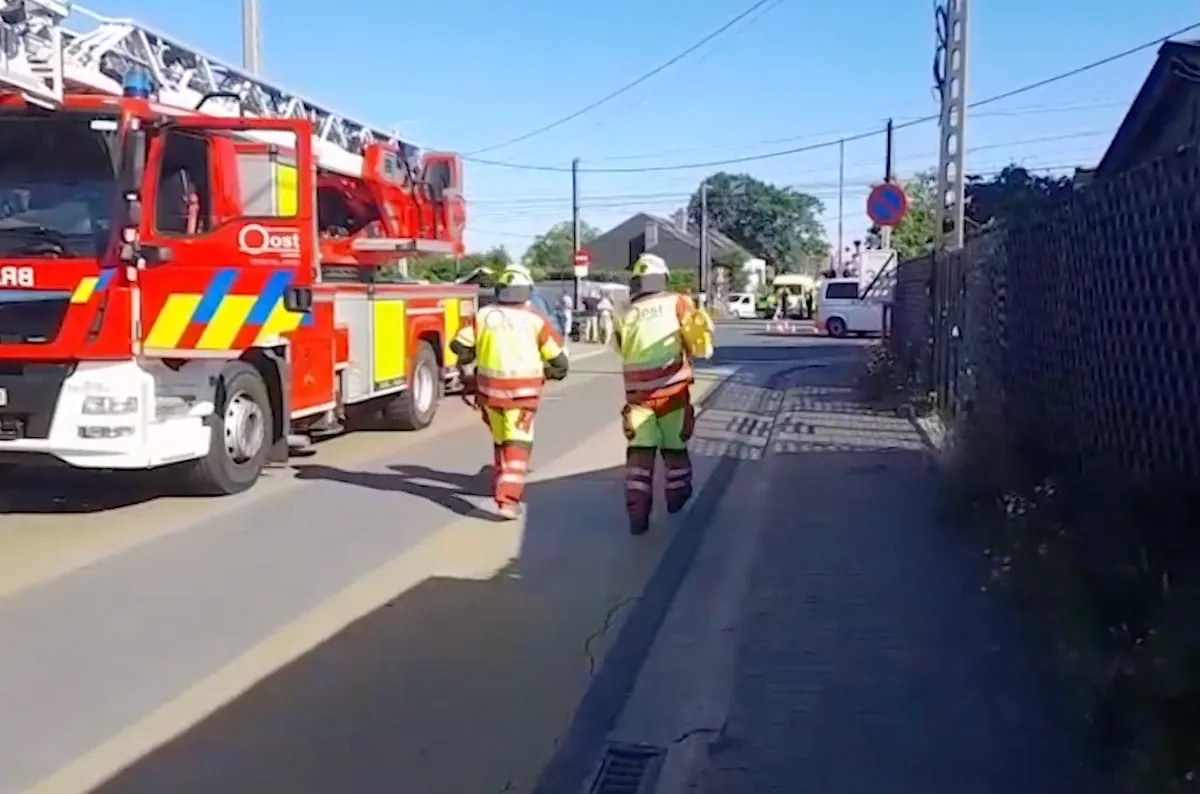
In het Oost-Vlaamse Buggenhout is maandagochtend een schoolbusje in botsing gekomen met een reizigerstrein aan een overweg nabij het station. Volgens de eerste berichten uit Belgische media zijn daarbij meerdere slachtoffers gevallen in het busje, dat gebruikt werd voor schoolvervoer. Op de trein, die onderweg was op de spoorlijn Brussel–Mechelen, zaten naar schatting ruim honderd tot honderdvijftig passagiers.
De hulpdiensten rukten massaal uit naar de plaats van het ongeval. Het medisch rampenplan werd afgekondigd om de inzet van ambulances, brandweer en politie te coördineren en ter plaatse werd een triagezone ingericht voor de opvang van gewonden. Reizigers uit de trein werden geëvacueerd en opgevangen in de omgeving van het station.
Spoorwegbeheerder Infrabel meldt dat de overweg op het moment van de aanrijding gesloten was. De precieze toedracht van het ongeval is nog onduidelijk en wordt onderzocht door politie en experts van de spoorwegmaatschappij. Het treinverkeer in de regio is voorlopig stilgelegd, wat leidt tot vertragingen en omleidingen voor reizigers tussen Brussel en Mechelen.
US secretary of state appears to downplay warnings from Russian counterpart to move diplomats out of Kyiv
The French government said Tuesday that seven people were reported to have died in connection to the recent heatwave baking much of western Europe, five of which were drownings, AFP reported.
“What I can say today is that there have been seven deaths directly or indirectly related to the heat,” government spokesperson Maud Bregeon told television broadcaster TF1.
Continue reading...Ellen Roome, whose son, Jools Sweeney, was 14 when he died, wants a ban put in place for under-16s
The mother of a teenager who believes he died in a TikTok challenge gone wrong has said that Downing Street has been too slow to move towards a social media ban for under-16s, and accused the government of “kicking it down the road”.
Ellen Roome, the mother of Jools Sweeney, 14, is among the families who will meet Keir Starmer on Tuesday as a consultation into the social media ban closes this week.
Continue reading...
Is in de serie ‘Spider-Noir’ een Spider-Man een misdaadbestrijder van middelbare leeftijd die nogal op Nicolas Cage lijkt? Dat kan gewoon: geen superheld komt in zoveel gedaanten als ‘Spidey’. Waarom eigenlijk?
/s3/static.nrc.nl/wp-content/uploads/2026/05/26102656/260526CUL_2033830244_3.jpg)
Quentin Tarantino’s tiende en laatste film blijft uit: hij schrijft een toneelstuk en is papa. Nu de ‘director’s cut’ van ‘Kill Bill’ in de bioscoop draait groeit de angst dat hij weer wil acteren.
/s3/static.nrc.nl/wp-content/uploads/2026/05/22112834/260526CUL_2033928135_close-up.jpg)
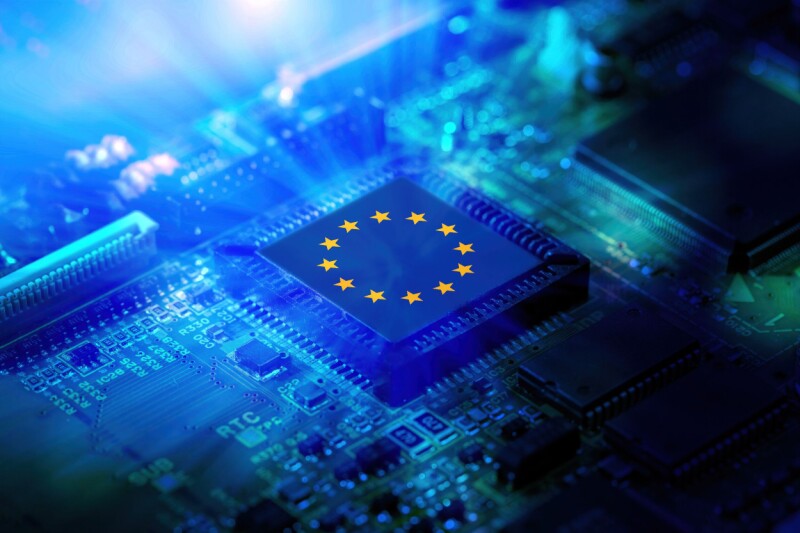
OPINION There's a spy in the court of Europe's digital sovereignty. Actually there are two, the half-siblings Intel and AMD, whose chips power the Old World bit barns on which the sovereign cloud is based. Both companies' chips have so-called Ring -3 management subsystems, complete computers with deep access to the host system, while remaining largely opaque to the people who own and administer it. All this isn't secret, even if it's not widely discussed. The story is more that the French specification derived from the EU's IPCEI-CIS specification and for sovereign clouds, while having thousands of technical details, doesn't mention this at all. The management subsystems are designed to be controlled over the same networks that servers use for servery stuff, which makes them in theory and in practice vectors for remote attackers. As Intel and AMD are governed by American laws that can force them to act in secret for the state, the billion-Euro effort to fly the European flag over an impenetrable cloud fortress seems badly flawed. A good old supply chain attack, not so much secret as too boring to think about. Fixing it will mean fixing that supply chain, and the others that live in the same blind spot. Sovereignty is supply chains. If you don't control the components that keep your state safe from malign influence or outright attack, you don't have sovereignty. This is most starkly on show during wartime, not just in military logistics in theatre but also the industrial base that keeps the machinery going. The effective strangulation of Japan's oil and other raw materials during World War II fatally constrained what its military could do. In technology, America controlled the supply of high-quality quartz needed to make radio crystals, which gave its battlefield communications a generational advantage. Britain's early warning radar system depended on tubes made only in Holland, necessitating a last-minute convoy of components and tooling that left the Dutch factory the day before the Germans overran it. Most ironically, during the Cold War, the titanium needed for the Mach 3 SR-71 spy plane came from the Soviet Union. Which obliviously sold it to a chain of shell companies set up by the CIA. That's the same CIA which surreptitiously took control of Swiss cryptography company Crypto AG to backdoor its products. Supply chain attacks can come in many forms. Sovereignty can never be guaranteed, only risk-managed. Managing the risk of Europe's autonomous cloud security is the primary lens of the specification, and in overlooking the risk inherent in CPU management engines, this task is incomplete. That risk can be extended to everywhere in the overall infrastructure that CPUs touch data and network. Routers and switches inside the datacenters, as well as in the connectivity between there and the users, all offer extensions of that threat surface. Mitigating that risk isn't as unthinkable as may appear. The first step is to characterize the traffic types and patterns that the management subsystems generate and evolve defences. Asking Intel and AMD how to do this, and how to disable them permanently, at the same time as developing these techniques independently, will create an initial patch. Then, armed with an updated specification which specifies no Ring-3 independent processing or ones that are properly transparent, ask the chip companies to comply and make variants of their processors that can go in the next refresh. The best opportunity, though, is for Europe to build its own datacenter chips. It is unduly pessimistic to say that the only way to do this is to wait for Risc-V to mature for a decade or so. There is plenty of Arm expertise and licensable IP out there for high-performance devices. It's not open source, but it is available under NDA to clients, and with the right Arm license you get to add what you like. Apple started developing the project that became the M1 Apple Silicon in 2018, and started selling the results two years later. If the EU wanted, it could ask a third party to build Arm designs to digital sovereignty specifications. It could start its own design bureau, hire the talent and keep everything in-house. Apple did it, Qualcomm and Broadcom did it, Samsung and MediaTek and Renesas did it. This is a well-trodden path. The size of the market for digital sovereignty-certified datacenter chips is unknown, but there's a good chance that any venture set up to create them will see a lot of interest from enterprises and other states who don't want their most intimate silicon to spy on them. Plus, Europe gets some very desirable capabilities in CPU design. There's good eating in that. You can only have true digital sovereignty when you either control or trust the supply chains that link data and network. That's the perspective that can deliver what's needed, and the only one that can. Open source is the obvious foundation for the software component, not necessarily for hardware. We can make Intel and AMD burn their codebooks, and we can evict them altogether from the fortress. The best control is the most control if you want to be king. ®

Fat Burns ☮ has added a photo to the pool:

Many thanks for your visits, faves and comments. Cheers.
Eastern Great Egret
Scientific Name: Ardea modesta
Description: The Great Egret's overall plumage is white, and, for most of the year, when not breeding, the bill and facial skin are yellow. The feet are dark olive-grey or sooty black, as are the legs. During the breeding season, the bill turns mostly black and the facial skin becomes green. Also at this time, long hair-like feathers (nuptial plumes) hang across the lower back, and the legs become pinkish-yellow at the top. Young Great Egrets are similar to the adults, but have a blackish tip to the bill.
Similar species: The Great Egret can be confused with other white egrets found in Australia. It can be distinguished by the length of its neck, which is greater than the length of its body (and with a noticeable kink two-thirds of the way up), a dark line extending from the base of the bill to behind the eye and the overall larger size.
Distribution: Great Egrets occur throughout most of the world. They are common throughout Australia, with the exception of the most arid areas.
Habitat: Great Egrets prefer shallow water, particularly when flowing, but may be seen on any watered area, including damp grasslands. Great Egrets can be seen alone or in small flocks, often with other egret species, and roost at night in groups.
Feeding: The Great Egret usually feeds alone. It feeds on molluscs, amphibians, aquatic insects, small reptiles, crustaceans and occasionally other small animals, but fish make up the bulk of its diet. The Great Egret usually hunts in water, wading through the shallows, or standing motionless before stabbing at prey. Birds have also been seen taking prey while in flight.
Breeding: The Great Egret breeds in colonies, and often in association with cormorants, ibises and other egrets. Both sexes construct the nest, which is a large platform of sticks, placed in a tree over the water. The previous years' nest may often be re-used. Both sexes also incubate the eggs and care for the young (usually two or three).
Minimum Size: 70cm
Maximum Size: 90cm
Average size: 80cm
Breeding season: October to December in the south; March to May in the north.
Clutch Size: 2 to 6
Incubation: 28 days
Nestling Period: 40 days
(Source: www.birdsinbackyards.net)
_______________________
© Chris Burns 2026
All rights reserved.
This image may not be copied, reproduced, distributed, republished, downloaded, displayed, posted or transmitted in any form or by any means, including electronic, mechanical, photocopying and recording without my written consent.