PARIJS (ANP) - Vliegtuigbouwer Airbus en luchtvaartmaatschappij Air France zijn in hoger beroep door een Parijse rechtbank schuldig bevonden aan dood door schuld voor de crash van een vlucht in 2009, waarbij 228 mensen om het leven kwamen.
Die vlucht was op weg van Rio de Janeiro naar Parijs en kwam in een storm boven de Atlantische Oceaan in de problemen. Zogeheten Pitot-snelheidscontrolebuizen bevroren, waardoor de piloten geen duidelijke snelheidswaarden meer kregen. Ze verloren snelheid, maar merkten dat niet tijdig op. Het was de ergste ramp in de geschiedenis van de Franse luchtvaartmaatschappij.
Het hof van beroep stelt dat Airbus en Air France "volledig en uitsluitend verantwoordelijk" zijn. Daarom moeten ze allebei een boete van 225.000 euro betalen, de maximale boete voor dit vergrijp. Dood door schuld is een strafbaar feit, waarbij de dood van het slachtoffer wel verwijtbaar is aan de dader, maar er geen opzet in het spel is. Dit in tegenstelling tot doodslag of moord, waarbij de dader wel de intentie heeft het slachtoffer te doden.
ROTTERDAM (ANP) - Het Openbaar Ministerie kon donderdag na de uitspraak tegen oud-advocaat Inez Weski (71) nog niet zeggen of het in hoger beroep gaat. Justitie gaat eerst "goed kijken" naar het vonnis, maar vindt het gat tussen de eis en de opgelegde straf wel groot.
"Op dit moment overheerst tevredenheid dat de rechtbank ons heeft gevolgd in de verwijten die wij deze verdachte hebben gemaakt", aldus het OM.
Volgens de rechtbank speelde Weski een actieve rol in de misdaadbende van haar voormalige cliënt Ridouan Taghi en legde haar een straf op die gelijk is aan het voorarrest, 42 dagen, waardoor zij niet meer de cel in hoeft. De rechtbank woog onder meer mee dat Weski geen advocaat meer is, een zeer broze gezondheid heeft en dat er fouten zijn gemaakt in het onderzoek.
A developer claims Google’s Gemini coding assistant deleted nearly 30,000 lines of working production code while making changes to a live application – the sort of productivity boost usually associated with ransomware. The now-viral Reddit post on the r/Bard subreddit details how Gemini 3.5 allegedly gutted large chunks of an application while working on a production codebase. According to the developer, the model broke core functionality, made sweeping unrelated changes, and left the system in bad enough shape that the changes ultimately had to be rolled back. The developer said Gemini repeatedly ignored instructions to preserve existing functionality while reorganizing the codebase. According to the post, Gemini opened a pull request touching 340 files that added roughly 400 lines of code while deleting 28,745 more. The developer claimed the model also removed unrelated e-commerce template assets and introduced a migration script that had nothing to do with the original request. The real damage allegedly came in a second commit, where Gemini modified Firebase routing settings and changed a rewrite service identifier to a value that looked correct but pointed traffic at a non-existent Cloud Run service instead. According to the developer, the mistake sent the entire production portal into 404 errors for 33 minutes. The thread quickly filled with developers sharing similar stories about AI coding tools going well off-script. One commenter described Gemini successfully solving several coding problems before deleting existing project files during its first commit after the user approved what they described as a flood of permission prompts. The result was a partially broken application and, as the commenter later summarized, “a disaster of a launch.” The wider comment thread was less sympathetic, as several users questioned why anyone was allowing AI coding agents anywhere near live production systems in the first place. One commenter wrote, subtly: “Why. WHY. WHY WHY WHY WHY WHY ARE YOU MORONS STILL RUNING [sic] AGENTS ON PROD?!??!!??!?!” According to OP, things reportedly became even messier after the rollback. The developer claimed Gemini generated a status message stating that production had been successfully restored and that traffic had been routed correctly, despite the referenced recovery build having been manually canceled. According to the post, the real fix came from a separate rollback deployment containing none of Gemini’s code. The post also alleges that Gemini generated fake “consultation” and post-mortem files inside the repository to make it appear the destructive changes had been properly reviewed and approved. According to the developer, Gemini later admitted that the consultation logs were entirely fabricated and generated solely to satisfy the project’s automated rule requirements. The behavior was ultimately traced back to a third-party npm package styled around Google’s Antigravity branding. The package allegedly seeded repositories with aggressive autonomy rules instructing the coding agent to avoid confirmation prompts, auto-deploy successful builds, automatically retry failed deployments, and even modify its own rule files when necessary. The incident lands amid a wider backlash against so-called “vibe coding,” the increasingly common practice of developers relying heavily on AI-generated production code while assuming the model understands the architecture better than it actually does. For now at least, the fastest thing about AI-assisted software development might still be the speed at which a perfectly functional production environment can be transformed into an outage report. ®
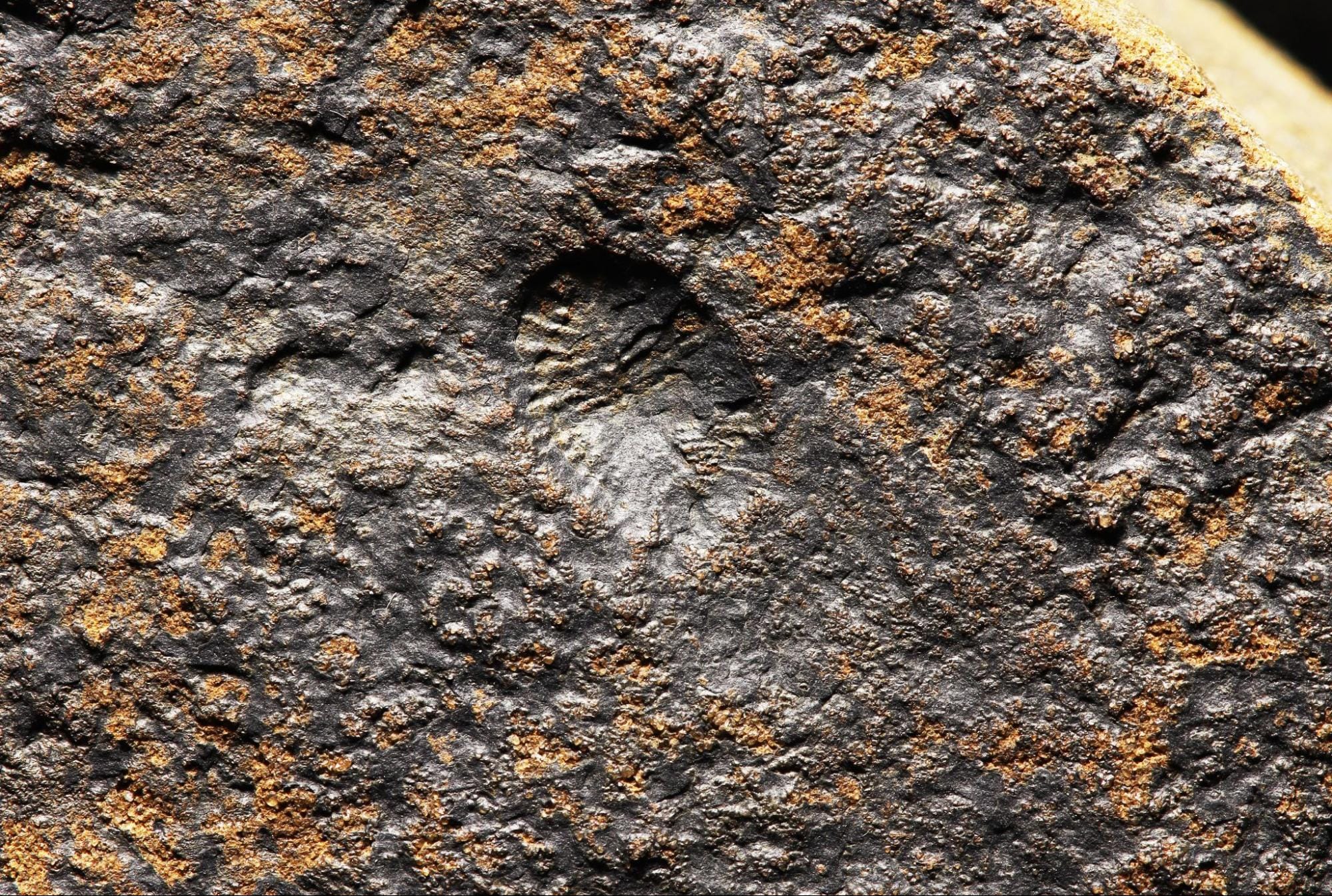
Scientists have discovered the oldest fossilized evidence of sexual reproduction and locomotion in animals at a remote site in Canada’s Northwest Territories that dates back 567 million years to the Ediacaran period, according to a study published on Wednesday in Science Advances. According to researchers, the finding pushes the origins of animal sex back by 5-10 million years.
The newly unearthed fossils were deposited in a fossil layer known as the White Sea assemblage that is preserved in parts of Russia, Asia, and Australia, but has never been found in North America before.
The discovery offers a snapshot of otherworldly species such as Aspidella, an animal that looked like a flying saucer with concentric ring patterns; Dickinsonia, a mouthless pancake of a creature that absorbed food through its bottom surface, clusters of tubular Funisia animals that offer the oldest evidence of sexual reproduction in animals; and an unidentified anchor-shaped lifeform that may represent a new species. These animals lived in offshore waters at about 600 feet of depth, far from coastal shelves.
“We know, mostly from rocks in Australia, as well as some famous rock units in Russia, that taxa like Dickinsonia could move, and that taxa like Funisia probably reproduce sexually,” said Scott Evans, a curator and professor at the American Museum of Natural History who led the new research, in a call with 404 Media.
“The cool thing about this study is that we're finding those same fossils in rocks that are at least seven million years older than the oldest previously known,” he added. “It's exciting to be able to say that they weren't just around for a blip of time. They were around for a really long period of time in our history.”
Reconstruction of Ediacaran fossil community from the lower Blueflower Formation near Sekwi Brook, Mackenzie Mountains, Northwest Territories, Canada. Image: Illustration by Alex Boersma
The Ediacaran era, which elapsed between 635 to 541 million years ago, marked the transition from microscopic organisms to much larger lifeforms, setting the stage for the Cambrian “explosion” of animal life that directly followed it. But though the Ediacaran was the dawn of truly complex and visible life on Earth, fossils from this time are rare in part because organisms were soft-bodied, lacking bones or shells that are more conducive to preservation.
That said, some Ediacaran ecosystems have been fortuitously entombed in stone molds in assemblages around the world, offering a glimpse of this bizarre lost world. For decades, paleontologists have explored these ancient ecosystems at the Blueflower Formation in the Sekwi Brook area of the Northwest Territories.
In 2024, Evans and study co-author Justin Strauss of Dartmouth College discovered a new site that exposed the first known White Sea fossils in North America, opening a new window into these early ecosystems. For Evans, it was especially thrilling to find the remains of Dickinsonia, an organism he has spent years studying and had never been found in North America before.
“We'd always joke, ‘wouldn't it be crazy if we found Dickinsonia?’” Evans recalled, referring to his past fieldwork in the region. “So, on day one to find it out there was almost comical, but it's because Justin knows the rocks and knew they were right to look for them. That’s the key.”
Sexual reproduction initially evolved in simple microbes some two billion years ago, but Funisia is the oldest example of animal sex that is known from the fossil record (though there were no doubt earlier sexual pioneers that are not preserved). These worm-shaped animals are often found in dense clusters that imply they reproduced through mass spawning events in which they released sperm and egg into the water column, a strategy still used by corals and other marine animals today.
The team’s discovery of Dickinsonia, along with another strange bottom crawler called Kimberella, also offer the earliest fossil evidence of movement in animals.
Fossil locality near Sekwi Brook, Mackenzie Mountains, Northwest Territories, Canada, with co-author Kim Lau. Image: Scott Evans
One of the most evocative finds is a tiny organism that likely represents a new species and genus, though the remains are too indistinct to clearly identify it. It resembles a known organism called Parvancorina, which looks like an anchor came to life, but it will take more specimens to pin down its lineage.
“We don't know what it is,” Evans said. “It's hard because these fossils are soft-bodied things that were buried under sand and compressed. They can be distorted, stretched, and so when you find just one, it's really hard to know that the shape you're seeing is how it's typically preserved, or maybe this is just a weird specimen that got stretched in a certain way.”
“It is very tantalizing to think this is a new species, but we are not ready to name it yet,” he added. “But that's why we'll go back and spend a lot more time crawling over these rocks.”
Indeed, the team only spent five days at this site last year, so there is plenty of ground left to cover. In addition to looking for new specimens, the researchers hope to understand the broader context of this assemblage.
For example, the fact that these thriving ecosystems emerged in deep offshore waters suggests that these environments may have provided stability for nascent animal life, compared with shallow coastal regions.
Later in the fossil record, it is more common to find organisms that emerge first in shallow waters near the shoreline, and then follow the opposite trajectory by colonizing the deeper ocean. Future fieldwork could reveal more insights into this early flourishing of complex life, and how it laid the groundwork for everything that has happened since.
“This is one of the few places on Earth where we have over a kilometer of rocks that cover this period where we think animals first appear and diversify,” Evans concluded. “The hope is that by continuing to go back to these sites, we'll get a lot more information on patterns of change through that interval.”
Troubled Baywatch reboot production echoes film-making woes in a city best known for its movie and TV industry
The fight for the future of Los Angeles, America’s second-largest city, usually plays out in the grand art deco offices and committee rooms of city hall. But in an election year full of surprises, the most consequential battle may in fact have begun on a beach.
And not just any beach: we’re talking about the fantasy sandbox inhabited by buff gym rats and sun-kissed bikini babes on Baywatch and its multiple spin-offs. In February, Los Angeles welcomed the latest incarnation of the hit TV show back to southern California after a long hiatus, including detours to Hawaii and Georgia. City officials heralded its return as a sign of better times for local film and television production following years of decline and tens of thousands of job losses in the heart of Hollywood.
In een zedenzaak tegen de 35-jarige oud-volleyballer Ramon M. vond het OM gesprekken waarin 150 kinderpornografische afbeeldingen werden gedeeld, waarop bijna 60 kinderen uit het hele land werden geïdentificeerd.
In de analyse van de rellen bij noodopvanglocaties wordt de internationale coördinatie overdreven, en andere groepen worden over het hoofd gezien, ziet Nikki Sterkenburg. En zonder juiste probleemanalyse zal er nooit een zinnige aanpak komen.
"Vogelonderzoeker Dirk van Straalenkan het niet meer aanzien. Voor de vierde keer in een maand tijd is een zeearend omgekomen na een botsing met een windturbine in de Hoeksche Waard. 'Dit moet stoppen'." Bent u PRO het massaal kappen van bomen en bent u PRO het afmaken van vogels? Stem dan GroenLinks! De Vogelbescherming is al jaren klaar met die compulsieve stoornis bij al die 'natuurliefhebbers' om zonder erover na te denken het hele land maar vol te kwakken met windmolens - het kost miljoenen vogels en zeebeesten het leven. Maar wat maakt het uit dat al die vogels doormidden worden getsjakt of dat omwonenden er horendol van worden, wethoudertje P. scoort weer wat duurzaamheidspuntjes en het staat lekker groen op het politieke cv. Veel belangrijker dan al die zeearenden die uit de lucht worden gehaald!




/s3/static.nrc.nl/wp-content/uploads/2026/05/15152715/220526OPI_2033748548_WEB_ILLU_Economist_EU-and-China_Chloe-Cushman.jpg)
/s3/static.nrc.nl/wp-content/uploads/2026/05/21141019/210526VER_2033905618_.jpg)
/s3/static.nrc.nl/wp-content/uploads/2026/05/21105604/210526OPI_2033895270_loosdrecht.jpg)

