
U mag straks lekker naar buiten kijken naar een asteroïde die u toch niet gaat zien. Het ding 'scheert' op circa 90.000 kilometer langs de aarde en dat is 35 keer met de Hobby Ontour 460DL van Utrecht naar Perpignan - en weer terug. Heel erg dichtbij dus! Iedereen heeft het over 'jaa het ding is zo groot als een basketbalveld' terwijl 95% van de Nederlanders geen flauw idee heeft hoe groot een basketbalveld is. Wij zeggen liever: zo groot als een strafschopgebied maar dan iets kleiner! De asteroïde heet 2026 JH2, is om 23.23 uur het dichtst bij de aarde, is niet te zien met het blote oog en is zelfs met een kleine telescoop waarschijnlijk niet te zien omdat het bewolkt is. Ergo, u kunt vanavond ook uw telescoop aan uw vriendin laten zien.
A court case in New York has highlighted how Iran is using technology to recruit agents who may not even be regime supporters
When on Friday a 32-year-old Iraqi was brought before a court in New York to be charged with planning to attack Jewish community sites in the US, a curtain was suddenly lifted on a corner of a shadowy world.
The detention of Mohammed Saad Baqer al-Saadi in Turkey last week revealed rare details of Iran’s efforts to use terrorism to sow discord among communities in Europe, the UK and the US – but also the outlines of an uncertain and threatening future.
Continue reading...Cannes film festival: The Palme laureate here makes a misstep with an odd, disquieting film that leaves too many issues unresolved
Romanian director and Palme laureate Cristian Mungiu – the winner here in 2007 with his stunning 4 Months, 3 Weeks and 2 Days – comes to Cannes with an anticlimactic, underpowered movie which it seems to me could be part of an odd phenomenon at this year’s festival, detectable also in films here by Kantemir Balagov and Ryusuke Hamaguchi: auteurs making coproduction movies outside their home turf and mother tongue with big foreign stars, perhaps as a result of creative conversations at international film festivals with admirers from all over the world – and losing focus.
Fjord is an odd film, bearing Mungiu’s signature, certainly, with enigmatic long shots and avoidance of closeups, and one very distinctive crowding of faces in a dinner-scene tableau. But the ostensible pain and trauma of its story is conveyed without the rewarding complexity that we have come to associate with him, and without revelation or mystery. Ultimately, the film does not compellingly deliver a blazing truth about its various relationships – but neither does it intriguingly withhold any such truth from us.
Sebastian Stan plays a Romanian guy called Mihai, married to a Norwegian woman called Lisbet (Renate Reinsve); they have to come to live in the beautiful, remote village of Lisbet’s birth because Mihai, a qualified software engineer, can get an IT job and there is a strong church community thereabouts which is a great attraction as Mihai and Lisbet are fundamentalist conservative Christians who are very strict. They are given a warm welcome by their (non-Christian) neighbours, who are the school’s headteacher and his wife.
The film begins on a disquieting, ambiguous moment: Mihai has clearly just delivered a punishment of some sort to their teenage daughter who is now required to give him a penitent hug. The school’s staff notice that the children have marks and bruises. They are gently but pointedly questioned and (perhaps) incriminate their parents because they are not sufficiently proficient in any language other than Romanian. Perhaps the language issue also contributes to the calamitous statement Mihai then gives to the police with no lawyer present.
With lightning speed, the children are taken into provisional care pending a hearing and criminal trial. Things are complicated by a growing concern about their neighbours’ elderly disabled father and about Mihai and Lisbet’s daughter forming a close relationship with their neighbours’ rebellious teen daughter.
There is something undoubtedly ingenious in the way Mungiu invites the audience to sympathise with the children, and side against this ice-cold patriarch – and then almost side with the patriarch against the blandly smug, supercilious officers of a system weighted against them.
Liberal prejudice against them as Christians or as Romanians arguably plays its part. But the facts of the matter do not seem to be in doubt: Mihai concedes he smacks or slaps the children occasionally – quite normal in the robust world of Romania. But don’t those bruises and marks show something worse than that? The matter is not resolved in court or in the film and then we have a strangely inert and suspense-free finale at the ferry terminal which reveals that the relationship between the teen girls Elia (Vanessa Ceban) and Noora (Henrikke Lund-Olsen) is something else the film has not sufficiently told or not told us about. Mungiu’s technique will always be interesting but this is a disappointment.
• Fjord screened at the Cannes film festival
Continue reading...
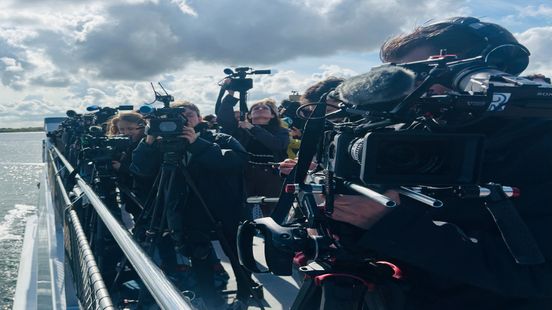
Ruim honderd journalisten, cameramannen en fotografen krioelen op het dek van een ingehuurde persboot. Vanaf het water hebben ze goed zicht op het 'besmette' schip de Hondius, dat aankomt in de Europoort. Rotterdam is even Wereldnieuws: "Nog nooit zo'n opkomst gezien."
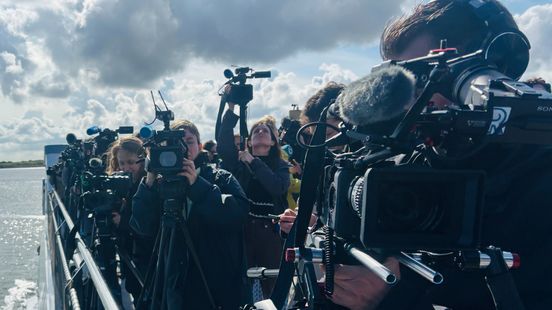
Ruim honderd journalisten, cameramannen en fotografen krioelen op het dek van een ingehuurde persboot. Vanaf het water hebben ze goed zicht op het 'besmette' schip de Hondius, dat aankomt in de Europoort. Rotterdam is even Wereldnieuws: "Nog nooit zo'n opkomst gezien."

De interne strijd gaat vooral over de impopulariteit van premier Starmer. Veel minder over hoe de sociaal-democraten van Labour zich staande houden in een meerpartijenland.
:format(jpeg):fill(f8f8f8,true)/s3/static.nrc.nl/taxonomy/bf9b707-commentaar-itemafbeelding-2024.png)
WASHINGTON (ANP/RTR) - De Amerikaanse regering staat met een vrijstelling toe dat Russische olie die al op tankers is geladen alsnog verkocht mag worden. Dat gebeurt slechts enkele dagen nadat de vorige vrijstelling was verlopen. De beslissing om opnieuw een vrijstelling toe te staan onderstreept de druk waarmee de regering van president Donald Trump te maken heeft om stijgende brandstofkosten te beperken. Tegelijkertijd heeft de regering te maken met een wereldwijd tekort aan olieaanbod dat door de oorlog in het Midden-Oosten is ontstaan.
De Verenigde Staten hadden de vrijstelling oorspronkelijk ingevoerd om tekorten in de olievoorziening en hoge prijzen te beperken, veroorzaakt door de sluiting van de Straat van Hormuz. De maatregel heeft echter weinig effect gehad op de Amerikaanse benzineprijzen.
Volgens de Amerikaanse minister van Financiën Scott Bessent heeft de nieuwe vergunning een looptijd van dertig dagen en helpt het om de oliemarkt te stabiliseren.