Kochel

Peter Kernwein posted a photo:

Kochel

Kochel

Peter Kernwein posted a photo:

Kochel

Kochel

Peter Kernwein posted a photo:

Kochel

Kochel

Peter Kernwein posted a photo:

Kochel

Kochel

Peter Kernwein posted a photo:

Kochel

Kochel

Peter Kernwein posted a photo:

Kochel

Slashdot

News for nerds, stuff that matters

LinkedIn Planning To Lay Off 5% of Staff In Latest Tech-Sector Cuts

An anonymous reader quotes a report from Reuters: LinkedIn planned to inform staff of layoffs on Wednesday, two people familiar with the matter told Reuters, in a widening of technology sector cuts this year. The Microsoft-owned social network plans to cut about 5% of its headcount as it reorganizes teams and focuses personnel on areas where its business is growing [...].

LinkedIn employs more than 17,500 full-time workers globally, its website says. Reuters was unable to determine the teams affected. The cuts come as revenue at LinkedIn, which sells recruiting tools and subscriptions, rose 12% in the just-ended quarter from a year prior, in an acceleration of growth in 2026, according to Microsoft's securities filings. The layoff rationale was not for artificial intelligence to replace jobs at LinkedIn, one of the people told Reuters. The specter of AI-fueled disruption has nonetheless hung over software incumbents and workers generally.

Read more of this story at Slashdot.
kottke.org

Jason Kottke's weblog, home of fine hypertext products

What Childhood Folklore Did You Learn As a Kid?

I loved this post by Kelsey Miller for Cup of Jo about “childlore”.

“Remember typing ‘BOOBS’ on a calculator?!” someone will blurt. “Or — or that thing when you’re driving by a cemetery and you have to hold your breath?” I love hearing the tiny differences in details (some people grew up lifting their feet off the floor when passing a graveyard). But what’s wild is how many of us grew up doing, drawing, singing, and believing the exact same funny little things: Miss Susie had a steamboat, Batman smelled, the floor was lava, and stepping on cracks broke our mothers’ backs.

For a definition of childlore, let’s go to the Wikipedia:

Childlore is a folklore or folk culture that focuses specifically on children typically between the ages of 6 and 15. As a branch of folklore, childlore is concerned with those activities which are learned and passed on by children to other children; it excludes the stories and tales told and spread by adults. Childlore can include games, riddles, rhymes, oral stories, codes, fantasies, jokes, and superstitions created by children.

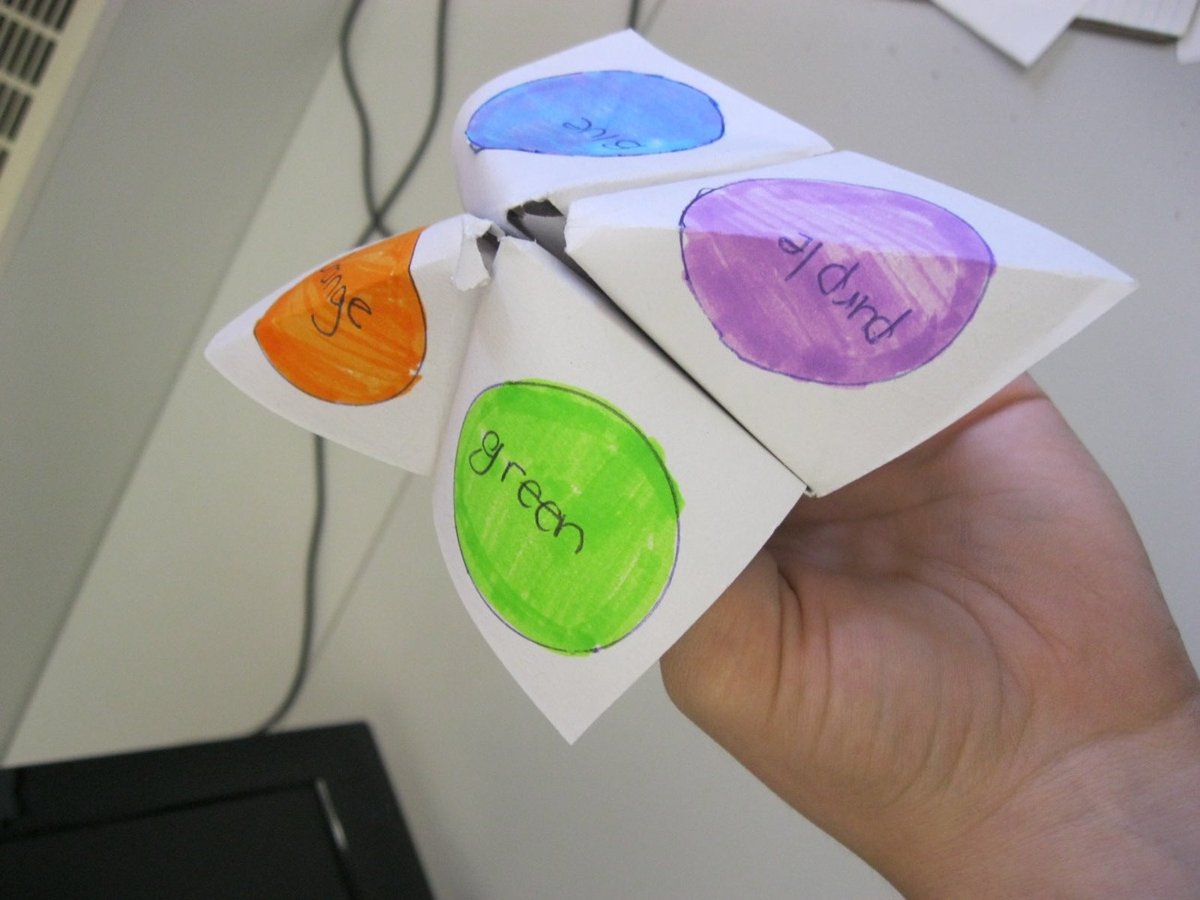
Other than what’s already been mentioned, I can’t remember many specific childlore from my childhood (my recall for such things isn’t great). Perhaps some string games? I can still do cat’s cradle & Jacob’s ladder and taught them to my kids when they were younger. Oh and those cootie catchers.

The commenters at Cup of Jo offered several suggestions: the diarrhea song, padiddle (when you saw a car with only one headlight), and slug bug (or punch buggy). And OMG, I gasped when I read this comment — I used to make these little feet all the time!

Just recently on a field trip with my kids we all traveled in a school bus. We live in Wisconsin so it was chilly in the bus and the bus driver had the heater turned on high. The condensation in the bus was freezing on the inside of the windows as it so often does on a winter morning her and then it’s fun to draw things in the frost. My favorite is to press the side of my fist against the glass to make a little footprint and then use my fingers to make toes. It looks like a baby footprint on the window.

What childlore do you remember from your childhood?

Tags: Kelsey Miller · language

The Register

Biting the hand that feeds IT — Enterprise Technology News and Analysis

Datacenters are having fewer, but bigger failures

There's good news and bad news when it comes to datacenter uptime. According to a recent report from the Uptime Institute, bit barns have actually gotten more resilient over the past five years. However, the report suggests that those datacenter failures that do occur are lasting longer and costing more to resolve. According to Uptime, half of the operators surveyed reported an impactful or serious outage in the past three years. “This is the lowest level recorded since 2020 and continues a multi-year trend of improving reliability.” However, the report also finds that datacenter operators may be having a harder time adding additional 9s of reliability to their SLAs. According to Uptime, failure rates are falling at a slower pace, suggesting that existing efforts to improve resiliency may be at the point of diminishing returns. This doesn’t appear to be the result of complacency. Instead, analysts suggest that efforts to improve uptime are being offset by greater system complexity and more challenging operating environments caused by the widespread deployment of power dense infrastructure used in AI training and inference. “Higher rack densities, load variability, and operating closer to available power limits may increase the likelihood of cascading failures,” Uptime warns. Shortages of critical physical infrastructure like generators, switchgear, transformers, and other power and cooling systems have driven some operators to adopt second-hand or unproven hardware. “This is believed to have contributed to several failures and incidents at some datacenters,” the report reads. Power-related failures remain the leading cause of major datacenter disruptions, but even this is improving. “While power issues accounted for 45 percent of respondents’ most impactful outages in 2025, this is down from 54 percent in 2024,” the analysts write. However, the analysts also warn that this could change as local grids are stressed by ever larger datacenter deployments. While Uptime doesn’t expect grid power failure to be a primary cause of outages going forward, grid failures can still affect the availability of onsite power. During an outage, datacenters have a limited window to switch over to onsite generators, which can and do fail. Overburdened grids aren’t the only external factors on Uptime’s radar. The industry watchers note that many public outages have been linked to fiber cuts and other networking disruptions. “Digital infrastructure is becoming more distributed with outages originating outside the datacenter, including those tied to power availability, network connectivity or the reliance on external cloud services playing a larger role,” Uptime Analyst Andy Lawrence said in a statement. According to the report, networking-related issues remain the most frequently cited cause for IT disruptions. Even if the datacenter itself doesn’t fail, a bad network configuration can still result in service outages. The good news is that wide adoption of software-defined networking and automated traffic rerouting has helped mitigate this risk. The report found that 20 percent of those surveyed reported having no IT service outages in the past three years, an improvement of nine points from 2024. Software-level resiliency is helping to mitigate localized disruptions, like a fiber cut, by distributing the workload across multiple sites. However, this software resiliency comes with its own challenges, most notably complexity. As we saw with the drone strikes on Amazon’s UAE and Bahrain datacenters, spreading your workloads out across multiple availability zones doesn’t do much good if the failure spreads to multiple sites. While Uptime observed fewer outages in 2025, the report suggests outages may be lasting longer. "While a majority of publicly reported incidents are still resolved within 12 hours (55 percent), the share lasting more than 48 hours has increased for the second consecutive year." As we mentioned earlier, many of these were tied to factors like damaged fiber lines, which Uptime notes occurred more than twice as often as usual. As you might expect, the longer the outage, the more costly it can be, particularly when it concerns highly leveraged AI infrastructure. Uptime reports that one in five outages now exceeds $1 million in total costs, and expects that figure to continue to rise in the coming years. ®

Anthropic butts in to small business, promises help with payroll and other core tasks

Anthropic is pushing into the small business space with a set of new plug-and-play tools designed for those without a tech team budget, but be warned: Depending on your Anthropic subscription tier, some business data might get sucked up to train Claude. Anthropic announced Claude for Small Business (CSB) on Wednesday, describing the new plugin as a way for SMB owners without AI expertise to automate the basic business tasks they’re saddled with, like payroll, chasing payments, and launching campaigns, that are usually the purview of different departments at the enterprise level. Installation is designed to be dead simple, with Pro, Max, and Teams plan users able to add it as a plugin from the Cowork space in the Claude Desktop app. Skills can then be run using natural language prompts or slash commands outlined here. Users will find “a package of connectors and ready-to-run workflows” inside the CSB plugin, according to the announcement. The aforementioned capabilities of the plugin are part of 15 skills based on common repeatable business tasks, while 15 agentic workflows are also included across areas like finance, operations, marketing and the like. As for the connectors themselves, Anthropic specifically mentions seven of them included in Claude for Small Business: Intuit Quickbooks, PayPal, HubSpot, Canva, Docusign, Google Workspace, and Microsoft 365. An Anthropic spokesperson told The Register in an email that CSB isn’t limited to those connectors, but the skills and workflows rolling out for the plugin were only optimized for those connectors to start. Anthropic told us it chose those products based on the results of a survey of SMB owners, but it plans to add support for more connectors in the coming months. In other words, if you’re a small business owner and you rely on a platform not on that list, you’ll have to keep waiting a while longer if you want to pull that info into Claude. Gotta reach ‘em all It's logical that Anthropic is pushing into the SMB space. The company has seen a leap in business customer subscriptions this year, taking advantage of OpenAI’s slip in the professional user space, and with growth comes the search for new markets to tap. As Anthropic notes in the announcement, and as many analysts have pointed out, AI adoption among SMBs has historically lagged enterprises. That’s to be expected, of course: Enterprises have far more resources to invest in new, unproven technologies and the money to absorb failure when said new tech doesn’t pan out as expected. Anthropic said in its CSB announcement that it specifically designed the new plugin for “those who have historically been last in line for new technology,” or small businesses, in other words. The company also launched an AI fluency for small business course to help SMB owners understand what exactly they’re installing when they tell Claude to install CSB. But if you're taking part, you have to be OK with the idea that Anthropic might train its AI on your business data. Anthropic points out in the announcement that it doesn't train its AI models on the data of its business customers “on our Team and Enterprise Plans.” But as we noted above, Anthropic is marketing CSB to those on Pro, Max, and Teams plans, and the privacy policy page for Pro and Max says something quite different: “We will use your chats and coding sessions (including to improve our models),” the page states. “Chat and coding session data we may use for improving our models includes the entire related conversation, along with any content, custom styles or conversation preferences, as well as data collected when using Claude for Chrome.” Raw content from connectors isn’t included, the page explains, “though data may be included if it’s directly copied into your conversation with Claude.” This only applies to users who, under regular circumstances, have chosen to allow Anthropic to use chats to improve Claude, but it likely won’t shock any El Reg readers to learn that permission is on by default – Anthropic told us that it's on users to turn it off. If you're copacetic with all this, you can start using CSB today - there’s no extra cost associated with installing the tool for anyone on a Pro, Max, or Teams plan. ®