The Foreign Ministry said Russia would target the capital city if Ukrainian attacks this week disrupt annual Victory Day celebrations.
The Foreign Ministry said that Russia would target the city if Ukrainian attacks on Saturday disrupt annual Victory Day celebrations.

Vandaag de laatste dag dat-ie als een naakte klepel heen en weer wordt geslingerd in de klok van het juridische leven: de uitspraak in het hoger beroep van Ali Bouali, de man die eerder tot twee jaar gevangenisstraf werd veroordeeld omdat hij de vrouwtjes nogal opdringerig in zijn broekmicrofoon heeft laten zingen. In eerste aanleg was de eis 36 maanden, in het hoger beroep was de eis 30 maanden. Twee dingen die we niet meer van ons netvlies krijgen: 1) Ali B. heeft een heel rechte piemel, pak er thuis maar eens een lineaal, een potlood, of een tandenborstel uit de iO-serie van Oral B bij. 2) Ali B. is helemaal geen gezellige knuffelmocro, maar een in eerste aanleg voor verkrachting veroordeelde onhebbelijke en gevoelloze narcistische clown, die de helft van de tijd alleen maar aan zichzelf denkt, en de helft van de tijd alleen maar aan z'n piemel. Die heel recht is. Zo meer.
Update 10:03 - Ali B. durft er trouwens niet bij te zijn
Update 10:06 - Voorzitter gerechtshof begint met voorlezen van de uitspraak
Update 10:15 - Dit ziet er niet goed uit (voor Ali)
Update 10:19 - Verkrachting Naomi en verkrachting Ellen ten Damme bewezen, aanranding Jill Helena niet. Hof: Ali B. (achternaam bekend bij redactie) SCHULDIG aan twee verkrachtingen
Update 10:22 - Ali bleef maar ontkennen. Hof: "Hij heeft geen inzicht getoond in het kwaad van zijn handelingen." Handelwijze Ali 'volkomen onaanvaardbaar'.
Update - DRIE JAAR CEL VOOR ALI B. DE VROUWENVERKRACHTER (hoger dus dan de straf in eerste aanleg)

Darren Schiller has added a photo to the pool:

The former Sands & McDougall building facade is an outstanding and early example of Art Deco architecture in South Australia. The facade is highly intact and demonstrates many of the key attributes of the style, including vertical form; concentration of ornamentation at the top of the building; and stylised decorations made from coloured-pressed Portland cement, copper panels, and metal grilles to the upper storey windows. The Art Deco remodelling of the facade transformed the nineteenth century classical building, eschewing the past and expressing optimism for the future.
The first and oldest surviving art deco façade in South Australia was saved in 2020 from being obliterated by a 15-storey office block project for King William Street, Adelaide city.
A backlash and official intervention meant the Sands and McDougall building frontage and canopy was incorporated within a three-storey podium on King William Street, providing an entry to the office tower.
The Sands and McDougall façade was designed in 1933 by Adelaide architects Philip Claridge, Lionel Gregor Bruer and Norman G. Fisher for the Melbourne stationer, bookseller, printer and account book manufacturing firm that set up an office in South Australia in 1882. The façade for the 1933 building, that housed a printing press, had geometrical patterns, shells and circular motifs on the parapet, fluted panels between the windows, and metal grilles on the second floor windows.
Australian developer Charter Hall lodged plans with the State Commission Assessment Panel (SCAP) in July 2020 to bulldoze the Southern Cross Arcade and neighbouring Sands and McDougall building to make way for a 15-storey office tower with ground-floor retail space. In August 2020, the South Australian Heritage Council decided to provisionally list the building at 64 King William Street from local heritage to a state heritage place, describing its “highly intact” façade as an “outstanding and early example of art deco architecture in South Australia”.
Adelaide city council confirmed it would not support demolishing the Sands and McDougall building – regardless of whether its state heritage listing was confirmed. South Australian government environment minister David Speirs then rejected a request from Charter Hall to intervene in a Heritage Council decision and fast tracked the listing of the Sands and McDougall building’s façade and canopy onto the state’s heritage register: “It’s my view that the developer didn’t place enough significance on the status of local heritage listing.” Art Deco and Modernism Society’s Adelaide chapter president David O’Loughlin, also president of the Australian Local Government Association, was “absolutely delighted” by Speirs’ decision.
Under new design for the building, by Cox Architecture, the newly state-heritage-listed Sands and McDougall building façade was incorporated into the new building design. The architects sought to “provide a sense of the former footprint of the (Sands and MacDougall) building within the entrance foyer” by including a lounge area directly behind the retained façade. The façade would be activated with a new entrance door visible both from outside and within the foyer. The podium treatment along King William Street was lifted to three storeys next to the heritage façade.
It was acknowledged that the “heritage façade and canopy will form a prominent entrance to the office tower and will ultimately assist in providing a level of recognition and identity to the office tower above.”
Darren Schiller has added a photo to the pool:

This would be one of the most beautiful industrial buildings I've ever come across.
It is the former Adelaide Electric Supply Co. Converter Station in Chancery Lane, Adelaide CBD.
It is heritage listed, so hopefully it remains for good.
Darren Schiller has added a photo to the pool:

Adelaide Town Hall reflected in the building across the street. King William Street, Adelaide CBD
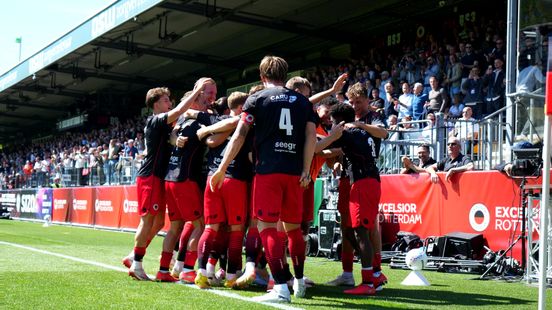
De strijd om handhaving in de eredivisie nadert voor Excelsior haar einde. De Rotterdamse club kan zich aankomend weekend tegen FC Volendam definitief verzekeren van nog een jaar voetballen op het hoogste niveau van Nederland. De route is duidelijk: Excelsior moet niet verliezen.
US secretary of state will hold talks with Italian government, also berated by Trump for not supporting Iran war
The US secretary of state, Marco Rubio, is to meet Pope Leo at the Vatican on Thursday in an effort to ease tensions after Donald Trump’s repeated criticisms of the first North American pontiff.
Amid unprecedented strain on relations between the Holy See and Washington, Rubio is expected to meet Leo at the Apostolic Palace in the morning, before holding a series of meetings with the Italian government.
Continue reading...