Wel.nl

Minder lezen, Meer weten.

Servers in Roosendaal voeden wereldwijde ‘verkrachtingsacademie’ a la Pelicot

Op de pornosite Motherless.com circuleren duizenden video's van seks met (schijnbaar) bewusteloze vrouwen, inclusief tips om partners te drogeren en te verkrachten. De site draait op servers van NForce in Roosendaal, een hoster met een beladen verleden rond misbruikbeelden.

Motherless.com begon in 2008 als "reguliere" pornosite, maar groeide uit tot een centrale vindplaats voor extreem misbruikmateriaal: ‘sleep content’ waarin vrouwen gedrogeerd of ogenschijnlijk bewusteloos worden misbruikt, soms zeer waarschijnlijk minderjarig. Gebruikers vormen groepen met duizenden leden, delen daar video’s en wisselen tips uit over medicatie, drugs en dosering om partners buiten bewustzijn te krijgen. De site beloont populaire uploaders met credits die in geld zijn om te zetten, wat het filmen en delen van misbruik actief stimuleert. CNN sprak over de ‘onthulling van een wereldwijde verkrachtingsacademie’ en schat dat de site tientallen miljoenen – elders zelfs meer dan 60 miljoen – bezoeken per maand trekt. Ook Nederlandse mannen uploaden actief materiaal, in Nederlandstalige groepen met typisch Hollandse gebruikersnamen.

Uit onderzoek van NRC blijkt dat Motherless al jaren draait op servers van NForce in Roosendaal. Dit hostingbedrijf dook eerder op in een TU‑Delft‑monitor als partij die relatief veel kindermisbruikmateriaal op zijn servers had staan, met tienduizenden meldingen in een paar maanden tijd. De huidige eigenaar, de Israëlisch‑Bulgaarse ondernemer Simon Shlomi Elimeleh, levert via meerdere bv’s diensten aan Motherless en ziet volgens eigen zeggen geen rol in de inhoud: NForce is slechts infrastructuur, beslissingen worden genomen “op basis van wetten, regels en contracten”, niet op publieke verontwaardiging.

Formeel klopt dat een hostingbedrijf moeilijk strafrechtelijk aansprakelijk te stellen is voor alles wat klanten doen. De sector heeft afgesproken meldingen van illegale inhoud binnen 24 uur te verwijderen, en toezichthouders kunnen pas optreden als klachten structureel genegeerd worden. Maar het verhaal van Motherless en NForce laat zien dat de scheidslijn tussen ‘neutrale snelweg’ en medeplichtige facilitator dun wordt wanneer je jarenlang vasthoudt aan een klant die bekendstaat om kindermisbruik, extreme verkrachtingsporno en falende leeftijdscontrole – waarvoor de huidige eigenaar van de site in het VK inmiddels een boete van 800.000 pond kreeg.


Behance Featured Projects

The latest projects featured on the Behance

Pan Xiang Ji Blueberry Flower Cake


Statushouders hebben vaker en steeds sneller een betaalde baan, ze werken vooral als uitzendkracht en in de horeca

Aan het begin van hun loopbaan zijn statushouders vaak onderdeel van de ‘flexibele schil’ als oproepkracht. Na tien jaar zijn de meesten in dienst. Statushouders werken vooral in de uitzendbranche en in de horeca.

The Guardian

Latest news, sport, business, comment, analysis and reviews from the Guardian, the world's leading liberal voice

Rewilding giants: captive elephants rehomed in Europe’s first sanctuary

Julie, once a circus elephant, and Kariba, from a Belgian zoo, are to be moved to a former ranch in Portugal

Europe’s first large-scale elephant sanctuary, which is opening to offer a more natural environment for some of the 600 animals still held in captivity across the continent, is to receive its first arrivals.

Julie, Portugal’s last circus elephant, will be moved next month to the animal charity Pangea’s multimillion pound sanctuary in the Alentejo, 200km (124 miles) east of Lisbon, close to the border with Spain.

Continue reading...

Cut UK speed limits to reduce Iran war impact on consumers, thinktank urges

Cap of 20mph in towns and cities and 60mph on motorways would cut fuel demand and combat rising prices, IPPR says

Britain should lower speed limits for drivers as part of a package of measures to reduce the impact of the Iran war on consumers, a thinktank has said.

Capping legal speeds at 20mph in towns and cities and 60mph on motorways would help reduce fuel demand and combat soaring oil prices triggered by conflict, according to the Institute for Public Policy Research (IPPR).

Continue reading...

‘They have built a machine that pulls out their mother tongue’: why Tibet’s children think they are Chinese

Parents say the insistence on Mandarin in schools is eroding the country’s language and culture right from early childhood

Weeks after a Tibetan-speaking five-year-old started preschool, she had “completely stopped speaking Tibetan”, according to her mother. Nine months later, although the child could still understand Tibetan, she only answered in Mandarin, and at best a few single-word answers in Tibetan after some time.

Instead the girl “keeps saying that she can only speak Chinese … that she is Chinese and not Tibetan”, according to a researcher who met the family. “The mother thinks that the daughter is just repeating what she is constantly told at school and that the government aims to eradicate Tibetan.”

Continue reading...

UAE’s ruling royal family benefits from more than €71m in EU farming subsidies

Al Nahyans’ control over farmland in Europe has meant they receive proportion of payments to farms

The United Arab Emirates’ ruling royal family is benefiting from tens of millions in EU subsidies to grow crops destined for the Gulf, it can be revealed.

A cross-border investigation by DeSmog and shared with the Guardian found subsidiaries controlled by the Al Nahyans collected more than €71m (£61m) in six years for farmland it controls in Romania, Italy and Spain.

Continue reading...

100 years on Earth: celebrating David Attenborough’s birthday – podcast

To celebrate Sir David Attenborough’s centenary, Madeleine Finlay catches up with natural history writer Patrick Barkham, who has met the celebrated presenter. They explore how the natural world has changed in the century that Attenborough has been on Earth, and how his programming has reflected his growing commitment to highlighting the devastating impacts of the climate crisis on nature and biodiversity

Clips: BBC, PBS

Support the Guardian: theguardian.com/sciencepod

Continue reading...

404 Media

404 Media is an independent media company founded by technology journalists Jason Koebler, Emanuel Maiberg, Samantha Cole, and Joseph Cox.

Scientists Gave ‘Aggressive’ Fish Psychedelic Drugs. A Breakthrough Came Next

Scientists Gave ‘Aggressive’ Fish Psychedelic Drugs. A Breakthrough Came Next

Move over, coked-up salmon. Fish dosed with psilocybin, the psychoactive component found in magic mushrooms, showed less aggression toward peers compared to their normal behavior in laboratory experiments, according to a study published on Thursday in Frontiers in Behavioral Neuroscience.

Scientists have studied the effects of psilocybin on humans and a variety of other mammals, but fish offer unique insights into the effects of this compound due to their wide varieties of social structures and activity levels. The research is the first to “demonstrate that psilocybin reduces aggression in any animal model,” according to the study, and opens the door to future studies that might pin down the neural mechanisms that underlie these behavioral changes.

Scientists Gave a Bunch of Salmon Cocaine. This Is What Happened Next
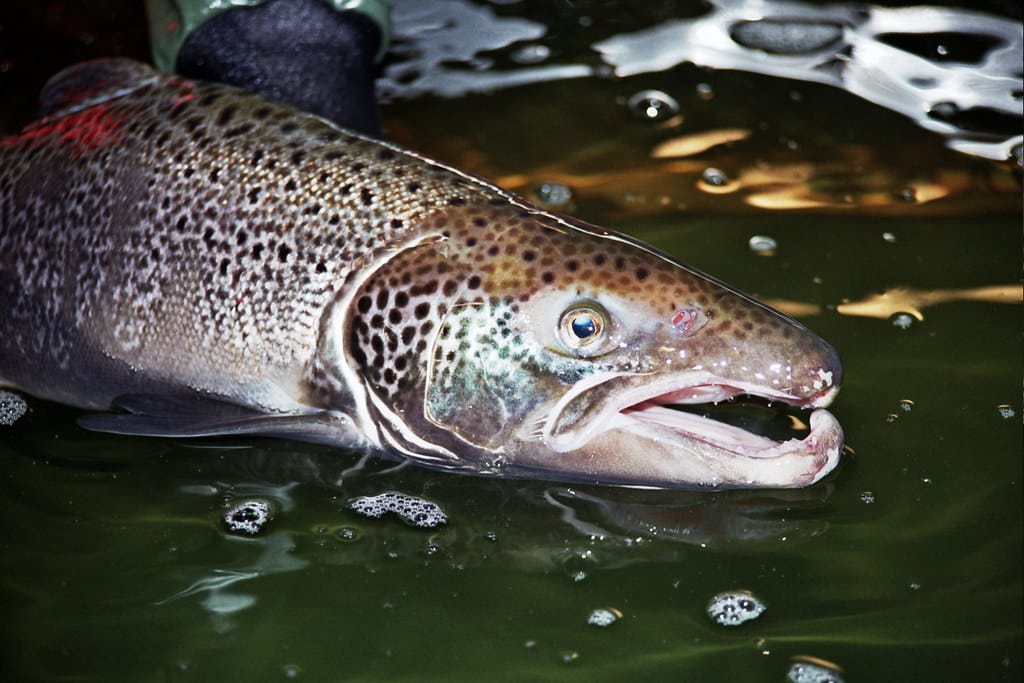
Salmon exposed to cocaine and its byproduct swam farther than unexposed fish, raising alarms about drug pollution in aquatic ecosystems.
Scientists Gave ‘Aggressive’ Fish Psychedelic Drugs. A Breakthrough Came Next

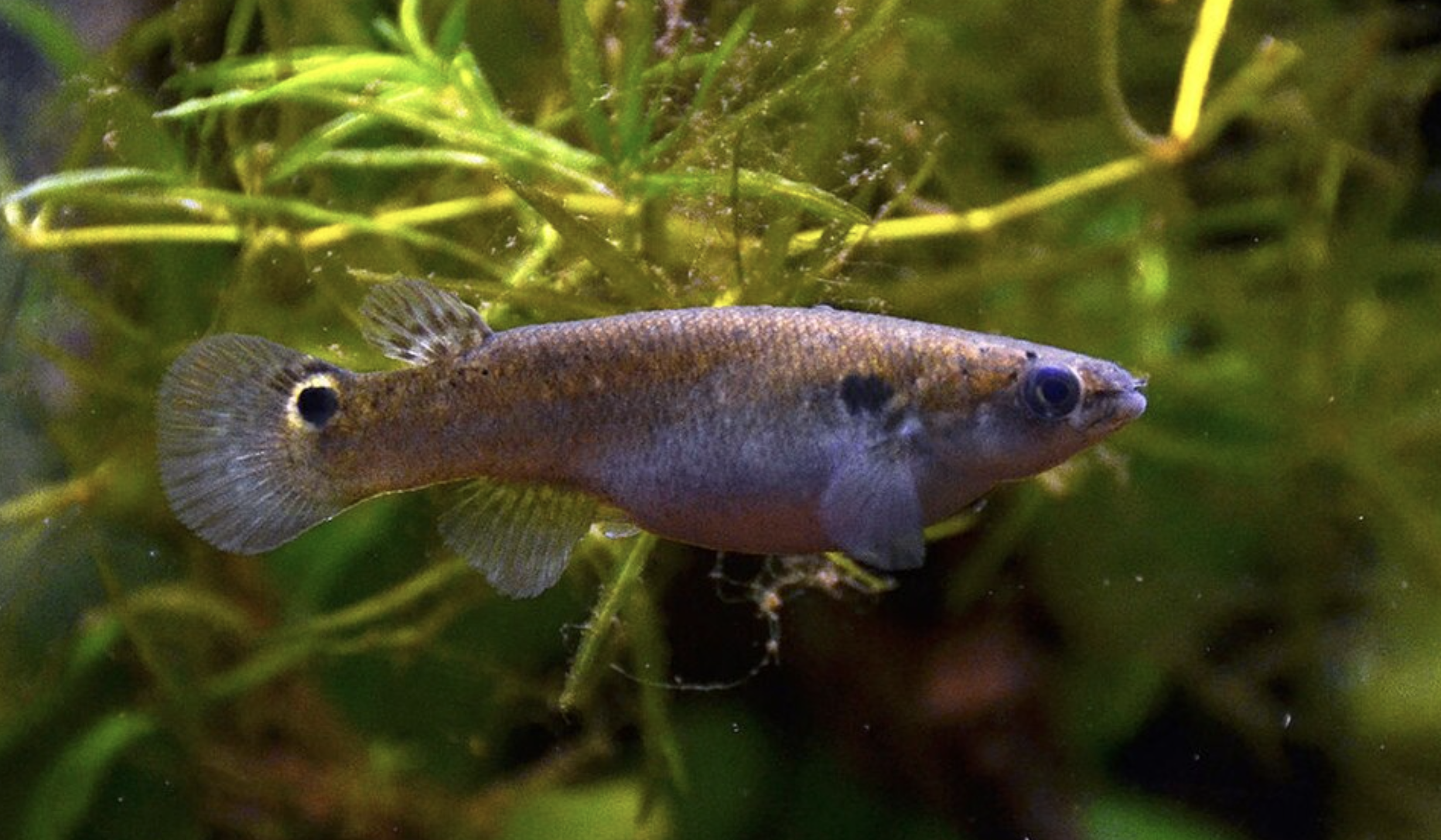
The mangrove rivulus fish (Kryptolebias marmoratus) is particularly intriguing as a highly aggressive fish with incredible adaptations, including the ability to survive out of water for months at a time. It is also a rare hermaphroditic species that reproduces mainly through self-fertilization, producing clones that remove genetic variation as a factor in experiments. 

“Each lineage that we have is essentially genetically identical, and between lineages, they are genetically distinct,” said Dayna Forsyth, a research associate at Acadia University in Nova Scotia who led the study, in a call with 404 Media. “So, we eliminate the genetic factor, and just focus on the behavioral effect.”

To determine how psilocybin influences behavior in these fish, Forsyth and her colleagues placed two undosed fish on opposite sides of a tank with a fiberglass mesh barrier that allowed the fish to see and smell each other, but prevented physical interactions. Then, the “focal fish” was removed and exposed to a low psilocybin dose in a separate tank for 20 minutes, and was later transferred back to the partitioned tank where its responses to the undosed “stimulus fish” were observed.

“We really had no idea what we were getting ourselves into,” Forsyth said. “We didn't have much to go off of before. My research question throughout was just: ‘does psilocybin affect fish behavior?’ We had no idea when we first started this, because there weren't too many papers out there on fish.”

As it turned out, psilocybin had a noticeable impact on the behavior of these fish. Mangrove rivulus fish express aggression by suddenly darting at peers in swimming bursts, but these charges were noticeably reduced in the psilocybin-treated fish. However, the fish still interacted in less overtly hostile ways—such as performing lateral and head-on displays meant to size up  peers—regardless of whether they had been dosed.  

“We definitely predicted that all aggressive behaviors, including those lateral and head-on displays, would be decreased,” Forsyth said. “We really did not expect it to just target that highly aggressive and more energetically costly behavior, rather than the low-energy behaviors. That was definitely a surprise.” 

The study adds to a growing body of research about the impacts of psychoactive compounds on fish, including a recent study in Current Biology about salmon that were exposed to cocaine.

Similar experiments could eventually yield insights about the effects of psilocybin, and other substances, on humans, given that we share some neural anatomy with fish. Forsyth is also interested in how an increased dose might affect fish, or whether they might develop a long-term tolerance to the compound that might shift their behavior back to a normal aggressive state.

“In terms of toxicology studies and exposing fish to a compound for a medicinal aspect, you always want the lowest dose that creates the outcome,” she said. “But it would be interesting to increase that dose and see if it almost reverses the effects. We don't know, but it would be interesting to see what that tolerance is for the dose, maybe even with repeated exposures over time.”


VK: Voorpagina

Volkskrant.nl biedt het laatste nieuws, opinie en achtergronden

Rusland: meerdere gewonden door aanval Oekraïne