Greg Brockman has faced questions about his emails, texts and writings in his personal diary in second week of the trial
As Elon Musk’s case against OpenAI entered its second week, focus shifted to the company’s president, Greg Brockman. Over the course of several hours on Monday and Tuesday, Brockman faced questions about his emails, texts and one piece of evidence that has become central to the trial: his personal diary.
Musk’s lawsuit revolves around his allegation that Brockman, OpenAI and its CEO, Sam Altman, violated the founding agreement of the artificial intelligence firm by turning it into a for-profit entity. Musk argues that Altman and Brockman also unjustly enriched themselves in the process, essentially taking Musk’s money while deceiving him about their true intent for the business. He is seeking Altman and Brockman’s removal, the undoing of the for-profit restructuring and $134bn, which Musk wants distributed to OpenAI’s non-profit.
Continue reading...From economic woes to concerns that war could break out again at any moment, underlying worries run deep
In the weeks since the fragile ceasefire with the US and Israel took hold, life in Tehran has – on the surface at least – largely returned to something like pre-war normality. Many security checkpoints have been taken down, coffee shops are bustling, parks are full of people gathering for picnics, musicians are playing again in the streets, highways are jammed with traffic and the metro - free to use since the war - runs packed.
But underlying worries run deep, and many Iranians fear the war could return at any moment. The uncertainty was underlined on Monday when the US and Iran launched fresh attacks in the Gulf as the two sides continue to blockade of the strait of Hormuz. The war’s economic toll has been severe too. Many people have lost their jobs and inflation is surging. The International Monetary Fund estimates it could reach 70% this year.
Continue reading...A Swedish firm’s pursuit of the product testing company Intertek suggests investors’ price expectations are yet to be shifted by the Iran war
It was a bad day for the FTSE 100 index on Tuesday – down 1.4% – but the puzzle in many quarters is why share prices haven’t fallen further since the start of the US-Israel war on Iran. The index is still up by a couple of percentage points since new year, which is not a bet most would have made at the time if they had been told an inflationary energy price shock lay around the corner.
An absence of Iran-related corporate profits warnings partly explains the relative resilience, even if those usually take a while to arrive. So, too, the fact that the Footsie is overpopulated with overseas earners for whom the US economy, which isn’t suffering Europe’s soaring natural gas prices, matters more than their home market. And higher oil prices obviously help the likes of Shell and BP.
Continue reading...De grote vraag is natuurlijk: gaat het hem lukken. Niet Odysseus, die komt wel thuis, maar Christopherus. Het is natuurlijk niet het minste verhaal, maar Nolan is ook niet de minste regisseur. Vakjury's wereldwijd nog altijd unaniem ontevreden over het ontbreken van historisch accuraat bronstijdpantser, maar er komt een tijd dat die bijl begraven moet worden en zelfs zij gewoon in IMAX achterover leunen om te zien of Het Gelukt Is. Vanaf 16 juli in de bioscoop!
De vorige, eerste trailer uit december
Social

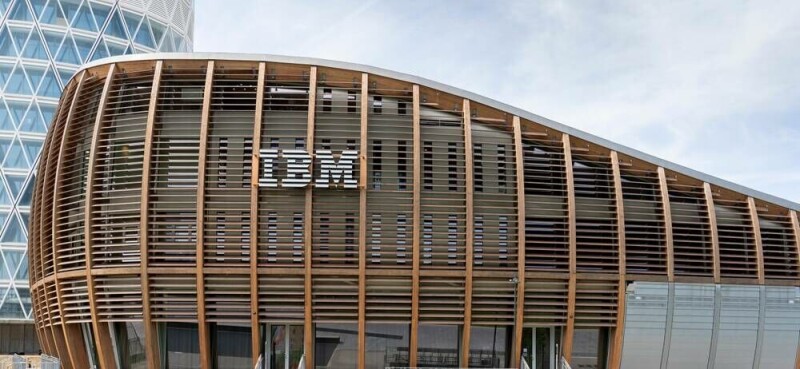
With help from Google and Intel, Big Blue brings new automation to Db2
IBM has added support for Google Vertex AI and Intel Gaudi to boost the AI-based management of its stalwart Db2 database.…