
Nature has retracted a paper that claimed AI had a positive impact on student learning.
The original paper, titled “The effect of ChatGPT on students’ learning performance, learning perception, and higher-order thinking: insights from a meta-analysis,” was originally published in May of last year by Jin Wang and Wenxiang Fan of the Hangzhou Normal University in China. It is a meta-analysis, meaning it combines data from 51 research studies published between November 2022 and February 2025 on the effectiveness of ChatGPT in education. The paper claimed it found that ChatGPT had a large or moderately positive impact on “students’ learning performance, learning perception, and higher-order thinking.”
“The Editor has decided to retract this paper owing to concerns regarding discrepancies in the meta-analysis,” Nature said in its retraction note. “These issues ultimately undermine the confidence the Editor can place in the validity of the analysis and resulting conclusions. The authors have not responded to correspondence regarding this retraction.”
The researchers did not immediately respond to a request for comment.
“I first noticed the paper published just a day or two after it came out on 6 May 2025,” Ben Williamson, a senior lecturer in digital education at the University of Edinburgh, told me in an email. “It rapidly picked up a lot of attention on social media, especially on LinkedIn, as it appeared to offer some of the first hard evidence that ChatGPT improves what the authors called ‘learning performance.’ Within a month it had been accessed online almost 400,000 times and had an Altmetric score of 365 after being shared hundreds of times on X and Bluesky. It was very much helped by some very influential individuals sharing it on social media as good evidence to support promoting AI in education.”
The retraction note did not provide more details on Nature's decision, but a 2025 study published in European Journal of Education Policy and Practice shows that the method Wang and Fan used is often flawed, and highlighted the issues in their paper before it was retracted.
“Existing empirical evidence on AIED [AI in educations] suggests some positive effects, but a closer look reveals methodological and conceptual problems and leads to the conclusion that existing evidence should not be used to guide policy or practice,” the paper, written Ilkka Tuomi and titled “What counts as evidence in AI & ED: Towards Science-for-Policy 3.0,” said.
One problem according to Tuomi is that these meta-analysis studies use any paper that was peer-reviewed, but that a closer look at each individual paper reveals that they vary in quality or that the data doesn’t show AI improves learning outcomes.
“Despite its apparent methodological quality and apparent rigour, the heterogeneity of the analysed studies makes the quantitative results of the Deng et al. meta-analysis meaningless,” Tuomi said, referring to another study about ChatGPT enhancing student learning. “Very similar problems underpin another viral article that has been interpreted to provide final proof that ChatGPT has positive impacts on learning. This study, by Wang and Fan (2025), uses the same methodology as the Deng et al. study, to the extent that it copies their search pattern with the original spelling mistakes. Already a quick review of the journals where the original studies have been published, show that low-quality and potentially predatory journals are included.”
“This meta analysis on ChatGPT effects on learning appeared only two and a half years after ChatGPT was launched,” Williamson said. “So what we are supposed to believe is that in the intervening period, dozens of high quality studies of the effect of ChatGPT on learning performance took place, were written up, submitted for peer review, and published, which the meta analysis authors then painstakingly synthesized using robust methods. What appeared actually to be the case is that the meta analysis aggregated a whole bunch of very low quality research published in disreputable journals. Ultimately, the meta analysis recycled junk science into headline-grabbing claims about the benefits of ChatGPT for learners. And those claims were simply unfounded due to methodological problems with the conduct of the study, as the retraction now appears to indicate.
"The retraction of this study should serve as a crucial reminder to the education community,” Jake Baskin, executive director of the Computer Science Teachers Association, told me in an email. “We need to teach students how this technology actually works, not just how to use it, and rigorously evaluate if and how generative AI genuinely improves teaching and learning."
Our reporting has repeatedly shown that large language models are prone to errors that can make education frustrating to both students and teachers. Multiple teachers have told us that ChatGPT has completely upended their ability to educate students and grade their work which is increasingly AI-generated. My investigation into Alpha School, the leading “AI-powered” school, used AI generated lesson plans that included errors and flawed questions.
Despite these problems, AI companies and lawmakers continue to push AI products into schools.
“ChatGPT and other generative AI applications have been incredibly disruptive in education for several years,” Williamson said. “What educators, parents and policy officials really needed was high quality data and evidence to help guide them. What they have had to deal with instead is some substandard research.”
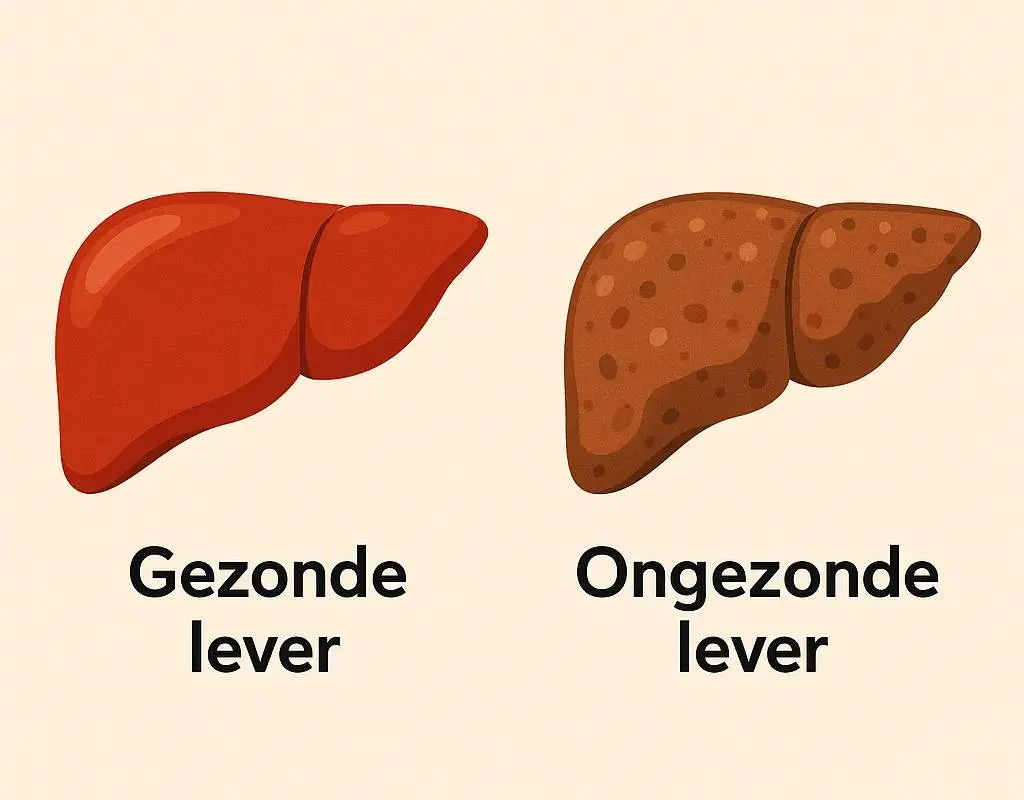
De lever is een van de weinige vitale organen die nauwelijks pijnsignalen geeft, waardoor leververvetting en cirrose vaak pas aan het licht komen als de schade al vergevorderd is. Dat maakt het een stille massaziekte, aangewakkerd door leefstijl en welvaart.
De lever lijdt in stilte
Hepatologen benadrukken al jaren dat de lever geen pijn doet, zelfs niet wanneer hij al flink is aangetast. Vroege leververvetting geeft hooguit vage klachten als vermoeidheid of een beetje druk rechtsboven in de buik, die zelden direct aan de lever worden gekoppeld. Pas bij ernstige cirrose ontstaan dramatische symptomen, zoals spataderen in slokdarm en buik of levensbedreigende bloedingen.
Intussen groeit leververvetting wereldwijd razendsnel uit tot de meest voorkomende leverziekte, onder de nieuwe naam MASLD (metabolic dysfunction-associated steatotic liver disease). Volgens recente schattingen leven inmiddels rond de 1,3 miljard mensen met deze vorm van leververvetting, ongeveer 16 procent van de wereldbevolking.
Leefstijl, champagne en de schijn van gezondheid
De paradox: leververvetting treft niet alleen mensen met ernstig overgewicht. Ook wie slank oogt maar weinig beweegt, veel bewerkt voedsel eet of regelmatig drinkt, kan een vervette lever hebben. Nederlandse en internationale cijfers laten zien dat overgewicht, type 2-diabetes en een “Western style”-dieet met veel suiker en vet de belangrijkste motoren zijn achter de stille leverepidemie.
Toch is dit geen noodlot: leververvetting is in een vroeg stadium omkeerbaar met minder calorieën, meer bewegen en een overwegend plantaardig, mediterraan voedingspatroon. Uit studies blijkt dat regelmatig duurtraining het vet in de lever met 10 tot 30 procent kan verminderen, zelfs zonder gewichtsverlies. Maar zolang de lever geen pijn doet, ontbreekt vaak de urgentie om iets te veranderen.
Duiding: preventie begint bij erkenning
Dat leververvetting nu al een groeiende oorzaak is van levertransplantaties in Nederland, vooral als gevolg van leefstijl, is een signaal dat verder gaat dan individuele keuzes. Onze zorgsystemen zijn ingericht op het bestrijden van klachten, maar niet op het opsporen van een orgaan dat zwijgend achteruitgaat.
Het maakt het aantrekkelijk om leverchecks – via simpele bloedtesten en gerichte echo’s – veel normaler te maken, zeker bij mensen met overgewicht, diabetes of hoge bloeddruk. Want juist omdat de lever geen pijn doet, vraagt hij om politiek en maatschappelijk beleid dat verder kijkt dan het volgende ziekenhuisbed.
Bath unhappy with collision between Barbeary and Lucu
Some camera angles were unavailable to TMO in semi-final
An independent broadcast director is set to be in position for this month’s Champions Cup final in Bilbao after disquiet about the lack of crucial replays available to match officials during Bath’s 38-26 semi-final defeat against Bordeaux-Bègles on Sunday.
Johann van Graan, Bath’s head of rugby, suggested three high tackles on his No 8, Alfie Barbeary, were missed because the referee and television match official (TMO) had not been supplied with all the requisite angles by the French host broadcaster. Members of the commentary team on Premier Sports also highlighted the absence of replay footage.
Continue reading...Former New York City mayor, who was placed on ventilator, is also being monitored, a spokesperson said
Rudy Giuliani, a former New York City mayor, is breathing on his own after being hospitalized with pneumonia and placed on a ventilator, his spokesperson said on Monday.
Giuliani, 81, remains in critical but stable condition at a Florida hospital and is being monitored as a precautionary measure, Ted Goodman, a spokesperson, said.
Continue reading...

An anonymous reader quotes a report from Ars Technica: In a makeshift demonstration kitchen in Concord, California, cooking oil splatters in and around a frying pan, which catches fire on an unattended gas stove. Within moments, a smoke detector wails. But in this demonstration, something less common happens: An AI-driven sensor activates and wall emitters blast infrasound waves toward the source of the fire in an attempt to put it out. The science of acoustic fire suppression, which has long been known and documented in scientific literature and the press, works by vibrating oxygen molecules away from a fuel source, depriving the fire of a critical component needed for combustion. Indeed, after just a few seconds of infrasound, the tiny kitchen blaze goes out.
"We were able to not just point-and-shoot like a fire extinguisher; we figured out how to run it through ducting and distribute it like a sprinkler system," said Geoff Bruder, co-founder and CEO of Sonic Fire Tech, during the presentation. The company's goal is to replace sprinklers, which are effective at stopping fires but can also do significant water damage to a property. Sonic Fire Tech appears to be the first company trying to commercialize the science of acoustic fire suppression. Its executives have already been touring Southern California; Wednesday's event was the first in the northern half of the state.
The company aims to make this infrasound technique mainstream in both commercial (for instance, a data center, where sprinklers would damage electronics) and in-home installations, given that sprinklers are already required in all new California homes built in 2011 and later. Sonic Fire Tech also hopes to produce a backpack-based system that could be worn by wildland firefighters headed out into the field. "We are making meaningful technological improvements on a monthly basis," Stefan Pollack, a company spokesperson, emailed Ars after the event. But two experts who spoke with Ars raised serious questions about the potential for this technology to supplant traditional sprinklers in a home. They are even more skeptical as to whether the technique can be effective in an uncontrolled wildfire situation, where flames can grow very quickly. Experts are concerned that infrasound may knock down small flames but does not cool hot surfaces or wet fuel like sprinklers do, which raises the risk of re-ignition, smoldering fires, hidden fires, or blocked fires. Sonic Fire Tech has claimed third-party validation and possible NFPA 13D equivalency, but it has not publicly released full testing details.
Fire officials and outside observers also want more information about reliability, maintenance, calibration, and how system failures would be detected and communicated.


"We were able to not just point-and-shoot like a fire extinguisher; we figured out how to run it through ducting and distribute it like a sprinkler system," said Geoff Bruder, co-founder and CEO of Sonic Fire Tech, during the presentation. The company's goal is to replace sprinklers, which are effective at stopping fires but can also do significant water damage to a property. Sonic Fire Tech appears to be the first company trying to commercialize the science of acoustic fire suppression. Its executives have already been touring Southern California; Wednesday's event was the first in the northern half of the state.
The company aims to make this infrasound technique mainstream in both commercial (for instance, a data center, where sprinklers would damage electronics) and in-home installations, given that sprinklers are already required in all new California homes built in 2011 and later. Sonic Fire Tech also hopes to produce a backpack-based system that could be worn by wildland firefighters headed out into the field. "We are making meaningful technological improvements on a monthly basis," Stefan Pollack, a company spokesperson, emailed Ars after the event. But two experts who spoke with Ars raised serious questions about the potential for this technology to supplant traditional sprinklers in a home. They are even more skeptical as to whether the technique can be effective in an uncontrolled wildfire situation, where flames can grow very quickly. Experts are concerned that infrasound may knock down small flames but does not cool hot surfaces or wet fuel like sprinklers do, which raises the risk of re-ignition, smoldering fires, hidden fires, or blocked fires. Sonic Fire Tech has claimed third-party validation and possible NFPA 13D equivalency, but it has not publicly released full testing details.
Fire officials and outside observers also want more information about reliability, maintenance, calibration, and how system failures would be detected and communicated.
Read more of this story at Slashdot.