GameStop is reportedly preparing a potential offer for eBay, an unusually ambitious move given that eBay's roughly $46 billion market value is nearly four times GameStop's. Reuters reports: GameStop is preparing an offer for eBay as CEO Ryan Cohen pursues plans to boost the struggling videogame retailer's market value more than tenfold, the Wall Street Journal reported on Friday. Shares of eBay, which has a market capitalization of about $46 billion, soared about 14% in extended trading. GameStop gained 4%. The company has a market value of nearly $12 billion.
GameStop has been quietly building a stake in eBay's shares ahead of a potential offer, the report said, citing people familiar with the matter. If eBay is not receptive, Cohen could decide to take the offer directly to the e-commerce company's shareholders, the Journal said.
GENÈVE (ANP) - De grote rederij voor containerschepen MSC heeft een nieuwe dienst aangekondigd richting de Perzische Golf die de Straat van Hormuz mijdt. Die zeestraat wordt zo goed als geblokkeerd door Iran sinds de Verenigde Staten en Israël een oorlog begonnen tegen het land. Daardoor is vrachtvervoer per schip naar landen aan de Perzische Golf ernstig bemoeilijkt.
MSC biedt vanaf volgende week een vervoersdienst aan waarbij schepen via Europese havens naar de Rode Zee varen. Daar loopt de route onder andere naar de havensteden Jeddah en Koning Abdullahstad aan de kust van de Rode Zee. Van daaruit kunnen klanten per vrachtwagen goederen laten vervoeren naar de Saudische havenstad Dammam, dat ruim 1300 kilometer verderop aan de Perzische Golf ligt. MSC is van plan van daaruit kleinere vrachtschepen te laten varen naar belangrijke havens in bijvoorbeeld de Verenigde Arabische Emiraten, Bahrein en Koeweit.
Somewhere deep in the countryside of Nagano, one of the best izakaya I've ever been.
I wasn't thinking too much about the B&W switch on the Zf, so thought to try it for that evening. I love it. Paired with IBIS, it's incredibly fun in low light, and given the form factor, reminds me of my FE film camera.
Ipswich are back in the Premier League. And in what style. They are used to promotion parties in this part of Suffolk and, under Kieran McKenna, they do not fall flat. Two early goals dismissed any fears of shredded nerves and an afternoon of celebration could commence. No police presence around the pitch perimeter was ever going to be sufficient to stop this pitch invasion. Happy days, indeed.
It had not been the simple season many anticipated for a team widely expected to make this instant return to the top flight. Given the swashbuckling style of their last Championship ascent and their status as title favourites this time around, it is difficult to avoid the sense that Ipswich largely underperformed in a campaign that flickered at regular points, but never really caught light.
Russo, Mariona, Foord, Blackstenius, Smith all on the field. Slegers seems to have found her best team by filling it with attacking players. Also a tribute to how much Kim Little can still cover.
From Virginia to New York, the bugs drain vines, cut yields and leave growers resorting to one simple fix: squash them
Around grape harvest time about three years ago, an employee at Zephaniah Farm Vineyard in Leesburg, Virginia, noticed bugs, about 1in long with gray and black wings and a bright red underwing, atop some trees.
While the insects were pretty, they were there for the grapevines and not welcome guests at the vineyard, which sits atop a farm that the Zephaniah family has run since 1949.
Alessandro Zanardi verloor in 2001 beide benen bij een grote crash – niet zijn eerste, en ook niet zijn laatste. Als F1-coureur maakte hij weinig indruk, maar door de manier waarop hij zich na elke tegenslag terugknokte, des te meer.
De terugtrekking van enkele duizenden Amerikaanse militairen uit Duitsland komt voor Berlijn niet onverwacht. Het legt wel de recente spanningen bloot tussen president Trump en de regering van kanselier Merz.
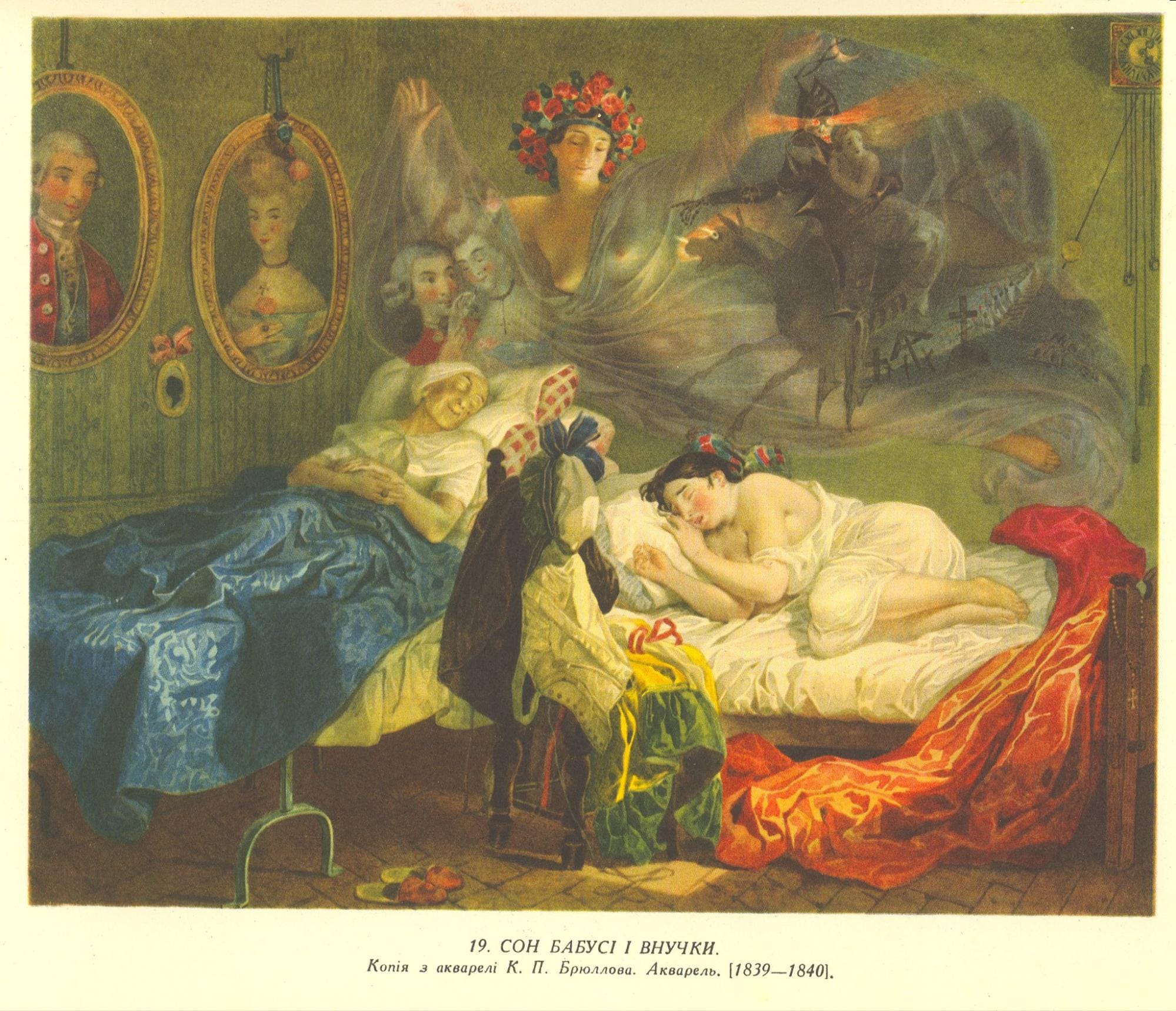
Welcome back to the Abstract! These are the stories this week that dared to dream, slinked through the city, mourned their mothers, and visited ancient graveyards.
First, scientists studied thousands of dream reports and discovered that world events—like the COVID-19 pandemic—can manifest in our vespertine visions. Then: the science of urban snake rescues, the lonely lives of orphaned dolphins, and scientists fiddle with Rome’s ancient DNA.
Why do we dream? It’s a question that has kept people up at night for thousands of years. Now, scientists have taken a new crack at the mystery by collecting and analyzing more than 3,700 reports from 207 participants who described both their dreams and waking experiences between 2020 to 2024, as well as 80 participants who reported their dreams during the onset of the COVID-19 pandemic from April to May 2020.
The results revealed possible links between personality traits and dream experiences, and suggested that dreams are influenced by external events such as the pandemic.
“During lockdown, dreams showed increased references to limitations and heightened emotional intensity, effects that gradually normalized over the following years,” said researchers led by Valentina Elce of IMT School for Advanced Studies Lucca. “These findings demonstrate that stable individual traits and incidental experiences jointly shape dream semantics.”
For the main dataset, Elce and her colleagues recruited 207 Italian adults ranging from 18 to 70 years old who were assessed for their psychological and cognitive traits, demographics, and sleep patterns. These participants recorded recollections of their dreams as soon as they woke up using a scale of descriptive elements, such as bizarreness, vividness, valence (emotional tone), and the level of agency they had over events in the dream. This sample of dreamers was also prompted to record their waking experiences throughout the day.
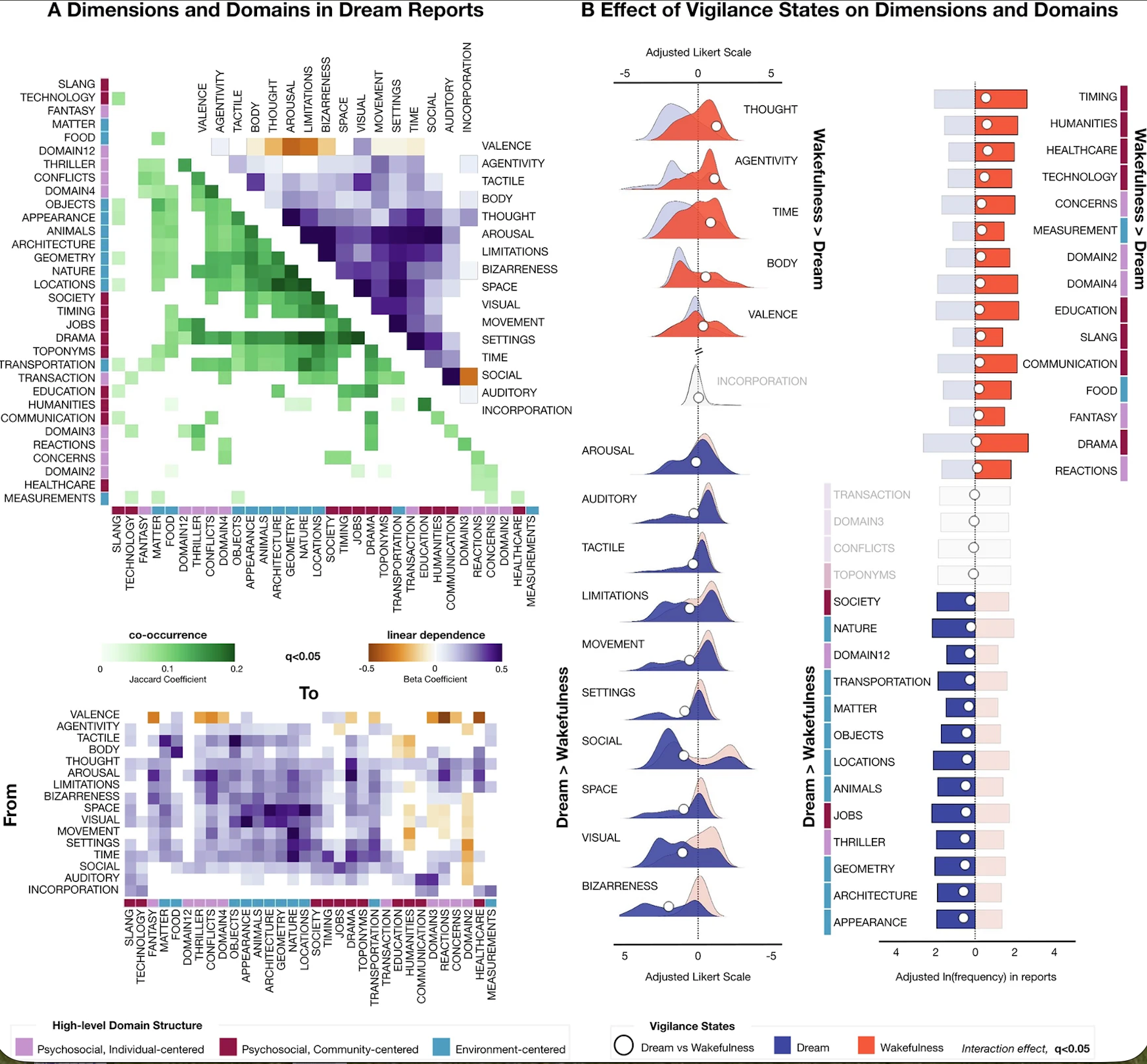
Figure 1 of the study illustrates descriptive statistics of report content across vigilance states (i.e., wakefulness and dream). Image: Elce, Valentina et al.
The team used natural language processing models to quantitatively analyze the semantic structure of the dream reports and correlations between individual traits and dream experiences. For example, people who let their mind wander in their waking hours reported having more bizarre dreams.
“Our findings indicate that dream bizarreness is associated with a higher tendency of the individuals to mind-wander, which also drives frequent shifts in narrative settings,” the team said. “This is in line with accounts suggesting that dreaming and mind-wandering may share a common neural and cognitive foundation.”
The lockdown group, meanwhile, was composed of 60 women and 20 men who recorded their dreams in diaries during spring 2020. By comparing the two samples, the researchers suggest that “external emotionally salient events, in this case the COVID-19 pandemic, might affect dream experiences and how such effects develop over long time spans,” according to the study.
“Notably, themes concerning healthcare, which were heavily represented in daily life during the pandemic, showed no significant changes,” the researchers said. “However, in a continuous line with what was happening in the daylight world, the actions of the individuals while they were dreaming were described as limited by physical or metaphorical constraints and the recalled emotional states carried a stronger intensity.”
Godspeed to the oneirologists—the term for scientists who study dreams—for finding new ways to probe these ephemeral experiences that constantly elude explanation.
In cities with urban snake populations, such as Hyderabad in India, millions of people live alongside venomous snakes—including deadly Indian cobras and Russell’s vipers—that have been displaced by rapid habitat loss.
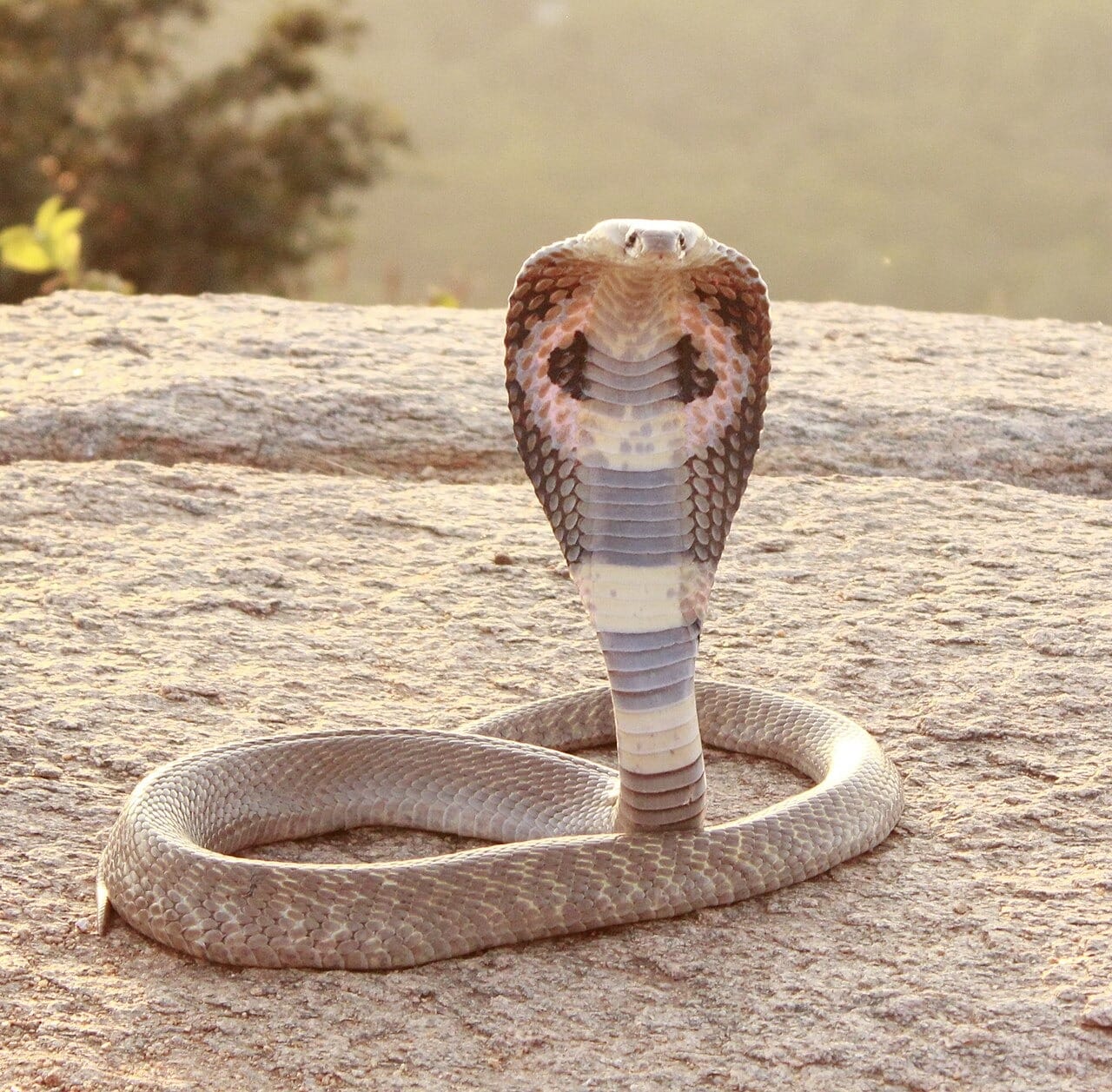
To discourage people from just killing these cosmopolitan cobras, an organization called the Friends of Snakes Society performs “snake rescues” with trained handlers who remove snakes and transport them to safer locations. By analyzing 55,467 snake rescue records in Hyderabad from 2013 to 2022, a team found that snake rescues rose nearly 17 percent over the decade, and that about 54 percent (n = 30,189) of rescues involved venomous snakes.
Venomous Indian cobras were the most common snakes to be rescued, making up 49 percent of all cases (27,132 snakes). Image: Pavan Kumar N
“Snakes have either become locally extinct or have adapted to the city as their habitat, resulting in intensified human–wildlife interactions in Hyderabad and its neighboring areas,” said researchers led by Avinash Visvanathan of the Friends of Snakes Society. “The dataset demonstrates that standardized snake rescue operations not only mitigate immediate risks but also generate valuable ecological information.”
As always, The Simpsons already did it with the 1993 episode “Whacking Day,” though in that case, a mass snake rescue was made possible by the dulcet tones of Barry White rather than a helpline. Perhaps the efficacy of baritone vocals in urban snake management could offer a future avenue of study.
Dolphins, like humans, invest a lot of maternal care into their young, typically nursing calves for two to three years. But scientists now discovered that months-old orphaned calves can survive the deaths of their mothers—though they are negatively impacted by their losses.
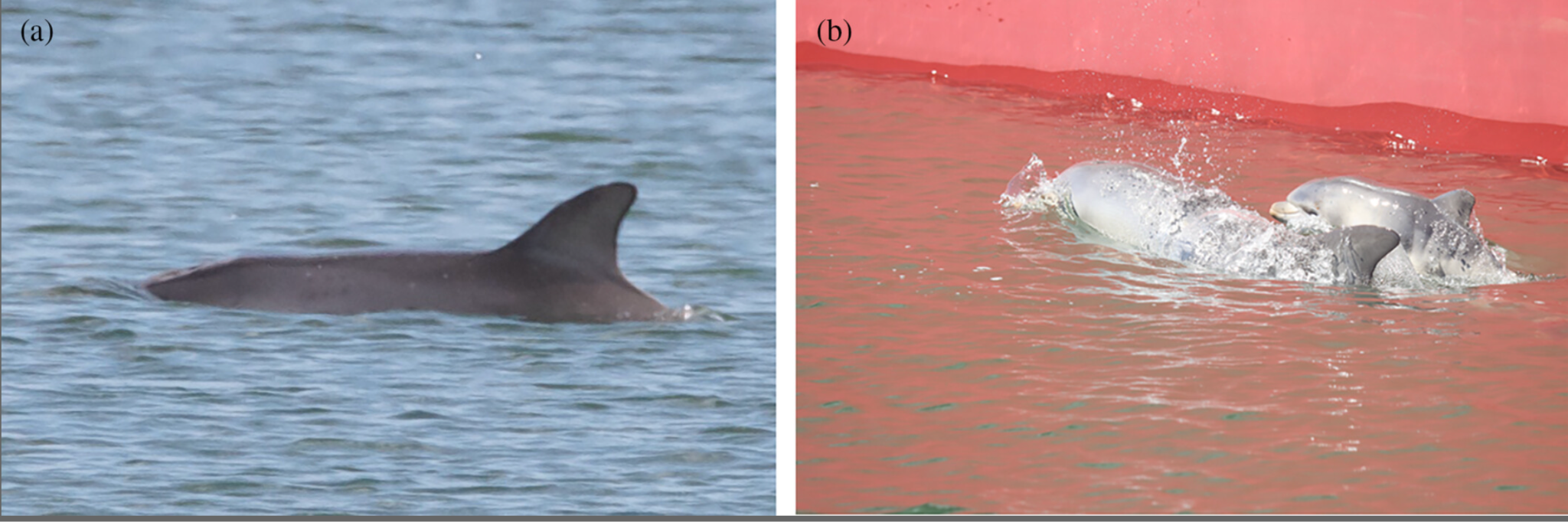
Ali, an Indo-Pacific bottlenose dolphin born in February 2011, suddenly lost her mother Millie in October that same year; Rocket, a member of the same species born in February 2022, was orphaned at seven months old after her mother Ripple disappeared.
Ali photographed shortly before becoming an orphan in 2011 in (a) and (b) and with her newborn calf in March 2025. Images: Barbara Saberton (a) and Cristina Vicente Sanchez (b).
Ali is probably still alive and birthed her own calf in 2025, though it sadly died of blunt force trauma at a few weeks old, possibly due to infanticide or a boat strike. Rocket endured for three years, and was sometimes spotted with a mother-calf pair that may have cared for her, before she was killed by a boat strike last year. Both Ali and Rocket displayed maladaptive behavior, especially getting too close to boats.
The study “provides rare empirical evidence that young-of-year calves can persist without maternal care,” said researchers led by Cristina Vicente-Sánchez of Flinders University.
It’s a bittersweet finding, demonstrating that when young calves are forced to sink or swim, some can make it—but they may bear lifelong signs of bereavement.
Oceans of ink have been spilled on the rise and fall of the Roman empire, but scientists have now read the story that is written in the genomes of people who lived in the aftermath.
A new study analyzed ancient DNA from 258 individuals found at grave sites in southern Germany who died between the years 400 and 700. These reconstructed lineages “reveal a major demographic shift coinciding with the late fifth century collapse of Roman state structures, when a founding population of northern European ancestry mixed with genetically diverse Roman provincial groups” said researchers co-led by Jens Blöcher and Leonardo Vallini of Johannes Gutenberg University Mainz.
These intermarriages eventually formed ”a population resembling modern Central Europeans by the early seventh century,” and reflected the rise of “Christian ideals such as lifelong monogamy, with minimal divorce or remarriage after widowhood” and “strict incest avoidance,” according to the study.
While this time of transition “has traditionally been framed as a conflict between northern ‘barbarians’ and a Roman Empire in decline, newer studies reveal a multifaceted transformation,” the team added.
Rome wasn’t built in a day, so the saying goes, and its flamboyant collapse is arguably still in motion, inspiring new interpretations and never-ending material for history podcasters.


/s3/static.nrc.nl/wp-content/uploads/2026/05/02130145/020526SPO_2033446972_1.jpg)
/s3/static.nrc.nl/wp-content/uploads/2026/05/02112206/020526BUI_2033446272_.jpg)