Slashdot

News for nerds, stuff that matters

To Fill Air Traffic Controller Shortage, FAA Turns To Gamers

An anonymous reader quotes a report from the New York Times: As the Trump administration seeks to fill a national shortage of air traffic controllers, officials are targeting a new talent pool: gamers. The Federal Aviation Administration on Friday is making a recruiting push aimed at avid players of video games, as the agency strives to fill thousands of vacancies that lawmakers have said leave the traveling public less safe. In a new YouTube ad, the agency is using flashy graphics and the promise of six-figure salaries to convince video game enthusiasts to apply their trigger fingers in service of air safety.

In recent years, video gamers have emerged as a target demographic for recruiters at a number of federal agencies, including the military and the Department of Homeland Security. They are welcomed for their hand-eye coordination, quick decision-making in complex environments and ability to remain focused on screens for hours on end. "To reach the next generation of air traffic controllers, we need to adapt," Transportation Secretary Sean Duffy said in a statement. Focusing recruiting efforts on gamers, he added, "taps into a growing demographic of young adults who have many of the hard skills it takes to be a successful controller."

[...] The F.A.A. plans to begin prioritizing recruiting gamers over more traditional avenues like college fairs, officials said, pointing out that only 25 percent of controllers have a traditional college degree, while the vast majority appear to have logged hours gaming. During the presidential transition in 2024, incoming Trump administration officials polled about 250 new air traffic academy graduates over six weeks. Only two of those interviewed were not gamers, according to F.A.A. officials [...]. Students who failed out of the training academy were not similarly queried, officials said, though they have plans to conduct more comprehensive exit interviews in the future. Still, the overwhelming presence of gaming habits among graduates tracked with what they were hearing anecdotally from controllers already certified to work in towers and other air traffic facilities, the officials said, many of whom liked to play video games during breaks in their shifts.

Read more of this story at Slashdot.

End of Sakura season. Wish for another viewing next year.

steadie has added a photo to the pool:

End of Sakura season. Wish for another viewing next year.

Rijnmond - Nieuws

Het laatste nieuws van vandaag over Rotterdam, Feyenoord, het verkeer en het weer in de regio Rijnmond

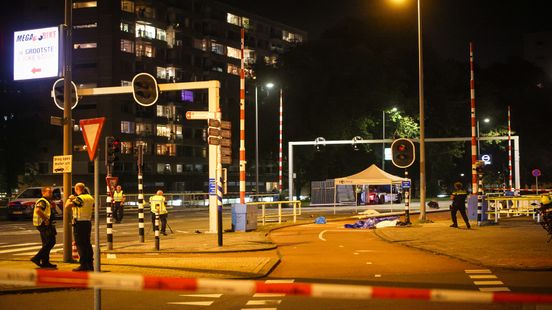
Dit is waarom je vaak wordt aangehouden als je betrokken bent bij een ernstig ongeluk

Na een ernstig ongeluk buigen de politie en het Openbaar Ministerie zich over de vraag of er iets strafbaars is gebeurd. Dit is hoe de politie onderzoek doet naar strafbaar gedrag en wanneer iemand daadwerkelijk als verdachte wordt gezien.

Blaastest, sporenonderzoek en auto uitlezen: zo onderzoekt de politie of een aanrijding strafbaar is

Na een ernstig ongeluk buigen de politie en het Openbaar Ministerie zich over de vraag of er iets strafbaars is gebeurd. Dit is hoe de politie onderzoek doet naar strafbaar gedrag en wanneer iemand daadwerkelijk als verdachte wordt gezien.

Sargasso

Hopeloos Genuanceerd

Linkse of rechtse wetenschap is een categoriefout

COLUMN - door Joyce Weeland

De wetenschap krijgt vaak het verwijt dat zij links is en dat dit ten koste gaat van de kwaliteit. Volgens onderzoeker Joyce Weeland is wetenschap niet links of rechts: de geloofwaardigheid wordt juist bedreigd zodra wetenschappelijke bevindingen politiek worden geframed.

Op universiteiten ontbreekt het aan diverse ideologische perspectieven en dit schaadt het vertrouwen in de wetenschap. Onder meer Andreas de Block en Musa al-Gharbi zetten dit verwijt uitgebreid uiteen in hun boeken en recent verscheen in NRC nog een opiniestuk over ‘linkse dominantie’ op universiteiten. Echter, de roep om ‘ideologische diversiteit’ op de universiteit klinkt misschien aantrekkelijk, maar het is een categoriefout. De universiteit is geen parlement waar elke overtuiging recht heeft op zetels.

Dat relatief veel wetenschappers progressief stemmen, betekent niet automatisch dat wetenschappelijke bevindingen vertekend zijn

Het idee dat wetenschap ‘links’ is omdat veel wetenschappers progressief stemmen, is misleidend. Hoogleraren stemmen inderdaad gemiddeld linkser dan andere beroepsgroepen, maar ze zijn niet ideologisch homogener dan professionals in andere sectoren. Hun politieke oriëntatie past in een breder patroon waarbij beroepen met veel cultureel kapitaal (zoals wetenschappers en kunstenaars) vaker naar links leunen, terwijl beroepen met veel economisch kapitaal (zoals CEO’s en managers) vaker rechts georiënteerd zijn (Van de Werfhorst, 2020).
Dat relatief veel wetenschappers progressief stemmen, betekent daarnaast niet dat wetenschappelijke bevindingen vertekend zijn. Wetenschap ontleent haar geloofwaardigheid aan transparantie, peer review en replicatie. Dat systeem is expliciet ontworpen om individuele aannames, voorkeuren en vooroordelen uit te filteren. Als bepaalde opvattingen nauwelijks voorkomen in de academie, kan dat evengoed betekenen dat ze empirisch niet standhouden. Sommige politieke ideologieën liggen verder af van empirische bevindingen dan andere.

Onderzoeksagenda’s

Ook het argument dat onderzoek bevooroordeeld is en vooral linkse thema’s behandelt, is discutabel. Onderzoeksagenda’s volgen actuele maatschappelijke vraagstukken en beschikbare data, geen partijprogramma’s. Zo steeg het aantal publicaties over gezondheidsongelijkheid significant in landen die door Europese bezuinigingen werden getroffen (Pietrovito et al., 2026).
Dat is geen ideologische ruk naar links, maar een reactie op reële maatschappelijke verschuivingen. Wetenschap volgt problemen, zij creëert ze niet. Echter, wetenschappers doen soms aan zelfcensuur, vanuit een afhankelijkheid van financiering en publicatiekansen, uit zelfbescherming of bezorgdheid om het welzijn van (sociale) groepen (Clark et al., 2023).

Rechtse stemmers missen thema’s als criminaliteit en de kosten van klimaatbeleid

De progressieve agenda van wetenschappers zou daarnaast ook het vertrouwen in de wetenschap beschadigen, bijvoorbeeld omdat het niet aansluit bij de belevingswereld van niet-wetenschappers.
Rechtse stemmers missen thema’s als migratie, criminaliteit en de kosten van klimaatbeleid. Sociale veiligheid in een diverse samenleving verdient serieuze academische aandacht, juist omdat simplistische frames schade en verdere polarisatie veroorzaken (Albarosa & Elsner, 2023Van Assche et al., 2023). En inderdaad, de kosten van klimaatbeleid zijn reëel en soms pijnlijk. Maar oplossingen voor klimaatbeleid worden onderzocht omdat we weten dat het negeren van klimaatverandering de maatschappelijke en economische kosten uiteindelijk alleen maar hoger zouden maken (Caruso, de Marcos & Noy, 2024Newman & Noy, 2023).

Het echte probleem

Het echte probleem rondom vertrouwen in de wetenschap wordt hiermee zorgvuldig vermeden: het vertrouwen in wetenschap wordt actief ondermijnd en daalt vooral waar politici en opiniemakers haar systematisch framen als ‘woke’, ‘activistisch’ of ‘elitair’. Wantrouwen is een gevolg van een politieke strategie die kennis verdacht maakt.

Niet een vermeend linkse universiteit tast het vertrouwen aan, maar het systematisch zaaien van twijfel

Hiermee wordt de vertrouwenskwestie omgedraaid: niet een vermeend linkse universiteit tast het vertrouwen aan, maar het systematisch zaaien van twijfel over wetenschap. Onderzoek laat bijvoorbeeld zien dat mensen die zichzelf als ‘rechts’ beschrijven juist méér vertrouwen hebben in wetenschap in landen waar rechtse partijen de wetenschap niet aanvallen.
Deze mensen hebben minder vertrouwen zodra juist rechtse politici dat wél doen. Hetzelfde geldt spiegelbeeldig voor linkse mensen in landen waar linkse partijen wetenschap in twijfel trekken (Mede et al., 2023Lasco & Curato, 2019).

Het kan beter

Dit alles betekent niet dat wetenschappers zichzelf niet kritisch hoeven te bevragen, we niet hoeven te streven naar diversiteit op de universiteit, of dat we zaken niet beter kunnen doen. Allereerst: conclusies die gebaseerd zijn op feiten zijn niet per definitie objectief. Data en onderzoeksresultaten krijgen pas betekentis na interpretatie. Transparantie over uitgangspunten, gemaakte keuzes en positionaliteit is daarom cruciaal en dit zouden we in de wetenschap nog verder kunnen versterken.

Maak zichtbaar vanuit welk perspectief onderzoeksresultaten worden geduid

Zo is het in kwalitatief onderzoek gebruikelijk om je eigen positionaliteit als onderzoeker te bevragen, maar wordt dit in kwantitatieve studies niet of nauwelijks expliciet gemaakt. Het doel hierbij is niet om onderzoeksresultaten te relativeren, maar om zichtbaar te maken vanuit welk perspectief ze worden geduid.
De wetenschappelijke agenda wordt daarnaast vaak door een relatief klein groepje mensen met veel invloed bepaald. Beslissingen over wat wordt onderzocht hangen daarbij ook af van schaars beschikbare middelen, zoals financiering. Ook heeft de wetenschap nog een enorme kans om de maatschappelijke impact te vergroten door bevindingen beter en toegankelijker te communiceren, zodat inzichten niet alleen binnen academische kringen blijven, maar ook voor het grote publiek begrijpelijk en bruikbaar zijn.
Wie de kwaliteit en het vertrouwen in wetenschap echt wil versterken, moet stoppen met haar te reduceren tot een cultureel strijdtoneel. Investeren in een grote diversiteit aan onderzoeksprogramma’s, open science en betere wetenschapscommunicatie helpen hierbij meer dan ideologische quota. Kortom: de universiteit hoeft niet ‘rechtser’ te worden. Ze moet onafhankelijk blijven. Dat is iets heel anders.


Dit artikel verscheen eerder bij Sociale Vraagstukken. Joyce Weeland is onderzoeker en werkt als Associate Professor bij de afdeling Jeugd en Gezin aan de Erasmus School of Social and Behavioural Sciences.

Literatuur
Albarosa, E., & Elsner, B. (2023). Forced migration and social cohesion: Evidence from the 2015/16 mass inflow in GermanyWorld Development167, 106228.

Burgers, F., Duiveman, A., & Hogeweg, L. (2026, 13 februari). Linkse dominantie op de universiteit ondergraaft vertrouwen in wetenschap. NRC. https://www.nrc.nl/nieuws/2026/02/13/linkse-dominantie-op-de-universiteit-ondergraaft-vertrouwen-in-wetenschap-a4919609

Caruso, G., de Marcos, I., & Noy, I. (2024). Climate changes affect human capitalEconomics of Disasters and Climate Change8(1), 157-196.

Clark, C. J., Jussim, L., Frey, K., Stevens, S. T., Al-Gharbi, M., Aquino, K., … & Von Hippel, W. (2023). Prosocial motives underlie scientific censorship by scientists: A perspective and research agendaProceedings of the National Academy of Sciences120(48), e2301642120.

Lasco, G., & Curato, N. (2019). Medical populismSocial Science & Medicine, 221, 1-8.

Newman, R., & Noy, I. (2023). The global costs of extreme weather that are attributable to climate changeNature Communications14(1), 6103.

Mede, V., Berger, S., Besley, J., Brick, C., Joubert, M., … Metag, J. (2025). Trust in scientists and their role in society across 68 countriesNature Human Behaviour, 9(4), 713-730.

Pietrovito, F., Rancan, A., Resce, G., & Santangelo, A. E. (2026). Do fiscal constraints affect health inequality research? A bibliometric perspective (No. esdp26102). University of Molise, Department of Economics.

Van Assche, J., Ardaya Velarde, S., Van Hiel, A., & Roets, A. (2023). Trust is in the eye of the beholder: How perceptions of local diversity and segregation shape social cohesionFrontiers in Psychology13, 1036646.

Van de Werfhorst, H. G. (2020). Are universities left‐wing bastions? The political orientation of professors, professionals, and managers in EuropeThe British Journal of Sociology, 71(1), 47-73.


The Guardian

Latest news, sport, business, comment, analysis and reviews from the Guardian, the world's leading liberal voice

Margo’s Got Money Troubles: Elle Fanning and Michelle Pfeiffer ace this taboo OnlyFans comedy

Fanning is a young single mother who makes adult content in this hilarious series. It is smart, sexy and bold – and Pfeiffer is unmissable as her ex-Hooters-waitress mother

I promise, it’s the title that drew me in. Margo’s Got Money Troubles is a new Apple TV show (out Wednesday), starring Elle Fanning as a single mum who becomes an OnlyFans model. It joins a niche canon of similarly blunt titles about generic obstacles. To wit: Fleishman Is in Trouble; Big Trouble in Little China. Margo’s Got Money Troubles is better, though. Check out the assonance, the rhythm. It has great mouthfeel, to borrow a word from food reviewing, one I instantly regret.

Our hero, Margo Millet, is a first-year college student who falls pregnant by her professor. The married academic tells her to get an abortion; her friends agree with him. She has the baby. She drops out of college, falls into money troubles. She attempts to fall out of them by joining the notorious content creation platform. She does nude video shoots, in the character of a sexy alien. If none of this inflames you, can I interest you in Nick Offerman as Margo’s pro-wrestler, drug-addicted father? Or Michelle Pfeiffer as her blue collar, ex-Hooters-waitress mother? No? Are you dead?

Continue reading...

Can fish smell and what does the meme six-seven actually mean? The kids’ quiz

Five multiple-choice questions – set by children – to test your knowledge, and a chance to submit your own junior brainteasers for future quizzes

Molly Oldfield hosts Everything Under the Sun, a podcast answering children’s questions. Do check out her books, Everything Under the Sun and Everything Under the Sun: Quiz Book, as well as her new title, Everything Under the Sun: All Around the World.

Continue reading...

What links Althea & Donna, Sean Paul and Ken Boothe? The Saturday quiz

From Kling Klang and the Queen of Mauretania to Elf, Peterbald and Sphynx, test your knowledge with the Saturday quiz

1 What was discovered on a dish containing Staphylococcus aureus?
2 At which Jewish festival is it traditional to serve triangular food?
3 Whose daughter became Queen of Mauretania in 25BC?
4 Kling Klang in Düsseldorf was which band’s studio?
5 Which Briton was the first person to deadlift 500kg?
6 What are studied by a dendrochronologist?
7 Which warrior class was abolished in the 1870s?
8 On the Calculation of Volume is a seven-novel series by which Dane?
What links:
9
Gladstone only; eg Salisbury, Baldwin; eg Churchill, Wilson; eg Thatcher, Truss?
10 Alexander III; Austerlitz; Alma; Bir-Hakeim; Jena; Léopold Sédar Senghor?
11 Bambino; Donskoy; Elf; Peterbald; Sphynx?
12 Althea & Donna; Ken Boothe; Desmond Dekker; Boris Gardiner; Sean Paul?
13 Pacific Warriors; Invictus; Murderball; The Brighton Miracle; This Sporting Life?
14 Manchester and Sheffield, via Ladybower reservoir?
15 Earl of Essex; 16th US president; Australian bushranger; wartime German industrialist?

Continue reading...

I swapped England for Seoul after watching a Korean teen drama – and found myself cast in a K-pop video

I was on the verge of failing Mandarin, when a last-second pivot caused me to utterly fall in love with Korean culture, and send me in a totally new direction

The first time I discovered South Korea was during a Mandarin homework mishap in 2013. I was 16 and lacked all the characteristics required to be good at languages: confidence, a thick skin and any desire to talk out loud. Forced to choose a language, Mandarin seemed like the best option for me – with a self-proclaimed photographic memory, I spent hours cramming complex Chinese characters, convincing myself I could pass my exams without speaking a word. I could not.

My vow of silence was shattered three months in, when I was introduced to my native-Chinese conversation teacher. As suspected, I was woeful. I cried, she cried. Stunned by my ineptitude, she quietly wiped a tear away with her knuckle as she helplessly suggested that I watch Chinese TV dramas to improve my pronunciation instead.

Continue reading...

‘We are not like the rest of the Andalucía’: the rugged charms of Almería, Spain’s desert city

While Málaga battles overtourism down the coast, this ‘forgotten’ working port city revels in its outsider status

Perched high on the battlements of Almería’s 10th-century Alcazaba, looking over the mosaic of flat roofs tumbling down to the sea, I’m reminded of author Gerald Brenan’s travel classic South from Granada, and his impression upon arriving in Almería in 1920: “Certainly, it seemed that the sea was doubly Mediterranean here, and the city … contained within it echoes of distant civilisations.

A British adventurer, Hispanist and fringe member of the Bloomsbury group, Brenan had walked to Almería from where he was living near Granada, apparently to buy extra furniture in preparation for a visit from Virginia Woolf and friends. A century later, my journey here in a 30-year-old van from London is somewhat less notable, but as I marvel at the almost surreal incandescence of the Med, and the maze of ancient streets below me, I too am aware of a sensation of time travel.

Continue reading...