
Van Irans nucleaire capaciteiten tot de mondiale veiligheid: de oorlog in Iran heeft tal van ongewenste gevolgen voor de initiatiefnemers. Negen misrekeningen van Trump.
/s3/static.nrc.nl/wp-content/uploads/2026/03/27130826/270326WEE_2032593693_1.jpg)
In Nederland roken dertigduizend mensen wekelijks crack, ongeveer evenveel als het aantal heroïneverslaafden in de jaren tachtig. NRC ging mee met veldwerkers Ella en Has, die dakloze gebruikers opzoeken en aanspreken. „Meer geld is meer crack. Honderd procent.”
/s3/static.nrc.nl/wp-content/uploads/2026/03/18171413/270326VER_2031201916_1.jpg)
/s3/static.nrc.nl/wp-content/uploads/2026/03/27134913/270326OND_2032633366_fvd_doetinchen.jpg)
DEN HAAG (ANP) - De oplopende kosten van de arbeidsongeschiktheidsuitkering WIA onderstrepen volgens minister Hans Vijlbrief (Sociale Zaken) het belang van de hervormingen die het kabinet wil doorvoeren in de sociale zekerheid. "Maak het simpeler", is zijn boodschap. De D66-bewindsman wil dat "met voorrang" gaan bespreken met vakbonden en werkgevers.
De voorjaarsnota laat zien dat de kosten van de WIA de komende jaren oplopen. Dit jaar kost de uitkering een kleine 300 miljoen euro extra, en dat bedrag loopt gestaag op tot meer dan 1 miljard euro in 2031. Dat komt doordat steeds meer mensen er gebruik van maken. Vijlbrief vindt dat allereerst "een drama" voor de mensen die het betreft. "Als je daarin komt, dan kom je er niet makkelijk meer uit."
Het kabinet wil juist bezuinigen op de WIA, en die tegelijkertijd vereenvoudigen door de aparte uitkering voor volledig arbeidsongeschikten te schrappen. Daardoor blijft er één regeling over. Dat moet ook helpen de druk op keuringsartsen te verlichten.
MOSKOU (ANP/RTR) - Rusland heeft Pavel Talankin, de maker van de Oscar-winnende documentaire Mr. Nobody against Putin, aangemerkt als buitenlandse agent. Moskou gebruikt dat label om kritische individuen en organisaties aan te pakken.
Talankin legde als medewerker van een school in Rusland vast hoe leraren gedwongen werden om propaganda over de oorlog in Oekraïne door te geven aan leerlingen. Hij vluchtte het land uit en smokkelde het beeldmateriaal mee.
Buitenlandse agenten worden in Rusland verplicht om aan allerlei bureaucratische verplichtingen te voldoen. Ze moeten de autoriteiten inzicht geven in hun financiën, om te laten zien of ze geld ontvangen uit het buitenland. Ook kunnen mensen ontslagen worden en websites uit de lucht gehaald worden.
Eerder deze week werd de prijswinnende documentaire al verboden op een aantal streamingplatforms in de regio Tsjeljabinsk, vanwege het "promoten van terrorisme". Het is niet bekend in welk land de 35-jarige Talankin zich momenteel bevindt.
DEN HAAG (ANP) - De Consumentenbond vindt de claim van Jumbo dat het de laagste paasprijzen van Nederland heeft "te kort door de bocht". Volgens de Consumentenbond kiest de winkelketen zelf gunstig geprijsde producten, maakt vergelijkingsfouten en verstopt het de kleine lettertjes. Jumbo is van mening dat de campagne "goed onderbouwd" is.
De Consumentenbond zegt veel fouten te hebben ontdekt in de prijsvergelijking van Jumbo. De waakhond vindt het onvoldoende dat de winkelketen "de prijs van dertig gunstig gekozen producten met slechts vijf andere supermarkten vergelijkt". "Bovendien zitten dure paasproducten, zoals paaseieren en paasstollen, niet in de vergelijking", schrijft de Consumentenbond.
Jumbo laat weten op basis van de opmerkingen van de Consumentenbond enkele verduidelijkingen te hebben doorgevoerd. "Zo hebben we de toelichting in onze uitingen op de website, in de digitale folder en op digitale schermen nog zichtbaarder gemaakt." De supermarktketen is van mening dat de campagne voldoende duidelijk is voor klanten.
'Vol fouten en gaten'
Dat Jumbo aanpassingen heeft gedaan op de folder en online is voor de Consumentenbond nog niet voldoende. "Die uitleg staat niet op de talloze posters die de klanten in de winkels tegenkomen. Jumbo wil die niet aanpassen of weghalen", zegt de waakhond.
De winkelketen stelt dat wanneer een van de geselecteerde producten goedkoper is bij een van de vijf andere supermarkten (Albert Heijn, Lidl, Aldi, Plus en Dirk) de prijs direct wordt aangepast. Volgens de Consumentenbond zit de prijsvergelijking "nog steeds vol fouten en gaten" en is er helemaal geen sprake van de laagste paasprijzen.
De Consumentenbond verzet zich al langer tegen prijsbeloften als "de goedkoopste". Als Jumbo niet stopt, overweegt de bond vervolgstappen.
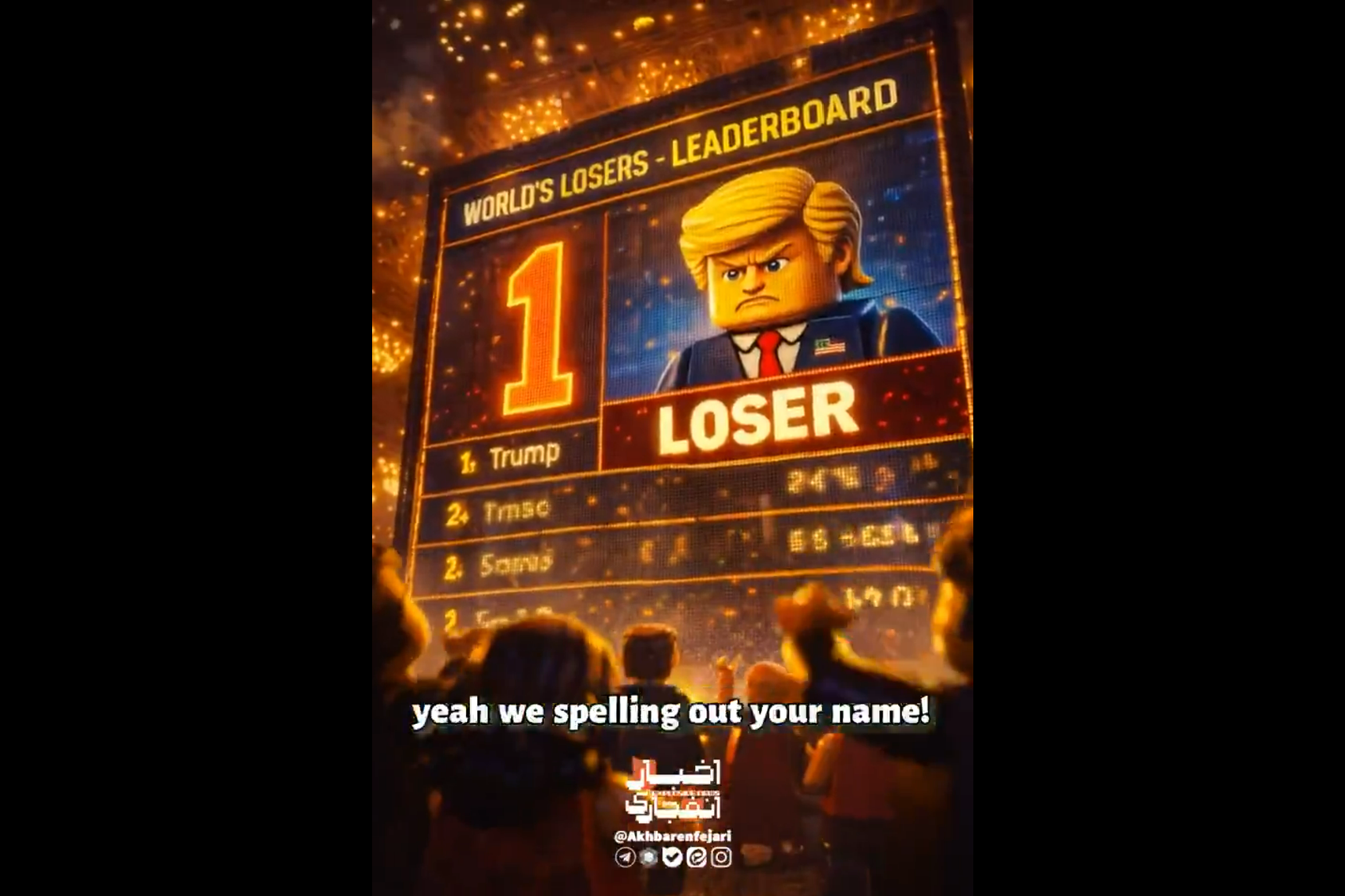
An AI-generated LEGO movie out of Iran depicting Trump as a war hungry pedophile has gone viral online. The video is the work of Iran-based propagandists called the “Explosive News Team” and is just the latest in a long line of AI-generated LEGO videos aimed at mocking Trump and Benjamin Netanyahu. LEGO-themed propaganda isn’t new and the Iranian video plays on familiar wartime propaganda themes. What’s different in 2026 is speed and scale.
During World War II, the Korean War, and the Vietnam War, America’s enemies littered the battlefield with pamphlets, cartoons, and radio broadcasts aimed at shaking the morale of American troops, but that stuff rarely got back home. Now, Iran can use AI tools to produce lavishly animated cartoons at scale for dissemination across social media all aimed at the US homefront.
The latest “Explosive News Team” video is set to a catchy rap song about how Trump is a LOSER and millions of people are watching it across multiple platforms. At the same time Iran is releasing AI-generated videos of Trump drowning in a river of blood, the US Department of Homeland Security is sharing fashwave filtered pictures of Gen Z ICE agents milling around airports.
Iran’s use of LEGO set rap music tells me it’s been studying us. These are videos meant for the American people crafted in a language Iran knows we’ll understand.
Meanwhile, the White House is dropping Grand Theft Auto and Call of Duty memes that were out of fashion 10 years ago on Reddit and vague-posting pixelated images of Trump like it’s running an ARG. Iran is attempting to speak to the broader American public. Trump is confident he only has to impress the online freaks he thinks still love him.
In other words, there’s a AI slopaganda proxy war playing out, and Trump is speaking only to people whose brains are rotting out of their skull, while Iranian propaganda is currently doing a better job of speaking to the concerns of the broad American population than the American president. Trump continues to narrowcast to his base while losing support for his wildly unpopular war as Americans worry about skyrocketing gas prices, a tanking economy and stock market, insane lines at airports, and a war that has little rationale and apparently no real goal. A recent Pew poll found 61 percent of Americans disapprove of Trump’s handling of the conflict.
To be clear, it speaks to how bad things are online that we need to analyze whose AI disinformation and propaganda is “better,” and, in general, the slopification of the internet has been a disaster. And yet, the stuff Iran is making is resonating and spreading online in a way that Trump’s slop is not. We do not know who, specifically, is making the Iranian AI slop or which tools they are using to make it. But the fact that Iranian AI slop is resonating with Americans while American slop is not should perhaps not be surprising; for the last several years, the most successful purveyors of AI slop have largely been based in foreign countries, where they have been incentivized to make content that specifically targets American audiences because of the way that social media ad rates work. Because of that, an entire economy has emerged in which people who would otherwise have little interest in reaching American audiences have been incentivized to study what resonates with Americans on the internet and have created entire businesses focused on teaching other people what Americans care about and how to target them with AI slop.
Propaganda, especially war-time propaganda, is about causing a quick emotional reaction in the viewer. Iran has proved remarkably capable of that and hits similar themes in most of its videos: Epstein, Netanyahu, and blood. “The really striking throughline is the 1) connecting victims from Minab to Epstein, 2) a cartoonish antisemitism that attributes the bog-standard reactionary hawkishness of Trump and Netanyahu to a sinister and supernatural evil, 3) heavy emphasis on missiles and revenge-weapons,” Kelsey Atherton, Chief Editor at Center for International Policy, told 404 Media.
“There's a grand tradition of wartime propaganda aimed at convincing the other side to quit and I think Iran's best falls into that camp, like North Korea and especially North Vietnam sending pamphlets aimed at getting black soldiers to defect by highlighting inequity at home,” Atherton said. “Iran's online propaganda is trying to activate this by (charitably) appealing to class war and (uncharitably) leaning on antisemitism to get US soldiers to quit and to erode support among Americans watching short-form vertical video.”
In one AI-generated video shared by Russian state controlled news organization RT depicts victims of American military campaigns staring at the sky. It begins with an American Indian then cuts to a boy in Hiroshima, a schoolgirl in Minab, a little girl in front of the bizarre temple on Epstein’s Island, and ends with US-assassinated Quds Forces leader Qasem Soleimani.
US Under Secretary of State Sarah B Rogers attempted to critique the video in a post on X. “You do see common propaganda threads here and elsewhere: the ideology is resentment-driven, civilization-skeptical, and obsessed with upending, cathartic violence enacted by the ‘historically downtrodden’ (ie ‘wretched of the earth’),” she said.
The post felt like projection and was especially strange given the Trump administration’s own resentment driven ideology, destruction of institutions, and obsession with revenge-driven violence on behalf of the “forgotten man.” Iran did not start America’s war with it. And it did not start the AI-generated propaganda war, it’s just doing it better than the United States.
There are other echoes of the past. An AI-generated Iranian riff on Pixar’s Inside Out shared on X by Iran’s embassy in the Hague showed a Disneyesque version of the inside of Trump’s brain. It showed frothing demons demanding the President lie to the press. A poster from World War II depicts an X-Ray photo of Hitler’s Brain filled with skeletons and snakes. It’s the same theme in different eras using different tools.
LEGO bricks, too, are a far older propaganda tool than the current war. The Danish bricks are one of the most recognizable toys on the planet. Last year, Russian propagandists circulated images of fake LEGO sets depicting soldier’s funerals ahead of an election in Moldova. In 2020, the Chinese released “Once Upon a Virus,” a LEGO short film that mocked America’s response to the Covid pandemic.
In memory of the 168 innocent schoolchildren of #Minab whose lives were cruelly taken by the most evil people on earth.
— ☫ Iran Embassy in The Hague, The Netherlands (@IRAN_in_NL) March 12, 2026
Their names may fade from the headlines, but they must never fade from our conscience.#StandWithIran#WarCrime#مدرسه_میناب pic.twitter.com/sCG2kpfM71
The Trump administration’s new fascist aesthetic is defined by AI slop. From Studio Ghibli-inspired grotesques to AI-generated Sora videos of ICE raids that never happened going viral on Facebook, Trump and his supporters are also using the tools of the moment to churn out crappy propaganda. The difference is that Trump’s videos aren’t about winning hearts and minds, they’re about activating a rapidly diminishing base of supporters.
“I think Trump's stuff is aimed at the same audience, except to convince them that what they're doing is righteous and good,” Atherton said. “Obviously we're seeing the stuff put out in English to English video-watching audiences but White House videos—AI or otherwise—are like group-chat in-jokes aimed at keeping cohesion. It's not an AI video but the Wii Sports/snuff film one is so skin-crawling that it requires the audience to be cooked in the feverswamps.”
The Trump administration has bet big on video game memes as the vehicle for its propaganda efforts. Last October DHS depicted Halo’s Master Chief as an anti-immigrant killer and compared immigrants to a ravening horde of mindless monsters. Two weeks ago it published a now-deleted video that mixed footage from Call of Duty with missile strikes in Iran. White House Communications Director Steven Cheung posted the infinite ammo cheatcode for Grand Theft Auto: San Andreas above footage of airstrikes.
Video games are incredibly popular in the United States, but many of these memes require a level of familiarity with specific games and the culture around them. LEGO, by contrast, is instantly recognizable to most of the world.
JUSTICE THE AMERICAN WAY. 🇺🇸🔥 pic.twitter.com/0502N6a3rL
— The White House (@WhiteHouse) March 6, 2026
On March 5, the White House’s X account posted a video mixing American pop culture figures like Walter White, Optimus Prime, Super Man, and Tony Stark with footage from the war. Watching it, I was reminded of a moment from six years ago after America assassinated Soleimani during the first Trump administration.
On an Iranian television show, Cleric Shahab Moradi called in to share his thoughts on how Iran could strike back. Who might Iran attack that has the same cultural purchase as Soleimani did in Iran? Who were America’s heroes? “Think about it. Are we supposed to take out Spider-Man and SpongeBob? They don't have any heroes,” Moradi said. “We have a country in front of us with a large population and a large landmass, but it doesn't have any heroes. All of their heroes are cartoon characters—they're all fictional.”
And so Iran has chosen to speak to Americans in a language it thinks we’ll understand: with cartoons and LEGOs.
The Shajareh Tayyebeh primary school building in Minab had been classified as a military facility in a Defense Intelligence Agency database that, according to CNN, had not been updated to reflect that the building had been separated from the adjacent Islamic Revolutionary Guard Corps compound and converted into a school, a change that satellite imagery shows had occurred by 2016 at the latest. A chatbot did not kill those children. People failed to update a database, and other people built a system fast enough to make that failure lethal.
The Maven Smart System is the platform that came out of those exercises, and it, not Claude, is what is being used to produce "target packages" in Iran. There are real limits to what a civilian such as myself can know about this system, and what follows is based on publicly available information, assembled from Palantir product demos, conferences, as well as instructional material produced for military users. But we can know quite a bit. The Maven interface looks like a military-skinned version of corporate project management software crossed with a mapping application. What the military analyst building the target list sees is either a map layered with intelligence data or a screen organised into columns, each representing a stage of the targeting process. Individual targets move across the columns from left to right as they progress through each stage, a format borrowed from Kanban, a "lean manufacturing" workflow system developed at Toyota, and now widely used in software development.
