Brigg, Lincolnshire: With harvest approaching, we’re putting the glorious long evenings to good use, and both humans and insects are working hard to protect the crops
There’s something magical about the long evenings in June, the warmth and the way the setting sun casts long shadows across the fields. The extra hours are much-needed though as there is plenty to do.
We’re in the run-up to harvest in July, so if the weather is dry we walk up and down the seed crop tramlines, pulling out (rouging) unwanted wild oats, brome and blackgrass. They drop seeds that could contaminate not only our ground, but potentially someone else’s. Strict numbers govern how many of such plants are allowed per hectare in a seed crop, and independent inspectors check the results. Government officials in the Animal and Plant Health Agency will even walk the higher quality seed crops.
Continue reading...David Ronald Mobbs, who had motor neurone disease, had said he didn’t want to live if his illness became intolerable, court hears
Get our breaking news email, free app or daily news podcast
A woman who gave a lethal cocktail of medication to her husband who was dying from motor neurone disease has been granted bail after being charged with murder.
Kylie Ellina Truswell‑Mobbs was granted bail on Tuesday after being charged with murdering her 56-year-old husband, who was dying from motor neurone disease.
Continue reading...Few things are more feared than a dementia diagnosis. Now people living with the condition are fighting against damaging stereotypes and demanding proper medical support
When Maxine Linnell, 78, a retired psychotherapist living in Leicestershire, learned that she had dementia four years ago, the diagnosis proved less challenging than some people’s reactions. “What was striking was how many people’s attitudes changed almost immediately … they stop seeing you as a person and see only dementia, some professionals included. Like this is the end and everything after will be devastating.”
The assumption that you go overnight from diagnosis to late-stage dementia isn’t confined to family and friends. Julie Hayden, a nurse and social worker from Yorkshire, was diagnosed nine years ago at the age of 54, long after sensing that something was wrong but being constantly told that it was depression or menopause; her doctors still associated dementia with old age and didn’t consider that she might have had young onset. “At the point of diagnosis,” she recalls, “most of us are told: ‘Well, it’s dementia, nothing we can do about that. Best go away and get your end of life affairs in order.’”
Continue reading...The bottom of the ocean has barely been explored, but every journey to the deep reveals wondrous new lifeforms. As underwater mining gains momentum, we risk destroying one of the Earth’s last great wildernesses
On 8 March 2018, at 1.20am, Malaysian Airlines flight 370 veered off its scheduled route from Kuala Lumpur to Beijing. An hour later, military radar spotted the plane heading west over the Andaman Sea. Six or seven hours later, it is presumed to have crashed somewhere over the southern Indian Ocean, one of the least studied bodies of water in the world.
Just how little we knew about this part of the ocean became clear during the subsequent search for the missing aircraft. Before a proper underwater search could even begin, a vast stretch of seafloor had to be mapped. Over the next three years, a team of ships from Australia, China and Malaysia scanned the bottom with a combination of submersible robots and ship-borne sonar. Together, they charted a swath of ocean roughly 1,500 miles long and 150 miles wide, encompassing an area the size of France. The maps produced from these scans revealed a lost world, full of undersea canyons, crevasses, volcanic plateaux and a single, enormous cliff taller than the Swiss Alps. Even the abyssal plains, thought to be some of the flattest areas on the planet, were home to previously uncharted hills.
Continue reading...Capping the population at 10 million is a far-right fantasy. It would dismantle the openness that has made the country rich
Zürich on a Sunday morning can feel like the day after Armageddon: so empty, so calm, despite being Switzerland’s biggest city. But then the church bells erupt across the lake basin, and a jogger trots by like a polite deer in aerodynamic sunglasses, and one knows that all is fine in this proudly impeccable place, where little is left to chance and the authorities even track the city’s pigeons with GPS.
Swiss people know they are lucky. A highly diversified economy keeps salaries high and income inequality comparatively low. A British friend once remarked that our supermarkets feel like the gourmet hall at Harrods. The state makes business easy. Hiking paths are maintained by armies of volunteers. The flip side is our reputation for being a nation of humourless control freaks, but there are benefits to trains running on time. In a restless world, Switzerland remains a place where one can exhale.
Joseph de Weck is an associate fellow with the German Council on Foreign Relations and writes for Guardian Europe from Zürich and Paris
As he publishes a memoir, the pioneering guitarist talks about rejecting spandex and hair metal, his fears for breakthrough hit Black Hole Sun – and completing nine unfinished Soundgarden songs
Kim Thayil has always felt like an outsider. For example: the Soundgarden guitarist has lived in Seattle, a city infamously addicted to coffee, for more than four decades, but only started drinking the stuff himself during lockdown. “I was pretty against-the-grain to my Seattle friends, who always wanted to meet up at coffee shops,” he grins, cradling a freshly brewed cup of java in his kitchen. “My girlfriend in the 80s and 90s even worked at the original branch of Starbucks and made coffee with a French press every morning. But I drank tea, because my parents are Indian.”
Thayil’s Indian heritage also set him apart from his peers. In his new memoir, A Screaming Life, he writes that when he and bassist Hiro Yamamoto formed Soundgarden in 1984, the group was “two-thirds Asian”, and that “as liberal and accepting as the punk scene was, it was still largely white, and I was ever aware of that”. Nevertheless, Soundgarden went on to become pioneers of Seattle’s grunge movement, a multiplatinum-selling, critically acclaimed, Grammy-winning group whose breakthrough hit, Black Hole Sun, transcended their gnarly milieu to become an enduring anthem.
Continue reading...
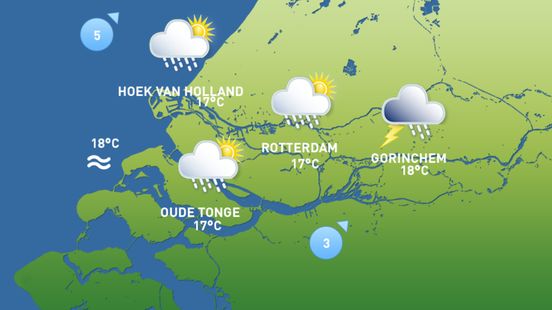
Vanochtend ziet het weer er niet verkeerd uit. De zon laat zich geregeld zien en op de meeste plaatsen in het Rijnmondgebied blijft het droog. Vanmiddag verandert dat beeld. Verspreid over de regio trekken dan enkele buien over, waardoor het weer van plaats tot plaats sterk kan verschillen. Tijdens deze buien bestaat ook kans op onweer en lokaal op hagel en windstoten. De temperatuur komt niet hoger uit dan 17 of 18 graden. De zuidwestenwind neemt toe naar matig en wordt langs de kust vrij krachtig tot krachtig.

"Adventure before dementia" has added a photo to the pool:

Carved by the Lennard River, Bandilngan (Windjana Gorge) is over three kilometres long with 300 metre-high walls. At the base of the gorge, deep freshwater pools surrounded by native fig, cadjeput and liechardt trees attract flocks of noisy corellas, fruit bats and freshwater crocodiles.

De beoogde miljardenbezuinigingen op zorg en sociale zekerheid gaan mensen met een beperking of chronische ziekte flink raken, berekende het Nibud. Veel van hen zijn afhankelijk van meerdere regelingen, waardoor maatregelen „in elkaar grijpen”. Duizenden verontruste leden van belangenorganisaties hebben zich gemeld.
/s3/static.nrc.nl/wp-content/uploads/2026/06/08162022/080626BIN_2034234822_zorg.jpg)