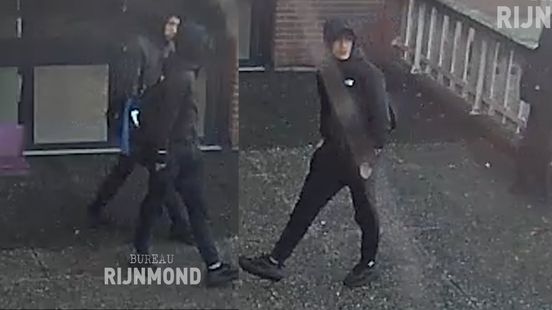
Wie zijn de twee jonge mannen die op uiterst grove wijze een juwelier in winkelcentrum De Terp in Capelle aan den IJssel overvallen? De politie is naar ze op zoek, Vorige week werden hun gezichten nog onherkenbaar gedeeld, maar nu worden ze herkenbaarder getoond.
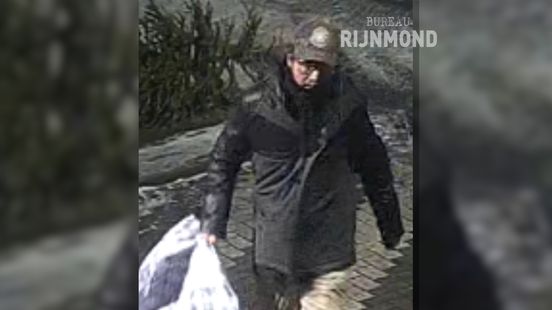
Een man laat een discriminerende tekst achter bij het vier meter hoge bronzen beeld van een jonge vrouw op het stationsplein bij Rotterdam Centraal. De politie is op zoek naar de dader.
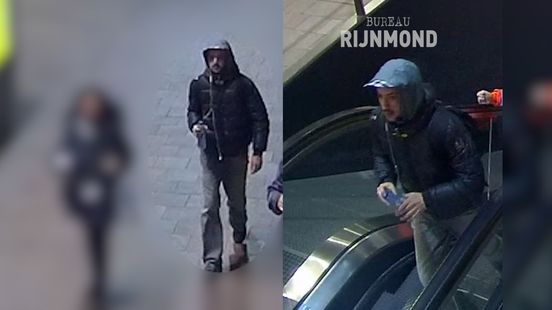
Op een perron van Rotterdam Centraal vindt in de vroege morgen van donderdag 16 oktober vorig jaar een beroving plaats. De verdachte volgt het slachtoffer naar het perron en daar slaat hij toe tussen 5.46 en 6.07 uur.
Op een perron van Rotterdam Centraal vindt in de vroege morgen van donderdag 16 oktober vorig jaar een beroving plaats. De verdachte volgt het slachtoffer naar het perron en daar slaat hij toe tussen 5.46 en 6.07 uur.
Rollback of government’s ability to limit climate-heating pollution from vehicles will make families ‘sicker and less safe’, environmental advocate says
The Trump administration has revoked the bedrock scientific determination that gives the government the ability to regulate climate-heating pollution. The move was described as a gift to “billionaire polluters” at the expense of Americans’ health.
The endangerment finding, which states that the buildup of greenhouse gases in the atmosphere endangers public health and welfare, has since 2009 allowed the Environmental Protection Agency (EPA) to limit heat-trapping pollution from vehicles, power plants and other industrial sources.
Canadian authorities seized firearms from the residence approximately two years ago but later returned them
Police have said they were called on multiple occasions to the home of the teenage suspect behind one of Canada’s deadliest school shootings after concerns were raised regarding mental health problems and weapons.
Six people, including a teacher and five children, were killed in a school shooting on Tuesday in the western Canadian town of Tumbler Ridge. About 25 other people were injured and two of them remain in critical but stable condition.
Xandra Velzeboer wint goud op de 500 meter! Na de valse start van het shorttracktoernooi, waarin de 24-jarige Velzeboer in de halve finale van de gemengde aflossing ten val kwam…
An anonymous reader shares a report: Palo Alto Networks opted not to tie China to a global cyberespionage campaign the firm exposed last week over concerns that the cybersecurity company or its clients could face retaliation from Beijing, according to two people familiar with the matter. The sources said that Palo Alto's findings that China was tied to the sprawling hacking spree were dialed back following last month's news, first reported by Reuters, that Palo Alto was one of about 15 U.S. and Israeli cybersecurity companies whose software had been banned by Chinese authorities on national security grounds.
A draft version of the report by Palo Alto's Unit 42, the company's threat intelligence arm, said that the prolific hackers -- dubbed "TGR-STA-1030" in a report published on Thursday of last week -- were connected to Beijing, the two people said. The finished report instead described the hacking group more vaguely as a "state-aligned group that operates out of Asia." Attributing sophisticated hacks is notoriously difficult and debates over how best to assign blame for digital intrusions are common among cybersecurity researchers.
Szilveszter Makó’s enigmatic photographs carry layers of mystery and introspection. Standing inside curious block-like backdrops and lain against two-dimensional fields of color and texture, his subjects seamlessly meld into stories in which every detail carries intention.
Taking inspiration from art history, the Milan-based artist references Surrealism and grotesque art through his use of chiaroscuro effects via light exploration and contrasting earth tones. Similar to 20th-century Surrealist paintings, Makó’s images delve into uncanny realms and evoke a dreamlike sense of unfettered imagination. It’s no surprise that the photographer was once a painter and has suggested that these impulses may be a subconscious homage to his earlier chapters.
Mystery presents itself in Makó’s photos through tactility that’s difficult to pinpoint. Subtle but moody elements—such as grain and halation surrounding moments of brightness—point to the possibility of filmic qualities achieved by chemical reaction, rather than digital manipulation. While the photographer doesn’t divulge his specific post-production techniques, he explains, “I would not call it a secret but more of an unorthodox process… those who understand the history of analog photography could probably recognize what I am doing.”
Makó’s strong sense of style can be attributed to his distinct mise en scène, consisting of handmade props made with recycled materials, carefully constructed theatrical environments, and bold yet often sculptural garments that add visual interest through elongated lines and exaggerated silhouettes. Often highlighting designer pieces by Schapiarelli, Maison Margiela, Prada, Bottega, and more, the artist has also teamed up with more commercial names, such as Zara, and most recently, Adidas.
“When we come into the studio, everything that my team and I have prepared, like the props, the costumes, and the designs, pile up in one room,” Makó shares in a conversation with Artribune. “I like to see it all collide. As what we imagine beforehand does not always want to come together in the way we planned.”
One of the most distinguishable motifs across the artist’s images is a box. This cubic element appears in many forms—a confined space that models find themselves in, the repeating shapes that make up checkered floors, house-inspired headpieces, or, more recently, its evolution into a two-dimensional compositional element in playful flat-lay photographs. “For me, the box is both a restriction and a liberation,” Makó notes. “It centralizes the host whilst simultaneously amplifying it, preventing energy from scattering across the frame.”
While the box’s formally geometric characteristics lend itself to an evolution of order, structure, and guidance, the photographer also enthusiastically welcomes spontaneous moments, explaining that “control makes images cold and calculated, leaving much without meaning. A shoot should breathe, it should evolve, it should shock even those who are making it.”
Although Makó regularly works with a slew of well-known celebrities—such as Elle Fanning, Bad Bunny, Michelle Yeoh, Willem Dafoe, Cate Blanchett, and more—he possesses a unique ability to transcend the veil of fame, artfully translating even the most recognizable faces into something entirely of his own. He shares, “I do not treat celebrities differently from anyone else. We enter the room as equals. The set is not a hierarchy, it is a space where we work together.”
See more from the photographer on Instagram, and find his images published in editions of Vogue, The Cut, Acne Paper, Vanity Fair, GQ, and more.

/s3/static.nrc.nl/wp-content/uploads/2026/02/12215537/120226SPO_2031557936_1.jpg)


