The Guardian

Latest news, sport, business, comment, analysis and reviews from the Guardian, the world's leading liberal voice

Masterpiece, fridge magnet, phone case … opera: how Hokusai’s The Great Wave hit the stage

He survived a stroke, a lightning strike, a fire – and created one of the world’s most recognisable images. Now the Japanese artist’s ‘wild, fascinating’ life has inspired an opera

Opera has inspired many of the 20th century’s greatest artists to create extraordinary sets. Oskar Kokoschka designed a Magic Flute for Salzburg and a Ballo in maschera for Florence. Salvador Dalí produced a controversial Salome for London; David Hockney’s designs for Glyndebourne’s Rake’s Progress complement Stravinsky’s sound-world so miraculously that they are still in use 50 years after their creation. Marc Chagall’s ceiling fresco for Paris’s Opéra Garnier and murals for the New York Met testify to the intimate connection between opera and painting.

And yet remarkably few operas portray visual artists. Something about their painstaking work seems to resist representation in this most extravagant of artforms. Only two operas about artists are regularly performed: Hindemith’s Mathis der Maler, depicting the German Renaissance painter Matthias Grünewald, and Berlioz’s Benvenuto Cellini – and Cellini gave Berlioz a head-start with his rollicking memoirs about his scandalous adventures in 16th-century Florence.

Continue reading...

Ex-Florida police chief claims Trump told him ‘everyone’ knew what Epstein was doing in 2006

Former police chief Michael Reiter claims Trump also said ‘thank goodness you’re stopping’ Epstein in 2006 phone call

Donald Trump slammed Jeffrey Epstein about two decades ago, claiming “everyone has known he’s been doing this”, a former Palm Beach police chief claimed.

Michael Reiter’s account of a conversation with Trump, contained within the justice department’s release of 3m Epstein files, dramatically contrasts with the US president’s public statements. After Epstein’s arrest in July 2019, Trump said “I had no idea” when asked if he knew about his former friend’s abuse of teenage girls.

Continue reading...

A peeping peacock and a snow moon – readers’ best photographs

Click here to submit a picture for publication in these online galleries and/or on the Guardian letters page

Continue reading...

‘A step in the wrong direction’: Israel’s West Bank plans prompt global backlash

US, Britain, EU and Arab nations condemn plans that Israeli ministers say will ‘kill the idea of a Palestinian state’

Israeli measures to tighten its control of the West Bank have prompted a global backlash, including a signal from Washington restating the Trump administration’s opposition to annexation of the occupied territory.

Announcing the measures, which involve extending Israeli control in areas that are currently under Palestinian administration, Israel’s defence minister, Israel Katz, made clear they were aimed at strengthening Israeli settlements in the West Bank and pre-empting the emergence of an independent sovereign Palestine.

Continue reading...

Het beoogde kabinet-Jetten wordt een balanceeract

Geen ego’s, geen eigenbelang: de profielschets van het kabinet-Jetten leek wel een schaap met vijf poten. Wie kiezen D66, VVD en CDA om het coalitieakkoord uit te voeren?

VK: Voorpagina

Volkskrant.nl biedt het laatste nieuws, opinie en achtergronden

Extreemrechtse ideeën zijn op de buis tegenwoordig normaler dan in de echte wereld

Rijnmond - Nieuws

Het laatste nieuws van vandaag over Rotterdam, Feyenoord, het verkeer en het weer in de regio Rijnmond

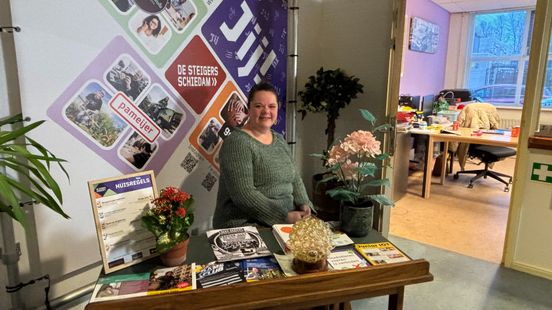
Doek valt voor jongerenproject dat is betaald met crimineel geld: 'Niet mislukt, wel te vroeg einde'

Leerwerkplaats De Steigers in Schiedam stopt na de zomer. De subsidie loopt af voor het project dat met afgepakt crimineel geld kwetsbare jongeren aan een baan moest helpen. Een vervolg komt er niet. De coördinator baalt: “Jongeren weten ons nu eindelijk te vinden. We stoppen te vroeg.”

Accumulated rainfall over the Iberian Peninsula

europeanspaceagency posted a photo:

Accumulated rainfall over the Iberian Peninsula

This map of the Iberian Peninsula shows rainfall accumulation between 1-7 February 2026, using data from the Global Precipitation Measurement (GPM) mission. The GPM mission is an international network of satellites that provide global observations on rain and snow. This helps to advance our understanding of Earth’s water and energy cycles and improve forecasting. The GPM mission was initiated by NASA and JAXA in 2014. Areas shown in red recorded more than 250 mm of rainfall during the seven-day period.

Read full story

Credits: ESA (data source: GPM)

Hubble captures light show around rapidly dying star

europeanspaceagency posted a photo:

Hubble captures light show around rapidly dying star

This stunning image from the NASA/ESA Hubble Space Telescope reveals a dramatic interplay of light and shadow in the Egg Nebula, sculpted by freshly ejected stardust. Located approximately 1000 light-years away in the constellation Cygnus, the Egg Nebula features a central star obscured by a dense cloud of dust. Only Hubble’s sharpness can unveil the intricate details that hint at the processes shaping this enigmatic structure.

The Egg Nebula, also known as CRL 2688, is located in the constellation Cygnus (the Swan). It is the first, youngest, and closest pre-planetary nebula ever discovered [1].

The Egg Nebula offers a rare opportunity to test theories of late-stage stellar evolution. At this early phase, the nebula shines by reflecting light from its central star, which escapes through a polar 'eye' in the surrounding dust. This light emerges from a dusty disc expelled from the star’s surface just a few hundred years ago.

Twin beams from the dying star illuminate fast-moving polar lobes that pierce a slower, older series of concentric arcs. Their shapes and motions suggest gravitational interactions with one or more hidden companion stars, all buried deep within the thick disc of stardust.

Stars like our Sun shed their outer layers as they exhaust their hydrogen and helium fuel. The exposed core becomes so hot that it ionises surrounding gas, creating the glowing shells seen in planetary nebulae such as the Helix, Stingray, and Butterfly nebulae. However, the compact Egg Nebula is still in a brief transitional phase – known as the pre-planetary stage – that lasts only a few thousand years. This makes it an ideal time to study the ejection process while the forensic evidence remains fresh.

The symmetrical patterns captured by Hubble are too orderly to result from a violent explosion like a supernova. Instead, the arcs, lobes, and central dust cloud likely stem from a coordinated series of poorly understood sputtering events in the carbon-enriched core of the dying star. Aged stars like these forged and released the dust that eventually seeded future star systems, such as our own solar system, which coalesced into Earth and other rocky planets 4.5 billion years ago.

[Image description: In the centre an opaque cloud of grey gas hides a star. Two strong beams of light from the star emerge from large holes in both sides of the cloud. The central cloud is surrounded by concentric, wispy shells of gas, illuminated by the star’s light. The shells reflect extra light where they’re hit by the twin beams. A crowd of smaller stars with cross-shaped spikes over them surround the nebula on a black background.]

Notes: [1] A pre-planetary nebula is a precursor stage of a planetary nebula, which is a structure of gas and dust formed from the ejected layers of a dying, Sun-like star. The term is a misnomer, as planetary nebulae are not related to planets.

Credits: ESA/Hubble & NASA, B. Balick (University of Washington); CC BY 4.0

Lowering the upper part of Ariane 6 flight VA267 onto the rocket on the launch pad

europeanspaceagency posted a photo:

Lowering the upper part of Ariane 6 flight VA267 onto the rocket on the launch pad

Launch technicians work at the top of the Ariane 6 on the launchpad at Europe's Spaceport in French Guiana, 9 February 2026. This launch will be the first to fly with four boosters, doubling liftoff thrust for the launcher, and see Ariane 6 take 32 satellites for Amazon’s Leo constellation to orbit. The satellites are housed under the 20-m long fairing – the nose-cone that splits into two vertically after launch. The fairing protects the satellites from the elements and provides an aerodynamic shape as Ariane 6 will rocket into space. These indispensable launcher parts come in two variants, 20 or 14 metres tall, to accommodate passengers of various sizes – this launch will be the first to use the 20-m tall version. The larger fairing type weighs in at 2.6 tonnes, the smaller 1.8 tonnes, and both match the rocket’s diameter of 5.4 metres. Each shell of the fairing is manufactured in one piece from carbon fibre material and cured in an industrial oven to solidify into its final shape and form.

Ariane 6 launcher elements are manufactured in mainland Europe and then transported by ship and then trucks to Europe’s Spaceport.

The Upper Composite Trailer that takes the payload in its fairing to the launch pad is 6 m wide and 26 m long. This trailer is as large as a tennis court and has two driver cabins – instead of “reversing” the driver can jump out and walk to the other side to drive in the opposite direction. At 180 tonnes it has 32 wheels and three generators for power.

The four boosters used on this flight are connected to the central core on the launch pad. The booster structures are produced in Italy and then filled with solid propellant at Europe’s Spaceport at their booster finishing facility. Ariane 6 flight VA267 will be the first flight to use four boosters to get to orbit. Each P120C solid rocket booster is 13.5 m long and 3.4 m in diameter. Filled with about 142 tonnes of solid propellant, they provide around 4500 kN of maximum thrust. Working together the boosters will provide the majority of the thrust during Ariane 6’s launch to get it off the launch pad.

The mobile building surrounding Ariane 6 is a 90-metre-high metallic structure that rolls away once assembly is complete to allow Ariane 6 a clear view of the sky and space. The building has platforms for technicians to further assemble Ariane 6 while also protecting the rocket until it is ready for launch.

Ariane 6 is Europe’s newest heavy-lift rocket, designed to provide great power and flexibility at a lower cost than its predecessors. The rocket provides Europe with greater efficiency and an ensures access to space for the benefits of humankind, allowing for all types of missions from exploration to navigation, science and communications.

Credits: ESA–M. Pédoussaut