DEN HAAG (ANP) - FVD-Kamerlid Gideon van Meijeren beschouwt het als "een belangrijke overwinning" dat het gerechtshof in Den Haag hem in hoger beroep heeft vrijgesproken van opruiing. "Niet alleen voor mij, maar voor de vrijheid van meningsuiting van ons allemaal", zegt hij in een video op X.
Waar de rechtbank Van Meijeren eerder veroordeelde tot een taakstraf, oordeelt het hof dat hij met zijn uitspraken niet heeft aangezet tot geweld. "Dat zou vanzelfsprekend moeten zijn", meent het Kamerlid, "omdat ik juist altijd oproep tot vreedzaam en geweldloos verzet, maar het is heel goed dat dit nu ook juridisch is bevestigd."
DEN HAAG (ANP) - De overheid heeft Nederlandse schepen gewaarschuwd om de regio van Iran te mijden. Een woordvoerder van de kustwacht meldt dat een bericht met die strekking namens het ministerie van Infrastructuur en Waterstaat is doorgegeven aan Nederlandse reders. Meerdere updates zijn verstuurd, waarvan de precieze inhoud geheim is.
De Straat van Hormuz voor de zuidkust van Iran is een belangrijke route voor schepen die brandstoffen vanuit het Midden-Oosten vervoeren. Door de oorlog in Iran ligt het scheepvaartverkeer in de zeestraat vrijwel stil. In de Perzische Golf liggen daardoor veel schepen vast, waaronder tientallen Nederlandse.
"Er is al langer sprake van een verhoogd risiconiveau in de regio", laat een woordvoerder van Infrastructuur en Waterstaat weten. "Indien nodig worden verdere maatregelen genomen."
No ParalympicsGB athletes will be present in Verona
IPC say Russian presence ‘determined by members’
Seven nations and the British government will boycott the opening ceremony of the Winter Paralympics in protest at the inclusion of Russian and Belarusian athletes, organisers have confirmed.
The International Paralympic Committee (IPC) said that the Czech Republic, Estonia, Finland, Latvia, Lithuania, Poland and Ukraine would not be sending athletes or officials to the ceremony on Friday night.
Is the Islamic Republic a messianic theocracy or a brittle dictatorship? It’s neither – as those attacking it are finding out
When the US and Israel launched coordinated strikes against Iran on 28 February, the campaign was structured like a textbook air war: destroy defences, degrade retaliatory capabilities and decapitate leadership. Iranian air defences – already battered in last summer’s war – were further dismantled to secure uncontested skies. Missile factories, drone infrastructure and naval assets were hit to erode Iran’s ability to retaliate. And a steady cadence of precision strikes removed senior commanders in what amounted to a sustained attempt to disorient Tehran’s decision-making.
From a purely operational perspective, the advantages have been stark. Once skies are open, the war becomes cheaper: plentiful, relatively inexpensive munitions can replace the long-range systems that defended airspace typically demands.
Ali Vaez is Iran project director and senior adviser to the president at the International Crisis Group
In the age of the internet, we’re fortunate to have virtual access to museum collections around the world, thanks to objects in the public domain and programs like The Metropolitan Museum of Art’s Open Access Initiative. Through a searchable digital catalogue, visitors to the museum’s website can see hundreds of thousands of objects, many images of which are available for download. And it’s not alone—other institutions like the Art Institute of Chicago, The National Gallery of Art, and The Cleveland Museum of Art, among others, make pieces in their collections accessible to all.
The thing is, digital images don’t always give us the full picture, so to speak. Even two-dimensional paintings and drawings have unique textures, structural details, and materials that we can only really appreciate in person. This won’t ever really change—nothing beats the real thing. But one caveat is that even in person, much of the work remains hidden. We can’t see the backs of oil paintings, for example, and edges are often hidden within frames. Thanks to The Met’s continued emphasis on imaging, we can now experience every detail in three-dimensional renderings of nearly 140 significant objects in its holdings.
The Temple of Dendur (10th century B.C.E.)
The Met is home to a whopping 1.5 million historic objects, which range from the iconic Temple of Dendur and Impressionist paintings to African tribal ceremonial sculptures and medieval pottery. The museum recently published 3D models of some of these, plus numerous other objects, including nine produced in collaboration with NHK (Japan Broadcasting Corporation).
With careful attention to technical precision and color, these animated renderings are research-grade tools, allowing us to see the objects at any angle. View van Gogh’s brushstrokes closer than you’re allowed to in a museum, zoom in on a Babylonian cuneiform tablet, and turn an 18th-century Turkish tile over to see its reverse side.
The Met plans to continue adding 3D scans to its online library. Explore more on the museum’s website.
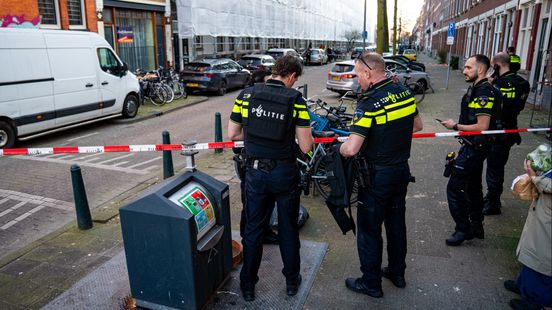
In Rotterdam-Delfshaven is donderdagmiddag geschoten vanuit een auto. De politie meldt dat hierbij één persoon gewond is geraakt en dat diegene op eigen houtje naar het ziekenhuis is gegaan. De auto ging er na de schietpartij vandoor.
In Rotterdam-Delfshaven is donderdagmiddag geschoten vanuit een auto. De politie meldt dat hierbij vermoedelijk één persoon gewond is geraakt en dat diegene op eigen houtje naar het ziekenhuis is gegaan. De auto ging er na de schietpartij vandoor.