Omg, Amazon Prime inserted an ad for Febreze in the midst of the most famous match cut in the history of cinema (in Kubrick’s 2001, when the ape-thrown bone turns into a spacecraft). I don’t know whether to laugh or cry (rn, it’s both).
The 2026 F1 Sim Racing World Championship continues with Round 9, where the racers will take on the United States Grand Prix.
The £20,000 award for writers aged 39 or under goes to Joy Is My Middle Name, a collection about navigating race, addiction and womanhood
A debut poetry collection with themes including race, addiction and womanhood has won this year’s Swansea University Dylan Thomas prize.
American poet Sasha Debevec-McKenney took home the £20,000 prize – awarded to writers aged 39 or under in honour of the Welsh poet Dylan Thomas, who died at that age – for her debut collection Joy Is My Middle Name. She was announced as the winner at a ceremony in Swansea, Thomas’s birthplace.
Continue reading...The prospect of a contest exposes a deeper truth: the party’s problems go far beyond Keir Starmer
In politics, opportunities for supreme power are rare and fleeting. Yet rather than making challengers to Sir Keir Starmer more ruthless, this truth seems to have made them more cautious. The health secretary, Wes Streeting, resigned from the cabinet but did not launch a leadership bid. Rather than provoke a contest, Mr Streeting’s message to Sir Keir was that since his authority was gone, his duty was to depart and enable an orderly transition rather than cling to office.
If the Labour leadership were truly up for grabs, winning it would require opportunism, a feel for elite collapse and a willingness to defy both the party establishment and orthodoxy. Those who successfully seize the crown – Lloyd George, Harold Macmillan, Margaret Thatcher and Boris Johnson – recognise their moment and act decisively. These leaders were also not subject to the Labour party rulebook.
Continue reading...The new government in Budapest has already made an impact in Brussels. At home, the new prime minister is so far doing and saying the right things
The transformative impact of Péter Magyar’s historic election victory over Viktor Orbán is already being felt in Brussels. On Monday, two days after Mr Magyar was sworn in as Hungary’s new prime minister, his new pro-EU government lifted the veto which for over a year has prevented the EU imposing sanctions on violent Israeli settlers. This followed a similar breakthrough on a long-delayed £78bn loan to Ukraine, which Mr Orbán had also blocked. At a critical geopolitical moment, the end of an era in Budapest is freeing the EU to act in defence of its interests and values.
Mr Magyar, who inherits a struggling economy stifled by years of cronyism and corruption, will hope and expect that the benefits of rapprochement cut both ways. In total, around £17bn of EU development funds to Hungary remain off-limits, following Mr Orbán’s refusal to address multiple transgressions of EU law. Agreement on the disbursement of around £10bn needs to be reached by the end of August.
Continue reading...Jury set to deliberate and return a verdict on whether they believe AI firm and Altman are liable in case
Closing arguments began on Thursday in Elon Musk’s lawsuit against Sam Altman and OpenAI, bringing the weeks-long courtroom battle between the two tech moguls nearer to a decision. A nine person jury is set to deliberate and return a verdict on whether they believe the AI firm and Altman are liable in the case.
The trial, which began last month in an Oakland, California federal courthouse, has gripped Silicon Valley and featured some of the tech industry’s biggest names as witnesses. Attorneys for both sides have presented testimony and documents that have exposed Musk and Altman’s private dealings, as well as provided a window into the contentious history of OpenAI.
Continue reading...Knap en gedurfd hoor, gewoon door die bomen
SocialWant dit is dus een compleet andere categorie dan al die propellorvoertuigen op de markt. De Volonaut is namelijk straalaangedreven en ook nog eens afkomstig uit het laatste daadwerkelijke land van Europa, namelijk Polen. En in tegenstelling tot vorige keer zijn er inmiddels wat specificaties bekend: het voertuig weegt slechts 30 kilo, heeft een topsnelheid van 102 km/u, draait op o.a. diesel en kerosine, heeft een vluchttijd van 10 minuten en de piloot mag maximaal 95 kilo wegen. Daarmee valt 83% van de lezers af, maar kijken is ook wat waard. In tegenstelling tot het prijskaartje van $880.000, wat voor 83% dan weer geen probleem is.
Social

woesh
Social
🌘
Subscribe to 404 Media to get The Abstract, our newsletter about the most exciting and mind-boggling science news and studies of the week.
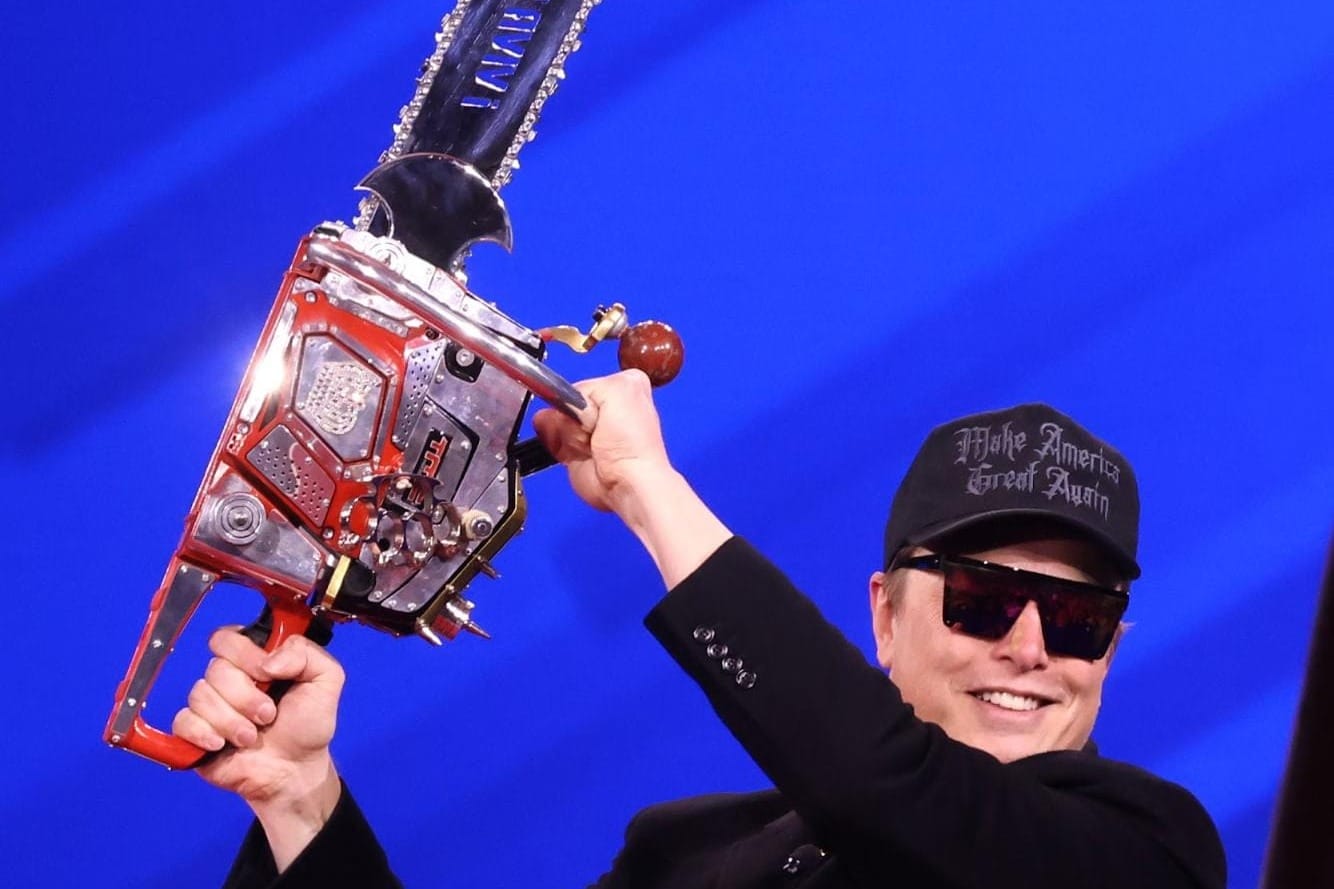
The sudden shuttering of the United States Agency for International Development (USAID) by DOGE in 2025 is associated with a rise in violent conflicts across Africa, according to a study published on Thursday in Science.
Days into Donald Trump’s second term, his administration began rapidly dismantling USAID, which had, up until that point, been the world’s largest national humanitarian donor. Elon Musk, who spearheaded the Department of Government Efficiency, announced that his team had fed the agency “into the woodchipper” in February 2025. Tracking models suggest the collapse of USAID may have already caused 762,000 preventable deaths, of which 500,000 are children, and the cuts could lead to more than nine million preventable deaths by 2030, according to a study published in February 2026.
Now, a team reports “the earliest evidence of the impact of cuts to USAID on the incidence of violent events” which suggests that “the radical cuts…led to an increase in conflict in the regions that received the most aid from the United States,” according to the new study.
“What we find is that with the USAID shutdown, there was a rapid increase in the likelihood of violence, the severity of violence, and the lethality of violence across nearly one thousand subnational administrative units across Africa,” said Austin L. Wright, study co-author and associate professor and director of strategic initiatives at the Harris School of Public Policy at the University of Chicago, in a call with 404 Media.
In regions that received the most support from USAID, the cuts were associated with a 6.5 percent probability of any conflict event, compared to regions that received no aid. To get a sense of the devastating impact of that statistic, here’s what the study reports:
“The probability of protests and riots was 10% greater, the number of conflict events increased by 10.6%, battle counts increased by 6.9%, and battle-related fatalities increased by 9.3%. Event-study analysis confirmed no preexisting differences in conflict trends between high- and low-exposure regions before the shutdown. Effects are of similar size, with a 12.3% relative increase in the number of conflict events.“
Between 2021 and 2024, USAID is estimated to have saved 91 million lives, about a third of which are children under 5 years old. The agency was created by John F. Kennedy in 1961 and, in the years preceding Trump’s shutdown of the agency, accounted for less than 1 percent of total U.S. federal spending.
The impact of aid on communities is complex and context-dependent. Aid may reduce conflicts in cases where the opportunity costs of violence are mitigated by an influx of resources, known as the “opportunity cost effect.” But aid can also fuel conflicts over the handling and distribution of those resources, known as the “rapacity effect.”
The collapse of USAID, which is unprecedented in its scale and speed, has produced the worst of both worlds, according to the new study.
“When those funds rapidly go away, it's a shock to the opportunity cost, and now it becomes more and more attractive to participate in what we might call the unproductive part of the economy, which is participating in violence, engaging in crime, and other activities,” Wright said. “But because the shutdown was so rapid, it didn't really have an opportunity to bind on the rapacity effect, because it's not as if the bridges, roads, or full-on infrastructure went away. The things that individuals or groups might fight over were still present.”
“It’s a bit of a ticking time bomb, because you're both removing the conflict-reducing side of aid, while leaving behind the conflict-enhancing part of aid,” he added.
To quantify the impact of the cuts on violence, Wright and his colleagues examined the Geocoded Official Development Assistance Dataset (GODAD), which monitors geolocated information regarding foreign aid disbursements, alongside the Armed Conflict Location and Event Data (ACLED), which tracks violent events.
The overlapping datasets revealed macro-level patterns between aid distribution and violence in the wake of the cuts, including significant upticks of violence in areas that had previously received large amounts of aid, or where the population had less control over their government due to weaker executive constraints.
Moreover, this increase in conflict has persisted over the course of months and may continue in areas that fall into “conflict traps” defined by self-perpetuating cycles of violence.
These impacts are catastrophic for people who had relied on USAID, as evidenced by the estimated death tolls, and the increased risk of violent conflicts and upheavals. They also present new vulnerabilities for the United States and its allies. Though USAID had an altruistic mission, the agency also served as a vector of soft power and an early-warning system for tracking public health risks, like pandemics. The loss of the agency has already caused national security issues for the U.S., such as the seizure of discarded USAID supplies by Iran-backed Houthi groups in Yemen.
“Those insecurities don't stay where they're created; they travel,” Wright said. “That unfortunately means that the vulnerabilities that are being created at the moment will likely have long-run consequences of creating insecurity that directly impacts the safety of Americans.”
Moreover, Trump’s demolition of USAID prompted many allies in Europe to pull back on their own foreign aid, exacerbating the effects. Though other humanitarian organizations are struggling to mitigate the consequences, the loss of trust caused by the shutdown of USAID is likely permanent, with ominous long-term consequences.
“Even if you reactivated USAID and pretended as if it never went away, you can't reverse these effects because you've already communicated your bad faith behavior,” Wright said. “There is nothing quite like the reputational bomb of simply shutting down an agency, and what that does to the reputation that the U.S. might have if it ever wanted to reinitiate its interventions.”
“From the soft power lens, and a global lens, the reputational effects, I think, are tremendous and will create a bunch of wedges and inefficiencies,” he concluded. “If one simply wanted to restart USAID, it's going to cost much more to rebuild than simply the same budget all over again.”
🌘
Subscribe to 404 Media to get The Abstract, our newsletter about the most exciting and mind-boggling science news and studies of the week.