The Guardian

Latest news, sport, business, comment, analysis and reviews from the Guardian, the world's leading liberal voice

Kevin Warsh sworn in as Fed chair as Trump faces backlash over economy

Former Wall Street banker takes over amid growing concern over cost of living – and disapproval of Trump’s agenda

Kevin Warsh has been sworn in as chair of the US Federal Reserve, tasked with steering the world’s largest economy as the Trump administration faces mounting pressure over Americans’ financial wellbeing.

Warsh, handpicked by Donald Trump, takes charge of the powerful central bank as it comes under extraordinary pressure from the US president to cut interest rates, even as prices climb.

Continue reading...

UK pitched single market for goods with EU in pursuit of deeper trade ties

Exclusive: Top Cabinet Office official presented idea in Brussels but sources say it was rebuffed

The UK government pitched the creation of a single market for goods with the EU as the cornerstone of an ambitious attempt to reintegrate British trade back into Europe, the Guardian can reveal.

During recent visits to Brussels, the Cabinet Office’s top official on EU relations, Michael Ellam, presented the idea to deepen the UK’s economic relationship with the bloc.

Continue reading...

Wel.nl

Minder lezen, Meer weten.

Dodental instorting pand in Fez loopt op

FEZ (ANP/AFP) - Het dodental door het instorten van een pand in de Marokkaanse stad Fez is opgelopen tot vijftien. Dat meldden lokale autoriteiten. Onder de doden zijn twee kinderen. Ook zijn er nog enkele gewonden.

Het vier verdiepingen tellende pand in het historische centrum van Fez kwam in de nacht van woensdag op donderdag plotseling naar beneden. Omliggende panden werden uit voorzorg ontruimd, terwijl gezocht werd naar mensen onder het puin.

Het is niet voor het eerst dat in Fez een instorting een dodelijke afloop heeft. Zo resulteerde de ineenstorting van twee panden in december in 22 doden. En in 2010 kwamen bij het instorten van een minaret in het eveneens noordelijk gelegen Meknes 41 mensen om het leven.


Zeilster Wind vijfde op EK in ILCA6-klasse

KASTELA (ANP) - Zeilster Roos Wind is op het Europees kampioenschap in de ILCA6-klasse in Kroatië vijfde geworden. De 21-jarige zeilster eindigde bij de wedstrijden na elf races als zesde, maar met het wegstrepen van de Amerikaanse Charlotte Rose finishte ze als vijfde op het EK. In het klassement onder 23 jaar werd ze tweede.

"We hebben nog drie races kunnen varen met wind die echt alle kanten op ging, dus het was heel moeilijk. Maar ik ben ontzettend tevreden over hoe deze week is gegaan", reageerde Wind via het Watersportverbond. "Ik ben als vijfde Europese geëindigd in het klassement en daar ben ik heel blij mee. En zilver bij de onder 23 is natuurlijk ook mooi meegenomen."

In de ILCA7-klasse bij de mannen eindigde Duko Bos op een negende plaats en zevende in de ranglijst van het EK.


Rotterdam - FediMeteo (@rotterdam@nl.fedimeteo.com)

Weer voor de stad Rotterdam Deze bot wordt beheerd door het FediMeteo-project. Voor informatie en contact kunt u de pagina https://fedimeteo.com raadplegen.

Weer voor Rotterdam 🌤️ - 22-05-2026 19:15 CES...

Weer voor Rotterdam 🌤️ - 22-05-2026 19:15 CEST

In één oogopslag:
• 26.6°C · Licht bewolkt 🌤️ | Min 14.9°C / Max 26.9°C

Verwachting voor vandaag:
• Min 14.9°C, Max 26.9°C (Bewolkt) ☁️, 🧭 1026.1 hPa ➡️ 0.0 hPa/24h, Windsnelheid: 11.2 km/u (3.1 m/s), richting: ↖ 157°

Uurlijkse voorspelling voor de komende 12 uur:

20:00: 26.1°C (Zonnig) ☀️, 🧭 1025.8 hPa ➡️ 0.0 hPa/1h, Windsnelheid: 6.8 km/u (1.9 m/s), richting: ↖ 150°
21:00: 24.8°C (Zonnig) ☀️, 🧭 1025.9 hPa ➡️ 0.0 hPa/1h, Windsnelheid: 11.2 km/u (3.1 m/s), richting: ← 105°
22:00: 23.8°C (Helder) 🌕, 🧭 1026.4 hPa ↗️ +0.5 hPa/1h, Windsnelheid: 9.4 km/u (2.6 m/s), richting: ↖ 117°
23:00: 23.0°C (Licht bewolkt) 🌕, 🧭 1026.4 hPa ➡️ 0.0 hPa/1h, Windsnelheid: 9.4 km/u (2.6 m/s), richting: ← 111°
00:00: 22.2°C (Gedeeltelijk bewolkt) ☁️, 🧭 1026.5 hPa ➡️ 0.0 hPa/1h, Windsnelheid: 9.0 km/u (2.5 m/s), richting: ↖ 126°
01:00: 22.0°C (Helder) 🌕, 🧭 1026.5 hPa ➡️ 0.0 hPa/1h, Windsnelheid: 9.7 km/u (2.7 m/s), richting: ↖ 139°
02:00: 21.4°C (Helder) 🌕, 🧭 1026.3 hPa ➡️ 0.0 hPa/1h, Windsnelheid: 11.2 km/u (3.1 m/s), richting: ↖ 143°
03:00: 21.0°C (Helder) 🌕, 🧭 1025.9 hPa ➡️ 0.0 hPa/1h, Windsnelheid: 11.2 km/u (3.1 m/s), richting: ↖ 154°
04:00: 20.4°C (Licht bewolkt) 🌕, 🧭 1025.9 hPa ➡️ 0.0 hPa/1h, Windsnelheid: 12.6 km/u (3.5 m/s), richting: ↑ 158°
05:00: 19.8°C (Licht bewolkt) 🌕, 🧭 1025.8 hPa ➡️ 0.0 hPa/1h, Windsnelheid: 10.8 km/u (3.0 m/s), richting: ↑ 169°
06:00: 19.5°C (Bewolkt) ☁️, 🧭 1026.1 hPa ➡️ 0.0 hPa/1h, Windsnelheid: 9.4 km/u (2.6 m/s), richting: ↑ 178°
07:00: 20.0°C (Bewolkt) ☁️, 🧭 1026.4 hPa ➡️ 0.0 hPa/1h, Windsnelheid: 7.9 km/u (2.2 m/s), richting: ↑ 202°

Voorspelling voor de komende dagen:

zaterdag 23 mei: Min 19.5°C, Max 29.8°C (Bewolkt) ☁️, Kans op neerslag 1%, 🧭 1027.1 hPa ↗️ +1.0 hPa/24h, Windsnelheid: 15.5 km/u (4.3 m/s), richting: ↗ 221°
zondag 24 mei: Min 18.6°C, Max 29.1°C (Bewolkt) ☁️, 🧭 1030.4 hPa ↗️ +3.3 hPa/24h, Windsnelheid: 14.0 km/u (3.9 m/s), richting: ← 79°
maandag 25 mei: Min 15.8°C, Max 27.1°C (Bewolkt) ☁️, 🧭 1030.9 hPa ↗️ +0.5 hPa/24h, Windsnelheid: 8.1 km/u (2.2 m/s), richting: ← 77°
dinsdag 26 mei: Min 13.8°C, Max 27.1°C (Zonnig) ☀️, 🧭 1028.3 hPa ↘️ -2.6 hPa/24h, Windsnelheid: 15.3 km/u (4.2 m/s), richting: ↓ 356°
woensdag 27 mei: Min 11.4°C, Max 19.8°C (Bewolkt) ☁️, 🧭 1028.8 hPa ↗️ +0.5 hPa/24h, Windsnelheid: 13.2 km/u (3.7 m/s), richting: ↙ 45°
donderdag 28 mei: Min 9.8°C, Max 18.5°C (Zonnig) ☀️, 🧭 1026.3 hPa ↘️ -2.5 hPa/24h, Windsnelheid: 10.0 km/u (2.8 m/s), richting: ↓ 13°

Details:
• 🌡️ Huidige temperatuur (om 19:15): 26.6°C (Licht bewolkt)
• 🤚 Gevoelstemperatuur: 24.9°C (-1.7°C)
• 💨 Windsnelheid: 6.8 km/u (1.9 m/s), richting: ↑ 185°
• 🌬️ Windstoten: 17.3 km/h (4.8 m/s)
• 💧 Luchtvochtigheid: 34%
• 🧭 Luchtdruk: 1025.8 hPa ↗️ +0.6 hPa/3h
• 👁️ Zichtbaarheid: 41.4 km
• ☀️ UV-index: 1.2
• 🌅 Zonsopgang: 05:38 · 🌇 Zonsondergang: 21:38

Luchtkwaliteit:
• AQI: 55 🟡 (Matig)
• PM2.5: 9.5 μg/m³
• PM10: 12.9 μg/m³

Gegevens geleverd door Open-Meteo


The answer my friend...

Greg Adams Photography posted a photo:

The answer my friend...

Rijnmond - Nieuws

Het laatste nieuws van vandaag over Rotterdam, Feyenoord, het verkeer en het weer in de regio Rijnmond

VVD-leider Tim Versnel trekt stekker uit coalitiegesprekken: ‘Politiek is niet leuk vandaag’

De korte vakantie tijdens Pinksteren gaat er voor Tim Versnel van de VVD iets anders uitzien dan gedacht. Het zal veel telefoneren worden. De partijleider stapte vrijdag uit de onderhandelingen voor een nieuw Rotterdams stadsbestuur. “Het gaat niet om het baantje, maar dat je trouw kunt blijven aan waar je voor staat.”

The Register

Biting the hand that feeds IT — Enterprise Technology News and Analysis

Datacenter builders face an impossible quandary: Demand to the left of me, protests to the right

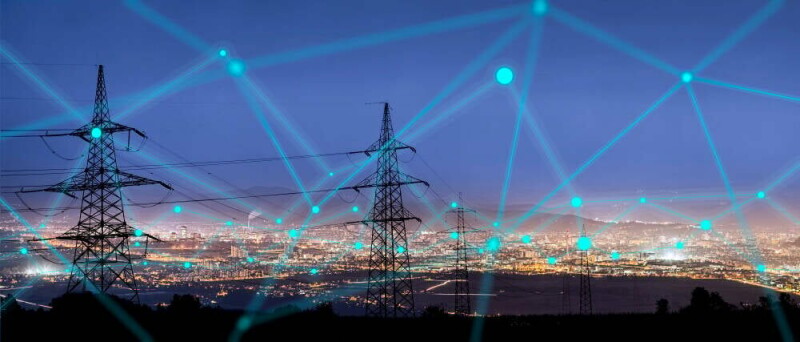
Power grid operators and datacenter developers in the United States are in a bind, and energy analysts can't see an easy way out. The American power grid is old, outdated, and in desperate need of upgrades. Add in a growing number of gigawatt-scale AI datacenters demanding stable access to power that doesn’t disrupt service-level uptime agreements and things start to look even worse. Energy costs have already skyrocketed in the nation's largest energy market mainly thanks to the bit barn bonanza, leading to a new chorus of calls for datacenters to bring their own power generation if they want reliable supplies not bound by grid constraints. According to energy analysts at Wood Mackenzie, datacenter operators have a choice to make, and neither option is great. They can wait the five to 10 years it’ll take for grid operators to upgrade their transmission and generation capabilities to account for their demands. Or they can accept deals with power companies that supply them with power but require curtailment during peak loads, and then install their own on-site power generation to make up the difference. This is the far riskier option, but it’s one that many operators are going with. “With more than 90 GW of collocated generation in US interconnection pipelines, it is clear that the need to scale up at speed has sent many data centre developers down the riskier path,” WoodMac explained in the report. “Collocating volatile AI workloads with power generation has scarce precedent, though, and is far more difficult than most in the industry understand.” What the grid wants, the grid gets Many datacenter operators are only thinking about generator megawatts, say the analysts, leaving engineers frustrated at having to explain the technical complexities of building colocated power generators. Multiple grid operators have passed rules that, as key stakeholders understand them, could give utilities priority rights over colocated power generators during shortages, potentially forcing datacenters to reduce demand while supplying power back to the grid, WoodMac said. “This effectively makes the model unworkable,” the analysts said. “Few data centre developers would invest in baseload generation if it could not be utilised when it was most needed.” Near-instantaneous swings in AI power demand can damage reciprocating engines and gas turbines, while batteries may not respond fast enough to every spike and can degrade over time. The rapidly fluctuating power demanded by hyperscale AI datacenters could even damage the grid itself. “These loads can also cause sub-synchronous oscillations, which pose fundamental stability risk to not only local generators but also to distant ones on the transmission system,” the analysts note. “Technology providers are only beginning to come to terms with this challenge, the mitigation of which is site specific, making solutions hard to scale.” In other words, on-site generation might solve one problem while introducing a whole host of new issues. “While hyperscalers are likely to successfully operationalise some projects with collocated resources, it will come at considerable cost,” the report concludes. “This cost, along with the technical risk and project-specific mitigation required, will prevent collocation from emerging as a scalable model.” So, what’s the alternative? Well, building out the grid, obviously. WoodMac said that grid operators largely don’t consider conditional interconnection with curtailment requirements to be a long-term solution, and are all investing billions in modernization. But those modernization initiatives are going to hit everyone in the wallet. Improving grids to serve AI datacenters “has profound implications for affordability … regional network upgrades necessary to support local large-load connections will be spread among all ratepayers,” WoodMac said. “This may trigger a political outcry.” Rates are already increasing across the US, said Ben Hertz-Shargel, WoodMac's global head of grid transformation and large loads, and no presidential decree can slow that down. "As the data center buildout eclipses existing utility capacity and more infrastructure must be built, we'll see that increasingly become a driver of customer rates," Hertz-Shargel told us in an email. The study doesn’t present a solution for the current situation, forecasting uncertainty as grid operators hurry to come up with some solution, as datacenter operators’ plans blow past their ability to meet demand. Hertz-Shargel didn't have much comfort to offer here, either. "With utilities and grid operators reforming their load interconnection processes, we're likely to see more capacity made available through utilities," Hertz-Shargel said. Not everyone is going to be able to secure that utility capacity, though, and the organizations that are left out will be stuck with the same choice: Wait for the grid to catch up, or rely on colocated generation and conditional grid connection deals, Hertz-Shargel explained. "When the current wave of transmission capacity completes, though, the industry will be in a position for quick acceleration," Hertz-Shargel added – as long as the numbers continue to work out. "That presumes that investors like what they see in terms of AI's return on investment by that time, however, and remain comfortable deploying massive capital into digital infrastructure." That's far from a sure thing at this point. The only thing that the report sees for certain in the current situation is a quick division into winners and losers in the AI race. Big players who are able to absorb the costs will emerge as victors. “The challenges facing [energy] collocation are surmountable for the most experienced and deep-pocketed developers,” Wood Mackenzie said. “Companies capable of operating reliably without firm grid service will be able to scale their AI business faster than others, positioning them to outcompete.” In other words, expect the big guns to further entrench their dominance as the little guys are starved to death or are gobbled up by the competition. There’s nothing like the American dream, eh? ®

MetaFilter

The past 24 hours of MetaFilter

Goodbye dystopia, hello 'thrutopia'

"We're so familiar with this idea of utopia where everything is perfect and dystopia where everything sucks. But thrutopia is something else altogether. I think it's written with the intention of helping us survive and thrive." (CBC News's Weekly What on Earth newsletter) Credit in the article is also given to Rupert Read's coining the term thrutopia on Huffington Post in 2017. (Yes Parable of the Sower is mentioned.)

VK: Voorpagina

Volkskrant.nl biedt het laatste nieuws, opinie en achtergronden

De betrouwbare mannetjes hebben het misschien verkeerd begrepen